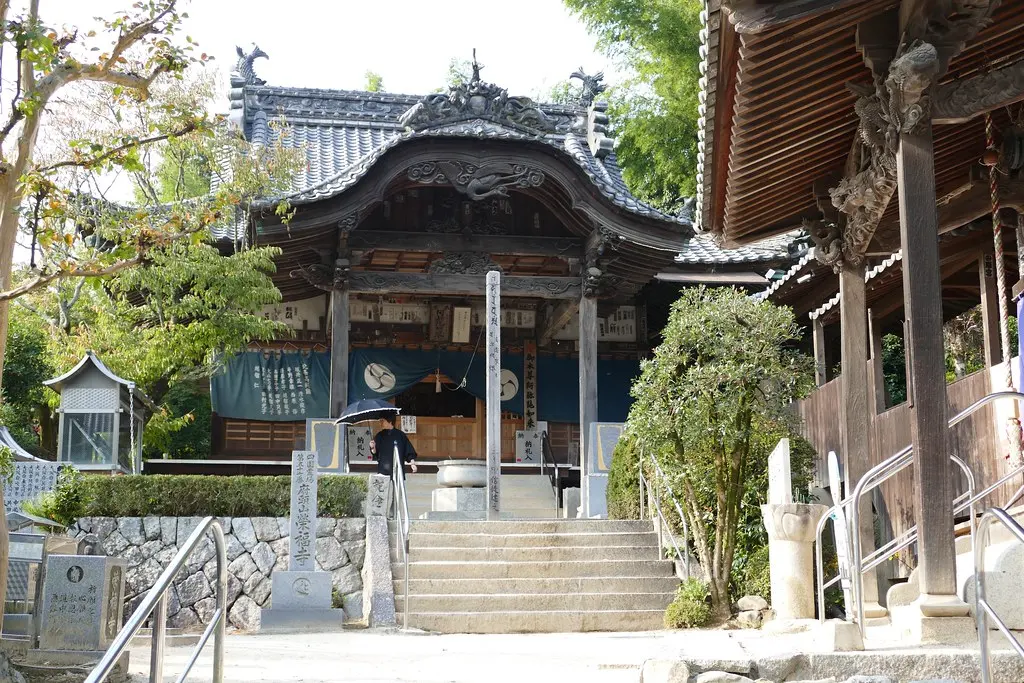
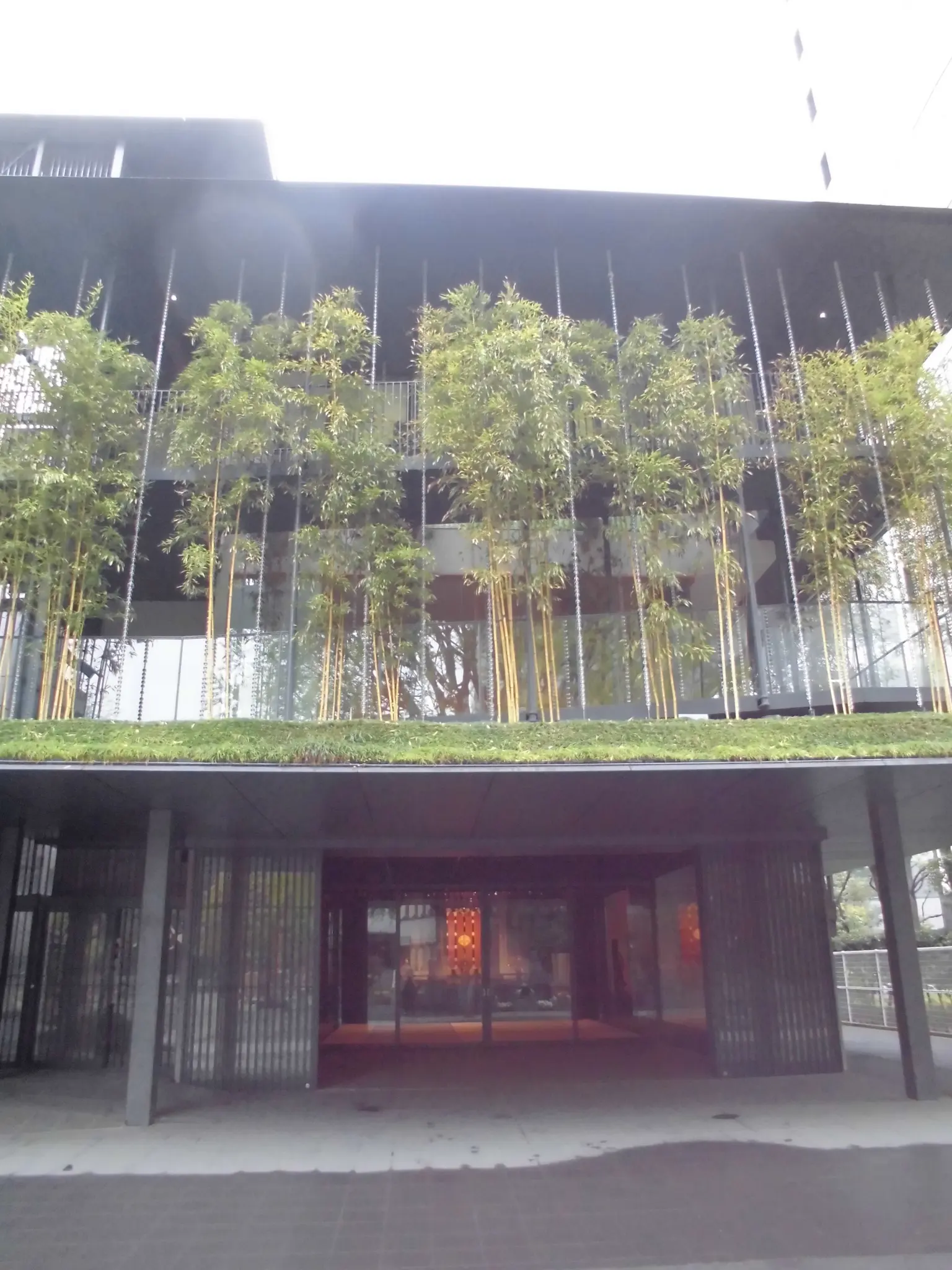
Focused guide
Buddhism sacred sites in Japan
Explore Buddhism sacred sites in Japan: pilgrimage places, living traditions, heritage landmarks, and sacred landscapes.
Atlas summary
Buddhism sacred sites in Japan overview
Buddhism sacred sites in Japan help visitors move beyond broad directories into a more precise set of sacred places with shared geography, tradition, or site type.
Use this page for search-friendly discovery, map comparison, and faster paths into individual site pages with context, coordinates, and nearby places.
Refine the atlas
Related focused search
Showing 120 of 266 matching sites

Rinnō-ji
Nikko, Tochigi Prefecture, Japan
Rinnoji Temple stands as the Buddhist heart of Nikko's sacred landscape, founded in 766 CE by Shodo Shonin....

Rinnō-ji
Nikko, Tochigi Prefecture, Japan
Rinnoji Temple stands as the Buddhist heart of Nikko's sacred landscape, founded in 766 CE by Shodo Shonin....

Horyuji
Ikaruga, Nara Prefecture, Japan
The pagoda and main hall of Hōryū-ji have stood for over 1,300 years—the oldest surviving wooden structures on earth....
Ishiteji Temple, Matsuyama
Matsuyama, Ehime Prefecture, Japan
At Temple 51 of Japan's most famous pilgrimage, a stone preserved for twelve centuries tells of sin, remorse, and redemption....
Seigantoji (Seiganto Temple)
Nachikatsuura, Wakayama Prefecture, Japan
High on Mt. Nachi in Wakayama Prefecture, the three-story vermillion pagoda of Seigantoji frames one of the most iconic views in Japan: the 133-meter Nachi Falls cascading...

Rinnō-ji
Nikko, Tochigi Prefecture, Japan
Rinnoji Temple stands as the Buddhist heart of Nikko's sacred landscape, founded in 766 CE by Shodo Shonin....
Toji
Kyoto, Kyoto Prefecture, Japan
For over 1,200 years, Tō-ji has been the beating heart of Shingon Buddhism—the esoteric tradition that Kūkai brought from China in the 9th century....

Daihonzan Eiheiji (Eihei Temple)
Eiheiji Town, Fukui Prefecture, Japan
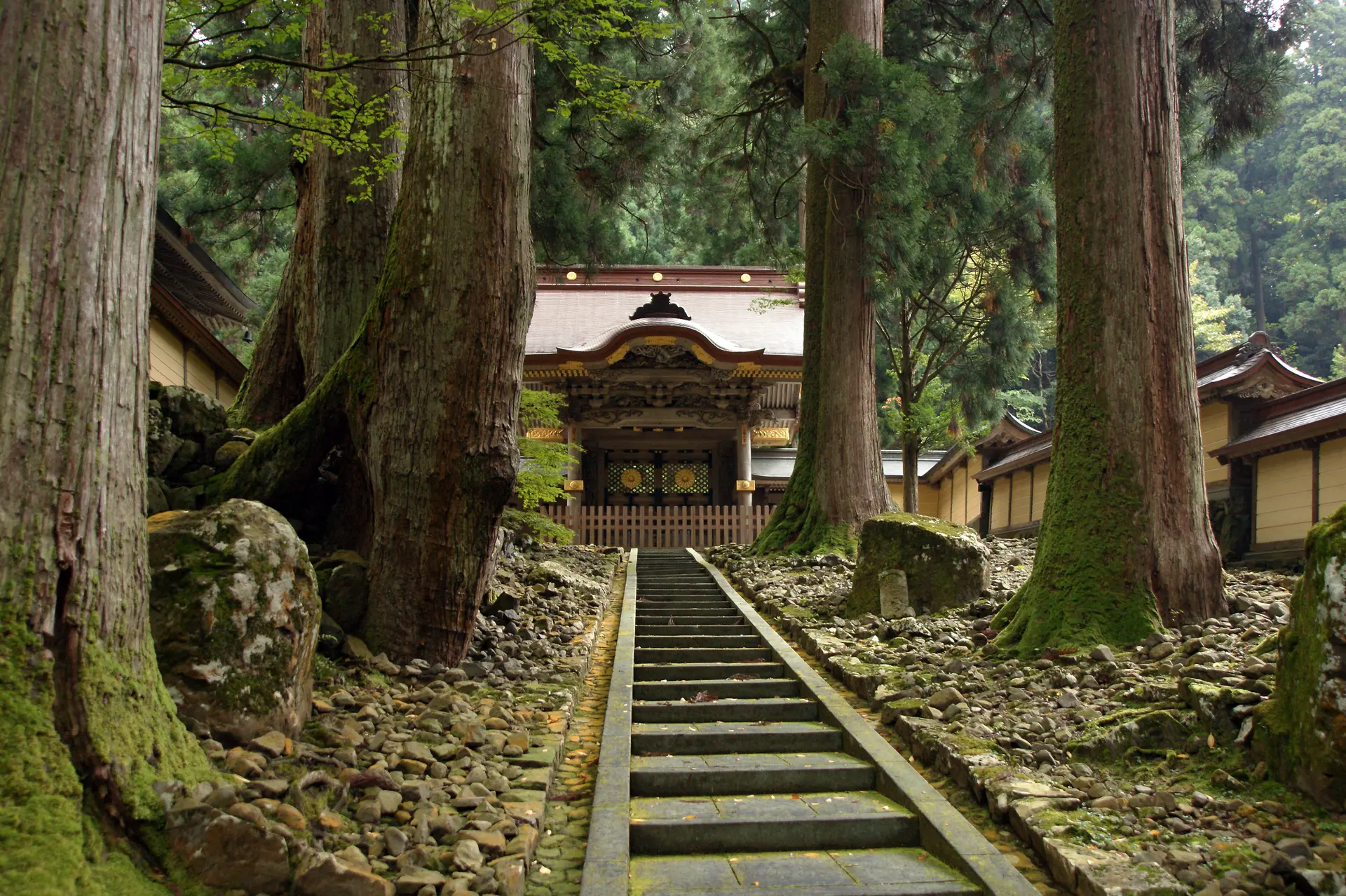
Hidden in the cedar forests of Fukui Prefecture, Eiheiji stands as one of the two head temples of Soto Zen Buddhism....
Kiyomizu-dera Temple
Kyoto, Kyoto Prefecture, Japan
On the forested slopes of Mount Otowa in eastern Kyoto, a vast wooden stage juts out over the valley—built without a single nail, supported by pillars of...

Mii-dera
Otsu, Shiga Prefecture, Japan
Mii-dera has earned its nickname—the Phoenix Temple—through seven destructions and seven risings....
Kongofukuji Temple, Tosashimizu
Tosashimizu, Kochi Prefecture, Japan
At the southernmost tip of Shikoku, where land yields to endless ocean, stands the temple Kobo Daishi founded after sensing the presence of Fudaraku—Kannon's Pure...

Todaiji
Nara, Nara Prefecture, Japan
In 752 CE, Emperor Shōmu consecrated a bronze Buddha of unprecedented scale—15 meters tall, cast from nearly all the copper in Japan—to bring peace to a nation wracked by...

Kurama-dera Temple
Kyoto, Kyoto Prefecture, Japan
Rising 584 meters above Kyoto's northern edge, Mount Kurama has drawn seekers for over twelve centuries....

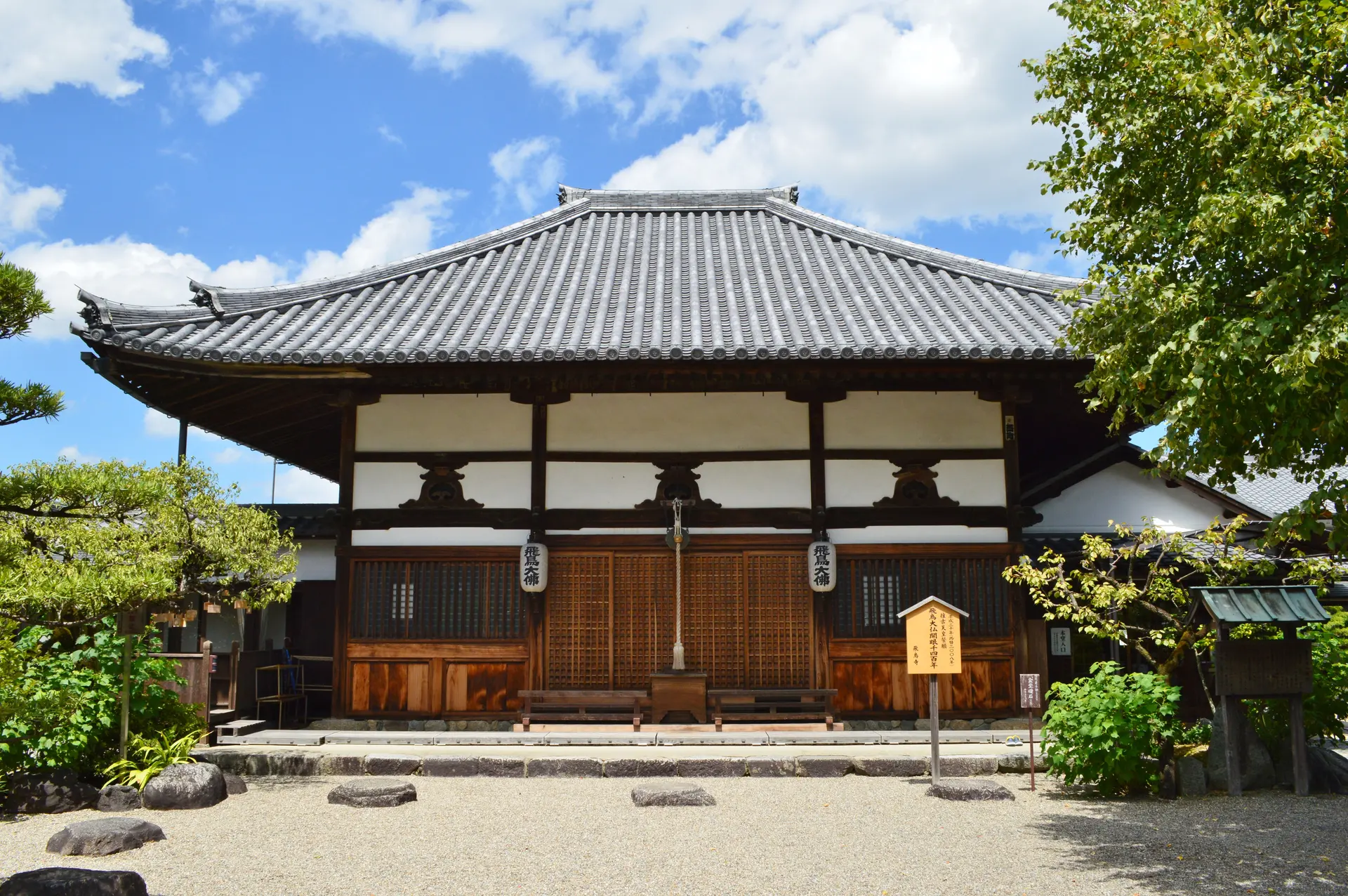
Asuka-dera
Asuka, Nara Prefecture, Japan
In a quiet valley surrounded by rice fields, Japan's oldest surviving Buddha statue has watched from the same location for over 1,400 years....

Kongōchō-ji (金剛頂寺)
Muroto, Muroto, Kōchi, Japan
Kongōchō-ji crowns a wooded promontory on the western side of Cape Muroto, the second of the Muroto Sanzan triad....
Chōkoku-ji (Iiyama Kannon)
Atsugi, Japan
Iiyama Kannon — the local name for Chōkoku-ji on the slopes of Mount Hakusan in Atsugi — has drawn pilgrims for some thirteen centuries....
Kōjō-ji
Onomichi, Japan
Kōjō-ji — Chōon-zan Kōjō-ji — sits atop Mt. Chōon ('Tide-Sound Mountain') above Setoda Bay on Ikuchijima....

Nariai-ji (成相寺)
Miyazu, Miyazu, Kyoto, Japan
Nariai-ji is station 28 on the Saigoku Kannon Pilgrimage, a Hashidate Shingon-shū temple in Kyoto dedicated to Shō Kannon....
Dōryū-ji (道隆寺)
Tadotsu, Tadotsu, Kagawa, Japan
Temple 77 Dōryū-ji in Tadotsu is known on the Shikoku route as the Eye-Healing Yakushi (me-naoshi Yakushi)....
Chōmei-ji (長命寺)
Ōmihachiman, Ōmihachiman, Shiga, Japan
Chōmei-ji is station 31 on the Saigoku Kannon Pilgrimage, a Tendai Buddhism temple in Shiga dedicated to Senju Kannon Jūichimen Kannon Shō Kannon....

Sanuki Kokubun-ji (讃岐国分寺)
Takamatsu, Takamatsu, Kagawa, Japan
Temple 80 Sanuki Kokubun-ji in Takamatsu is the working successor to one of the eighth-century kokubunji — the provincial protection-temples ordered by Emperor Shōmu in...
Shimabu-ji (四萬部寺)
Chichibu, Japan
Shimabu-ji is the first temple of the Chichibu 34 Kannon Pilgrimage in Saitama, Japan....

An'yō-in (安養院)
Kamakura, Japan
An'yō-in is the third station of the Bandō Sanjūsankasho — a small Jōdo-shū temple in Kamakura founded as Hōjō Masako's grief-prayer for her husband Minamoto no Yoritomo,...

Imakumano Kannon-ji (今熊野観音寺)
Higashiyama-ku, Higashiyama-ku, Kyoto, Japan
Imakumano Kannon-ji is station 15 on the Saigoku Kannon Pilgrimage, a Shingon Buddhism, Kumano cult temple in Kyoto dedicated to Jūichimen Kannon....
Suishō-ji (Daishō-in)
Miyajima, Japan
Daishō-in — full classical name Takizan Suiseiji Daishōin (also Suishō-ji), commonly called Miyajima Daishō-in — is the daihonzan (head temple) of the Omuro branch of...
![Iwaya-ji [ja] (岩屋寺)](/_next/image?url=https%3A%2F%2Flive.staticflickr.com%2F5674%2F23792583391_6cd21251b5_b.jpg&w=3840&q=75)
Iwaya-ji [ja] (岩屋寺)
Kumakōgen, Kumakōgen, Ehime, Japan
Iwaya-ji is the forty-fifth temple of the Shikoku pilgrimage and a designated National Scenic Beauty....

Tachiki-Kannon An’yō-ji
Japan
Tachiki Kannon An'yō-ji stands above the Seta River on a cliff that pilgrims reach by climbing roughly 800 stone steps....

Fujii-dera (藤井寺)
Yoshinogawa, Yoshinogawa, Tokushima, Japan
Fujii-dera sits at the foot of a steep mountain ridge in Yoshinogawa, the threshold temple before the most demanding stretch of the Shikoku 88....
Kiyomizu-dera (清水寺)
Isumi, Japan
Otowasan Kiyomizu-dera in Isumi, Chiba, is the 32nd station of the Bandō Sanjūsankasho — a Tendai temple set on Otowa-yama in the forested hills of southern Bōsō....
Hanta-ji (繁多寺)
Matsuyama, Matsuyama, Ehime, Japan
Temple 50 of the Shikoku henro stands on a wooded hillside above southern Matsuyama, its Yakushi Nyorai principal image attributed by tradition to the wandering monk Gyōki....
Nichirin-ji
Daigo, Japan
Nichirin-ji sits on the eighth station of Mt. Yamizo, the highest peak in Ibaraki....
Senyū-ji (仙遊寺)
Imabari, Imabari, Ehime, Japan
Senyū-ji crowns Mt. Sakurei south of Imabari, the 58th temple of the Shikoku 88....
Sugimoto-dera (杉本寺)
Kamakura, Japan
Sugimoto-dera is the first station of the Bandō Sanjūsankasho — Kamakura's oldest Buddhist temple, where three Eleven-Headed Kannon statues from successive Heian centuries...

Onzan-ji (恩山寺)
Komatsushima, Komatsushima, Tokushima, Japan
Onzan-ji, Temple 18 of the Shikoku 88, is the 'Temple of Gratitude.' It stands at the place where Kūkai's mother, Tamayori Gozen, became one of the first women admitted to...
Negoro-ji (根香寺)
Takamatsu, Takamatsu, Kagawa, Japan
Negoro-ji stands at 365 metres on the slopes of Mt. Aomine, deep in the cedar forest of the Goshikidai plateau....
Rokuharamitsu-ji (六波羅蜜寺)
Higashiyama-ku, Higashiyama-ku, Kyoto, Japan
Rokuharamitsu-ji is station 17 on the Saigoku Kannon Pilgrimage, a Shingon Buddhism, Kūya nembutsu temple in Kyoto dedicated to Jūichimen Kannon....

Nagao-ji (長尾寺)
Sanuki, Sanuki, Kagawa, Japan
Nagao-ji is the eighty-seventh of the eighty-eight Shikoku temples — the second-to-last, set in the open Nagao district of Sanuki under an enormous camphor canopy....
Tanema-ji (種間寺)
Haruno, Haruno, Kōchi, Japan
The thirty-fourth temple of the Shikoku 88 sits among rice paddies in Haruno, Kōchi....
Shōfuku-ji (勝福寺)
Odawara, Japan
Shōfuku-ji — popularly known as Iizumi Kannon — is the fifth station of the Bandō Sanjūsankasho and one of the most active Shingon Kannon temples in Kanagawa....
Mandara-ji (曼荼羅寺)
Zentsūji, Zentsūji, Kagawa, Japan
Mandara-ji is the ancestral temple of the Saeki clan, into which Kūkai was born....
Kongojo-ji
Japan
Nagusayama Kongōjō-ji in Fukusaki, Hyōgo, traces its founding to 597 CE under the Korean monk Ekan during Empress Suiko's reign....
Kannon-in
Tottori, Japan
Kannon-in in Tottori, the 32nd station of the Chūgoku 33 Kannon Pilgrimage, was founded in 1632 as the Tottori-Ikeda clan's domain temple....

Kanjizai-ji (観自在寺)
Ainan, Ainan, Ehime, Japan
Kanjizai-ji is the fortieth stop on the Shikoku 88 — the first temple of the Ehime (Iyo) section, marking the pilgrim's transition from Tosa's discipline of asceticism...
Hōun-ji (法雲寺)
Chichibu, Japan
Hōun-ji — Zuiryū-san Hōun-ji — is the 30th station of the Chichibu 34 Kannon Pilgrimage, founded in 1319 by the Kamakura Zen master Dōin (Dōon) of Kenchō-ji....
Shimpuku-ji (真福寺)
Chichibu, Japan
Shinpuku-ji is the second station of the Chichibu 34 Kannon Pilgrimage and the temple whose late-Muromachi addition raised the Chichibu count to 34....

Buttsū-ji
Mihara, Japan
Buttsū-ji — Omoto-san Buttsū-ji — is the head temple (daihonzan) of the Buttsū-ji branch of Rinzai Zen, founded in 1397 by Kobayakawa Haruhira and Zen master Gucchū Shūkyū...
Iyadani-ji (弥谷寺)
Mitoyo, Mitoyo, Kagawa, Japan
Iyadani-ji is one of three reizan — spirit mountains — of Shikoku, places where the souls of the dead are traditionally felt to gather....

Mii-dera (三井寺)
Otsu, Otsu, Shiga, Japan
Mii-dera is station 14 on the Saigoku Kannon Pilgrimage, a Tendai Buddhism, Saigoku Kannon devotion temple in Shiga dedicated to Nyoirin Kannon....
Yōkoku-ji
Japan
Yōkoku-ji — known to most Kyotoites as Yanagidani Kannon — joins three rare devotional layers in one Nishiyama mountainside: a hibutsu Eleven-faced Thousand-armed Kannon...
Saihoin
Japan
Saihōin is a small Pure Land nunnery in Taishi-chō, founded in 622 CE by three of Prince Shōtoku's nurse-attendants who shaved their heads after his death and built the...

Gokuraku-ji (極楽寺)
Naruto, Naruto, Tokushima, Japan
Gokuraku-ji is Temple 2 of the Shikoku 88, sitting 1.4 km southwest of Temple 1 in Naruto....

Yasaka-ji (八坂寺)
Matsuyama, Matsuyama, Ehime, Japan
Yasaka-ji is the forty-seventh temple of the Shikoku pilgrimage and one of its most layered....
Jikō-ji (慈光寺)
Tokigawa, Japan
Jikō-ji on Mount Toki, founded in tradition in 673 and as an institution in 770 CE, is one of the oldest Tendai mountain temples in the Kantō....
Saizen-ji (西善寺)
Yokoze, Japan
Saizen-ji is the eighth station of the Chichibu 34 Kannon Pilgrimage in Yokoze, Saitama. The Rinzai Zen temple of the Nanzen-ji school sits at the northern foot of Mt....
Hōsen-ji (法泉寺)
Chichibu, Japan
Hōsen-ji is the twenty-fourth station of the Chichibu 34 Kannon Pilgrimage — a Rinzai Zen temple of the Nanzen-ji branch that, until the mid-19th century, was a Shugendō...
Taiyū-ji
Japan
Founded by Kūkai in the early 9th century at the heart of what is now Osaka's Umeda entertainment district, Taiyū-ji is a Kōyasan Shingon temple whose principal Senju...
Ryūshō-in
Narita, Japan
Ryūshō-in — known locally as Namegawa Kannon — is the 28th station of the Bandō Sanjūsankasho pilgrimage, a Tendai temple set among rice fields outside Narita....
Tanjō-ji (Okayama)
Kumenan, Japan
Tanjō-ji marks the literal birthplace of Hōnen Shōnin (1133–1212), founder of Jōdo-shū Pure Land Buddhism....
Taisan-ji
Japan
Sanshinzan Taisan-ji in Kobe's Nishi Ward holds a 1293 wooden main hall registered as a National Treasure of Japan — one of only a few such structures in the entire Hyōgo...

Entsū-ji
Kurashiki, Japan
Entsū-ji crowns a small mountain in Tamashima, Kurashiki, and serves as Chūgoku 33 Kannon Pilgrimage station #7....
Shusshakaji (出釈迦寺)
Zentsūji, Zentsūji, Kagawa, Japan
Temple 73 Shusshakaji sits at the foot of Mt Gahaishi in Zentsūji City, Kagawa. The legend here is intimate: a seven-year-old boy named Mao — later Kūkai — leapt from a...
Goka-dō (語歌堂)
Yokoze, Japan
Goka-dō is the fifth station of the Chichibu 34 Kannon Pilgrimage in Yokoze, Saitama....
Suisen-ji (水潜寺)
Minano, Japan
Suisen-ji — Nittaku-san Suisen-ji — is the 34th and final station of the Chichibu 34 Kannon Pilgrimage and the kechigan-jo (結願所, 'place where the vow is fulfilled') of...
Anraku-ji (安楽寺)
Kamiita, Kamiita, Tokushima, Japan
Anraku-ji is Temple 6 of the Shikoku 88, in Kamiita, Tokushima. Yakushi Nyorai, the Buddha of Healing, presides here, and Anraku-ji is the only fudasho with its own onsen....
Hōshō-ji (法性寺)
Ogano, Japan
Hōshō-ji — Hannya-san Hōshō-ji — is the 32nd station of the Chichibu 34 Kannon Pilgrimage, a Sōtō Zen mountain temple in Ogano set against a sandstone cliff....
Kannon-ji (観音寺)
Kan'onji, Kan'onji, Kagawa, Japan
Kannon-ji shares its precinct on Mt. Kotohiki with Jinne-in at Temple 68, but the two temples have separate histories and separate identities....
Nofuku-ji
Japan
Nōfuku-ji, founded by Saichō in 805 CE on his return from Tang China, is one of the oldest Tendai temples in the Hyōgo region....
Gōshō-ji (郷照寺)
Utazu, Utazu, Kagawa, Japan
Temple 78 Gōshō-ji rises above the old port of Utazu on a hill overlooking the Seto Inland Sea....
Dōji-dō (童子堂)
Chichibu, Japan
Dōji-dō is the twenty-second station of the Chichibu 34 Kannon Pilgrimage — literally 'Children's Hall,' a Shingon Buzan-ha temple where Kannon has been invoked for...

Hōrin-ji (法輪寺)
Awa, Awa, Tokushima, Japan
Hōrin-ji is the only temple among the Shikoku 88 whose principal image is a Parinirvana Shaka Nyorai—Shakyamuni at the threshold of nirvana, lying on his side....
Jūraku-ji (十楽寺)
Awa, Awa, Tokushima, Japan
Jūraku-ji is Temple 7 of the Shikoku 88, in Awa, Tokushima. The 'Temple of Ten Joys' offers two specialized intercessions: an eye-healing Jizō beside the Hondō and a row...

Kiyomizu-dera (清水寺)
Higashiyama-ku, Higashiyama-ku, Kyoto, Japan
Kiyomizu-dera is station 16 on the Saigoku Kannon Pilgrimage, a Kita-Hossō Buddhism, Saigoku Kannon devotion temple in Kyoto dedicated to Senju Kannon....
Enpuku-ji (圓福寺)
Chōshi, Japan
Enpuku-ji is the 27th Bandō station and the easternmost stop of the eastern Kannon circuit....
Hōju-ji (宝寿寺)
Saijō, Saijō, Ehime, Japan
Hōju-ji is the 62nd fudasho on the Shikoku 88, an 8th-century imperial foundation that has been moved at least four times—by flood, war, Meiji separation, and the...
Ichinomiya-ji (一宮寺)
Takamatsu, Takamatsu, Kagawa, Japan
Ichinomiya-ji is the eighty-third temple of the Shikoku circuit and the only one historically tied to a province's principal Shinto shrine....

Kongo-ji
Japan
Founded by Gyōki on Mount Amano in the Tenpyō era and revived in the late Heian period by the monk Akan, Amano-san Kongō-ji became known as Nyonin Kōya — Women's Kōyasan —...

Chikurin-ji (竹林寺)
Kōchi, Kōchi, Kōchi, Japan
Chikurin-ji crowns Mt. Godaisan above Kōchi City — a Japanese Mañjuśrī mountain modelled on China's Mt....
Enmyō-ji (圓明寺)
Matsuyama, Matsuyama, Ehime, Japan
Temple 53 of the Shikoku henro is small, layered, and unusually plural. Its Shingon Hondō houses an Amida Nyorai principal image — uncommon for the school....
Kagaku-ji
Japan
Banshū Akō Taiunzan Kagaku-ji is the Asano clan's family temple in Akō, founded in 1645 and made permanent home of Akō's memorial culture by the 1701–1703 vendetta of the...
Saigoku-ji (Sōji-in)
Onomichi, Japan
Saigoku-ji — full name Maniyama Sōji-in Saigoku-ji — sits on Mt. Atago above Onomichi's old port, ascended by 108 stone steps....
Nan'endō (Kofuku-ji) (南円堂)
Nara, Nara, Nara, Japan
Nan'endō (Kōfuku-ji) is station 9 on the Saigoku Kannon Pilgrimage, a Hossō school temple in Nara dedicated to Fukūkenjaku Kannon....
Kami Daigo-ji (醍醐寺)
Fushimi-ku, Fushimi-ku, Kyoto, Kyoto, Japan
Kami Daigo-ji is station 11 on the Saigoku Kannon Pilgrimage, a Shingon-shū Daigo-ha temple in Kyoto dedicated to Juntei Kannon....
Ryōzen-ji (霊山寺)
Naruto, Naruto, Tokushima, Japan
Ryōzen-ji is Temple 1 of the Shikoku 88-temple pilgrimage in Naruto, Tokushima. Pilgrims begin their 1,200-kilometer circuit here, buying white robes, conical hats, and...
Ōya-ji (大谷寺)
Utsunomiya, Japan
Ōya-ji, station 19 of the Bandō Sanjūsankasho, sits inside a natural rock-shelter overhang of Ōya tuff in Utsunomiya....
Mizuma-dera
Japan
Mizuma-dera, popularly called Mizuma Kannon, is among the most actively visited temples in southern Osaka....
Dōjō-ji
Japan
Dōjō-ji is the oldest documented temple in Wakayama Prefecture, founded in 701 CE by the monk Gien at Emperor Monmu's command....
Saidai-ji (Okayama)
Okayama, Japan
Saidai-ji Kannon-in opens the Chūgoku 33 Kannon Pilgrimage in eastern Okayama. Founded in the eighth century around a Senju Kannon image said to have chosen this spot by...
Nosaka-ji (野坂寺)
Chichibu, Japan
Nosaka-ji, twelfth station of the Chichibu 34 Kannon Pilgrimage, is a Rinzai Zen temple of the Nanzen-ji branch formed by the 1741 merger of an older Kannon-dō with...
Enkō-ji (Myō-ō-in)
Fukuyama, Japan
Enkō-ji, also known as Myō-ō-in, sits on Atago-yama above the Kusado Sengen archaeological site in Fukuyama, Hiroshima....

Shinshō-ji (津照寺)
Muroto, Muroto, Kōchi, Japan
Shinshō-ji rises directly above the working harbour of Murotsu, reached by a steep stone staircase that climbs through a Niōmon gate set unusually mid-flight....
Zenjibu-ji (禅師峰寺)
Nankoku, Nankoku, Kōchi, Japan
Zenjibu-ji rests on the cliff-edge of Hachiyō-san — Eight-Petalled Lotus Mountain — above Urado Bay....
Sanbutsu-ji
Misasa, Japan
Sanbutsu-ji, the 31st station of the Chūgoku 33 Kannon Pilgrimage, sits on Mt. Mitoku in Misasa, Tottori....

Hase-dera (長谷寺)
Sakurai, Sakurai, Nara, Japan
Hase-dera is station 8 on the Saigoku Kannon Pilgrimage, a Shingon-shū Buzan-ha temple in Nara dedicated to Jūichimen Kannon....

Jōsen-ji (常泉寺)
Chichibu, Japan
Jōsen-ji is the third station of the Chichibu 34 Kannon Pilgrimage in Saitama, Japan....
Meiseki-ji (明石寺)
Seiyo, Seiyo, Ehime, Japan
Meiseki-ji is the forty-third temple of the Shikoku 88 and one of the few stops not affiliated with Shingon....

Nago-ji (那古寺)
Tateyama, Japan
Nago-ji — Fudaraku-san Nago-ji — is the 33rd and final station of the Bandō Sanjūsankasho, set on a forested mid-slope of Mt. Nago in Tateyama, Chiba....
Kannon-ji (観音寺)
Chichibu, Japan
Kannon-ji is the twenty-first station of the Chichibu 34 Kannon Pilgrimage, a Shingon Buzan-ha temple in central Chichibu locally known as Yano-dō ('Arrow Hall')....
Kiyotaki-ji (清滝寺)
Tsuchiura, Japan
Kiyotaki-ji is the 26th Bandō station, a quiet Shingon-Buzan temple on the lower slopes of Mt. Ryūgamine in rural Tsuchiura....
Kyūshō-ji (久昌寺)
Chichibu, Japan
Kyūshō-ji is the twenty-fifth station of the Chichibu 34 Kannon Pilgrimage — a Sōtō Zen temple known by its older nickname Otehan-dera, 'Hand-Seal Temple,' for the legend...

Sankaku-ji (三角寺)
Shikokuchūō, Shikokuchūō, Ehime, Japan
Sankaku-ji sits at roughly 450 metres above the industrial coast of Shikokuchūō, the sixty-fifth temple of the Shikoku 88 and the last of twenty-six temples in Ehime....

Bodai-ji (菩提寺)
Sanda, Sanda, Hyōgo, Japan
Bodai-ji is station bangai-bodai-ji on the Saigoku Kannon Pilgrimage, a Shingon Buddhism, Kazan-in branch temple in Hyogo dedicated to Kannon....
Saikō-ji (西光寺)
Chichibu, Japan
Saikō-ji, sixteenth station of the Chichibu 34 Kannon Pilgrimage, is a Shingon Buzan-ha temple whose Senju (Thousand-Armed) Kannon is traditionally attributed to the Nara...
Anraku-ji (安楽寺)
Yoshimi, Japan
Anraku-ji, the Yoshimi Kannon, is the eleventh station of the Bandō Sanjūsankasho pilgrimage....
Shikoku Pilgrimage
Shikoku, japan
The Shikoku Henro: an 88-temple pilgrimage circuit on the island of Shikoku, Japan, traditionally associated with the 9th-century Shingon master Kūkai (Kōbō-Daishi).
Gyōgan-ji (Kōdō) (行願寺)
Nakagyo-ku, Nakagyo-ku, Kyoto, Japan
Gyōgan-ji (Kōdō) is station 19 on the Saigoku Kannon Pilgrimage, a Tendai Buddhism, Miyako Shichifukujin temple in Kyoto dedicated to Senju Kannon....

Kakurin-ji (鶴林寺)
Katsuura, Katsuura, Tokushima, Japan
Kakurin-ji, Temple 20 of the Shikoku 88, sits high on Mount Washinō in Katsuura....
Akechi-ji (明智寺)
Yokoze, Japan
Akechi-ji is the ninth station of the Chichibu 34 Kannon Pilgrimage in Yokoze, Saitama....
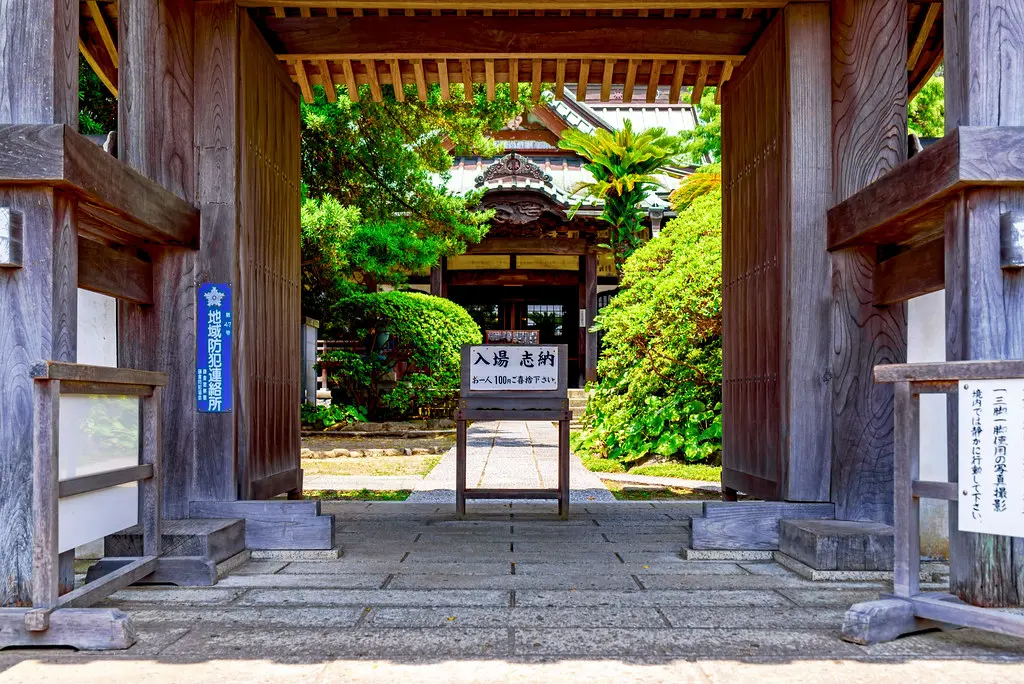
Daien-ji (大渕寺)
Chichibu, Japan
Daien-ji — Ryūga-zan Daien-ji — is the 27th station of the Chichibu 34 Kannon Pilgrimage, a Sōtō Zen temple in the Kagemori valley of Chichibu, Saitama....
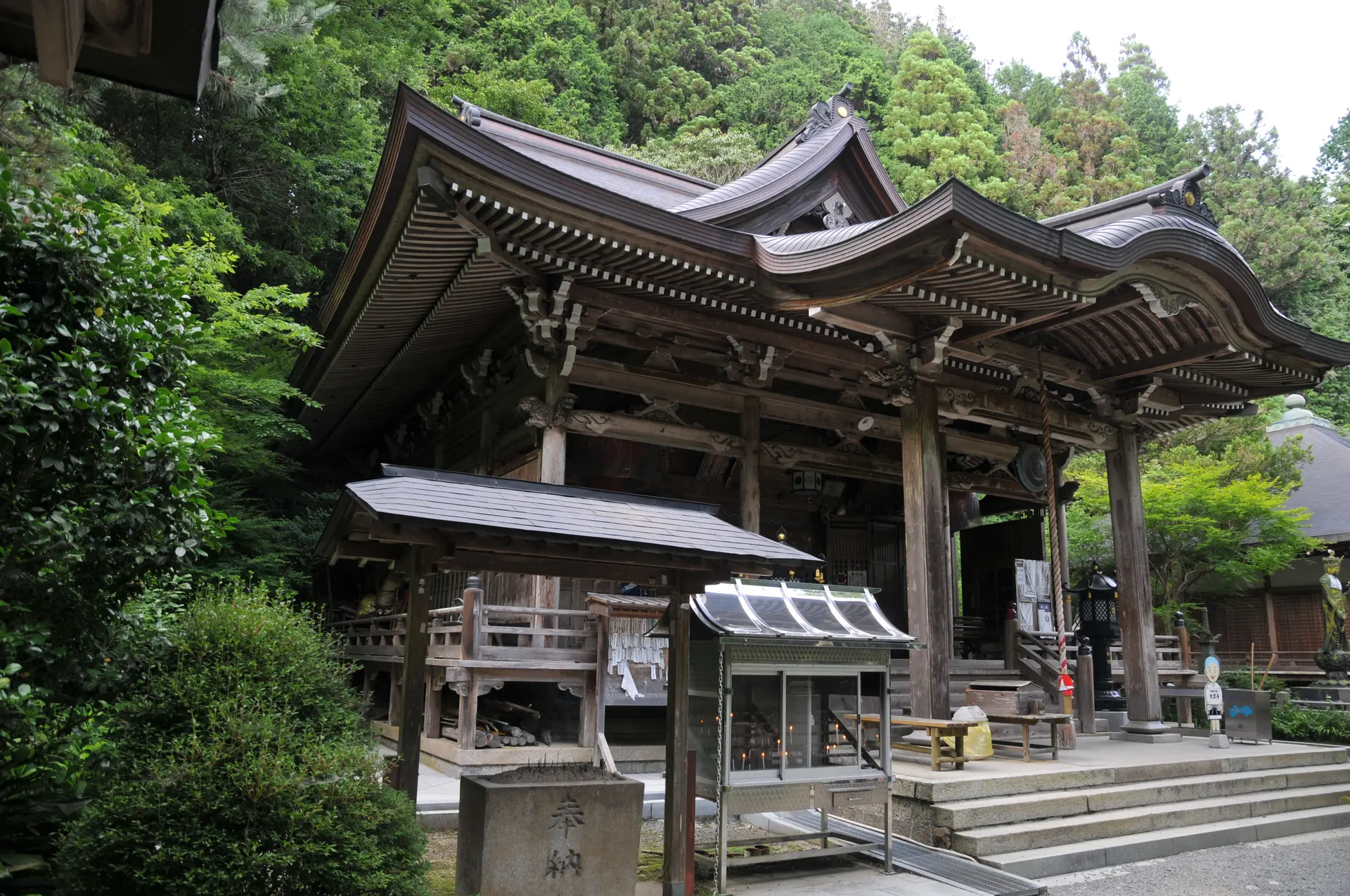
Kōon-ji (香園寺)
Saijō, Saijō, Ehime, Japan
Kōon-ji is the 61st fudasho on the Shikoku 88 and the head temple of the Shingon-shū Goki-ha sub-school....
Kichijō-ji (吉祥寺)
Saijō, Saijō, Ehime, Japan
Kichijō-ji is the 63rd fudasho on the Shikoku 88 and the only temple on the route whose principal image is Bishamonten—Buddhist guardian-king of the north and one of the...

Ishite-ji (石手寺)
Matsuyama, Matsuyama, Ehime, Japan
Temple 51 of the Shikoku henro is the legendary birthplace of the entire pilgrimage tradition....
Mizusawa-dera (水澤寺)
Shibukawa, Japan
Mizusawa-dera, the sixteenth station of the Bandō Sanjūsankasho Kannon pilgrimage, sits on the wooded slopes below Ikaho Onsen....

Rakuhō-ji (楽法寺)
Sakuragawa, Japan
Rakuhō-ji is the 24th Bandō station, popularly known as Amabiki Kannon — the Rain-Drawing Kannon....
Tairyū-ji (太龍寺)
Anan, Anan, Tokushima, Japan
Tairyū-ji, Temple 21 of the Shikoku 88, is one of the few sites Kūkai names in his own writings as the place of his decisive ascetic practice....

Enmei-ji (延命寺)
Imabari, Imabari, Ehime, Japan
Temple 54 of the Shikoku henro is the first of six temples clustered around Imabari....
Yokei-ji
Setouchi, Japan
Yokei-ji crowns Ueterasan, a low hill above the rice plains of Setouchi City. Founded in the eighth century and long affiliated with the Tendai school, the temple holds...
Kabusan-ji
Japan
Kabusan-ji is a Tendai mountain temple in the hills north of Takatsuki, traditionally founded by En no Gyōja in 697 CE and held to be the place where Bishamonten was first...
Mitaki-dera (Mitaki-Kannon)
Hiroshima, Japan
Mitaki-dera — Ryūsen-zan Mitaki-ji — sits in a forested ravine 3 km from the hypocentre of the Hiroshima atomic bomb, with three named waterfalls flowing through the...
Hōgon-ji (宝厳寺)
Nagahama, Nagahama, Shiga, Japan
Hogon-ji is station 30 on the Saigoku Kannon Pilgrimage, a Shingon-shū Buzan-ha, Benzaiten devotion temple in Shiga dedicated to Senju Kannon....
Henshō-ji (Hōkai-in)
Okayama, Japan
Henshō-ji, also known as Hōkai-in, sits at the base of wooded Kongōsan in northern Okayama City....
Key questions
Buddhism sacred sites in Japan questions
- What Buddhism sacred sites in Japan are included?
- This guide includes 266 Buddhism sacred sites in Japan, filtered from the Pilgrim Map atlas for stronger browsing and planning context.
- Can I view these sacred sites on a map?
- Yes. Use the map view to compare geographic clusters, then open individual site pages for coordinates, nearby places, and practical visiting context.
- Where can I explore more Buddhism sites in Japan?
- Use the related browse links on this page to widen your view by country, tradition, site type, or a focused search.