Iwaya-ji
Halls embedded in a vertical cliff, with a hermit's cave reachable by ladder above
Understand sacred places, explore living traditions, and learn how to engage respectfully with Pilgrim Map.
Access has not been verified. Check current local guidance before planning a visit.
Kumakōgen, Ehime Prefecture, Japan
Read the sources![Image of Iwaya-ji [ja] (岩屋寺)](/_next/image?url=https%3A%2F%2Flive.staticflickr.com%2F5674%2F23792583391_6cd21251b5_b.jpg&w=3840&q=75)
Image of Iwaya-ji [ja] (岩屋寺). Image source
Station 45 of 88
Shikoku 88 Temple PilgrimageVisit essentials
A quick read before you go
- Duration
- 60-90 minutes including the climb up to the precinct from the parking lot and the optional…
- Access
- Mountain road in Kumakōgen.
Overview
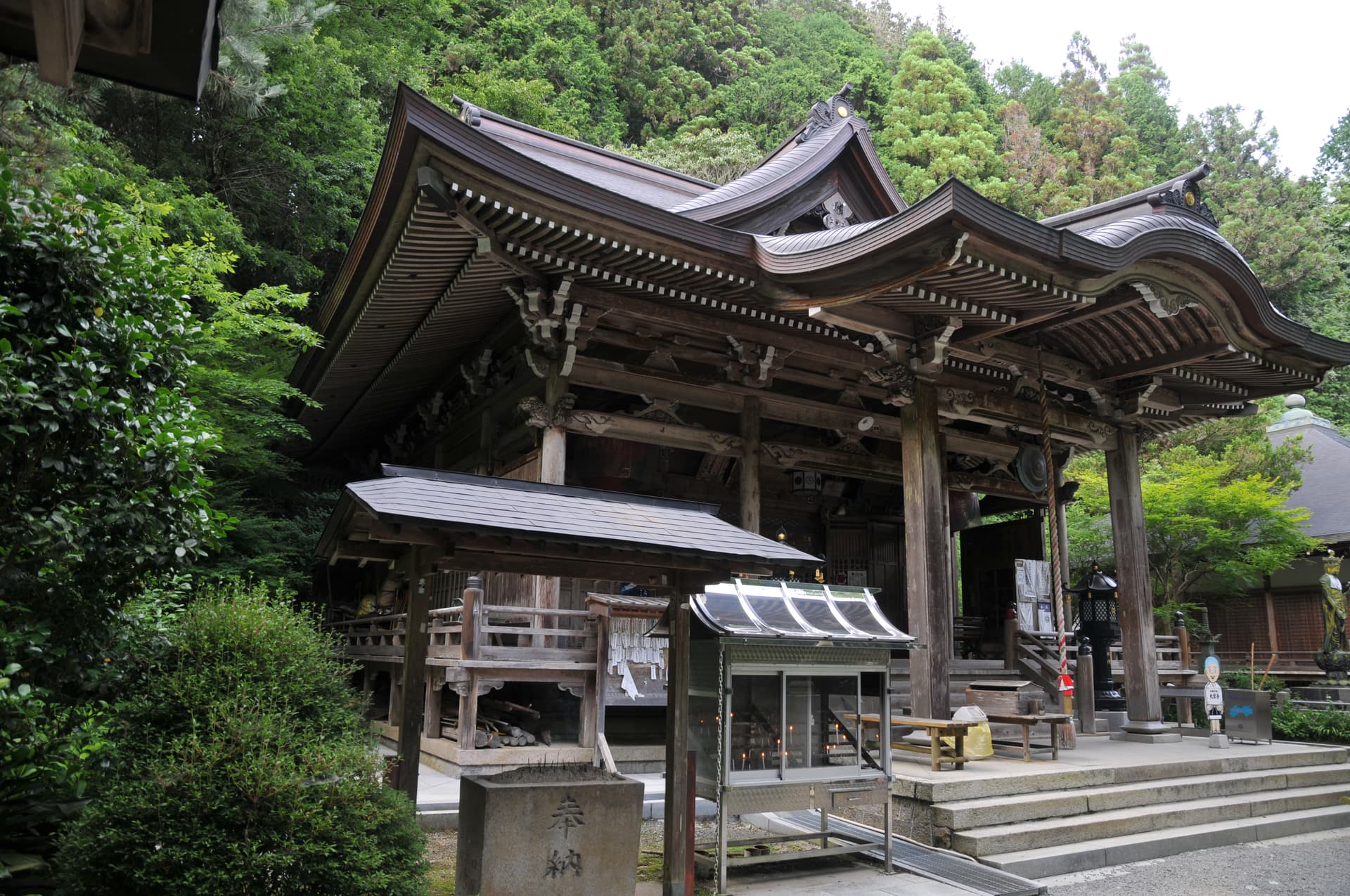
Iwaya-ji is a cliff temple: its Hondō and halls are embedded in a vertical, cave-honeycombed conglomerate face at 700 meters in central Ehime's Kuma Highlands, surrounded by old-growth sawtooth oak. Small caves occur both above and below the precinct. The precinct's National Scenic Beauty (kuni shitei meishō) designation recognises a union of geology and built devotion unmatched on the Shikoku circuit.
Its founding tradition centres on Hokke Sennin, a Tosa woman and mountain ascetic said to have practised Lotus Sutra meditation in a cave and gained the power of flight. In 815 Kūkai entered seeking a training ground, met Hokke, and received her offer of the mountain. He carved Fudō Myōō, concealed it in the cliff as hibutsu, founded the temple, and named Kaiganzan—Sea-shore Mountain—for wave-like rocks. This female-hermit transmission is rare among Kūkai-attributed temples.
Vertical rock, embedded architecture, Shugendō memory, and hidden Fudō create an intensity pilgrims often call the strongest of the 88. The monthly goma ritual on the 28th echoes against the cliff; when conditions permit, a steep wooden ladder reaches the upper Hokke-no-iwaya cave and its hermit-lineage silence. The rock-embedded Hondō is a 1920 Important Cultural Property.
Reaching it means either crossing a high ridge from Temple 44 Daihō-ji, which is nine kilometres west, or climbing twenty minutes from the lower car park on wooded stone steps. Many pilgrims describe the result as a circuit peak, pointing beyond ordinary devotional routine through landscape, female-hermit lineage, and concealed Fudō.
Why this place is sacred
Most thin places report a single dominant register — silence, view, ancientness, ritual. Iwaya-ji holds several at once. The cliff itself is the strongest. A vertical conglomerate face honeycombed with small caves, rising out of an old-growth oak forest at 700 meters elevation, gives the senses something the rest of the Shikoku 88 does not approximate. Halls are not adjacent to the rock; they are embedded in it. A pilgrim chanting in the Hondō stands inside stone.
The second register is biographical. Hokke Sennin, the female Tosa ascetic to whom the temple's founding is partly attributed, is held in local tradition as a real historical figure rather than purely a literary one. Her cave above the precinct is reachable by a steep wooden ladder when seasonal conditions allow, and pilgrims who climb up enter a small, low rock chamber that bears the marks of long use.
Her flight-attainment narrative is uncorroborated outside Shikoku hagiography, but the cave is concrete. The lineage of female mountain-ascetic practice that she represents is rare on the Kūkai-attributed circuit, and the offer of the mountain to Kūkai re-frames the founding act not as territorial claim but as transmission between practitioners.
The third register is the hibutsu. The Fudō Myōō honzon is concealed within the cliff and not displayed; its location and exact carving date are temple-internal claims. Pilgrims chant its mantra (Nōmaku-sammanda-bazaradan-senda-makaroshada-sowataya-untarata-kanman) in front of an absence rather than an image. The combination of vertical rock, female-hermit cave, and hidden Fudō produces what many ohenro describe as the most powerfully felt site of the circuit.
Goma smoke against rock walls on the 28th of each month adds a fourth sensory layer for those whose visit aligns with the festival day.
Founded according to temple tradition in 815 CE (Kōnin 6) by Kūkai, who is said to have ascended the mountain searching for a sacred training ground, met the hermit Hokke Sennin, carved a Fudō Myōō statue concealed within the cliff, and founded the temple. The site's pre-Kūkai identity is as a female-mountain-ascetic cave practice center under Hokke Sennin.
The temple has functioned continuously as a Shingon mountain practice site since Kūkai's founding. The current Hondō dates to 1920 and is an Important Cultural Property; other halls reflect 20th-century rebuilding. The precinct was designated a National Scenic Beauty (kuni shitei meishō) for its rock-cliff landscape. The Hokke Sennin lineage of female mountain asceticism is preserved as institutional memory through the upper cave and through ongoing Shugendō-Shingon practice.
The monthly goma ritual on the 28th maintains the active devotional life of the site.
Experience and orientation
The car park sits at the base of the mountain. The walk up to the precinct takes about twenty minutes on stone steps that climb steadily through old-growth sawtooth oak and mixed broadleaf forest. The cliff appears in glimpses through the trees on the climb — a vertical conglomerate face that becomes more present as the path rises. Pilgrims often pause on the ascent both to recover breath at the elevation and to look up at what is approaching.
The precinct opens at the top of the climb. Halls are set against and into the cliff face. The Hondō, an Important Cultural Property dating to 1920, is embedded in rock; chanting from inside it carries a distinct acoustic signature, the stone reflecting and dampening the sound at once.
The seven-step ritual proceeds at the Hondō and Daishi-dō: bow at the threshold, light a candle, place three sticks of incense, deposit a fudasho-fuda, place a saisen coin, chant the Heart Sutra and the Fudō Myōō mantra (Nōmaku-sammanda-bazaradan-senda-makaroshada-sowataya-untarata-kanman) at the Hondō and the mantra of Kōbō Daishi at the Daishi-dō (Namu-Daishi-Henjō-Kongō), bow on departure. The Fudō honzon is hidden within the cliff and not displayed; pilgrims chant in front of an absence.
A steep wooden ladder rises from the precinct to the upper Hokke-no-iwaya cave when conditions allow. The climb is optional and weather-dependent — the ladder is closed during rain, ice, or maintenance. Pilgrims who go up reach a small, low rock chamber that the hermit Hokke is said to have meditated in. The chamber bears the marks of long use. Some pilgrims sit briefly in the cave before descending.
On the 28th of any month, the precinct holds a goma fire ritual; smoke against rock walls and the rumble of the fire echoing off the cliff add a sensory layer that aligns visit and devotion. The goshuin stamp is taken at the nōkyō-jō. Continuing pilgrims face the descent and the next leg toward Temple 46 Jōruri-ji about 26 kilometers north, in the Matsuyama plain.
Park at the base of the mountain. Stone steps climb about 20 minutes through old-growth oak forest to the precinct. The Hondō (embedded in cliff) and Daishi-dō form the main devotional axis. The wooden ladder up to Hokke-no-iwaya cave is on the precinct, climbing the cliff face above; it is closed in unsafe conditions. The nōkyō-jō for the goshuin stamp is near the Hondō. Sturdy footwear and mountain-grade clothing essential, especially in winter.
The precinct is a designated National Scenic Beauty; treat the rock and forest accordingly.
Context and lineage
Temple tradition records that in 815 CE, Kūkai entered the mountain searching for a sacred training ground and met Hokke Sennin, a Tosa woman who had secluded herself in a cave on the cliff, attained Lotus Sutra meditation, and acquired the supernatural power of flight. She offered the mountain to him.
He carved a Fudō Myōō statue, concealed it within the cliff as a hibutsu (hidden image), founded the temple on the spot, and named the mountain Kaiganzan — Sea-shore Mountain — because the rock formations resembled waves. The female-hermit lineage gives Iwaya-ji a layer rare among Kūkai-attributed temples; the mountain's transfer was an offer between practitioners rather than a territorial claim.
Shingon Buddhism, with deep Shugendō (mountain-asceticism) layering. The temple is part of the Shikoku 88-temple circuit attributed to Kūkai. The Shugendō layer derives from Hokke Sennin's pre-Kūkai practice and continues in the temple's contemporary engagement with mountain training and the optional cave-ladder ascent. The temple practices Ajikan meditation, a contemplation on the syllable 'A' as the unborn cosmic source, distinctive to Shingon mikkyō.
Hokke Sennin
Female Tosa mountain ascetic; pre-Kūkai practitioner on the cliff; figure to whom the upper cave is dedicated
Kūkai (Kōbō Daishi)
Founder per temple tradition in 815 CE; carver of the hidden Fudō Myōō
Fudō Myōō (as honzon)
Principal image; hidden within the cliff
Traditions and practice
The seven-step pilgrim ritual at each main hall: bow at the threshold, light a candle, place three sticks of incense, deposit a fudasho-fuda in the slip box, place a saisen coin, chant the Heart Sutra and the Fudō Myōō mantra at the Hondō (Nōmaku-sammanda-bazaradan-senda-makaroshada-sowataya-untarata-kanman) and the mantra of Kōbō Daishi at the Daishi-dō (Namu-Daishi-Henjō-Kongō), bow on departure. The kongō-zue staff is set down with the tassel cover removed before entering temple grounds.
The optional ladder ascent to Hokke-no-iwaya cave is for additional silent meditation; participation in the monthly goma on the 28th is welcomed.
Resident priests perform goma fire ritual on the 28th of every month, the Fudō Myōō festival day. Ajikan meditation introductions are occasionally offered to interested practitioners. Daily Shingon liturgy is performed. The Important Cultural Property Hondō is kept in active devotional use rather than as a museum object.
If schedule allows, plan the visit to align with the 28th of the month for goma. The fire ritual against the rock walls is an experience the rest of the circuit does not match. Allow the climb up to the precinct to be unhurried — twenty minutes on stone steps in old-growth forest is a contemplative lead-in. Sit briefly inside the embedded Hondō after the formal ritual; the acoustic register is part of the experience.
If the upper cave ladder is open, ascend slowly and quietly. Mountain-grade footwear and warm layers are essential.
Shingon Buddhism
ActiveTemple 45 of the Shikoku 88-temple pilgrimage. The temple practices Ajikan meditation, a contemplation on the syllable 'A' as the unborn cosmic source, distinctive to Shingon mikkyō. Goma fire ritual is held monthly on the 28th, the Fudō Myōō festival day.
Goma fire ritual on the 28th of every month; Heart Sutra and Fudō Myōō mantra (Nōmaku-sammanda-bazaradan-senda-makaroshada-sowataya-untarata-kanman); Ajikan meditation sessions; daily Shingon liturgy.
Shugendō and mountain asceticism
ActiveThe site's identity is rooted in Hokke Sennin, a female Tosa mountain ascetic who attained Lotus Sutra meditation in a cliff cave and reportedly gained the supernatural power of flight. Kūkai's 815 visit transmitted her practice into the Shingon framework, but the Shugendō layer remains active through the cave-ladder ascent and the precinct's mountain training register.
Ascent to the upper Hokke-no-iwaya cave via a steep wooden ladder when seasonal conditions allow; silent meditation in the cave; pre-dawn waterfall purification at certain times of year. Historical mountain-ascetic training continues in altered form.
Perspectives and open questions
Iwaya-ji is read as a model integration of Shugendō and Shingon, a female-ascetic lineage memorial, and a designated National Scenic Beauty.
Scholarly perspective
Iwaya-ji is studied as a model integration of Shugendō rock-cave practice with Shingon esotericism, illustrating how Kūkai-attributed temples often absorbed pre-existing female ascetic and shamanic traditions. The 815 founding narrative — Kūkai meeting Hokke Sennin and receiving the mountain — is read as a transmission story rather than a conversion story, and the temple's continued cliff-cave practice maintains that institutional layering.
Living and traditional perspectives
Local Kuma Highland tradition holds Hokke Sennin as a real historical figure and an exemplar of female mountain practice. Her cave is a pilgrimage destination within the pilgrimage; pilgrims who climb the wooden ladder to the upper Hokke-no-iwaya enter a small chamber that bears the marks of long use. The ladder ascent is treated by local devotees as continuing the lineage rather than as a tourist climb.
Alternative interpretations
Shingon mikkyō reading: Fudō Myōō embedded in the cliff is the immovable wisdom-king binding the mountain energy. Ajikan meditation practiced here taps the rock's own 'unborn' nature — the syllable 'A' as the unborn source meets the conglomerate cliff that has stood since geological time. The hibutsu format intensifies the contemplation by removing the visible image; what is venerated is the rock and the absence together.
Open questions
The historical existence of Hokke Sennin is not externally corroborated; her flight-attainment narrative belongs to Shikoku hagiography. The exact carving date and location of the hibutsu Fudō are temple-internal claims. Cave-ladder access conditions vary seasonally; current open and closed status of the upper cave is not always documented online and must be checked at the nōkyō-jō.
Plan your visit
Access and arrival
Mountain road in Kumakōgen. About 9 km from Temple 44 Daihō-ji over a high ridge — a long walking section for pilgrims, with notable elevation change. Car park at the base; about 20 minutes uphill on stone steps to the precinct.
Pilgrim minshuku and small inns in Kumakōgen and along the route between Temples 44 and 46. Mountain-grade clothing essential in winter. Walking pilgrims often stay overnight in Kumakōgen between Daihō-ji and Iwaya-ji.
Respectful visit
Sturdy footwear essential — many stone steps and a steep wooden ladder. Pilgrim hakui welcome but practical mountain clothing prioritized. Warm layers in winter; the elevation is significant.
Permitted on grounds and cliff exteriors. Do not photograph the hibutsu Fudō (it is hidden anyway) or the goma fire mid-ritual without permission. Ask before close-up photography of the Hokke-no-iwaya cave interior; some visitors prefer not to be photographed there.
Three incense sticks and one candle at each of the Hondō and Daishi-dō; a fudasho-fuda; a saisen coin in each offering box. Goma-gi (wooden prayer sticks) can be added to the monthly fire ritual on the 28th.
Do not climb on cliff faces outside the marked ladder. Do not damage moss, lichen, or oak roots. Quiet inside the embedded Hondō. The cave-ladder ascent is closed during rain, ice, or maintenance. Goma fire mid-ritual photography requires permission.
Do not climb on cliff faces outside the marked ladder. Do not damage moss, lichen, or oak roots. Quiet inside the embedded Hondō. The hibutsu Fudō is not photographed (it is hidden anyway). Goma fire mid-ritual is photographed only with permission. The ladder is closed during rain, ice, or maintenance — do not climb in unsafe conditions. The cave-ladder ascent is optional and weather-dependent; check current status at the nōkyō-jō.
Current practical details
Address
1468 Nanatori, Kumakogen, Kamiukena District, Ehime 791-1511, Japan
Phone
Hours
Hours, fees, and access can change — verify on the official source before you travel. Practical details last checked Jun 2026.
Location
Map loads as you approach this section.
Pilgrim reflections
A portrait of encounter, not a score
Pilgrims describe what they felt, how present they could become, and whether the place would shape a journey. There are no stars and no ranking of traditions.
No reviewed reflections yet
The first pilgrims can help describe the character of being here.
Share a reflection
Available after an account-backed “Been there.” Every reflection is reviewed before publication.
Watch deeper
Films, episodes, and recorded talks for visitors who want more context before or after a visit. Speculative and alternative-history entries are labelled as perspectives, not as sources for established claims.
Nearby sacred places
Explore other sacred places in the region. Proximity does not establish access or travel time; check each place’s guidance.
References
Sources consulted for this page. Source categories describe the publication, not a guarantee that every claim is verified. Traditional accounts and outside interpretations may differ.
- 01Kaiganzan Iwayaji, the 45th of the 88 temples on the Shikoku Pilgrimage — Iwaya-ji official siteofficialOfficial temple website
- 02Iwayaji – Kumakogen, Ehime Prefecture, Shikoku — Henro.orgguideStandard reference
- 03Iwaya-ji Temple, 45th Temple of the Sacred Temples of Shikoku — Shikoku Pilgrimage NewsguideDetailed temple history
- 04About Iwayaji temple — Iwaya-ji official siteofficialOfficial temple history page
- 05Temple 45, Iwayaji — QR TranslatorguideTranslated temple signage
Pilgrim glossary
- Honzon
- The principal Buddhist deity enshrined as a temple's central object of worship.
- Sutra
- A canonical Buddhist scripture, often chanted as part of practice.
- Mantra
- A sound, word, or phrase repeated as part of meditation or ritual.
- Shingon
- An esoteric Japanese Buddhist school emphasizing ritual, mantra, and mandala practice.
Share a photo
Help visitors recognize Iwaya-ji. Every submission is reviewed before publication.