Dōryū-ji
The eye-healing Yakushi behind 255 Kannon
Understand sacred places, explore living traditions, and learn how to engage respectfully with Pilgrim Map.
Access has not been verified. Check current local guidance before planning a visit.
Tadotsu, Kagawa Prefecture, Japan
Read the sources
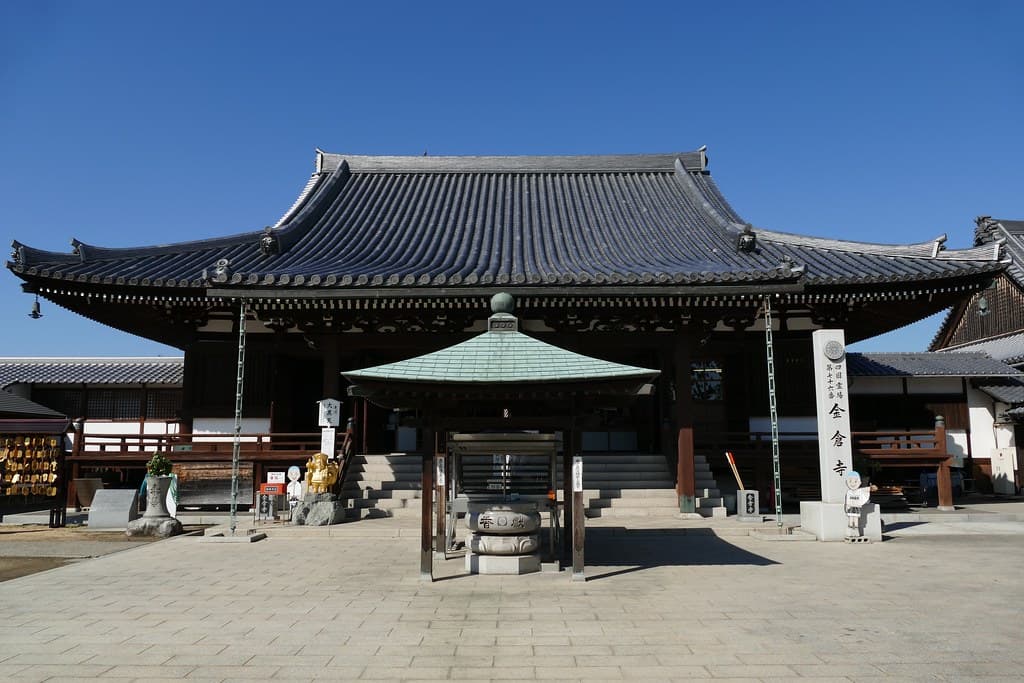
Image of Dōryū-ji (道隆寺). Image source · CC-BY-SA-4.0
Station 77 of 88
Shikoku 88 Temple PilgrimageVisit essentials
A quick read before you go
- Duration
- 30–45 minutes including the Kannon avenue.
- Access
- Tadotsu, Kagawa.
Overview
Dōryū-ji is the seventy-seventh Shikoku temple, set in flat coastal Tadotsu, Kagawa. Its distinctive 712 founding account tells how Wake Michitaka accidentally killed his wet-nurse after shooting a luminous five-metre mulberry tree, then carved its wood into a small Yakushi Nyorai, the Medicine Buddha, in remorse. In 807 his son commissioned Kūkai (Kōbō Daishi) to carve a larger Yakushi enclosing the original—a Buddha-within-a-Buddha still held in the main hall.
Its Eye-Healing Yakushi reputation was sealed in the Edo period when the lord Kyōgoku Samanomiyatsuko is said to have recovered his sight after praying here. Eye-shaped ema and medicinal eye-tea continue the devotion. Along the approach, 255 bronze Kannon statues dedicated to eye health, traffic safety, mizuko-kuyō for unborn or stillborn children, and other needs receive pilgrims' personal petitions.
Why this place is sacred
Dōryū-ji's atmosphere is unusual on the Shikoku route in two respects. First, the founding story is one of the few that begins with grief over an accidental killing rather than with vision or vow; the original small Yakushi was carved as penance, enclosed within Kūkai's larger image two generations later. The doubled image is a physical analogue of the layered intentions: outer compassion enclosing inner mercy.
Second, the avenue of 255 Kannon turns the approach itself into a ritual: each statue receives small offerings for specific needs, multiplying the intercessory function of the temple before pilgrims even reach the main hall. The cumulative effect on pilgrims with concrete petitions — eye trouble, family safety, unresolved grief — is reported as direct and steadying.
Founded by Wake Michitaka in 712 as a memorial and act of remorse following the accidental killing of his wet-nurse, anchored on a small Yakushi Nyorai he carved from a luminous mulberry tree.
In 807 Kūkai carved a larger Yakushi inside which the original small statue was placed. The eye-healing reputation was reinforced in the Edo period. The 255 bronze Kannon statues along the approach were added largely in modern times around older cores.
Experience and orientation
Dōryū-ji is reached on foot from JR Tadotsu Station or by car along the flat Tadotsu coastal plain. The temple sits within the town rather than on a hill; the approach is the first thing most pilgrims notice. Two hundred and fifty-five bronze Kannon statues line the path, each with a small inscription identifying its dedication — eye health most prominently, but also traffic safety, family welfare, mizuko-kuyō for children lost before birth, and many other specific needs.
Pilgrims walk slowly, dropping a coin at statues whose dedication matches a personal intention.
Inside the precinct, the standard liturgy proceeds at the main hall and Daishi-dō. The main hall houses the doubled Yakushi — Kūkai's larger image enclosing the smaller founding statue. Pilgrims with eye troubles often add a specific petition here: eye-shaped ema, votive cloths, and the medicinal eye-tea sold at the temple office are part of the local tradition.
The mizuko-kuyō area to the side of the main precinct is a quieter zone for memorial offerings to children lost early; it is treated with particular respect, photography is avoided, and voices stay low. The full visit including the Kannon avenue runs thirty to forty-five minutes.
Walk the Kannon avenue slowly on the way in, pausing at statues that match personal intentions. Complete liturgy at the main hall and Daishi-dō. Visit the mizuko-kuyō area only with respectful quietness. The eye-tea and eye-related ema are available at the temple office.
Context and lineage
In 712 the local lord Wake Michitaka shot at a five-metre mulberry tree that emitted nightly light. A woman screamed and his wet-nurse fell dead. In grief he cut down the tree, carved a small Yakushi from its wood, and enshrined it as the founding image. In 807 his son commissioned Kūkai to carve a larger Yakushi inside which the small original statue was placed.
An Edo-period story tells of the lord Kyōgoku Samanomiyatsuko whose sight was restored after praying here, sealing the eye-healing reputation that continues today.
Shingon Buddhism. Working temple of the Shikoku 88-temple pilgrimage.
Wake Michitaka
Founder
Kūkai (Kōbō Daishi)
Re-carver of the principal image
Yakushi Nyorai (Medicine Buddha)
Honzon (principal image)
Kyōgoku Samanomiyatsuko
Edo-period devotee
Traditions and practice
At the main hall: bell, candle, three incense sticks, osamefuda, coin, Heart Sutra, and the Yakushi mantra (On koro koro sendari matogi sowaka). Repeat at the Daishi-dō. Receive nōkyō at the stamp office. Pilgrims with specific needs make additional offerings at matching Kannon statues along the approach.
Daily worship and reception of pilgrims; sale of medicinal eye-tea and eye-related ema; mizuko-kuyō memorial services for children lost before or at birth.
Walk the Kannon avenue slowly on entry; pause at any statue whose dedication speaks to a personal intention. Add an eye-related petition at the main hall if relevant. Visit the mizuko-kuyō area with quiet respect.
Shingon Buddhism
ActiveYakushi Nyorai is enshrined as principal image. The temple is famed in Shikoku as the Eye-Healing Yakushi (me-naoshi Yakushi) and draws pilgrims with eye and vision concerns.
Heart Sutra and Yakushi mantra chanting; eye-healing prayers; offerings of medicinal eye-tea sold at the temple.
Perspectives and open questions
Dōryū-ji is read in different ways depending on the pilgrim's stance toward devotional specificity — eye healing, mizuko-kuyō, and the doubled Buddha each draw distinct interpretive registers.
Scholarly perspective
The 712 founding date is traditional and not independently documented; the Kūkai re-carving in 807 fits the period of his return from Tang. The Wake Michitaka legend has the structure of a remorse narrative common to local foundation stories.
Living and traditional perspectives
Local devotion treats the Yakushi as actively responsive to vision-related petitions. The 255 Kannon statues are considered to multiply the intercessory reach of the temple, distributing prayer across many specific needs.
Alternative interpretations
Some practitioners interpret the doubled Buddha-within-a-Buddha as an esoteric kongō-mandala metaphor — outer compassion enclosing inner mercy — and read the eye-healing theme as both physical sight and prajñā (wisdom) sight.
Open questions
The historicity of the Wake Michitaka legend cannot be recovered. The avenue of 255 Kannon was largely constructed in modern times around older cores; precise dating is partial.
Plan your visit
Access and arrival
Tadotsu, Kagawa. Close to JR Tadotsu Station on the Dosan and Yosan lines. Flat walking from the station; on-site parking.
Pilgrim minshuku and small hotels in Tadotsu and Zentsūji.
Respectful visit
Modest dress. Pilgrim hakui welcomed.
Permitted in the outdoor precinct including the Kannon avenue. Do not photograph the mizuko-kuyō area or active private services.
Osamefuda at the main hall and Daishi-dō. Coin offerings before individual Kannon statues. Eye-tea purchase at the temple office.
Treat the mizuko-kuyō area with quiet respect. Do not handle the Kannon statues.
The mizuko-kuyō area is a private space for grief and memorial; do not photograph or speak loudly. The 8th of each month (Yakushi day) is busier, particularly with eye-health pilgrims.
Current practical details
Address
1-chōme-3-30 Kitagamo, Tadotsu, Nakatado District, Kagawa 764-0022, Japan
Phone
Hours
Hours, fees, and access can change — verify on the official source before you travel. Practical details last checked Jun 2026.
Location
Map loads as you approach this section.
Pilgrim reflections
A portrait of encounter, not a score
Pilgrims describe what they felt, how present they could become, and whether the place would shape a journey. There are no stars and no ranking of traditions.
No reviewed reflections yet
The first pilgrims can help describe the character of being here.
Share a reflection
Available after an account-backed “Been there.” Every reflection is reviewed before publication.
Watch deeper
Films, episodes, and recorded talks for visitors who want more context before or after a visit. Speculative and alternative-history entries are labelled as perspectives, not as sources for established claims.
Nearby sacred places
Explore other sacred places in the region. Proximity does not establish access or travel time; check each place’s guidance.


References
Sources consulted for this page. Source categories describe the publication, not a guarantee that every claim is verified. Traditional accounts and outside interpretations may differ.
- 01Sotazan Myooin Doryuji – Shikoku 88 Temple Pilgrimage — Shikoku 88 Temple ReijokaiofficialOfficial temple-association entry.
- 02The 77th Temple Doryuji Temple — Sanuki History & Culture GuideguideDetailed founding legend.
- 03Doryuji Temple — Japan Tourism Agency / MLITofficialGovernment source on temple history.
- 04Doryuji Temple | Central Kagawa — Kagawa Culture CompassofficialPrefectural cultural source.
- 05Doryuji – Tadotsu, Kagawa Prefecture — Henro.orgguidePilgrim community reference.
- 06Customs and Etiquette of the Shikoku Pilgrimage — Henro.orgguideEtiquette and visiting hours.
Pilgrim glossary
- Honzon
- The principal Buddhist deity enshrined as a temple's central object of worship.
- Kannon
- The bodhisattva of compassion, central to many East Asian pilgrimage routes.
- Mandala
- A symbolic diagram of the cosmos used in meditation and ritual.
- Sutra
- A canonical Buddhist scripture, often chanted as part of practice.
- Mantra
- A sound, word, or phrase repeated as part of meditation or ritual.
- Shingon
- An esoteric Japanese Buddhist school emphasizing ritual, mantra, and mandala practice.
Share a photo
Help visitors recognize Dōryū-ji. Every submission is reviewed before publication.