Sanuki Kokubun-ji
Shikoku's only Special Historic Site, prayer continuing on Nara ground
Understand sacred places, explore living traditions, and learn how to engage respectfully with Pilgrim Map.
Access has not been verified. Check current local guidance before planning a visit.
Takamatsu, Kagawa Prefecture, Japan
Read the sources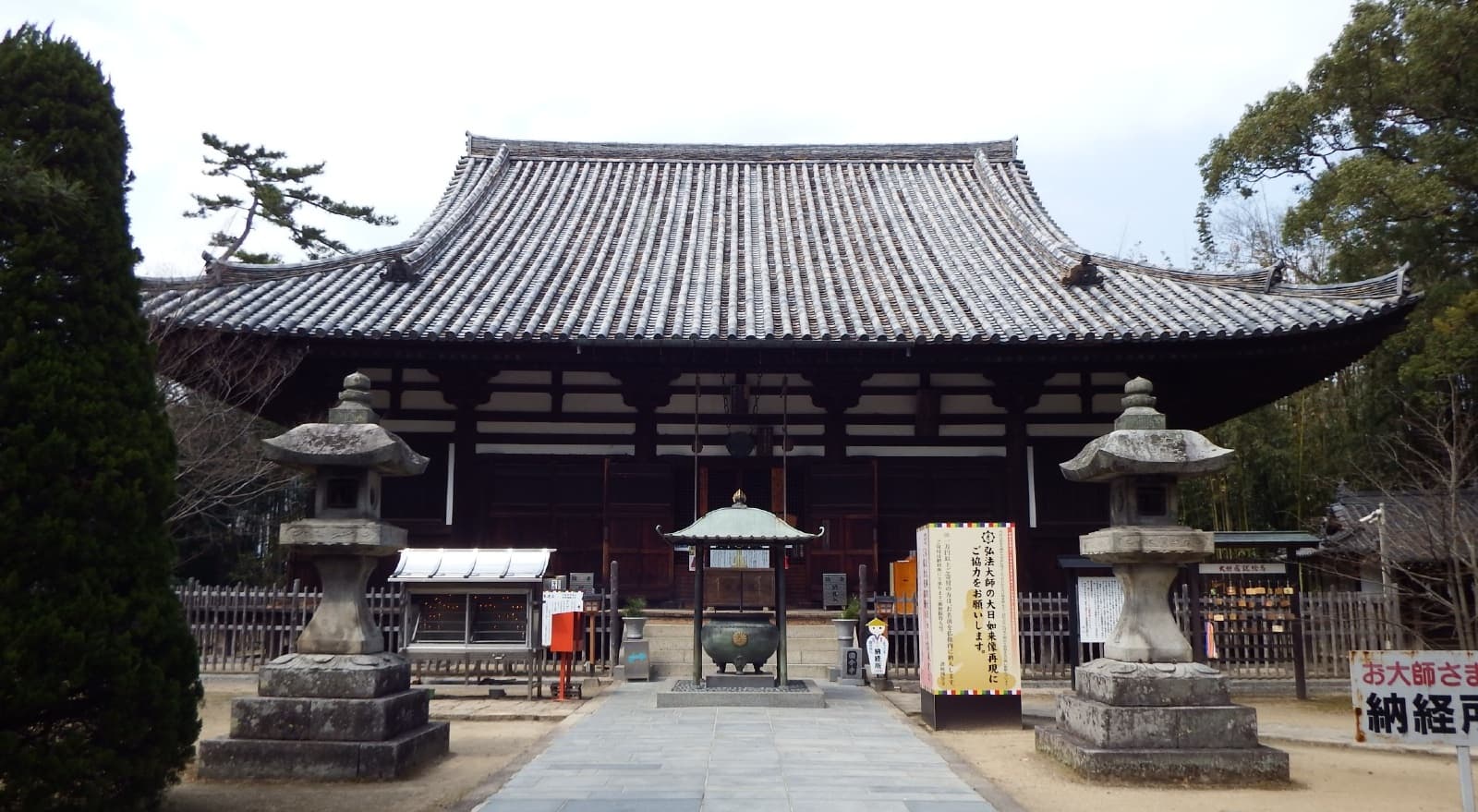
Image of Sanuki Kokubun-ji (讃岐国分寺). Image source · CC-BY-SA-4.0
Station 80 of 88
Shikoku 88 Temple PilgrimageVisit essentials
A quick read before you go
- Duration
- 60–90 minutes for the working temple combined with the archaeological park and museum.
- Access
- Kokubunji-cho, Takamatsu City, Kagawa.
Overview
Sanuki Kokubun-ji, the eightieth Shikoku temple, unusually combines a working pilgrimage temple and designated archaeological park on the same ground. Founded in 741 under Emperor Shōmu's kokubunji edict after a smallpox epidemic and the Fujiwara no Hirotsugu Rebellion, it was one of the provincial protection-temples charged with chanting the Konkōmyō Saishōō Sūtra for the realm.
Nara monk Gyōki, credited with founding many such temples, built Sanuki Kokubun-ji and is said to have carved its principal image: the 4.85-metre Eleven-Headed Thousand-Armed Kannon (Senjū Jūichimen Kannon) still enshrined in the main hall.
Sengoku-period warfare destroyed most original buildings; the main hall (Hondō, a medieval rebuild), Nara-period bronze bell, and principal image survived. Excavations between 1983 and 1991 confirmed the original two-hundred-and-forty-by-two-hundred-and-twenty-metre footprint and monks' quarters. The precinct now presents a one-tenth scale stone model, reconstructed earthen wall, and on-site museum of excavated finds. Its 1952 designation as a Special Historic Site of Japan remains the only such designation in Shikoku.
Sixty to ninety minutes allows for the working temple and archaeological park: standard liturgy at the main hall and Daishi-dō, followed by the model and earthwork at the visitor's pace. Many henro find the conjunction of 1,300-year-old foundations and current ritual unusually direct, with Emperor Shōmu's anxieties about plague and rebellion made tangible underfoot.
Why this place is sacred
Sanuki Kokubun-ji's weight comes from the literal continuity of its ground. Unlike many ancient Shikoku temples resting on rebuilds, the original Nara precinct footprint is excavated, dated, and preserved as a Special Historic Site, with the main hall still inside it. The eighth-century bronze bell remains, though no longer rung, and the 4.85-metre Kannon—whether Gyōki's original carving or a later replacement on the same throne—has been enshrined here for over a millennium.
Pilgrims pass the reconstructed earthen wall and one-tenth stone model of the lost monastic complex before chanting the Heart Sutra that local monks used for protection during smallpox epidemics. This thinness is documentary and devotional: state-protection prayer continuing from a specific imperial anxiety to what each pilgrim brings now.
Founded in 741 under Emperor Shōmu's kokubunji edict as one of approximately sixty provincial protection-temples charged with chanting the Konkōmyō Saishōō Sūtra for national peace and prosperity. Sanuki Kokubun-ji served the Sanuki Province (modern Kagawa).
Most original wooden buildings were destroyed in Sengoku-era warfare; only the main hall (medieval rebuild), the Nara-period bronze bell, and the principal image survived. Edo-period support came from the daimyō of Takamatsu Domain. Archaeological excavations 1983–1991 confirmed the Nara footprint; designated a Special Historic Site (Shikoku's only) by the national government.
Experience and orientation
From JR Kokubu Station on the Yosan Line or the on-site car park, walking is flat throughout. The unusual openness contrasts with most compact, densely built Shikoku precincts: the original two-hundred-and-forty-by-two-hundred-and-twenty-metre Nara footprint remains open ground, and pilgrims pass the reconstructed earthen wall, one-tenth scale stone model, and interpretive signage before reaching the working temple at its centre.
Inside the main hall, large by Shikoku standards, the 4.85-metre Eleven-Headed Thousand-Armed Kannon dominates the central altar as a single image combining both iconographies. The standard Shikoku Henro liturgy at the main hall and Daishi-dō includes bell, incense, candle, osamefuda, Heart Sutra, and the Senjū Kannon mantra. The Nara-period bronze bell, a nationally important cultural property, is visible in its tower but not available for visitor ringing.
Pilgrims can then walk the historic park independently and see the on-site museum's roof tiles, foundation stones, and ceremonial objects from the eighth-century complex. Archaeology and active liturgy create a distinct rhythm; pilgrims often report a quiet recalibration in encountering the same protection-prayer, ground, and form of words across thirteen centuries.
Enter through the Special Historic Site grounds. Walk the earthen wall and the one-tenth stone model on the way in. Complete liturgy at the main hall and Daishi-dō. Visit the on-site museum if time allows. Receive the nōkyō stamp.
Context and lineage
After a devastating smallpox epidemic and the Fujiwara no Hirotsugu Rebellion in 740, Emperor Shōmu issued the kokubunji edict in 741 ordering each province to build a temple for chanting the Konkōmyō Saishōō Sūtra in the protection of the realm. Gyōki travelled the provinces founding many of these temples. At Sanuki he carved the great Eleven-Headed Thousand-Armed Kannon as honzon. The complex stood in Nara-period grandeur — over fifty thousand square metres — until Sengoku-period warfare destroyed most of it.
Archaeological excavations between 1983 and 1991 confirmed the original layout, and the site was designated a Special Historic Site, Shikoku's only one.
Shingon Buddhism, Omuro school. Successor temple to the Nara-period kokubunji system. Working temple of the Shikoku 88-temple pilgrimage and Special Historic Site of Japan.
Emperor Shōmu
Imperial founder of the kokubunji system
Gyōki
Founder; carver of the principal image
Eleven-Headed Thousand-Armed Kannon (Senjū Jūichimen Kannon)
Honzon (principal image)
Traditions and practice
At the main hall: bell, candle, three incense sticks, osamefuda, coin, Heart Sutra, and the Senjū Kannon mantra. Repeat at the Daishi-dō. Receive nōkyō at the stamp office. The great Kannon is unveiled or its specific rituals observed on designated festival days.
Daily worship and pilgrim reception. The archaeological park is open as a public historic site with interpretive signage; the on-site museum displays excavated finds. Festival rituals tied to the kokubunji historical role continue.
Plan sixty to ninety minutes to combine the working temple and the historic park / museum. Walk the earthen wall and stone model slowly; the layered presence of foundations and ritual is part of the visit.
Shingon Buddhism (Omuro school)
ActiveSuccessor temple to the eighth-century state-sponsored kokubunji system — one of approximately sixty provincial protection-temples ordered by Emperor Shōmu in 741 to spread Buddhist sūtra-chanting for national peace and prosperity.
Heart Sutra and Senjū Kannon mantra chanting; nokyocho service; festival rituals tied to the kokubunji historical role.
Imperial Buddhist state-protection lineage (Kokubunji system)
HistoricalThe original political-religious institution dissolved with the medieval period, but the ground itself remains an unbroken witness to that history. The 1/10 stone scale model and reconstructed earthen wall make this lineage uniquely visible among the Shikoku 88 temples.
Historical only; the original kokubunji liturgical schedule is not maintained as a separate institution.
Perspectives and open questions
Sanuki Kokubun-ji is unusually well documented for a Shikoku temple; readings of the site mostly differ on how to weight the kokubunji historical role against the present-day pilgrimage function.
Scholarly perspective
The kokubunji system as established in 741 is well documented in Nara-period sources. Archaeological excavations between 1983 and 1991 confirmed the Nara precinct's footprint and monastic-quarters layout, making this one of the best-understood kokubunji sites nationally and the basis for its Special Historic Site designation.
Living and traditional perspectives
Local Shingon devotion focuses on the great Kannon as a continuous protective presence over Sanuki Province (modern Kagawa). The temple is read as the 'mother temple' of the prefecture and a continuous channel for state-protection prayer linking imperial era to present.
Alternative interpretations
Some practitioners view the kokubunji network as a Heian-era 'mandala of the realm' — sites of state-prayer that continue to anchor Japan's spiritual geography. Sanuki Kokubun-ji is read as one node in this national pattern.
Open questions
Whether the surviving giant Kannon is in fact the original Gyōki carving or a later replacement on the same throne is unresolved; the original wooden buildings of the eighth-century complex are entirely lost.
Plan your visit
Access and arrival
Kokubunji-cho, Takamatsu City, Kagawa. Close to JR Kokubu Station on the Yosan Line. On-site car parking. Flat walking.
Pilgrim minshuku and small hotels in Takamatsu and Sakaide; ryokan in central Takamatsu offer wider options.
Respectful visit
Modest dress. Pilgrim hakui welcomed.
Permitted across the historic park and outdoor precinct. Do not photograph inside the main hall during active worship without permission.
Osamefuda at the main hall and Daishi-dō. Small coins at the saisen-bako.
Stay on marked paths in the archaeological zone. Do not touch the surviving foundation stones. The Nara-period bronze bell is not for visitor ringing.
Stay on marked paths in the archaeological zone. Do not touch the surviving foundation stones. The Nara-period bronze bell is not for visitor ringing.
Current practical details
Address
2065 Kokubunjichō Kokubu, Takamatsu, Kagawa 769-0102, Japan
Phone
Hours
Hours, fees, and access can change — verify on the official source before you travel. Practical details last checked Jun 2026.
Location
Map loads as you approach this section.
Pilgrim reflections
A portrait of encounter, not a score
Pilgrims describe what they felt, how present they could become, and whether the place would shape a journey. There are no stars and no ranking of traditions.
No reviewed reflections yet
The first pilgrims can help describe the character of being here.
Share a reflection
Available after an account-backed “Been there.” Every reflection is reviewed before publication.
Watch deeper
Films, episodes, and recorded talks for visitors who want more context before or after a visit. Speculative and alternative-history entries are labelled as perspectives, not as sources for established claims.
Nearby sacred places
Explore other sacred places in the region. Proximity does not establish access or travel time; check each place’s guidance.



References
Sources consulted for this page. Source categories describe the publication, not a guarantee that every claim is verified. Traditional accounts and outside interpretations may differ.
- 01Sanuki Kokubunji Temple Site (Travel in Takamatsu) — Experience TakamatsuofficialOfficial Takamatsu City tourism source on the Special Historic Site.
- 02The 80th Temple Kokubunji Temple — Sanuki History & Culture GuideguideDetailed pilgrim-oriented history.
- 03Hakugyuzan Senjuin Kokubunji – Shikoku 88 Temple Pilgrimage — Shikoku 88 Temple ReijokaiofficialOfficial temple-association entry.
- 04Sanuki Kokubunji – Takamatsu, Kagawa Prefecture — Henro.orgguidePilgrim community reference.
- 05Customs and Etiquette of the Shikoku Pilgrimage — Henro.orgguideEtiquette and visiting hours.
- 06Sanuki Kokubun-ji — Wikipedia contributorsencyclopediaEncyclopaedic overview with archaeology details.
- 07Temple 80, Sanuki Kokubun-ji — Shikoku ToursguideVisitor-facing summary.
Pilgrim glossary
- Honzon
- The principal Buddhist deity enshrined as a temple's central object of worship.
- Kannon
- The bodhisattva of compassion, central to many East Asian pilgrimage routes.
- Mandala
- A symbolic diagram of the cosmos used in meditation and ritual.
- Sutra
- A canonical Buddhist scripture, often chanted as part of practice.
- Mantra
- A sound, word, or phrase repeated as part of meditation or ritual.
- Shingon
- An esoteric Japanese Buddhist school emphasizing ritual, mantra, and mandala practice.
Share a photo
Help visitors recognize Sanuki Kokubun-ji. Every submission is reviewed before publication.