Saigoku-ji (Sōji-in)
Onomichi's hilltop Yakushi temple, a Special Sacred Temple of the Chūgoku Kannon route
Understand sacred places, explore living traditions, and learn how to engage respectfully with Pilgrim Map.
Access has not been verified. Check current local guidance before planning a visit.
Onomichi, Hiroshima Prefecture, Japan
Read the sources
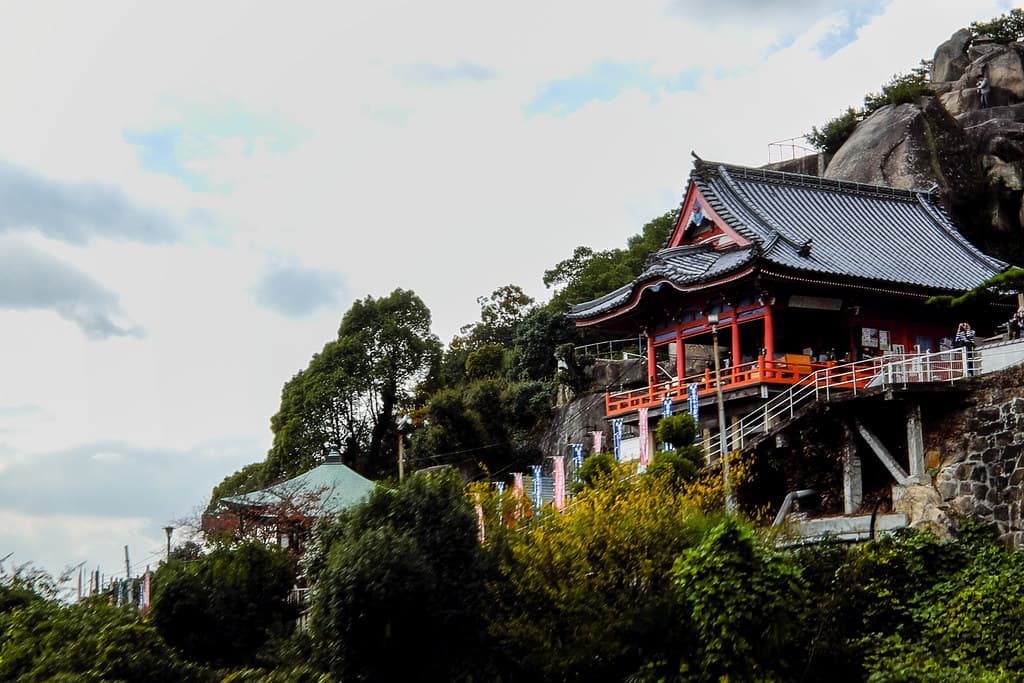
Image of Saigoku-ji (Sōji-in). Image source · CC-BY-2.5
Visit essentials
A quick read before you go
- Duration
- 60–90 minutes for the precinct, including the 108-step ascent and time at the pagoda; longer in…
- Access
- Address: 29-27 Nishikubo-chō, Onomichi, Hiroshima Prefecture.
Overview
Saigoku-ji occupies a long terraced precinct on the western slope of Mt. Atago in central Onomichi, the old port city wrapped between hill and Inland Sea. The temple's full mountain-and-temple name — Maniyama Sōji-in Saigoku-ji — names three things at once: 'Mani Mountain' for the wish-granting jewel of Buddhist iconography; Sōji-in as the temple's in-go (院号), not a separate subtemple as is sometimes assumed; and Saigoku-ji ('Western-Country Temple') for its identity as a major Shingon foundation in the western provinces.
Founding tradition places the establishment in the Tenpyō era, traditionally 729 CE, by the wandering Nara-period priest Gyōki (668–749) under imperial decree of Emperor Shōmu. Other sources cite 739, and the broader scholarly view is simply 'early 8th century.' The 11th-century restoration is the first firmly attested phase: after a 1066 fire reduced the precinct, abbot Keihō rebuilt the temple in 1081 under imperial protection from Emperor Shirakawa, who designated it a chokugan-ji (imperial prayer-temple).
The current Kondō (main hall) was rebuilt in 1386 by the Yamana clan after another round of 1370s fires; this hall and the three-storied pagoda above it are National Important Cultural Properties.
For pilgrims on the Chūgoku 33 Kannon route, Saigoku-ji is one of four Special Sacred Temples (tokubetsu-reijō, 特別霊場) standing outside the numbered 1–33 sequence — sites considered foundational enough to require a stamp of their own. The principal honzon is Yakushi Nyorai, the Medicine Buddha, but the pilgrimage honzon for Kannon devotees is Nyoirin Kannon.
The temple thus holds two distinct devotional identities: a Yakushi healing temple of the Chūgoku Yakushi 49 reijō (where it is #56), and a Kannon way-station of the Chūgoku 33. The Niōmon at the foot of the 108 steps is hung with giant straw sandals — pilgrims petition the Niō for healthy legs and safe passage.
Why this place is sacred
Saigoku-ji's quality of thinness is best understood through the architecture of ascent. The 108 steps that climb from the Niōmon to the Kondō count out, in stone, the 108 worldly attachments of Buddhist tradition; practitioners describe the climb as a slow purification, each landing inviting a pause to recite a verse of the Heart Sutra or to glance back at the harbor below.
The hung waraji (straw sandals) at the Niōmon — pilgrims have left them there for centuries — physicalize the prayer for legs strong enough to carry the climber on through the rest of the Onomichi temple walk.
The Kondō, rebuilt in 1386 (Shitoku 3) by the Yamana clan after the 1370s fires, is among the finest medieval Buddhist halls of the San'yō coast. Its proportions and surviving timber make it a National Important Cultural Property. The vermilion three-storied pagoda above the Kondō, dating from the 1429 (Eikyō 1) Muromachi reconstruction, is also nationally designated and gives the temple its most photographed silhouette against Onomichi's strait.
The Niōmon itself dates from 1648 (Keian 1), Edo-period work standing on a Nara-period site.
The temple's institutional identity has shifted across the centuries: founded by tradition under Nara-state Buddhism, restored as imperial prayer-temple under Shirakawa, rebuilt under medieval clan patronage, and re-organized in the modern era as the daihonzan (head temple) of the Daigo branch of Shingon. (Sources note an earlier, brief existence as the head of its own Saigoku-ji-ha sect before reabsorption into Daigo-ha.) The honzon Yakushi Nyorai is hibutsu, shown only at rare ticketed openings; the pilgrimage Nyoirin Kannon is venerated continuously.
By temple tradition, Saigoku-ji was founded in the Tenpyō era (traditionally 729 CE) by the priest Gyōki under imperial decree of Emperor Shōmu, as a state-protected Yakushi healing temple in the western provinces. Sources also cite 739 or 'early 8th century,' and Gyōki's personal involvement is devotional tradition rather than documented fact. Archaeological and architectural evidence supports substantial pre-medieval Buddhist activity at the site.
The temple's institutional course shows successive cycles of fire and reconstruction: a 1066 fire reduced the original complex; 1081 restoration under Emperor Shirakawa elevated it to imperial prayer-temple status; 1370s fires were followed by the 1386 Yamana-clan rebuilding of the Kondō and the 1429 three-storied pagoda; the 1648 Niōmon completed the present silhouette.
Sectarian affiliation has settled as Shingon-shū Daigo-ha (head temple Daigo-ji in Kyoto), with the Niōmon waraji tradition, the 108-step ascent, and continuous Chūgoku 33 Kannon and Chūgoku Yakushi 49 pilgrimage activity serving as the temple's principal markers of identity.
Experience and orientation
From JR Onomichi Station, the temple lies about ten to twelve minutes uphill, on the Onomichi Temple Walk between Senkō-ji and Jōdo-ji. The approach passes the steeply terraced backstreets that the city is known for — wooden houses, stray cats, citrus trees in tiny gardens — before opening onto the Niōmon.
The two giant waraji hung at the gate are unmistakable: each is roughly two metres tall, replaced periodically by lay devotees, and surrounded by smaller paired sandals left by individual pilgrims petitioning the Niō for safe legs.
Beyond the gate, the 108 stone steps rise in measured stages. In late March and early April, cherry blossoms tunnel above the climb; in November the maples turn. Side-paths branch to the Suishō-ma sub-precinct (the temple's gemstone-named hall) and to viewing points across Onomichi Strait. The 1386 Kondō, Onomichi's principal medieval hall, stands at the upper terrace; its restrained Muromachi proportions register as quietly authoritative rather than ornate.
The vermilion three-storied pagoda above is older than its bright paintwork suggests — its 1429 timber frame is original beneath the maintained pigment.
Worship follows standard Shingon form: bow at the Niōmon, ring the bell if rung; ascend slowly; light incense at the Kondō, drop a saisen coin in the offertory box, and recite or quietly listen to the Hannya Shingyō. Pilgrims bring their nōkyō-chō to the temple office for the Special-Temple stamp on the Chūgoku Kannon route and, separately, for the #56 stamp on the Chūgoku Yakushi 49.
From JR Onomichi Station, walk east along the harbour and turn uphill toward Mt. Atago — about ten to twelve minutes. Pause at the Niōmon to read the waraji. Climb the 108 steps unhurriedly, allowing each landing to slow the breath. At the Kondō, light incense, offer at the saisen box, and recite the Heart Sutra if equipped. Walk up to the three-storied pagoda for the strait view.
Pilgrims request the Special-Temple stamp (Chūgoku 33) and the #56 stamp (Chūgoku Yakushi 49) at the temple office during posted hours.
Context and lineage
By temple tradition, in the Tenpyō era — traditionally 729 CE, with sources also giving 739 — the Nara-period itinerant priest Gyōki traveled the western provinces under imperial decree of Emperor Shōmu (701–756) and founded a Yakushi temple on Mt. Atago above Onomichi Bay. The temple was named Saigoku-ji ('Western-Country Temple') for its position as a major Shingon foundation in the western provinces, with the in-go Sōji-in and the mountain name Maniyama drawn from the Buddhist wish-granting jewel.
Gyōki's personal involvement is devotional tradition rather than documented fact. The first firmly attested phase is the 11th-century restoration: after a 1066 fire, abbot Keihō rebuilt the temple in 1081 under Emperor Shirakawa (1053–1129), who elevated it to chokugan-ji (imperial prayer-temple) status — placing Saigoku-ji within a small group of state-protected sites whose prayers were offered for the imperial line.
The 1370s fires of the Nanboku-chō wars destroyed the medieval halls; the Kondō was rebuilt in 1386 (Shitoku 3) under the Yamana clan, then powerful in the western provinces; the three-storied pagoda was added in 1429 (Eikyō 1). The Niōmon dates from the Edo period (1648).
In the modern era, Saigoku-ji has been the daihonzan (head temple) of the Daigo branch (醍醐派) of Shingon Buddhism. Sources note that, briefly, the temple headed its own former Saigoku-ji-ha sect before reabsorption into Daigo-ha. As one of four Special Sacred Temples of the Chūgoku 33 Kannon Pilgrimage, it has been continuously active in pilgrimage life through every cycle of fire and rebuilding.
Saigoku-ji is the daihonzan (head temple) of the Daigo branch of Shingon Buddhism, named for the Daigo-ji mother temple in Kyoto. Its esoteric ritual program (mantras, hand-seals, periodic goma fire offerings) frames the daily and annual liturgy. Across the Nara, Heian, medieval, Edo, and modern periods, sectarian affiliation has shifted within the broader Shingon world; the dual Yakushi-and-Kannon devotion at the heart of the temple, and its identity as Onomichi's principal mountain temple, have remained constant.
Gyōki (668–749)
Traditional founder
Nara-period itinerant priest later venerated as a bodhisattva. Temple tradition places his founding visit in the Tenpyō era under imperial decree of Emperor Shōmu. Personal involvement is not corroborated by contemporary records, but the broader Nara-period activity at the site is supported by architectural and archaeological evidence.
Emperor Shōmu (701–756)
Imperial founder-patron
Eighth-century emperor who, by tradition, ordered the temple's founding as part of the Tenpyō state-Buddhist programme of provincial temples in the western provinces.
Emperor Shirakawa (1053–1129)
11th-century imperial patron
Elevated Saigoku-ji to chokugan-ji (imperial prayer-temple) status in 1082, following abbot Keihō's 1081 reconstruction after the 1066 fire. This is the first firmly attested phase of the temple's documented history.
The Yamana clan
Medieval rebuilders
Powerful western-provinces clan who rebuilt the Kondō in 1386 (Shitoku 3) after the 1370s fires of the Nanboku-chō era. The hall they constructed is the temple's standing main hall and a National Important Cultural Property.
Postwar resident clergy and Daigo-ha lineage
Contemporary stewards
The community responsible for daily Shingon Daigo-ha liturgy, the maintenance of the National Important Cultural Property halls, and the issuance of stamps for the Chūgoku 33 Kannon Special-Temple and Chūgoku Yakushi 49 #56 pilgrimages.
Traditions and practice
The temple's liturgy follows Shingon Daigo-ha esoteric forms — recitation of the Hannya Shingyō, the Yakushi mantra ('On koro koro sendari matōgi sowaka' in transliteration; variants apply), and the Nyoirin Kannon mantra. Goma fire rituals (homa) are performed periodically. Pilgrims tie pairs of straw sandals at the Niōmon as a petition to the Niō for healthy legs; this tradition is maintained continuously and the great waraji are replaced as they wear.
Hibutsu kaichō openings of the Yakushi honzon are rare and ticketed.
Pilgrims arrive year-round for the Special-Temple stamp on the Chūgoku 33 route and the #56 stamp on the Chūgoku Yakushi 49 route; many combine the visit with Senkō-ji (#10) and other Onomichi Temple Walk stops within the same day. Cherry blossom along the 108 steps (late March to early April) and autumn maple (November) draw additional visitors. Standard nōkyō hours follow Chūgoku 33 convention (typically 8:00–17:00; confirm seasonally).
Allow 60 to 90 minutes for an unhurried visit. Pause at the Niōmon to read the waraji and bow to the Niō. Climb the 108 steps slowly, treating each landing as a brief recitation point. At the Kondō, light incense, offer at the saisen box, and recite or listen to the Heart Sutra. Continue up to the three-storied pagoda for the strait view. Pilgrims should bring their nōkyō-chō to the temple office for both pilgrimage stamps.
Practitioners describing the climb as a kleśa-purification rite mirroring the 108 worldly attachments may treat each step as a single object of release.
Buddhism
ActiveSaigoku-ji is the daihonzan (head temple) of the Daigo branch of Shingon Buddhism in the western provinces, named for the Daigo-ji mother temple in Kyoto. By temple tradition, it was founded in the Tenpyō era by the Nara-period priest Gyōki under imperial decree of Emperor Shōmu, and elevated to chokugan-ji (imperial prayer-temple) status under Emperor Shirakawa in 1082. As one of four Special Sacred Temples (特別霊場) of the Chūgoku 33 Kannon Pilgrimage, it stands outside the numbered 1–33 sequence as a foundational western-provinces site. The current Kondō (1386) and three-storied pagoda (1429) are National Important Cultural Properties; the Niōmon (1648) carries the temple's living waraji tradition.
Chūgoku 33 Kannon Pilgrimage
ActiveSpecial Sacred Temple (特別霊場) of the Chūgoku 33 Kannon route, one of four sites considered foundational enough to require a stamp of their own outside the numbered 1–33 sequence. The pilgrimage honzon is Nyoirin Kannon.
Chūgoku Yakushi 49 Reijō
Active#56 of the Chūgoku Yakushi 49 sacred-sites pilgrimage — a Medicine Buddha pilgrimage circuit through the western provinces. Saigoku-ji's principal honzon Yakushi Nyorai is the focus of this route's veneration here.
Perspectives and open questions
Saigoku-ji is a temple where founding tradition, imperial-protection records, and architectural survival each tell a different story about the same precinct. The site rewards visitors who hold all three open at once.
Scholarly perspective
Modern scholarship treats Gyōki's personal early-8th-century founding as devotional tradition rather than corroborated history. The 1081 Shirakawa-era restoration is the first firmly attested phase, and the 1386 Yamana-clan Kondō and 1429 three-storied pagoda are the temple's principal surviving medieval buildings — both designated National Important Cultural Properties. The Niōmon (1648) is Edo-period work. The 1066 and 1370s fire records are documented in early historical sources.
Living and traditional perspectives
Within Shingon Daigo-ha and Chūgoku Kannon pilgrimage tradition, Saigoku-ji is venerated as a Gyōki-foundation temple with imperial protection, validated by Emperor Shōmu's traditional decree, the Shirakawa-era chokugan-ji status, and continuous medieval and modern devotional life. The dual Yakushi (healing) and Nyoirin Kannon (compassion) devotion frames the temple as both medical-spiritual refuge and pilgrimage way-station.
Alternative interpretations
Some practitioners read the 108-step ascent as a kleśa-purification rite mirroring the 108 worldly attachments of Buddhist tradition, with each step a small object of release. The waraji at the Niōmon are similarly read as embodied prayer — strength for legs that must carry the body forward through the rest of the pilgrimage and the rest of life.
Open questions
{"Documentary evidence for the 729 (or 739) founding is thin; Gyōki's personal involvement at this site is unknowable on present evidence","The exact relationship between the Nara-period precinct and the post-1066-fire reconstruction remains partially unresolved","The brief Saigoku-ji-ha sect period before reabsorption into Daigo-ha is incompletely documented in retrieved English sources","Pre-Buddhist use of Mt. Atago is plausible (the mountain bears a name with kami associations) but undocumented"}
Plan your visit
Access and arrival
Address: 29-27 Nishikubo-chō, Onomichi, Hiroshima Prefecture. About a 10–12-minute walk uphill from JR Onomichi Station; on the Onomichi Temple Walk between Senkō-ji and Jōdo-ji. Phone: 0848-37-3321. Limited parking near the Niōmon. Mobile phone signal is reliable on all major Japanese carriers in central Onomichi.
Onomichi offers a range of guesthouses, business hotels, and renovated machiya (townhouses) within walking distance of the temple walk. Many pilgrims base themselves in central Onomichi for two days to complete the temple walk and continue to Ikuchijima.
Respectful visit
Modest casual mountain-temple attire; sturdy walking shoes for the 108 steps. Pilgrim coat (hakui), sedge hat (sugegasa), and walking stick (kongō-zue) appropriate for those on the Chūgoku 33 or Chūgoku Yakushi 49 circuits.
Exterior photography of the Niōmon, the 108 steps, the Kondō, and the three-storied pagoda is welcomed. No flash inside halls. Do not photograph past closed inner sanctuaries. Ask before photographing any service in progress.
Saisen (small coin) at the offertory box; incense at the dedicated stand; pilgrims tie waraji at the Niōmon if so inclined. Stamp fees paid at the temple office.
Yakushi Nyorai honzon is a hibutsu, not on regular public display | Three-storied pagoda interior generally not enterable | Do not move or untie waraji from the Niōmon | Quiet behavior expected throughout the precincts | No flash or tripods inside the Kondō
The Yakushi honzon is hibutsu and not on regular public display. The 108 steps are steep and uneven in places; sturdy footwear is recommended. Photography of the gate, halls, and pagoda exterior is welcomed; interior altar photography is generally discouraged. Tour-bus arrivals concentrate around midday — early morning is quieter. Hibutsu openings of the Yakushi honzon are ticketed events; check ahead if attendance is desired.
Current practical details
Address
29-27 Nishikubochō, Onomichi, Hiroshima 722-0044, Japan
Phone
Hours
Hours, fees, and access can change — verify on the official source before you travel. Practical details last checked Jun 2026.
Location
Map loads as you approach this section.
Pilgrim reflections
A portrait of encounter, not a score
Pilgrims describe what they felt, how present they could become, and whether the place would shape a journey. There are no stars and no ranking of traditions.
No reviewed reflections yet
The first pilgrims can help describe the character of being here.
Share a reflection
Available after an account-backed “Been there.” Every reflection is reviewed before publication.
Nearby sacred places
Explore other sacred places in the region. Proximity does not establish access or travel time; check each place’s guidance.


References
Sources consulted for this page. Source categories describe the publication, not a guarantee that every claim is verified. Traditional accounts and outside interpretations may differ.
- 01Saikokuji official site (摩尼山 総持院 西國寺) — Saikoku-ji TempleofficialAuthoritative for sect, in-go, honzon, founding tradition
- 02Saigokuji Temple — Dive! Hiroshima (official tourism) — Hiroshima Prefecture TourismofficialCultural property details, history of fires/rebuilds
- 03西國寺 — Chūgoku Kannon Reijō — Chūgoku 33 Kannon Pilgrimage AssociationofficialConfirms Special Sacred Temple (特別霊場) designation
- 04Onomichi: A Historic Port City Perfect for Wandering — Japan National Tourism Org (JNTO)guideOnomichi Japan Heritage context
- 05Chūgoku 33 Kannon Pilgrimage — Wikipedia (English)officialPilgrimage overview; confirms 4 bangai/tokubetsu-reijō
- 06Saikoku-ji Temple — Setouchi Tours — Setouchi ToursguideMt. Atago location, complex layout
- 07Onomichi Temple Walk — Japan-guide.comguidePosition within Onomichi temple route
Pilgrim glossary
- Honzon
- The principal Buddhist deity enshrined as a temple's central object of worship.
- Kannon
- The bodhisattva of compassion, central to many East Asian pilgrimage routes.
- Sutra
- A canonical Buddhist scripture, often chanted as part of practice.
- Mantra
- A sound, word, or phrase repeated as part of meditation or ritual.
- Shingon
- An esoteric Japanese Buddhist school emphasizing ritual, mantra, and mandala practice.
- Pure Land
- A Buddhist tradition focused on rebirth in Amida Buddha's western paradise through devotional practice.
Share a photo
Help visitors recognize Saigoku-ji (Sōji-in). Every submission is reviewed before publication.