Mt. Kaimon
The perfect cone at the end of the earth where sun meets sacred mountain
Understand sacred places, explore living traditions, and learn how to engage respectfully with Pilgrim Map.
Access has not been verified. Check current local guidance before planning a visit.
Ibusuki, Kagoshima Prefecture, Japan
Read the sources
Visit essentials
A quick read before you go
- Duration
- 4-5 hours round trip for the climb.
- Etiquette
- Standard mountain safety protocols.
Overview
Mount Kaimon's near-perfect volcanic cone rises from Kyushu's southern tip, visible for miles against sea and sky. Locals call the 924-meter peak 'Satsuma Fuji,' Fuji of the old Satsuma domain; its symmetry and isolated position at land's end give it significance beyond height.
Mountain worship predates the historical record. Dormant since its last eruption in 885 CE, Kaimon has received centuries of veneration from nearby communities. Ryugu Shrine, linked to the Sea Palace legend, extends its sacred geography along the coast.
In early October, the Diamond Satsuma Fuji phenomenon draws visitors from across Japan as the setting sun aligns with the summit and produces a diamond-like glint. Solar and terrestrial geometry briefly converge. From the summit, clear-day views reach Yakushima, the UNESCO-designated island across the water and another sacred landscape.
Why this place is sacred
The sacred quality of Mount Kaimon begins with what the eye perceives. Volcanic forces produced this cone, but the result appears crafted. From every angle, the mountain presents the same symmetrical profile, as if designed to demonstrate what a mountain should look like.
This visual perfection creates immediate recognition. No instruction is needed to see that this mountain differs from ordinary terrain. The response is pre-verbal, pre-analytical—a recognition that something here exceeds explanation. Ancient worshippers responding to this visual power were not naive; they were attentive to what remains evident today.
The mountain's position amplifies this effect. Rising near Japan's southern tip, Mount Kaimon stands against sea and sky without competing peaks to diminish its presence. The isolation concentrates attention. There is this mountain, and there is everything else.
The Diamond Satsuma Fuji phenomenon adds temporal dimension. For most of the year, the mountain's perfection is spatial—visible from every direction, consistent from every angle. But in early October, time enters the picture. The sun's position at a specific moment creates an effect impossible at any other time. The alignment suggests that the mountain's placement serves cosmic purpose.
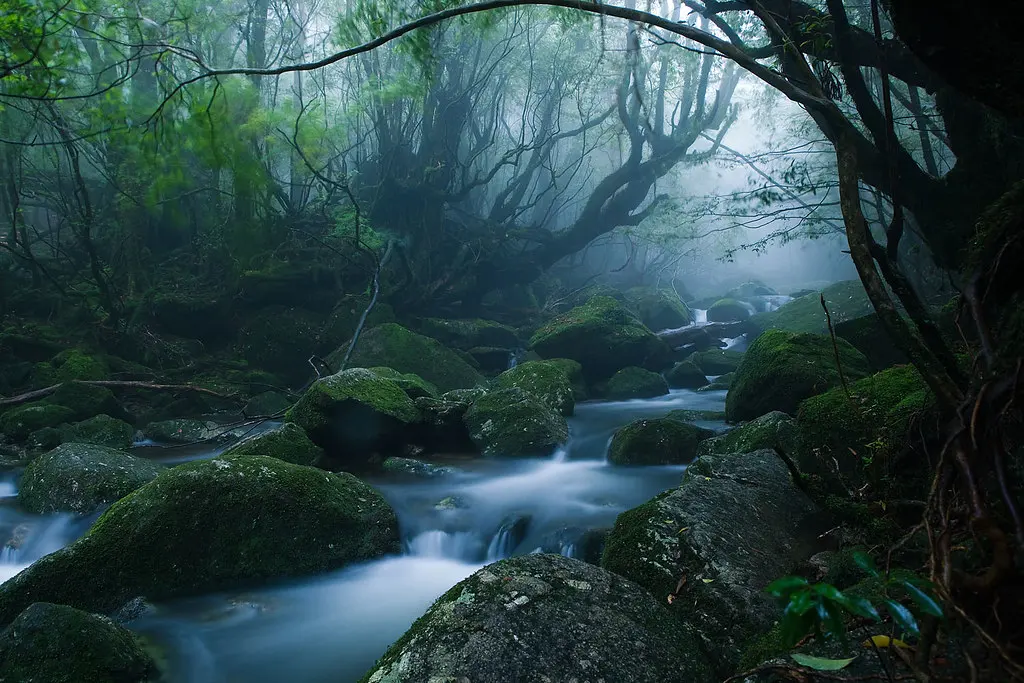
The view to Yakushima from the summit extends sacred geography beyond Kaimon itself. Yakushima—with its ancient forests and UNESCO designation—appears on the horizon as destination or counterpart. The two sacred landscapes acknowledge each other across the water.
The last eruption in 885 CE places the mountain in dormant category, its fire sleeping beneath the symmetrical slopes. The power that built this perfect form remains present, merely quiet. The mountain's dormancy is not death but patience.
Ancient mountain worship recognized the peak's sacred character expressed through its perfect form. The mountain was venerated as home to divine presences whose nature the symmetrical cone suggested.
From ancient worship through historical development to contemporary recognition as one of Japan's 100 Famous Mountains, Mount Kaimon has maintained its status as a sacred peak whose visual perfection sustains devotion.
Experience and orientation
The approach to Mount Kaimon from Kaimon Furiai Park begins the encounter with this perfect cone. The trail spirals around the mountain rather than ascending directly, creating a circumambulation that reveals the peak from changing angles. Each turn offers a different perspective on the same form—demonstration of the consistency that defines the mountain's visual power.
The climb is substantial. Four to five hours round trip requires genuine effort, and the trail offers no water sources. This is not a casual tourist stroll but a physical commitment that transforms reaching the summit into achievement. The traditional understanding that spiritual ascent requires physical effort finds practical expression here.
The vegetation changes with elevation, tracking the transition from subtropical lowlands toward the summit. The spiral path passes through different ecosystems, adding variety to what might otherwise be mere elevation gain.
The summit rewards the effort with panoramic views. On clear days, Yakushima—the UNESCO World Heritage island with its ancient forests—appears across the water. The Satsuma Peninsula extends below. The landscape that seemed mere geography from below reveals itself as a connected system of sacred and significant places.
For the Diamond Satsuma Fuji phenomenon, visitors position themselves at viewing points rather than on the summit itself. Early October evenings bring photographers and pilgrims to witness the moment when the setting sun meets the peak. The phenomenon lasts only minutes, but anticipation and memory extend the experience.
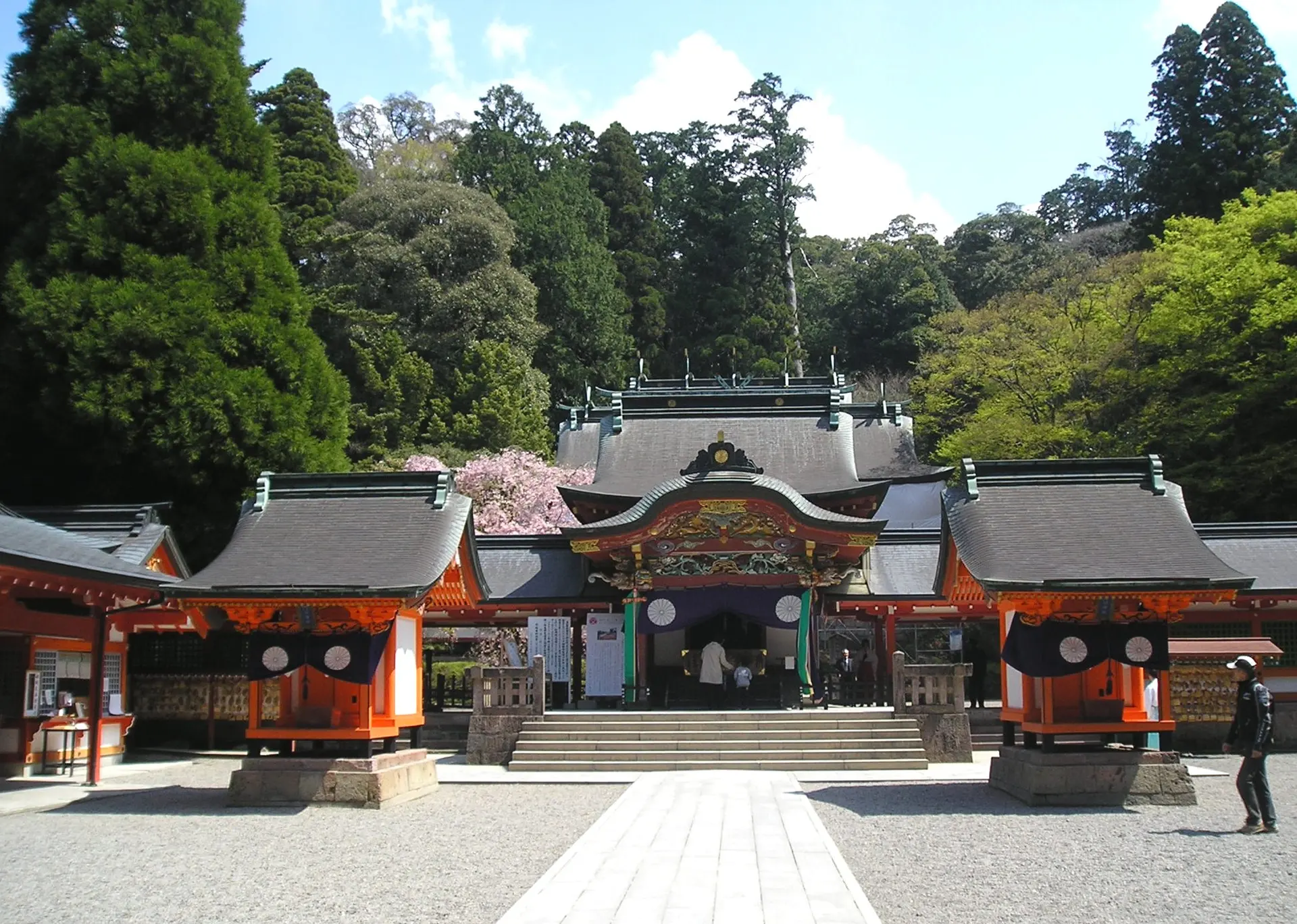
Ryugu Shrine at nearby Cape Nagasakibana provides additional sacred encounter. The shrine, associated with legends of the Sea Palace, adds mythological dimension to the coastline's dramatic beauty.
The climb typically begins at Kaimon Furiai Park, a 30-40 minute walk from Yamakawa Station. Allow 4-5 hours round trip. Bring adequate water—none available on the mountain. For Diamond Satsuma Fuji, check specific dates in early October and identify optimal viewing locations.
Context and lineage
The worship of Mount Kaimon predates historical documentation. The mountain's perfect conical form, rising at the southern tip of Kyushu with no competing peaks, inspired veneration from early inhabitants who recognized its extraordinary visual character. The dormant volcano, last active in 885 CE, has accumulated centuries of devotion from the communities living in its shadow.
Mount Kaimon's worship connects to broader traditions of Japanese mountain veneration, with the peak's recognition as one of Japan's 100 Famous Mountains representing contemporary acknowledgment of historical significance.
Mountain deities
Divine presences believed to inhabit the peak
Traditions and practice
Traditional practice recognized climbing as both physical and spiritual exercise. The effort required to reach the summit was understood as preparation for encounter with the sacred. Worship of mountain deities sought blessing and protection.
Contemporary practice includes climbing as recreational/spiritual activity, worship at Ryugu Shrine, and viewing the Diamond Satsuma Fuji phenomenon. The mountain's designation as one of Japan's 100 Famous Mountains draws visitors seeking significant peaks.
Climb for the full experience—let the physical effort create receptivity. Visit in early October if possible to witness Diamond Satsuma Fuji. Include Ryugu Shrine to extend encounter with the sacred coastline. Bring adequate water for the climb.
Mountain Worship
ActiveMount Kaimon, called 'Satsuma Fuji' for its perfect conical form, has been venerated since ancient times. The mountain is believed to be home to divine presences whose nature its symmetrical form suggests.
Mountain climbing as spiritual practice, worship at associated shrines, viewing Diamond Satsuma Fuji in October.
Perspectives and open questions
Mount Kaimon invites interpretation as natural perfection manifesting sacred presence, as regional Mount Fuji analog, and as site of remarkable solar-mountain alignment.
Scholarly perspective
Geologists and historians recognize Mount Kaimon as a significant volcanic peak with documented worship traditions. Its designation as one of Japan's 100 Famous Mountains reflects both natural and cultural significance.
Living and traditional perspectives
In traditional understanding, the mountain's perfect form expresses divine presence. The symmetry that draws the eye reveals purpose that transcends geological explanation.
Open questions
Pre-historic worship traditions remain undocumented. The full extent of ancient sacred practices at the mountain is uncertain.
Plan your visit
Access and arrival
Ibusuki offers hot spring ryokan and various accommodation. Kagoshima city provides fuller options.
Respectful visit
Proper hiking attire with sturdy shoes. Bring adequate water.
Permitted throughout.
Standard offerings at Ryugu Shrine.
{"Bring adequate water (none on mountain)","Follow mountain safety guidelines","Standard shrine protocols at Ryugu Shrine"}
The climb is demanding and offers no water sources. Bring sufficient supplies. Check weather conditions before ascending.
Current practical details
Address
Kaimondake volcano, Kaimonjutcho, Ibusuki, Kagoshima 891-0603, Japan
Hours, fees, and access can change — verify on the official source before you travel. Practical details last checked Jun 2026.
Location
Map loads as you approach this section.
Pilgrim reflections
A portrait of encounter, not a score
Pilgrims describe what they felt, how present they could become, and whether the place would shape a journey. There are no stars and no ranking of traditions.
No reviewed reflections yet
The first pilgrims can help describe the character of being here.
Share a reflection
Available after an account-backed “Been there.” Every reflection is reviewed before publication.
Nearby sacred places
Explore other sacred places in the region. Proximity does not establish access or travel time; check each place’s guidance.

References
Sources consulted for this page. Source categories describe the publication, not a guarantee that every claim is verified. Traditional accounts and outside interpretations may differ.
- 01Mt. Kaimon - JNTO — Japan National Tourism OrganizationofficialOfficial tourism information
- 02Ibusuki's Kaimondake (Satsuma Fuji) — JNTOofficialCultural context
- 03Mount Kaimon - Wikipedia — Wikipedia contributorsencyclopediaOverview
Share a photo
Help visitors recognize Mt. Kaimon. Every submission is reviewed before publication.