Okadera Buddhist Temple, Asuka
Where Japan's largest clay Kannon guards a sealed dragon
Understand sacred places, explore living traditions, and learn how to engage respectfully with Pilgrim Map.
Access has not been verified. Check current local guidance before planning a visit.
Asuka, Nara Prefecture, Japan
Visit essentials
A quick read before you go
- Duration
- 30-60 minutes for the temple.
- Etiquette
- Standard Buddhist temple etiquette applies.
Overview
Okadera's Nyoirin Kannon has watched over the valley for over 1,200 years. At 4.85 meters, Japan's largest clay sculpture has survived earthquakes, fires, typhoons, and fallen dynasties. Tradition says Kōbō Daishi created it from clay from India, China, and Japan, uniting three lands in one image of compassion.
The alternative name Ryūgai-ji, Temple of the Sealed Dragon, recalls founder-monk Gien confronting a dragon that terrorized Asuka Village and imprisoning it beneath a pond sealed by a massive boulder. In drought, the story says, shaking the lid wakes the Thunder Dragon to bring rain.
Okadera is Japan's first sacred site dedicated to yakuyoke, warding off evil and disaster. Pilgrims have sought this protection since the 8th century, making its blessing one of Japan's oldest continuously offered. As Temple 7 of the Saigoku Kannon Pilgrimage, Japan's oldest pilgrimage route, it joins individual protection to collective devotion.
The temple stands in Asuka, cradle of Japanese civilization, where Buddhism took root, emperors established courts, and patterns of Japanese culture emerged.
Why this place is sacred
The thinness at Okadera operates through accumulation—layers of significance that reinforce each other. The massive clay Kannon represents one layer: a statue that has maintained its protective watch for over 1,200 years, surviving disasters that destroyed lesser works. Clay is fragile; that this statue endures speaks to something beyond material resilience.
The dragon legend adds mythological depth. A creature sealed beneath a boulder, neither dead nor released, controllable through proper approach—this narrative transforms the temple grounds into a landscape of contained power. The dragon is still there, the tradition says; the lid still holds.
The yakuyoke tradition makes this power accessible. As Japan's first sacred site dedicated to warding off evil and disaster, Okadera has offered protection for over twelve centuries. Generation after generation has sought and received this blessing, their combined faith creating a resource subsequent seekers can draw upon.
The location in Asuka adds historical resonance. This valley is where Japanese civilization took recognizable form—where Buddhism established itself, where Chinese writing was adapted for Japanese use, where imperial government developed its patterns. To visit Okadera is to visit a temple in civilization's nursery.
The Saigoku pilgrimage connection extends significance outward. As Temple 7 of Japan's oldest pilgrimage, Okadera is one node in a network of 33 Kannon sites, each reinforcing the others. The pilgrims who have visited across centuries link Okadera to something larger than itself.
The temple was founded in the 8th century to house the Nyoirin Kannon and provide protection from evil and disaster. The yakuyoke tradition established here became the first of its kind in Japan.
From its 8th-century founding, Okadera developed as a center of protective devotion while becoming Temple 7 of the Saigoku Kannon Pilgrimage. The massive clay Kannon has remained the temple's heart, surviving the disasters it protected against.
Experience and orientation
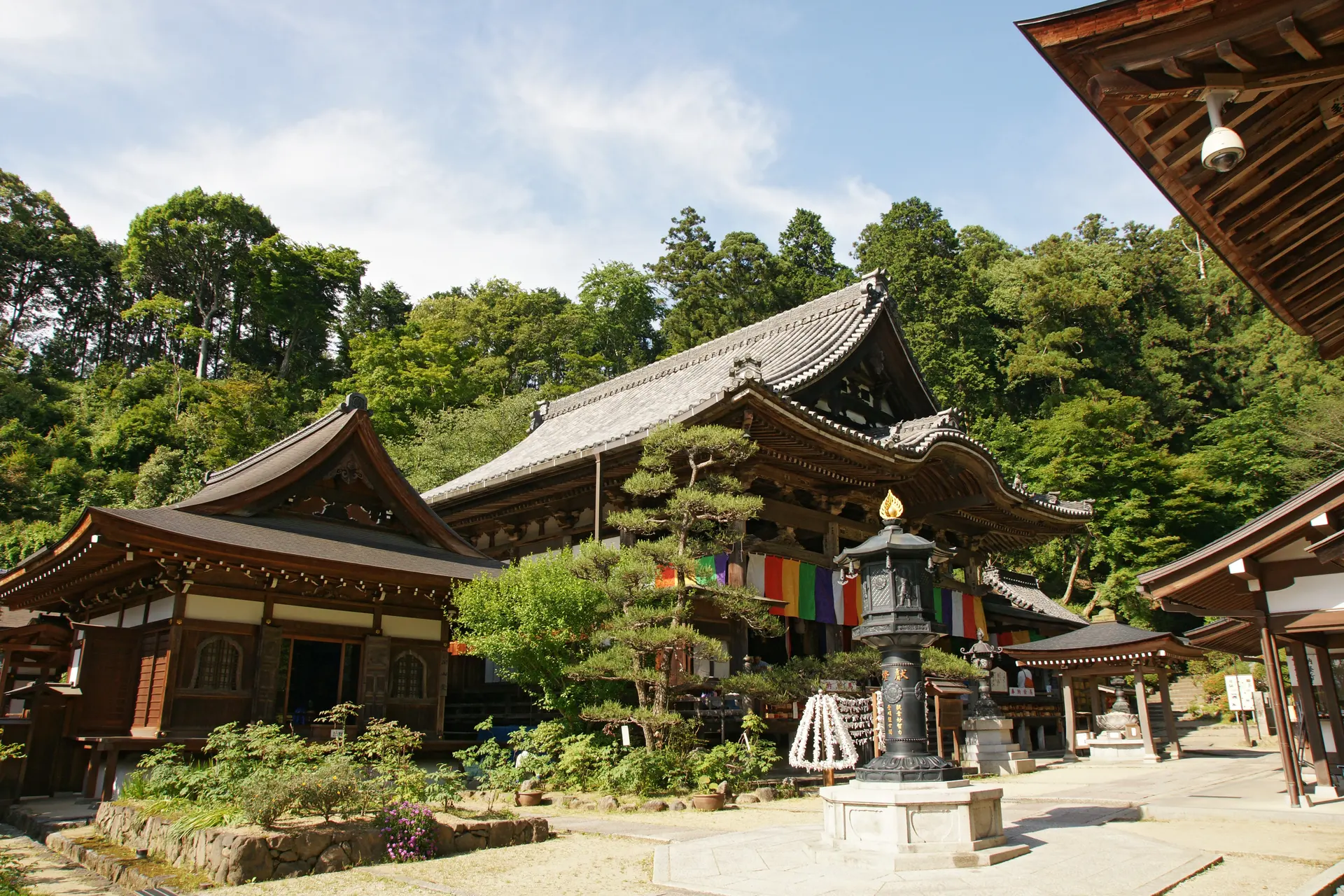
Approaching Okadera, visitors enter the landscape of ancient Asuka—the valley where Japanese civilization took form. The temple sits on elevated ground overlooking terrain that once held imperial courts and now holds archaeological wonders.
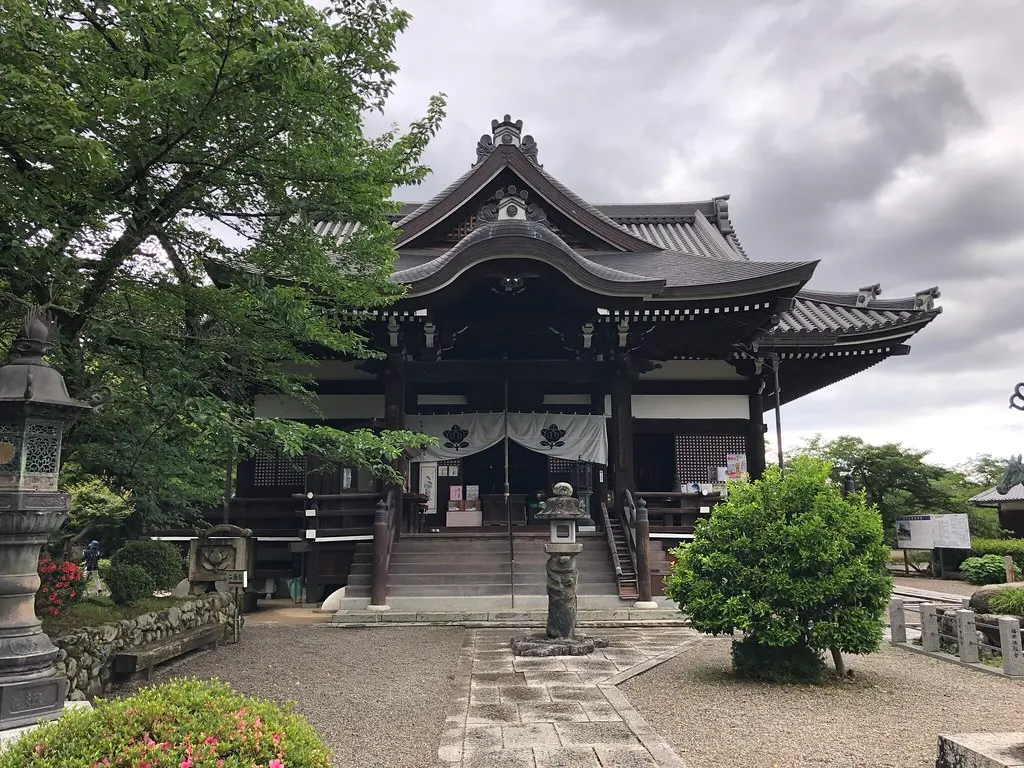
The main hall houses the Nyoirin Kannon, and encountering this statue creates the visit's central moment. At 4.85 meters, the clay figure towers overhead, its survival across twelve centuries of earthquakes and fires speaking to the protection it offers. The face looks down with the particular expression of Nyoirin Kannon—wisdom that includes compassion, compassion informed by wisdom.
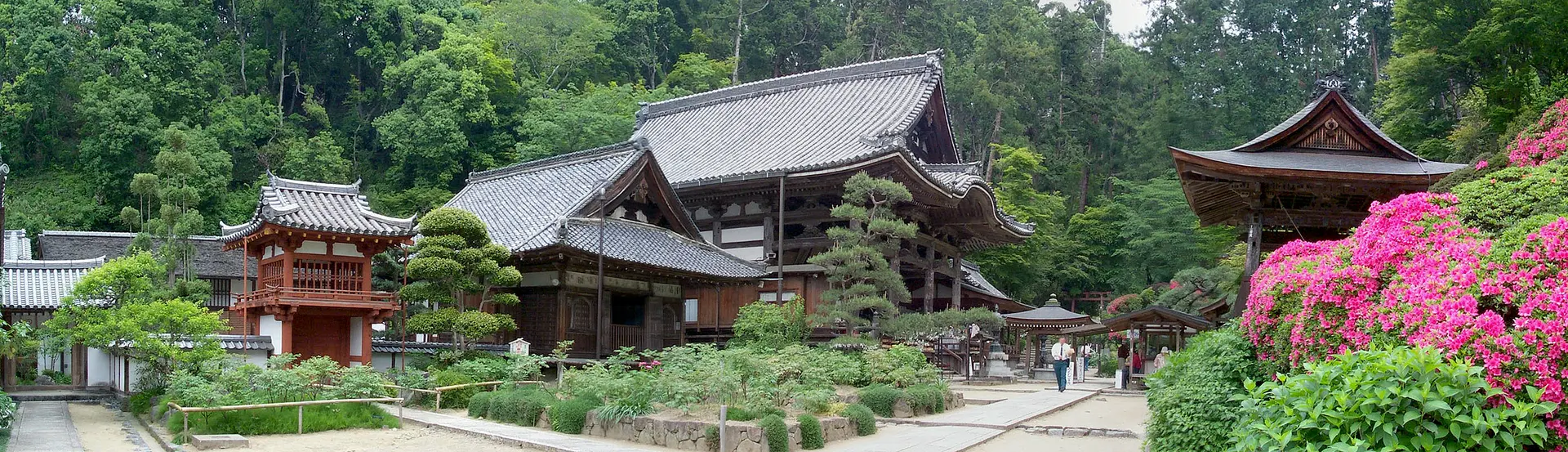
The dragon legend adds dimension. Somewhere in the temple grounds, beneath a boulder that serves as lid, lies the dragon that monk Gien imprisoned. The pond marks the location. The story activates the landscape—what appears to be merely garden becomes containment vessel for dangerous power.
As Temple 7 of the Saigoku Pilgrimage, Okadera receives pilgrims following Japan's oldest pilgrimage route. Encountering them—in their special garb, carrying their stamp books—reminds visitors that this is not a museum but a functioning sacred site.
The yakuyoke blessing attracts seekers with specific needs. Those facing difficulty, those anticipating challenge, those simply wanting protection from the uncertainties of life—all find relevance in what Okadera offers. The protection sought here has been sought here for over 1,200 years.
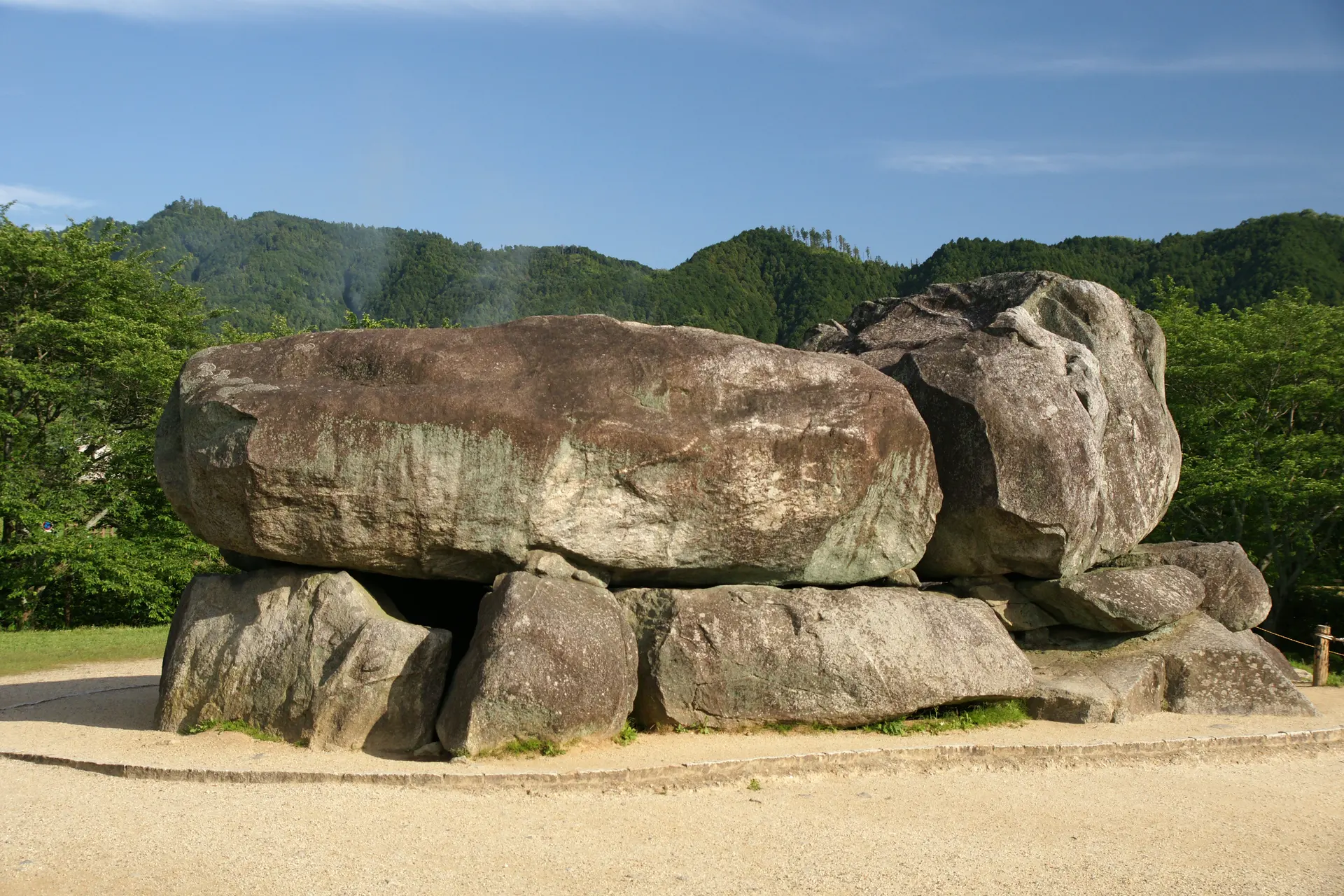
The temple combines naturally with other Asuka sites. Ishibutai Kofun lies within walking distance. Asuka-dera, Japan's first full-scale Buddhist temple, is nearby. A day in Asuka can encompass multiple encounters with the origins of Japanese civilization.
The temple is accessible from Asuka village, typically combined with visits to other Asuka historical sites. The main hall with the Kannon is the primary destination; the dragon pond and various sub-temples extend the visit. Allow 30-60 minutes for the temple proper; longer if combining with other Asuka sites.
Context and lineage
The monk Gien founded the temple in the 8th century after encountering and imprisoning a dragon that terrorized Asuka Village. The massive Nyoirin Kannon statue, attributed to Kobo Daishi and created from clay of India, China, and Japan, was installed as the principal image. The temple became Japan's first sacred site dedicated to yakuyoke (warding off evil and disaster).
Okadera belongs to the Buzan sect of Shingon Buddhism and serves as Temple 7 of the Saigoku Kannon Pilgrimage, Japan's oldest pilgrimage route.
Gien
Founder monk who imprisoned the dragon and established the temple
Kobo Daishi
Attributed with creating the Kannon statue from sacred clay
Traditions and practice
The yakuyoke tradition offers protection from evil and disaster, established at this site over 1,200 years ago. The dragon legend suggests additional practices—when drought threatens, shaking the dragon's lid to bring rain.
As Temple 7 of the Saigoku Pilgrimage, Okadera receives pilgrims following standard protocols. Visitors seek yakuyoke blessings for protection. The massive Kannon remains the focus of devotion.
Spend time with the Kannon—let the scale and survival of this 1,200-year-old clay statue register. Seek the dragon pond and contemplate what lies sealed beneath. Consider a yakuyoke blessing if protection resonates with your needs.
Shingon Buddhism / Saigoku Pilgrimage
ActiveOkadera belongs to the Buzan sect of Shingon Buddhism and serves as Temple 7 of the Saigoku Kannon Pilgrimage, Japan's oldest pilgrimage route. The temple established Japan's first yakuyoke (protection from evil) sacred site.
Saigoku pilgrimage protocols, Kannon devotion, yakuyoke blessings for protection from evil and disaster.
Perspectives and open questions
Okadera invites interpretation as repository of Japan's largest clay Kannon, as origin site of yakuyoke protection tradition, and as dragon legend made tangible in landscape.
Scholarly perspective
Art historians recognize the 8th-century Kannon as an important example of Nara period sculpture, remarkable for its scale and survival in clay medium. The temple's position within the Saigoku pilgrimage reflects its significance in Japanese religious geography.
Living and traditional perspectives
In Buddhist understanding, the Kannon provides genuine protection from evil and disaster, and the dragon remains sealed beneath the temple grounds. The yakuyoke blessing continues to offer what seekers have sought here for over 1,200 years.
Open questions
The full original form of the Kannon statue before repairs and the historical basis of the dragon legend remain uncertain.
Plan your visit
Access and arrival
Limited accommodation in Asuka; many visitors stay in Nara city and visit Asuka as a day trip. Bicycle rental available for exploring the scattered sites.
Respectful visit
Modest dress appropriate for temple visit.
Check restrictions for interior photography. Generally permitted outdoors.
Standard temple offerings.
{"Remove shoes when entering buildings","Quiet and respectful behavior","Follow temple protocols"}
The temple is a functioning religious site, not a museum. Conduct yourself accordingly.
Current practical details
Address
806 Oka, Asuka, Takaichi District, Nara 634-0111, Japan
Phone
Hours
Hours, fees, and access can change — verify on the official source before you travel. Practical details last checked Jun 2026.
Location
Map loads as you approach this section.
Pilgrim reflections
A portrait of encounter, not a score
Pilgrims describe what they felt, how present they could become, and whether the place would shape a journey. There are no stars and no ranking of traditions.
No reviewed reflections yet
The first pilgrims can help describe the character of being here.
Share a reflection
Available after an account-backed “Been there.” Every reflection is reviewed before publication.
Nearby sacred places
Explore other sacred places in the region. Proximity does not establish access or travel time; check each place’s guidance.

Pilgrim glossary
- Kannon
- The bodhisattva of compassion, central to many East Asian pilgrimage routes.
- Shingon
- An esoteric Japanese Buddhist school emphasizing ritual, mantra, and mandala practice.
Share a photo
Help visitors recognize Okadera Buddhist Temple, Asuka. Every submission is reviewed before publication.