Mt. Omine (Mount Sanjō)
Where Shugendo's most demanding tests await those who may enter
Understand sacred places, explore living traditions, and learn how to engage respectfully with Pilgrim Map.
Access has not been verified. Check current local guidance before planning a visit.
Tenkawa, Nara Prefecture, Japan
Read the sources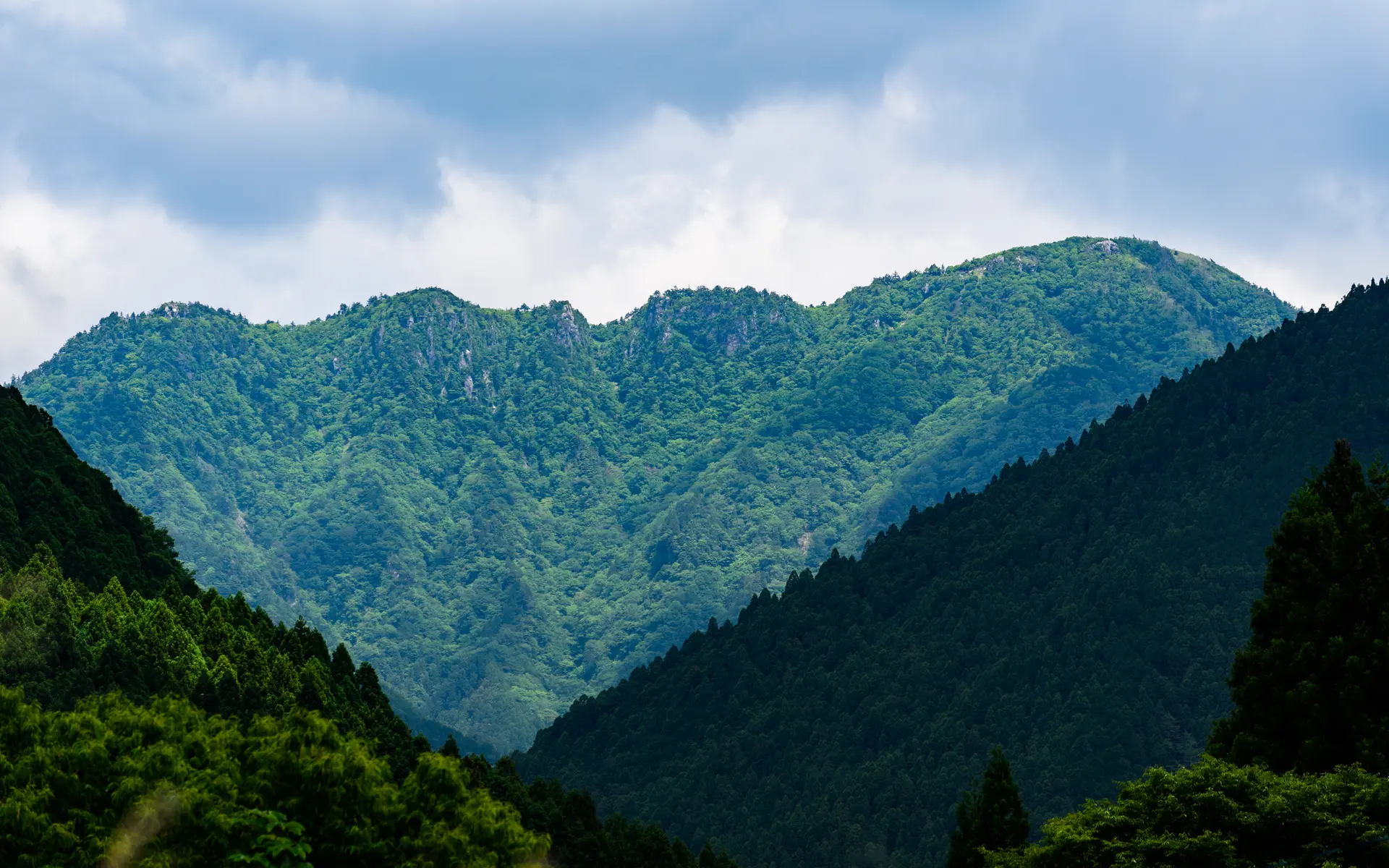
Visit essentials
A quick read before you go
- Duration
- Full day for the climb from Yoshino area.
- Etiquette
- Respect for intensive practice is essential.
Overview
Some mountains welcome all who approach. Mount Omine does not. The headquarters of Shugendo—the Japanese tradition that means 'the path of training and testing'—this peak has maintained the most stringent access restrictions in Japan for over 1,300 years. Women may not enter the main Sanjogatake peak under any circumstances. Men may climb, but the mountain will test them.
The founder En no Gyoja established his monastery here in the 8th century, creating the center from which Shugendo would spread across Japan. The temple at the summit, Ominesan-ji, remains the tradition's headquarters. From this base, practitioners have undertaken rigorous austerities for over a millennium—fasting, walking through fire, hanging over cliffs.
The 'three tests of courage' embody Shugendo's principle that spiritual awakening comes through direct, challenging experience. At sites along the mountain, practitioners are suspended over precipices, their lives depending on the grip of fellow yamabushi. The practice is not metaphorical. The danger is real. The transformation is also real.
The women's prohibition (nyonin kinsei) is 1,300 years old and shows no sign of changing. When UNESCO designated the Sacred Sites and Pilgrimage Routes in the Kii Mountain Range as World Heritage in 2004, the decision generated controversy. An international body recognized a site that excludes half of humanity. The tension is unresolved.
For women seeking Shugendo experience, Mount Inamura—called Nyonin Omine (Women's Omine)—provides alternative training ground. The practice is genuine; the exclusion from the main peak is real.
Mount Omine does not accommodate. It maintains its standards. Those standards can be questioned, but they cannot be ignored. The mountain makes its demands, and seekers must respond accordingly.
Why this place is sacred
The sacred quality of Mount Omine operates through intensity rather than beauty or accessibility. This is not a place that invites casual encounter. The restrictions—women's absolute exclusion, the physical tests, the demanding practice—create concentration rather than diffusion. The few who enter find something undiluted.
Shugendo understands transformation as requiring challenge. The path of 'training and testing' assumes that comfort produces complacency and that genuine awakening requires genuine difficulty. Mount Omine embodies this principle in geography. The cliffs that test courage, the summit that demands effort, the tradition that imposes discipline—all serve the same purpose.
The three tests of courage make this concrete. Practitioners suspended over precipices, their lives in others' hands, experience a stripping away of pretense that meditation alone might not achieve. The body's fear, the mind's surrender, the emergence afterward—this is the transformation Shugendo seeks.
The continuity intensifies the effect. Ominesan-ji has maintained practice since the 8th century. Each generation of yamabushi added to what came before. The mountain is saturated with the devotion and breakthrough of predecessors. Current practitioners walk paths worn by centuries of seekers, undergo tests that thousands before them underwent.
The women's prohibition creates controversy but also preserves something. Whatever the original reasons—lost to uncertain history—the exclusion has created a space that maintains intensity that might otherwise dissipate. Whether this trade-off is acceptable is a genuine question. That the trade-off exists is undeniable.
The UNESCO designation brought international attention to this tension. World Heritage status typically implies universal accessibility; Mount Omine maintains universal restriction of half the world's population. The designation neither resolved this tension nor pretended to.
En no Gyoja founded the monastery in the 8th century as the center for Shugendo practice—demanding training that would produce spiritual transformation through physical challenge.
From its 8th-century founding through the Meiji-era ban on 'superstitious practices' (1872-1945) to UNESCO World Heritage designation (2004), Mount Omine has maintained its core character as a site of demanding practice and restricted access.
Experience and orientation
The experience of Mount Omine differs fundamentally by gender. For men who climb, the mountain offers one of Japan's most intense spiritual encounters. For women, the experience is the exclusion itself—a confrontation with restriction that cannot be circumvented.
Men approaching the mountain typically ascend from the Yoshino area, following the same trails that pilgrims have walked for over a millennium. The terrain is demanding—steep, rocky, requiring genuine fitness and appropriate equipment. This physical difficulty is intentional; the tradition understands the climb itself as preparation.
Encountering yamabushi practitioners on the trail creates immediate awareness that this is living tradition, not historical reconstruction. The white-robed ascetics, blowing conch shells, performing rituals at sacred points along the path—they transform the hike into pilgrimage by their presence.
The three tests of courage, for those who undergo them, create experiences that resist description. Being suspended over a cliff, trusting fellow practitioners with your life, facing the fear and whatever comes after—this is what Shugendo offers and why it has attracted seekers for centuries.
Ominesan-ji at the summit serves as the tradition's headquarters. The temple, maintained at altitude for over 1,200 years, receives pilgrims who have earned arrival through the demanding climb. The atmosphere of intensive practice pervades the place.
For women, Mount Inamura (Nyonin Omine) provides alternative Shugendo experience. The training there is genuine; practitioners report authentic encounter with the tradition. But the exclusion from the main peak remains a reality that frames any engagement with Shugendo at Omine.
The Omine Okugakemichi pilgrimage trail extends from Yoshino to Kumano, connecting Mount Omine to the broader sacred geography of the Kii Peninsula. For serious practitioners, this multi-day walk represents the full Shugendo experience.
The main climbing route approaches from Yoshino. The climb is demanding—allow a full day. The climbing season runs May through October; winter conditions are extreme. For women seeking Shugendo practice, Mount Inamura provides an alternative.
Context and lineage
En no Gyoja (En no Ozunu), the founder of Shugendo, established his monastery at Mount Omine in the 8th century. The new religion—meaning 'the path of training and testing'—combined elements of Buddhism, Shinto, and folk religion into a distinctive tradition of mountain asceticism. The summit temple, Ominesan-ji, became and remains Shugendo's headquarters. The women's prohibition was established during the Heian period, predating most historical documentation.
Mount Omine has maintained continuous Shugendo practice since the 8th century, interrupted only by the Meiji government's ban on 'superstitious practices' from 1872 to 1945. The Japanese Culture Act of 1945 restored traditional practices.
En no Gyoja (En no Ozunu)
Founder of Shugendo, established the mountain as the tradition's headquarters
Traditions and practice
Traditional Shugendo practice includes demanding physical austerities: fasting, walking on fire, suspension over cliffs, extended pilgrimage through difficult terrain. The 'shugyō' (rigorous training) is designed to break through ordinary consciousness into spiritual awakening.
Active yamabushi training programs continue at Mount Omine. Pilgrims climb during the May-October season. The Omine Okugakemichi trail to Kumano maintains multi-day pilgrimage tradition. Ominesan-ji serves as functioning headquarters of living practice.
For men: Approach the climb as spiritual practice, not mere hiking. Consider connecting with yamabushi groups for guided experience. Allow the physical demands to create receptivity. For women: Visit Mount Inamura (Nyonin Omine) for genuine Shugendo practice. Engage with the exclusion question thoughtfully.
Shugendo
ActiveMount Omine is the headquarters of Shugendo—the Japanese tradition of mountain asceticism founded by En no Gyoja. Ominesan-ji temple at the summit has maintained continuous practice since the 8th century, making this one of Japan's most important religious sites.
Shugyō (rigorous ascetic tests) including cliff-hanging, fasting, fire-walking; pilgrimage from Yoshino to Kumano; yamabushi training programs; daily practice at Ominesan-ji.
Perspectives and open questions
Mount Omine invites interpretation as Shugendo's living heart, as site of demanding transformation, and as controversial exception to universal accessibility principles.
Scholarly perspective
Scholars recognize Mount Omine as one of Japan's most important religious sites with well-documented continuous practice since the 8th century. The women's prohibition generates ongoing debate, particularly given UNESCO World Heritage status.
Living and traditional perspectives
In Shugendo understanding, the mountain's restrictions are essential to maintaining sacred power and practice integrity. The demanding standards that define Mount Omine are not arbitrary but necessary.
Open questions
The original reasons for women's exclusion are lost to historical record. How the tradition will navigate UNESCO status and modern gender equality principles remains to be seen.
Plan your visit
Access and arrival
Yoshino offers accommodation. Mountain huts may be available for pilgrims.
Respectful visit
Traditional yamabushi wear white robes. Climbers should wear appropriate hiking gear.
Check restrictions. Be sensitive around practitioners.
Traditional offerings at Ominesan-ji temple.
{"Women may not enter the main peak area","Respect yamabushi practitioners at their practice","Follow all signage and restrictions"}
The climb is physically demanding. Weather conditions can be challenging. The women's prohibition is absolute and non-negotiable. Respect yamabushi practitioners at their practice.
Current practical details
Address
Dorogawa, Tenkawa, Yoshino District, Nara 638-0431, Japan
Phone
Hours, fees, and access can change — verify on the official source before you travel. Practical details last checked Jun 2026.
Location
Map loads as you approach this section.
Pilgrim reflections
A portrait of encounter, not a score
Pilgrims describe what they felt, how present they could become, and whether the place would shape a journey. There are no stars and no ranking of traditions.
No reviewed reflections yet
The first pilgrims can help describe the character of being here.
Share a reflection
Available after an account-backed “Been there.” Every reflection is reviewed before publication.
Nearby sacred places
Explore other sacred places in the region. Proximity does not establish access or travel time; check each place’s guidance.


References
Sources consulted for this page. Source categories describe the publication, not a guarantee that every claim is verified. Traditional accounts and outside interpretations may differ.
- 01Women in Shugendo — Buddhistdoor GlobalacademicAcademic perspective
- 02Mount Ōmine - Wikipedia — Wikipedia contributorsencyclopediaComprehensive overview
- 03Ōminesan-ji - Wikipedia — Wikipedia contributorsencyclopediaTemple information
- 04Mt. Omine, Yoshino - Sacred Natural Sites — Sacred Natural Sites JapanacademicShugendo context
Share a photo
Help visitors recognize Mt. Omine (Mount Sanjō). Every submission is reviewed before publication.