Entsū-ji
The Sōtō Zen temple where the wandering poet-priest Ryōkan trained in Tamashima
Understand sacred places, explore living traditions, and learn how to engage respectfully with Pilgrim Map.
Access has not been verified. Check current local guidance before planning a visit.
Kurashiki, Okayama Prefecture, Japan
Read the sources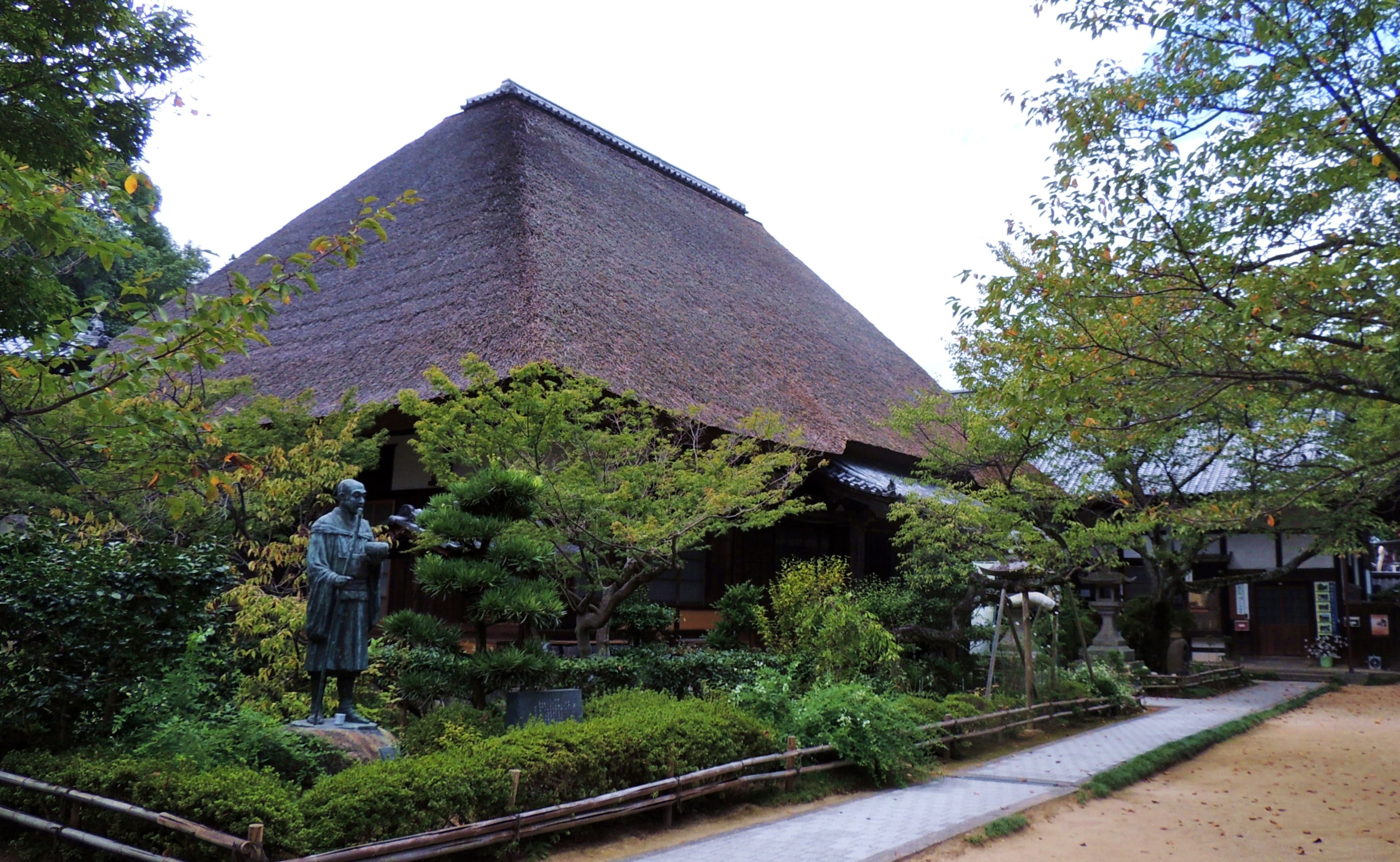
Image of Entsū-ji. Image source · CC-BY-3.0
Station 7 of 33
Chūgoku 33 Kannon PilgrimageVisit essentials
A quick read before you go
- Duration
- 60–90 minutes for a contemplative pilgrim visit; about two hours including the Ryōkan poetry…
- Access
- From JR Shin-Kurashiki or JR Kurashiki Stations, transfer to JR Tamashima Station on the…
Overview
Entsū-ji carries two sacred claims. Fudaraku-san invokes Avalokiteśvara's Pure Land in the south-Indian sea, and the precinct's siting near the Inland Sea was chosen with this Mt. Potalaka symbolism in mind; its Shō Kannon makes it station #7 of the modern Chūgoku 33 Kannon route. It was also Ryōkan Taigu's formative training ground, where the Sōtō poet-priest learned to make leaves, a child's ball, and a begging bowl instruments of awakening.
Tradition credits Gyōki with its founding; Toku-ō Ryōkō historically refounded it in 1698. Ryōkan arrived at twenty-two, trained under Kokusen for roughly twelve years (sources cluster around 1779–1795), received inka, and departed as a wandering monk. Poem inscriptions, Sunday and summer dawn zazen, and sesshin continue that practice. Distinct from Kagawa's Zentsū-ji (Shikoku 88 #75) and Kyoto's garden temple, Tamashima Entsū-ji remains a working Sōtō center with a thatched hall, stone garden, and Inland Sea views.
Why this place is sacred
Entsū-ji's thinness operates through two complementary registers. The Fudaraku-san mountain name frames the entire precinct as a topographic enactment of Avalokiteśvara's Pure Land — the visible Inland Sea views reinforce the symbolism. The continuity of Sōtō zazen practice from Ryōkan's day to the present means that the silence of the meditation hall is not historical but actual: people are sitting now where Ryōkan sat, in roughly the same posture, attending to roughly the same practice.
Many Zen students describe their first sit at Entsū-ji as a 'returning' — the place where Ryōkan was made and broken open is hard to leave unchanged.
Tradition credits Gyōki with the original Nara-period founding, though documentary evidence is partial. The 1698 Sōtō Zen refounding under Toku-ō Ryōkō established the present religious identity, with Kannon devotion at the main hall and Zen meditative practice in the meditation hall.
After the Genroku-era refounding and the Shōtoku-era fixing of the present name, Entsū-ji became a regional Sōtō training centre. Ryōkan's twelve-year residency in the late eighteenth century gave the temple its biographical centre of gravity. In 1968, Okayama Prefecture designated the entire mountain Entsū-ji Park as a historic site of scenic beauty. The 1981 establishment of the Chūgoku 33 Kannon Pilgrimage placed the temple as #7.
Experience and orientation
Reach Entsū-ji from JR Tamashima Station by bus or taxi up to Entsū-ji Park; the mountain is small and the walk through the park is part of the experience. Stone-flagged paths and commemorative inscriptions of Ryōkan's poems thread the slopes between the parking area and the main precinct. Inside the precinct, the stone garden anchors the central courtyard. The thatched-roof main hall holds the Shō Kannon honzon.
The meditation hall sits adjacent — it is in active use, and visitors should pass with quiet attention.
Many pilgrims describe Entsū-ji's scale as the principal teaching: the precinct is small enough to inhabit in a single visit, and the sense of intimacy is as much religious as spatial. The Ryōkan residue is everywhere — a poem inscribed on a stone, a worn meditation-hall floor, a view of the Inland Sea from the upper terrace that he would have known. Pilgrims walking the Chūgoku 33 in order often find Entsū-ji the most contemplative station of the early route.
Walk the park approach slowly, then enter the main precinct. Pause at the stone garden, light incense at the main hall, and follow the commemorative poetry trail. Sixty to ninety minutes for a contemplative pilgrim visit; about two hours including the Ryōkan trail. Sunday morning visits coincide with open zazen if you contact the temple in advance.
Context and lineage
Tradition credits Gyōki with the original Nara-period founding of the site. The historically documented refounding is 1698 (Genroku 11), when the Sōtō Zen master Toku-ō Ryōkō (also rendered Yoshitaka) renamed the precinct Entsū-an. The 'Entsū-ji' name was fixed during the Shōtoku era (1711–1716). Ryōkan Taigu arrived around 1779 and trained for roughly twelve years before departing as a wandering monk.
Sōtō Zen Buddhism. Within the broader Sōtō tradition, Entsū-ji belongs to the post-Dōgen monastic system that emphasises shikantaza ('just sitting') as the central practice. Ryōkan's lineage through Kokusen connects the temple to the wider Edo-period Sōtō revival.
Traditions and practice
Sōtō Zen daily liturgy includes morning sutra recitation, work practice, and seated meditation in the meditation hall. Kannon liturgy at the main hall acknowledges the Fudaraku-san mountain name and the Shō Kannon honzon. Sesshin (multi-day intensive retreats) follow Sōtō protocols with strict silence and structured sitting periods.
Sunday zazen runs year-round, open to visitors with prior contact through the Entsū-ji Hakuun Zazen-kai. Summer dawn-zazen offers an early-morning practice during the warm months. New Year's Eve bell ringing (joya-no-kane) is a public event open to all comers. Pilgrim reception and goshuin issuance run through standard temple hours.
Walk the park approach slowly. Light incense at the main hall facing the Shō Kannon, then pause at the stone garden. Read or recall a Ryōkan poem if you carry one in mind — the precinct is rich for that practice. Receive the goshuin. For a deeper visit, arrange Sunday zazen with the temple in advance.
Sōtō Zen Buddhism
ActiveEntsū-ji was the training hall of Ryōkan Taigu (1758–1831), the wandering Zen poet-priest, under master Tainin Kokusen. Ryōkan trained here for roughly twelve years from age 22, and the period shaped his later poetic-religious life of radical simplicity. The temple maintains a living zazen community today.
Chūgoku 33 Kannon Pilgrimage
ActiveEntsū-ji is Temple #7 of the modern Chūgoku 33 Kannon circuit established in 1981/1982. The temple's Fudarakusan mountain name — referring to Kannon's Pure Land in the south-Indian sea — frames the precinct as a Kannon-Pure-Land microcosm, distinct in tone from the more popular-religious yakuyoke focus of the prior station at Yugasan.
Perspectives and open questions
Entsū-ji invites overlapping readings: as a Kannon enshrinement site whose Fudaraku-san mountain name reaches back to Avalokiteśvara's Pure Land symbolism, as the formative training ground of Ryōkan whose poetry became Sōtō Zen teaching, and as a living Zen practice centre maintaining open zazen for visitors today.
Scholarly perspective
Japanese Buddhist and literary scholarship treats Entsū-ji as a genuine Sōtō Zen temple of Edo-era refoundation, with the Gyōki founding tradition regarded as folk-religious narrative rather than archaeologically verified history. The Ryōkan connection is well documented through Kokusen-lineage records and Ryōkan's own poems. The temple's 1968 prefectural designation as a historic site of scenic beauty marks its broader cultural-landscape significance.
Living and traditional perspectives
In Sōtō understanding, the temple's life is the practice itself — Ryōkan's writing about begging bowls and falling leaves is taught as actual dharma transmission, not metaphor. The continuity of zazen on this ground gives the precinct a particular quality of presence that contemporary practitioners describe as 'cooked-in.'
Alternative interpretations
The mountain name Fudaraku-san frames the entire precinct as a topographic enactment of Avalokiteśvara's Pure Land. Zen and Pure Land symbols meet here without doctrinal forcing — the Shō Kannon at the main hall and the meditation hall's seated practice address different facets of the same compassionate attention.
Open questions
The specific year of Ryōkan's arrival is uncertain — sources cluster around 1779 but disagree by a year or two. Whether original Nara-period structures ever existed on the site remains unverified archaeologically; the surviving fabric is Edo-era at oldest.
Plan your visit
Access and arrival
From JR Shin-Kurashiki or JR Kurashiki Stations, transfer to JR Tamashima Station on the Mizushima or local lines, then by bus or taxi up to Entsū-ji Park. Walking trails through the mountain park form part of the temple experience.
Standard accommodation in Kurashiki (~30 minutes by car) or in Tamashima itself. Pilgrim-oriented stays are limited; most visitors base in Kurashiki and day-trip to Entsū-ji Park.
Respectful visit
Modest, covered clothing with comfortable shoes. For zazen, simple loose-fitting clothes that allow the legs to fold comfortably.
Outer precinct generally permitted; ask before photographing zazen sessions or individual sitters.
Saisen at the main hall, incense at the appropriate stand. For sesshin, follow Sōtō protocols including ritual offerings as instructed.
Strict silence required during zazen | Mobile phones off in the meditation hall | No photography of sitters during zazen | Sesshin requires advance registration
Strict silence is required in the meditation hall during zazen. Mobile phones should be turned off in the meditation hall. Sesshin requires registration and full participation; casual drop-ins are not appropriate for retreat days. Verify zazen schedules in advance — they are well-maintained but subject to seasonal change.
Current practical details
Address
451 Tamashima Kashiwajima, Kurashiki, Okayama 713-8123, Japan
Phone
Hours, fees, and access can change — verify on the official source before you travel. Practical details last checked Jun 2026.
Location
Map loads as you approach this section.
Pilgrim reflections
A portrait of encounter, not a score
Pilgrims describe what they felt, how present they could become, and whether the place would shape a journey. There are no stars and no ranking of traditions.
No reviewed reflections yet
The first pilgrims can help describe the character of being here.
Share a reflection
Available after an account-backed “Been there.” Every reflection is reviewed before publication.
Nearby sacred places
Explore other sacred places in the region. Proximity does not establish access or travel time; check each place’s guidance.


References
Sources consulted for this page. Source categories describe the publication, not a guarantee that every claim is verified. Traditional accounts and outside interpretations may differ.
- 01良寛修行の寺・曹洞宗円通寺 official site — Entsū-ji templeofficialTemple's own site
- 02円通寺について — Entsū-ji templeofficialTemple's history page
- 03良寛さんとは — Entsū-ji templeofficialTemple's Ryōkan biography page
- 04Entsuji Temple — Okayama Prefecture Official Tourism GuideofficialEnglish overview
- 05円通寺 (倉敷市) - Wikipedia — Wikipedia (Japanese)academicFounding tradition (Gyōki), Genroku refounding 1698, Ryōkan training
- 06About Entsuji Hakuun Zazenkai — Entsū-ji Zazen-kaispiritualLiving Sōtō Zen practice at the temple
- 07I Leave This Old Heart To The World: 3 Poems By The Zen Priest Ryokan — James Ford, PatheosspiritualRyōkan biography in English; Entsū-ji as his training ground
Pilgrim glossary
- Honzon
- The principal Buddhist deity enshrined as a temple's central object of worship.
- Kannon
- The bodhisattva of compassion, central to many East Asian pilgrimage routes.
- Sutra
- A canonical Buddhist scripture, often chanted as part of practice.
- Dharma
- The teachings of the Buddha; also the universal law underlying them.
- Pure Land
- A Buddhist tradition focused on rebirth in Amida Buddha's western paradise through devotional practice.
- Zen
- A Japanese Buddhist school emphasizing seated meditation and direct insight.
Share a photo
Help visitors recognize Entsū-ji. Every submission is reviewed before publication.