Mt. Iwaki
Where 1,200 years of worship guard the spirit of Tsugaru
Understand sacred places, explore living traditions, and learn how to engage respectfully with Pilgrim Map.
Access has not been verified. Check current local guidance before planning a visit.
Hirosaki, Aomori Prefecture, Japan
Read the sources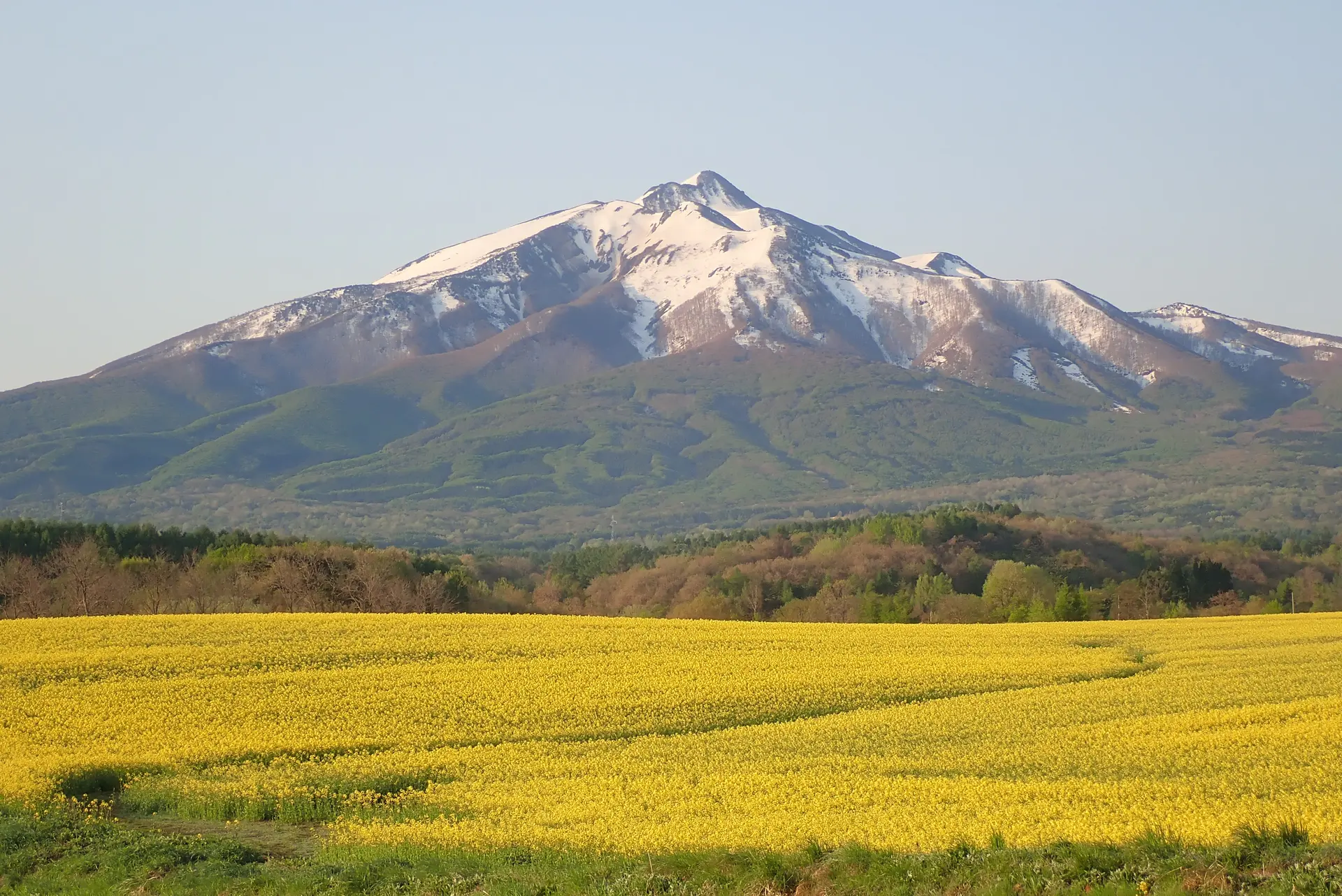
Image of Mt. Iwaki. Image source · CC-BY-SA-4.0
Visit essentials
A quick read before you go
- Duration
- Half day to full day for climb.
- Etiquette
- Standard shrine etiquette at Iwakiyama Shrine and summit inner shrine.
Overview
Mount Iwaki commands the Tsugaru landscape: Aomori Prefecture's tallest peak, a near-perfect cone visible across the region. Local people call it Oiwaki-sama, a name of reverent familiarity shaped by more than 1,200 years of relationship. Its veneration predates Japanese settlement around 780 CE, when indigenous Emishi people already recognized the mountain as sacred; Iwakiyama Shrine inherited and transformed rather than imported that worship.
For three days each August, the Important Intangible Folk Cultural Property of Oyama Sankei brings farmers, fishers, and merchants through a nighttime climb to sunrise prayers for harvest, safety, and prosperity. At the base, shrine buildings called the Nikko of the back evoke Toshogu Shrine; the summit's inner shrine completes a vertical pilgrimage along forests and stone markers worn into continuity by generations of seekers.
Why this place is sacred
Mount Iwaki's sacred quality operates through depth of relationship rather than dramatic geology. Emishi recognition preceded Japanese religious frameworks and perhaps shaped what followed, though sparse records leave its nature uncertain. Iwakiyama Shrine, successive festivals, and pilgrims then accumulated devotion without erasing that foundation; Oyama Sankei concentrates it in thousands of pilgrims making the three-day August nighttime ascent to sunrise worship.
The symmetrical form called Tsugaru Fuji may have drawn attention, but the mountain's thinness is not merely aesthetic: it lies in those who walked its paths, prayed at its shrines, and watched its sunrises. At the summit, the inner shrine, Oku-no-miya, focuses this vertical pilgrimage as a physical expression of spiritual aspiration.
The Emishi recognized the mountain's sacred nature before Japanese settlement. Iwakiyama Shrine formalized this recognition, providing structure for worship that sought the mountain's protection and blessing for the Tsugaru region.
From Emishi veneration through shrine formalization around 780 CE to the establishment of Oyama Sankei in the Genroku era (17th-18th century), Mount Iwaki's sacred tradition has grown through accumulation rather than transformation. The mountain receives ever more devotion without losing earlier layers.
Experience and orientation
The experience of Mount Iwaki typically begins at Iwakiyama Shrine, where buildings of remarkable beauty introduce the sacred geography. The shrine's elaborate construction—prompting comparison to Nikko's famous Toshogu—creates an immediate impression of significance. This is no rural backwater shrine but a major religious center that has served the Tsugaru region for over a millennium.
The climb itself follows paths worn smooth by countless pilgrims. The route ascends through forests that soften the mountain's slopes, past stone markers placed by generations of devotees, toward the summit that has drawn seekers since before recorded history. The physical effort creates its own preparation—arriving at the top means something because the climb demanded something.
The summit inner shrine (Oku-no-miya) provides the pilgrimage's destination. This small structure, maintained at altitude through harsh Tohoku winters, represents the mountain's sacred heart. Standing here, visitors occupy the same ground that has focused devotion for centuries.
Views from the summit extend across the Tsugaru Plain and beyond. The symmetrical peak that appears so dramatic from below becomes a platform for surveying the landscape the mountain protects. The connection between geographic height and spiritual significance becomes experientially clear.
For those seeking the fullest experience, the Oyama Sankei pilgrimage in August offers something extraordinary. Climbing through the night with hundreds of other pilgrims, reaching the summit for sunrise worship, participating in prayers for bountiful harvest—this is living tradition, not historical reconstruction. The Important Intangible Folk Cultural Property designation recognizes that such practices are themselves precious, their continuity itself significant.
Even outside festival time, the mountain rewards those who climb with the awareness that their footsteps join a procession stretching back 1,200 years and more.
Iwakiyama Shrine at the base provides the typical starting point. Multiple trails approach the summit. The Oyama Sankei pilgrimage occurs over three days each August. Allow a half day to full day for the climb. The summit inner shrine is the traditional destination.
Context and lineage
Before Japanese settlers arrived around 780 CE, the indigenous Emishi people venerated Mount Iwaki as a sacred mountain where ancestral spirits resided. When Japanese control was established, Iwakiyama Shrine formalized this existing worship rather than importing new traditions. The shrine has maintained continuous operation for over 1,200 years, with the Tsugaru feudal lords becoming important patrons. The Oyama Sankei pilgrimage developed during the Genroku era (17th-18th century), establishing the three-day August festival that continues today.
Iwakiyama Shrine has maintained continuous worship for over 1,200 years, with the Oyama Sankei pilgrimage designated as Important Intangible Folk Cultural Property recognizing the tradition's significance.
Emishi tribes
Indigenous people who first recognized the mountain's sacred nature
Tsugaru feudal lords
Historical patrons who supported shrine development
Traditions and practice
The Oyama Sankei pilgrimage represents the fullest expression of traditional practice: three days in August when pilgrims climb through the night, reaching the summit for sunrise worship and prayers for bountiful harvest. The practice has continued for centuries, maintaining forms that connect participants to generations of predecessors.
Iwakiyama Shrine continues regular worship throughout the year. The Oyama Sankei pilgrimage maintains its August schedule, drawing participants from throughout the region. The summit inner shrine receives visitors during climbing season.
Visit Iwakiyama Shrine to appreciate the 'Nikko of the back' architecture and connect with the shrine tradition. Climb to the summit for the full pilgrimage experience. If possible, participate in Oyama Sankei to join living tradition—though this requires August timing and preparation for nighttime climbing.
Mountain Worship / Iwakiyama Shrine
ActiveMount Iwaki has received continuous worship for over 1,200 years, built upon earlier Emishi veneration. Iwakiyama Shrine at the base serves as guardian of the Tsugaru region's agriculture, fishery, commerce, and household safety. The Oyama Sankei pilgrimage is designated Important Intangible Folk Cultural Property.
Oyama Sankei three-day August pilgrimage with nighttime ascent and sunrise worship, regular shrine worship throughout the year, prayers at the summit inner shrine.
Perspectives and open questions
Mount Iwaki invites interpretation as the spiritual guardian of Tsugaru, as continuity linking pre-Japanese Emishi veneration to present-day pilgrimage, and as living expression of regional faith.
Scholarly perspective
Historians recognize Mount Iwaki as one of Tohoku's most important sacred mountains, with documented worship predating Japanese settlement of the region. The Oyama Sankei designation as Important Intangible Folk Cultural Property acknowledges the practice's cultural significance.
Living and traditional perspectives
In local understanding, Mount Iwaki houses ancestral spirits and serves as protector of the Tsugaru region. The mountain called 'Oiwaki-sama' is not merely a geographical feature but a living presence deserving reverent relationship.
Open questions
The full nature of Emishi religious practices at the mountain remains poorly documented. Pre-shrine sacred traditions are largely lost to historical record.
Plan your visit
Access and arrival
Hirosaki City offers various accommodation options. Simple lodging may be available closer to the mountain during climbing season.
Respectful visit
Hiking attire for the climb. Modest dress at the shrine. Oyama Sankei participants may wear traditional white pilgrimage clothing.
Generally permitted outdoors. Be respectful during active worship.
Standard shrine offerings at Iwakiyama Shrine and summit shrine.
{"Standard shrine protocols","Mountain safety guidelines","Respect other pilgrims during Oyama Sankei"}
The climb is substantial and requires appropriate fitness and preparation. Weather in Tohoku can be challenging. Oyama Sankei involves climbing through the night with large crowds.
Current practical details
Address
Mount Iwaki, Higashiiwakisan Hyakuzawa, Hirosaki, Aomori 036-1343, Japan
Hours, fees, and access can change — verify on the official source before you travel. Practical details last checked Jun 2026.
Location
Map loads as you approach this section.
Pilgrim reflections
A portrait of encounter, not a score
Pilgrims describe what they felt, how present they could become, and whether the place would shape a journey. There are no stars and no ranking of traditions.
No reviewed reflections yet
The first pilgrims can help describe the character of being here.
Share a reflection
Available after an account-backed “Been there.” Every reflection is reviewed before publication.
Nearby sacred places
Explore other sacred places in the region. Proximity does not establish access or travel time; check each place’s guidance.



References
Sources consulted for this page. Source categories describe the publication, not a guarantee that every claim is verified. Traditional accounts and outside interpretations may differ.
- 01A visit to the sacred Mount Iwaki — ANAguideTravel guide with cultural context
- 02Hiking at Mount Iwaki - Mountain Worship — THE GATEguideHiking and worship information
- 03Iwakisan-jinja Shrine — WaknotacademicShrine history
Pilgrim glossary
- Torii
- The traditional Japanese gate marking the entrance to a Shinto sacred area.
Share a photo
Help visitors recognize Mt. Iwaki. Every submission is reviewed before publication.