Senyū-ji
Mountain-top fudasho with shukubo, onsen, and a Senjū Kannon carved by a devout girl
Understand sacred places, explore living traditions, and learn how to engage respectfully with Pilgrim Map.
Access has not been verified. Check current local guidance before planning a visit.
Imabari, Ehime Prefecture, Japan
Read the sources
Image of Senyū-ji (仙遊寺). Image source · CC0
Station 58 of 88
Shikoku 88 Temple PilgrimageVisit essentials
A quick read before you go
- Duration
- 45–90 minutes for a day visit including the climb.
- Access
- Steep paved access road from the foot of Mt.
Overview
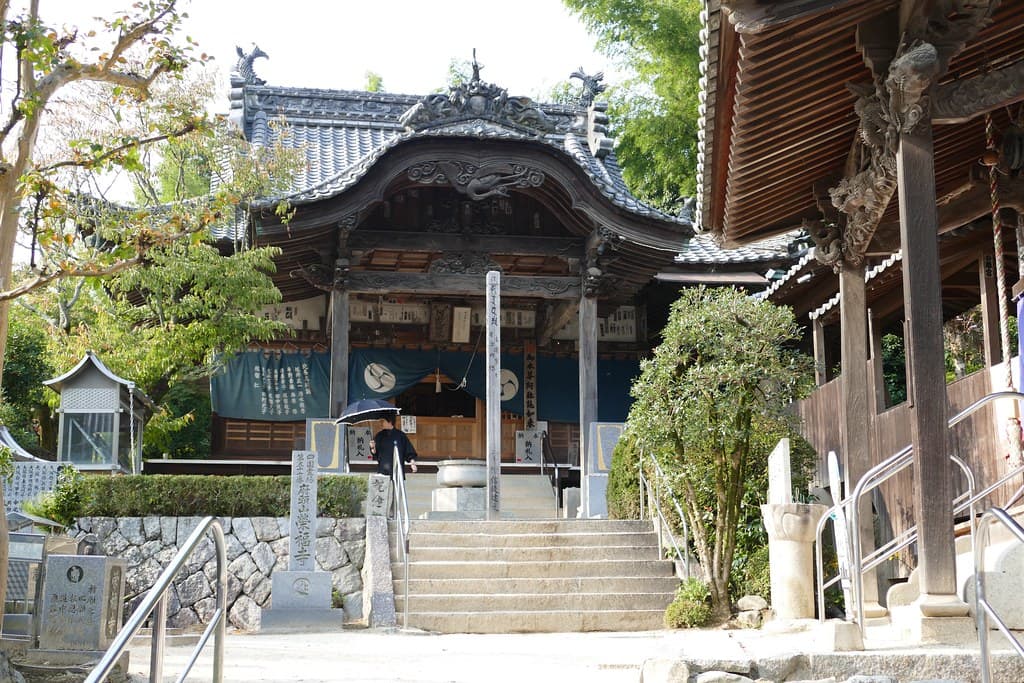
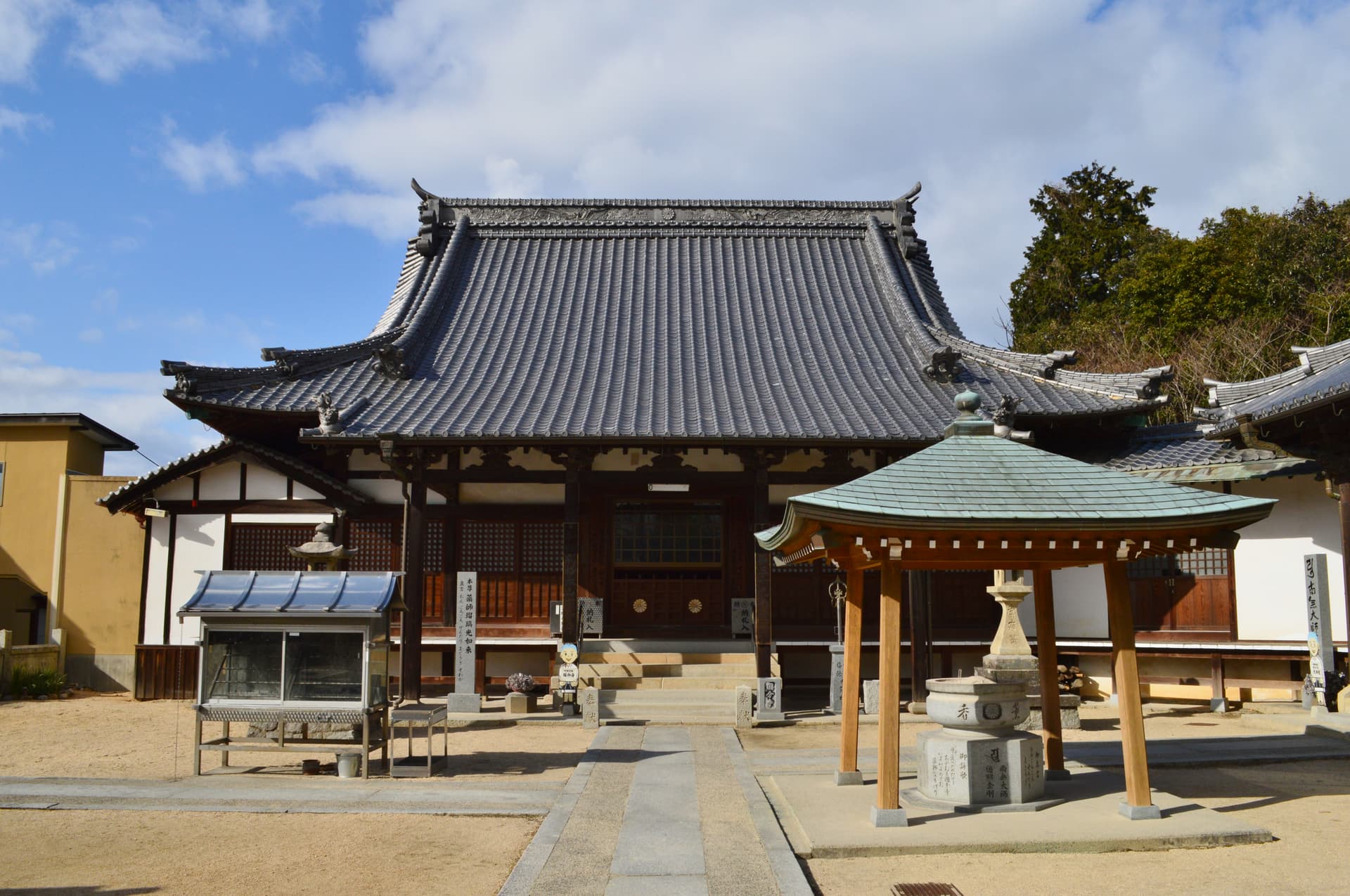
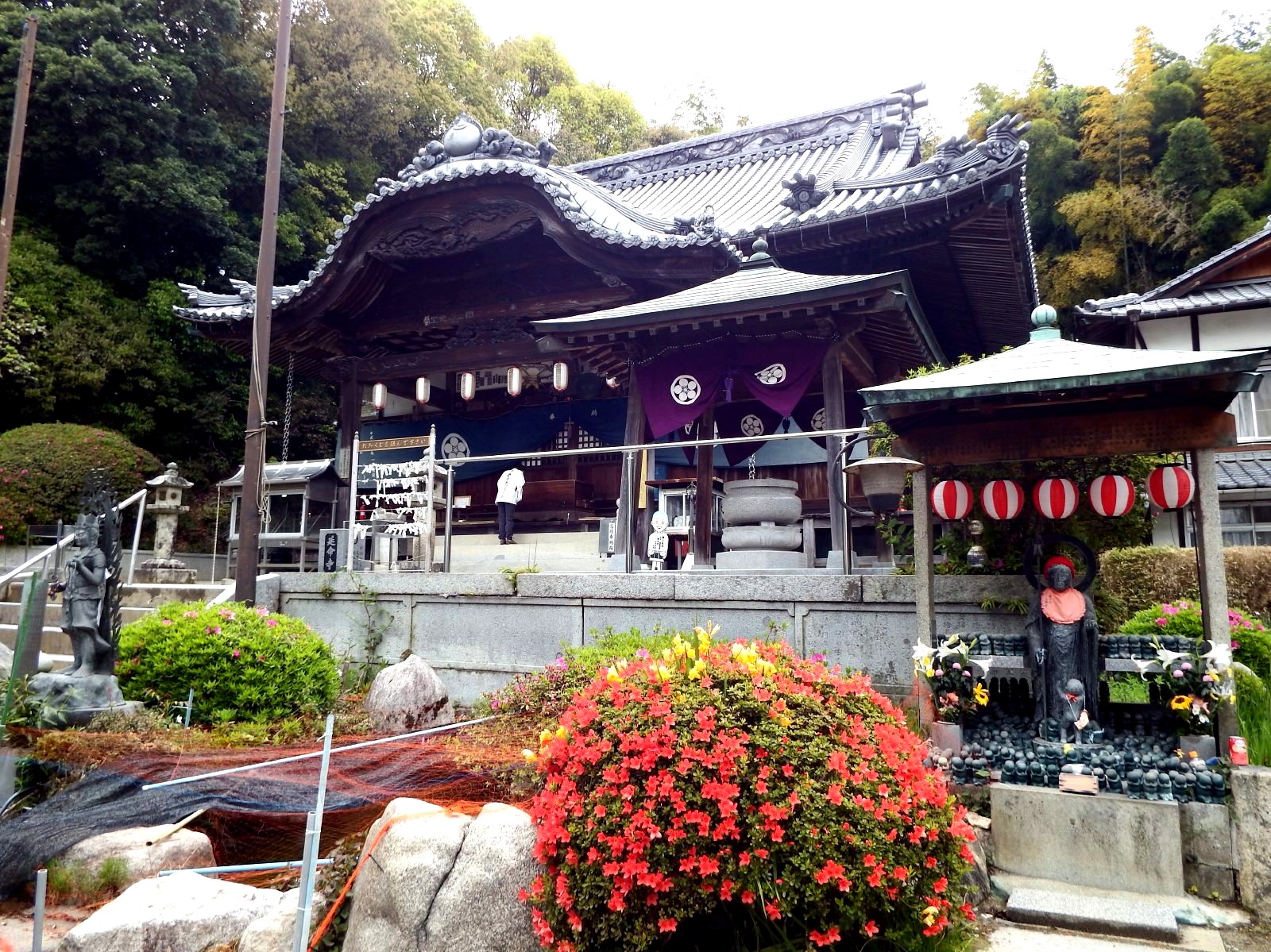
Senyū-ji is one of two mountain temples in the Imabari cluster, paired with gentler T57 below and much harder T60 ahead. Its distinguishing work is the climb up Mt. Sakurei: a cedar-lined approach ending in stone stairs through the Niōmon. The unusually open precinct holds an east-facing Hondō, Daishi-dō, bell tower, shukubo, and onsen building, with views beyond Imabari to the Shimanami Kaidō and inland sea.
The name layers two readings: 'sennin yūbu,' the play of immortals, recalls the hermit Abu and a pre-Buddhist mountain-religious substrate that still shapes the temple. For many henro, the shukubo sets Senyū-ji apart: a booked stay joins tatami lodging, an onsen bath, shōjin ryōri, and early morning gongyō into a depth unavailable on a day visit.
Walking henro may also read this climb as preparation for the harder ascent to Yokomine-ji (T60)—meeting the body before the route demands more of it.
Why this place is sacred
The thinness of Senyū-ji is composite. The mountain itself—Mt. Sakurei, a low summit by Shikoku standards but a real climb by foot—carries the older mountain-religion layer that the Abu legend names. The forest around the temple is deep and quiet, the air several degrees cooler than the plain below. The Hondō and Daishi-dō face east, opening to the rising sun over the Shimanami Kaidō islands.
The shukubo and onsen extend the precinct into living time: pilgrims who stay overnight experience the full diurnal rhythm of bell, bath, meal, sleep, and morning chant. Day visitors who only see the precinct in late morning miss the shape this gives the place. Senyū-ji is the kind of temple where the embodied work of arriving—the climb, the heat, the cooled forest air—does as much as the ritual to mark the visit.
The site's earliest function was hermit-ascetic practice, embodied in the Abu legend. The Gyōki foundation tradition gave it imperial-protective Buddhism through Senjū Kannon. Kūkai's designation made it a Shingon esoteric training place and embedded it in the 88-temple route.
A pre-Heian foundation in the Gyōki tradition is plausible but not securely documented. The temple was once a complex of seven halls, destroyed in 16th-century Sengoku warfare. Feudal lord Suga Shigehisa rebuilt it. The current Hondō, Daishi-dō, shukubo, and onsen building reflect Edo-period reconstruction with later modernization. The shukubo and onsen continue a tradition of pilgrim hospitality that has been part of mountain temple life for centuries.
Experience and orientation
Walking pilgrims approach Senyū-ji from Eifuku-ji (T57) below, picking up a marked footpath that climbs the slope of Mt. Sakurei. Drivers take a steep paved access road from the foot of the mountain, with limited parking near the temple gate. Either way, the final stretch is on stone stairs through the Niōmon. Inside, the precinct opens. The Hondō faces east; the Daishi-dō stands to the side; the shukubo and onsen building sit slightly downhill from the main worship area.
Bell, wash basin, and stamp office are arranged on the small flat between halls. A standard pilgrim visit takes 45–90 minutes including the climb. Pilgrims who stay at the shukubo arrive in the late afternoon and find a different temple: the day visitors have left, the cooler air settles, and the building's life shifts into evening.
The shōjin ryōri meal—vegetarian temple cuisine—is served in shared rooms; the onsen bath is open to guests in the evening and again early in the morning; lights out is early. Morning gongyō begins before dawn or shortly after, the temple's chanted liturgy filling the Hondō with seated pilgrims and resident priests together. After service and breakfast, guests pack and leave. Most overnight pilgrims describe this rhythm as one of the formative experiences of their walk.
Mt. Sakurei rises south of Imabari. Walking henro arrive on a footpath from Eifuku-ji (T57) below. Drivers take the access road from the foot of the mountain. The next temple, Iyo Kokubun-ji (T59), lies down on the eastern plain.
Context and lineage
The hermit Abu is said to have chanted sutras on this mountain for forty years and vanished one morning. Later, a devout local girl carved an image of Senjū Kannon, which became the protective Buddha of Emperor Tenchi (r. 668–671). Gyōki is traditionally credited with founding the temple in this period. Kūkai later visited, designated the site a 'dōjō of esoteric training,' and made it the 58th fudasho on the Shikoku route.
Koyasan Shingon school. The temple's distinctive features—mountain location, ascetic associations, shukubo with morning gongyō—reflect Shingon's long incorporation of mountain practice into formal liturgy.
Gyōki
Traditional founder of Senyū-ji.
Emperor Tenchi (Tenji)
Imperial figure whose protective Buddha was reportedly the Senjū Kannon image.
Kūkai (Kōbō Daishi)
Designator of the temple as an esoteric dōjō and as the 58th fudasho.
Abu
Hermit ascetic associated with the pre-Buddhist sanctity of the site.
Suga Shigehisa
Edo-period feudal patron who rebuilt the temple after Sengoku-era destruction.
Traditions and practice
Heart Sutra, honzon shingon for Senjū Kannon (On basara taruma kiriku), Daishi gohōgo, candle and incense, osamefuda offering at both the Hondō and the Daishi-dō. Morning gongyō service is conducted daily for shukubo guests and resident priests. Goma fire rituals occur on commemorative days. The mountain ascent itself is read by some Shingon practitioners as practice (gyō) rather than preparation for it.
Active fudasho with shukubo lodging, shōjin ryōri evening meal, onsen bath, and morning gongyō. The nokyō (stamp/calligraphy) office is staffed during the day. Senyū-ji is one of the temples on the route most strongly identified with overnight pilgrim hospitality.
If staying at the shukubo, consider arriving with enough daylight to walk the precinct before evening service; the views of the Shimanami Kaidō islands are most expansive in late afternoon. Join the morning gongyō if invited—the experience is what distinguishes the visit. For day pilgrims, the climb itself is the practice; pace it as sustained breathing rather than as effort to be finished.
Shingon Buddhism (Koyasan school)
Active58th fudasho of the Shikoku 88; designated by Kūkai as a 'dōjō of esoteric discipline.' Mountain-top setting on Mt. Sakurei links it to ascetic mountain Buddhism.
Daily liturgy, mountain ascent as practice, shukubo morning gongyō, occasional goma fire ritual.
Local hermit tradition (Abu legend)
HistoricalPre-Kūkai legend of the ascetic Abu reciting sutras for forty years before vanishing—gives the temple its 'sennin yūbu' (immortal-at-play) etymology.
Commemorated in temple lore and signage; no longer practiced as a living lineage.
Perspectives and open questions
Senyū-ji combines a hermit-tradition substrate, an imperial-Buddhist foundation legend, and a Shingon esoteric designation in a single mountain-top precinct. Each layer can be read on its own terms; pilgrims usually meet them as a single experience.
Scholarly perspective
A genuine pre-Heian foundation in the Gyōki tradition is plausible but not securely documented. Mid-Edo and modern temple structures are well attested. The temple's continuous role as a fudasho on the 88-temple route is solid from the medieval period onward.
Living and traditional perspectives
Senyū-ji continues to function as a center of mountain devotion, with the Senjū Kannon read as a feminine compassion-figure complementary to Mt. Sakurei's masculine ascetic associations. The shukubo's morning gongyō gives the mountain-Buddha relationship a daily liturgical form.
Alternative interpretations
Shingon practitioners interpret Kūkai's designation of the site as a dōjō to mean that the mountain itself is the practice space. Pilgrim ascent is thus interpreted as gyō—training—rather than as preparation for it. The climb is the practice.
Open questions
The historical identity (or composite legend) behind the hermit Abu remains unresolved; no surviving texts predate the Edo period. The exact pre-Sengoku layout of the seven-hall complex is reconstructed only from textual references.
Plan your visit
Access and arrival
Steep paved access road from the foot of Mt. Sakurei. Walking henro typically ascend on a marked footpath from Eifuku-ji (T57). Limited parking near the temple gate; final stretch from the Niōmon is on stone stairs.
Shukubo Soshinsha at the temple offers tatami rooms, shōjin ryōri evening meal, onsen, and morning gongyō. Book at least a week ahead, longer in spring and autumn pilgrimage peaks. Imabari city has standard hotel and minshuku options for non-shukubo nights.
Respectful visit
Modest clothing for the precinct; pilgrim whites optional. Slippers are provided for shukubo interior. Bring layers—the mountain is cooler than the plains.
Outside views and grounds are fine. Do not photograph the honzon, the interior of the Hondō, other guests' bath or private areas, or pilgrims at private prayer.
Standard pilgrim offerings (coin, candle, incense, osamefuda) at both halls. Shukubo guests pay for lodging in advance and do not pay separately for use of the morning service space.
Quiet expected after evening service. Onsen rules apply. Do not enter the inner sanctum of the Hondō. Walking henro should not attempt the ascent in winter without proper gear and experience.
Quiet expected after evening service. Onsen rules: shower fully before entering the bath; keep small towels outside the water; no swimwear; tattoos are generally accepted at this rural shukubo but ask if uncertain. Do not photograph other guests in the bath or private areas.
Current practical details
Address
Japan, 〒794-0113 Ehime, Imabari, 玉川町別所甲483
Phone
Hours
Hours, fees, and access can change — verify on the official source before you travel. Practical details last checked Jun 2026.
Location
Map loads as you approach this section.
Pilgrim reflections
A portrait of encounter, not a score
Pilgrims describe what they felt, how present they could become, and whether the place would shape a journey. There are no stars and no ranking of traditions.
No reviewed reflections yet
The first pilgrims can help describe the character of being here.
Share a reflection
Available after an account-backed “Been there.” Every reflection is reviewed before publication.
Watch deeper
Films, episodes, and recorded talks for visitors who want more context before or after a visit. Speculative and alternative-history entries are labelled as perspectives, not as sources for established claims.
Nearby sacred places
Explore other sacred places in the region. Proximity does not establish access or travel time; check each place’s guidance.

References
Sources consulted for this page. Source categories describe the publication, not a guarantee that every claim is verified. Traditional accounts and outside interpretations may differ.
- 0158th temple of the Shikoku Pilgrimage, Senyuji Temple — Shikoku Pilgrimage NewsofficialFounding by Gyōki, hermit Abu legend, Tenchi-era patronage, Kūkai's designation.
- 02Senyuji – Imabari, Ehime Prefecture, Shikoku — Henro.orgguidePilgrim-focused guide, hill access notes, Sengoku-era destruction and Suga-clan rebuilding.
- 03Sareizan Senkoin Senyuji — Shikoku 88 Temple Pilgrimage (88shikokuhenro.jp)officialOfficial 88-temple association entry.
- 04Senyuji Shukubo Soshinsha — Henro.orgguideShukubo (temple lodging) details: meals, onsen, evening service.
Pilgrim glossary
- Honzon
- The principal Buddhist deity enshrined as a temple's central object of worship.
- Shukubo
- A temple lodging where pilgrims and visitors can stay overnight, often with vegetarian meals and morning service.
- Kannon
- The bodhisattva of compassion, central to many East Asian pilgrimage routes.
- Sutra
- A canonical Buddhist scripture, often chanted as part of practice.
- Shingon
- An esoteric Japanese Buddhist school emphasizing ritual, mantra, and mandala practice.
Share a photo
Help visitors recognize Senyū-ji. Every submission is reviewed before publication.