Jūraku-ji
Eye-healing Jizō and seventy small Jizō for lost children at Temple 7
Understand sacred places, explore living traditions, and learn how to engage respectfully with Pilgrim Map.
Access has not been verified. Check current local guidance before planning a visit.
Awa, Tokushima Prefecture, Japan
Read the sources
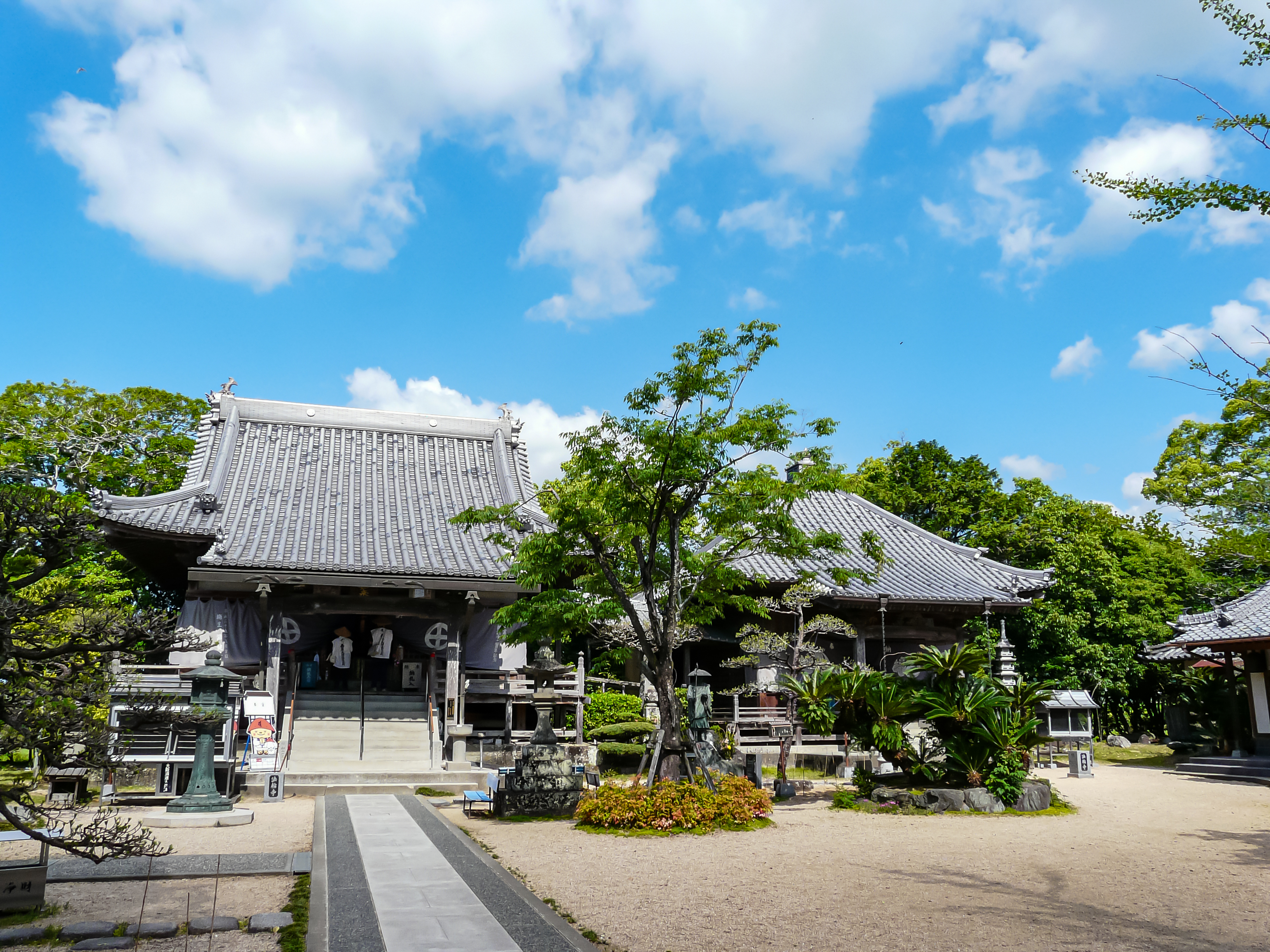
Image of Jūraku-ji (十楽寺). Image source · CC-BY-SA-4.0
Station 7 of 88
Shikoku 88 Temple PilgrimageVisit essentials
A quick read before you go
- Duration
- 30-45 minutes for a standard visit.
- Access
- About 1.2 km west of Anraku-ji on the standard henro route; easily walkable in twenty minutes.
Overview
Just over a kilometer west of Anraku-ji, the road continues into Awa, and the precinct of Jūraku-ji opens behind a distinctive two-story Chūmon — an inner gate housing not the standard Niō guardian kings but Aizen Myōō, the Love-Dyed Wisdom King.
The temple's name, written with the characters for 'ten' and 'joys,' expresses a Pure Land aspiration: ten kinds of bliss to outweigh the eight sufferings of human existence — birth, aging, illness, death, separation from the loved, encounter with the disliked, the unmet desire, and the burden of attachment to the five aggregates that constitute the self.
The principal image is Amida Nyorai, Buddha of the Pure Land, traditionally said to have been carved by Kūkai while he preached in this area during the Daidō era (806-810).
The temple was originally located about three kilometers north, in a place called Dōgahara in the Jūrakuji Valley; the medieval temple was burned by Chōsokabe Motochika in the 16th century, the chief priest is said to have rescued the principal image and carried it to safety on his back, and the rebuilt temple was relocated to its current site in 1635. The new wooden Hondō was completed in 1994.
But pilgrims do not come to Jūraku-ji primarily for the Amida principal image. They come for two side-stations that distinguish it among the early-route temples: the eye-healing Jizō informally known as Chigan Shitsume Kyūsai Jizō, beside the Hondō, where pilgrims with vision-related ailments come and pray; and the row of seventy small Jizō statues, mizuko-Jizō, dedicated to children lost to miscarriage, stillbirth, or abortion. The mizuko row is among the most quietly affecting features of the early Tokushima leg.
Many henro who pass through this temple do so unprepared for it. The combination of Pure Land naming, eye-healing intercession, and mizuko memorial creates a devotional gravity that sometimes surprises pilgrims this early on the route — typically prompting unexpected emotional response.
Why this place is sacred
The 'Ten Joys' theme of the temple's name corresponds to standard Pure Land doctrinal vocabulary: ten kinds of bliss available in Sukhāvatī, Amida's western paradise. The temple's full mountain-and-hall name — Kōmyōzan Rengein Jūrakuji, 'Bright-Light Mountain Lotus-Garden Hall Temple of Ten Joys' — embeds three Pure Land images simultaneously: the bright light of Amida's name, the lotus that opens at rebirth, and the ten joys themselves.
Within this Pure Land framework, the temple's specialized intercessions register as embodied applications of Amida's compassion. The eye-healing Jizō addresses a specific bodily condition. The mizuko-Jizō row addresses the most acute grief Japanese Buddhist practice has developed a vocabulary for. The Aizen Myōō at the Chūmon gate works on a third register: a tantric figure who transmutes erotic and emotional attachment into bodhisattva resolve, his presence at the inner gate turning the architectural threshold itself into a doctrinal one.
Relationships purified before entry. The combination is unusual on the early route, and the temple's relatively small size concentrates it.
Tradition places the founding during the Daidō era (806-810) by Kūkai, who is said to have witnessed Amida Nyorai while preaching in this area. The original temple stood about three kilometers north of the present site, in Dōgahara in the Jūrakuji Valley.
The medieval temple complex was burned during Chōsokabe Motochika's 16th-century invasion of Awa. Tradition holds that the chief priest rescued the principal Amida image and carried it to safety. The temple was rebuilt at the current location in 1635 and a new wooden Hondō was completed in 1994. The mizuko-Jizō and eye-healing Jizō devotions appear to have intensified during the Edo and modern periods as the henro practice grew. The temple is today a Kōyasan Shingon parish temple.
Experience and orientation
The walk from Anraku-ji takes about twenty minutes along quiet roads. The first gate is the standard Niōmon. The Chūmon — the inner two-story gate housing Aizen Myōō — distinguishes the entry; pilgrims familiar with the Shikoku 88 route notice it because the Niō are not the typical figures here. Inside, the precinct is compact. The Hondō stands ahead, the Daishi-dō to one side, and beside the Hondō is the small enclosure of the eye-healing Jizō.
To the other side is the row of seventy small Jizō statues, each one dressed in a red cap or bib, often with small offerings — toys, candy, paper cranes, sometimes a hand-written note. At the Hondō the standard ritual unfolds — candle, three incense sticks, osamefuda, coin, the Heart Sutra, and the Amida mantra. The same at the Daishi-dō. At the Chūmon, pilgrims familiar with esoteric practice may chant the Aizen Myōō mantra.
At the eye-healing Jizō, the traditional gesture is to wash one's eyes lightly with the temple's water before prayer rather than touching the statue itself. At the mizuko row, the gesture is quieter: a coin, a moment, a small offering if one is carried, or simply a bow. Many pilgrims pause longer than they planned. The stamp office is to the right. Twenty to forty-five minutes is typical, though those who came specifically for mizuko-kuyō stay longer.
The temple is small enough to take in at a glance, but the three devotional stations — eye-healing Jizō, mizuko-Jizō row, Aizen Myōō at the Chūmon — each warrant their own pause. Visit the Hondō and Daishi-dō first to complete the standard ritual; the side stations have no required sequence and are visited as inclination prompts.
Context and lineage
Kūkai is said to have witnessed Amida Nyorai while preaching in this area during the Daidō era. He carved a statue of Amida and named the temple Kōmyōzan Jūraku-ji — 'Bright-Light Mountain Temple of Ten Joys' — in the hope that ten lights of joy would shine on people despite the eight sufferings of human existence.
When Chōsokabe Motochika's forces burned the temple in the 16th century, the chief priest is said to have rescued the principal image, carrying it to safety on his back. The relocated temple was built at the current site in 1635.
Jūraku-ji is a parish temple of the Kōyasan Shingon-shū. Its dedication to Amida Nyorai expresses Shingon's integration of Pure Land devotion with esoteric ritual. The Aizen Myōō at the Chūmon and the eye-healing Jizō beside the Hondō layer tantric and folk-Buddhist practices into the broader Pure Land framework, producing the temple's particular three-register character.
Kūkai (Kōbō Daishi)
Founder; traditional carver of the principal Amida image
Anonymous 16th-century chief priest
Rescuer of the principal Amida image during the Chōsokabe burning
17th-century rebuilders
Builders of the relocated temple in 1635
Chōsokabe Motochika
16th-century destroyer
Traditions and practice
At each main hall, the standard sequence — chōzuya, one bell stroke on arrival, candle, three incense sticks, osamefuda, coin, sutra. The Amida mantra ('On amirita teizei kara un') is chanted at the Hondō; the Kōbō Daishi mantra at the Daishi-dō. At the Chūmon, the Aizen Myōō mantra ('On makakyaranan banzaroshunisha bazara satoba jaku un ban koku') is chanted by those familiar with it.
At the eye-healing Jizō, pilgrims wash their eyes with a small handful of water from the temple's water source — never touching the statue itself — and offer a coin and a brief prayer. At the mizuko-Jizō row, mizuko-kuyō is the technical term for the memorial practice; small offerings of flowers, candy, or folded paper are common, and formal services can be arranged through the temple office for families bearing specific grief.
Daily Shingon liturgy continues. Eye-health prayers at the Jizō and mizuko-kuyō at the small-Jizō row are the most active specialized practices. Relationship and harmonious-marriage blessings are offered at the Aizen Myōō. The stamp office issues the seventh inscription. Formal kitō services for any of these intercessions can be requested; the temple office can advise on timing.
Complete the standard ritual at both halls. Visit the eye-healing Jizō with a small intention — eye health, vision, or by extension, clarity of seeing. At the mizuko row, slow down. Even pilgrims with no personal experience of mizuko grief often find the row affecting; bring whatever attention you have. If you carry specific grief — a miscarriage, an abortion, a lost child — this is a place where Japanese Buddhist practice has developed a vocabulary that may register.
At the Aizen Myōō at the Chūmon, the gesture is quieter: a bow on entry, a moment of attention to the figure's tantric presence at the threshold.
Shingon Buddhism (Kōyasan branch)
ActiveTemple 7 of the Shikoku Pilgrimage. Mountain name Kōmyōzan ('Bright Light Mountain'), hall name Rengein ('Lotus Garden Hall'). The 'Ten Joys' (jū-raku) of the temple's name evoke Pure Land bliss as antidote to the eight sufferings of human life.
Daily Shingon liturgy at Hondō (Amida Nyorai) and Daishi-dō. Pilgrim chanting includes the Heart Sutra, the Amida mantra, and the Kōbō Daishi mantra. Specialized prayer at the Aizen Myōō Chūmon and at the eye-healing Jizō.
Mizuko-kuyō (memorial for lost children)
ActiveA row of 70 small Jizō statues memorializes mizuko — children lost to miscarriage, stillbirth, or abortion. The mizuko-kuyō tradition in its current form is largely a 20th-century Japanese Buddhist elaboration; Jizō Bosatsu's older role as protector of children in the lower realms underlies the practice.
Small offerings of flowers, candy, folded paper cranes, or hand-written notes are left before specific Jizō statues. Formal kuyō services for families bearing specific grief can be arranged through the temple office.
Perspectives and open questions
Jūraku-ji's three devotional stations invite three different readings, and each station functions on its own register: doctrinal Pure Land at the Hondō, folk-Buddhist intercession at the eye-healing Jizō and the mizuko row, and tantric esotericism at the Aizen Myōō.
Scholarly perspective
Like neighboring fudasho, the Kūkai foundation tradition is hagiographic; the documented architectural history starts with the 1635 relocation to the present site. The 'Ten Joys' theme corresponds to standard Pure Land doctrinal vocabulary that became prominent in Japanese Buddhism from the late Heian period onward. Whether an actual Heian-period Amida image survives is unclear; the 16th-century rescue tradition would imply yes, but no rigorous provenance study is publicly available.
Living and traditional perspectives
Shingon doctrine reads Amida and Aizen Myōō together as complementary: the soft light of the Pure Land and the fierce wisdom-light of passion transformed. This pairing makes Jūraku-ji a small esoteric microcosm. The eye-healing Jizō is read as a continuing manifestation of Jizō Bosatsu's vow to relieve suffering across the six realms.
Alternative interpretations
Aizen Myōō (the 'Love-Dyed Wisdom King') is a tantric figure who transmutes erotic and emotional attachment into bodhisattva resolve; his presence at the Chūmon turns the gate itself into a doctrinal threshold — relationships purified before entry. The mizuko-kuyō tradition belongs to a particular postwar Japanese Buddhist development; while individual Jizō for lost children appear in earlier centuries, the formal mizuko-kuyō practice in its current form is largely a 20th-century elaboration responding to specific Japanese postwar conditions.
Jūraku-ji's row of seventy small Jizō is among the more developed installations of this practice on the early Shikoku route.
Open questions
Whether an actual Heian-period Amida image survives is unclear. The exact dating of the eye-healing Jizō tradition at this temple is undocumented. The seventy small Jizō statues represent specific family-sponsored memorials accumulated over years, and their individual histories are not publicly catalogued.
Plan your visit
Access and arrival
About 1.2 km west of Anraku-ji on the standard henro route; easily walkable in twenty minutes. Free parking on site. Address: 198 Imabori, Tsuchinari, Awa-chō, Awa-shi, Tokushima Prefecture.
No shukubo at Jūraku-ji. Hotels and minshuku in Awa City. Most walking henro have stayed at Anraku-ji's shukubo the previous night and continue on toward Temple 8 and beyond after their visit here.
Respectful visit
Pilgrim whites are encouraged but not required. Modest casual dress is acceptable. There is no specific dress requirement for any of the side stations.
Permitted in the open precinct. The Chūmon's two-story architecture is photographically distinctive. Restraint near the mizuko-Jizō row — avoid intrusive close-ups, and do not photograph specific statues bearing recent offerings. Avoid flash inside halls.
At each main hall: coins, candle, three incense sticks, and an osamefuda. At the eye-healing Jizō: a coin in the offering box and a moment of prayer. At the mizuko row: small offerings of flowers, sweets, or folded paper are customary; do not leave offerings that would attract animals or that would not weather a few days outdoors. At the Aizen Myōō at the Chūmon: a bow is the standard gesture; no formal offering is required.
Do not touch the eye-healing Jizō. Do not remove offerings from the mizuko row. Do not photograph specific mizuko statues bearing recent family offerings. Do not climb the Chūmon beyond visitor-accessible levels. Do not enter behind the altars.
Do not light your candle from another pilgrim's flame. Do not touch the eye-healing Jizō image; the traditional practice is to wash your own eyes with the temple's water before prayer rather than to touch the statue. Do not photograph the mizuko-Jizō at close range; many of the small statues bear specific family offerings, and the row is a site of active grief. Do not remove offerings from the mizuko row.
Current practical details
Address
Hokyoden-58 高尾 土成町 Awa, Tokushima 771-1509, Japan
Phone
Hours
Hours, fees, and access can change — verify on the official source before you travel. Practical details last checked Jun 2026.
Location
Map loads as you approach this section.
Pilgrim reflections
A portrait of encounter, not a score
Pilgrims describe what they felt, how present they could become, and whether the place would shape a journey. There are no stars and no ranking of traditions.
No reviewed reflections yet
The first pilgrims can help describe the character of being here.
Share a reflection
Available after an account-backed “Been there.” Every reflection is reviewed before publication.
Watch deeper
Films, episodes, and recorded talks for visitors who want more context before or after a visit. Speculative and alternative-history entries are labelled as perspectives, not as sources for established claims.
Nearby sacred places
Explore other sacred places in the region. Proximity does not establish access or travel time; check each place’s guidance.



References
Sources consulted for this page. Source categories describe the publication, not a guarantee that every claim is verified. Traditional accounts and outside interpretations may differ.
- 01Jurakuji – Awa, Tokushima Prefecture, Shikoku — Henro.orgguideStandard pilgrimage reference
- 02Temple 7, Jūrakuji — Tourism ShikokuguideOfficial regional tourism portal
- 03Koumyouzan Rengein Jyurakuji — Shikoku 88 Temple Pilgrimage AssociationofficialOfficial 88-temple association
- 04Customs and Etiquette of the Shikoku Pilgrimage — Henro.orgguidePilgrim protocol
- 05Jūraku-ji (Awa) — WikipediaencyclopediaCross-referenced
Pilgrim glossary
- Bodhisattva
- An enlightened being who postpones full nirvana to help others toward awakening.
- Sutra
- A canonical Buddhist scripture, often chanted as part of practice.
- Mantra
- A sound, word, or phrase repeated as part of meditation or ritual.
- Shingon
- An esoteric Japanese Buddhist school emphasizing ritual, mantra, and mandala practice.
- Pure Land
- A Buddhist tradition focused on rebirth in Amida Buddha's western paradise through devotional practice.
Share a photo
Help visitors recognize Jūraku-ji. Every submission is reviewed before publication.