Enryaku-ji temple and Mt. Hiei
The mother temple where Japanese Buddhism was born and where monks still walk to enlightenment
Understand sacred places, explore living traditions, and learn how to engage respectfully with Pilgrim Map.
Access has not been verified. Check current local guidance before planning a visit.
Otsu, Shiga Prefecture, Japan
Read the sources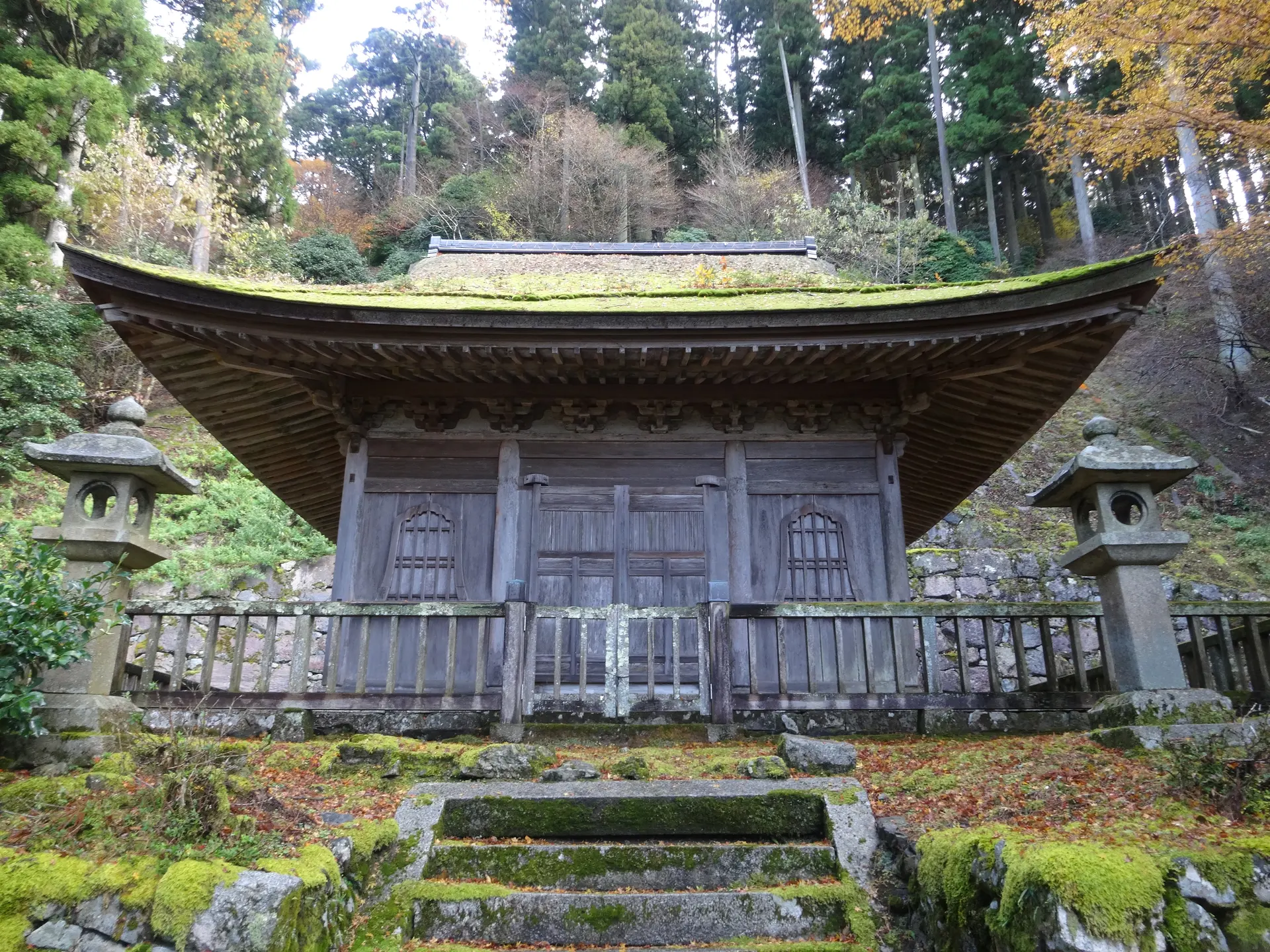
Station 18 of 33
New Saigoku Kannon PilgrimageVisit essentials
A quick read before you go
- Duration
- A half day allows thorough exploration of one area, typically Todo with the Konpon Chudo.
- Access
- Temple hours are generally 9:00 AM to 4:00 PM, varying slightly by season and area.
Overview
Enryaku-ji, headquarters of Tendai Buddhism, spreads across 1,700 hectares in three main areas on Mount Hiei and is designated a UNESCO World Heritage Site. Its Eternal Dharma Light, lit before the Medicine Buddha by Saicho in 788 CE, has remained burning for twelve centuries.
The monastery trained the founders of Pure Land, Zen, and Nichiren Buddhism; at its height it held 3,000 sub-temples and an army of warrior monks, and its tradition recovered after Oda Nobunaga burned it in 1571, killing 20,000.
Monks still undertake the seven-year kaihogyo, walking approximately 24,000 miles—the circumference of the earth—and stopping at over 250 sacred sites daily, including nine days without food, water, rest, or sleep. Only 46 men have completed the full practice since 1885; they are considered living Buddhas. Mount Hiei thus offers an encounter with a spiritual source that shaped Japanese civilization.
Why this place is sacred
The thinness at Mount Hiei arises from accumulated practice. Twelve centuries of monks have chanted, meditated, walked, and sought awakening on these slopes. The Eternal Dharma Light represents this continuity in physical form, a flame that has burned since Japan was still forming its religious identity. But the thinness is not merely historical. The tradition remains vigorously alive. Monks still train here following the same curriculum that produced Honen, Shinran, Dogen, Eisai, and Nichiren.
The kaihogyo practitioners still walk their circuits, visiting 250 sacred sites daily, accumulating merit through motion. The mountain itself is sacred geography, positioned northeast of Kyoto to protect the imperial capital from evil spirits approaching from the inauspicious direction. Standing in the Konpon Chudo before the Eternal Light, visitors encounter not a museum but an active spiritual forge where awakening is still being pursued with radical commitment.
Saicho established his hermitage on Mount Hiei to practice the Tendai teachings he would later bring from China, seeking to create a center for authentic Buddhist training away from the political complications of the Nara Buddhist establishment. The mountain's position was also understood to provide spiritual protection for the capital.
Over twelve centuries, Enryaku-ji evolved from a small hermitage to a vast monastic complex to a military power to its present status as a UNESCO World Heritage Site. The monastery's influence extended far beyond religion, shaping political history through its warrior monks and intellectual history through the founders it trained. The 1571 burning by Oda Nobunaga marked a turning point, ending the temple's military power while preserving its spiritual authority.
Modern Enryaku-ji maintains Tendai practice while welcoming visitors seeking connection to Japanese Buddhism's deepest roots.
Experience and orientation
Approaching Mount Hiei by cable car or road, visitors ascend through forests that have sheltered monks for over a millennium. The temple complex divides into three main areas: Todo (East Pagoda), Saito (West Pagoda), and Yokokawa, together spanning 1,700 hectares. Most visitors begin at Todo, home to the Konpon Chudo, the main hall containing the Eternal Dharma Light.
Entering this dimly lit space, visitors descend to the level of the flames, which burn in oil lamps below the main floor, while statues of the Medicine Buddha reside at eye level. The arrangement represents Buddhist teaching that Buddha and the practitioner exist on the same level. The experience of seeing flames that have burned continuously since 788 CE creates a palpable sense of temporal depth.
Beyond the main hall, pathways lead to sub-temples, lecture halls, and training facilities still in active use. The walk to Saito takes approximately thirty minutes through forested paths where kaihogyo monks conduct their walking meditation. Yokokawa requires additional transport but offers the most secluded atmosphere. Throughout, views of Lake Biwa and the Kyoto basin remind visitors of the mountain's protective role.
The three areas of Enryaku-ji are spread across Mount Hiei and cannot be visited in a single quick walk. Todo is the most visited, containing the Konpon Chudo with the Eternal Light. Saito offers more contemplative atmosphere with fewer crowds. Yokokawa is the most remote, requiring bus access. Shuttle buses connect the three areas. A half-day visit allows thorough exploration of one area; a full day permits visiting all three.
The cable car from Sakamoto provides the most atmospheric arrival; buses from Kyoto are more direct.
Context and lineage
In 788 CE, the monk Saicho climbed Mount Hiei seeking a place for serious Buddhist practice away from the political entanglements of Nara. He built a small hermitage, carved a statue of Yakushi Nyorai, the Medicine Buddha, and lit a flame before it. That flame has never been extinguished. In 805 CE, Saicho traveled to China where he studied Tendai, Zen, Pure Land, and esoteric Buddhism, synthesizing these traditions into Japanese Tendai upon his return.
One week after his death in 822 CE, the government officially recognized Tendai as an independent Buddhist sect. His monastery grew to become the most influential center of Buddhist training in Japan. Founders of Pure Land Buddhism, Zen Buddhism, and Nichiren Buddhism all trained here before establishing their own schools. The kaihogyo practice was founded by Soo Kasho in the ninth century, adding the dimension of walking meditation to Tendai practice.
Enryaku-ji maintains the Tendai lineage transmitted from China by Saicho, which itself traces back through the Chinese Tiantai school to Indian Buddhist origins. But the temple's influence extends beyond Tendai. The comprehensive training offered here, combining study, meditation, and esoteric practice, provided the foundation that monks carried into the other schools they founded. When practitioners of Pure Land, Zen, or Nichiren Buddhism trace their lineages back far enough, they arrive at Mount Hiei.
This makes Enryaku-ji not just one lineage holder but the common ancestor of Japanese Buddhism.
Saicho (Dengyo Daishi)
Founder of Japanese Tendai Buddhism
Soo Kasho
Founder of kaihogyo practice
The founders trained at Enryaku-ji
Founders of major Japanese Buddhist schools
Traditions and practice
Tendai practice synthesizes multiple Buddhist approaches: textual study, seated meditation, esoteric ritual, and Pure Land devotion. The kaihogyo represents an additional dimension: enlightenment through walking. Over seven years, monks undertake a 1,000-day practice that begins with 30 kilometers daily for 100 consecutive days, gradually increasing to 84 kilometers daily in later stages. The route includes over 250 prayer stops. In the fifth year, practitioners undergo doiri, nine consecutive days without food, water, rest, or sleep, constantly reciting mantra.
The practice is understood as a path to becoming a living Buddha, achieving enlightenment in this body, in this lifetime.
Daily services continue throughout the temple complex, with monks maintaining the same schedules followed for centuries. The Eternal Dharma Light requires constant tending. Kaihogyo practitioners, when in active practice, can sometimes be encountered on the mountain paths in the predawn hours, white-robed figures moving through darkness by lantern light. For visitors, shakyo (sutra copying) is offered as a meditative practice. Guided tours explain the temple's history and significance.
Enter the Konpon Chudo slowly, allowing eyes to adjust to the dimness and awareness to settle. Spend time with the Eternal Light, contemplating its unbroken burning since 788 CE. If time permits, walk between the temple areas on foot rather than by shuttle, following paths that kaihogyo monks traverse. Consider participating in shakyo, copying sutras by hand as generations have done.
Whether you stay for an hour or a full day, let the accumulated practice of twelve centuries inform your own contemplation.
Tendai Buddhism
ActiveEnryaku-ji is the headquarters of Tendai Buddhism, founded by Saicho in 788 CE. Tendai synthesizes multiple Buddhist practices including textual study, meditation, esoteric ritual, and Pure Land devotion. The school taught that enlightenment was possible in this lifetime.
Daily Buddhist services, monastic training, meditation, study of Tendai doctrine, esoteric ritual
Kaihogyo (Marathon Monks)
ActiveThe kaihogyo practice, founded by Soo Kasho in the ninth century, represents enlightenment through walking. Only 46 men have completed the full 1,000-day practice since 1885.
Daily walking meditation covering 30-84 kilometers, visiting 250+ sacred sites, mantra recitation, nine-day fasting retreat (doiri)
Perspectives and open questions
Understanding of Enryaku-ji encompasses scholarly assessment of its historical role, traditional teaching about spiritual attainment, and continuing mysteries about its deepest practices.
Scholarly perspective
Academic analysis positions Enryaku-ji as the single most influential institution in Japanese religious history. The monastery served as the training ground for virtually every major Buddhist innovator who shaped Japan's religious landscape. The temple's political and military power during the medieval period significantly influenced national history beyond religion. The kaihogyo practice represents one of the most extreme forms of asceticism documented in any world religion, providing material for studies of human physical and psychological limits in religious practice.
Living and traditional perspectives
In Tendai teaching, enlightenment is attainable in this lifetime through devoted practice. The kaihogyo represents a genuine path to Buddhahood, not merely a symbol or a metaphor. Monks who complete the 1,000-day practice achieve identification with Fudo Myoo, the Immovable Wisdom King, becoming living Buddhas who can confer blessings. The Eternal Dharma Light represents the unbroken transmission of Buddha's teaching from India through China to Japan, a literal flame of awakening kept alive across twelve centuries.
Alternative interpretations
Some view Mount Hiei as a powerful energy center whose position northeast of Kyoto creates spiritual protection for the ancient capital. The mountain is conceived as a guardian dragon whose presence maintains cosmic balance. The extreme practices of the kaihogyo monks are understood as generating spiritual power that benefits not just the practitioners but all beings.
Open questions
Significant mysteries remain about the full extent of esoteric practices transmitted at the temple, many of which are closely guarded. Details of the original rituals established by Saicho are not fully documented. What kaihogyo practitioners actually experience during the nine-day doiri, the period without food, water, rest, or sleep, remains largely beyond description.
Plan your visit
Access and arrival
Temple hours are generally 9:00 AM to 4:00 PM, varying slightly by season and area. Paid admission applies, with combined tickets available for multiple areas. The Sakamoto cable car provides atmospheric ascent from the east; buses from Kyoto approach from the west; the Hiei-zan Driveway allows car access. Shuttle buses connect the three temple areas.
Accommodation is available in Otsu at the mountain's base, or visitors can stay in Kyoto and visit Mount Hiei as a day trip. The temple area itself does not offer visitor accommodation.
Respectful visit
No specific dress code applies, but comfortable walking shoes are essential for navigating the mountain terrain. Mountain weather can be significantly cooler than the lowlands, so layers are advisable.
Photography is permitted in most outdoor areas and some interior spaces. Restrictions may apply in halls where images of the Buddha are enshrined. Follow posted signage.
Coins may be offered at main halls and sub-temples. Incense is available for purchase and offering.
{"Remove shoes when entering buildings","Maintain quiet in worship spaces","Kaihogyo practice restricted to ordained monks","Inner sanctuaries restricted","Respect ongoing Buddhist services"}
The kaihogyo practice is restricted to selected monks who undergo years of preparation; visitors cannot participate. Certain monastic areas and inner sanctuaries are restricted. Winter weather can make mountain access difficult.
Current practical details
Address
4220 Sakamotohonmachi, Otsu, Shiga 520-0116, Japan
Phone
Hours
Hours, fees, and access can change — verify on the official source before you travel. Practical details last checked Jun 2026.
Location
Map loads as you approach this section.
Pilgrim reflections
A portrait of encounter, not a score
Pilgrims describe what they felt, how present they could become, and whether the place would shape a journey. There are no stars and no ranking of traditions.
No reviewed reflections yet
The first pilgrims can help describe the character of being here.
Share a reflection
Available after an account-backed “Been there.” Every reflection is reviewed before publication.
Nearby sacred places
Explore other sacred places in the region. Proximity does not establish access or travel time; check each place’s guidance.


References
Sources consulted for this page. Source categories describe the publication, not a guarantee that every claim is verified. Traditional accounts and outside interpretations may differ.
- 01Mt. Hiei Enryakuji Temple - Japan Travel — Japan National Tourism OrganizationSource contextOfficial tourism information
- 02Enryakuji - World History Encyclopedia — World History EncyclopediaacademicAcademic historical source
- 03Hieizan (Mt. Hiei) - Official Website — Hieizan & Biwako TourismSource contextOfficial site information
- 04Enryaku-ji - Wikipedia — Wikipedia contributorsencyclopediaComprehensive overview
- 05Kaihogyo - Wikipedia — Wikipedia contributorsencyclopediaInformation on marathon monks
- 06Enryakuji Temple (Mount Hieizan) — Japan GuideguideVisitor information
Pilgrim glossary
- Sutra
- A canonical Buddhist scripture, often chanted as part of practice.
- Mantra
- A sound, word, or phrase repeated as part of meditation or ritual.
- Dharma
- The teachings of the Buddha; also the universal law underlying them.
- Tendai
- A Japanese Buddhist school based on the Lotus Sutra, foundational to many later traditions.
- Pure Land
- A Buddhist tradition focused on rebirth in Amida Buddha's western paradise through devotional practice.
- Zen
- A Japanese Buddhist school emphasizing seated meditation and direct insight.
Share a photo
Help visitors recognize Enryaku-ji temple and Mt. Hiei. Every submission is reviewed before publication.