Mt. Bandai
Where volcanic destruction birthed otherworldly beauty and ancient mountain ascetics still roam
Understand sacred places, explore living traditions, and learn how to engage respectfully with Pilgrim Map.
Access has not been verified. Check current local guidance before planning a visit.
Inawashiro, Fukushima Prefecture, Japan
Read the sources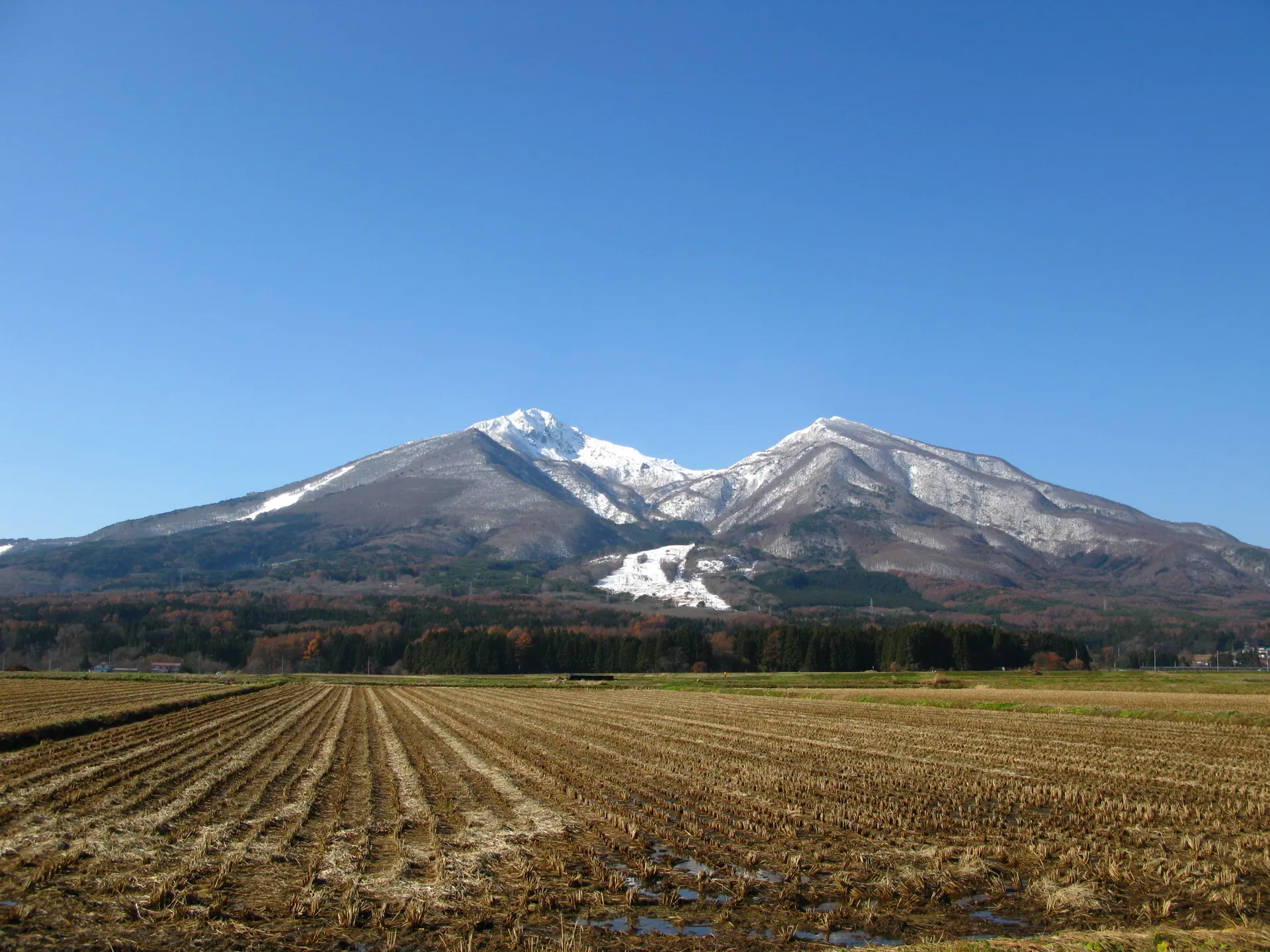
Image of Mt. Bandai. Image source · CC-BY-SA-3.0
Visit essentials
A quick read before you go
- Duration
- 4-6 hours for summit hike; full day for comprehensive area exploration including Urabandai lakes
- Access
- Open year-round, weather and volcanic conditions permitting.
Overview
Mount Bandai in Fukushima Prefecture embodies sacred transformation. Known in ancient times as 'Iwahashi-yama'—the rock ladder to the sky—it was revered as a bridge between earthly and heavenly realms. Resemblance to Mount Fuji also earned it the name 'Aizu Fuji.'
In the early Heian period, the Buddhist monk Tokuitsu established Enichiji Temple on Bandai's southwestern slopes and enshrined Yakushi Nyorai, the Medicine Buddha, as protector of the Aizu region. Pilgrims climbed here seeking healing for centuries.
On July 15, 1888, the worst volcanic disaster in modern Japanese history struck: a catastrophic phreatic eruption collapsed 'Little Bandai,' killed 477 people, and replaced the perfect cone with a scarred caldera. Minerals released in the eruption colored over one hundred new lakes and ponds. Now a UNESCO Global Geopark, Mount Bandai makes creation, destruction, and the Shugendo teaching of impermanence visible together. Yamabushi still seek wisdom on slopes they have roamed for over 1,400 years.
Why this place is sacred
The thinness of Mount Bandai lies in its embodiment of transformation. Ancient peoples called it 'rock ladder to the sky,' sensing that this peak reached toward something beyond the ordinary world. When Tokuitsu established Enichiji Temple here, he was drawn by that same quality - the mountain's presence as a threshold between realms.
The 1888 eruption paradoxically intensified this thinness. Where scholars once spoke of the mountain as a bridge between worlds, now it demonstrates an even more profound truth: nothing is permanent, and destruction can birth beauty. The hundreds of lakes created by the eruption glow with mineral colors that seem not entirely of this world. The scarred landscape speaks of forces beyond human scale.
Shugendo practitioners have always known that mountains reveal truth through their power and danger. Mount Bandai now teaches this lesson with devastating clarity. To walk here is to walk on a mountain that has died and been reborn - a physical koan about the nature of existence.
Mount Bandai's original sacred purpose centered on its role as a celestial bridge - the 'rock ladder to the sky' that connected earth and heaven. When Tokuitsu established Enichiji Temple, the mountain became a center for Yakushi Nyorai worship, offering healing and protection to the Aizu region. The temple overlooked the basin below like a guardian.
The 1888 eruption destroyed much of the historical Buddhist infrastructure, including Enichiji Temple. Yet rather than ending the mountain's sacred significance, the catastrophe deepened it. The new landscape - with its hundreds of colored lakes and dramatic caldera - became a teaching about impermanence. The Shugendo tradition, which had practiced in the region for over 1,400 years, found in the transformed mountain an even more powerful object of contemplation.
Today Mount Bandai serves as both a memorial to those who perished and a meditation on nature's capacity for renewal.
Experience and orientation
Approaching Mount Bandai, visitors first encounter the Urabandai area - the 'backside' created by the 1888 eruption. Here, over one hundred lakes and ponds fill the scarred landscape, their waters tinted ethereal blues and greens by volcanic minerals. The silence here feels different from ordinary quiet; it is the silence of a place that has witnessed catastrophe and survived.
The climb itself follows trails through forests that have regrown on devastated slopes - new life on old destruction. Views open to reveal the caldera left when 'Little Bandai' collapsed in 1888. From certain angles, the mountain still suggests 'Aizu Fuji,' the resemblance to Japan's holiest peak that earned it that name.
At higher elevations, the atmosphere shifts. The air thins, the volcanic origins become more apparent in the rocky terrain, and the sense of the mountain as a living, dangerous presence grows stronger. This is the landscape that Shugendo practitioners have traversed for over 1,400 years, finding in its challenges and dangers a path to spiritual awakening.
Descending through the colored lakes of Urabandai, visitors often report a profound sense of having witnessed something essential about the nature of change - how destruction can birth unexpected beauty.
Mount Bandai lies within Bandai-Asahi National Park in Fukushima Prefecture. The mountain has three main peaks, with hiking trails approaching from various directions. The Urabandai area, with its many colored lakes, lies to the north of the main peaks. Most visitors access the area via Inawashiro Station, then bus or taxi to trailheads.
Context and lineage
Mount Bandai's sacred history begins with its ancient name: 'Iwahashi-yama' - rock ladder to the sky. This name suggests that ancient peoples saw the mountain as a divine bridge, a place where heaven and earth drew near. In the early Heian period, the Buddhist monk Tokuitsu climbed these slopes and established Enichiji Temple, enshrining Yakushi Nyorai, the Medicine Buddha, to bring healing and protection to the Aizu region.
The temple overlooked the basin below, its presence a blessing upon the land.
For centuries, pilgrims came to receive that blessing. The mountain's resemblance to Mount Fuji earned it the name 'Aizu Fuji,' connecting it in the popular imagination to Japan's most sacred peak. Shugendo practitioners included the mountain in their circuits of sacred sites across the Bandai-Asahi region.
Then came July 15, 1888. Without warning, 'Little Bandai' - a secondary peak - exploded in a massive phreatic eruption. The collapse sent debris avalanches racing down the slopes at over 100 kilometers per hour. Entire villages vanished. In minutes, 477 people died - the worst volcanic disaster in modern Japanese history.
From the destruction emerged a transformed landscape. Over one hundred lakes and ponds filled the depression left by the collapse, their waters colored by volcanic minerals. The mountain that had been 'Aizu Fuji' now bore scars that spoke of nature's awesome power.
Mount Bandai's spiritual lineage encompasses both institutional Buddhism and the mountain ascetic tradition of Shugendo. Tokuitsu's Tendai Buddhist temple established formal worship here in the Heian period. Meanwhile, the broader Shugendo tradition that has practiced in the Bandai-Asahi region for over 1,400 years continued its mountain asceticism, connected to the great Dewa Sanzan tradition to the north. After the 1888 eruption destroyed much of the Buddhist infrastructure, the Shugendo connection remained, with yamabushi still traversing these sacred slopes.
Tokuitsu
Founder of Enichiji Temple
Traditions and practice
Traditional practices at Mount Bandai centered on the worship of Yakushi Nyorai at Enichiji Temple, where pilgrims came seeking healing and protection. Shugendo practitioners - yamabushi - performed mountain asceticism on the slopes, using the physical challenges of the terrain to transcend ordinary consciousness. These practices were part of a broader circuit of sacred mountains in the Bandai-Asahi region, connected to the Dewa Sanzan tradition.
Contemporary practice at Mount Bandai has shifted from temple-centered worship (the historical temples were largely destroyed) to mountain pilgrimage and contemplation. Visitors climb the trails as a form of meditation, encountering the volcanic landscape as a teaching about impermanence. Memorial sites commemorate those who died in 1888. Some connection to Dewa Sanzan Shugendo practice continues, with yamabushi occasionally seen on the mountain.
Visitors seeking a spiritual experience at Mount Bandai might approach the climb as a meditation on transformation. The colored lakes of Urabandai offer opportunities for quiet contemplation of how beauty can emerge from destruction. Pausing at memorial sites for the 1888 victims connects the visitor to the human cost of the mountain's transformation. The summit climb itself can be treated as the Shugendo practitioners treat it - as an ordeal that clears the mind through physical challenge.
Tendai Buddhism / Yakushi Nyorai Veneration
HistoricalIn the early Heian period, the Buddhist monk Tokuitsu established Enichiji Temple on Mount Bandai's southwestern slopes, enshrining Yakushi Nyorai (the Medicine Buddha). The temple made the mountain a center of healing and protection for the Aizu region. Much of this historical Buddhist presence was destroyed in the 1888 eruption.
Yakushi Nyorai worship, temple pilgrimage, healing prayers (historical)
Shugendo / Mountain Worship
ActiveShugendo, the mountain ascetic tradition fusing Buddhism and Shinto, has practiced in the Bandai-Asahi region for over 1,400 years. The dramatic volcanic landscape - especially after the 1888 transformation - embodies the power and danger of nature central to Shugendo philosophy. The tradition continues, connected to Dewa Sanzan practice.
Mountain asceticism, pilgrimage, connection to Dewa Sanzan practice
Perspectives and open questions
Mount Bandai is understood through multiple lenses: geological, historical, and spiritual.
Scholarly perspective
Scholars recognize Mount Bandai as an important example of how volcanic activity shapes both landscape and spiritual geography in Japan. The 1888 eruption is studied as a landmark event in volcanology, providing crucial data about phreatic eruptions and debris avalanches. Historians examine the mountain's role in regional Buddhist history through Enichiji Temple and its place in the broader Shugendo tradition of the Tohoku region.
Living and traditional perspectives
In Shugendo understanding, volcanic mountains like Bandai are especially powerful places where the forces of creation and destruction are palpable. The mountain's dramatic transformation in 1888 demonstrated the teaching of impermanence in the most visceral way possible. What seemed destroyed became something new - exactly the truth that mountain ascetics seek through their practice.
Open questions
Much remains unknown about Mount Bandai's pre-1888 religious landscape. The extent of sacred sites destroyed in the eruption, the specific Shugendo practices performed on the mountain, and the original significance of its ancient name 'rock ladder to the sky' are only partially understood. The mountain keeps its deepest history buried under volcanic debris.
Plan your visit
Access and arrival
Open year-round, weather and volcanic conditions permitting. No admission fee for mountain access (some facilities have fees). Reach via train to Inawashiro Station, then bus or taxi to trailheads.
Hot spring resorts in the Urabandai area; lodging in Inawashiro town; camping available at designated sites
Respectful visit
Proper hiking attire appropriate for mountain conditions. Weather can change rapidly; layers recommended. Sturdy hiking boots essential for rocky volcanic terrain.
Photography permitted throughout. The colored lakes of Urabandai and summit views offer exceptional opportunities.
Traditional offerings appropriate at any shrine or memorial sites encountered.
{"Follow all posted volcanic activity warnings","Stay on designated trails","No camping in prohibited areas","Leave no trace principles strictly observed"}
Mount Bandai is an active volcano monitored by the Japan Meteorological Agency. Check volcanic activity status before visiting. Trails may close during elevated volcanic warnings. Weather conditions can change rapidly at altitude. Proper hiking preparation is essential.
Current practical details
Address
Mount Bandai, Bandaisan, Inawashiro, Yama District, Fukushima 969-3100, Japan
Hours, fees, and access can change — verify on the official source before you travel. Practical details last checked Jun 2026.
Location
Map loads as you approach this section.
Pilgrim reflections
A portrait of encounter, not a score
Pilgrims describe what they felt, how present they could become, and whether the place would shape a journey. There are no stars and no ranking of traditions.
No reviewed reflections yet
The first pilgrims can help describe the character of being here.
Share a reflection
Available after an account-backed “Been there.” Every reflection is reviewed before publication.
Nearby sacred places
Explore other sacred places in the region. Proximity does not establish access or travel time; check each place’s guidance.

References
Sources consulted for this page. Source categories describe the publication, not a guarantee that every claim is verified. Traditional accounts and outside interpretations may differ.
- 01Mt. Bandai - Fukushima Travel — Fukushima TravelSource contextOfficial tourism information
- 02Explore Bandai-Asahi National Park — Japan National Tourism OrganizationSource contextNational park information
- 03Bandai-san Geopark — Bandai-san GeoparkSource contextGeopark information
- 04Mount Bandai - Wikipedia — Wikipedia contributorsencyclopediaComprehensive overview
- 05The 1888 Eruption of Fukushima's Mount Bandai — Unseen JapanSource contextHistorical context
Pilgrim glossary
- Tendai
- A Japanese Buddhist school based on the Lotus Sutra, foundational to many later traditions.
- Koan
- A paradoxical question used in Zen training to break conceptual thinking.
Share a photo
Help visitors recognize Mt. Bandai. Every submission is reviewed before publication.