Anraku-ji
Day-one rest: the only hot-spring shukubo on the Shikoku 88
Understand sacred places, explore living traditions, and learn how to engage respectfully with Pilgrim Map.
Access has not been verified. Check current local guidance before planning a visit.
Kamiita, Tokushima Prefecture, Japan
Read the sources
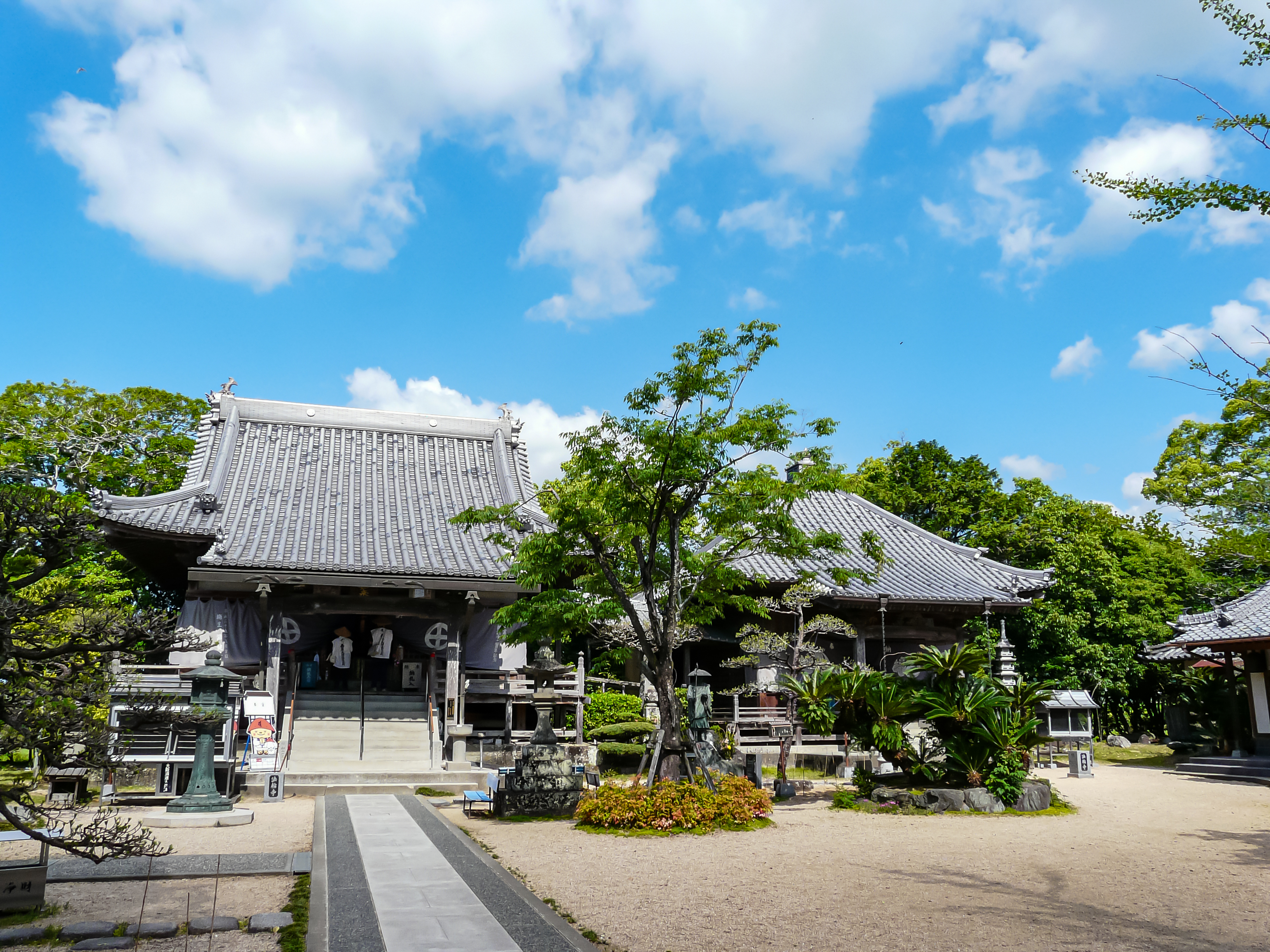
Image of Anraku-ji (安楽寺). Image source · CC-BY-SA-4.0
Station 6 of 88
Shikoku 88 Temple PilgrimageVisit essentials
A quick read before you go
- Duration
- 30-45 minutes for a day-only visit.
- Access
- About 5 km west of Jizō-ji; about a 30-minute walk on the henro route.
Overview
Sixteen kilometers from Temple 1, the first long walking day reaches Anraku-ji in Kamiita, the Temple of Peace and Comfort. Its principal image is Yakushi Nyorai—Bhaiṣajyaguru in Sanskrit—the Buddha of Healing. It is the only fudasho on the Shikoku 88 with its own onsen, attributed to Kūkai's discovery, and the route's only proper hot-spring shukubo. Many henro plan their first night here.
Walkers from Ryōzen-ji typically arrive late in the afternoon after five preceding temples and roughly sixteen kilometers of roads, paddy fields, and village streets. Onsenzan, 'Hot Spring Mountain,' and Ruri-kō-in, 'Lapis-Lazuli-Light Hall,' evoke Yakushi's eastern paradise of healing and describe what the temple offers: hot water, rest, prayer, sleep, a vegetarian shōjin-ryōri dinner supplemented with local Tokushima ingredients, and an evening sutra service led by the chief priest that guests may join.
The current Hondō was rebuilt in 1966 after a 1955 fire. The temple's documented role as a pilgrim ekiroji, or roadside lodging temple, extends back four hundred years through Hachisuka-clan patronage. Its shukubo provides traditional Shoin Japanese-style rooms, beds in a Western-style Kōdō wing, and a New Wing combining both. The bath rewards the day's walking; chanting frames the night.
Why this place is sacred
Yakushi Nyorai's twelve great vows include healing of body and mind, freedom from illness, sufficient food and clothing, and the eventual realization of the Pure Land of Lapis Lazuli Light in the east. Anraku-ji's hall name Ruri-kō-in is a direct reference to that Pure Land. The hot spring saturates this theology with literal water: the bath is not separate from the prayer.
Walking henro who finish their first day here often describe an integrative effect — the pain of the day washed out in the bath, the chanting before sleep folding the day into a single ritual frame, the morning beginning with breakfast and a short service before they shoulder packs and start again. The temple's identity as the early route's healing site is older than written records of the henro practice and continues unchanged.
Founded by Kūkai in 815. He is said to have walked through the area, found a hot spring, carved a Yakushi Nyorai image, and named the temple Anraku-ji ('Temple of Peace and Comfort') with the wish that the site become a refuge of healing for all sentient beings.
Razed by Chōsokabe Motochika in the 16th century and relocated to its current site, Anraku-ji became a roadside lodging temple — ekiroji — under the patronage of the Hachisuka clan, the daimyō family of Edo-period Awa. The shukubo function has continued for more than four hundred years. The Hondō burned in 1955 and was rebuilt in 1966. The present temple is a Kōyasan Shingon parish temple with active overnight pilgrim accommodation.
Experience and orientation
The walk from Jizō-ji to Anraku-ji is about five kilometers along quiet roads through Kamiita. The Niōmon is unhurried, the precinct medium-sized, the chōzuya near the gate, the Hondō ahead, and the Daishi-dō to one side. At the Hondō the standard sequence — candle, three incense sticks, osamefuda, coin, the Heart Sutra, and the Yakushi mantra ('On koro koro sendari matōgi sowaka'). The same at the Daishi-dō. After the formal ritual, henro staying overnight check in at the shukubo office.
Rooms are organized by wing: the Shoin building with traditional tatami rooms and futon bedding, the Kōdō building with Western-style beds, and the New Wing combining elements of both. The onsen schedule rotates between men's and women's hours; observe the schedule posted at the bath entrance. Pilgrims wash thoroughly before entering the bath — soap and shampoo at low stools, full rinse, then enter the bath itself, sitting low with the body submerged to shoulder level. No swimwear.
Tattoos may be restricted; ask in advance. Dinner is served in a shared dining room: shōjin-ryōri vegetarian dishes supplemented with local Tokushima fish and produce. Evening service in the Hondō begins around eight; the chief priest leads, and guests may join the chanting if they wish. Quiet hours begin around 21:00. Breakfast is early. By 7:00 most henro are walking again.
From Jizō-ji walk southwest about 5 km along the henro markers. From JR Itano Station, take a bus or taxi. Free parking on site. For day-only visitors: bow at the Niōmon, do the chōzuya, ring the bell once, complete the standard ritual at both halls, get the stamp. For overnight guests: book ahead by phone or via the temple's official channels — peak henro seasons fill weeks or months in advance. Arrive at the shukubo office before 17:00.
Bring towels for the bath; the temple supplies basic toiletries.
Context and lineage
Kūkai is said to have been walking through the area when he discovered a hot spring rising from the ground. He recognized the site as suitable for a temple of healing, carved a Yakushi Nyorai image, and named the temple Anraku-ji — 'Temple of Peace and Comfort' — with the explicit intention that the site become a refuge of healing for all beings.
The discovery of the spring is attributed to him, though geothermal continuity across the twelve centuries since cannot be independently established.
Anraku-ji is a parish temple of the Kōyasan Shingon-shū. Its identity as the healing temple of the Shikoku 88 — Buddha of Healing, hot spring, shukubo — folds together esoteric Buddhist soteriology, Shingon's characteristic embodied practice, and the older Japanese tradition of onsen as therapeutic and ritually saturated water. The temple is also one of the most documented continuous shukubo on the route, with four-plus centuries of pilgrim lodging records.
Kūkai (Kōbō Daishi)
Founder; traditional discoverer of the hot spring and carver of the principal Yakushi Nyorai image
Hachisuka Iemasa
Edo-period daimyō who established the temple as an ekiroji (roadside lodging temple)
Matsumoto Myōkei
Kyoto Daibutsu sculptor of statues at the temple
Chōsokabe Motochika
16th-century destroyer
Traditions and practice
At each main hall, the standard ritual: chōzuya purification, one bell stroke on arrival, candle from the temple flame, three incense sticks, osamefuda, coin, sutra. The Yakushi Nyorai mantra ('On koro koro sendari matōgi sowaka') is chanted at the Hondō. The Kōbō Daishi mantra is chanted at the Daishi-dō.
The evening service for shukubo guests is conducted by the chief priest in the Hondō and follows the standard Shingon evening liturgy, with guests joining where they can — chanting the Heart Sutra together, sometimes taking part in a shomyo-style invocation. The onsen practice is older than written henro records: enter the bath only after washing thoroughly, soak quietly, do not splash, and do not bring towels into the water itself.
Daily Shingon liturgy continues. The shukubo accepts overnight bookings year-round, with traditional Shoin, Western-style Kōdō, and New Wing rooms. Evening otsutome (service) is offered to overnight guests; day-only pilgrims do not typically attend. The onsen is open to overnight guests and, when capacity allows, to day visitors. Booking ahead is strongly recommended during peak henro seasons (March-May, October-November).
If you are walking the route, plan Anraku-ji as your Day 1 stop if possible. The 16-kilometer day from Ryōzen-ji to here is the conventional first walk. Book the shukubo well ahead. After arriving and completing the standard ritual at both halls, soak in the onsen before dinner. Attend the evening service even if you do not chant; standing or sitting in the back is welcomed. Sleep early.
If you are not staying overnight, complete the standard ritual and continue to Temple 7; day visits do not always include onsen access.
Shingon Buddhism (Kōyasan branch)
ActiveTemple 6 of the Shikoku Pilgrimage. Mountain name Onsenzan ('Hot Spring Mountain'), hall name Ruri-kō-in ('Lapis-Lazuli-Light Hall' — Yakushi Nyorai's eastern Pure Land of Healing).
Daily Shingon liturgy at Hondō (Yakushi Nyorai) and Daishi-dō. Pilgrims chant the Heart Sutra, the Yakushi mantra, and the Kōbō Daishi mantra. Nightly otsutome (evening service) is offered to shukubo guests, who may join the chief priest in chanting.
Folk onsen-veneration (older indigenous tradition)
ActiveJapanese hot springs have been treated as therapeutic and ritually saturated since pre-Buddhist times. Anraku-ji's identity as a hot-spring temple sits inside this older tradition, which the Buddhist Yakushi devotion overlays without displacing.
Standard onsen etiquette — wash before entering, soak quietly, do not bring towels into the water. The temple's bath is integrated with the shukubo and the evening sutra service rather than separate from them.
Perspectives and open questions
Anraku-ji's distinctive convergence — Buddha of Healing, hot spring, shukubo — invites readings from medicine, theology, and embodied practice. Each takes the same physical fact and frames it differently.
Scholarly perspective
The Kūkai-onsen-discovery story follows the 'water-miracle' pattern visible at multiple Shikoku temples and is read as devotional rather than strictly historical. The documented 400-plus years of pilgrim shukubo function under Hachisuka patronage are well attested. Whether the spring antedates Kūkai or was newly developed in his time is undocumented; geothermal continuity across 1,200 years is plausible but has not been rigorously studied.
Living and traditional perspectives
Shingon teaching emphasizes Yakushi Nyorai's twelve great vows for healing. The temple's identity as Onsenzan Ruri-kō-in deliberately evokes Yakushi's eastern Pure Land of Lapis Lazuli Light, making the bath ritually saturated. To soak at Anraku-ji is, in this reading, to bathe within the precincts of the healing Buddha's domain.
Alternative interpretations
Embodied Buddhism is Shingon's signature: the integration of hot-spring soaking and sutra chanting offers a tangible 'medicine of medicine' (yaku no yaku) — physical heat as a vehicle for the Yakushi blessing. This is Shingon's characteristic stance of working through the body, not against it. Folk-religious traditions of onsen as therapeutic waters predate Buddhism in Japan; Anraku-ji's identity sits inside that older indigenous water-veneration as much as inside Yakushi's Pure Land theology.
Open questions
Mineral analysis of the current spring and its precise medicinal properties are not always publicly published. The geothermal continuity of the spring across 1,200 years cannot be definitively established. The exact moment when the temple's shukubo function began under Hachisuka patronage is documented to within a few decades but not exactly.
Plan your visit
Access and arrival
About 5 km west of Jizō-ji; about a 30-minute walk on the henro route. From the closest JR station (Itano), bus or taxi or longer walk. By car, free parking on site. Address: 153 Tokuchō, Hikida, Kamiita-chō, Itano-gun, Tokushima Prefecture.
Shukubo on site. Three wings: Shoin (traditional Japanese tatami), Kōdō (Western-style with beds), and New Wing (mixed). Booking by phone or the temple's official online channels is required, especially in peak henro seasons. The shukubo is the only one on the entire 88-temple route with its own onsen, and it is repeatedly cited in henro accounts as the early-route highlight.
Respectful visit
Pilgrim whites are traditional and many henro arrive in them. For dinner and the evening service, indoor wear or yukata (provided in some rooms) is acceptable. At the bath, no clothing or swimwear is worn; the bath is the standard gender-segregated Japanese onsen format. Tattoos may be restricted; check at reception when booking.
Permitted in the open precinct. The Niōmon and the temple grounds are photographic standards. Strictly no photography at the bath area. Inside the halls, observe posted signs; flash is generally discouraged. Do not photograph other guests in the dining room or bath without explicit permission.
At the formal halls: coins, candle, three incense sticks, and an osamefuda. At the shukubo, the booking fee covers room, meals, bath, and evening service; tipping is not customary in Japan. A small donation at the office on departure is welcomed but not expected.
Quiet hours typically begin around 21:00 in the shukubo. Lights-out follows the room's individual rhythm but the public corridors quiet down by then. The bath has gender-segregated hours; switch carefully if you are using a bath with rotating designation. Do not bring outside food into the dining room. Do not photograph the bath.
Do not light your candle from another pilgrim's flame. At the shukubo: respect quiet hours from 21:00. Do not bring food or alcohol into the rooms in quantities that disturb other guests. At the onsen: wash thoroughly before entering the bath; no swimwear; tattoos may be restricted, so ask in advance. Do not photograph the bath area. Do not leave the temple grounds during shukubo evening hours without informing reception.
Current practical details
Address
Teranonishikita-8 Hikino, Kamiita, Itano District, Tokushima 771-1311, Japan
Phone
Hours
Hours, fees, and access can change — verify on the official source before you travel. Practical details last checked Jun 2026.
Location
Map loads as you approach this section.
Pilgrim reflections
A portrait of encounter, not a score
Pilgrims describe what they felt, how present they could become, and whether the place would shape a journey. There are no stars and no ranking of traditions.
No reviewed reflections yet
The first pilgrims can help describe the character of being here.
Share a reflection
Available after an account-backed “Been there.” Every reflection is reviewed before publication.
Watch deeper
Films, episodes, and recorded talks for visitors who want more context before or after a visit. Speculative and alternative-history entries are labelled as perspectives, not as sources for established claims.
Nearby sacred places
Explore other sacred places in the region. Proximity does not establish access or travel time; check each place’s guidance.


References
Sources consulted for this page. Source categories describe the publication, not a guarantee that every claim is verified. Traditional accounts and outside interpretations may differ.
- 01Shikoku 88 Temple Pilgrimage – Temple No. 6 The First Lodging Temple — Anraku-ji official siteofficialTemple's own English homepage
- 02Anrakuji – Kamiita, Tokushima Prefecture, Shikoku — Henro.orgguideStandard pilgrimage reference
- 03Anrakuji Temple Lodging (Shukubo) — Henro.orgguideDetailed shukubo info
- 04Customs and Etiquette of the Shikoku Pilgrimage — Henro.orgguidePilgrim protocol
- 05Anraku-ji (Kamiita) — WikipediaencyclopediaHistory and architecture
- 06Anrakuji Temple Shikoku — Japan ExperienceguideVisitor-oriented overview
Pilgrim glossary
- Shukubo
- A temple lodging where pilgrims and visitors can stay overnight, often with vegetarian meals and morning service.
- Sutra
- A canonical Buddhist scripture, often chanted as part of practice.
- Mantra
- A sound, word, or phrase repeated as part of meditation or ritual.
- Shingon
- An esoteric Japanese Buddhist school emphasizing ritual, mantra, and mandala practice.
- Pure Land
- A Buddhist tradition focused on rebirth in Amida Buddha's western paradise through devotional practice.
- Zen
- A Japanese Buddhist school emphasizing seated meditation and direct insight.
Share a photo
Help visitors recognize Anraku-ji. Every submission is reviewed before publication.