Osore-zan Boto-ji
Japan's gateway to the underworld where the living commune with the dead
Understand sacred places, explore living traditions, and learn how to engage respectfully with Pilgrim Map.
Access has not been verified. Check current local guidance before planning a visit.
Mutsu, Aomori Prefecture, Japan
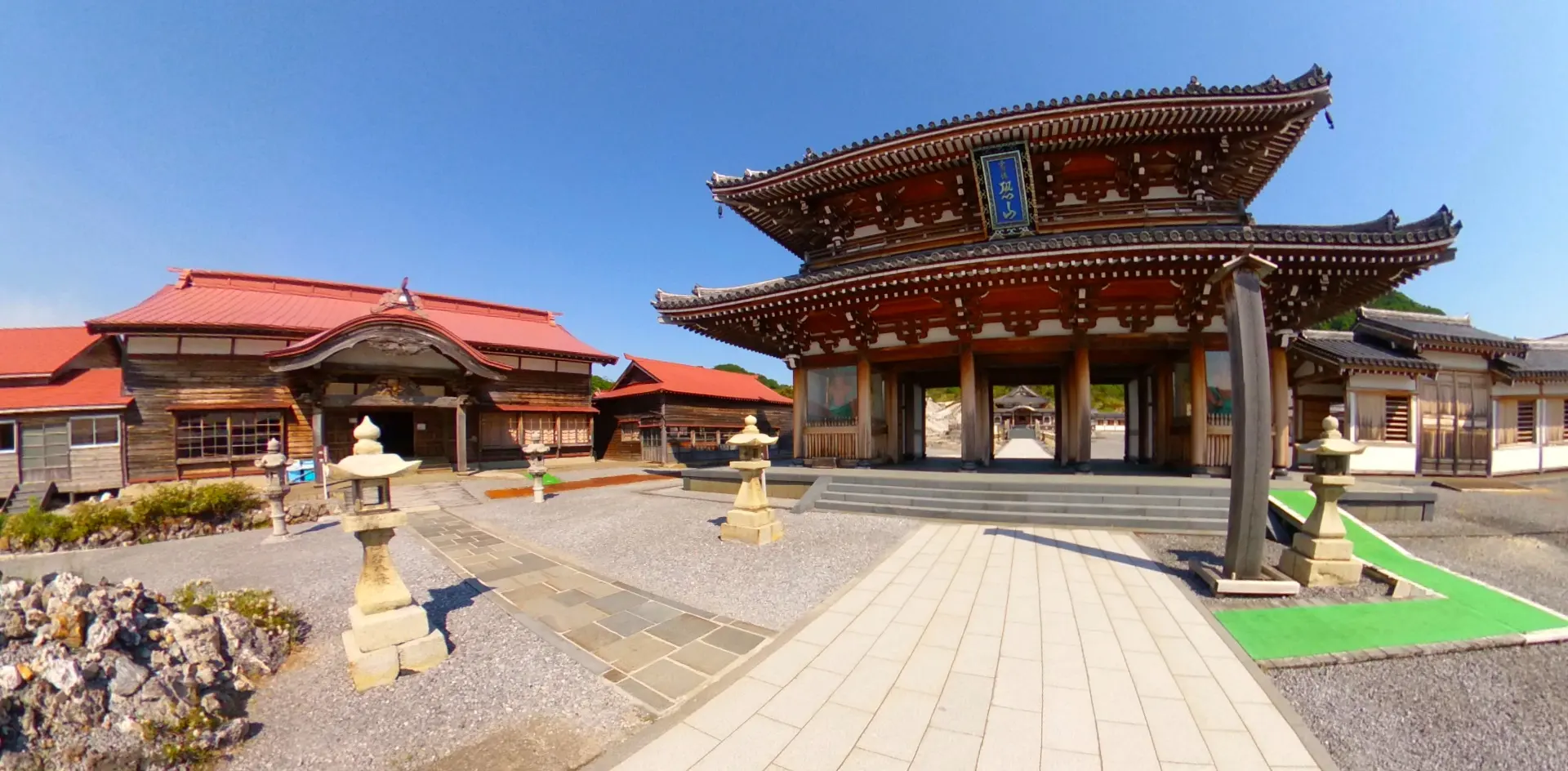
Image of Osore-zan Boto-ji. Image source · CC-BY-SA-3.0
Visit essentials
A quick read before you go
- Duration
- 2-4 hours for day visit; overnight highly recommended for temple lodging experience with morning…
- Access
- Open 6:00 AM - 6:00 PM (5:00 PM in October).
Overview
On the remote Shimokita Peninsula, where Hokkaido's shadow crosses Honshu's northern edge, Mount Osore opens a literal doorway to the underworld in Japanese tradition. Spirits of the dead cross the Sanzu River here, and bereaved families have visited the volcanic caldera for over a millennium seeking connection with those who passed.
Sulfurous vents hiss from charred ground, yellow and white deposits mark the rocks, and brimstone fills the air: jigoku, the Buddhist hell realm made visible. Beyond it, impossibly clear Lake Usori lies within eight peaks forming a lotus of paradise. Heaven and hell share the ground.
Bodaiji Temple, founded by the great monk Ennin in 862 CE after divine guidance in a dream, enshrines Jizo Bosatsu, protector of deceased children and underworld guide. Thousands of stone Jizo line paths, dressed in red bibs by grieving parents. Toy windmills turn as offerings for children's spirits trapped at Sai no Kawara, the riverbed where young souls endlessly build cairns hoping to cross to the other shore.
At the summer festival, the last living itako—blind women spirit mediums trained in ancient rites—enter trance to summon the dead and speak their messages to the living. Here the separation between worlds grows thin enough to cross.
Why this place is sacred
The thinness of Osorezan is not subtle. The volcanic landscape provides direct sensory experience of Buddhist hell realms, while the serene lake offers paradise. This is not symbolism but the actual geography of the afterlife made physical. The Sanzu River, which souls must cross after death, flows visibly to Lake Usori. The stone cairns children build at Sai no Kawara, knocked down by demons and protected by Jizo, stand in actual piles along the sulfurous shores.
For bereaved families, this embodied cosmology creates possibility. The dead are not abstractly elsewhere but specifically here, just across the thin membrane of this world. The itako mediums, though only two remain, provide actual communication. Whether understood as genuine contact or meaningful ritual, families receive messages that transform grief.
The temple's founding by Ennin, one of Japanese Buddhism's greatest figures, after direct divine vision established Osorezan's spiritual authority. The ranking alongside Koyasan and Hieizan confirms what the landscape proclaims: this is among the most spiritually potent places in Japan. Here, categories that normally organize experience lose their hard edges. The dead speak. The ground smokes. Paradise and hell share the same view.
Ennin founded Bodaiji Temple to serve souls making the transition between worlds. The temple honors Jizo Bosatsu, who protects the vulnerable dead and guides them through the underworld. The volcanic landscape was recognized as a natural embodiment of Buddhist teaching about the afterlife.
The temple was abandoned in 1457 for unknown reasons and restored in 1530. The itako tradition developed over centuries as a way for bereaved families to communicate with deceased loved ones. The annual festival has maintained this practice into the present, though the number of practicing mediums has dwindled to two. The site now receives visitors seeking both spiritual connection and the unique experience of its volcanic landscape.
Experience and orientation
Arrival at Osorezan immediately disorients. The smell of sulfur announces the shift from ordinary geography. Walking the paths around the caldera, one passes through distinct zones: barren volcanic ground where nothing grows, sulfurous vents producing unearthly sounds, and then suddenly the peaceful shores of Lake Usori where the eight surrounding peaks arrange themselves like lotus petals.
The Jizo statues accumulate into overwhelming presence. Thousands of stone figures, many dressed in red bibs and surrounded by offerings, line every path. Parents leave toys, candies, and small clothes for children who died before their own parents. The spinning windmills, their plastic colors bright against the gray volcanic rock, create a sound that becomes the voice of this place.
The temple offers free hot spring baths, sulfurous water piped from the volcanic ground. Bathing here continues ancient tradition of purification in sacred waters. The heat and mineral smell deepen the sense of being in a place apart.
For those staying overnight, temple lodging includes vegetarian meals and morning prayers. Waking in this landscape, attending services with resident monks, provides immersion unavailable in a day visit. During the summer festival, the itako sessions offer the possibility of receiving messages from deceased loved ones, an experience that for many brings genuine healing regardless of metaphysical interpretation.
Enter through the main gate and allow the volcanic landscape to work on you without rushing. Walk the paths around the caldera, paying attention to both the hellish landscape and the peaceful lake. Spend time with the Jizo statues. Consider bathing in the hot springs. If visiting during the summer festival, arrive early for itako sessions.
Context and lineage
In 862 CE, the monk Ennin received a divine vision in a dream guiding him to this remote volcanic location on the Shimokita Peninsula. Recognizing the supernatural power of this gateway between worlds, he founded Bodaiji Temple with Jizo Bosatsu as its main image. The souls of dead children and unborn babies were understood to gather at Sai no Kawara, the riverbed along the Sanzu River, where they build piles of pebbles trying to reach paradise.
Demons constantly destroy their cairns, but Jizo Bosatsu protects them.
Bodaiji Temple belongs to the Soto Zen tradition. It was founded by Ennin, originally a Tendai priest, before the Soto sect existed in Japan. The temple's current Soto affiliation reflects later historical developments while maintaining the original veneration of Jizo and service to the dead.
Ennin (Jikaku Daishi)
Founder
Jizo Bosatsu
Principal deity
Traditions and practice
The core practice at Osorezan is veneration of Jizo Bosatsu for deceased children and family members. Building stone cairns at Sai no Kawara connects to the cosmology of children's souls seeking to cross the Sanzu River. Memorial rituals help guide souls through the afterlife. Hot spring bathing purifies visitors before approaching the sacred center.
Daily Buddhist services continue at the temple. Overnight stays include vegetarian meals and morning prayers, providing immersion in temple life. During the summer festival (July 20-24), itako spirit mediums conduct sessions where they enter trance to summon deceased loved ones and deliver messages to the living.
Walk the paths slowly, allowing the landscape to affect you. Spend time with the Jizo statues, noticing the offerings left by grieving parents. Consider what losses you carry and how this place might hold them. Bathe in the hot springs as an act of purification. If staying overnight, attend morning prayers with the monks. If visiting during the summer festival and you have deceased loved ones you wish to contact, consider attending an itako session.
Soto Zen Buddhism
ActiveBodaiji Temple was founded in 862 CE by Ennin and maintains Buddhist services and memorial rituals. The temple's main image is Jizo Bosatsu, the bodhisattva who protects deceased children and guides the dead through the underworld. Osorezan ranks alongside Koyasan and Hieizan as one of Japan's three most sacred places.
Daily Buddhist services, memorial rituals, Jizo veneration, hot spring purification, overnight temple stays with vegetarian meals and morning prayers
Japanese Folk Religion / Itako Mediumship
ActiveOsorezan hosts itako, blind women spirit mediums who have undergone extensive spiritual training. Only two itako remain active today. They enter deep trances to summon souls of the dead and deliver messages to bereaved families.
Spirit mediumship sessions (kuchiyose) during summer festival, communication with deceased, ancestor veneration
Perspectives and open questions
Understanding Osorezan requires holding multiple perspectives that each illuminate aspects of its profound significance.
Scholarly perspective
Academic research recognizes Osorezan as a significant pilgrimage site reflecting Japanese Buddhist concepts of the afterlife and the syncretic blending of Buddhism with folk religion. The temple's evolution from ancient mountain worship to a major pilgrimage destination for bereaved families demonstrates how sacred sites develop and change over centuries. The itako tradition, while declining, represents an important form of religious practice studied by anthropologists and scholars of religion.
Living and traditional perspectives
In Japanese Buddhist tradition, Osorezan is a liminal space where the worlds of the living and dead genuinely overlap. Jizo Bosatsu truly protects the souls of deceased children, and the itako mediums provide authentic communication with the departed. The volcanic landscape is an actual manifestation of Buddhist cosmology, not mere metaphor. Pilgrimage here creates real connection with deceased loved ones.
Open questions
The reasons for the temple's abandonment in 1457 remain unknown. The full history of itako traditions before modern documentation has not been recovered. How the volcanic mountain's geothermal activity influences spiritual experiences remains unexplored by scientific research.
Plan your visit
Access and arrival
Open 6:00 AM - 6:00 PM (5:00 PM in October). Closed November through April. Admission 700 yen. Bus from Shimokita Station takes 45 minutes, costs 810 yen, runs every 3 hours.
Temple lodging (shukubo) available at Bodaiji, including vegetarian meals and morning prayers. This provides the most immersive experience. Reserve in advance, especially during festival periods.
Respectful visit
Modest, practical clothing suitable for walking volcanic terrain. Comfortable shoes essential.
Generally permitted but exercise judgment near grieving visitors and during ceremonies.
Coins for offering boxes, incense, stones for cairns, toy windmills for children's spirits. These can be purchased at the temple.
{"Do not touch or disturb offerings left by other visitors","Avoid toxic areas near volcanic vents","Do not enter the waters of Lake Usori","Maintain respectful silence in sacred areas","Temple closed November through April"}
The volcanic landscape contains toxic areas near active vents. Lake Usori's waters are toxic and swimming is prohibited. The site closes completely from November through April due to harsh winter conditions. Respect the grief of other visitors; many come to mourn.
Current practical details
Address
Usoriyama-3-2 Tanabu, Mutsu, Aomori 035-0021, Japan
Phone
Hours
Hours, fees, and access can change — verify on the official source before you travel. Practical details last checked Jun 2026.
Location
Map loads as you approach this section.
Pilgrim reflections
A portrait of encounter, not a score
Pilgrims describe what they felt, how present they could become, and whether the place would shape a journey. There are no stars and no ranking of traditions.
No reviewed reflections yet
The first pilgrims can help describe the character of being here.
Share a reflection
Available after an account-backed “Been there.” Every reflection is reviewed before publication.
Nearby sacred places
Explore other sacred places in the region. Proximity does not establish access or travel time; check each place’s guidance.



Pilgrim glossary
- Jizo
- A bodhisattva who protects travelers, children, and the deceased; common in Japanese roadside shrines.
- Tendai
- A Japanese Buddhist school based on the Lotus Sutra, foundational to many later traditions.
- Zen
- A Japanese Buddhist school emphasizing seated meditation and direct insight.
Share a photo
Help visitors recognize Osore-zan Boto-ji. Every submission is reviewed before publication.