Mt. Chokai
Sacred volcano of the Dewa region, former member of the Three Holy Mountains
Understand sacred places, explore living traditions, and learn how to engage respectfully with Pilgrim Map.
Access has not been verified. Check current local guidance before planning a visit.
Yuza, Yamagata Prefecture, Japan
Read the sources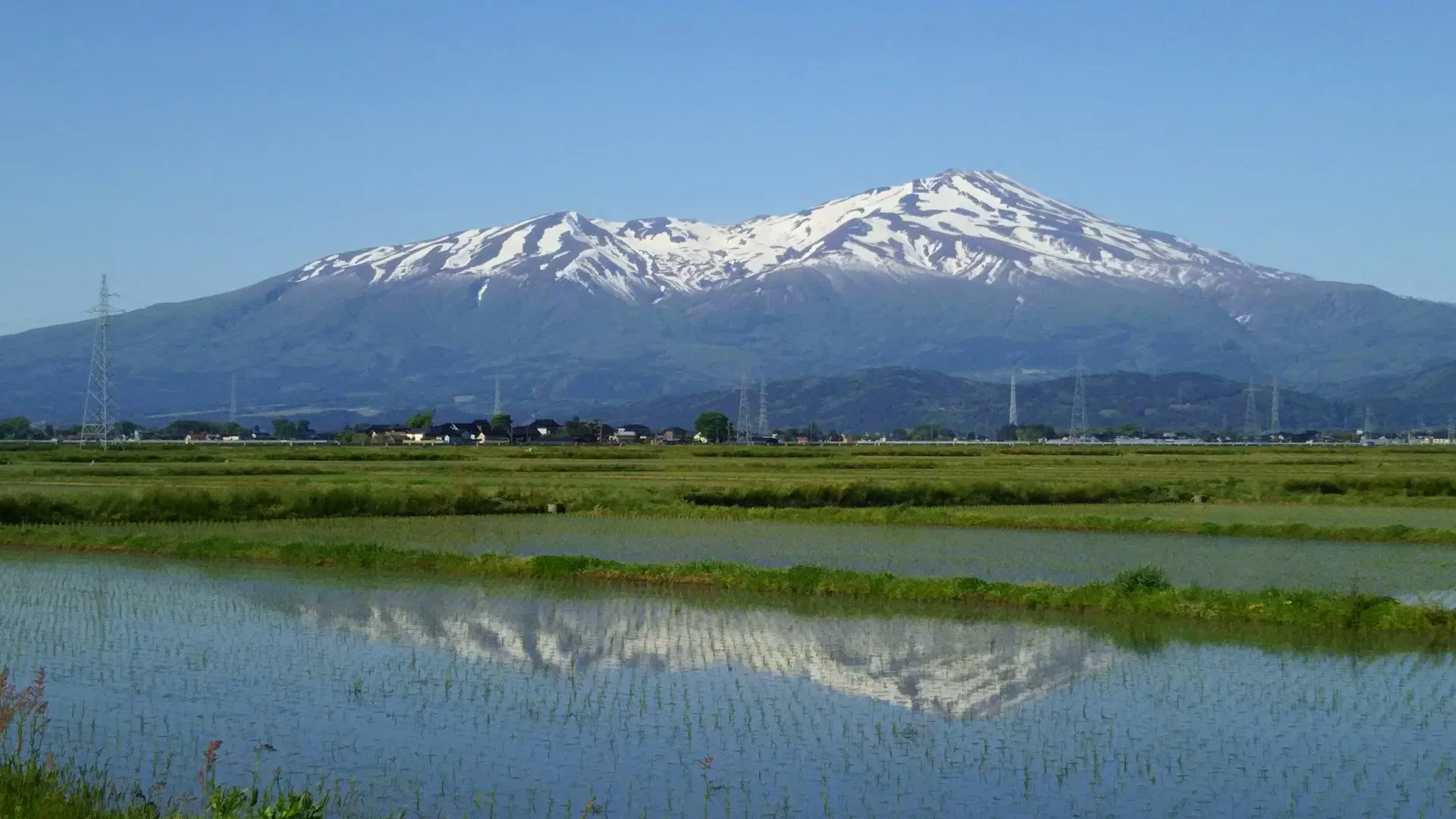
Image of Mt. Chokai. Image source · CC-BY-SA-2.0
Visit essentials
A quick read before you go
- Duration
- Full day (6-8 hours round trip depending on route).
- Etiquette
- Mountain climbing etiquette combined with shrine worship protocols apply.
Overview
Mount Chokai's isolated volcanic cone dominates Tohoku's northwest coast. It once belonged to the Dewa Sanzan, the Three Sacred Mountains of Dewa Province, before Mount Yudono replaced it in the early 17th century. Chokai-san nevertheless continued as a Shugendo training ground and pilgrimage destination.
In the Heian period, association with Yakushi Nyorai, the Medicine Buddha, expressed Japanese mountain worship's Buddhist-Shinto syncretism. By the Edo period, 33 chapels at the base served pilgrims taking multiple routes to the summit's Chokaisan Omonoimi Shrine.
Omonoimi no Kami, the mountain god whose presence defines the peak, has been worshipped here since ancient times. Today's climbers follow centuries-old pilgrim paths through alpine meadows and volcanic terrain toward a summit recognized as sacred longer than written records exist.
Why this place is sacred
The thinness at Mount Chokai operates through the ancient Japanese understanding of volcanic mountains as dwelling places of deities. The peak's dramatic form—isolated, visible from great distances, prone to eruption—marked it as obviously significant before any formal worship developed.
Omonoimi no Kami, the mountain deity, represents this recognition made personal. The name means something like 'great divine spirit,' acknowledging a presence too significant for more specific description. To climb Mount Chokai is to approach this presence through the physical effort that Japanese tradition understood as both preparation and offering.
The mountain's former status as one of the Dewa Sanzan reflects its importance in regional sacred geography. When Mount Yudono replaced Chokai-san in that designation, the reasons were complex—political, religious, and geographic factors all played roles. But the change speaks to how living sacred traditions evolve; it did not erase Chokai-san's significance but redirected it.
The 33 chapels that once served pilgrims at the mountain's base are largely gone now, but the pilgrimage continues. Modern climbers follow the same general routes, ascending through terrain that transitions from forest through meadow to volcanic rock, approaching the same summit where shrine and deity await.
The mountain was recognized as sacred from ancient times, with formal worship developing during the Heian period as Shugendo practices spread through Japan. The peak served as a training ground for mountain ascetics and a pilgrimage destination for laypeople seeking Omonoimi no Kami's blessing.
From ancient mountain worship through Heian period Shugendo development to Edo period peak as a major pilgrimage center with 33 supporting chapels, Mount Chokai's sacred tradition has adapted to changing religious contexts while maintaining continuity. Its replacement in the Dewa Sanzan designation redirected rather than ended its sacred significance.
Experience and orientation
The approach to Mount Chokai reveals its character gradually. From the surrounding lowlands, the volcanic cone dominates the horizon—a peak that demands attention through sheer presence. Multiple trails lead upward, each offering different perspectives on the mountain's volcanic geology and alpine ecosystems.
The climb is substantial, requiring a full day and appropriate preparation. The terrain transitions through zones: forested lower slopes give way to alpine meadows brilliant with wildflowers in summer, then to the rocky volcanic terrain of the upper mountain. Each zone creates its own atmosphere, building toward the summit.
Chokaisan Omonoimi Shrine at the summit provides the climb's destination. The small structure, maintained against the elements at 2,236 meters, houses the deity who has been worshipped here for centuries. Reaching it after hours of climbing creates the sense of arrival that pilgrimage traditions cultivate—the destination earned rather than easily achieved.
Views from the summit extend across Yamagata and Akita Prefectures to the Sea of Japan. On clear days, the scale of what's visible from this isolated peak explains why ancient observers recognized it as belonging to a different order of reality.
The mountain's status as National Historic Site reflects official recognition of what pilgrims have long known: this is a place set apart, where the ordinary rules of lowland life yield to something older and more demanding.
Multiple trails approach the summit from different directions and starting elevations. The climb typically takes 6-8 hours round trip depending on route and conditions. A full day should be allowed. The climbing season is limited by snow, typically extending from June through October.
Context and lineage
The mountain was recognized as sacred from ancient times, with the deity Omonoimi no Kami dwelling on the peak. During the Heian period, Shugendo practitioners identified the mountain as a training ground, and in the syncretic tradition of the era, associated it with Yakushi Nyorai, the Medicine Buddha. Mount Chokai was historically counted among the Dewa Sanzan until replaced by Mount Yudono in the early 17th century.
Mount Chokai's sacred tradition connects to broader Shugendo mountain worship in the Tohoku region, with the summit shrine maintaining the tradition of Omonoimi no Kami veneration.
Omonoimi no Kami
Mountain deity worshipped at the summit shrine since ancient times
Traditions and practice
Traditional practices included Shugendo mountain asceticism, pilgrimage to the summit, and worship at the shrine. The 33 chapels at the mountain's base during the Edo period supported elaborate pilgrimage infrastructure.
Modern practice centers on climbing as pilgrimage during the snow-free season, with worship at Chokaisan Omonoimi Shrine at the summit. The physical demands of the climb echo historical understanding of mountain ascent as spiritual practice.
Approach the climb as pilgrimage rather than sport. The physical demands are real, but the tradition frames them as preparation for encounter with the sacred. At the summit, take time at the shrine rather than immediately beginning descent.
Shugendo / Mountain Worship
ActiveMount Chokai has served as a Shugendo training ground since the Heian period, historically counted among the sacred mountains of the Dewa region.
Mountain asceticism, pilgrimage to summit, worship at Chokaisan Omonoimi Shrine, veneration of the mountain deity.
Perspectives and open questions
Mount Chokai invites interpretation as volcanic sacred geography, as former member of one of Japan's most important sacred mountain groupings, and as living pilgrimage tradition.
Scholarly perspective
Historians recognize Mount Chokai as significant for understanding Tohoku regional Shugendo traditions and the evolution of sacred geography, particularly its replacement in the Dewa Sanzan designation.
Living and traditional perspectives
In traditional understanding, Omonoimi no Kami is a living divine presence dwelling on the mountain, accessible to those who make the pilgrimage ascent.
Open questions
Ancient pre-Shugendo worship traditions at the mountain are poorly documented. The specific reasons for its replacement in the Dewa Sanzan grouping remain incompletely understood.
Plan your visit
Access and arrival
Mountain huts may be available seasonally. Towns near trailheads offer standard accommodation.
Respectful visit
Proper hiking attire and equipment essential.
Generally permitted.
Standard shrine offerings at summit.
{"Follow mountain safety protocols","Respect sacred sites","Stay on designated trails","Carry out all waste"}
The mountain requires proper preparation, equipment, and fitness. Snow limits the climbing season; weather can change rapidly at altitude.
Current practical details
Address
Mount Chōkai, Fukura, Yuza, Akumi District, Yamagata 999-8521, Japan
Hours, fees, and access can change — verify on the official source before you travel. Practical details last checked Jun 2026.
Location
Map loads as you approach this section.
Pilgrim reflections
A portrait of encounter, not a score
Pilgrims describe what they felt, how present they could become, and whether the place would shape a journey. There are no stars and no ranking of traditions.
No reviewed reflections yet
The first pilgrims can help describe the character of being here.
Share a reflection
Available after an account-backed “Been there.” Every reflection is reviewed before publication.
Nearby sacred places
Explore other sacred places in the region. Proximity does not establish access or travel time; check each place’s guidance.

References
Sources consulted for this page. Source categories describe the publication, not a guarantee that every claim is verified. Traditional accounts and outside interpretations may differ.
- 01Mount Chōkai - Wikipedia — Wikipedia contributorsencyclopediaComprehensive overview
- 02Mountain Worship in Japan — Japan UnknownacademicContext on Japanese mountain worship
Share a photo
Help visitors recognize Mt. Chokai. Every submission is reviewed before publication.