Ichinomiya-ji
Buddhist temple beside the senior shrine of old Sanuki Province
Understand sacred places, explore living traditions, and learn how to engage respectfully with Pilgrim Map.
Access has not been verified. Check current local guidance before planning a visit.
Takamatsu, Kagawa Prefecture, Japan
Read the sources
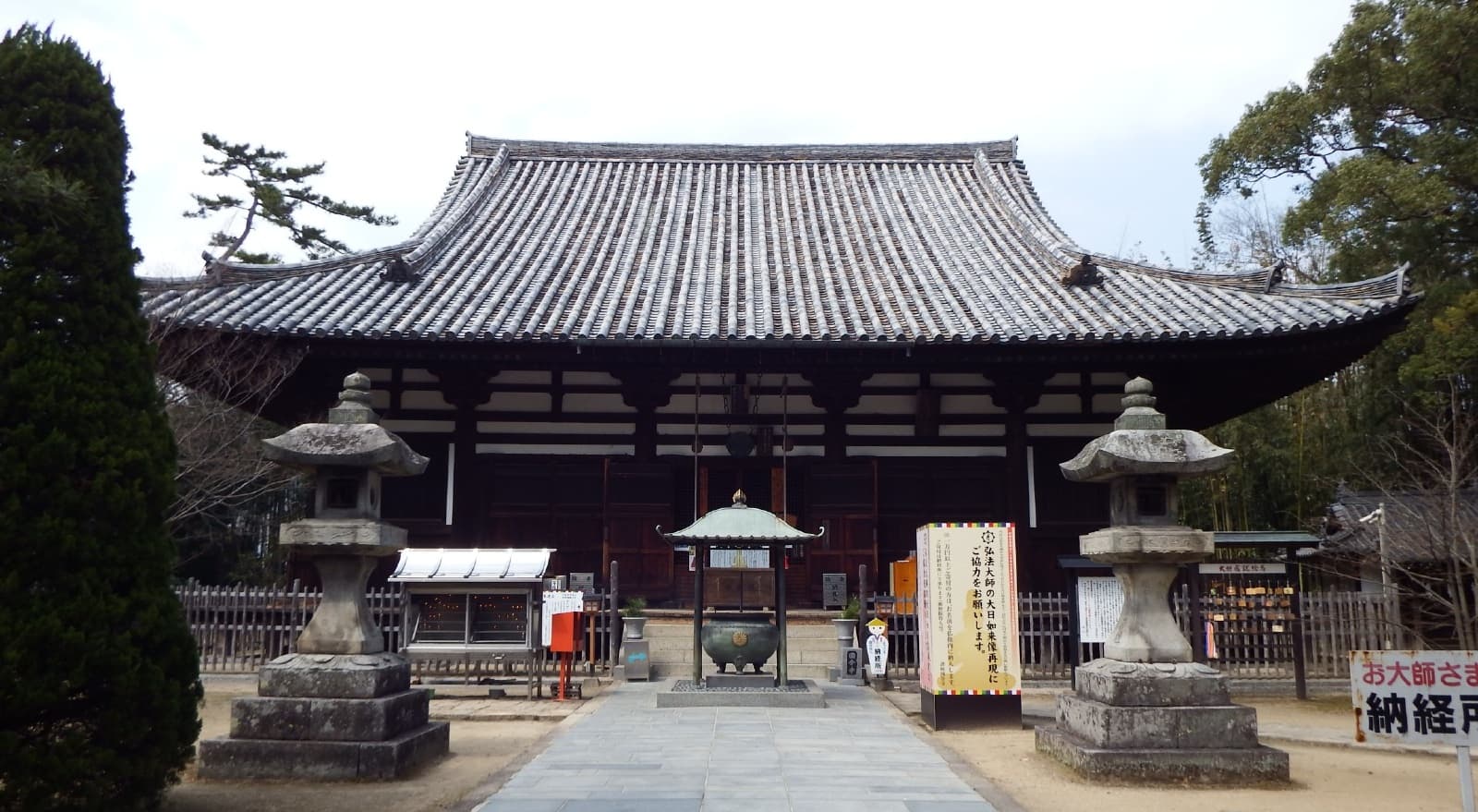
Image of Ichinomiya-ji (一宮寺). Image source · CC-BY-SA-3.0
Station 83 of 88
Shikoku 88 Temple PilgrimageVisit essentials
A quick read before you go
- Duration
- Thirty to forty-five minutes for the temple alone.
- Access
- Kotoden Kotohira Line to Busshōzan or Ichinomiya station, then a five-to-ten-minute walk.
Overview
Ichinomiya-ji's compact urban Takamatsu precinct makes a layered religious history unusually legible. Until 1679 it was the bettō-ji, or administrative Buddhist sister-temple, of Tamura Shrine, Sanuki Province's principal Shinto shrine. The paired institutions served tutelary kami and Buddhist dharma in one sacred zone until Takamatsu lord Matsudaira Yoritsune separated them—nearly two centuries before the broader Meiji separation of Buddhism and Shinto.
A temple visit takes about thirty to forty-five minutes, or around an hour with Tamura Shrine. Camphor trees, modest 1701 halls, and the adjacent provincial shrine retain a meeting of Buddhist and Shinto sacrality. The precinct's jigoku-no-kama is said to rumble with hell when someone inserts their head, and folk tradition warns that a wicked person's head may become stuck. This warm-edged Sanuki admonition is folk teaching, not canonical doctrine.
Why this place is sacred
Ichinomiya-ji is one of the few Shikoku 88 sites where the layered religious landscape of pre-modern Japan is still clearly readable. The combined visit with Tamura Shrine, only a few minutes away, completes the picture: shrine to the right, temple to the left, both held by the same protective field for centuries. Pilgrims often find that the temple's smaller scale focuses attention.
Ancient camphor trees, the modest 1701 halls, and the small folk shrine of the hell pot all sit within easy walking distance of each other.
Originally a Hossō Buddhist temple founded in the early 700s as Daihō-in, then re-established as Shingon by Kūkai in the early ninth century. From an early date the temple administered the adjacent Sanuki Ichinomiya (Tamura Shrine).
After the 1574 fire of the Awa Miyoshi–Kōzai conflict, the temple was revived by the monk Yūsei Daitoku. In 1679, under Matsudaira Yoritsune's domain reform, the auxiliary jingū-ji administrative function ended and Ichinomiya-ji and Tamura Shrine were formally separated. The current halls date from circa 1701.
Experience and orientation
Pilgrims arrive most often from the Kotoden Kotohira Line, alighting at Busshōzan or Ichinomiya stations and walking five to ten minutes through suburban streets. The Niō Gate opens onto a precinct dense with old trees. The Main Hall and Daishi-dō stand near the centre.
The henro practice is followed at both halls: bow at the gate, hands and mouth purified at the chōzuya, candle and three sticks of incense lit, an osamefuda nameslip dropped, the Heart Sutra recited, and the Shō Kannon mantra (On arorikya sowaka) sounded at the Main Hall. At the Daishi-dō, the Kōbō Daishi mantra closes the rite. The nōkyō stamp is collected at the temple office.
Many pilgrims also visit the small jigoku-no-kama hokora before leaving. It is unimposing and easy to miss. Local tradition says the wicked who put their heads in the stone shrine hear the rumble of hell and may find their heads stuck — a folk admonition rather than a doctrinal teaching, but treated with care. A short walk leads to Tamura Shrine, where the standard Shinto rite (two bows, two claps, one bow) acknowledges the long-paired Sanuki kami.
The Niō Gate fronts the small precinct. Main Hall and Daishi-dō are central. Old camphor trees frame the courtyard. The jigoku-no-kama hokora is small and sits to one side. Tamura Shrine stands a few minutes' walk away.
Context and lineage
Founded in the early 700s, by tradition, by the Hossō priest Gien as Daihō-in. The monk Gyōki repaired the pagoda between 708 and 715, and from his time the temple administered the adjacent Sanuki Ichinomiya, Tamura Shrine. Kūkai re-established the temple as Shingon between 806 and 810, carving the principal Shō Kannon and, by tradition, a self-portrait statue. The temple was destroyed by fire in 1574 during the Awa Miyoshi–Kōzai conflict and revived by the monk Yūsei Daitoku.
The present buildings date primarily from 1701. In 1679, under Matsudaira Yoritsune's reform, the temple was formally separated from Tamura Shrine.
Shingon Buddhism (Daikaku-ji branch lineage). Historical Hossō and Ritsu phases. Long historical pairing with the Shinto Tamura Shrine, the Sanuki Ichinomiya.
Gien
Founder of the original Hossō temple
Gyōki
Repairer; first administrator of the paired shrine
Kūkai (Kōbō Daishi)
Re-established the temple as Shingon
Matsudaira Yoritsune
Edo-period domain reformer
Traditions and practice
Pilgrims follow the standard henro rite. After a bow at the gate and purification at the chōzuya, a candle is lit and three sticks of incense placed at the Main Hall. An osamefuda nameslip is deposited, a coin offered, the Heart Sutra recited, and the Shō Kannon mantra (On arorikya sowaka) sounded. The same rite is repeated at the Daishi-dō, ending with the Kōbō Daishi mantra. The nōkyō calligraphy stamp is collected afterwards.
Daily Shingon services continue. Pilgrim hospitality at the nōkyō office is unhurried. The small jigoku-no-kama folk shrine is informally attended; visitors approach it on their own.
Plan to visit Tamura Shrine alongside the temple — the two were paired institutions for nearly a thousand years and still illuminate each other. At Tamura, the standard Shinto rite (two bows, two claps, one bow) is observed. Pause at the camphor trees on the way out; their age is part of the precinct's quiet authority.
Shingon Buddhism
ActiveRe-established as Shingon by Kūkai in the early ninth century after earlier Hossō and Ritsu phases. Remains Shingon today as a stop on the Shikoku 88.
Daily Shingon liturgy; pilgrim chanting of Heart Sutra, Shō Kannon mantra, and Kōbō Daishi mantra at Main Hall and Daishi-dō.
Hossō Buddhism (historical)
HistoricalOriginal tradition of the temple under Gien in the early 700s, when it was named Daihō-in.
No longer active at the site.
Shinto (Tamura Shrine — Sanuki Ichinomiya)
ActiveThe temple historically functioned as the administrative Buddhist sister-temple of Tamura Shrine, the principal shrine of Sanuki Province. The 1679 reform separated the two; pilgrims today often visit both as a paired site.
Shrine prayer at Tamura Shrine alongside temple visit at Ichinomiya-ji.
Perspectives and open questions
Ichinomiya-ji is read as a paradigmatic site of pre-modern Buddhist–Shinto pairing — and as a quiet anticipation of the Meiji-era separation.
Scholarly perspective
Ichinomiya-ji is read by historians as a textbook example of jingū-ji (shrine-temple) institutions in pre-modern Japan: a Buddhist temple administering a province's senior Shinto shrine. Its 1679 separation under domain reform anticipates the more sweeping Meiji-era shinbutsu bunri (separation of kami and Buddha) by two centuries.
Living and traditional perspectives
Local Sanuki tradition continues to read Tamura Shrine and Ichinomiya-ji as a single sacred zone whose tutelary deity protects the Takamatsu plain.
Alternative interpretations
In esoteric Shingon framing, the principal Shō Kannon mediates between the cosmic Buddha and the local kami, making Ichinomiya-ji a node where the dharmadhātu manifests through the language of native Sanuki spirituality.
Open questions
The precise historical sequence linking Gien, Gyōki, and Kūkai is traditional rather than documentary; the temple's earliest years are reconstructed from later engi (origin texts). The folk origin of the jigoku-no-kama is also undocumented.
Plan your visit
Access and arrival
Kotoden Kotohira Line to Busshōzan or Ichinomiya station, then a five-to-ten-minute walk. By car, roughly 25 minutes from JR Takamatsu Station. The pilgrim foot path from Negoro-ji descends through Takamatsu's western suburbs.
Plentiful in central Takamatsu. There is no shukubō at Ichinomiya-ji.
Respectful visit
Modest dress. Pilgrim attire (hakui, wagesa, sugegasa) is common.
Permitted in the grounds. No flash in the halls. Be considerate at Tamura Shrine ceremonies.
Incense, candles, coins, osamefuda. Nōkyō fee conventionally ¥500 per book.
Do not insert objects beyond your head into the hell-pot hokora. Treat all wayside shrines respectfully.
Do not insert objects beyond your head into the hell-pot hokora. Treat the small wayside shrines with the same care as the main halls.
Current practical details
Address
607 Ichinomiyachō, Takamatsu, Kagawa 761-8084, Japan
Phone
Hours
Hours, fees, and access can change — verify on the official source before you travel. Practical details last checked Jun 2026.
Location
Map loads as you approach this section.
Pilgrim reflections
A portrait of encounter, not a score
Pilgrims describe what they felt, how present they could become, and whether the place would shape a journey. There are no stars and no ranking of traditions.
No reviewed reflections yet
The first pilgrims can help describe the character of being here.
Share a reflection
Available after an account-backed “Been there.” Every reflection is reviewed before publication.
Watch deeper
Films, episodes, and recorded talks for visitors who want more context before or after a visit. Speculative and alternative-history entries are labelled as perspectives, not as sources for established claims.
Nearby sacred places
Explore other sacred places in the region. Proximity does not establish access or travel time; check each place’s guidance.


References
Sources consulted for this page. Source categories describe the publication, not a guarantee that every claim is verified. Traditional accounts and outside interpretations may differ.
- 01The 83rd Temple Ichinomiyaji Temple — Sanuki History & Culture GuideguideLocal cultural guide; covers Hossō origin under Gien, Gyōki repair, Kūkai's Shingon conversion, and Tamura Shrine separation in 1679
- 02Temple 83, Ichinomiya-ji — Shikoku ToursguideTour-operator guide with reliable historical summary
- 03Ichinomiyaji – Takamatsu, Kagawa Prefecture — Henro.orgguideLong-established English pilgrimage reference
- 04Shikoku 88 Temple Pilgrimage 83rd Sacred Spot, Ichinomiyaji Temple — Experience TakamatsuguideTakamatsu City tourism source
- 05Customs and Etiquette of the Shikoku Pilgrimage — Henro.orgguidePilgrim ritual reference
- 06Ichinomiya-ji (Temple 83 of the Shikoku Pilgrimage – Spring 2024) — Setouchi ExplorerblogRecent first-hand visit account, mentions hell-pot folklore
Pilgrim glossary
- Kannon
- The bodhisattva of compassion, central to many East Asian pilgrimage routes.
- Sutra
- A canonical Buddhist scripture, often chanted as part of practice.
- Mantra
- A sound, word, or phrase repeated as part of meditation or ritual.
- Dharma
- The teachings of the Buddha; also the universal law underlying them.
- Shingon
- An esoteric Japanese Buddhist school emphasizing ritual, mantra, and mandala practice.
Share a photo
Help visitors recognize Ichinomiya-ji. Every submission is reviewed before publication.