Kongōchō-ji
Cape-top temple of imperial founding and ocean wind
Understand sacred places, explore living traditions, and learn how to engage respectfully with Pilgrim Map.
Access has not been verified. Check current local guidance before planning a visit.
Muroto, Kochi Prefecture, Japan
Read the sources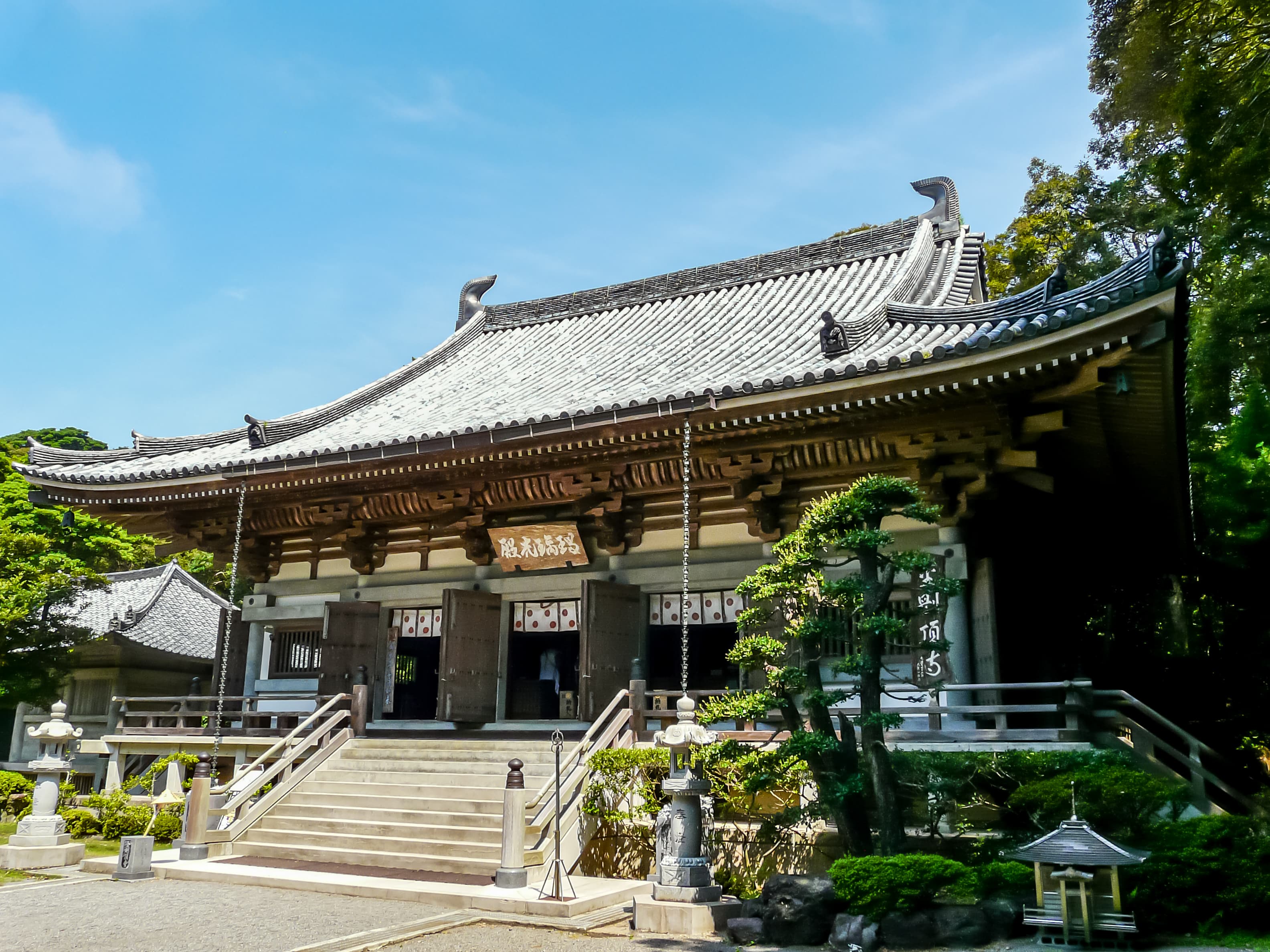
Image of Kongōchō-ji (金剛頂寺). Image source · CC-BY-SA-4.0
Station 26 of 88
Shikoku 88 Temple PilgrimageVisit essentials
A quick read before you go
- Duration
- Forty-five to sixty minutes for the ritual at both halls; allow a full day if combining with…
- Access
- By car: roughly 100 kilometres from Kōchi City along Route 55 to the cape, then a mountain road…
Overview
Kongōchō-ji, historically Nishidera (West Temple), is the western anchor of three Muroto temples, paired across the cape with eastern Hotsumisaki-ji, Higashidera. Its drive reaches a quiet cedar plateau where Pacific wind and sound enter the precinct.
Tradition dates its foundation to 807, the second year of Daidō: by Emperor Heijō's order, Kūkai is said to have carved the Yakushi Nyorai honzon and consecrated the cape-top site. Emperors Heijō, Saga, and Junna granted imperial-temple status, with imperial appointment of abbots for ten generations. Originally nyonin-kinsei like early Mt. Kōya, it excluded women until modern times.
In Shingon understanding, the cape shaped Kūkai. During ninth-century training he performed daily esoteric practice between Kongōchō-ji and Jōnin-dō, alongside Mikurodō cave, where he reportedly attained enlightenment. The healing Buddha links the temple to physical and spiritual restoration.
Temple 26 is the third stop of a single-push Muroto Sanzan day from Hotsumisaki-ji through Shinshō-ji. Pilgrims offer candle, three incense, fudasho-fuda, Heart Sutra, and Yakushi mantra at the Main Hall; Kōbō Daishi's gohōgō at Daishi-dō; and receive the nōkyō stamp before five. Exposed on three sides, the quieter, wooded imperial precinct holds ocean wind in its cedars.
Why this place is sacred
Cape Muroto thrusts south into the Pacific, and Kongōchō-ji occupies the western flank above the ocean. The precinct itself is wooded — cedar dominates the approach — but the cape is felt the moment you step outside the canopy. Wind moves continually through the temple courtyard. From the upper precincts the sea is visible across the western horizon. The temple's name means Diamond-Peak Temple, and the mountain it sits on is Ryūzu-zan, Dragon-Head Mountain.
The original purpose was twofold: an imperial-temple foundation in the early Heian period under Emperor Heijō, and a Shingon ritual centre tied directly to Kūkai's ascetic residence on the cape. The 807 founding is religious tradition rather than verifiable archaeology, but documentary continuity from the early Heian onward is plausible given the imperial-temple designation and the patronage of three successive emperors.
Kūkai is said to have carved the Yakushi Nyorai honzon himself — a tradition central to the temple's authority within Shingon. Kongōchō-ji forms one corner of the Muroto Sanzan, the three Muroto temples. As Nishidera, the West Temple, it is paired in the traditional reading with Hotsumisaki-ji as Higashidera, the East Temple, while Shinshō-ji at Murotsu port sits between them as the central station.
Walking pilgrims often complete the three in a single day, and the day reads as a compressed encounter with the landscape where the founder of Japanese Shingon is said to have first opened. The precinct was originally closed to women, a Kōyasan-style restriction that lasted into the modern era and was lifted in the recent past.
That history is part of the temple's evolution: from a strict ascetic precinct of the early Heian to a working pilgrimage station and shukubō host today, where pilgrims of any gender can stay the night, attend morning service, and eat shōjin-ryōri vegetarian temple cuisine.
Imperial-temple foundation under Emperor Heijō's order in 807, paired with a Shingon ritual centre tied to Kūkai's ascetic residence on Cape Muroto.
Three successive emperors — Heijō, Saga, Junna — granted Kongōchō-ji imperial-temple status, with abbots appointed by imperial decree for ten generations. The precinct was originally closed to women, a restriction lifted in the modern period. Today the temple operates a shukubō for overnight pilgrims, conducts daily Shingon liturgy, and remains a working stop on the eighty-eight-temple circuit.
Experience and orientation
Most visitors arrive at Kongōchō-ji along a mountain road that climbs from the coast onto the cape's western shoulder. Free parking sits below the precinct; from there a short walk through cedar leads up to the temple gate. Bow at the gate before entering. The Main Hall sits in the upper precinct, with the Daishi-dō nearby.
Wind moves through the cedars almost constantly — pilgrims often note it as the dominant sensory texture of the visit, alongside the muted sound of distant surf. At the Main Hall, place a small offering at the saisen-bako, light one candle from a fresh flame, light three incense sticks, deposit a fudasho-fuda name slip, and chant the Heart Sutra. Follow with the Yakushi Nyorai mantra (Oṃ koro koro sendari matōgi sowaka).
Close with the gohōgō to Kōbō Daishi: namu daishi henjō kongō. Move to the Daishi-dō and repeat the ritual, with the Kōbō Daishi mantra in place of the Yakushi. Take the nōkyōchō stamp book to the nōkyō office for the temple seal and calligraphy. The temple's shukubō, the on-site lodging, is open to pilgrims and travellers who book in advance by phone.
An overnight stay typically includes participation in morning service, shōjin-ryōri dinner and breakfast, and a quiet night inside an imperial-temple precinct. For pilgrims doing the Muroto Sanzan in a single day, Kongōchō-ji is usually the third and final temple after Hotsumisaki-ji and Shinshō-ji. The Mikurodō cave, where Kūkai is traditionally said to have attained enlightenment, lies on the cape itself and is often visited the same day.
The precinct is more wooded and quieter than Hotsumisaki-ji's, with a different sensory mood — less directly oceanic, more cedar-shadowed, with the imperial-temple lineage palpable in the proportions of the halls.
From Kōchi City, drive roughly 100 kilometres along Route 55 to Cape Muroto, then follow signs up the mountain road to Kongōchō-ji. Walking henro arrive about 4 kilometres uphill from Shinshō-ji.
Context and lineage
By temple tradition, Emperor Heijō ordered Kūkai to establish a temple on Cape Muroto in 807. Kūkai is said to have carved a Yakushi Nyorai honzon — the Buddha of healing — and consecrated the precinct under the original name Hozhozanzan-ji, later renamed Kongōchō-ji under Emperor Saga and granted imperial-temple status by Emperor Junna.
A separate folk tradition holds that Kūkai debated and bested a tengu, a mountain demon, on the cape, demonstrating the supremacy of the Buddhist Dharma — a domestication narrative common to Shingon mountain sites.
Kōyasan Shingon-shū, the largest of the Shingon schools, descended directly from Kūkai's mountain headquarters at Mt. Kōya. Kongōchō-ji is one of the eighty-eight stations of the Shikoku Pilgrimage and the second of the three Muroto temples (Muroto Sanzan).
Kūkai (Kōbō Daishi)
Founder and traditional sculptor of the honzon
Emperor Heijō
Imperial commissioner of the temple
Emperor Saga
Imperial patron
Emperor Junna
Imperial patron
Traditions and practice
At each hall: bow at the threshold, light one candle from a fresh flame, light three incense sticks, place a fudasho-fuda name slip in the box, drop a coin in the saisen-bako, ring the bell once if a small bell is provided, and chant. At the Main Hall, the Heart Sutra in full followed by the Yakushi Nyorai mantra (Oṃ koro koro sendari matōgi sowaka). At the Daishi-dō, the Heart Sutra and the Kōbō Daishi mantra (Namu Daishi henjō kongō).
After both halls, take the nōkyōchō to the nōkyō office for the temple stamp.
Resident clergy conduct daily morning services and periodic goma fire rituals typical of Shingon temples. The temple operates a shukubō where pilgrims and other visitors can stay overnight, attend morning service, and eat shōjin-ryōri vegetarian temple cuisine. Pilgrim supplies are available at the nōkyō office.
If staying at the shukubō, attend the morning service even if you have no formal practice — the cedars at dawn are part of the temple's continuity. For day visitors, slow each step of the ritual: light the candle before the incense, never light from another pilgrim's flame. After both halls, walk to the western edge of the precinct where the Pacific opens up before continuing.
Shingon Buddhism (Kōyasan Shingon-shū)
ActiveKongōchō-ji is Temple 26 of the eighty-eight-temple Shikoku Pilgrimage and the second of the three Muroto-Sanzan temples. Founded by imperial command, granted imperial-temple status by three successive emperors, and explicitly tied to Kūkai's early ascetic period in Muroto.
Standard pilgrim ritual at the Main Hall (Yakushi Nyorai) and Daishi-dō: candle, three incense, fudasho-fuda, Heart Sutra, Yakushi mantra, gohōgō to Kōbō Daishi, nōkyō stamp.
Perspectives and open questions
Kongōchō-ji's history sits between religious tradition and documented continuity; modern scholarship accepts the imperial-temple lineage while treating the 807 founding date and the Kūkai-as-carver tradition as religious rather than strictly archaeological history.
Scholarly perspective
Documentary continuity from the early Heian period is plausible given the imperial-temple designation. The 807 founding date and the Kūkai-as-carver tradition are accepted as religious history rather than verifiable archaeology. Three successive imperial reigns of patronage — Heijō, Saga, Junna — give the temple a particularly clear early-Heian provenance among Tosa sites.
Living and traditional perspectives
Within Shingon, Kongōchō-ji's authority derives from imperial founding and from Kūkai's documented ascetic residence on the cape. Both are foundational legitimations: the temple stands on ground where the founder of Japanese Shingon practised, with imperial sanction confirming the precinct's status.
Alternative interpretations
The tengu-debate legend functions in folk religion as a domestication narrative — Buddhism subduing older mountain spirits — a pattern repeated across many Shingon mountain sites. The Yakushi Nyorai honzon's healing function continues to draw lay devotees seeking recovery from illness alongside formal pilgrims.
Open questions
The original architectural plan and the exact location of Kūkai's hermitage (Jōnin-dō) on the cape are not fully reconstructed. The date of the lifting of the women-prohibition is not commonly documented in English sources.
Plan your visit
Access and arrival
By car: roughly 100 kilometres from Kōchi City along Route 55 to the cape, then a mountain road to the cape-top precinct. Free parking on site. Walking henro: about 4 kilometres uphill from Shinshō-ji (T25). Local bus services run along Route 55; the final ascent is by taxi or on foot.
The temple operates a shukubō (temple lodging) on site; advance booking by phone is required. Additional ryokan and minshuku options are available in Muroto City a short drive away.
Respectful visit
Modest casual or henro attire; the cedars keep the precinct cool and a light layer is useful even in summer. Sturdy shoes are preferable for the slightly uneven precinct surfaces.
Outdoor grounds and exterior architecture are generally fine to photograph. Interior of the Main Hall and the Yakushi Nyorai honzon are typically not. Be discreet around other pilgrims.
One candle, three incense sticks, a fudasho-fuda name slip with date and prayer intention, and a small monetary offering at the saisen-bako. Light from a fresh flame.
The nōkyō office hours are typically 07:00–17:00; arrive by 16:30 to be safe. Quiet, slow pace expected inside the ritual halls. Shukubō stays require advance phone booking.
The cape is exposed; typhoon-season afternoons in August and September can be unsafe. The mountain road is narrow and switches back; drive slowly. Honzon photography inside the Main Hall is typically not permitted.
Current practical details
Address
523 Motootsu, Muroto, Kochi 781-7108, Japan
Phone
Hours
Hours, fees, and access can change — verify on the official source before you travel. Practical details last checked Jun 2026.
Location
Map loads as you approach this section.
Pilgrim reflections
A portrait of encounter, not a score
Pilgrims describe what they felt, how present they could become, and whether the place would shape a journey. There are no stars and no ranking of traditions.
No reviewed reflections yet
The first pilgrims can help describe the character of being here.
Share a reflection
Available after an account-backed “Been there.” Every reflection is reviewed before publication.
Watch deeper
Films, episodes, and recorded talks for visitors who want more context before or after a visit. Speculative and alternative-history entries are labelled as perspectives, not as sources for established claims.
Nearby sacred places
Explore other sacred places in the region. Proximity does not establish access or travel time; check each place’s guidance.

References
Sources consulted for this page. Source categories describe the publication, not a guarantee that every claim is verified. Traditional accounts and outside interpretations may differ.
- 01Ryuzuzan Koumyouin Kongouchouji – Shikoku 88 Temple Pilgrimage — Shikoku 88 Reijokai (Official Association)officialOfficial association page; founding under Emperor Heijo, imperial-temple status, Saga and Junna patronage
- 02Temple 26, Kongōchōji — Tourism SHIKOKU — Shikoku Tourism Promotion OfficeguideTourism authority
- 03Kongochoji – Muroto, Kochi Prefecture, Shikoku — Henro.orgguideEnglish henro reference
- 04Customs and Etiquette of the Shikoku Pilgrimage — Henro.orgguideEtiquette baseline
- 05Temple No. 26: Mount Ryuzu, Komyoin, Kongochoji — MATCHA Japan Travel GuideguideTravel guide
- 06Muroto Sanzan — Kochi EscapesguideLocal Kōchi tourism resource describing the three Muroto temples
Pilgrim glossary
- Honzon
- The principal Buddhist deity enshrined as a temple's central object of worship.
- Sutra
- A canonical Buddhist scripture, often chanted as part of practice.
- Mantra
- A sound, word, or phrase repeated as part of meditation or ritual.
- Dharma
- The teachings of the Buddha; also the universal law underlying them.
- Shingon
- An esoteric Japanese Buddhist school emphasizing ritual, mantra, and mandala practice.
Share a photo
Help visitors recognize Kongōchō-ji. Every submission is reviewed before publication.