Mt. Ontake
Where ancient pilgrimage meets volcanic power and modern tragedy
Understand sacred places, explore living traditions, and learn how to engage respectfully with Pilgrim Map.
Access has not been verified. Check current local guidance before planning a visit.
Otaki, Nagano Prefecture, Japan
Read the sources
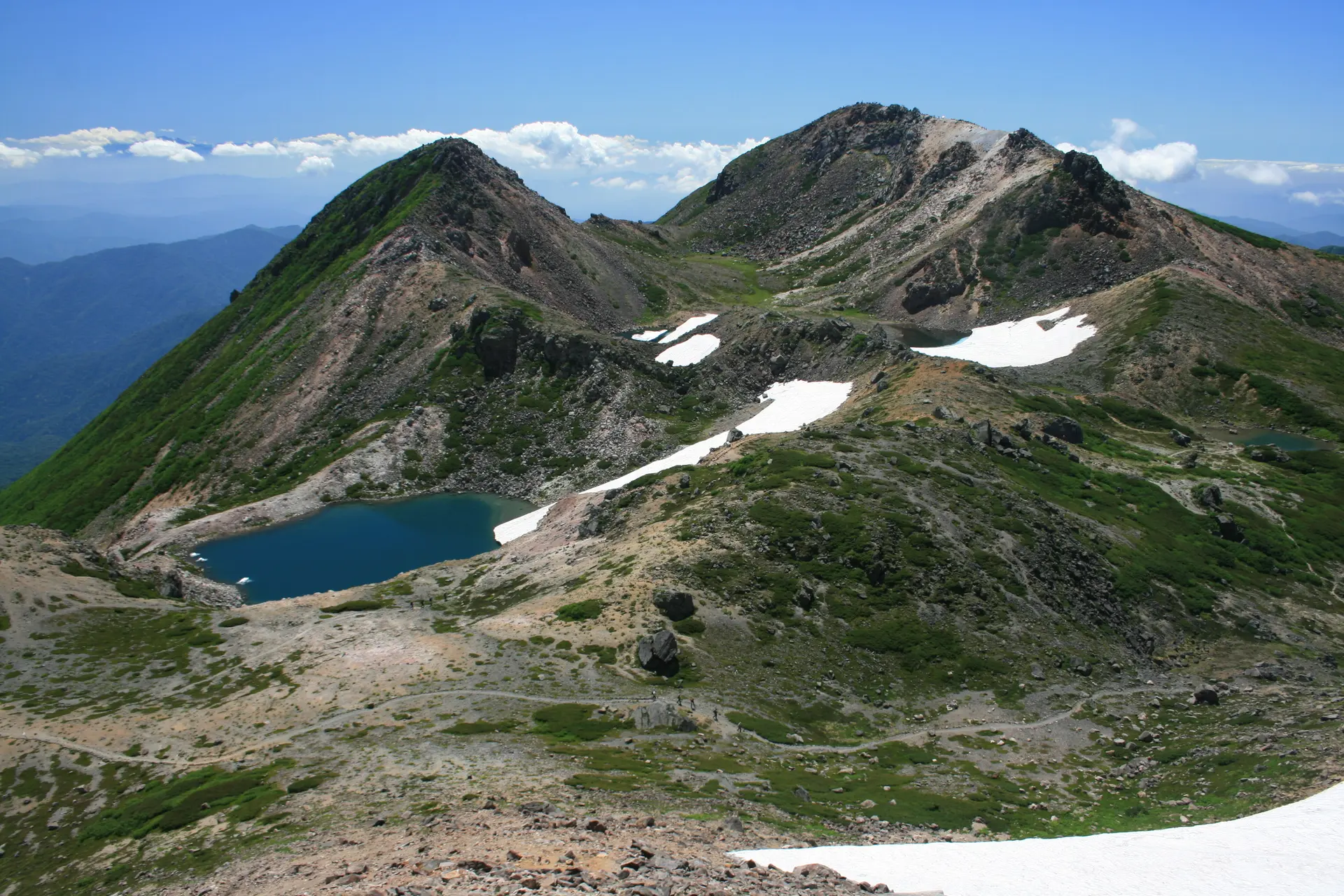
Image of Mt. Ontake. Image source · CC-BY-SA-3.0
Visit essentials
A quick read before you go
- Duration
- Full day or multi-day.
- Etiquette
- Respect for living pilgrimage tradition and recent tragedy defines appropriate conduct.
Overview
Mount Ontake rises 3,067 meters on the Nagano-Gifu border, Japan's second-highest volcano after Mount Fuji. For over a thousand years, pilgrims have climbed, purified themselves beneath sacred waterfalls, and sought spirits believed to inhabit the peak; white-robed devotees continue the ascent.
On September 27, 2014, an eruption without warning caught hundreds of summit hikers. Sixty-three people died in postwar Japan's worst mountain disaster. Worship continued, but the tragedy made the honored volcanic power devastatingly immediate and deepened the humility long expressed through purification and prayer.
Ontake-kou pilgrimage groups, formalized in the Edo period, still lead devotees. Their sendatsu, or holy guides, maintain waterfall purification, chanted prayer, and sacred song. In the 'oza' ceremony, deities are invoked to speak through practitioners, preserving shamanic elements older than Buddhist and Shinto influence. Memorials now stand beside ancient shrines, joining the 63 lost lives to more than a millennium of human pursuit of divine encounter.
Why this place is sacred
The sacred quality of Mount Ontake has always derived from volcanic power. The mountain's presence—Japan's second highest volcano, its peak often smoking, its slopes sculpted by eruption—marked it as significant before any formal worship began. Ancient people recognized what 2014 made unmistakably clear: forces beyond human control dwell here.
The pilgrimage traditions developed appropriate response to this power. The waterfall purification that begins Ontake practice strips away ordinary identity. The white robes create uniformity, erasing worldly distinction. The chanted prayers and mudras focus attention away from individual concern. All this preparation acknowledges that approaching Mount Ontake requires transformation.
The 'oza' ceremony preserves the most direct form of encounter. In this practice, deities are invoked to speak through human practitioners. The tradition suggests that the barrier between divine and human can become permeable here—that the mountain's power can enter those properly prepared.
Ontake-kou groups have maintained these practices since the Edo period, organizing collective pilgrimage that reinforces individual devotion. The sendatsu guides carry responsibility for proper conduct, ensuring that traditions pass unbroken from generation to generation.
The 2014 eruption transformed something in this equation. The volcanic power that pilgrims honored killed 63 people with no warning. Whatever metaphorical understanding visitors might have brought was interrupted by physical reality. The mountain that had been approached with ritual humility demonstrated that such humility was and is appropriate.
Memorials now stand among the shrines. The 63 dead joined the accumulated presence of those who came before. The tragedy cannot be understood simply as disaster; it is also demonstration. The power that pilgrims worship is real. The mountain that demands respect enforces that demand.
Ancient animistic worship recognized the volcano's power. Shugendo practitioners formalized practice. Ontake-kou groups organized mass pilgrimage. Throughout, the purpose remained: appropriate approach to forces beyond human control.
From prehistoric mountain veneration through Shugendo influence (8th-12th century) to Edo period Ontake-kou formalization to the 2014 eruption and its aftermath, Mount Ontake's sacred tradition has continuously developed while maintaining its core recognition of volcanic divine power.
Experience and orientation
The approach to Mount Ontake typically begins at Otaki Village, where the pilgrimage infrastructure has developed over centuries. Kiyotaki and Shintaki waterfalls provide purification sites where devotees in white robes stand beneath the cold cascades. Observing or participating in this practice creates immediate entry into the tradition.
The ascent follows the Ontake Kodo trail through forest and alpine terrain. Shrines dot the route, each receiving attention from passing pilgrims. The sendatsu guides lead their groups in chanting, prayers, and songs. Encountering these devotees transforms the climb from hike to pilgrimage.
The terrain changes with elevation. Lower slopes offer dense forest; higher reaches reveal volcanic landscape. Views extend across the surrounding mountains. The physical demands of the climb create appropriate preparation for whatever the summit holds.
Evidence of the 2014 eruption appears as climbers ascend. The tragedy left marks that will persist for generations. Memorials honor the 63 who died. The combination of ancient sacred geography and recent disaster produces something found nowhere else in Japan—immediate awareness that the power worshipped here can kill.
The 'oza' ceremony, when available to observe, offers encounter with the tradition's shamanic core. Watching deities invoked to speak through human practitioners connects visitors to dimensions of Japanese religion that temple visits cannot provide.
For serious engagement, arranging to join an Ontake-kou group offers the fullest experience. The sendatsu guides, the collective practice, the traditional protocols—participation in organized pilgrimage provides context that individual climbing cannot.
The summer climbing season brings peak activity. Check volcanic status before visiting—the mountain remains active, and restrictions may apply to certain areas.
Otaki Village serves as the typical starting point. Waterfall purification sites and the climbing trail are accessible during summer season. Check volcanic activity status before visiting. Some areas may be restricted. Joining an Ontake-kou group provides the fullest traditional experience.
Context and lineage
Worship at Mount Ontake extends back before historical documentation to prehistoric animistic mountain veneration. Shugendo influence arrived between the 8th and 12th centuries, adding Buddhist and ascetic practices. Ontake-kou pilgrimage groups formalized in the late Edo period (19th century), organizing mass pilgrimage and developing the 'oza' ceremony of deity invocation. On September 27, 2014, a sudden eruption killed 63 people on the summit—the worst mountain disaster in postwar Japan.
Mount Ontake worship represents continuous tradition from prehistoric times through Shugendo influence to Ontake-kou formalization to the present. The 2014 eruption marks the most significant recent event in this ongoing history.
Ontake-kou founders
Organized collective pilgrimage in the Edo period
Sendatsu (holy guides)
Leaders who maintain and transmit pilgrimage traditions
Traditions and practice
Traditional practice begins with waterfall purification at Kiyotaki or Shintaki. Pilgrims in white robes stand beneath the cold water, chanting Buddhist mantras and performing mudras. The ascent proceeds through praying spots where specific rituals are performed. The 'oza' ceremony invokes deities to speak through practitioners.
Ontake-kou groups continue to lead organized pilgrimages. Individual climbers ascend during summer season. Memorial observance for the 2014 victims has become part of contemporary practice. Volcanic restrictions may affect access to certain areas.
If possible, arrange to join an Ontake-kou pilgrimage for traditional experience. Otherwise, approach the climb as pilgrimage rather than mere hiking. Visit waterfall purification sites even if not participating. Honor memorials to the 2014 victims. Respect the volcanic power that demands humility.
Ontake-kou / Mountain Worship
ActiveMount Ontake has received worship for over a thousand years, with Ontake-kou pilgrimage groups organizing collective devotion since the Edo period. The mountain blends Shinto, Buddhist, and shamanic traditions. The 2014 eruption deepened its sacred significance as a site where divine power became undeniably immediate.
Waterfall purification at Kiyotaki and Shintaki, white-robed pilgrimage ascent, chanting and prayer at shrines along the route, 'oza' ceremony of deity invocation, sendatsu-led group pilgrimages.
Perspectives and open questions
Mount Ontake invites interpretation as living pilgrimage tradition, as site of tragic demonstration of volcanic power, and as unique convergence of ancient devotion and modern disaster.
Scholarly perspective
Scholars recognize Mount Ontake as one of Japan's most important sacred mountains with well-documented pilgrimage tradition. The 2014 eruption has generated research on the relationship between sacred sites, natural hazards, and continuing worship.
Living and traditional perspectives
In Ontake tradition, the mountain is alive with divine spirits who can be contacted through proper practice. The volcanic power is both creative and destructive—the same forces that demand respect also provide blessing to those who approach appropriately.
Alternative interpretations
Some view the mountain as a powerful energy vortex where earth energies concentrate.
Open questions
The full nature of 'oza' deity possession ceremonies remains esoteric. Future volcanic activity cannot be predicted.
Plan your visit
Access and arrival
Lodging available in Otaki Village area. Mountain huts may operate seasonally.
Respectful visit
Traditional pilgrims wear white robes. Hikers should wear appropriate gear.
Be sensitive around pilgrims at practice and memorial areas.
Traditional offerings at shrines along the trail.
{"Respect pilgrims at their practice","Honor memorial areas appropriately","Follow all volcanic activity restrictions"}
Mount Ontake is an active volcano. Check current volcanic status before visiting. Some areas may be restricted. Honor memorial areas with appropriate conduct. The 2014 tragedy is recent; sensitivity is required.
Current practical details
Address
Mount Ontake, Otaki, Kiso District, Nagano 397-0201, Japan
Hours, fees, and access can change — verify on the official source before you travel. Practical details last checked Jun 2026.
Location
Map loads as you approach this section.
Pilgrim reflections
A portrait of encounter, not a score
Pilgrims describe what they felt, how present they could become, and whether the place would shape a journey. There are no stars and no ranking of traditions.
No reviewed reflections yet
The first pilgrims can help describe the character of being here.
Share a reflection
Available after an account-backed “Been there.” Every reflection is reviewed before publication.
Nearby sacred places
Explore other sacred places in the region. Proximity does not establish access or travel time; check each place’s guidance.

References
Sources consulted for this page. Source categories describe the publication, not a guarantee that every claim is verified. Traditional accounts and outside interpretations may differ.
- 01Mt. Ontake - JNTO — Japan National Tourism OrganizationofficialOfficial tourism information
- 02Shugendo now - winter pilgrimage on Mt Ontake — Elemental JapanguidePilgrimage experience
- 03The gods who connect us with nature - Mt. Ontake — Hikes in JapanacademicCultural context
- 04Shugendo on Mt Ontake — Green ShintospiritualReligious context
Share a photo
Help visitors recognize Mt. Ontake. Every submission is reviewed before publication.