Jōsen-ji
Where stone, water, and Kannon hold a single embodied prayer
Understand sacred places, explore living traditions, and learn how to engage respectfully with Pilgrim Map.
Access has not been verified. Check current local guidance before planning a visit.
Chichibu, Saitama Prefecture, Japan
Read the sources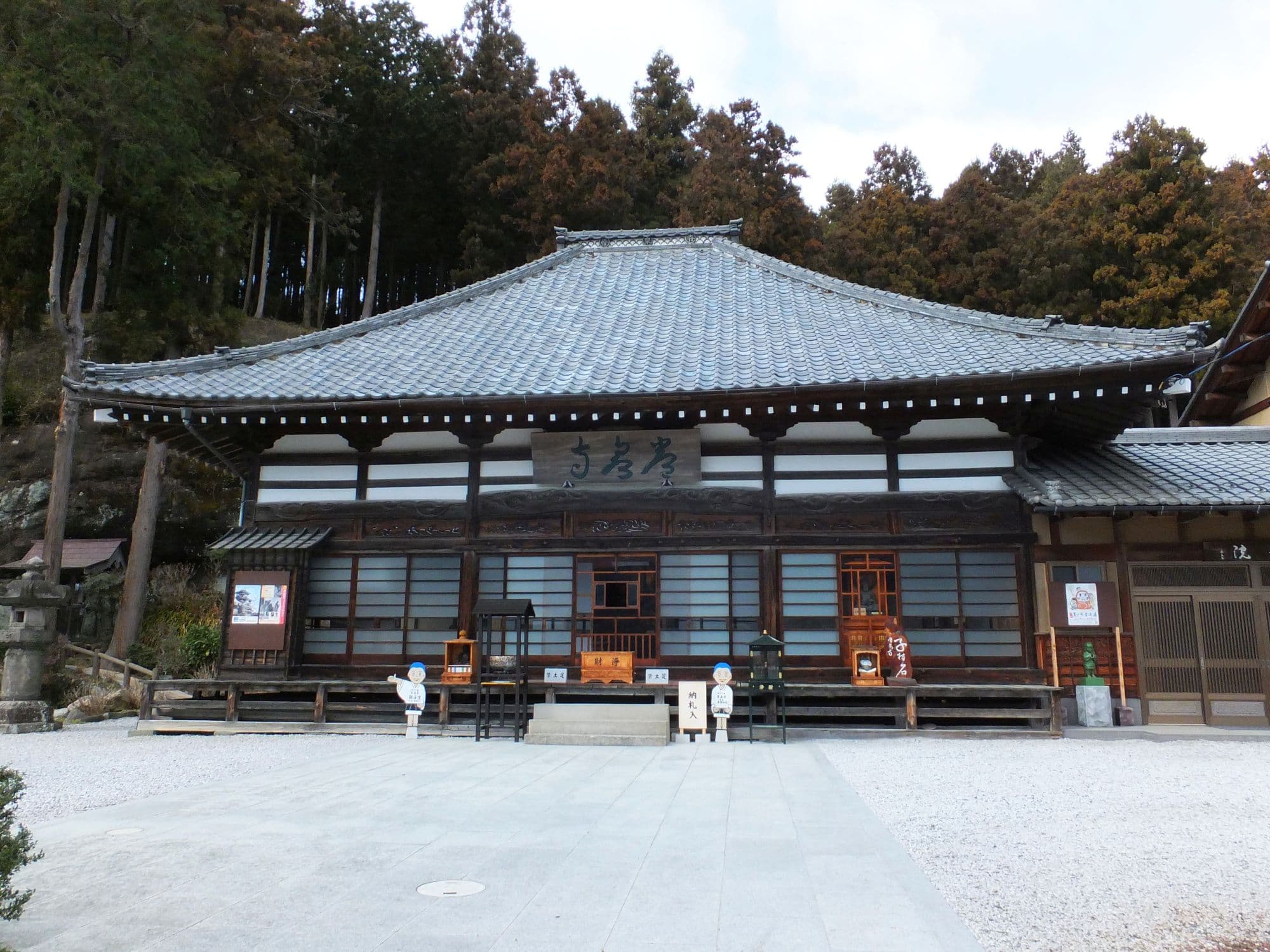
Station 3 of 34
Chichibu 34 Kannon PilgrimageVisit essentials
A quick read before you go
- Duration
- 30–45 minutes for a focused visit including chanting, the Komochi-ishi, and the Chōmei-sui…
- Access
- About 6 km southwest of Shimabu-ji and 3 km southwest of Shinpuku-ji.
Overview
Jōsen-ji stands in the Iwamoto valley, south of Shinpuku-ji and roughly 6 km from the threshold temple of Shimabu-ji. Its mountain name, Iwamotosan (“Foot-of-the-Rock Mountain”), preserves the tradition that Abbot Kakuryō founded a practice place in a Takanashiyama rock cave in 1234 before the temple moved to the valley.
The current Kannon-dō was moved here in 1870 during the Meiji shinbutsu bunri policies that forcibly separated Buddhist halls from Shintō shrines. Formerly Zōfuku-ji's Yakushi-dō within Chichibu Shrine, it survived by becoming part of Jōsen-ji. Inside is a standing wooden Muromachi-period Shō Kannon; outside, its beams bear dramatic dragon carvings by Iida Izumi of Tamai near Kumagaya.
The Komochi-ishi (“child-bearing stone”) is touched or embraced in fertility prayer. Chōmei-sui (“longevity water”) is believed to confer healing and long life, following a legend in which Kannon directed an ailing monk to drink from the spring. Stone, water, and wooden image make prayer bodily as well as mental. The 2026 Year of the Horse sōkaichō, March 18–November 30, opens the inner zushi and principal image to public viewing for the first time since 2014.
Why this place is sacred
The thinness of Jōsen-ji is unusually concrete. Most Chichibu fudasho ask the pilgrim to chant, leave an osamefuda, and receive a stamp; Jōsen-ji also asks the pilgrim to embrace a stone and drink a spring. This embodied register is rare on the circuit and gives the third temple its particular character. People praying about fertility, illness, recovery, or family come here to hold something and to swallow something, and the gesture is openly received.
Three elements amplify the threshold. The first is the living water of Chōmei-sui, still flowing and still drunk by pilgrims when site signage indicates it is potable. The second is the Komochi-ishi, one of the few features on the Chichibu pilgrimage that asks for tactile contact, making prayer bodily as well as verbal.
The third is the layered history of the Kannon-dō itself: a wooden hall that survived the Meiji-era dismantling of mixed Shintō-Buddhist precincts at Chichibu Shrine and continues its life inside the Kannon circuit.
A practice place at a rock cave on Takanashiyama in 1234, founded by Abbot Kakuryō. The mountain name Iwamotosan ('Foot-of-the-Rock Mountain') preserves this origin. The site was later moved down to the present Iwamoto valley.
From medieval rock-cave practice space to valley temple; through a 1847 fire and 1858 reconstruction; to its present configuration when the Kannon-dō was relocated here in 1870 from Zōfuku-ji within the Chichibu Shrine precincts during the Meiji shinbutsu bunri reforms. The Komochi-ishi and Chōmei-sui folk practices remain continuously alive.
Experience and orientation
Walking pilgrims arriving at Jōsen-ji from Shinpuku-ji's hilltop solitude often note the change of register. The third temple is staffed; the precinct is small and unhurried; the Kannon-dō with its carved dragons sits beside the simple Komochi-ishi and the running spring. Visitors photograph the dragons and pause at the stone, often touching it briefly with one hand or embracing it more deliberately if they have come for a fertility prayer.
Many travelers comment on drinking from the Chōmei-sui as a small, embodied act of trust — checking the signage, cupping the water, swallowing once. The contrast between dramatic carving and accessible folk practice is widely remarked on. Pilgrims report that the third temple is where Chichibu's character begins to feel concretely available rather than abstract: stone, water, wood, ink in the goshuin book.
Bow at the gate, purify hands and mouth at the temizuya, approach the Kannon-dō, place a coin in the saisen-bako, recite a sutra, leave an osamefuda. Visit the Komochi-ishi for fertility prayer; drink or fill a small bottle from Chōmei-sui only if signage indicates it is offered for that purpose. Receive the goshuin at the stamp office.
Context and lineage
Founding tradition: in 1234, Abbot Kakuryō established a practice place at a rock cave on Takanashiyama, giving the temple its mountain name Iwamotosan. The site was later moved down to the present Iwamoto valley. A separate healing legend tells of an ailing monk who dreamed of Kannon, was instructed to drink from the spring on the temple grounds, and was restored — the spring became known as Chōmei-sui (Longevity Water).
The Komochi-ishi tradition began when women without children embraced a particular stone on the precincts to pray to Kannon for offspring; the practice continues.
Sōtō Zen, with the mountain name Iwamotosan. The temple holds the institutional inheritance of Edo and Meiji Sōtō reorganization on the Chichibu circuit, and at the same time preserves layered folk traditions of stone and water that predate any sectarian identity.
Abbot Kakuryō (覚了和尚)
Traditional founder, 1234. Established the original practice place at the rock cave on Takanashiyama.
Iida Izumi (飯田岩次)
Tamai master craftsman who carved the supporting dragons of the present Kannon-dō. The carvings are a key surviving feature of the hall.
Meiji-era relocators
Anonymous Buddhist administrators who moved the Kannon-dō from Zōfuku-ji at Chichibu Shrine in 1870, preserving it from the shinbutsu bunri dispossessions.
The dreaming monk of the spring legend
Anonymous figure of the Chōmei-sui origin tradition: an ailing monk who, according to local devotional history, was instructed by Kannon in a vision to drink from the spring and was restored.
Traditions and practice
Recitation of the Kannon-kyō or the Heart Sutra at the Kannon-dō; embracing the Komochi-ishi while praying for a child; drinking or filling a small bottle from Chōmei-sui; leaving an osamefuda inscribed with one's name and prayer.
Sōtō priests perform daily liturgy and issue goshuin; the temple receives a steady traffic of fertility and longevity petitioners alongside formal Chichibu pilgrims. The 2026 Horse-Year unveiling intensifies devotional activity from March through November.
Allow 30–45 minutes for a focused visit including chanting, the Komochi-ishi, and the Chōmei-sui. Visitors with specific intentions about fertility, illness, or family should consider arriving early in the day before larger groups; the precinct is small and benefits from quiet.
Sōtō Zen Buddhism
ActiveJōsen-ji is institutionally a Sōtō Zen temple with the mountain name Iwamotosan ('Foot-of-the-Rock Mountain'), reflecting the tradition that the original site was a rock cave on Takanashiyama. The Sōtō reorganization that consolidated much of the Chichibu circuit shaped the temple's current administrative life.
Kannon (Avalokiteśvara) devotion
ActiveThe principal image is a standing wooden Shō Kannon (Holy Kannon) of the Muromachi period. The Kannon-dō was relocated to Jōsen-ji in 1870 from the Yakushi-dō of Zōfuku-ji within the Chichibu Shrine precincts during the early-Meiji shinbutsu bunri, making the hall a tangible record of that historical disruption.
Folk water and stone devotion
ActiveThe Komochi-ishi (子持ち石, 'child-bearing stone') is embraced by those praying for fertility, and Chōmei-sui (長命水, 'longevity water') is a spring believed to confer healing and long life. A legend tells of an ailing monk who was instructed in a vision by Kannon to drink from the spring and was restored. These features tie the temple to a wider Japanese pattern of layered Buddhist–folk practice.
Perspectives and open questions
Jōsen-ji holds a layered identity: medieval Sōtō foundation, embodied folk practice, and architectural witness to a difficult Meiji-era moment in modern Japanese religious history. Each register is read differently by different communities.
Scholarly perspective
Scholars treat Jōsen-ji as an example of how the Chichibu pilgrimage absorbed and preserved cultural artifacts during the Meiji-era shinbutsu bunri: a Buddhist hall removed from a Shintō precinct found its second life inside the Kannon circuit. The temple's architectural and liturgical trajectory is well documented from the Edo period onward; the 13th-century founding is hagiographic but consistent with the founding traditions of many Chichibu temples.
Living and traditional perspectives
Local devotees treat the Komochi-ishi and the Chōmei-sui as forms in which Kannon's compassion is concretely available. The temple is a regular destination for people praying about fertility, childbirth, recovery from illness, and the long lives of elderly relatives.
Alternative interpretations
Some popular pilgrim guides interpret the pairing of stone and water at Jōsen-ji as a complementary pair — solidity and flow, yō and in — answering different phases of bodily prayer. The reading is devotional poetry rather than doctrinal teaching.
Open questions
The exact provenance and date of the principal Shō Kannon image is not consistently described; tradition assigns it to the Muromachi period, but specifics await closer iconographic study.
Plan your visit
Access and arrival
About 6 km southwest of Shimabu-ji and 3 km southwest of Shinpuku-ji. By car, accessible from National Route 299 or the Chichibu basin road network with a small temple parking area. By foot from Yokoze Station, about 30–40 minutes. Mobile phone signal is reliable in the valley.
A range of ryokan and minshuku in central Chichibu, about 10–15 minutes by car. Yokoze Town offers smaller minshuku and farm-stay options closer to the third through ninth temples.
Respectful visit
Comfortable, modest clothing. White oizuru optional. Remove hats inside interior worship spaces.
Exterior photography is fine including the dragon carvings on the Kannon-dō supports. Avoid flash inside; do not photograph the principal image during the Horse-Year unveiling without explicit permission.
Small coin (5 yen traditional), incense, osamefuda. Goshuin fee typically 300–500 yen. Small written prayers may be left near the Komochi-ishi but not on it.
Do not climb on the Kannon-dō supports or the carved dragons. Drone use prohibited without prior temple consent.
Drink Chōmei-sui only if site signage indicates it is offered for that purpose. Do not climb on the Kannon-dō supports or the carved dragons. Do not write directly on the Komochi-ishi; small written prayers go on osamefuda or on the designated tray.
Current practical details
Address
1392 Yamada, Chichibu, Saitama 368-0004, Japan
Phone
Hours, fees, and access can change — verify on the official source before you travel. Practical details last checked Jun 2026.
Location
Map loads as you approach this section.
Pilgrim reflections
A portrait of encounter, not a score
Pilgrims describe what they felt, how present they could become, and whether the place would shape a journey. There are no stars and no ranking of traditions.
No reviewed reflections yet
The first pilgrims can help describe the character of being here.
Share a reflection
Available after an account-backed “Been there.” Every reflection is reviewed before publication.
Nearby sacred places
Explore other sacred places in the region. Proximity does not establish access or travel time; check each place’s guidance.


References
Sources consulted for this page. Source categories describe the publication, not a guarantee that every claim is verified. Traditional accounts and outside interpretations may differ.
- 013番 常泉寺 — 秩父三十四所観音霊場 — Chichibu Fudasho Renraku Kaigi (Chichibu Fudasho Liaison Council)officialOfficial Chichibu pilgrimage organization page; confirms Sōtō Zen affiliation and Shō Kannon principal image.
- 02札所3番 岩本山 常泉寺 / 秩父市 — Chichibu City GovernmentofficialMunicipal government page; describes the Komochi-ishi (child-bearing stone) and Chōmei-sui (longevity water spring).
- 03Chichibu Fudasho — A Journey Through History, Spirituality, and the Japanese Landscape — Saitama Prefecture Tourism Support DeskofficialDescribes Jōsen-ji as 'The Temple of Miraculous Waters' with curative spring traditions; sectarian distribution of the 34 temples.
- 04Chichibu 34 Kannon Pilgrimage: Historical Overview — Chichibu Omotenashi Tourism OrganizationofficialLocal government tourism authority; pilgrimage history and etiquette.
- 05常泉寺 (秩父市) — Wikipedia (Japanese) — Wikipedia contributorsofficialConfirms Sōtō Zen sect, mountain name Iwamotosan, traditional founding by Abbot Kakuryō on 1234/3/18, the 1847 fire and 1858 reconstruction, the 1870 transfer of the Kannon-dō from Zōfuku-ji within the Chichibu Shrine precincts, and the carved dragons by master craftsman Iida Izumi of Tamai.
- 06Chichibu 34 Kannon Sanctuary — Wikipedia (English) — Wikipedia contributorsofficialPilgrimage-level overview.
Pilgrim glossary
- Kannon
- The bodhisattva of compassion, central to many East Asian pilgrimage routes.
- Sutra
- A canonical Buddhist scripture, often chanted as part of practice.
- Zen
- A Japanese Buddhist school emphasizing seated meditation and direct insight.
Share a photo
Help visitors recognize Jōsen-ji. Every submission is reviewed before publication.