Mt. Fuji
Japan's highest peak and holiest mountain, where pilgrims have climbed toward sunrise for over a thousand years
Understand sacred places, explore living traditions, and learn how to engage respectfully with Pilgrim Map.
Access has not been verified. Check current local guidance before planning a visit.
Fujinomiya, Shizuoka Prefecture, Japan
Read the sources
Visit essentials
A quick read before you go
- Duration
- Two days recommended: ascend to hut on day one (4-6 hours), sleep, complete climb for sunrise on…
- Access
- Yoshida Trail (most popular): Bus to Fuji Subaru Line 5th Station from Kawaguchiko or Shinjuku…
Overview
Fuji's solitary, symmetrical cone, snow-capped much of the year and visible from Tokyo on clear days and from the Pacific, has inspired worship since prehistoric times. Man'yoshu poets called it 'kami-sabite iru,' meaning 'acting like a god.'
Mount Fuji is one of Japan's Three Holy Mountains, the Sanreizan, with Mount Tate and Mount Haku. Shinto tradition places the goddess Konohanasakuya-hime within it; Buddhists read its eight-cusped crater as lotus blossom and eightfold path. Shugendo practitioners have trained on its slopes since the 8th century. Edo-period Fuji-ko pilgrimage societies first made group ascent accessible to ordinary people, while those unable to travel built miniature Fujis, or Fujizuka, for local climbing.
Quiet since its last eruption in 1707-1708 but still classified as active, Fuji remains a living mountain whose dormant power could awaken. Climbers pass marked stations toward the summit where the goddess resides. Approximately 400,000 people climb in summer; most are not consciously pilgrims, yet preparation, staged ascent, summit arrival, possible transformation, and return preserve pilgrimage structure. Many describe being changed regardless of religious orientation: some things are encountered rather than believed.
Why this place is sacred
What makes a place thin? At Fuji, the answer begins with form. The mountain's symmetry is so complete, so apparently intentional, that simply seeing it produces a kind of recognition—not that one has seen it before, but that such perfection exists. The ancient poets who called Fuji 'kami-sabite iru' were responding to this quality: the mountain acts like a god because it looks like one.
Layered onto this natural power is over a thousand years of intentional veneration. The Sengen shrines at the mountain's base have been active since 806 CE. The summit shrine receives prayers from climbers who have just completed hours of physical effort. The stations marking the climb from first to tenth are not mere trail markers but spiritual way-stations, each representing progress toward what awaits above.
Traditional pilgrims understood the ascent as movement toward the divine; the structure remains even when contemporary climbers hold no such belief.
The physical challenge intensifies the thinness. Altitude sickness is common. Temperatures drop as high as 25 degrees Celsius between base and summit. The ascent takes 5-8 hours; the descent 3-5 hours. By the time climbers reach the summit, ordinary mental chatter has quieted, replaced by focused attention on breath, step, the next station. This is not metaphor—the mountain literally exhausts the ordinary mind, creating space for something else.
Sunrise from the summit, called Goraiko, completes the experience. After hours of climbing through darkness, pilgrims gather at the crater rim as night gives way to light. The sun emerges, the sky transforms, and for a moment the boundary between witness and witnessed seems to dissolve. Then the descent begins, and ordinary life resumes—but something has shifted.
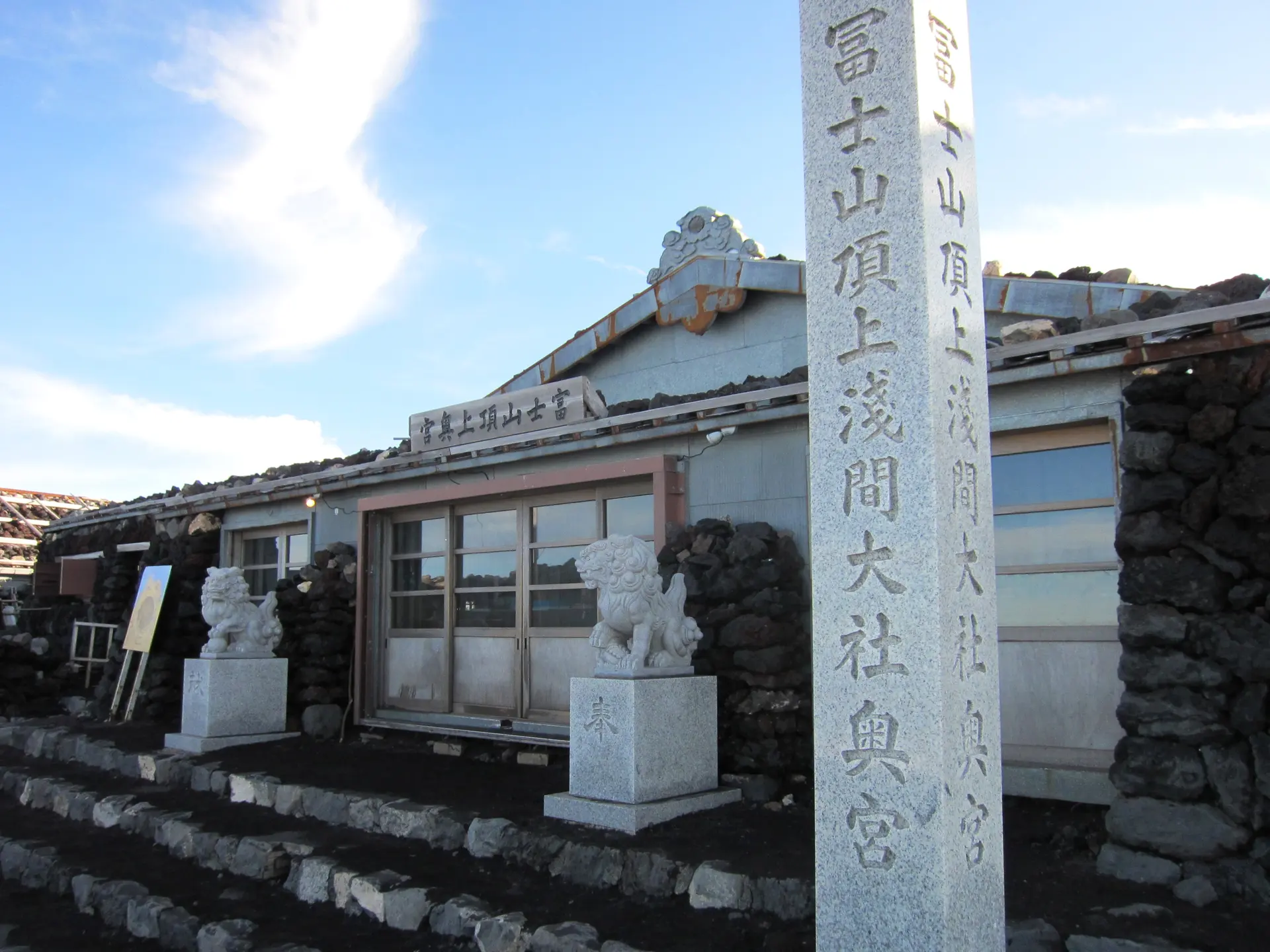
Mount Fuji was worshipped as a kami dwelling place from prehistoric times. The 663 CE first recorded ascent established it as a destination for Buddhist pilgrimage and ascetic practice. The Sengen shrines (first built 806 CE) formalized Shinto veneration. Shugendo practitioners used the mountain for training, and Fuji-ko societies democratized pilgrimage in the Edo period.
From exclusive ascetic practice to popular pilgrimage to modern tourism, Mount Fuji has continuously adapted while maintaining its sacred character. The 1872 lifting of the ban on women climbing opened access to all. The 2013 UNESCO inscription as a cultural World Heritage site recognized the mountain's ongoing religious significance. Recent regulations (climbing fees, daily limits, trailhead closures) aim to preserve the experience and the mountain itself.
Experience and orientation
The experience begins before the mountain. Fuji is visible from surprising distances—from Tokyo skyscrapers, from bullet train windows, from airplane approaches to Haneda and Narita. This distant viewing is itself a practice; traditional pilgrims contemplated the mountain's form before attempting its slopes.
The climb starts at a 5th station, accessible by bus or car. Most climbers choose the Yoshida Trail, beginning on the Yamanashi side. The trail rises through ten stations, the system dating to the Edo period. Fifth station (2,300m) is lively with shops and restaurants. As you ascend, facilities thin; the landscape shifts from forest to volcanic scree. By the 7th and 8th stations, you're above the clouds, breathing harder, feeling the altitude.
Most climbers stay overnight in a mountain hut around the 7th or 8th station. The huts are basic—futon on platforms, shared space, limited facilities—but they serve a crucial function: gradual acclimatization reduces altitude sickness. You eat dinner, sleep a few hours, then rise around 1-2 AM for the final push to the summit for sunrise.
The pre-dawn climb is a stream of headlamps moving upward through darkness. Fellow pilgrims become anonymous companions in a shared journey. The cold intensifies; each step requires attention; the mind simplifies. Then the path levels, the summit shrine appears, and you are there.
Goraiko—sunrise viewed from Fuji's summit—is the traditional goal. Climbers gather at the crater rim, facing east. The sky lightens from black through gray to colors. When the sun's edge breaks the horizon, cheers sometimes arise, but often silence is the response. The moment is too large for noise.
Those who complete the summit experience can circumambulate the crater (ohachimeguri), visiting the highest point (Kengamine, 3,776m) and the summit shrine. Then the descent begins—faster than the ascent but hard on knees and ankles. By afternoon, you're back at the 5th station, and the mountain returns to being an image rather than an experience.
Approach Mount Fuji with physical preparation: the climb is demanding and altitude sickness is common. Reserve a hut well in advance during peak season. Bring layers, rain gear, and a headlamp. Begin the ascent early enough to reach your hut before nightfall. Rise in time to reach the summit for sunrise. Move slowly, stay hydrated, and rest at each station. Let the climb be the practice; no additional technique is needed.
Context and lineage
According to the Nihon Shoki (720 CE), the goddess Konohanasakuya-hime became the deity of Mount Fuji when she married Ninigi, grandson of the sun goddess Amaterasu. Her name means 'Princess of Blossoming Trees'—she is associated with life, beauty, and the ephemeral nature of blossoms. Some interpret Fuji's volcanic power as her capacity for both creation and destruction.
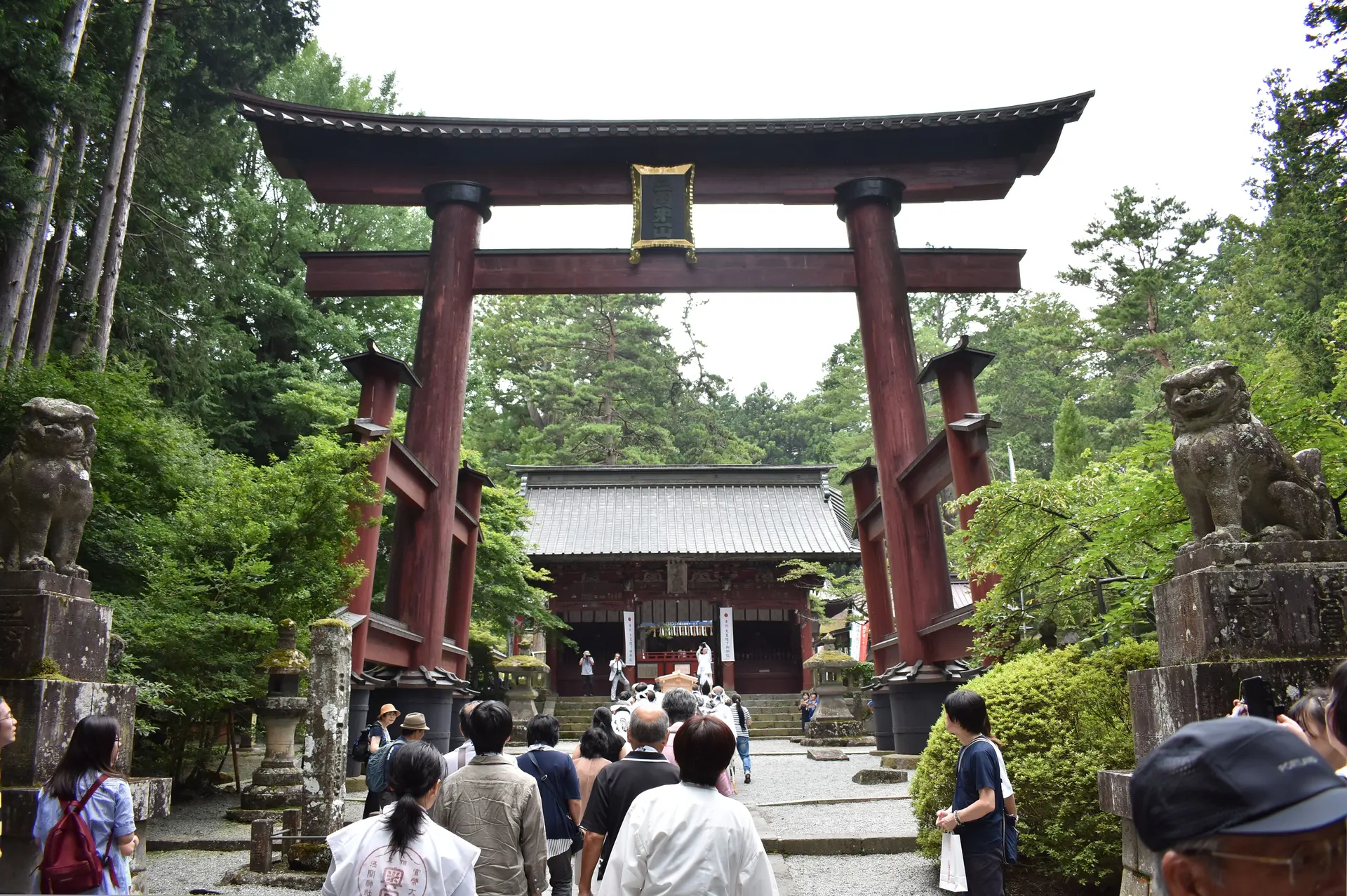
The Fujisan Hongu Sengen Taisha, constructed in 806 CE, is dedicated to her worship, and the network of Sengen shrines around the mountain's base maintains her veneration to this day.
The lineage of Fuji veneration runs from prehistoric mountain worship through the establishment of Sengen shrines (806 CE), the integration of Buddhist practice (Shugendo), the democratization of pilgrimage through Fuji-ko societies (Edo period), and into the present day. The UNESCO inscription (2013) formally recognized this continuity, inscribing the mountain as a cultural World Heritage site representing 'object of faith and source of artistic inspiration.'
Konohanasakuya-hime
Shinto goddess of Mount Fuji, daughter of the mountain god Oyamatsumi, wife of Ninigi
En no Ozunu
Buddhist monk credited with the first recorded ascent in 663 CE
Matsudai Shonin
Buddhist monk who founded a temple at the summit in the 12th century
Hasegawa Kakugyo
16th-century ascetic who founded one of the major Fuji-ko pilgrimage societies
Traditions and practice
Traditional Fuji pilgrims prepared through purification rituals (Mizugori) at sacred lakes and springs, then proceeded to Sengen shrines for prayers before the ascent. They climbed in white pilgrimage garb, chanting as they ascended. At the summit, they performed ohachimeguri—circumambulating the crater rim, visiting the highest point and summit shrine. The Fuji-ko societies organized group climbs with leaders guiding pilgrims through proper observances.
Contemporary climbing follows the traditional structure even when climbers hold no religious intention. The ascent through ten stations, the overnight stay at mountain huts, the pre-dawn final push to witness sunrise—all mirror pilgrimage patterns. Many climbers visit the summit shrine and circumambulate the crater. Walking sticks branded at each station provide tangible evidence of progress. Shrine stamps (oshuin) offer spiritual souvenirs.
For pilgrimage approach: Visit a Sengen shrine before your climb to offer prayers for safety. Consider wearing white or carrying white elements. Climb slowly, allowing the mountain to teach patience. At each station, mark the transition consciously. Stay overnight in a hut rather than 'bullet climbing.' At the summit, witness Goraiko and then circumambulate the crater, visiting the shrine. On descent, carry the mountain's silence back into ordinary life.
Shinto Mountain Worship
ActiveMount Fuji is venerated as the dwelling of the goddess Konohanasakuya-hime. The network of Sengen shrines maintains this tradition, with the Fujisan Hongu Sengen Taisha as the principal shrine.
Worship at Sengen shrines, pilgrimage climbing, prayer for safety and blessing, festivals marking the climbing season
Buddhism
ActiveBuddhists understand Fuji's summit as zenjo (perfect meditative state) and the eight-cusped crater as reflecting the lotus and eightfold path. Fuji is the abode of the Buddha of All-Illuminating Wisdom.
Meditation, pilgrimage climbing as spiritual practice, circumambulation of the crater
Shugendo
ActiveShugendo practitioners use Fuji for ascetic training that fuses mountain worship with Buddhist practice, seeking enlightenment through physical ordeal in sacred mountains.
Rigorous climbing practices, fasting, prayer, endurance of physical extremes
Perspectives and open questions
Mount Fuji can be understood through geological, religious, artistic, and experiential lenses. These perspectives are not mutually exclusive; the mountain accommodates all of them.
Scholarly perspective
Geologically, Fuji is a stratovolcano formed over approximately 100,000 years of volcanic activity. Its last eruption (1707-1708) deposited ash on Edo (Tokyo). The mountain remains classified as active; monitoring continues. The UNESCO inscription as a cultural (not natural) World Heritage site recognizes that Fuji's significance lies primarily in human response to its form rather than pure geological interest.
Living and traditional perspectives
Shinto tradition understands Fuji as the dwelling of the goddess Konohanasakuya-hime. Buddhist teaching finds in the eight-cusped crater the lotus blossom and eightfold path. Shugendo practitioners use the mountain for ascetic training that transforms consciousness through physical ordeal. All three traditions share the understanding that the mountain is alive with spiritual power accessible through proper approach.
Alternative interpretations
Some contemporary seekers understand Fuji as a power spot—a location where earth energy concentrates. The mountain's dormant volcanic energy is interpreted as spiritual potential. The climbing experience is understood as a journey through energy zones, with each station representing a different vibration or state of consciousness.
Open questions
When Fuji will next erupt remains unpredictable; the mountain sleeps but has not died. The origins of Fuji worship before written records are only partially reconstructed. How the complex of Shinto, Buddhist, and Shugendo practices developed and interrelated in detail is not fully documented. The nature of the transformation climbers report experiencing lies beyond empirical study.
Plan your visit
Access and arrival
Yoshida Trail (most popular): Bus to Fuji Subaru Line 5th Station from Kawaguchiko or Shinjuku (Tokyo). Fujinomiya Trail: Bus to Fujinomiya 5th Station from Fujinomiya or Shinkansen stations (Shin-Fuji, Mishima). Buses run during climbing season only.
Mountain huts between 7th and 9th stations (approximately 5,000-8,000 yen with meals). Book well in advance for peak season. Town accommodations in Fujikawaguchiko, Fujinomiya, and surrounding area for before/after climbing.
Respectful visit
Traditional pilgrims wore white. Modern climbers should prioritize function: layers for temperature extremes, rain gear, hiking boots with good ankle support, warm hat and gloves, headlamp for pre-dawn climbing.
Photography is welcome throughout. The summit sunrise is a classic image. Be respectful at shrines and aware of fellow climbers seeking their own experience.
Standard shrine offerings at Sengen shrines. Many climbers purchase walking sticks and collect brands at each station. Shrine stamps (oshuin) available at mountain shrines.
{"Climb only during official season (early July to early September)","Pay required 4,000 yen climbing fee","Reserve huts in advance during peak season","Do not attempt 'bullet climbing' without hut reservation (trailheads closed 2pm-3am)","Carry out all waste","Stay on designated trails"}
Altitude sickness affects many climbers; ascend slowly and stay hydrated. The summit is cold (5-8°C even in summer); bring adequate layers. Weather changes rapidly; rain gear is essential. The descent is hard on knees and ankles. Do not attempt off-season climbing without expert preparation. Recent regulations prohibit 'bullet climbing' (overnight ascent without hut reservation) to reduce accidents and altitude sickness.
Current practical details
Address
Mount Fuji, Kitayama, Fujinomiya, Shizuoka 418-0112, Japan
Hours, fees, and access can change — verify on the official source before you travel. Practical details last checked Jun 2026.
Location
Map loads as you approach this section.
Pilgrim reflections
A portrait of encounter, not a score
Pilgrims describe what they felt, how present they could become, and whether the place would shape a journey. There are no stars and no ranking of traditions.
No reviewed reflections yet
The first pilgrims can help describe the character of being here.
Share a reflection
Available after an account-backed “Been there.” Every reflection is reviewed before publication.
Nearby sacred places
Explore other sacred places in the region. Proximity does not establish access or travel time; check each place’s guidance.

References
Sources consulted for this page. Source categories describe the publication, not a guarantee that every claim is verified. Traditional accounts and outside interpretations may differ.
- 01Fujisan, sacred place and source of artistic inspiration — UNESCO World Heritage CentreofficialOfficial UNESCO World Heritage listing and description
- 02Mount Fuji — World History EncyclopediaencyclopediaScholarly historical information
- 03Mount Fuji, Object of Faith — Highlighting Japan (Government of Japan)officialOfficial Japanese government publication
- 04Mount Fuji – Japan — Sacred LandSource contextCultural preservation perspective
- 05Mt. Fuji Climbing Guide — Japan National Tourism OrganizationofficialOfficial tourism climbing guide
- 06Official Web Site for Mt. Fuji Climbing — Fujisan-climb.jpofficialOfficial climbing regulations and information
- 07Climbing Mount Fuji — Japan-Guide.comguideComprehensive practical climbing information
- 08Mount Fuji's Pilgrimage Traditions Before and After Buddhism — PilgrimapsSource contextDetailed pilgrimage history
Share a photo
Help visitors recognize Mt. Fuji. Every submission is reviewed before publication.