Rokuharamitsu-ji
Saigoku temple 17: a working Jūichimen Kannon hall in the Kansai pilgrimage round
Understand sacred places, explore living traditions, and learn how to engage respectfully with Pilgrim Map.
Access has not been verified. Check current local guidance before planning a visit.
Higashiyama-ku, Kyoto Prefecture, Japan
Read the sources
Visit essentials
A quick read before you go
- Duration
- 30–60 minutes including the treasure house.
- Access
- About 10 minutes' walk west of Kiyomizu-dera (downhill via Matsubara-dōri); ~10 minutes from…
Overview
Rokuharamitsu-ji is a working Jūichimen Kannon hall and temple 17 of the thirty-three-station Saigoku Kannon Pilgrimage, which has organized Kansai Kannon devotion for more than a thousand years. Its sacred identity joins three histories: a National Treasure Kannon temple, the cradle of Kūya's street nembutsu and lay-Buddhist plague response, and the late-Heian spiritual center of the Heike compound, where compassion, urban suffering, and political tragedy meet.
During Kyoto's 951 CE plague, tradition says the wandering monk Kūya Shōnin founded Saikō-ji, carved its Jūichimen Kannon, wheeled the image through the streets while chanting 'Namu Amida Butsu,' and served the sick tea infused with sacred herbs. The temple took the name Rokuharamitsu-ji in the 11th century. From the late 11th century, the adjoining Taira Rokuharaden mansion grew into a district with more than 5,000 Heike residences at the clan's height.
Today the temple belongs to Shingon Buddhism's Chisan-ha branch, whose head temple is Chishaku-in; esoteric ritual frames both Kannon veneration and Kūya's memorial cult. The National Treasure Jūichimen Kannon is a hibutsu revealed at 12-year intervals around the Year of the Dragon. A Kamakura-era Kūya statue shows six Amida Buddhas emerging from his mouth, making vocalized prayer visible within the compact medieval Rokuhara district.
Why this place is sacred
Rokuharamitsu-ji's depth lies where Kannon devotion, plague-era street practice, and Heike memory overlap in a compact urban precinct. Its National Treasure hibutsu Jūichimen Kannon opens at 12-year intervals around the Year of the Dragon, while the Kamakura-era Kūya statue makes vocal prayer visible through six Amida Buddhas emerging from his mouth. These images connect Saigoku 17 compassion with Kūya's attributed 951 procession, 'Namu Amida Butsu' chant, sacred-herb tea, and care for the sick.
The same precinct became the late-11th-century center of Taira power around Rokuharaden, eventually surrounded by more than 5,000 Heike residences. In 1183, as the Heike fled the capital during the Genpei War, they burned the compound. The temple's later re-emergence under Shingon affiliation holds urban suffering and political tragedy beside its continuing lay-Buddhist and Kannon practice.
Experience and orientation
Profound stillness in the small treasure house among Kamakura-period sculptures An almost cinematic encounter with the Kūya statue — the breath made visible Awareness of layered history: Heike, plague, nembutsu Surprise at the modesty of the precincts compared to the historical weight
Context and lineage
951 CE (founded by Kūya as Saikō-ji during a Kyoto plague). Renamed Rokuharamitsu-ji in the 11th century. Founded by Kūya Shōnin. During a Kyoto plague in 951, the wandering monk Kūya Shōnin is said to have built a hall (Saikō-ji) to enshrine a Jūichimen Kannon he had carved, and to have rolled this image through the streets in a cart while chanting 'Namu Amida Butsu' and serving sick people tea infused with sacred herbs.
Traditions and practice
12-year hibutsu kaichō of the Jūichimen Kannon Annual Kūya memorial services Heike memorial rites New Year 'kūki-shōkai' ritual involving dance and chant
Shingon Buddhism (Chisan-ha)
ActiveToday the temple belongs to the Chisan-ha branch of Shingon Buddhism (head temple Chishaku-in). Esoteric Shingon ritual frames the veneration of the Jūichimen Kannon and the memorial cult of Kūya.
Goma esoteric rituals; Saigoku Kannon liturgy; Kūya nembutsu chanting commemorations
Kūya nembutsu (odori-nembutsu) lineage
ActiveThe temple originated as Saikō-ji, a hall built by Kūya Shōnin (903–972) during a Kyoto plague to house the Jūichimen Kannon and to spread chanting of 'Namu Amida Butsu' through the streets. The famous Kamakura-period statue of Kūya by Kōshō (Unkei's son), with six tiny Amida Buddhas issuing from his mouth, embodies this practice.
Devotional chanting of the nembutsu; Memorial services for Kūya Shōnin; Veneration of the six pāramitās (rokuharamitsu) — generosity, ethics, patience, energy, meditation, wisdom
Heike memorial cult
ActiveFrom the late Heian period the temple stood at the heart of the Taira (Heike) clan's Rokuhara compound. Memorials for the fallen Heike, especially Taira no Kiyomori, persist in temple liturgy and in associated treasure-house portraits.
Memorial services for Taira clan dead; Annual rites tied to the fall of the Heike
Perspectives and open questions
Rokuharamitsu-ji is treated as a key witness to mid-Heian lay Buddhism (Kūya's plague-era nembutsu) and to the urban geography of Heike power; its Kamakura-period sculpture corpus is considered among the most important in Japan. Within Shingon Chisan-ha, the Jūichimen Kannon's eleven heads and the six Amidas of Kūya's mouth are read as a single program: Kannon's panoramic compassion realized through human voice and embodied practice.
Scholarly perspective
Rokuharamitsu-ji is treated as a key witness to mid-Heian lay Buddhism (Kūya's plague-era nembutsu) and to the urban geography of Heike power; its Kamakura-period sculpture corpus is considered among the most important in Japan.
Living and traditional perspectives
Within Shingon Chisan-ha, the Jūichimen Kannon's eleven heads and the six Amidas of Kūya's mouth are read as a single program: Kannon's panoramic compassion realized through human voice and embodied practice.
Alternative interpretations
Some interpret the temple's name (rokuharamitsu = six pāramitās) as an instruction sheet: each of the six perfections is to be cultivated and offered before the Kannon, with the Kūya statue as a model of how 'speech-as-offering' becomes visible.
Plan your visit
Access and arrival
About 10 minutes' walk west of Kiyomizu-dera (downhill via Matsubara-dōri); ~10 minutes from Keihan Kiyomizu-Gojō Station. Open daily ~08:00–17:00; treasure house ~08:30–17:00, ~¥600.
Respectful visit
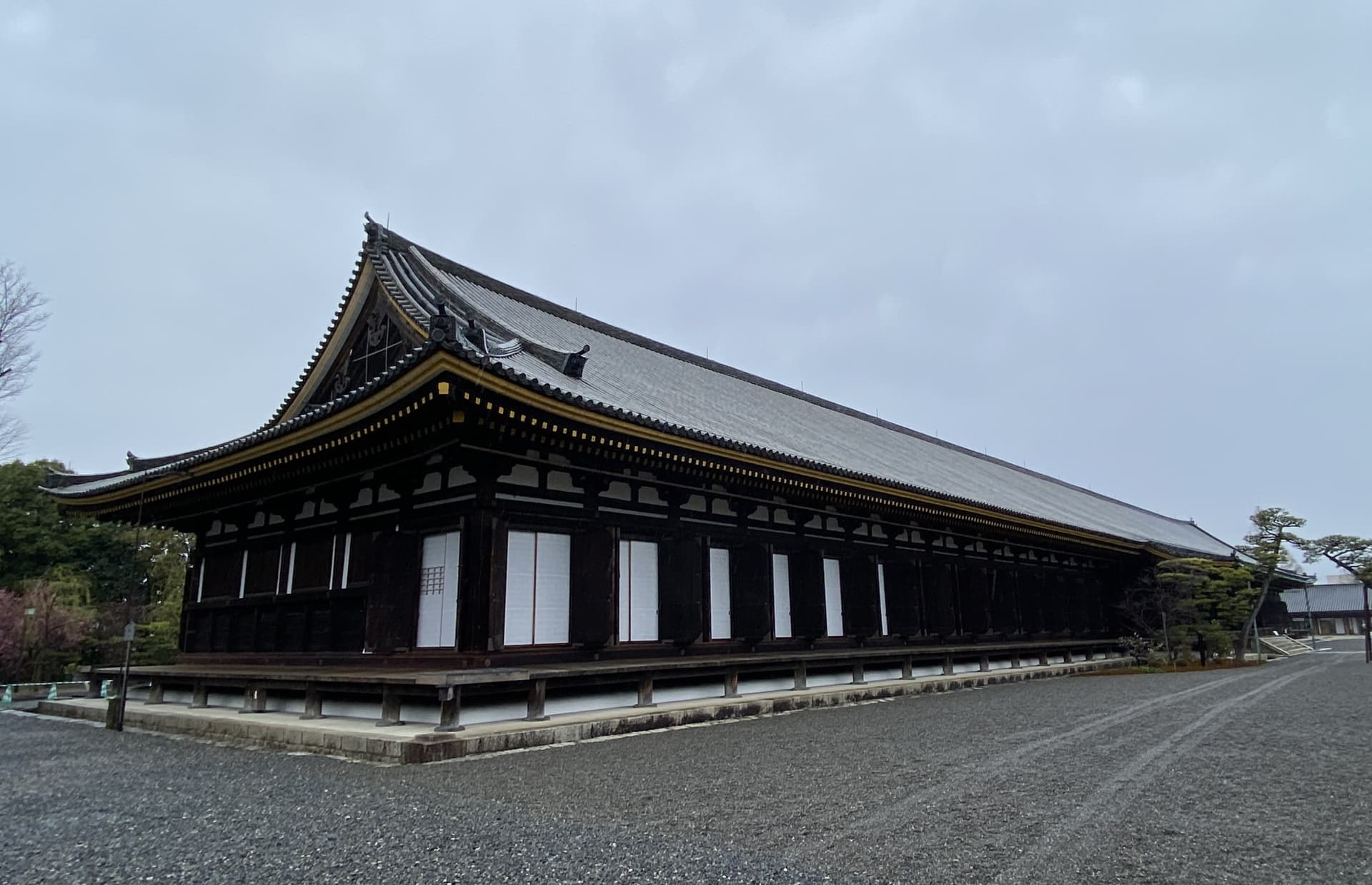
Permitted in outdoor precincts. Strictly forbidden inside the hondō and the treasure house, where the National Treasure and ICP sculptures are displayed.
Saisen, incense, candles. Treasure-house entry fee (~¥600). Goshuin and ema at the nōkyōjo.
Maintain quiet around the hondō and treasure house. Do not touch images or display cases. No flash, no tripods.
Current practical details
Address
81-1 Rokurochō, Higashiyama Ward, Kyoto, 605-0813, Japan
Phone
Hours
Hours, fees, and access can change — verify on the official source before you travel. Practical details last checked Jun 2026.
Location
Map loads as you approach this section.
Pilgrim reflections
A portrait of encounter, not a score
Pilgrims describe what they felt, how present they could become, and whether the place would shape a journey. There are no stars and no ranking of traditions.
No reviewed reflections yet
The first pilgrims can help describe the character of being here.
Share a reflection
Available after an account-backed “Been there.” Every reflection is reviewed before publication.
Nearby sacred places
Explore other sacred places in the region. Proximity does not establish access or travel time; check each place’s guidance.



References
Sources consulted for this page. Source categories describe the publication, not a guarantee that every claim is verified. Traditional accounts and outside interpretations may differ.
- 01Rokuharamitsu-ji — Wikipedia contributorsencyclopediaFounding by Kūya in 951; National Treasure Jūichimen Kannon; Heike association.
- 02The Saint Kūya and Rokuharamitsuji Temple — Tokyo National MuseumofficialKūya Shōnin statue by Kōshō, Heian and Kamakura sculpture corpus.
- 03Rokuharamitsu-ji Temple — Kyoto Museums AssociationofficialTreasure house information.
- 04Rokuharamitsu-ji Temple — Japanese Wiki CorpusencyclopediaJapanese-source–derived background.
- 05Rokuharamitsu-ji — Henro.orgSource contextSaigoku 17 context.
Pilgrim glossary
- Kannon
- The bodhisattva of compassion, central to many East Asian pilgrimage routes.
- Shingon
- An esoteric Japanese Buddhist school emphasizing ritual, mantra, and mandala practice.
Share a photo
Help visitors recognize Rokuharamitsu-ji. Every submission is reviewed before publication.