Todaiji
The Great Buddha who brought peace to a troubled nation
Understand sacred places, explore living traditions, and learn how to engage respectfully with Pilgrim Map.
Access has not been verified. Check current local guidance before planning a visit.
Nara, Nara Prefecture, Japan
Read the sources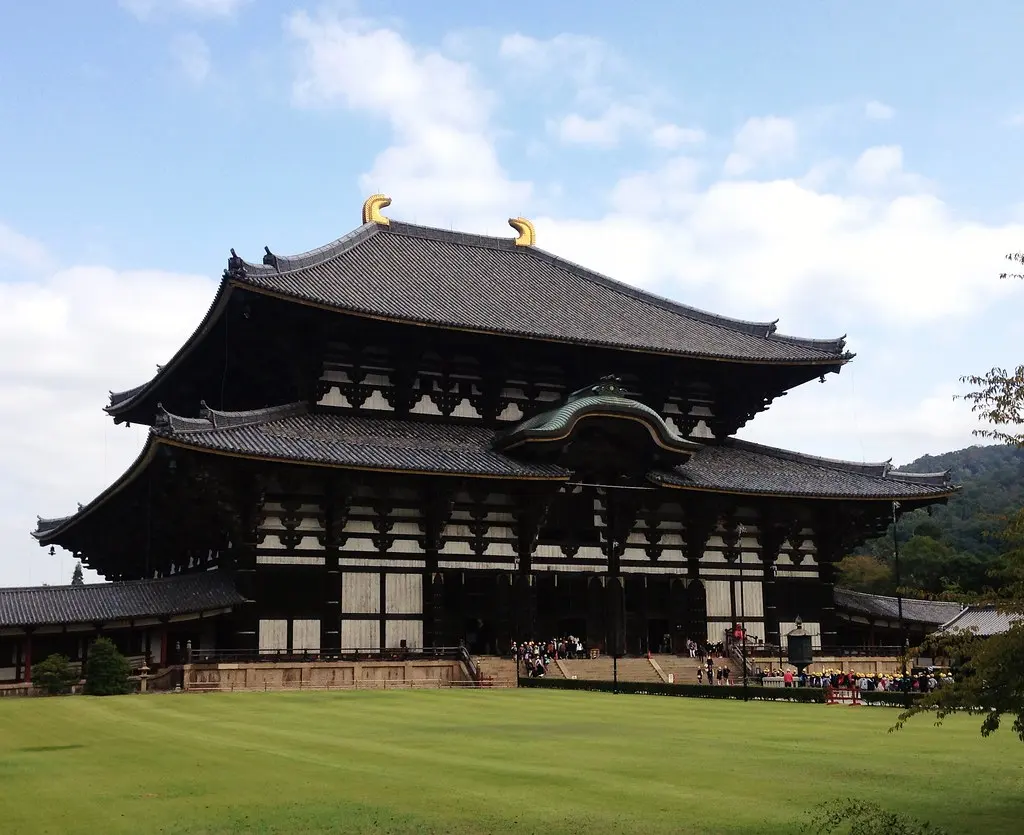
Image of Todaiji. Image source
Visit essentials
A quick read before you go
- Duration
- 1.5-2 hours for the Daibutsuden and immediate area.
- Access
- 7 minutes by city loop bus from JR Nara or Kintetsu Nara stations to Daibutsu-den…
Overview
Within the Daibutsuden, one of the largest wooden structures ever built, Tōdai-ji's Great Buddha rises 15 metres in 500 tons of bronze. Vairocana embodies the Kegon cosmic Buddha whose wisdom illuminates all worlds. Emperor Shōmu commissioned it after the 737 CE smallpox epidemic, earthquakes, crop failures, and political turmoil; 2.5 million people—half Japan's population—contributed, consuming nearly all the country's copper.
In 752 CE, Indian priest Bodhisena opened its eyes before 10,000 monks and 4,000 dancers, and Tōdai-ji became head of a protective network of provincial temples.
Sacred deer still wander as divine messengers. A hole in the pillar behind the Buddha is said to grant enlightenment to those who pass through. Each March, the Omizutori ceremony continues an unbroken observance begun in 752 CE, among humanity's longest-running rituals.
Why this place is sacred
What makes Tōdai-ji thin is the sheer scale of human intention it represents. This was not one patron's vision but a nation's prayer made physical. When Emperor Shōmu issued his proclamation for the erection of a great Buddha, the response was unprecedented: 2.5 million people contributed labor or resources—nearly half of Japan's 8th-century population. The statue required approximately 500 tons of copper, essentially exhausting Japan's reserves.
Gold for gilding had to be found through special prayer, which was answered when deposits were discovered in the northern provinces—an event understood at the time as divine confirmation of the project's righteousness. What emerged was a physical embodiment of Kegon philosophy: Vairocana, the cosmic Buddha whose light of wisdom illuminates all phenomena simultaneously.
To stand before this figure is to encounter the central concept of Kegon Buddhism made material—the idea that all worlds, all beings, all moments are interconnected in the cosmic Buddha's awareness. The temple was designed as the spiritual axis of a network extending to every province, provincial temples positioned like points on a mandala with Tōdai-ji at the center. This network has faded, but the axis remains.
The Shuni-e (Omizutori) ceremony at Nigatsu-do has been performed every March since 752 CE without interruption—a living thread connecting the present moment to the temple's founding. The sacred deer of Nara, messengers of the kami who have wandered these grounds since the founding era, add Shinto presence to the Buddhist foundation.
The temple was built by Emperor Shōmu to establish Buddhism as a protective force for the nation during a time of catastrophe—plague, earthquake, and political turmoil.
The current Great Buddha Hall dates to 1709 and is smaller than the original—which itself was rebuilt multiple times after fires. Yet the Great Buddha's bronze core contains original material, and the temple's function as Kegon headquarters and pilgrimage destination continues unbroken.
Experience and orientation
The experience of Tōdai-ji begins with approach. Walking through Nara Park, the sacred deer appear as prelude—these are not pests but divine messengers, their presence preparing consciousness for what follows. The Nandaimon gate, with its fierce guardian statues, marks formal entry to the sacred precinct. Then the Daibutsuden appears, and scale becomes the first teacher. The building is simply too large to process immediately—one of the largest wooden structures ever built, its roof seeming to float impossibly above.
Entry into the hall brings the second shift. The Great Buddha dominates the interior, 15 meters of bronze presence, hands positioned in teaching and granting-fearlessness mudras. The face is serene, the eyes looking down with what visitors consistently describe as compassionate awareness. Photographs cannot capture this: the combination of scale and presence creates an experience that exceeds visual documentation. Behind the Buddha, a pillar has a hole at its base.
According to tradition, passing through this hole grants enlightenment in the next life. The hole is the same size as the Buddha's nostril—a teaching in itself about the scale of cosmic awareness. Children and slim adults can attempt the passage; the experience, compressed and dark, creates its own transformation. Beyond the main hall, the temple complex extends across the hillside. Nigatsu-do offers sunset views over Nara, a contemplative space where the Omizutori ceremony has occurred every March since 752 CE.
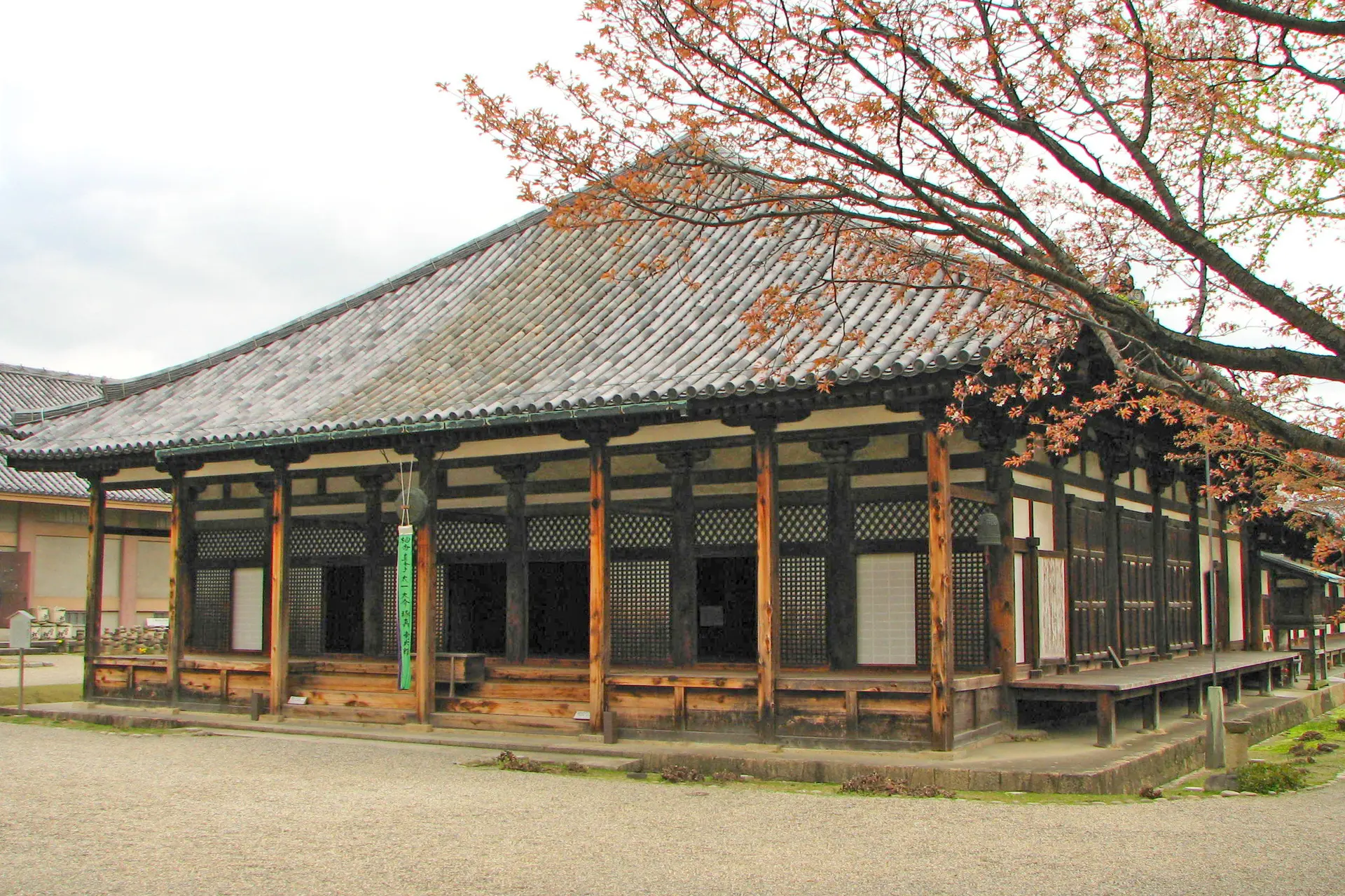
The stairs leading up are steep, the terrace at the top rewards the climb. Sangatsu-do, the oldest building in the complex, houses remarkable Buddhist statuary in intimate scale—a counterpoint to the Daibutsuden's overwhelming presence.
Begin with the Daibutsuden to encounter the Great Buddha. Allow time for initial shock of scale to settle into contemplation. Attempt the pillar hole if you wish the experience (dress appropriately—it's a tight squeeze). Visit Nigatsu-do for sunset views and to walk where the Omizutori ceremony takes place. Sangatsu-do rewards those interested in Buddhist sculpture.
Context and lineage
In 737 CE, a smallpox epidemic devastated Japan, killing perhaps one-third of the population including four of Emperor Shōmu's chief ministers. Earthquakes, crop failures, and political rebellions followed. The emperor, a devout Buddhist, believed only the Dharma could save his nation. In 743, he issued an edict calling for the erection of a great Buddha—a Vairocana figure representing the cosmic Buddha whose light illuminates all worlds. The scale of response was unprecedented.
Over 2.5 million people—half of Japan's population—contributed labor or resources. The statue required nearly all of Japan's copper reserves. When casting began, gold for gilding seemed impossible to find until deposits were discovered in the northern provinces—understood as divine confirmation. The Indian priest Bodhisena, who had traveled from southern India to China to Korea to Japan, performed the eye-opening ceremony in 752 before 10,000 monks and 4,000 dancers.
The temple was designated head of all provincial temples throughout Japan, creating a Buddhist network with Tōdai-ji at its center.
Tōdai-ji is the headquarters of the Kegon school of Buddhism in Japan. The Shuni-e (Omizutori) ceremony has continued without interruption since 752 CE.
Emperor Shōmu
The devout Buddhist emperor who commissioned the Great Buddha to bring peace to his troubled nation
Bodhisena
The Indian priest who traveled from South Asia to perform the eye-opening ceremony in 752 CE
Vairocana
The cosmic Buddha represented by the Great Buddha—the central figure of Kegon Buddhism whose light of wisdom illuminates all phenomena
Traditions and practice
The Shuni-e (Omizutori) ceremony at Nigatsu-do is the temple's most significant ritual, performed each March since 752 CE without a single interruption. The ceremony involves priests drawing sacred water from a well below the hall while performing dramatic fire rituals with enormous torches. The water is considered to have healing properties. The ceremony's 1,200+ years of continuous observance makes it one of the longest-running rituals anywhere in the world.
Daily worship services continue at the temple. The Great Buddha Hall receives millions of visitors annually. The monastic community maintains residence and continues Buddhist study and practice. The pillar hole passage remains a popular practice for visitors seeking blessing.
Stand before the Great Buddha without rushing—allow the scale and presence to work. The pillar hole passage offers participatory experience for those who fit (the hole is about 50cm x 37cm). Visit Nigatsu-do at sunset for contemplative atmosphere. If visiting in March, the Omizutori ceremony offers rare participation in ancient ritual.
Buddhism (Kegon)
ActiveTōdai-ji serves as the headquarters of the Kegon school of Buddhism in Japan, which emphasizes the interconnectedness of all phenomena as taught in the Avatamsaka Sutra. The Great Buddha represents Vairocana, the cosmic Buddha central to Kegon philosophy.
Daily worship services continue. The Shuni-e (Omizutori) ceremony at Nigatsu-do has been held every March since 752 CE without interruption. A monastic community maintains residence and Buddhist study. Pilgrimage to the Great Buddha and various halls continues year-round.
Perspectives and open questions
Tōdai-ji can be experienced as architectural wonder, as the center of Japanese Buddhist history, or as encounter with the cosmic Buddha's presence.
Scholarly perspective
Art historians and archaeologists recognize Tōdai-ji as one of the most significant monuments of East Asian Buddhism and a masterpiece of Nara-period architecture. The temple documents the transmission of Buddhism from India through China and Korea to Japan. The scale of the 8th-century construction project demonstrates the organizational capacity of the ancient Japanese state. UNESCO recognition confirms its outstanding universal value. The Omizutori ceremony represents one of the longest continuously observed rituals anywhere in the world.
Living and traditional perspectives
Within Buddhist tradition, the Great Buddha is not merely a statue but an embodiment of Vairocana's presence—the cosmic Buddha whose light of wisdom illuminates all phenomena simultaneously. The Kegon teaching of interconnectedness finds physical expression in the temple's historical role connecting all provincial temples. The Shuni-e ceremony maintains an unbroken spiritual lineage over 1,200 years. The deer are genuine divine messengers whose presence predates the temple itself.
Alternative interpretations
Some visitors experience the Great Buddha Hall as a power spot where the accumulated devotion of centuries creates accessible spiritual energy. The pillar hole passage is sometimes interpreted as symbolic rebirth or passage between states of consciousness.
Open questions
The exact techniques used to cast and gild the original Great Buddha are not fully understood. How ancient craftsmen achieved such scale with the technology available remains a subject of study and admiration.
Plan your visit
Access and arrival
7 minutes by city loop bus from JR Nara or Kintetsu Nara stations to Daibutsu-den Kasugataisha-mae, then 5-minute walk. Alternatively, 15-20 minute walk from Kintetsu Nara Station through Nara Park.
Day trip from Kyoto or Osaka is feasible. Staying in Nara allows early morning visits before crowds arrive.
Respectful visit
Modest dress appropriate for a Buddhist temple.
Generally permitted inside the Daibutsuden. Flash may be restricted. Be mindful of worshippers.
Incense and monetary offerings available at the altar. Deer crackers (shika senbei) sold by vendors for feeding sacred deer.
Entrance fee required for the Daibutsuden. Buddhist etiquette applies—bow with palms together, no clapping.
The temple is extremely popular, especially during peak seasons. Early morning or late afternoon visits offer better atmosphere. The pillar hole queue can be long; adults may not fit through.
Current practical details
Buy the Great Buddha Hall admission ticket on the day at the hall's ticket gate (¥800 adult); no advance booking is needed.
A combined Great Buddha Hall + Tōdai-ji Museum ticket is ¥1,200. Hall hours are 7:30–17:30 (Apr–Oct), 8:00–17:00 (Nov–Mar). Nara Park grounds are free.
Buy / book ticketsAddress
406-1 Zōshichō, Nara, 630-8587, Japan
Phone
Hours
Hours, fees, and access can change — verify on the official source before you travel. Practical details last checked Jun 2026.
Location
Map loads as you approach this section.
Pilgrim reflections
A portrait of encounter, not a score
Pilgrims describe what they felt, how present they could become, and whether the place would shape a journey. There are no stars and no ranking of traditions.
No reviewed reflections yet
The first pilgrims can help describe the character of being here.
Share a reflection
Available after an account-backed “Been there.” Every reflection is reviewed before publication.
Nearby sacred places
Explore other sacred places in the region. Proximity does not establish access or travel time; check each place’s guidance.


References
Sources consulted for this page. Source categories describe the publication, not a guarantee that every claim is verified. Traditional accounts and outside interpretations may differ.
- 01Tōdai-ji Temple Official Website — Tōdai-ji TempleofficialOfficial temple website
- 02Todaiji - World History Encyclopedia — World History EncyclopediaacademicAcademic historical resource
- 03JNTO - Todaiji Temple — Japan National Tourism OrganizationofficialOfficial Japanese government tourism resource
- 04Tōdai-ji - Smarthistory — SmarthistoryacademicAcademic art history resource
- 05Todai Temple - Britannica — Encyclopaedia BritannicaSource contextAuthoritative encyclopedia
- 06Tōdai-ji - Wikipedia — Wikipedia contributorsencyclopediaComprehensive historical overview
Pilgrim glossary
- Mandala
- A symbolic diagram of the cosmos used in meditation and ritual.
- Dharma
- The teachings of the Buddha; also the universal law underlying them.
Share a photo
Help visitors recognize Todaiji. Every submission is reviewed before publication.