Mii-dera
The phoenix temple that rose from destruction seven times
Understand sacred places, explore living traditions, and learn how to engage respectfully with Pilgrim Map.
Access has not been verified. Check current local guidance before planning a visit.
Otsu, Shiga Prefecture, Japan
Read the sources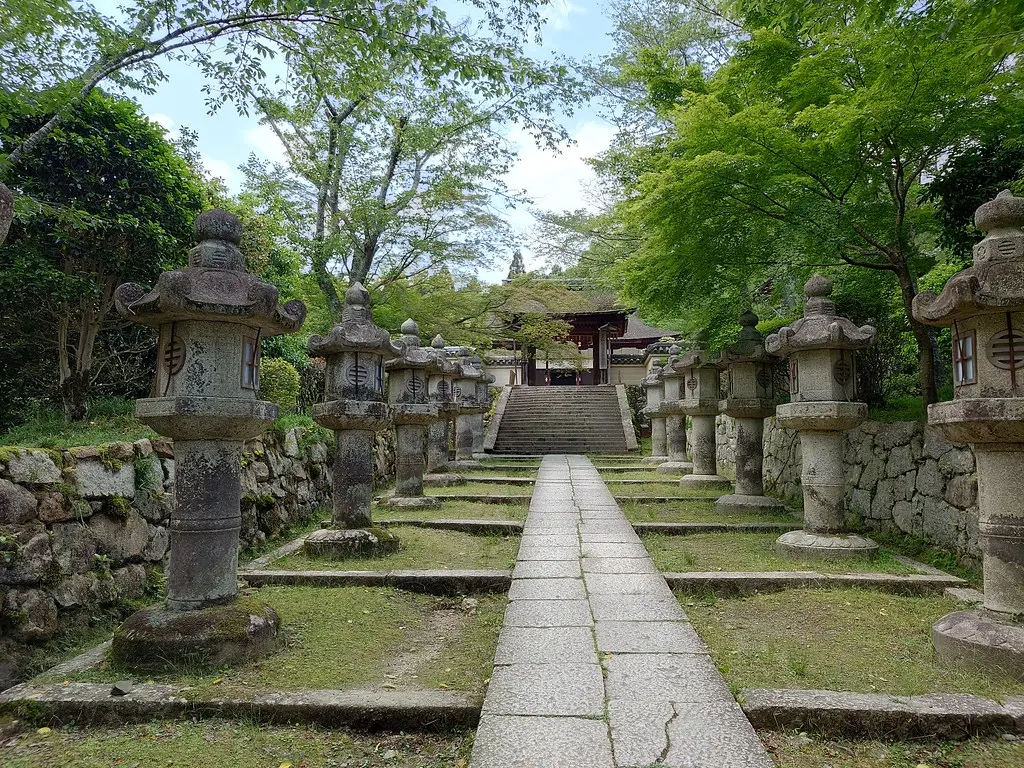
Image of Mii-dera. Image source
Station 14 of 33
Saigoku Kannon PilgrimageVisit essentials
A quick read before you go
- Duration
- 1-2 hours to explore the main areas.
- Access
- From Kyoto Station: JR Kosei Line to JR Otsukyo Station (11 minutes), then 20-minute walk.
Overview
Some temples endure through preservation; Mii-dera endures through resurrection. Founded in 672 CE following violent imperial succession, destroyed and rebuilt seven times through centuries of religious warfare, the temple has earned its epithet—the Phoenix Temple. What burns returns. What falls rises. The resilience inscribed in the temple's history makes it a meditation on impermanence and perseverance.
The name Mii-dera, Temple of Three Wells, comes from its most ancient feature: the miraculous spring that provided the first bath water for Emperors Tenji, Tenmu, and Empress Jitō. That spring still flows. In the Akaiya Well House, visitors can hear water that has bubbled since the 7th century, connecting through sound to the temple's deepest origins.
For over 1,200 years, this water has been used for the Sanbu Kanjo ritual, the Buddhist rite of passage where a master 'pours' wisdom onto a student. The temple sprawls across the hillside above Lake Biwa, its over 40 buildings ranging from National Treasures to quiet subsidiary halls. The famous Mii-dera bell—celebrated as one of the Eight Views of Ōmi—has been praised in Japanese poetry for centuries.
The Benkei Bell, scarred from legendary conflict, tells the story of the temple's long rivalry with Mount Hiei's Enryaku-ji. Over 1,000 cherry trees bloom in spring; 250 maples burn red in autumn. Temple 14 on the Saigoku Kannon Pilgrimage brings devotees seeking the Heian-period Nyoirin Kannon. The head temple of Tendai Buddhism's Jimon sect, Mii-dera concentrates over 100 National Treasures and Important Cultural Properties—sacred art accumulated through 1,200 years of devotion.
Why this place is sacred
Mii-dera's thinness derives from survival through catastrophe. Seven times the temple was destroyed—by fire, by warfare, by the violent rivalry with Enryaku-ji that defined medieval Japanese Buddhism. Seven times it rose again. This pattern inscribes Buddhist teaching directly into the temple's history: impermanence is not merely doctrine but physical reality; resilience is not merely virtue but survival. The sacred spring predates the temple's doctrinal identity, connecting to the earliest days of the Japanese state.
When Emperor Tenmu founded the temple in 672 CE to honor his brother Emperor Tenji, the spring was already flowing—water considered pure enough to bathe newborn emperors. That same water still bubbles in the Akaiya Well House, its sound audible to visitors who approach. For over 1,200 years, this water has been used for the Sanbu Kanjo ritual, pouring wisdom from master to student in the Buddhist rite of passage.
The accumulation of sacred art—over 100 National Treasures and Important Cultural Properties—creates another dimension of presence. These objects represent the temple's phoenix nature made visible: treasures saved from fires, restored after destructions, accumulated through 1,200 years of devotion. The famous evening bell, ranked among the Eight Views of Ōmi, adds sound to the temple's spiritual landscape. The Benkei Bell, its surface scarred by the legendary warrior-monk's attempt to steal it, tells stories of conflict that shaped Japanese Buddhist history.
The temple was founded in 672 CE by Emperor Tenmu to honor his brother Emperor Tenji. The sacred spring that provided bath water for three emperors gave the temple its identity.
The temple's transformation into a major Buddhist center occurred under Chishō Daishi Enchin in the mid-9th century. The schism with Enryaku-ji in 993 CE created the Jimon-Sanmon split within Tendai Buddhism, leading to centuries of conflict and the temple's repeated destructions.
Experience and orientation
Mii-dera rewards those who take time. The temple sprawls across hillside terrain above Lake Biwa, its over 40 buildings creating a landscape of accumulated devotion rather than a single focused precinct. Begin at the Kondō (Main Hall), a 1603 reconstruction housing the temple's principal Buddha images. The scale of the building and the darkness within establish the temple's weight.
The Akaiya Well House requires attention: approach quietly, and you may hear the sacred spring still bubbling—water that has flowed since the 7th century, that bathed emperors, that has been used for Buddhist initiations for over a millennium. The Benkei Bell tells a different story. According to legend, the warrior-monk Benkei stole this bell from Mii-dera and dragged it up Mount Hiei for Enryaku-ji.
The bell cried 'I want to go back to Mii-dera,' so Benkei rolled it back down the mountain in anger. The scratches on the bell's surface are attributed to this legendary abuse. The temple's famous evening bell—one of the Eight Views of Ōmi—can be rung by visitors. The sound, praised in Japanese poetry for centuries, rolls across the hillside toward Lake Biwa. Timing a visit for evening allows experiencing the sound in its intended context.
The Kannondō, Temple 14 on the Saigoku Pilgrimage, draws devotees seeking the Heian-period Nyoirin Kannon. The pilgrimage route through the temple grounds creates structured devotional movement. Spring brings over 1,000 cherry trees into bloom; autumn sets 250 maples aflame with color.
Begin with the Kondō for the temple's spiritual center. Seek the Akaiya Well House to hear the ancient spring. Find the Benkei Bell and its legendary scratches. Consider timing your visit for evening to experience the famous bell sound. If visiting as part of Saigoku Pilgrimage, the Kannondō deserves particular attention.
Context and lineage
The temple emerged from tragedy. Emperor Tenji died, and his son was killed in the conflict over imperial succession. The victor became Emperor Tenmu, who founded Mii-dera in 672 CE to honor and memorialize his brother. The sacred spring—which had provided bath water for Emperors Tenji, Tenmu, and Empress Jitō—gave the temple its name: Mii-dera, Temple of Three Wells. Two centuries later, the great teacher Chishō Daishi Enchin transformed Mii-dera into a major Tendai Buddhist center.
Under his leadership, the temple grew to become one of Japan's 'four largest temples' alongside Enryaku-ji, Tōdai-ji, and Kōfuku-ji. But in 993 CE, the temple split from Enryaku-ji in the Jimon-Sanmon schism. What followed were centuries of violent rivalry—the temple destroyed and rebuilt seven times, earning its epithet 'the Phoenix Temple.'
Mii-dera is the head temple of the Jimon sect of Tendai Buddhism and Temple 14 on the Saigoku Kannon Pilgrimage.
Emperor Tenmu
Founder of the temple in 672 CE, built to honor his brother Emperor Tenji
Chishō Daishi Enchin (814-891)
The first head of the temple and later fifth head of the entire Tendai sect, who transformed Mii-dera into a major Buddhist center
Benkei
The legendary warrior-monk whose attempted theft of the temple bell became part of the temple's mythology
Traditions and practice
The Sanbu Kanjo ritual has used the sacred spring water since Enchin's time—a Buddhist rite of passage where the master pours wisdom onto the student, using water from the same spring that bathed 7th-century emperors. The Saigoku Kannon Pilgrimage has included the Kannondō (Temple 14) for centuries.
Daily worship services continue. The Saigoku Pilgrimage brings devotees to the Kannondō throughout the year. Seasonal illuminations of cherry blossoms (late March to mid-April) and autumn foliage (November) draw visitors for evening viewing. Ringing the famous Mii-dera bell is available to visitors.
Experience the sacred spring's sound at the Akaiya Well House—few temples offer such direct sensory connection to their founding. Ring the famous bell, rated among the Eight Views of Ōmi. If walking the Saigoku Pilgrimage, the Kannondō deserves the devotional attention appropriate to a pilgrimage station.
Buddhism (Tendai Jimon)
ActiveMii-dera serves as the head temple of the Jimon sect of Tendai Buddhism. The temple was transformed by Chishō Daishi Enchin in the mid-9th century and grew to become one of Japan's four largest temples. It is Temple 14 on the Saigoku Kannon Pilgrimage.
Daily worship continues. The Sanbu Kanjo ritual uses the sacred spring water. Saigoku pilgrims visit the Kannondō. Seasonal illuminations celebrate cherry blossoms and autumn foliage.
Perspectives and open questions
Mii-dera can be experienced as phoenix temple, as Saigoku pilgrimage station, or as case study in medieval Japanese Buddhist conflict.
Scholarly perspective
Historians recognize Mii-dera as a major center of Japanese Buddhism and an important case study in religious institutional conflict—the Jimon-Sanmon schism shaped Tendai Buddhism for centuries. The temple's survival through multiple destructions demonstrates institutional resilience. The collection of over 100 National Treasures and Important Cultural Properties makes it a significant repository of Japanese Buddhist art. The sacred spring and its use in imperial baptism are documented in historical records.
Living and traditional perspectives
Within Buddhist tradition, the sacred spring carries the blessing of its use for three emperors and continues to hold spiritual power for rituals. The temple's phoenix-like rebirth after each destruction is understood as evidence of its profound karma and the protection of the Buddhas and bodhisattvas. The Nyoirin Kannon at the Kannondō continues to answer the prayers of Saigoku pilgrims.
Alternative interpretations
Some visitors experience the temple as a power spot where accumulated centuries of prayer and the sacred spring's energy can be accessed. The phoenix narrative of destruction and resurrection resonates with personal transformation themes.
Open questions
The exact nature of some early rituals at the sacred spring is not fully documented. The full details of the Sanmon-Jimon conflict's spiritual dimensions remain subjects of historical debate.
Plan your visit
Access and arrival
From Kyoto Station: JR Kosei Line to JR Otsukyo Station (11 minutes), then 20-minute walk. Or transfer at Ojiyama Station to Keihan Ishiyama Sakamoto Line to Miidera Station.
Day trip from Kyoto is feasible. Ōtsu offers hotels for those wanting to explore the Lake Biwa area more extensively.
Respectful visit
Modest dress appropriate for Buddhist temple.
Generally permitted in outdoor areas. Restrictions may apply in certain buildings.
Incense and monetary offerings available.
Entrance fee required (600 yen adults, 300 yen high school/junior high, 200 yen elementary). Standard Buddhist temple etiquette applies.
The temple grounds are extensive with significant walking on hills. Comfortable shoes are essential.
Current practical details
Address
Japan, 〒520-0036 Shiga, Otsu, Onjōjichō, 246 園城寺
Hours, fees, and access can change — verify on the official source before you travel. Practical details last checked Jun 2026.
Location
Map loads as you approach this section.
Pilgrim reflections
A portrait of encounter, not a score
Pilgrims describe what they felt, how present they could become, and whether the place would shape a journey. There are no stars and no ranking of traditions.
No reviewed reflections yet
The first pilgrims can help describe the character of being here.
Share a reflection
Available after an account-backed “Been there.” Every reflection is reviewed before publication.
Nearby sacred places
Explore other sacred places in the region. Proximity does not establish access or travel time; check each place’s guidance.


References
Sources consulted for this page. Source categories describe the publication, not a guarantee that every claim is verified. Traditional accounts and outside interpretations may differ.
- 01Miidera Temple Official Website — Miidera TempleofficialOfficial temple website
- 02JNTO - Miidera Temple — Japan National Tourism OrganizationofficialOfficial Japanese government tourism resource
- 03Miidera Temple Cultural Property Museum — Miidera TemplespiritualOfficial temple cultural heritage documentation
- 04Mii-dera - Wikipedia — Wikipedia contributorsencyclopediaComprehensive historical overview
- 05Kansai Odyssey - Miidera Temple — Kansai OdysseyguideDetailed visitor information
Photo gallery
2 curated photos
Pilgrim glossary
- Kannon
- The bodhisattva of compassion, central to many East Asian pilgrimage routes.
- Tendai
- A Japanese Buddhist school based on the Lotus Sutra, foundational to many later traditions.
Share a photo
Help visitors recognize Mii-dera. Every submission is reviewed before publication.