Shimabu-ji
The threshold temple where Chichibu's 34-Kannon pilgrimage formally begins
Understand sacred places, explore living traditions, and learn how to engage respectfully with Pilgrim Map.
Access has not been verified. Check current local guidance before planning a visit.
Chichibu, Saitama Prefecture, Japan
Read the sources
Station 1 of 34
Chichibu 34 Kannon PilgrimageVisit essentials
A quick read before you go
- Duration
- 30–60 minutes for a focused first-temple visit including outfitting and goshuin.
- Access
- Approximately 15 minutes by car or about 25 minutes by Seibu-Kankō bus from Seibu-Chichibu…
Overview
Shimabu-ji sits at the northern edge of Yokoze, where the rural lanes of the Chichibu basin meet the lower slopes of the surrounding mountains. Its full name, Zuikyōzan Shimabu-ji, points back to a founding legend: in 1007 CE, the wandering monk Gendōbiku is said to have arrived here, taught the dharma to the local people, and recited forty thousand sutra-passages morning and evening — shi-man-bu, four-ten-thousand parts — until the recitation seeded a new sacred geography in Musashi Province.
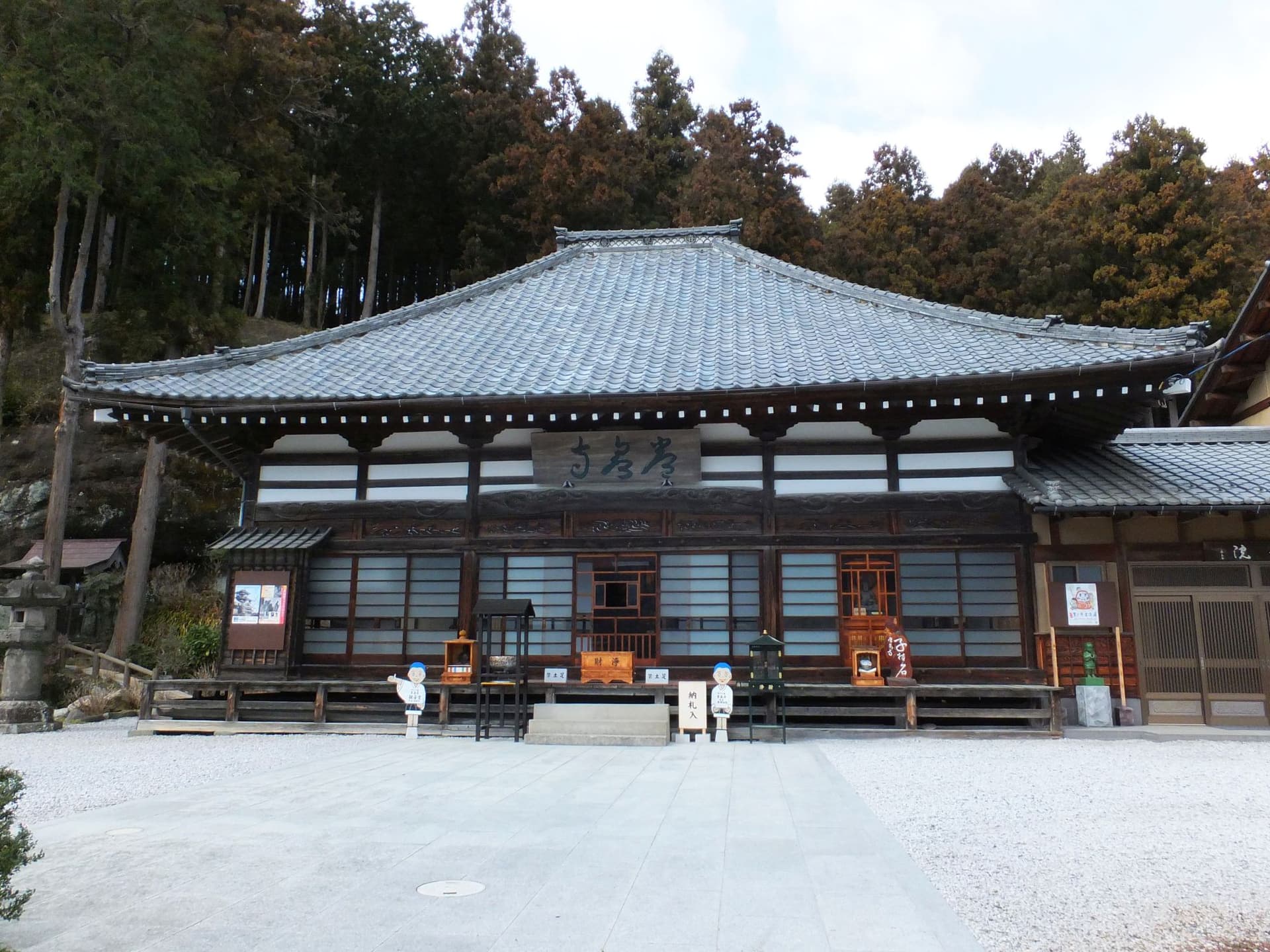
What survives in stone and timber is more recent. The Kannon-dō dates to 1697, an Edo-period hall designated by Saitama Prefecture as a Tangible Cultural Property, and is the building most pilgrims encounter as the architectural face of the temple. Beside it stands the Yakushi-dō, dedicated to the Healing Buddha — a quiet pairing of compassion and bodily healing at the very start of the pilgrimage.
The temple is administered as a Sōtō Zen institution; the principal image is a Shō Kannon, the 'Holy' or Sacred form of Avalokiteśvara, traditionally kept behind the closed doors of an inner zushi.
As the formal first station of the Chichibu 34, Shimabu-ji is where pilgrimage becomes practice: pilgrims outfit themselves, receive the first goshuin, chant at the Kannon-dō, and walk on toward Shinpuku-ji.
The temple also hosts one of the Kantō region's three major Daisegaki rituals — a feeding-of-hungry-ghosts memorial held annually on August 24, when the boundaries between living parishioners and unsettled dead are deliberately eased. In 2026, the once-in-twelve-years Year of the Horse sōkaichō opens the inner zushi to public viewing for the first time since 2014; pilgrims who arrive between March 18 and November 30, 2026 may meet the principal image directly.
Why this place is sacred
The thinness of Shimabu-ji is structural rather than dramatic. There are no cliffs, no caves, no astronomical alignments. What the temple offers is a precise threshold — outfitting, stamping, chanting, walking — built up over a millennium of devotional repetition. Pilgrims who arrive at dawn report that the act of buying the oizuru and bowing for the first time at a fudasho gate is enough to register as a perceptible internal shift.
The pilgrimage frame begins here, not at the second or third temple.
Three elements amplify the effect. The first is the surviving 1697 Kannon-dō: a wooden hall whose Edo-period weight gives the threshold tangibility. The second is the row of thirteen small statues representing the legendary founders of the Chichibu circuit — a quiet visual genealogy at the entrance to the pilgrimage. The third is the temple's role in the August 24 Daisegaki, which embeds the pilgrim's beginning in a longer cycle of memorial work for the unsettled dead.
A place of sustained sutra recitation. The temple's name records the founding act: forty thousand recitations of sutra-passages by the legendary monk Gendōbiku, framing the site as a sound-making rather than image-making place.
From medieval recitation hall to formal first station of the consolidated Chichibu pilgrimage. An earlier ordering placed Shimabu-ji at #24; Edo-period reorganization promoted it to #1, partly because of its position on the standard approach from Edo. The 1697 Kannon-dō survives from this Edo identity. The Sōtō Zen affiliation reflects later institutional reorganizations of regional Buddhism.
Experience and orientation
Pilgrims arriving at Shimabu-ji often comment on how unhurried the temple feels compared with the busier central halls of Chichibu town. The approach is rural — rice paddies, a low wooden fence, the silhouette of the mountains behind the precinct. The Kannon-dō is elegantly carved but modest in scale; the Yakushi-dō stands beside it, a reminder that physical healing and compassionate awakening are addressed together at the threshold.
Many visitors note the row of thirteen small statues representing the legendary founders of the circuit, and the relative quiet of this end of the route. Inside the nōkyōjo, a temple staff member brushes the first goshuin into the new stamp book, often with a brief word about pace, weather, or the next two temples. First-time pilgrims are commonly given simple instructions about chanting, the saisen-bako coin, and how to leave an osamefuda.
The transition from urban Tokyo into pilgrim mind is widely reported to begin here.
Approach through the sanmon gate, stepping over rather than on the threshold. Purify hands and mouth at the temizuya. Bow before the Kannon-dō, place a coin in the saisen-bako, and recite the Heart Sutra or Kannon-kyō silently or aloud. Leave an osamefuda at the designated box. Then enter the nōkyōjo for the goshuin and any pilgrim outfitting. The nōkyōchō is the stamp book used to accumulate the marks of all 34 Chichibu temples.
Context and lineage
According to the Kannon Reigenki (Record of Kannon's Miracles), Shōkū Shōnin of Shoshazan Engyō-ji in Harima received a vision that Chichibu was a land especially blessed by Kannon, and sent his disciple Gendōbiku to teach there. Gendōbiku was guided to the site by a sacred bird, taught the local people, recited forty thousand sutra-passages morning and evening, and built a sutra mound. The temple's name records the recitation count. Hard architectural evidence begins with the 1697 Kannon-dō.
Sōtō Zen, with the mountain name Zuikyōzan ('Sutra-Reciting Mountain'). Founding legend traces back to the Tendai-influenced Shoshazan Engyō-ji line via Gendōbiku; current institutional identity is Sōtō, reflecting Edo and Meiji reorganization of regional Buddhism.
Gendōbiku (幻通)
Traditional founder, c. 11th century. Disciple of Shōkū Shōnin of Engyō-ji; remembered for forty thousand sutra recitations. Hagiographic figure preserved in the Kannon Reigenki.
Shōkū Shōnin
Tendai master at Shoshazan Engyō-ji in Harima Province whose vision of Chichibu as a Kannon-blessed region prompted Gendōbiku's journey.
Edo-period reorganizers
Late-Edo Sōtō administrators who promoted Shimabu-ji from #24 to #1 in the consolidated Chichibu circuit and oversaw the 1697 Kannon-dō.
Hiroshige Utagawa II and Toyokuni Utagawa III
Mid-19th-century ukiyo-e artists whose 'Record of Kannon's Miracles: Chichibu Pilgrimage Stop #1' documents Shimabu-ji's Edo-period popularity.
Traditions and practice
Recitation of the Kannon-kyō (Lotus Sutra chapter 25) and the Heart Sutra; offering of incense and a small coin at the saisen-bako; leaving osamefuda inscribed with personal prayers; the annual Daisegaki Hōyō on August 24, regarded as one of the three major segaki rituals of the Kantō region.
Sōtō priests perform daily liturgy, issue goshuin, sell pilgrim outfit (oizuru, kongō-zue, sugegasa, nōkyōchō), and lead the annual rituals. The 2026 Horse-Year unveiling — March 18 through November 30 — marks the once-in-twelve-years public viewing of the principal Shō Kannon.
First-time pilgrims should plan to arrive at opening (08:00) to allow unhurried outfitting, chanting, and the first goshuin. Walk slowly through the precinct after the stamp; pause at the row of thirteen founder-statues; sit on the steps of the Kannon-dō for a few minutes before continuing toward Shinpuku-ji.
Sōtō Zen Buddhism
ActiveShimabu-ji is administratively a Sōtō Zen temple (mountain name Zuikyōzan). Like much of the Chichibu circuit, it came under Sōtō control during Edo and Meiji reorganizations of regional Buddhism. Sōtō priests today perform daily liturgy, oversee pilgrim reception, and lead the annual Daisegaki ritual.
Kannon (Avalokiteśvara) devotion
ActiveShimabu-ji is the formal opening temple of the Chichibu Kannon pilgrimage and one of the gates into the Hyakkannon (100 Kannon) tradition. The principal image is a Shō Kannon (Āryāvalokiteśvara, the 'Holy' Kannon).
Perspectives and open questions
Shimabu-ji holds together a hagiographic founding legend, a verifiable Edo-period architectural identity, and a continuing role as the threshold of one of Japan's three great Kannon pilgrimages. Different communities read the temple in different ways.
Scholarly perspective
Academic and tourism-authority sources converge on three points: the Chichibu pilgrimage as a coherent 34-temple circuit was consolidated by 1536, when Shinpuku-ji was added to bring the count to 34 and complete the 100-Kannon system with Saigoku and Bandō; the institutional dominance of Sōtō Zen on the circuit reflects Edo and Meiji reorganization, including the suppression of Shugendō and the formal separation of Shintō and Buddhism; and the surviving Kannon-dō at Shimabu-ji dates to 1697 and is a high-quality Edo-period structure designated by Saitama Prefecture.
Living and traditional perspectives
The Chichibu lay Buddhist tradition treats the Gendōbiku founding narrative as devotionally true regardless of historical verifiability: the temple is where forty thousand sutra recitations first opened the basin to Kannon's compassion. Local people continue to participate in the August Daisegaki and the 12-year grand opening as community events as well as personal devotions.
Alternative interpretations
Some popular pilgrim guides discuss the 100-Kannon circuit as a numerological completion expressing the bodhisattva's full repertoire of compassionate forms. Shimabu-ji as #1 of Chichibu is sometimes interpreted as the threshold from the everyday into this expanded field of compassion.
Open questions
The actual 11th-century footprint of the temple is unrecoverable from extant evidence. Whether there was continuous occupation between Gendōbiku's legendary founding and the 1697 Kannon-dō is unclear. The exact date of the principal Shō Kannon image is not consistently given across sources.
Plan your visit
Access and arrival
Approximately 15 minutes by car or about 25 minutes by Seibu-Kankō bus from Seibu-Chichibu Station to the 'Shimabu-ji' or 'Ōaza Yokoze' stop, plus a short walk. Free on-site parking for cars and tour buses. Chichibu is roughly 90 minutes from Ikebukuro on the Seibu Chichibu Line (Limited Express Laview). Mobile phone signal is reliable in the Chichibu basin.
A range of ryokan and minshuku in central Chichibu, about 15–20 minutes by car. The Chichibu basin also has Western-style hotels near Seibu-Chichibu Station for pilgrims arriving by Limited Express Laview from Tokyo.
Respectful visit
Modest, comfortable clothing. Many pilgrims wear the white sleeveless oizuru jacket bought here; a sugegasa straw hat and a kongō-zue staff are optional but traditional. Remove hats inside halls. Shoes are removed if entering interior worship spaces.
Exterior photography is generally welcome. Avoid flash and tripods inside the Kannon-dō. Do not photograph the principal image when zushi doors are open during the Horse-Year unveiling without explicit permission.
A small coin (5 yen traditional) at the saisen-bako, optional incense, and an osamefuda at the designated box. Goshuin fees are typically 300–500 yen.
Maintain quiet during others' chanting. Do not step on the threshold of the sanmon. Drone use requires prior temple consent.
Do not photograph the principal image during the Horse-Year unveiling without explicit temple permission. Step over, not on, the sanmon threshold. Drone use is prohibited without prior temple consent.
Current practical details
Address
418 Tochiya, Chichibu, Saitama 368-0002, Japan
Phone
Hours
Hours, fees, and access can change — verify on the official source before you travel. Practical details last checked Jun 2026.
Location
Map loads as you approach this section.
Pilgrim reflections
A portrait of encounter, not a score
Pilgrims describe what they felt, how present they could become, and whether the place would shape a journey. There are no stars and no ranking of traditions.
No reviewed reflections yet
The first pilgrims can help describe the character of being here.
Share a reflection
Available after an account-backed “Been there.” Every reflection is reviewed before publication.
Nearby sacred places
Explore other sacred places in the region. Proximity does not establish access or travel time; check each place’s guidance.


References
Sources consulted for this page. Source categories describe the publication, not a guarantee that every claim is verified. Traditional accounts and outside interpretations may differ.
- 01秩父札所三十四ヵ所 秩父札所 第一番 曹洞宗 誦経山 四萬部寺 (Official temple website) — Shimabu-ji TempleofficialSelf-published by the temple; gives sect (Sōtō), mountain name (Zuikyōzan), founding tradition, and ritual calendar.
- 02Pilgrimages — Canton to Chichibu: Introduction to the Shimabu-ji Temple — USC Scalar (David W. Chappell project)academicAcademic/curated digital scholarship; situates Shimabu-ji within Edo-period reordering and discusses the Gendōbiku narrative.
- 03Chichibu 34 Kannon Pilgrimage: Historical Overview — Chichibu Omotenashi Tourism OrganizationofficialLocal government tourism authority; English-language pilgrimage history and visitor protocol.
- 04Chichibu 34 Kannon Buddhist Temple Circuit | Japan's Local Treasures — Japan National Tourism Organization (JNTO)officialNational tourism authority; introduces Shimabu-ji as the official starting point and notes the elaborate Kannon-dō and Yakushi-dō.
- 05Record of Kannon's Miracles: Chichibu Pilgrimage Stop #1, Shimabu-ji — Hiroshige Utagawa II & Toyokuni Utagawa III (woodblock print) — Google Arts & CultureofficialMid-19th-century ukiyo-e print attesting to Edo-period popularity of Shimabu-ji as pilgrimage stop #1.
- 06Chichibu Fudasho (34 sacred places of the Kannon) — Saitama Prefecture Tourism Support DeskofficialPrefectural tourism source; visitor etiquette, sectarian distribution of the 34 temples.
- 07四萬部寺 — Wikipedia (Japanese) — Wikipedia contributorsofficialCites Kannon Reigenki (観音霊験記) for the Gendōbiku founding legend (1007 CE) and confirms 1697 dating of the Kannon-dō (Saitama Prefecture designated cultural property).
- 08Chichibu 34 Kannon Sanctuary — Wikipedia (English) — Wikipedia contributorsofficialPilgrimage-level overview: 34 temples, ~100 km, formation completed in 1536 to enable the Hyakkannon (100 Kannon) circuit with Saigoku and Bandō.
Pilgrim glossary
- Kannon
- The bodhisattva of compassion, central to many East Asian pilgrimage routes.
- Bodhisattva
- An enlightened being who postpones full nirvana to help others toward awakening.
- Sutra
- A canonical Buddhist scripture, often chanted as part of practice.
- Dharma
- The teachings of the Buddha; also the universal law underlying them.
- Tendai
- A Japanese Buddhist school based on the Lotus Sutra, foundational to many later traditions.
- Zen
- A Japanese Buddhist school emphasizing seated meditation and direct insight.
Share a photo
Help visitors recognize Shimabu-ji. Every submission is reviewed before publication.