Negoro-ji
A cedar-deep mountain temple where a fragrant root became a thousand-armed Kannon
Understand sacred places, explore living traditions, and learn how to engage respectfully with Pilgrim Map.
Access has not been verified. Check current local guidance before planning a visit.
Takamatsu, Kagawa Prefecture, Japan
Read the sources
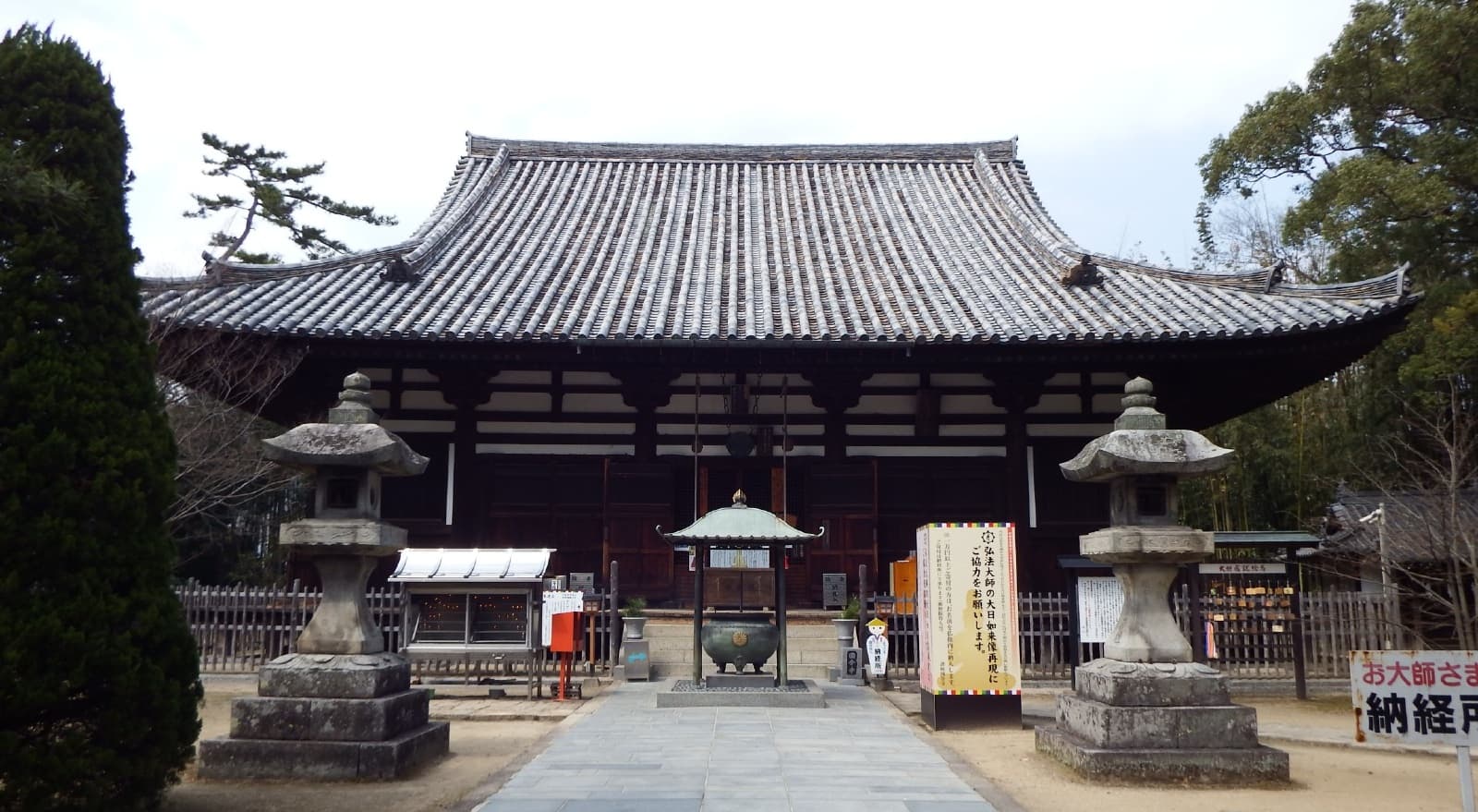
Image of Negoro-ji (根香寺). Image source · CC-BY-SA-3.0
Station 82 of 88
Shikoku 88 Temple PilgrimageVisit essentials
A quick read before you go
- Duration
- Forty-five to seventy-five minutes for the temple itself.
- Access
- By car, roughly 30 minutes from JR Takamatsu Station via the Goshikidai Skyline.
Overview
The eighty-second temple of the Shikoku circuit is approached down two flights of mossed stone steps, between cedar trunks tall enough to filter the daylight green. The descent into the precinct is unusual on the route; most temples stand above their pilgrims, but Negoro-ji is set in a forested hollow on the ridge of Mt. Aomine. The hush is the first impression. The bronze gyū-oni at the gate is the second.
The principal Senju Kannon enshrined here is, by tradition, carved from a tree root that emitted perfume during sculpting — the source of the temple's name, Negoro, the root perfume. Two layered foundation stories run through the temple's history. In the first, Kūkai practised on Mt. Aomine and his disciple Enchin carved the principal image from the fragrant root, lending the precinct its esoteric Shingon foundation.
In the second, the famous archer Yamada Takakiyo prayed to Negoro-ji's deity, encountered the man-eating gyū-oni, and shot it through the mouth; its severed horn was offered to the temple, where the relic and its bronze likeness remain.
The sect has shifted. Originally Shingon under Kūkai, the temple was converted to Tendai in 1664 under Matsudaira Yorishige, the first Tokugawa-related lord of the Takamatsu domain. It has remained Tendai since. Pilgrims notice the change in chant style — the liturgical inflections are slightly different from neighbouring Shingon temples — but the henro rite at the Main Hall and Daishi-dō is the same, and the Kōbō Daishi mantra is still sounded at the Daishi-dō.
What stays with most visitors is the forest, the carved compassion of the perfumed root, and the small bronze beast at the gate.
Why this place is sacred
The atmosphere at Negoro-ji depends on a few specific things: the descent rather than ascent into the precinct; the sustained shade of the cedars; the perfume legend behind the principal image; the gyū-oni horn relic and its bronze counterpart. Pilgrims arrive often in the late morning, after walking the ridge from Shiromine-ji along the henro path. Mist is common. Late October to late November the maples turn and the cedar-and-maple combination is exceptional even by Shikoku standards.
Originally a Shingon esoteric mountain temple in the Kūkai lineage, founded in the early ninth century around the carving of a Senju Kannon from a fragrant tree root.
Damaged in the Sengoku-period wars, restored by Ikoma Kazumasa in the late sixteenth century, and converted from Shingon to Tendai in 1664 under Matsudaira Yorishige. The Daishi-dō and the temple's place on the Shikoku 88 keep Kūkai veneration alive even after the formal sect change.
Experience and orientation
Most pilgrims drive up the Goshikidai Skyline from Takamatsu, or walk the ridge path from Shiromine-ji, a five-kilometre cedar-and-maple traverse. The temple is reached down two flights of stone steps. The bronze gyū-oni at the entrance is small, dark, and easy to miss in the shade. The Main Hall and Daishi-dō stand at the centre of the hollow.
Standard henro practice is followed: bow at the gate, purify hands and mouth at the chōzuya, light a candle and three sticks of incense, deposit an osamefuda, recite the Heart Sutra, sound the Kannon mantra (On bazara taramaki riku) at the Main Hall, and the Kōbō Daishi mantra at the Daishi-dō. The chant style differs slightly from the surrounding Shingon temples, since Negoro-ji is now Tendai, but the rite is the same.
Pilgrims may then view the gyū-oni horn relic, displayed in a side hall. Some leave a small offering. The descent back to the gate, with the Kannon's perfume legend in mind, lengthens the visit in memory.
The Main Hall sits at the centre of a hollow precinct, with the Daishi-dō to its side. The Niō Gate is at the top of the descending steps; the gyū-oni statue stands near the gate. The horn reliquary is held in a small adjacent hall.
Context and lineage
Standard temple history credits Kūkai (Kōbō Daishi) and his disciple Chishō Daishi (Enchin) with the founding around the Tenchō era (824–834). Senju Kannon was enshrined as principal image, carved by Enchin from a fragrant tree root that gave the temple its name. The temple was damaged during the Sengoku-period wars and restored by Ikoma Kazumasa, lord of Takamatsu Castle.
In 1664, Matsudaira Yorishige, the first Tokugawa-related lord of the Takamatsu domain, rebuilt the temple and converted it from Shingon to Tendai. The gyū-oni legend — the man-eating cow-ogre subdued by the archer Yamada Takakiyo — sits alongside the foundation tradition and is preserved through the horn relic and the bronze statue at the gate.
Tendai Buddhism (Sanmon school) since 1664; Shingon Buddhism prior. The temple remains a stop on the predominantly Shingon Shikoku 88 circuit.
Kūkai (Kōbō Daishi)
Founder, esoteric mountain practitioner
Enchin (Chishō Daishi)
Carver of the principal Senju Kannon
Matsudaira Yorishige
Edo-period rebuilder; converted the temple to Tendai
Yamada Takakiyo
Legendary archer in the gyū-oni story
Traditions and practice
Pilgrims follow the standard henro practice. After a bow at the Niō Gate and purification at the chōzuya, a candle is lit at the front of the candle-stand and three sticks of incense placed in the censer at the Main Hall. An osamefuda nameslip is deposited, a coin offered, the Heart Sutra recited, and the Senju Kannon mantra (On bazara taramaki riku) chanted.
At the Daishi-dō, the same rite is repeated, ending with the Kōbō Daishi mantra (Namu Daishi Henjō Kongō). The nōkyō calligraphy stamp is collected at the temple office.
Daily Tendai services in the Lotus Sutra-centred liturgical mode continue at the temple. The gyū-oni narrative is kept alive through display, signage, and the bronze statue at the gate. The temple receives both Shikoku pilgrims and visitors drawn specifically to the legend.
Pause at the bronze gyū-oni before entering the descent. The story it carries — of a violent force pacified by Buddhist intercession — sits naturally with the Senju Kannon ahead. After chanting at the halls, walk the precinct slowly. The cedar shade is the temple's quietest teacher.
Tendai Buddhism (Sanmon school)
ActiveOriginally founded in the early ninth century within Kūkai's Shingon orbit, the temple was converted to Tendai in 1664 under Matsudaira Yorishige and has remained Tendai since.
Daily sutra services in the Tendai liturgical mode, including Lotus Sutra recitation and Tendai esoteric rites. Pilgrim chanting at Main Hall and Daishi-dō.
Shingon Buddhism (historical)
HistoricalFoundational tradition under Kūkai. The Daishi-dō and the temple's place on the Shikoku 88 keep Kūkai veneration alive even after the formal sect change.
Pilgrims still chant the Kōbō Daishi mantra at the Daishi-dō.
Local Sanuki folk Buddhism (gyū-oni / cow-ogre cult)
ActiveThe gyū-oni legend is preserved in a horn relic and a bronze statue at the gate, blending Buddhist exorcism narrative with local memory of mountain monsters.
Visitors view the gyū-oni statue at the gate and the horn reliquary; some leave small offerings.
Perspectives and open questions
Negoro-ji is read in three frames: as a Shingon-origin mountain temple, as a Tendai institution after Edo-period reform, and as the keeper of a folk-monster relic.
Scholarly perspective
Negoro-ji is treated as a Goshikidai mountain temple founded in the Kūkai lineage, structurally reconfigured as a Tendai institution under Edo-period domain politics, but functionally still serving as a Shingon-styled pilgrim stop within the Shikoku 88 system.
Living and traditional perspectives
Local tradition treats the Goshikidai range — Shiromine, Aomine, Negoro — as a sacred mountain triad whose deities protect the Sanuki plain. The gyū-oni story preserves a memory of pre-Buddhist mountain spirits subjugated by Buddhist intercession.
Alternative interpretations
In esoteric reading, the fragrant root from which the Senju Kannon was carved is a dharmakāya manifestation: the mountain itself produces the body of the Bodhisattva. The gyū-oni horn, once a sign of violence, becomes a relic of awakening once enshrined.
Open questions
The historicity of Yamada Takakiyo and the gyū-oni cannot be verified. The exact age of the present principal image is debated and is generally dated to the medieval period.
Plan your visit
Access and arrival
By car, roughly 30 minutes from JR Takamatsu Station via the Goshikidai Skyline. The temple is most often visited by car or taxi. The henro foot path from Shiromine-ji (T81) is a popular ridge walk of approximately 5 km.
Most pilgrims stay in central Takamatsu. There is no shukubō at Negoro-ji.
Respectful visit
Modest dress. Pilgrim attire — white hakui, wagesa sash, sugegasa hat — is common but not required.
Permitted in the grounds. No flash inside the halls. Ask before photographing office staff.
Incense, candles, coins, osamefuda. Nōkyō fee conventionally ¥500 per book.
Do not touch the gyū-oni horn reliquary or other displayed cultural properties.
Do not touch the gyū-oni horn reliquary or other displayed cultural properties. The chant style is Tendai; pilgrims may keep their own Shingon-style practice if preferred.
Current practical details
Address
1506 Nakayamachō, Takamatsu, Kagawa 761-8004, Japan
Phone
Hours
Hours, fees, and access can change — verify on the official source before you travel. Practical details last checked Jun 2026.
Location
Map loads as you approach this section.
Pilgrim reflections
A portrait of encounter, not a score
Pilgrims describe what they felt, how present they could become, and whether the place would shape a journey. There are no stars and no ranking of traditions.
No reviewed reflections yet
The first pilgrims can help describe the character of being here.
Share a reflection
Available after an account-backed “Been there.” Every reflection is reviewed before publication.
Watch deeper
Films, episodes, and recorded talks for visitors who want more context before or after a visit. Speculative and alternative-history entries are labelled as perspectives, not as sources for established claims.
Nearby sacred places
Explore other sacred places in the region. Proximity does not establish access or travel time; check each place’s guidance.


References
Sources consulted for this page. Source categories describe the publication, not a guarantee that every claim is verified. Traditional accounts and outside interpretations may differ.
- 01Aominesan Senjuin Negoroji – Shikoku 88 Temple Pilgrimage — Shikoku 88 Temple Pilgrimage ReizōkaiofficialOfficial pilgrimage site
- 02Negoroji – Takamatsu, Kagawa Prefecture — Henro.orgguideReliable English pilgrim reference
- 03Negoroji Temple | Takamatsu | Kagawa Culture Compass — Kagawa Prefecture TourismguidePrefectural tourism source
- 04Shikoku 88 Temple Pilgrimage 82nd Sacred Spot, Negoroji Temple — Experience Takamatsu (city tourism)guideTakamatsu City tourism information
- 05Customs and Etiquette of the Shikoku Pilgrimage — Henro.orgguidePilgrim etiquette reference
- 06Temple 82, Negoro-ji — Japan AdventurerguideDetailed legend of Yamada Takakiyo and the gyū-oni (cow-ogre); covers Tendai conversion in 1664
- 07Negoroji Temple (82) and Kozaiji — SJ Spencer (Medium)blogFirst-hand pilgrim account; useful for atmosphere and gyū-oni statue
Pilgrim glossary
- Kannon
- The bodhisattva of compassion, central to many East Asian pilgrimage routes.
- Bodhisattva
- An enlightened being who postpones full nirvana to help others toward awakening.
- Sutra
- A canonical Buddhist scripture, often chanted as part of practice.
- Mantra
- A sound, word, or phrase repeated as part of meditation or ritual.
- Shingon
- An esoteric Japanese Buddhist school emphasizing ritual, mantra, and mandala practice.
- Tendai
- A Japanese Buddhist school based on the Lotus Sutra, foundational to many later traditions.
Share a photo
Help visitors recognize Negoro-ji. Every submission is reviewed before publication.