Buttsū-ji
Daihonzan of the Buttsū-ji branch of Rinzai Zen, in a forested ravine on Mt. Omoto
Understand sacred places, explore living traditions, and learn how to engage respectfully with Pilgrim Map.
Access has not been verified. Check current local guidance before planning a visit.
Mihara, Hiroshima Prefecture, Japan
Read the sources
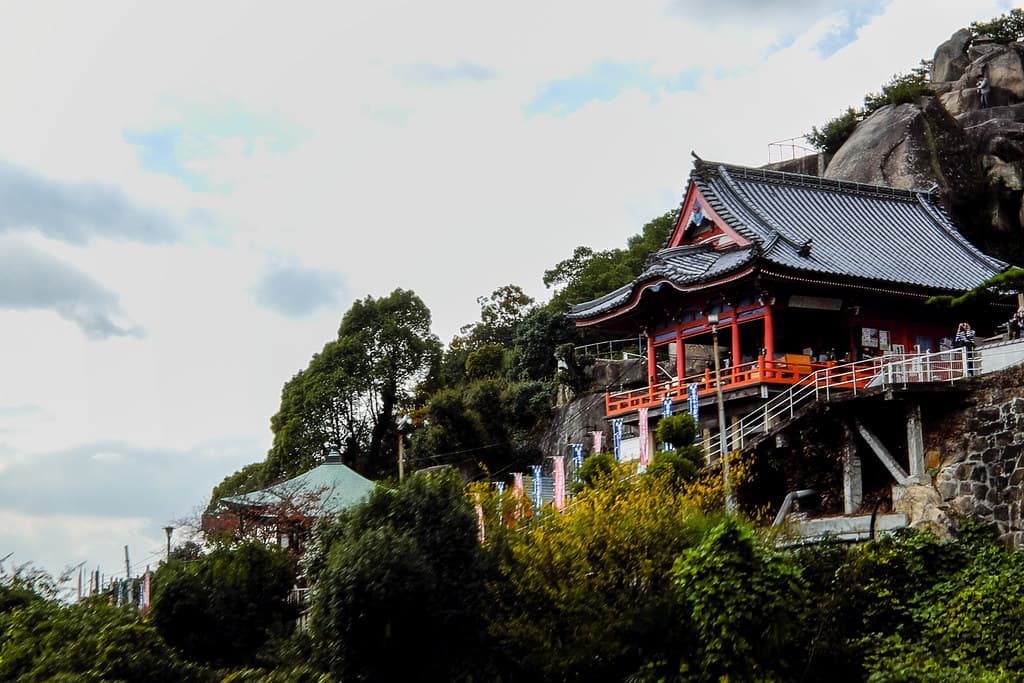
Image of Buttsū-ji. Image source · CC-BY-SA-3.0
Visit essentials
A quick read before you go
- Duration
- 75–120 minutes including bridge approach, Tahōtō, and main halls.
- Access
- Address: 22 Takasaka-chō Buttsū-ji, Mihara, Hiroshima Prefecture.
Overview
Omoto-san Buttsū-ji occupies a remote forested Mt. Omoto ravine about 40 minutes by bus from JR Mihara Station. Its mountain name identifies the enclosing peak; 'Buttsū-ji' honors founder Gucchū Shūkyū's Chinese teacher Buttsū Zenji (Sokkyū Keiryō, 即休契了), under whom he trained for ten years in Yuan-dynasty China.
Founded in 1397 (Ōei 4) under Kobayakawa Haruhira (Shunpei), lord of Numata-Mihara, its first abbot was Gucchū Shūkyū (愚中周及, posthumously Bukkyō Daitsū Zenji). Though a Dharma-successor of the Tenryū-ji-associated early-Muromachi master Musō Soseki, Gucchū refused the Kyoto Five Mountains hierarchy and founded an independent western Rinzai branch. Rinzai-shū Buttsū-ji-ha (臨済宗佛通寺派) remains a daihonzan governing roughly 47 temples, one of few Rinzai head temples west of Kyoto and the San'yō region's principal Zen training monastery.
Buttsū-ji is #12 on the Chūgoku 33 Kannon route. The Daihōjō, or Gōma-den, enshrines the pilgrimage honzon Jūichimen Kannon, while the main hall enshrines Shaka Nyorai. Working sōdō training, sanzen kōan practice, and daily zazen continue alongside pilgrim and autumn-leaf traffic. Mihara City designates the precinct a Historic Site and Place of Scenic Beauty; its 1525 Tahōtō, or multi-treasure pagoda, and Jizō-dō are National Important Cultural Properties.
Why this place is sacred
Buttsū-ji's depth emerges where forest ravine meets continuous Rinzai practice. The maple-lined Buttsū-ji Bridge approach rises through cypress and maple toward the Sanmon and has been described as natural samu, or work-meditation, quieting the mind before the precinct.
Its identity is exceptional: Rinzai-shū Buttsū-ji-ha is independent, not a Tenryū-ji or other Kyoto sub-branch. Although founder Gucchū Shūkyū studied under Musō Soseki in the Tenryū-ji line, he refused the Kyoto Gozan hierarchy to train monks in a remote retreat. The branch governs roughly 47–50 temples, and its sōdō has maintained Rinzai training continuously since 1397, making it one of few such institutions west of Kyoto and San'yō's principal Zen training monastery.
The 1525 (Daiei 5) Tahōtō and Jizō-dō are National Important Cultural Properties. Sengoku warfare destroyed many records, so Mt. Omoto's pre-1397 status remains undocumented although institutional history is secure from the late 14th century. Early-to-mid-November maples bring the year's largest crowds and kōyō illumination from 18:00–20:00.
Founded in 1397 (Ōei 4) under the patronage of Kobayakawa Haruhira (Shunpei), lord of Numata-Mihara, with founding abbot Gucchū Shūkyū (愚中周及). Founded as an independent Rinzai Zen training monastery — Gucchū's deliberate alternative to the Kyoto Gozan hierarchy, modelled on the Yuan-dynasty Chinese Chan training he had received under his teacher Sokkyū Keiryō ('Buttsū Zenji') over ten years.
The temple's institutional course shows a clear arc: 1397 founding under Kobayakawa-clan patronage; expansion through the 15th and early 16th centuries with the construction of the 1525 Tahōtō pagoda; partial loss of records in the Sengoku-era warfare; Edo-period reorganization within Rinzai's main-and-branch system; modern designation as the daihonzan of the Buttsū-ji branch governing roughly 47 affiliated temples; designation by Mihara City as Historic Site and Place of Scenic Beauty (市史跡・名勝). Sectarian affiliation has remained Rinzai-shū Buttsū-ji-ha throughout.
Experience and orientation
Reach JR Mihara Station by Sanyō Shinkansen or local San'yō Line, then take the Chūbu-bus 'Buttsū-ji' line for about 40 minutes; by car, San'yō Expressway Hongō IC is about 20 minutes away. Because the last return bus leaves in early afternoon, confirm schedules carefully.
Buttsū-ji Bridge crosses the ravine stream into maple-and-cypress forest leading to the Sanmon. Maples form a tunnel in early to mid November; spring brings fresh green. Beyond the gate are the Shaka Nyorai main hall, Jūichimen Kannon's Daihōjō (Gōma-den), the 1525 Tahōtō, Jizō-dō, and the working sōdō, which is off-limits to visitors.
Follow Rinzai form: bow at the Sanmon, light incense, place a saisen coin, and recite or quietly hear the Hannya Shingyō. Chūgoku 33 pilgrims present their nōkyō-chō for the #12 stamp. Visitor and corporate zazen sessions require advance booking through the office. Admission is about 300 yen and higher in autumn; early-to-mid-November illumination extends hours to 18:00–20:00.
From JR Mihara Station, take the Chūbu-bus 'Buttsū-ji' line (~40 minutes); confirm last bus back. Cross Buttsū-ji Bridge at the foot of the ravine and walk up through the maple-and-cypress forest toward the Sanmon. Pause at the Sanmon. Continue to the main hall, light incense, and offer at the saisen box. Visit the Daihōjō (Gōma-den) for the Jūichimen Kannon, then the 1525 Tahōtō. Pilgrims request the Chūgoku 33 #12 nōkyō at the temple office.
Bookable zazen and group experiences are arranged in advance through the temple.
Context and lineage
In 1397 (Ōei 4), Kobayakawa Haruhira (Shunpei), lord of Numata-Mihara, sought to establish a Rinzai Zen training monastery in his domain. He invited Gucchū Shūkyū (愚中周及, 1323–1409), then a senior monk recently returned from a decade of training in Yuan-dynasty China under the master Sokkyū Keiryō (即休契了, posthumously 'Buttsū Zenji').
Gucchū had been a Dharma-successor of Musō Soseki, the great Tenryū-ji-line master, but he had grown wary of the Kyoto Gozan hierarchy and chose instead to establish an independent training centre in a remote mountain ravine.
The temple's name honours Gucchū's Chinese teacher Buttsū Zenji. Its founding architecture and ritual programme followed Yuan-dynasty Chinese Chan models more rigorously than the metropolitan Kyoto Zen of the time. Buttsū-ji thus became its own branch of Rinzai Zen — Rinzai-shū Buttsū-ji-ha (臨済宗佛通寺派) — with its own daihonzan status, distinct from Tenryū-ji and from all other major Kyoto Rinzai branches.
The temple expanded through the 15th and early 16th centuries; the 1525 (Daiei 5) Tahōtō pagoda survives from this period. Many records were lost in the Sengoku-era warfare. Across the Edo, Meiji, and modern periods the temple has continued as the daihonzan of the Buttsū-ji branch, governing roughly 47–50 affiliated temples and operating a working sōdō (monks' training hall). Mihara City designation as Historic Site and Place of Scenic Beauty acknowledges both the institutional heritage and the cypress-and-maple ravine landscape.
Buttsū-ji is the daihonzan (head temple) of the Buttsū-ji branch of Rinzai Zen Buddhism — Rinzai-shū Buttsū-ji-ha (臨済宗佛通寺派). This is its own Rinzai branch, not a sub-branch of Tenryū-ji or any other major Kyoto Rinzai school. Founder Gucchū Shūkyū's lineage descends through Musō Soseki to the Song-Yuan Chinese Chan tradition transmitted by Sokkyū Keiryō ('Buttsū Zenji'). The Buttsū-ji branch governs approximately 47 affiliated temples in the western provinces; its daily ritual programme follows classical Rinzai forms with a Yuan-Chinese inflection.
Gucchū Shūkyū (愚中周及, 1323–1409)
Founding abbot
Posthumously titled Bukkyō Daitsū Zenji (佛徳大通禅師). A Dharma-successor of Musō Soseki who studied for ten years in Yuan-dynasty China under master Sokkyū Keiryō ('Buttsū Zenji'). Refused the Kyoto Gozan hierarchy and accepted Kobayakawa patronage to establish an independent Rinzai training monastery at Buttsū-ji in 1397.
Kobayakawa Haruhira (Shunpei) (小早川春平)
Founding patron
Late-14th-century lord of Numata-Mihara of the Kobayakawa clan. Patron of Buttsū-ji's 1397 founding, providing land, materials, and political protection for the new training monastery. The Kobayakawa would later become one of the most powerful clans of the Setouchi region.
Sokkyū Keiryō ('Buttsū Zenji', 即休契了)
Chinese teacher and namesake
Yuan-dynasty Chinese Chan master under whom Gucchū Shūkyū trained for ten years. Posthumously titled 'Buttsū Zenji,' from which the temple takes its name. The Yuan-Chinese training under Sokkyū shaped Buttsū-ji's distinctive architectural and ritual character.
Postwar Buttsū-ji-ha lineage and resident sōdō
Modern stewards
The Buttsū-ji branch of Rinzai Zen, governing roughly 47–50 affiliated temples in the western provinces, with continuous sōdō (monks' training hall) operation at the daihonzan since 1397. Responsible for daily liturgy, monastic training, the maintenance of the National Important Cultural Properties (Tahōtō, Jizō-dō), and bookable zazen for lay visitors.
Mihara City Heritage Office
Modern conservators
Designated the Buttsū-ji site as Historic Site and Place of Scenic Beauty (市史跡・名勝), recognizing both the institutional heritage and the cypress-and-maple ravine landscape. Coordinates with the Agency for Cultural Affairs on the National Important Cultural Property buildings.
Traditions and practice
The temple's liturgy follows classical Rinzai forms with the Yuan-Chinese inflection inherited from Sokkyū Keiryō: silent zazen, sanzen kōan practice with the abbot, recitation of the Hannya Shingyō, and the daily Rinzai service. Fudō-myōō goma fire rituals are performed in subordinate halls on periodic schedule. The sōdō (monks' training hall) maintains continuous Rinzai training since 1397 — one of the longest unbroken sōdō traditions west of Kyoto.
Pilgrims arrive year-round for the Chūgoku 33 #12 stamp at the Daihōjō (Gōma-den), which houses the pilgrimage honzon Jūichimen Kannon. Bookable zazen sessions for visitors and corporate groups can be arranged in advance through the temple office. The most concentrated visitor period is early to mid November for the maple kōyō; evening illumination from 18:00 to 20:00 during the autumn-leaves period extends visitor hours.
April brings fresh green and cherry blossoms; the temple is open year-round but with reduced services in winter.
Allow 75 to 120 minutes including the bridge approach, the Tahōtō, and the main halls. Walk the maple-lined approach across Buttsū-ji Bridge unhurriedly — the path itself is the temple's first teaching. Pause at the Sanmon. Light incense at the main hall, offer at the saisen box, and recite or listen to the Heart Sutra. Visit the Daihōjō (Gōma-den) for the Jūichimen Kannon and the 1525 Tahōtō. Pilgrims should bring their nōkyō-chō to the temple office for the #12 stamp.
Bookable zazen and shakyō experiences are arranged in advance through the temple. Avoid heavy rain — the single-lane mountain road can become difficult.
Buddhism
ActiveButtsū-ji is the daihonzan (head temple) of the Buttsū-ji branch of Rinzai Zen — its own Rinzai branch, not a sub-branch of Tenryū-ji or any other major Kyoto Rinzai school. Founded in 1397 by Kobayakawa Haruhira and Zen master Gucchū Shūkyū, the temple has functioned as a working sōdō (monks' training hall) continuously since its founding — one of the longest unbroken sōdō traditions west of Kyoto. The branch governs roughly 47–50 affiliated temples in the western provinces. As Chūgoku 33 #12, the temple's pilgrimage honzon (Jūichimen Kannon) is enshrined in the Daihōjō (Gōma-den); the main-hall principal honzon is Shaka Nyorai. The 1525 Tahōtō pagoda and the Jizō-dō are National Important Cultural Properties; the precinct is designated by Mihara City as Historic Site and Place of Scenic Beauty.
Chūgoku 33 Kannon Pilgrimage
Active#12 of the Chūgoku 33 Kannon Pilgrimage. The pilgrimage honzon is the Eleven-Faced Kannon (Jūichimen Kannon), enshrined in the Daihōjō (Gōma-den).
Hiroshima Shin-Reijō (Hiroshima New Sacred Sites)
ActiveA station on the Hiroshima Shin-Reijō, a regional pilgrimage route linking sacred sites of Hiroshima Prefecture. Buttsū-ji's inclusion reflects its position as one of the region's principal Zen monasteries.
Perspectives and open questions
Buttsū-ji is a temple where 14th-century Rinzai Zen's deliberate refusal of the Kyoto Gozan hierarchy meets a continuously functioning training monastery and a forested ravine. The site rewards visitors who hold all three open at once.
Scholarly perspective
Buttsū-ji is a key site in the history of provincial Rinzai Zen — an exceptional surviving Muromachi-era Zen monastery whose pre-modern buildings (Tahōtō 1525, Jizō-dō) and continuous monastic lineage make it institutionally and architecturally important. Many records were lost in the Sengoku-era warfare; the precise pre-1397 status of the Mt. Omoto site is undocumented. Modern scholarship affirms the temple's branch identity as Rinzai-shū Buttsū-ji-ha — its own Rinzai branch — distinct from the Tenryū-ji-ha and other major Kyoto Rinzai schools.
Living and traditional perspectives
Buttsū-ji's identity is anchored in Gucchū Shūkyū's anti-establishment choice — refusing the Kyoto Gozan and training monks in a mountain retreat instead, modelled on the Yuan-dynasty Chinese Chan training he had received under his teacher Sokkyū Keiryō. This independent stance shaped the branch's distinctive ritual and architectural character.
Alternative interpretations
The autumn maple display has been read in modern Zen-influenced essays as a perfect mujōkan (impermanence) teaching: the most beautiful state of the temple is the moment leaves are falling. The maple-lined approach across Buttsū-ji Bridge has been described as a natural samu (work-meditation) that prepares the mind for the temple precinct.
Open questions
{"Many records were lost in the Sengoku-era warfare; the precise pre-1397 status of the Mt. Omoto site as an earlier hermitage is undocumented","The full extent of original Yuan-Chinese ritual transmission from Sokkyū Keiryō through Gucchū's establishment is partially reconstructable from fragmentary sources","Detailed liturgical content of the working sōdō at Buttsū-ji is not documented in retrieved English sources — the training is internal to the monastery"}
Plan your visit
Access and arrival
Address: 22 Takasaka-chō Buttsū-ji, Mihara, Hiroshima Prefecture. From JR Mihara Station: Chūbu-bus 'Buttsū-ji' line, ~40 minutes; the last bus back is early afternoon — confirm schedules carefully. By car: San'yō Expressway Hongō IC ~20 minutes. Phone: 0848-66-3502. Mobile phone signal is reliable on most major Japanese carriers in the ravine, though may be weaker in pockets along the approach road.
Mihara offers business hotels and ryokan within walking distance of JR Mihara Station; some pilgrims base themselves in Onomichi or Hiroshima and treat Buttsū-ji as a half-day trip. No on-site accommodations are offered at Buttsū-ji itself.
Respectful visit
Modest casual; quiet attire befitting a working monastery. Sturdy footwear for the bridge approach and stone paths. Pilgrim coat (hakui), sedge hat (sugegasa), and walking stick (kongō-zue) appropriate for those on the Chūgoku 33 circuit.
Allowed on grounds and of buildings from the exterior. No photography of monks, services in progress, or inside the sōdō. No flash inside any hall. Tripods are discouraged during the autumn-leaves illumination period to avoid blocking other visitors.
Coin offerings at the main hall and Daihōjō saisen boxes; incense at the dedicated stands; admission fee separate (~300 yen, higher in autumn). Pilgrim stamp fee paid at the temple office.
Sōdō (monks' training hall) is off-limits to visitors; do not enter or photograph | Pilgrimage Jūichimen Kannon and main-hall Shaka Nyorai venerated within their respective halls; interior altar photography is generally discouraged | Silence requested in the inner precinct and during zazen sessions | Tripods discouraged during autumn-leaves illumination | Single-lane mountain road can be slippery in heavy rain; confirm last bus back early
The sōdō (monks' training hall) is off-limits to visitors and clearly marked. Do not enter buildings marked off-limits. Photography of monks, services, or inside the sōdō is not permitted. Silence is requested in the inner precinct, and especially during zazen sessions. Admission fee is charged (~300 yen, higher in autumn). The single-lane mountain road can be slippery in heavy rain; the last bus back to Mihara is early afternoon — confirm schedules carefully.
Current practical details
Address
Motoyama-22 Takasakachō, Mihara, Hiroshima 729-0471, Japan
Phone
Hours
Hours, fees, and access can change — verify on the official source before you travel. Practical details last checked Jun 2026.
Location
Map loads as you approach this section.
Pilgrim reflections
A portrait of encounter, not a score
Pilgrims describe what they felt, how present they could become, and whether the place would shape a journey. There are no stars and no ranking of traditions.
No reviewed reflections yet
The first pilgrims can help describe the character of being here.
Share a reflection
Available after an account-backed “Been there.” Every reflection is reviewed before publication.
Nearby sacred places
Explore other sacred places in the region. Proximity does not establish access or travel time; check each place’s guidance.


References
Sources consulted for this page. Source categories describe the publication, not a guarantee that every claim is verified. Traditional accounts and outside interpretations may differ.
- 01Buttsū-ji official site (Rinzai Buttsū-ji-ha Daihonzan) — Buttsū-ji TempleofficialAuthoritative for sect, founders, history
- 02佛通寺 — Chūgoku Kannon Reijō #12 — Chūgoku 33 Kannon Pilgrimage AssociationofficialConfirms #12 and Jūichimen-Kannon as pilgrimage honzon
- 03Rinzai-Obaku zen — Buttsū-ji head temple page — Rinzai-Obaku FederationofficialOfficial Rinzai-Obaku federation profile
- 04Buttsuji Temple — Dive! Hiroshima — Hiroshima Prefecture TourismofficialTourism details, autumn illumination
- 05佛通寺 — Mihara City Heritage page — Mihara CityofficialDesignated City Historic Site & Scenic Beauty
- 06Buttsū-ji — Wikipedia — WikipediaofficialFounder, branch (Buttsū-ji-ha), 47 sub-temples
- 07愚中周及 — Wikipedia (JA) — WikipediaofficialBiography of founder Gucchū Shūkyū / Daitsū Zenji
Pilgrim glossary
- Honzon
- The principal Buddhist deity enshrined as a temple's central object of worship.
- Kannon
- The bodhisattva of compassion, central to many East Asian pilgrimage routes.
- Sutra
- A canonical Buddhist scripture, often chanted as part of practice.
- Dharma
- The teachings of the Buddha; also the universal law underlying them.
- Zen
- A Japanese Buddhist school emphasizing seated meditation and direct insight.
- Koan
- A paradoxical question used in Zen training to break conceptual thinking.
Share a photo
Help visitors recognize Buttsū-ji. Every submission is reviewed before publication.