Nan'endō (Kofuku-ji)
Part ofKofuku-ji
Saigoku temple 9: a working Fukūkenjaku Kannon hall in the Kansai pilgrimage round
Understand sacred places, explore living traditions, and learn how to engage respectfully with Pilgrim Map.
Access has not been verified. Check current local guidance before planning a visit.
Nara, Nara Prefecture, Japan
Read the sources
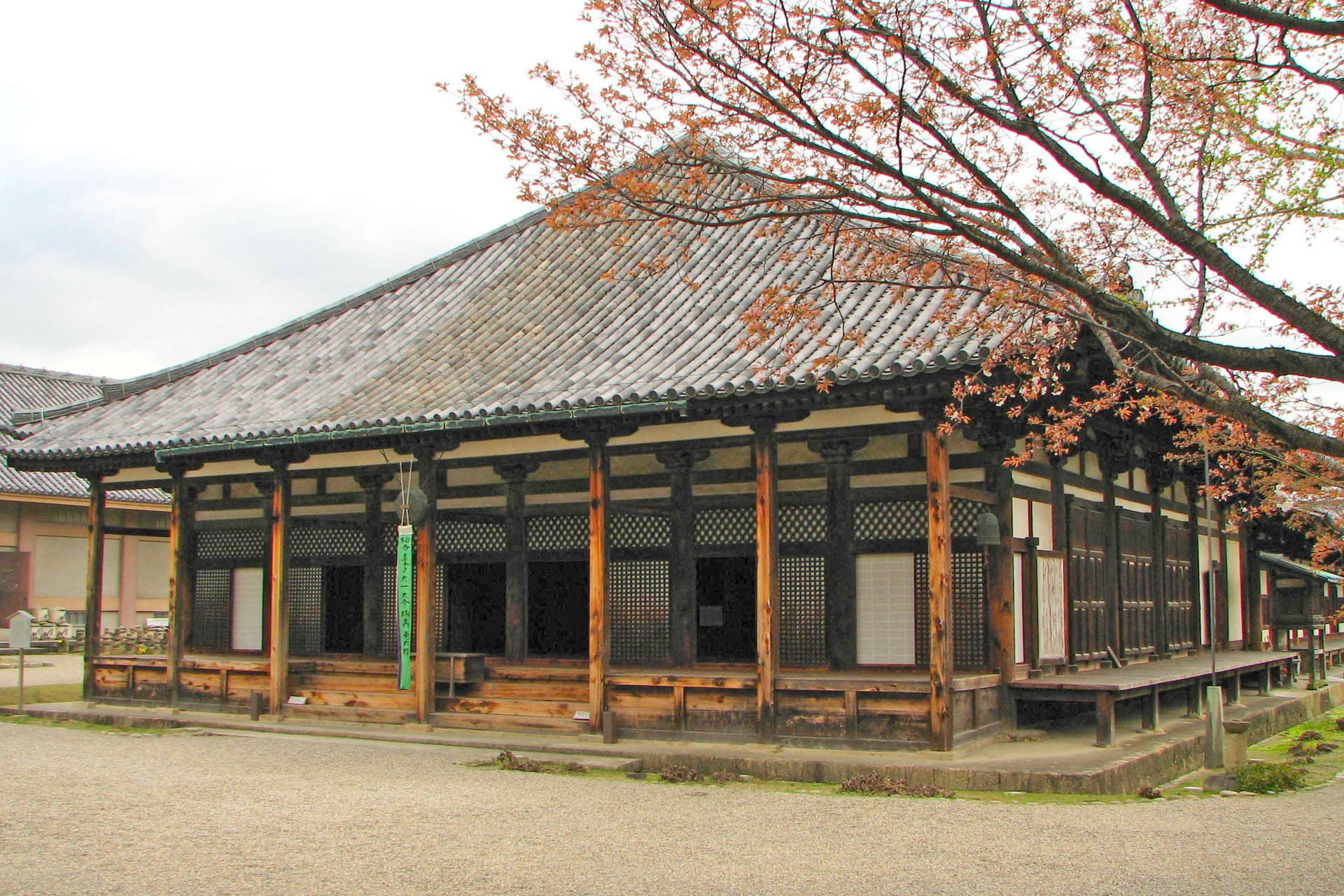
Image of Nan'endō (Kofuku-ji) (南円堂). Image source · CC-BY-3.0
Station 9 of 33
Saigoku Kannon PilgrimageVisit essentials
A quick read before you go
- Duration
- Allow 30 minutes to 1 hour for Nan'endō and its immediate surroundings; 2-3 hours to take in the…
- Access
- Approximately 10-15 minutes' walk east from JR/Kintetsu Nara Station.
Overview
Nan'endō is temple 9 of the thirty-three-station Saigoku Kannon Pilgrimage, a route that has organised Kansai Kannon devotion for more than a thousand years, and a working Fukūkenjaku Kannon hall within Kōfuku-ji, the family temple of the most powerful aristocratic house of classical Japan and Japan's Hossō-school headquarters.
Fujiwara no Uchimaro (756–812) vowed to build an ancestral memorial hall but died before completion; his son Fujiwara no Fuyutsugu fulfilled the vow in 813 CE, and tradition says Kūkai (Kōbō Daishi) consecrated it. The present octagonal hall dates to 1741. Its National Treasure principal image, Kōkei's 1189 Kei-school Fukūkenjaku Kannon, has three eyes and eight arms and holds a 'never-empty noose' understood to miss no sentient being.
National Treasure images of the Six Hossō Patriarchs and Four Heavenly Kings surround it. Hossō, or East Asian Yogācāra, is one of the six original Nara schools (Nanto Rokushū) and teaches yuishiki, that experienced reality is constructed by consciousness rather than independently existing. The octagon is associated with the Eightfold Path. The hall's 1,200 years of Fujiwara memorial devotion, annual October 17 opening, and place within Kōfuku-ji—the 1998 UNESCO Historic Monuments of Ancient Nara—join ancestral, doctrinal, artistic, and pilgrim life.
Why this place is sacred
Nan'endō joins the ninth Saigoku station, Fujiwara ancestral memory, Hossō doctrine, and Kamakura sculpture in a rare octagonal form at the edge of Nara Park. Kōkei's 1189, three-eyed and eight-armed Fukūkenjaku Kannon holds the noose of compassion among the Six Patriarchs and Four Heavenly Kings; the interior opens only on October 17. The UNESCO-listed Kōfuku-ji setting and 1,200-year memorial continuity deepen that single day of access.
A small adjacent chapel enshrines Hitokoto Kannon, the 'Kannon of One Word,' where tradition holds that one sincere prayer can bring salvation.
Experience and orientation
Most Saigoku pilgrims experience Nan'endō from the exterior throughout the year — a striking octagonal vermillion-painted hall set among the broader Kōfuku-ji compound, surrounded by Nara Park's deer, the five-storied pagoda, and the Tōkondō. Visitors describe the hall's compactness and the contrast with Kōfuku-ji's larger structures.
Context and lineage
Nan'endō built in 813 CE by Fujiwara no Fuyutsugu to fulfill the vow of his father Fujiwara no Uchimaro (756-812), who had pledged to build the hall but died before completion. Tradition says the hall was consecrated by Kūkai (Kōbō Daishi). Nan'endō: built by Fujiwara no Fuyutsugu (813), consecrated by Kūkai per tradition.
Fujiwara no Uchimaro vowed to build the hall as a memorial offering for his ancestors but died before its completion; his son Fuyutsugu fulfilled the vow in 813.
Traditions and practice
Daihannya-e (Great Perfection of Wisdom recitation) on October 17 each year, the only day Nan'endō's interior is opened to the public. Annual Kōfuku-ji liturgical observances tied to Hossō doctrinal calendar. Memorial rites for the Fujiwara family. Saigoku pilgrim ceremonies year-round at the exterior worship platform.
Hossō school (Yogācāra)
ActiveKōfuku-ji is the national headquarters of the Hossō (East Asian Yogācāra) school in Japan, one of the six original Nara schools (Nanto Rokushū). Hossō teaches that experienced reality is constructed by consciousness (yuishiki / 'consciousness only') rather than independently existing — a doctrine of central importance to Nara-period Japanese Buddhism. Nan'endō is a Hossō sub-hall but historically also functioned as the Fujiwara clan's memorial chapel for ancestral merit.
Hossō doctrinal study and Yogācāra meditation; Annual Daihannya-e (Great Perfection of Wisdom Sutra recitation), including the October 17 Nan'endō opening; Saigoku Kannon pilgrim reception; Goshuin inscription (multiple stamp designs available); Memorial rites tied to the Fujiwara family
Perspectives and open questions
Nan'endō can be read through distinct historical, Hossō-traditional, and Shingon-influenced lenses. Historically it is a Fujiwara memorial chapel begun from Uchimaro's vow, completed in 813 by Fuyutsugu, repeatedly rebuilt, and represented today by the 1741 hall. Hossō tradition centers Fukūkenjaku Kannon's never-empty compassion. Esoteric readings attend to the eight arms, octagonal plan, Kūkai consecration tradition, and annual unveiling.
Scholarly perspective
Nan'endō was built in 813 as a Fujiwara-clan memorial chapel fulfilling Fujiwara no Uchimaro's vow; Kūkai's consecration belongs to tradition, and the present hall dates to 1741 after repeated destruction and rebuilding. Kōkei's 1189 Kamakura-period Fukūkenjaku Kannon and the Six Hossō Patriarchs and Four Heavenly Kings are National Treasure Kei-school masterworks. Kōfuku-ji is the Hossō headquarters and a component of the 1998 UNESCO Historic Monuments of Ancient Nara.
Living and traditional perspectives
Within the Hossō school's self-understanding, Nan'endō embodies the bodhisattva path of Fukūkenjaku Kannon — the Kannon whose noose 'never returns empty,' meaning no sentient being is ultimately overlooked by compassion. The hall's role as a Fujiwara memorial fuses doctrinal Hossō practice with ancestral-clan devotion, a characteristic pattern of Heian aristocratic Buddhism.
Alternative interpretations
Esoteric (Shingon-influenced) readings — recalling Kūkai's traditional consecration — interpret the eight arms of Fukūkenjaku Kannon as the Eightfold Path embodied in skillful means; the octagonal architectural plan as a built mandala; and the once-yearly opening as a calendrical revelation parallel to the unveiling of hibutsu icons elsewhere. The Hitokoto Kannon sub-cult exemplifies the esoteric principle that a single mantra-word, sincerely uttered, can carry the entire intention of awakening.
Plan your visit
Access and arrival
Approximately 10-15 minutes' walk east from JR/Kintetsu Nara Station. The grounds of Kōfuku-ji are free and open year-round; interior access to specific halls (Tōkondō, Kokuhōkan) carries individual fees. Goshuin from Kōfuku-ji's office for ¥300.
Respectful visit
Permitted of the exterior architecture and grounds (Kōfuku-ji as a whole). Photography of the principal Kannon and inside Nan'endō is restricted, especially during the October 17 opening.
Osaisen at the offering box, incense at the exterior censer, candles when available. Goshuin offering ¥300.
Interior of Nan'endō is closed except on October 17. Quiet reverence expected. No food or drink within the immediate worship area.
Current practical details
Address
48 Noboriōjichō, Nara, 630-8213, Japan
Phone
Hours
Hours, fees, and access can change — verify on the official source before you travel. Practical details last checked Jun 2026.
Location
Map loads as you approach this section.
Pilgrim reflections
A portrait of encounter, not a score
Pilgrims describe what they felt, how present they could become, and whether the place would shape a journey. There are no stars and no ranking of traditions.
No reviewed reflections yet
The first pilgrims can help describe the character of being here.
Share a reflection
Available after an account-backed “Been there.” Every reflection is reviewed before publication.
Nearby sacred places
Explore other sacred places in the region. Proximity does not establish access or travel time; check each place’s guidance.


References
Sources consulted for this page. Source categories describe the publication, not a guarantee that every claim is verified. Traditional accounts and outside interpretations may differ.
- 01Kōfuku-ji — Wikipedia contributorsencyclopediaStandard reference for Kōfuku-ji and its sub-temples
- 02Nanendo – Nara, Nara Prefecture — Henro.orgguideSaigoku pilgrimage guide
- 03The Kōfukuji Nan'endō and Its Buddhist Art: Building a Realm of Death, Memory, and Family — Sainsbury InstituteacademicAcademic context for Nan'endō as Fujiwara memorial chapel
- 04KOHFUKUJI Temple — Kōfuku-jiofficialOfficial temple website
- 05Kohfuku-ji Temple — Nara Travelers GuideofficialOfficial Nara tourism, UNESCO context
- 06Nanendo Hall - Saigoku Kannon Pilgrimage — Tale of GenjiguidePilgrimage-focused English guide
- 07Kofukuji Nan'en-do A special day that occurs only once a year — Chrononaut NaraguideInformation on October 17 special opening
Pilgrim glossary
- Kannon
- The bodhisattva of compassion, central to many East Asian pilgrimage routes.
- Bodhisattva
- An enlightened being who postpones full nirvana to help others toward awakening.
- Mandala
- A symbolic diagram of the cosmos used in meditation and ritual.
- Mantra
- A sound, word, or phrase repeated as part of meditation or ritual.
- Shingon
- An esoteric Japanese Buddhist school emphasizing ritual, mantra, and mandala practice.
Share a photo
Help visitors recognize Nan'endō (Kofuku-ji). Every submission is reviewed before publication.