Templo Mayor Archaeological Zone and Museum
At Tenochtitlan's sacred centre, twin temples and earth-and-moon monoliths still reshape history
Understand sacred places, explore living traditions, and learn how to engage respectfully with Pilgrim Map.
Access has not been verified. Check current local guidance before planning a visit.
Mexico City, Mexico City, Mexico
Read the sources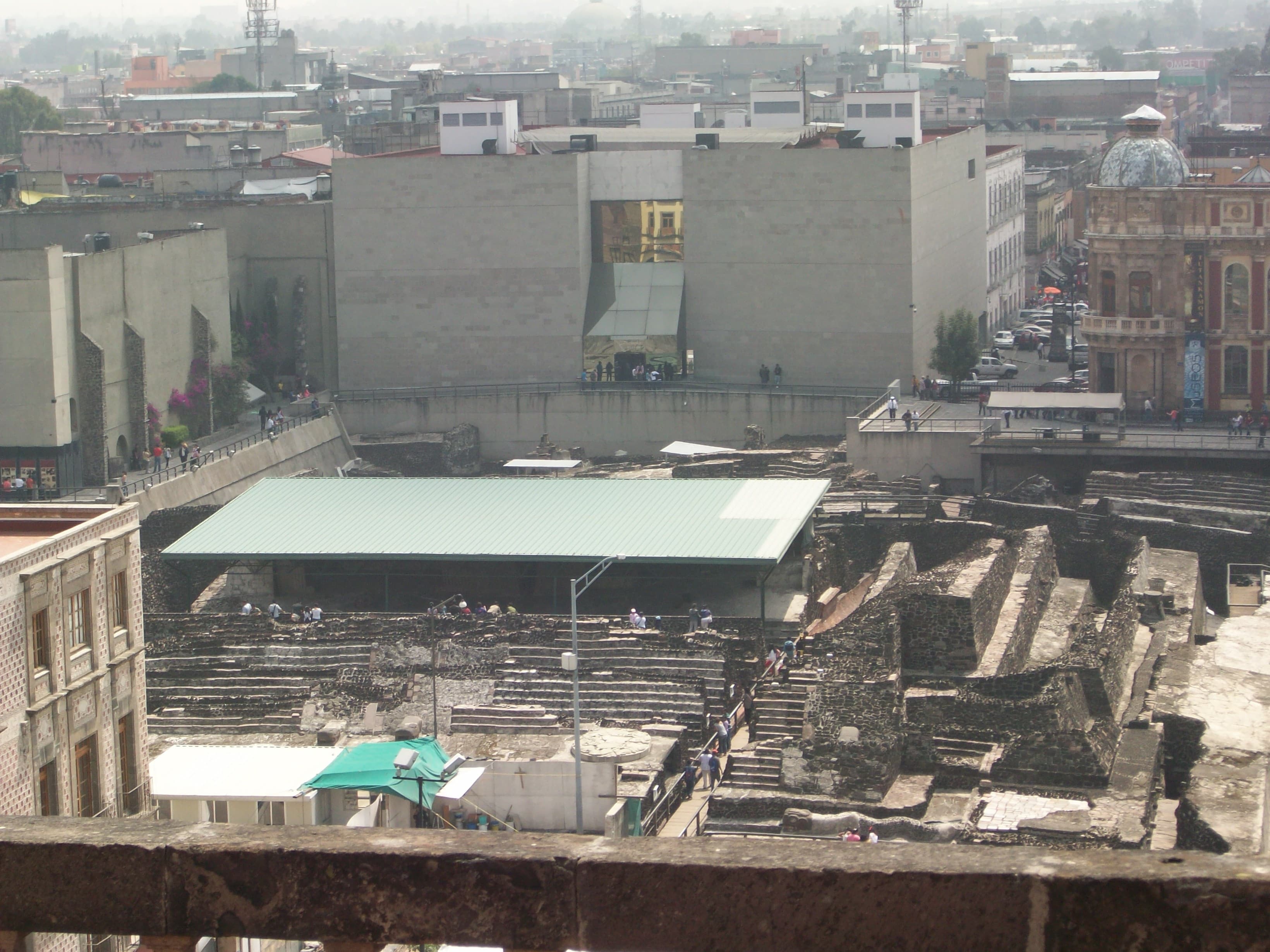
Templo Mayor Archaeological Zone and Museum — rights-reviewed exact-site image. Image source · CC BY-SA 3.0
Visit essentials
A quick read before you go
- Duration
- Allow at least two hours for both the archaeological route and eight museum rooms; three hours…
- Access
- Use the combined destination Zona Arqueológica y Museo del Templo Mayor, Seminario 8, Centro…
Overview
The Templo Mayor changed repeatedly as Mexica rulers built new twin stairways and sanctuaries over earlier phases while keeping it at Tenochtitlan's physical and symbolic centre. Its northern summit sanctuary honoured Tláloc, associated with rain, mountains, agriculture, and sustenance; the southern honoured Huitzilopochtli, the Mexica tutelary deity associated with sun, warfare, and political destiny. Together they joined life's conditions to state power and obligation.
The public zone preserves only part of a once-larger sacred precinct. Along and around the route, INAH has identified the House of the Eagles, red temples, altars, precinct platforms, and other structures. Museum galleries give excavated materials context through archaeology, ritual and sacrifice, tribute and commerce, Huitzilopochtli, Tláloc, flora and fauna, agriculture, and historical archaeology.
Two monumental images anchor the visit. The circular Coyolxauhqui Stone, found in 1978 near the Huitzilopochtli stair's foot, depicts the dismembered goddess within Coatepec's conflict narrative; its discovery transformed archaeological work in the historic centre. The immense Tlaltecuhtli monolith, found before the precinct in 2006, retains extraordinary pigment and represents a powerful earth-being associated with death and generation. Neither is an interchangeable 'Aztec god' or decorative masterpiece: each has a precise architectural, narrative, and ritual relationship.
Why this place is sacred
For the Mexica, INAH explains, the Templo Mayor occupied the centre of the universe and could not simply be relocated. Successive enlargements preserved its paired form. The temple gave built shape to a mountain and to the relationship between rain-fed sustenance and the political-religious force of Huitzilopochtli. Causeways, plazas, schools, ballcourts, altars, and dozens of other buildings connected this centre to the wider island city.
Coyolxauhqui clarifies how sculpture and architecture worked together. Placed near the foot of the Huitzilopochtli side, her dismembered body evoked the myth in which Huitzilopochtli defeats her at Coatepec. Ritual action, including human sacrifice, could reference that narrative, but the site should not be reduced to a theatre of killing. Offerings also contained plants, animals, minerals, crafted objects, imported materials, and signs of agricultural and political relationships extending far beyond the capital.
Tlaltecuhtli belongs to another but connected sacred field. The enormous relief presents an earth being whose creative and consuming powers resist tidy modern categories of male or female, benevolent or terrible. Its surviving red, yellow, blue, white, and black pigments also correct the assumption that Mexica sculpture was bare stone. Conservation research keeps those fragile traces visible and documents why contact and flash are prohibited.
Principal ceremonial and political temple complex of Mexico-Tenochtitlan
An active Mexica sacred precinct was destroyed and built over after 1521; modern archaeology and a site museum now protect and interpret part of it.
Experience and orientation
Enter at Seminario 8 and orient yourself to the cathedral and Zócalo nearby, but keep the Templo Mayor's own boundary in mind. The route descends among successive construction phases, walls, stairways, altars, and traces of buildings that once stood inside the sacred precinct. Modern streets and buildings cut through what remains; gaps are evidence of destruction and the limits of excavation, not empty scenery.
The museum is indispensable. Coyolxauhqui's scale and carved detail become legible at close range, while maps and objects reconnect the stone with the Huitzilopochtli side of the temple. Tlaltecuhtli occupies the vestibule as a monumental threshold. Look for surviving pigment and for the difference between a deity represented in stone and the living earth, death, and rulership concepts that archaeologists infer from context.
The route and galleries can be crowded with school groups. Floors, ramps, stairs, exterior heat, rain, and restricted viewpoints affect access. Do not rush from one famous object to another. Smaller offerings, botanical and animal remains, trade goods, and colonial finds show that the sacred precinct was sustained by a city and an empire, then transformed through conquest and reuse. The complete visit is a movement between architecture, object, story, and uncertainty.
Context and lineage
Mexica accounts placed the foundation of Tenochtitlan within a sacred migration narrative and made the Templo Mayor the centre from which the city and cosmos were ordered. Archaeology documents at least seven enlargements. Each new phase enveloped earlier masonry, producing a layered monument with twin summit sanctuaries rather than a sequence of unrelated temples. The precinct around it contained dozens of ritual, educational, residential, and administrative spaces.
After the Spanish-led conquest in 1521, the complex was dismantled and the colonial city rose across it. Knowledge of the temple persisted in documents and scattered discoveries, but much of its position remained obscured. On 21 February 1978, electrical workers encountered the Coyolxauhqui Stone. INAH's rescue excavation expanded into the Proyecto Templo Mayor, led initially by Eduardo Matos Moctezuma and continued by interdisciplinary teams.
In 2006, urban archaeology uncovered the Tlaltecuhtli monolith at the Ajaracas property before the precinct. Its size, imagery, date glyph, context, and preserved color opened new questions about royal burial, earth, and late Mexica ritual. The museum and research project remain active, so this page presents findings as current scholarly interpretations rather than a completed reconstruction.
Mexica ceremonial history interpreted through continuing INAH archaeology and conservation.
Traditions and practice
The twin sanctuaries connected rain and agricultural fertility with Huitzilopochtli's martial and solar power. Ritual calendars structured offerings and festivals, and architectural enlargements could be consecrated through ceremonies involving captives. The precinct also included schools, altars, a ballcourt, temples to other deities, and places for elite and communal gathering. Archaeology reveals diversity within ritual life rather than one unchanging practice.
Human sacrifice and displayed remains are part of the evidence and should be described plainly, without euphemism or voyeurism. The people involved were not anonymous props in a tourist story. Museum interpretation, osteological research, and the limits placed on photography or access deserve the same respect given to sacred art in an active sanctuary.
No current visitor is authorized to reproduce Mexica rites on the ruins. Do not leave blood, food, flowers, incense, crystals, coins, or other materials; do not climb, chant over school groups, or claim private revelation as historical fact.
The current practices are archaeology, conservation, education, remembrance, and museum interpretation under INAH authority.
Move quietly through the route and galleries, reading object labels before forming symbolic conclusions.
Mexica ceremonial tradition
ActiveThe Templo Mayor joined twin sanctuaries of Tláloc and Huitzilopochtli with offerings, political authority, calendrical ceremony, agriculture, warfare, and the cosmic geography of Tenochtitlan.
Mexica sacred narratives in monumental sculpture
ActiveCoyolxauhqui at the Huitzilopochtli side and Tlaltecuhtli before the precinct materialize distinct narratives of cosmic conflict, earth, death, regeneration, rulership, and offering.
Perspectives and open questions
Templo Mayor can be approached through archaeology, Mexica sacred narratives, conservation science, colonial urban history, and contemporary Indigenous critique. None alone exhausts the site.
Scholarly perspective
Excavation and material analysis support a layered temple, complex offerings, long-distance exchange, polychrome sculpture, and an extensive sacred precinct. Interpretations change as urban archaeology continues.
Living and traditional perspectives
Mexica histories place the temple at the centre of Tenochtitlan and connect its architecture with Coatepec, Tláloc's mountain world, Huitzilopochtli, earth, death, sustenance, and renewal.
Alternative interpretations
Extraterrestrial builders, energy portals, universal chakra systems, and claims that the monoliths teach a visitor initiation are unsupported and excluded.
Open questions
Large portions of the precinct remain under the modern city; the exact meaning of many offerings, structures, and individual lives cannot yet be recovered.
Plan your visit
Access and arrival
Use the combined destination Zona Arqueológica y Museo del Templo Mayor, Seminario 8, Centro Histórico. Zócalo/Tenochtitlan on Metro Line 2 is nearby. Current INAH listings agree on the normal Tuesday-through-Sunday visiting window and Monday closure but differ on fees, so confirm the same-day schedule, ticketing, and temporary closures. The route includes exterior exposure and changes in level; contact the museum for current mobility assistance. There is no visitor parking on site.
No lodging recommendation is made; use current official city information.
Respectful visit
Weather-appropriate clothing and stable footwear; no ritual costume or staged regalia.
Personal photography only where permitted; no flash and no intrusive images of visitors or sensitive material.
Do not leave offerings, liquids, smoke, food, coins, flowers, or objects anywhere in the zone or museum.
Monday closure, ticketing, barriers, gallery closures, bag rules, and conservation instructions override travel plans.
Avoid sensationalizing sacrifice or treating Coyolxauhqui and Tlaltecuhtli as generic occult symbols.
Location
Map loads as you approach this section.
Pilgrim reflections
A portrait of encounter, not a score
Pilgrims describe what they felt, how present they could become, and whether the place would shape a journey. There are no stars and no ranking of traditions.
No reviewed reflections yet
The first pilgrims can help describe the character of being here.
Share a reflection
Available after an account-backed “Been there.” Every reflection is reviewed before publication.
Nearby sacred places
Explore other sacred places in the region. Proximity does not establish access or travel time; check each place’s guidance.
References
Sources consulted for this page. Source categories describe the publication, not a guarantee that every claim is verified. Traditional accounts and outside interpretations may differ.
- 01Zona Arqueológica Templo Mayor — Instituto Nacional de Antropología e HistoriaofficialPrimary custodial account of the sacred precinct, twin temple, Coyolxauhqui, chronology, and ritual context; updated 6 January 2026.
- 02Zona Arqueológica del Templo Mayor — Museo del Templo Mayor, INAHofficialOfficial interpretation of the 1.2-hectare public zone, building phases, Tláloc and Huitzilopochtli sanctuaries, and surrounding structures.
- 03Proyecto Templo Mayor — Museo del Templo Mayor, INAHofficialOfficial research history documenting the 1978 Coyolxauhqui discovery and later Tlaltecuhtli discovery as components of the continuing archaeological project.
- 04Museo del Templo Mayor — Lugares INAHofficialOfficial museum record for the eight-room interpretation, access, services, collections, and current visitor information.
- 05El relieve monumental de la diosa Tlaltecuhtli de Templo Mayor — Intervención, INAHacademicPeer-reviewed conservation study documenting the 2006 discovery, surviving pigment, and stabilization of the Tlaltecuhtli monolith.
- 06Historic Centre of Mexico City and Xochimilco — UNESCO World Heritage CentreofficialWorld Heritage context naming the monumental Templo Mayor complex and Coyolxauhqui as testimony to Mexica religious life.
- 07Templo Mayor (Q774021) — Wikidata contributorsacademicStructured identity and coordinates for the archaeological monument; the attached museum remains a distinct institution within this combined visitor record.
- 08Templo Mayor 50 — GAEDacademicExact-site overview released by its creator under CC BY-SA 3.0.
Share a photo
Help visitors recognize Templo Mayor Archaeological Zone and Museum. Every submission is reviewed before publication.