All pilgrimages

Pilgrimage · India · Gujarat, Andhra Pradesh, Madhya Pradesh, Uttarakhand, Maharashtra, Uttar Pradesh, Jharkhand, Tamil Nadu

Twelve Jyotirlingas

द्वादश ज्योतिर्लिंग (Dwadasha Jyotirlinga)

Twelve self-manifested lingams of light, scattered the length of India, each a complete pilgrimage in itself.

Stations
0 of 12
Founded
Puranic tradition holds the jyotirlingas to be self-manifested and beyond dating; the standing temples themselves range from ancient foundations rebuilt many times over to structures raised as late as the 20th century
Focus
Shiva, worshipped at each site as a jyotirlinga — a lingam understood to be a column of light rather than an installed image
Best season
Varies by site and climate; most temples are visited year-round, though the Himalayan station at Kedarnath is open only from spring through autumn

Key questions

What is Twelve Jyotirlingas?
Twelve Jyotirlingas is a Hinduism pilgrimage route in India, Gujarat, Andhra Pradesh, Madhya Pradesh, Uttarakhand, Maharashtra, Uttar Pradesh, Jharkhand, Tamil Nadu. Twelve self-manifested lingams of light, scattered the length of India, each a complete pilgrimage in itself
How many stations are on Twelve Jyotirlingas?
This guide currently maps 12 stations, with 12 total sites noted in the route metadata.
When is the best time to walk Twelve Jyotirlingas?
Varies by site and climate; most temples are visited year-round, though the Himalayan station at Kedarnath is open only from spring through autumn

Opening

There is no road that connects all twelve. They stand scattered across the length of India — a temple by the Arabian Sea in Gujarat, another in the deep gorge country of Andhra Pradesh, one in a Himalayan valley reachable only on foot for part of the year, one on an island city at the southern tip of Tamil Nadu. A pilgrim who sets out to see all twelve is not walking a circuit but assembling a lifetime out of separate journeys, each one undertaken on its own terms, to its own region, in its own season. What unites them is not geography but a shared claim: that at each of these twelve places, Shiva did not arrive as an image installed by human hands but manifested himself as a jyotirlinga, a column of light, choosing the site rather than being placed there.

Origins

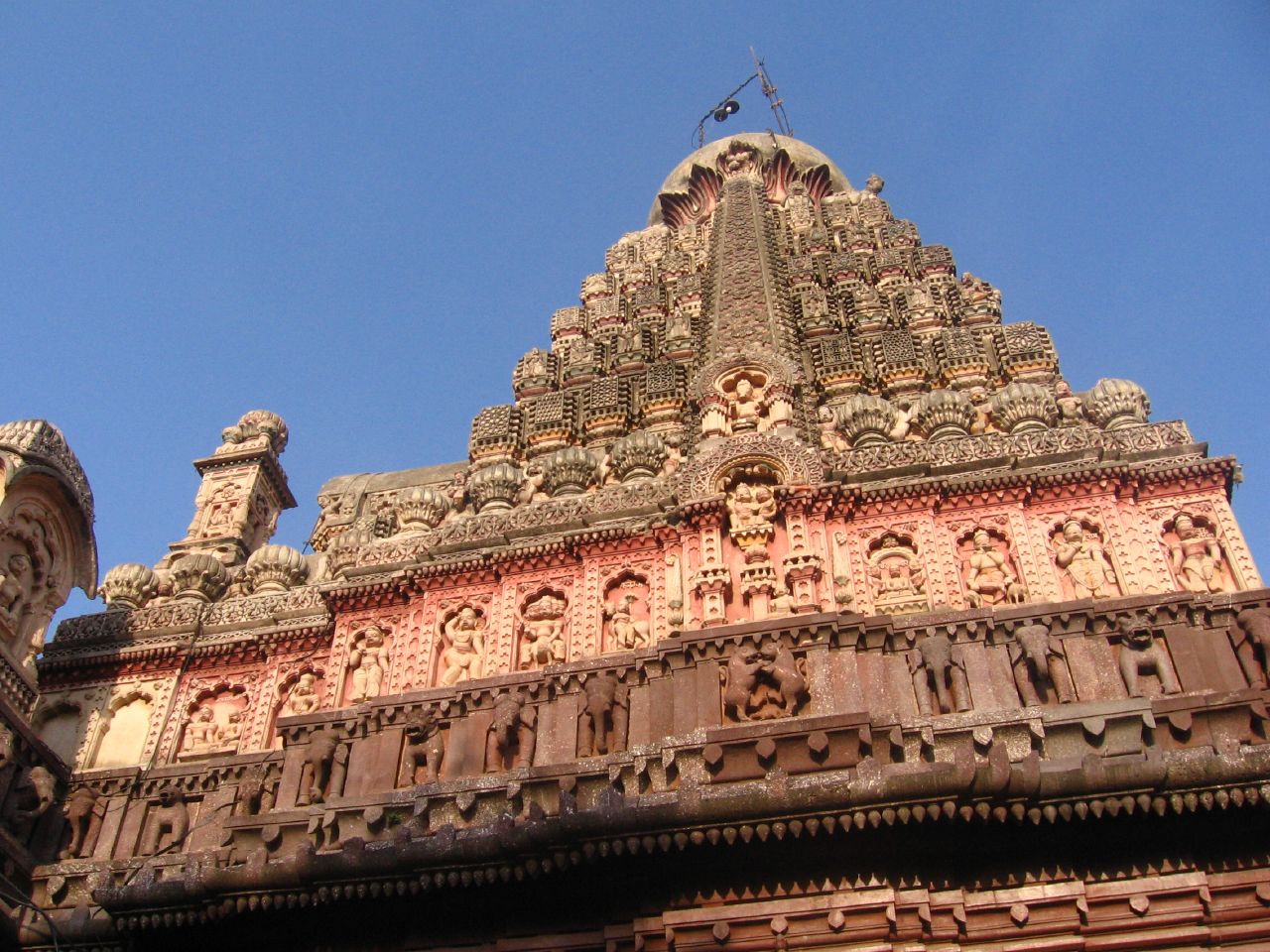
The number and identity of the twelve jyotirlingas are set out in Puranic literature, most explicitly the Shiva Purana, which names the sites and recounts, for several of them, a founding legend of Shiva's manifestation — an event tradition places outside ordinary chronology rather than within it. The physical temples that mark these places today carry a far more layered and datable history. Somnath, on the Gujarat coast, is recorded and re-recorded across centuries of destruction and reconstruction, most consequentially the sacking by Mahmud of Ghazni in 1024 CE and the temple's eventual modern rebuilding beginning in 1947, championed by Sardar Vallabhbhai Patel as a project of independent India; the current structure was completed and consecrated in 1951. Kashi Vishwanath in Varanasi has a similarly contested architectural history: repeatedly destroyed under various rulers across the medieval and early modern periods and rebuilt in its present form in 1780 under the patronage of the Maratha queen Ahilyabai Holkar, with a gold-plated dome added in the 19th century by Maharaja Ranjit Singh. Other jyotirlinga temples carry gentler, more continuous histories — Mahakaleshwar in Ujjain and Kedarnath in the high Himalaya both stand on sites of worship attested from centuries before the current structures, with rebuilding driven more by natural wear, flood, and renovation than by conquest. Grishneshwar, near Verul in Maharashtra, sits close to the Ellora cave complex but is a distinct temple in its own right, its current structure dating largely to an 18th-century reconstruction under the Maratha noblewoman Rani Ahilyabai Holkar, the same patron responsible for much of Kashi Vishwanath's present form.

Why pilgrims walk it

Devout Shaivites treat a visit to any single jyotirlinga as a complete pilgrimage, not a fragment of one, and few undertake all twelve as a single continuous journey; the more common pattern is a lifetime of separate trips, each planned around a festival, a family occasion, or simply the years it takes to reach temples scattered across a subcontinent. People travel to Ujjain for the Mahakaleshwar temple's Bhasma Aarti, a pre-dawn ritual in which the lingam is anointed with sacred ash, some say to invoke protection from death itself; they travel to Rameswaram at the southern tip of the country in the belief, held by many pilgrims, that a visit there completes a devotional arc begun at Kashi far to the north, since both cities are linked in popular practice by the custom of carrying Ganges water south to Rameswaram and bringing back sand or water from the southern sea. Others come to Kedarnath explicitly as part of the Char Dham Yatra in Uttarakhand, treating the same temple as both a jyotirlinga visit and a station on that separate, better-known circuit — an overlap that is entirely ordinary in Hindu pilgrimage practice, where a single sacred site routinely serves more than one devotional framework at once. Grief, vow-fulfillment, the marking of a recovery or a milestone, or simply a long-held wish to see Shiva at each of his twelve self-manifested forms before death — all of these motivations move through these twelve temples side by side, and none displaces the others.

Significance

The twelve jyotirlingas function, collectively, as the most geographically comprehensive framework for Shiva worship in India, deliberately spanning the subcontinent from the western coast to the eastern hill country, from the Himalayan north to the Tamil south — a symbolic claim that Shiva's presence is not confined to any single region or linguistic community. Individually, several of the temples carry historical weight far beyond their devotional role: Somnath and Kashi Vishwanath are both frequently cited in Indian historical and political discourse as sites where the long record of temple destruction and rebuilding under successive rulers, and the modern-era reconstructions undertaken after independence, have become touchstones in wider debates about religious history and identity — a significance this page records honestly rather than smoothing over. Kedarnath's inclusion in both the jyotirlinga list and the Char Dham Yatra illustrates how Hindu sacred geography layers multiple pilgrimage frameworks onto the same physical places rather than assigning each site to one devotional category alone. Taken together, the twelve temples remain active, densely attended centers of worship today, drawing millions of pilgrims annually across sites that range from small-town shrines to some of the most visited religious destinations in the country.

The route

12 stations on the map

Click any marker to open that station. Numbered pins follow the traditional route order.

Loading map...

Stations

Walk the route in order

Each station opens onto its own page. Origins, the experience of arrival, what is held there. Stations not yet on Pilgrim Map will appear here as their pages are completed.

  1. Station —

    Arulmigu Ramanathaswamy Temple, Rameshvaram, Tamil Nadu

    Rameswaram, Tamil Nadu

    '+ ''+ 'For additional information:https://sacredsites.com/asia/india/temples_rameshvaram_badrinath.html https://en.m.wikipedia.org/wiki/Ramanathaswamy_Temple https://en.m.wikipedia.org/wiki/Tirthas_of_Rameswaram'+ '

  2. Bhimashankar (commonly counted sixth)

    Station Bhimashankar (commonly counted sixth)

    Bhimashankar Shiva Jyotir Linga temple, Bhimashankar, Maharashtra

    Bhimashankar, Maharashtra

    '+ ''+ 'Shiva Jyotir Linga templeFor additional information:https://en.m.wikipedia.org/wiki/Bhimashankar_Templehttps://bhimashankar.in/https://shaivam.org/temples-special/12-jyothirlingas-10-shri-bhimashankar-temple-in-dakini'+ '

  3. Mallikarjuna, Srisailam (commonly counted second)

    Station Mallikarjuna, Srisailam (commonly counted second)

    Bhramaramba Ammavari Shakti Peetham Temple, Srisailam, Andhra Pradesh

    Srisailam, Andhra Pradesh

    '+ ''+ 'For additional information:https://srisailamtourism.com/bhramaramba-devi-temple-srisailamhttps://atmanirvana.com/sri-bhramaramba-mallikarjuna-swamy-temple-srisailam-andhra-pradesh/https://www.srisailadevasthanam.org/en-in/about/the-temple/bhramaramba-devi'+ '

  4. Station —

    Grishneshwar Jyotirlinga

    Verul, Verul, Chhatrapati Sambhaji Nagar district, Maharashtra

    Grishneshwar Jyotirlinga in Verul, Verul, Chhatrapati Sambhaji Nagar district, Maharashtra, India.

  5. kashi

    Station kashi

    Kashi Vishwanath Temple, Varanasi, Uttar Pradesh

    Varanasi, Uttar Pradesh

    '+ ''+ 'For additional information:https://sacredsites.com/asia/india/banaras.htmlhttps://en.m.wikipedia.org/wiki/Kashi_Vishwanath_Templehttps://shrikashivishwanath.org/https://en.m.wikipedia.org/wiki/Hindu_temples_in_Varanasi'+ '

  6. Station —

    Kedarnath Temple, Uttarakhand

    Kedarnath, Uttarakhand

    '+ ''+ 'For additional information:https://en.m.wikipedia.org/wiki/Kedarnath_Templehttps://en.m.wikivoyage.org/wiki/Kedarnathhttps://www.euttaranchal.com/tourism/kedarnath.phphttps://www.sacredyatra.com/kedarnath'+ '

  7. mahakaleshwar

    Station mahakaleshwar

    Mahakaleshwar Jyotirlinga Shiva Temple, Ujjain, Madhya Pradesh

    Ujjain, Madhya Pradesh

    '+ ''+ 'Mahakaleswar Jyotir linga Shiva templeFor additional information:https://en.m.wikipedia.org/wiki/Mahakaleshwar_Jyotirlingahttp://dic.mp.nic.in/ujjain/mahakal/default.aspx'+ '

  8. Station —

    Nageshwar Jyotirlinga

    Dwarka, Dwarka, Gujarat

    Nageshwar Jyotirlinga in Dwarka, Dwarka, Gujarat, India.

  9. omkareshwar

    Station omkareshwar

    Omkareshwar Jyotir Linga Shiva temple, Omkareshwar, Madhya Pradesh

    Omkareshwar, Madhya Pradesh

    '+ ''+ 'Jyotir linga Shiva templeFor additional information:https://en.m.wikipedia.org/wiki/Omkareshwar_Templehttp://omkareshwar.org/English'+ '

  10. somnath

    Station somnath

    Somnath Jyotir Linga Shiva Temple, Somnath, Gujarat

    Veraval, Gujarat

    '+ ''+ 'For additional information:https://en.m.wikipedia.org/wiki/Somnath_templehttp://www.somnath.org'+ '

  11. trimbakeshwar

    Station trimbakeshwar

    Trimbakeshwar Jyotir Linga Shiva Temple, Trimbak, Maharashtra

    Trimbak, Maharashtra

    '+ ''+ 'For additional information:https://en.m.wikipedia.org/wiki/Trimbakeshwar_Shiva_Templehttps://www.trimbakeshwartrust.com/https://www.trimbakeshwar.net/https://templeknowledge.com/about-trimbakeshwar-temple/https://www.artofliving.org/mahashivratri/triambakeshwar-jyotirlinga'+ '

  12. vaidyanath

    Station vaidyanath

    Vaidyanath Jyotir Linga and Jai Durga Shakti Pitha, Deoghar, Jharkhand

    Deoghar, Jharkhand

    '+ ''+ 'For additional information:https://en.m.wikipedia.org/wiki/Vaidyanath_Jyotirlingahttps://www.thedivineindia.com/baidyanath-jyotirlinga-mandir/5956https://www.templepurohit.com/hindu-temple/baidyanath-jayadurga-shakti-peeth/'+ '

Walking it today

Each jyotirlinga is reached as its own trip; there is no combined itinerary infrastructure linking all twelve; and the practical demands vary enormously between them. Somnath, Dwarka (Nageshwar), and Rameswaram are coastal temples reachable by road and rail with standard tourist infrastructure. Ujjain (Mahakaleshwar) and Omkareshwar sit within a few hours of each other in Madhya Pradesh and are often visited together. Kedarnath requires a seasonal window (roughly May through October or November, weather permitting) and a trek or helicopter transfer from the nearest road-head, exactly as on the Char Dham Yatra it also belongs to. Bhimashankar and Trimbakeshwar, both in Maharashtra, involve travel into forested hill country and are often paired with a visit to Nashik or Pune. Vaidyanath in Deoghar, Jharkhand, and Mallikarjuna at Srisailam, Andhra Pradesh, are each somewhat more remote and benefit from advance planning around darshan queues, which can run to several hours at the more heavily visited temples during major festivals such as Maha Shivaratri.

Attire and practice

Modest dress is expected at all twelve temples, and several — including Somnath and Mahakaleshwar — enforce specific dress codes or restrict certain items (mobile phones, leather goods) within the inner sanctum. Darshan of the jyotirlinga is the central act at each site: pilgrims queue to view and, at many though not all of the temples, touch or have priests perform abhishekam (a ritual bathing of the lingam with water, milk, and other offerings) on their behalf. Mahakaleshwar's Bhasma Aarti, performed before dawn, requires advance booking and is one of the most sought-after ritual experiences among the twelve. Offerings of bilva leaves, flowers, and milk are customary at Shiva temples generally, and most of the twelve sell prasad and offering materials at stalls just outside the temple precincts.

Sources

Sources consulted when researching this page. Independent verification by readers is welcome.

  1. 01Shiva Purana (English translation) — Jyotirlinga chapters
  2. 02India: A Sacred GeographyDiana L. Eckhigh-reliability
  3. 03Somanatha: The Many Voices of a HistoryRomila Thaparhigh-reliability
  4. 04Archaeological Survey of India — official websiteArchaeological Survey of Indiahigh-reliability