All pilgrimages

Pilgrimage · Sri Lanka · Island-wide

Solosmasthana

සොළොස්මස්ථාන

The sixteen (or seventeen) places tradition holds the Buddha himself visited or blessed across Sri Lanka.

Stations
0 of 7
Founded
Set in the Buddha's lifetime by tradition (traditionally 6th–5th century BCE); documented in the Mahāvamsa chronicle, compiled around the 5th century CE
Focus
Places tradition holds were visited, blessed, or hallowed by the Buddha during three legendary visits to the island
Best season
December through April, avoiding the wetter southwest monsoon months

Key questions

What is Solosmasthana?
Solosmasthana is a Buddhism pilgrimage route in Sri Lanka, Island-wide. The sixteen (or seventeen) places tradition holds the Buddha himself visited or blessed across Sri Lanka
How many stations are on Solosmasthana?
This guide currently maps 7 stations, with 7 total sites noted in the route metadata.
When is the best time to walk Solosmasthana?
December through April, avoiding the wetter southwest monsoon months

Opening

Solosmasthana is not a road but a scatter — sixteen, or by some counts seventeen, places spread across the length of Sri Lanka that Buddhist tradition holds were touched by the Buddha's own presence, whether in body, through a discourse, or through relics and objects he is said to have blessed. A devotee working through the set moves between the dry-zone stupas of the ancient capital Anuradhapura, the riverside shrine at Mahiyangana in the island's interior, the coastal temple at Kelaniya near Colombo, the pilgrim mountain of Adam's Peak rising sharply from the southern hill country, and the shrine complex at Kataragama in the deep south — a geography wide enough that completing the full set is understood as a devotion carried out across years or a lifetime, not a single journey. This page gathers seven of the traditional sixteen, a working set rather than the whole, and holds them as a devotional constellation rather than a linear itinerary.

Origins

The Mahāvamsa, Sri Lanka's great Pāli chronicle compiled around the fifth century CE from older oral and written material, records three visits by the Buddha to the island: the first to Mahiyangana in the ninth month after his enlightenment, where he is said to have preached to an assembly of spirits and left behind a lock of hair enshrined in the dagoba that stands there still; a second to Nāgadīpa five years later to settle a dispute between rival nāga kings over a jeweled throne; and a third, in the eighth year after his enlightenment, to Kelaniya, where he is said to have accepted an invitation from the nāga king Maniakkika and delivered a discourse on that occasion. Later devotional tradition expanded the set of sacred places associated with these visits and the Buddha's continuing presence on the island to sixteen, and in some enumerations seventeen, locations, folding in sites such as Anuradhapura's Ruwanwelisaya, Abhayagiri, and the Jaya Sri Maha Bodhi — grown, tradition holds, from a cutting of the very tree under which the Buddha attained enlightenment — alongside the summit shrine at Adam's Peak, where a rock formation is venerated by Buddhists as the Buddha's own footprint left during one of his visits.

Why pilgrims walk it

Devotees who set out to complete Solosmasthana are usually not first-time visitors to any of these places but longtime practitioners returning, often repeatedly, to sites they may already have visited individually for years — the pilgrimage as a formal set becomes a way of gathering scattered lifelong devotion into a single deliberate undertaking, frequently timed around a milestone: a retirement, a recovery from illness, a vow made and finally fulfilled. Others come to individual sites for reasons specific to that place alone — the strenuous night ascent of Adam's Peak for the sunrise view and the pilgrim's sense of physical accomplishment, Kelaniya for its role in the annual Duruthu Perahera procession, Anuradhapura's stupas as much for their scale and historical weight as for devotional practice. Because the sixteen places are not walked as a single continuous route, the pilgrimage rewards patience over intensity; a devotee might add one or two sites to the set on each visit home over decades, and completing all sixteen is spoken of by some practitioners as a lifetime achievement rather than an expected accomplishment.

Significance

Within Sri Lankan Theravāda Buddhism, Solosmasthana functions as the island's most comprehensive framework for organizing devotional geography around the Buddha's own legendary presence, distinct from and complementary to the separate, better-known pilgrimage circuit of the sixteen sacred cities associated with his life in India and Nepal. Individual sites within the set carry outsized weight on their own — Anuradhapura's stupas and the Jaya Sri Maha Bodhi anchor Sri Lanka's status as one of the oldest continuously practicing Buddhist nations in the world, while Kataragama's Kiri Vehera, a Buddhist stupa distinct from the separate multi-faith Kataragama devale shrine complex nearby that draws Hindu, Muslim, and indigenous Vedda devotion as well, illustrates how the island's sacred landscape often layers multiple traditions at a single place without erasing their distinctions. The set as a whole reflects a specifically Sri Lankan devotional geography built from chronicle history, legend, and centuries of continuous pilgrimage practice rather than archaeological certainty about the Buddha's actual travels.

The route

7 stations on the map

Click any marker to open that station. Numbered pins follow the traditional route order.

Loading map...

Stations

Walk the route in order

Each station opens onto its own page. Origins, the experience of arrival, what is held there. Stations not yet on Pilgrim Map will appear here as their pages are completed.

  1. Station —

    Abhayagiri Vihara

    Anuradhapura, Anuradhapura

    Founded around 89 BCE by a king fulfilling a vow of vengeance and restoration, Abhayagiri grew into one of the ancient world's most cosmopolitan Buddhist institutions — a monastery that studied Mahayana and Vajrayana texts alongside Theravada Vinaya and drew scholars from across Asia. Its restored stupa and 500-acre ruins now sit within the UNESCO-listed Sacred City of Anuradhapura, visited as both archaeological monument and living pilgrimage stop.

  2. Station —

    Adam's Peak (Sri Pada)

    Dalhousie, Sabaragamuwa Province

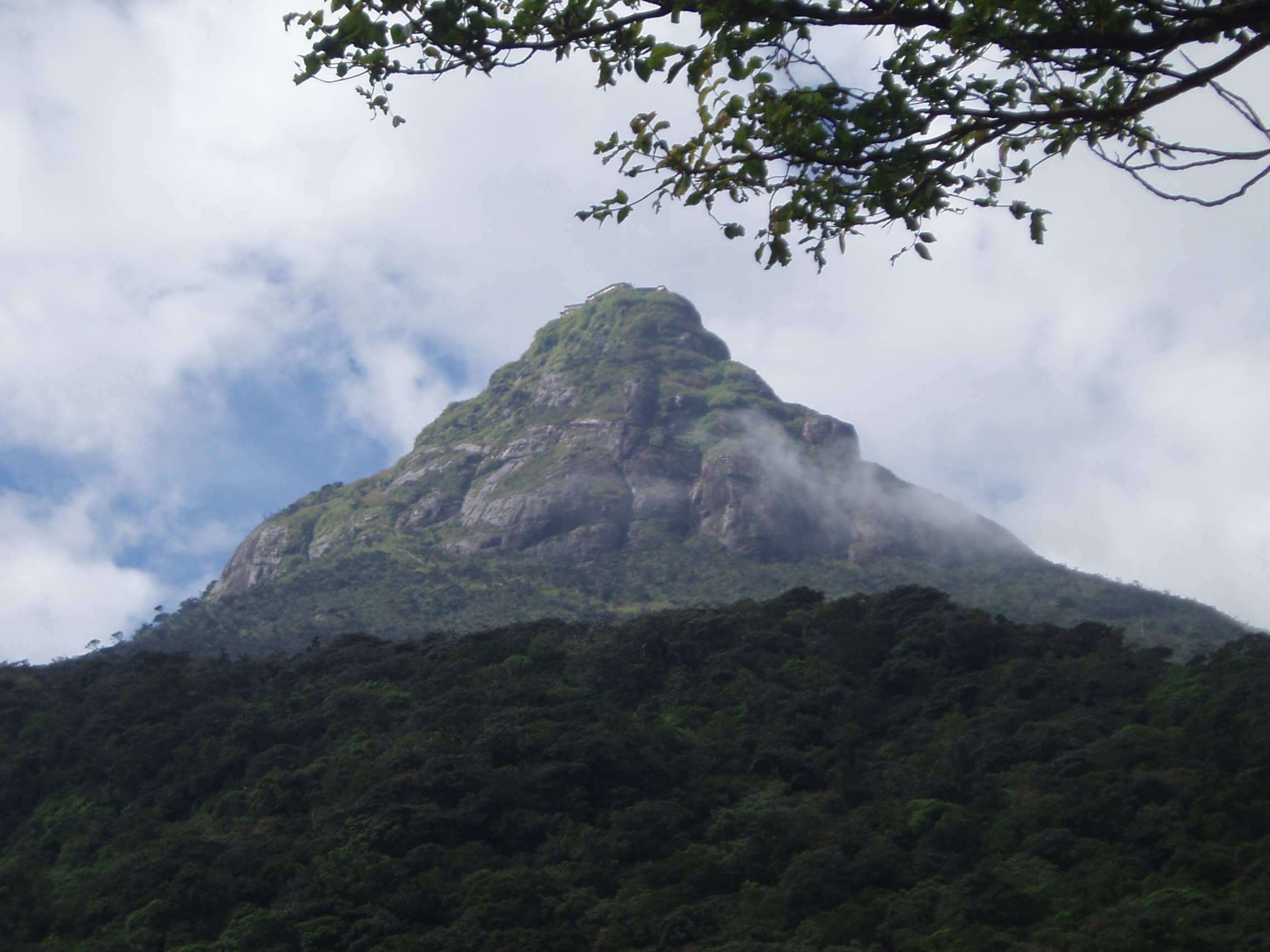
    Rising 2,243 meters above the Sri Lankan highlands, the conical peak known as Sri Pada—or Adam's Peak—draws pilgrims from four world religions to a single mysterious footprint at its summit. Buddhists see the Buddha's mark; Hindus recognize Shiva's sacred step; Muslims and Christians trace Adam's penance. Each night during pilgrimage season, thousands climb through darkness toward a shared sunrise and a shadow that defies the mountain's own shape.

  3. Station —

    Jaya Sri Maha Bodhi

    Anuradhapura, North Central Province

    A cutting from the tree under which the Buddha attained enlightenment was brought to Sri Lanka in the 3rd century BCE. The original tree at Bodh Gaya was destroyed multiple times over the centuries. This one survived. For 2,300 years, pilgrims have venerated this living descendant of the tree that sheltered the Buddha at the moment of awakening. It is the oldest historically documented human-planted tree in the world, and when the tree at Bodh Gaya needed replanting, a cutting from this tree was sent back to India—the daughter giving life to the mother.

  4. Station —

    Kelaniya Raja Maha Vihara

    Kelaniya, Kelaniya

    On the banks of the Kelani River, Kelaniya Raja Maha Vihara marks what tradition holds as the Buddha's third and final visit to Sri Lanka, when he settled a dispute between Naga kings and received a gem-studded throne now said to lie within the stupa. The temple is equally known for Solias Mendis's sweeping 20th-century murals and for the January Duruthu Perahera, one of the country's largest processions.

  5. Station —

    Kiri Vehera

    Kataragama, Kataragama

    Kiri Vehera is a modest, actively worshipped Buddhist stupa roughly 800 meters from the well-known multi-faith Kataragama shrine complex — a separate site entirely, with its own resident monks. Tradition holds it marks the spot where the Buddha met a local ruler during his third visit to Sri Lanka, though sources disagree on who that ruler was and when the stupa was actually built.

  6. Station —

    Mahiyangana Raja Maha Vihara

    Mahiyangana, Mahiyangana

    Nine months after his enlightenment, the Buddha is said to have crossed to Sri Lanka and pacified its yaksha inhabitants at Mahiyangana, leaving behind a hair relic enshrined in what tradition holds as the island's first stupa. As the traditional first stop on the Solosmasthana circuit, the temple remains an active monastery where pilgrims gather for Duruthu Poya and the Esala Perahera each year.

  7. Station —

    Ruwanwelisaya

    Anuradhapura, Anuradhapura

    Rising from the plains of Anuradhapura, Ruwanwelisaya was raised by King Dutugemunu in the 2nd century BCE to hold what tradition describes as one of the largest collections of the Buddha's bodily relics anywhere. It remains an active site of daily worship within a UNESCO World Heritage archaeological zone, drawing pilgrims for its evening lamp-lit terrace and its role as the eleventh of the Solosmasthana.

Walking it today

The seven sites gathered here span the length of the island, from Mahiyangana in the central interior to Kataragama in the deep south and Adam's Peak rising from the hill country, and are typically visited by car or organized pilgrimage tour rather than on foot between sites, with the exception of the steep pilgrim ascent of Adam's Peak itself, traditionally climbed at night to reach the summit shrine by sunrise. The pilgrimage season for Adam's Peak runs roughly December through May, corresponding to drier weather and the traditional opening of the mountain's pilgrim season, while Anuradhapura and Kelaniya are visited year-round; the December–April window generally offers the most reliable weather for travel between sites across the island.

Sources

Sources consulted when researching this page. Independent verification by readers is welcome.

  1. 01Solosmasthana
  2. 02Sixteen Sacred Places (සොළොස්මස්ථාන)Colombo Dhamma Friends