Key questions
- What is Char Dham Yatra (Uttarakhand)?
- Char Dham Yatra (Uttarakhand) is a Hinduism pilgrimage route in India, Uttarakhand (Garhwal Himalaya). Four Himalayan shrines to two river-goddesses, Shiva, and Vishnu, opened only when the mountains allow it
- How many stations are on Char Dham Yatra (Uttarakhand)?
- This guide currently maps 4 stations, with 4 total sites noted in the route metadata.
- When is the best time to walk Char Dham Yatra (Uttarakhand)?
- Late April or May (opening, typically timed to Akshaya Tritiya) through October or November (closing around Diwali); the temples are snowbound and closed in winter
Opening
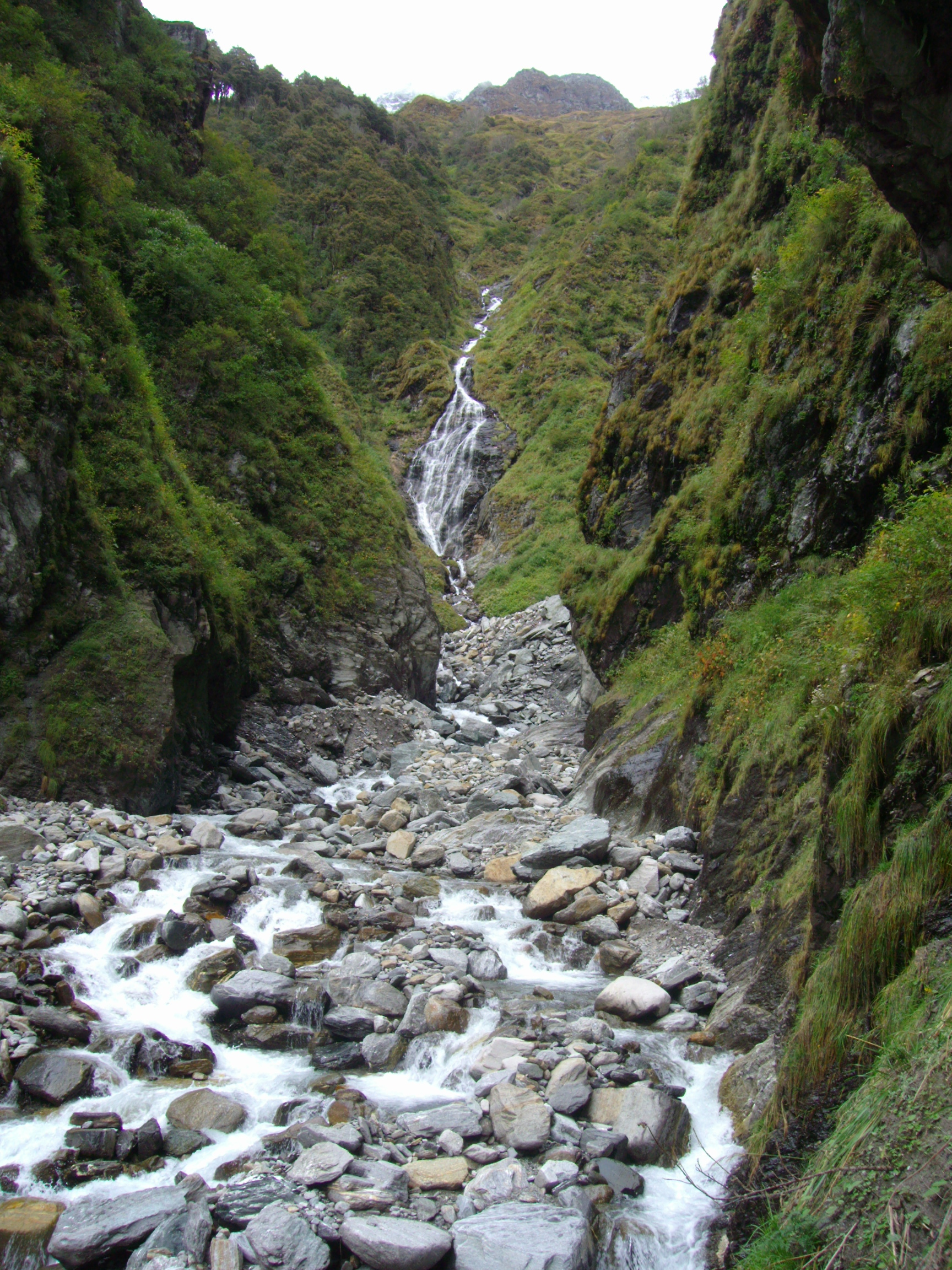
The road into this circuit climbs out of Haridwar and Rishikesh along the braided valleys of the Yamuna, Bhagirathi, Mandakini, and Alaknanda rivers, rising through terraced villages and pine and deodar forest into the higher folds of the Garhwal Himalaya, where four shrines sit near glacial sources and beneath permanently snowed peaks. The traditional order is fixed and, for most pilgrims, still observed: Yamunotri first, at the head of the Yamuna; then Gangotri, near the source of the Ganges; then Kedarnath, reached on foot or pony beneath a cirque of the Kedarnath massif; and finally Badrinath, where the Alaknanda runs past a temple painted in gold and vermilion at the valley's head. Every year the route closes with the first heavy snow and reopens only when priests and officials judge the passes safe — so to set out on this yatra is to enter a landscape that shuts its own doors each winter and decides, each spring, when pilgrims may return.
Origins
Each of the four shrines carries its own deep, largely legendary founding history — Kedarnath is counted among the twelve Jyotirlingas, the sites where Shiva is held to have manifested as a column of light, and Badrinath's image of Vishnu is traditionally said to have been recovered from the Alaknanda by the philosopher-saint Adi Shankaracharya in the eighth century CE, who is also credited with reviving the temple's worship. What is specific to this circuit, and a frequent point of confusion, is the grouping itself: this is the regional, Himalayan 'Chota Char Dham' (Small Char Dham) of Uttarakhand — Yamunotri, Gangotri, Kedarnath, and Badrinath — and it is a different, later, and much smaller circuit than the older pan-Indian Char Dham historically associated with Adi Shankaracharya's four cardinal monasteries at Puri (east), Rameswaram (south), Dwarka (west), and Badrinath (north). The two circuits share only one site, Badrinath, and are otherwise unrelated in scale, geography, and the deities they center on; the Uttarakhand grouping under a shared 'Char Dham' label and shared promotional and administrative machinery is a comparatively modern regional convention layered onto much older individual shrine traditions.
Why pilgrims walk it
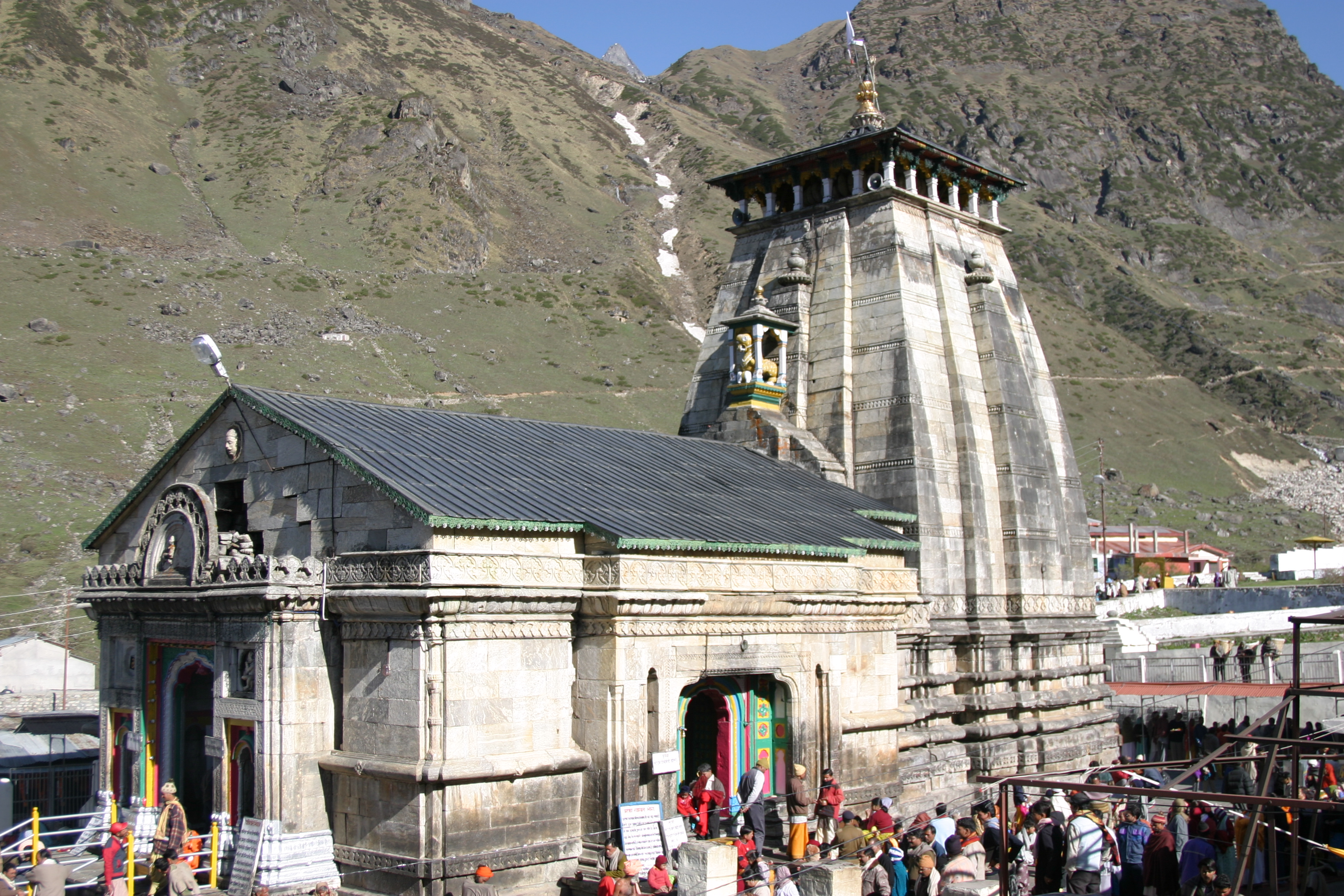
This is not a historical circuit kept alive by scholars and archaeologists; it is one of the largest active pilgrimages on earth, drawing several million visitors across each short operating season. People come because a parent has died and their ashes need to reach the Ganga near its source, or because an illness has been diagnosed and a vow was made to Kedarnath's Shiva if it could be survived, or because a family has decided, after years of talking about it, that this is the year the grandparents make the journey while they still can. Many older pilgrims undertake the yatra explicitly as one of the last great acts of a devout life, understanding the difficulty of the mountain roads and the Kedarnath trek as part of what makes the merit real. Others come with less specific intentions — curiosity, family obligation, the pull of a landscape that is, on its own terms, overwhelming — and find themselves, at Kedarnath's rebuilt temple standing improbably intact after the 2013 flood that devastated the town around it, moved by something they had not expected to feel. The crowds, the long queues, the cold, and the altitude are all understood as part of the offering, not obstacles to it.
Significance
Religiously, the circuit compresses an enormous devotional geography into a single, demanding journey: two river-goddesses at their sources, one of Shiva's twelve Jyotirlingas, and one of Vishnu's most venerated Himalayan seats, visited in a sequence that mirrors the rivers' own descent from the high mountains toward the plains. Each shrine also functions independently within much older pilgrimage traditions of its own; their union under the Char Dham banner is a relatively recent framing that has, nonetheless, become the dominant way both pilgrims and the Indian state now organize and discuss Himalayan pilgrimage in Uttarakhand. The yatra's cultural and economic footprint on the state is immense — it is Uttarakhand's largest annual event by visitor volume, shapes road-building and disaster-preparedness policy after recurring landslides and flash floods, and has required the state government to introduce mandatory pilgrim registration and health screening in recent years, given the number of altitude-related deaths among older and unacclimatized travelers.