All guides

Cosmological theme · Creation & origin

Sacred Origin Sites

Where the world, the people, or creation itself is said to begin

Many traditions mark a single place where everything started — the navel of the world, the first mound, the door of emergence, the cosmic mountain. The accounts do not agree, but the impulse to fix a centre recurs everywhere. Eleven sites, with photos.

Sites gathered
11
Atlas pages live
11
Traditions held
8+
Continents
5

Hero image: Dome of the Rock, Jerusalem

Why pilgrims come

The need for a centre

People travel to where creation is said to have begun for a reason that is hard to argue and easy to feel: the wish to stand at the centre, at the source, at the place where the story starts. The sites are scattered across continents and belong to traditions that never met, yet the pull is recognisably the same. To stand on the Foundation Stone, beneath Kailash, or on the navel-stone at Delphi is to place yourself, for a moment, at the beginning of things.

What pilgrims do there is mostly to be present and to attend. At Bear Butte they fast and tie cloth prayers along the trail. At Ile-Ife they keep the groves and the festivals that re-tell the descent of Oduduwa. At Delphi, for a thousand years, they came to ask the oracle the questions that mattered most. The places differ; the posture is consistent: a quieting, a listening, a sense of having arrived somewhere that came before you and will outlast you.

Some come in the faith of the tradition that names the site. Many come as outsiders, drawn by the idea of origin itself. The guide holds both, and lets each tradition speak in its own voice rather than dissolving them into one.

How traditions picture a beginning

Four shapes of the origin

The accounts gathered here are unrelated, but their imagery falls into a few recurring shapes. Most sites carry more than one at once, and the traditions themselves rarely insist on a single reading.

Thesis 01

The navel of the world

The earth has a centre, a fixed point from which it was measured or spread. Delphi's omphalos is the clearest case — set, by legend, where Zeus's two eagles met — and the Foundation Stone in Jerusalem is read the same way in rabbinic tradition: the rock from which the world was founded outward.

Thesis 02

The primordial mound

Land rises from a chaos of water, and on that first ground creation proceeds. Heliopolis preserves the purest version: the Benben mound lifting from the waters of Nun, with the creator Atum upon it. The image recurs wherever a tradition pictures a watery beginning settling into solid earth.

Thesis 03

Emergence from below

Humanity does not descend from the sky but climbs up into this world from earlier worlds beneath it. Hopi tradition locates that ascent at the Sipapu near the Little Colorado, the door between the Third World and this, the Fourth — a beginning told as arrival rather than as making.

Thesis 04

The cosmic mountain

A single peak joins earth to sky and orders the world around itself. Kailash is the living example, read by four traditions as the axis of the cosmos, and the same logic stands behind Bear Butte and behind the temple-mounts where a built sanctuary takes the mountain's place.

A pattern across traditions

Why every people seems to have a beginning-place

The recurrence is striking enough that scholars of religion have long noted it. Mircea Eliade gathered many of these images under the idea of an axis mundi and a sacred centre — the conviction, found in culture after culture, that the world has a true middle where it touches the divine and where it first came to be. Whether that says something about the world or something about the human mind is a question the guide leaves open.

What is observable is that the centres are local. Each tradition fixes its own: the rabbinic sages set creation at the Foundation Stone, the Egyptians at the Benben of Heliopolis, the Greeks at Delphi, the Yoruba at Ile-Ife, the Hopi at the Sipapu, the Anangu across the body of Uluru. These claims cannot all be literally true at once, and the traditions know it; the centre is true within the world the tradition inhabits. The Foundation Stone and the Dome of the Rock raised over it show how a single rock can be a beginning for more than one people, and how that doubling can become a wound as easily as a meeting-point.

To walk these sites in sequence is not to find the place where the world began. It is to see how widely, and how differently, human beings have needed to say: it began here.

The sites

Eleven origin sites, with photos

Grouped by the shape of the beginning they hold — cosmic mountain, foundation rock, navel, primordial mound, and place of emergence. Cards open the corresponding atlas page.

  1. 01

    Site 01 · Ngari Prefecture, Tibet

    Mount Kailash

    The cosmic axis of four traditions. Hindus know it as the throne of Shiva, Buddhists as Mount Meru made visible, Jains as the place of the first tirthankara's liberation, and Bön as the seat of the sky-goddess. By tradition the unclimbed peak is the still centre around which the world turns.

  2. 02

    Site 02 · Jerusalem

    Temple Mount

    The rabbinic sages held that creation began here, the first solid ground set down in the waters of chaos. The same hill carries the Jewish Temple, the Muslim Noble Sanctuary, and Christian memory, which is why it is among the most contested ground on earth.

  3. 03

    Site 03 · Temple Mount, Jerusalem

    Foundation Stone

    The Even haShetiyyah, the rock from which, in Talmudic tradition, the world was founded and from which it spread outward. It is held to be the site of the Holy of Holies and, in Islam, the place of the Prophet's ascent.

  4. 04

    Site 04 · Temple Mount, Jerusalem

    Dome of the Rock

    The seventh-century golden-domed shrine raised over the Foundation Stone. It encloses the rock that three traditions read as a beginning, and is one of the oldest works of Islamic architecture still standing.

  5. 05

    Site 05 · Phocis, Greece

    Delphi

    The navel of the Greek world. A foundational legend recounts that Zeus released two eagles from the ends of the earth and they met above Delphi, fixing it as the centre. For a thousand years pilgrims came to question the oracle of Apollo here.

  6. 06

    Site 06 · Delphi, Greece

    Omphalos Stone

    The carved stone that marked the world's navel, the omphalos. The surviving Hellenistic stone, netted in a woollen agrenon, stood near Apollo's temple as the physical anchor of the centre of the earth.

  7. 07

    Site 07 · Cairo, Egypt

    Heliopolis

    In the theology of Egypt's oldest priesthood, the first mound, the Benben, rose here from the primordial waters of Nun, and on it the creator Atum brought the Ennead of gods into being. An obelisk of Senusret I still stands on the spot.

  8. 08

    Site 08 · Osun State, Nigeria

    Ile-Ife

    In Yoruba tradition the cradle of humanity, where Olodumare lowered a chain from the sky and Obatala (or Oduduwa) descended to spread earth on the waters and begin the inhabited world. Its sacred groves and the Ooni's palace keep the account alive.

  9. 09

    Site 09 · Little Colorado River, Arizona

    Sipapu

    The place of emergence, where Hopi tradition holds that humanity climbed up into this, the Fourth World, from the worlds below. It is a restricted sacred site, not open to non-Hopi or uninvited visitors, and is named here only as the canon requires.

  10. 10

    Site 10 · Northern Territory, Australia

    Uluru

    For the Anangu, the great monolith was shaped in the Tjukurpa, the creation-time, by the ancestral beings whose journeys and deeds are written into its caves, fissures, and waterholes. The rock is read as the record of creation, not merely its monument.

  11. 11

    Site 11 · Black Hills, South Dakota

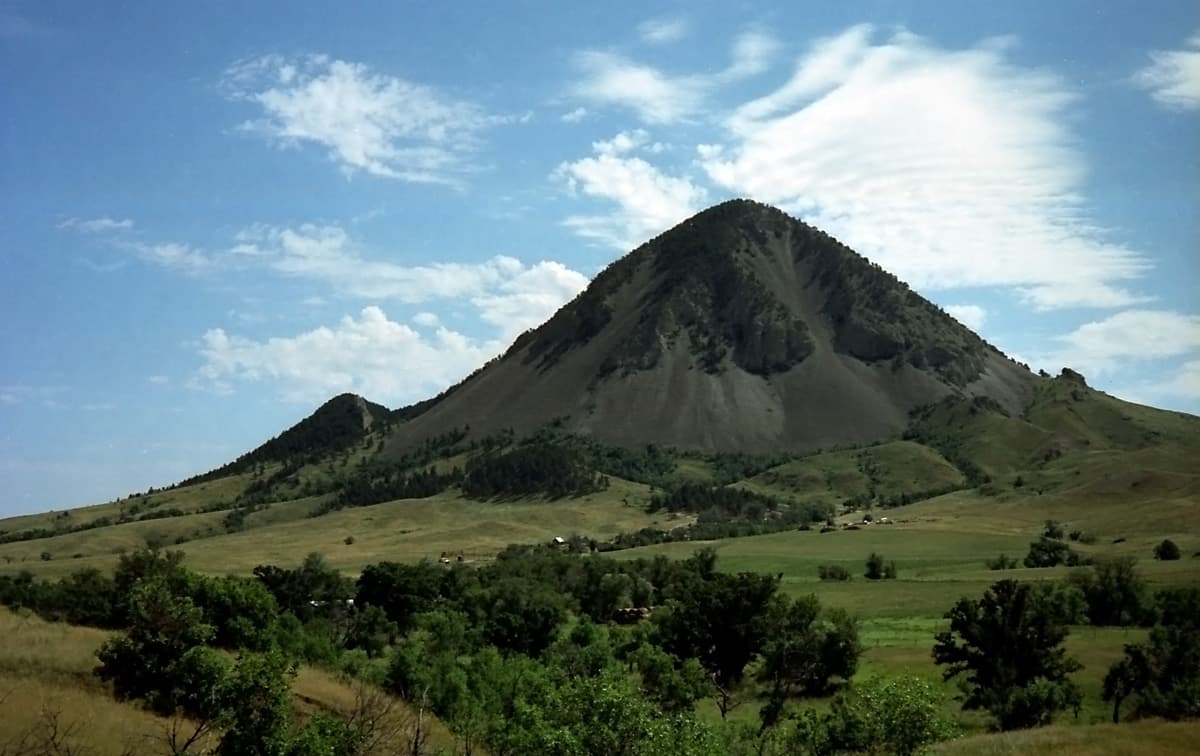
    Bear Butte

    Matȟó Pahá to the Lakota and Noahȧ-vose to the Cheyenne, who hold that the prophet Sweet Medicine received the people's founding laws here. A living place of fasting and prayer, hung with cloth offerings along its trail.

Key questions

What pilgrims usually ask

What is a sacred origin site?
A place where a religious or cultural tradition locates the beginning of the world, of humanity, or of its own people. The forms recur across unrelated cultures: a navel or centre of the earth, a first mound rising from primordial waters, a point of emergence from worlds below, and a cosmic mountain joining earth and sky.
Do these traditions agree on where creation began?
No, and the guide does not try to reconcile them. Each tradition names its own centre and tells its own account, often in language that other traditions would not accept. The pattern that recurs is the impulse to mark a centre at all, not agreement on which centre is true.
Can all of these sites be visited?
Most can, with respect for the living devotion that surrounds them. Some cannot: Sipapu, the Hopi place of emergence, is a restricted sacred site closed to non-Hopi and uninvited visitors, and Temple Mount carries access restrictions tied to its contested status. Where a site is sensitive, the atlas page says so.

Sources

Citations & further reading

The selections, dates, and traditions referenced on this page draw from the following sources. Where claims of healing, apparition, or relic provenance are made, we link to the institutional or scholarly source rather than presenting them as confirmed fact.

  1. [01]Old City of Jerusalem and its Walls — UNESCO World Heritage Centrewhc.unesco.org/en/list/148
  2. [02]Dome of the Rock — History, Architecture, & Significance — Encyclopædia Britannicabritannica.com
  3. [03]Miʿraj — Meaning, Islam, & Significance — Encyclopædia Britannicabritannica.com
  4. [04]Even Shetiyyah (the Foundation Stone) — Encyclopedia.comencyclopedia.com
  5. [05]Archaeological Site of Delphi — UNESCO World Heritage Centrewhc.unesco.org/en/list/393
  6. [06]Omphalos — Archaeological Site of Delphi (Hellenic Ministry of Culture)delphi.culture.gr
  7. [07]Ancient Egyptian Creation Myths: From Watery Chaos to Cosmic Egg — Glencairn Museumglencairnmuseum.org
  8. [08]Egypt's Eternal City (Heliopolis excavations) — Archaeology Magazinearchaeology.org
  9. [09]Ile-Ife — Meaning, Artifacts, Culture, & Map — Encyclopædia Britannicabritannica.com
  10. [10]Oduduwa and the origin of Ife — Verbum et Ecclesia (SciELO South Africa)scielo.org.za
  11. [11]Hopi Connections to the Little Colorado River — Grand Canyon Trustgrandcanyontrust.org
  12. [12]Hopi — Nature, Culture and History at the Grand Canyongrcahistory.org
  13. [13]Tjukurpa — Anangu culture, Uluṟu-Kata Tjuṯa National Park — Parks Australiaparksaustralia.gov.au
  14. [14]Bear Butte State Park — South Dakota Game, Fish & Parksgfp.sd.gov
  15. [15]Mount Kailas — Encyclopædia Britannicabritannica.com