//United Kingdom

    United Kingdom

    223 sites27 regions

    Alba / Scotland

    16 sites

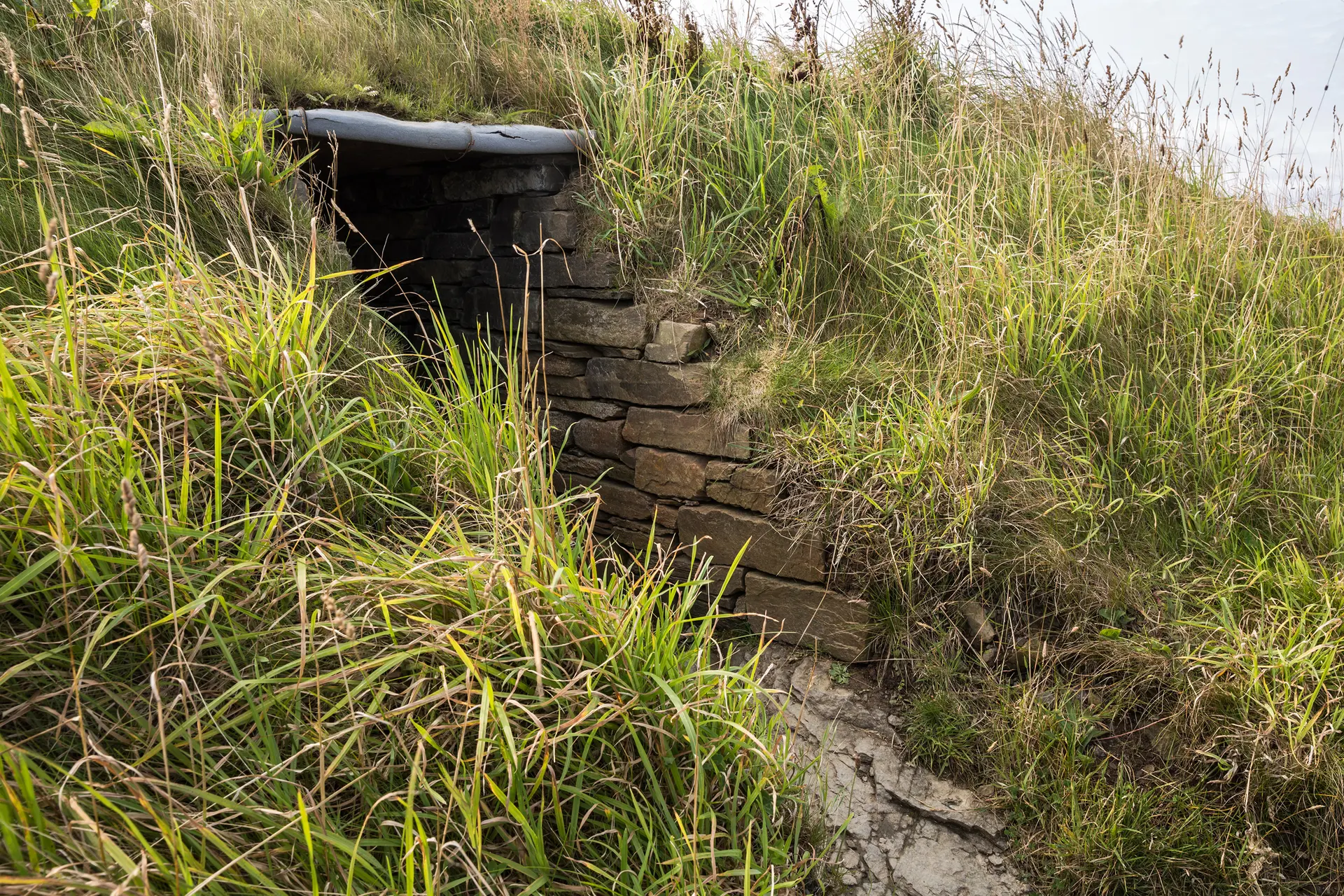
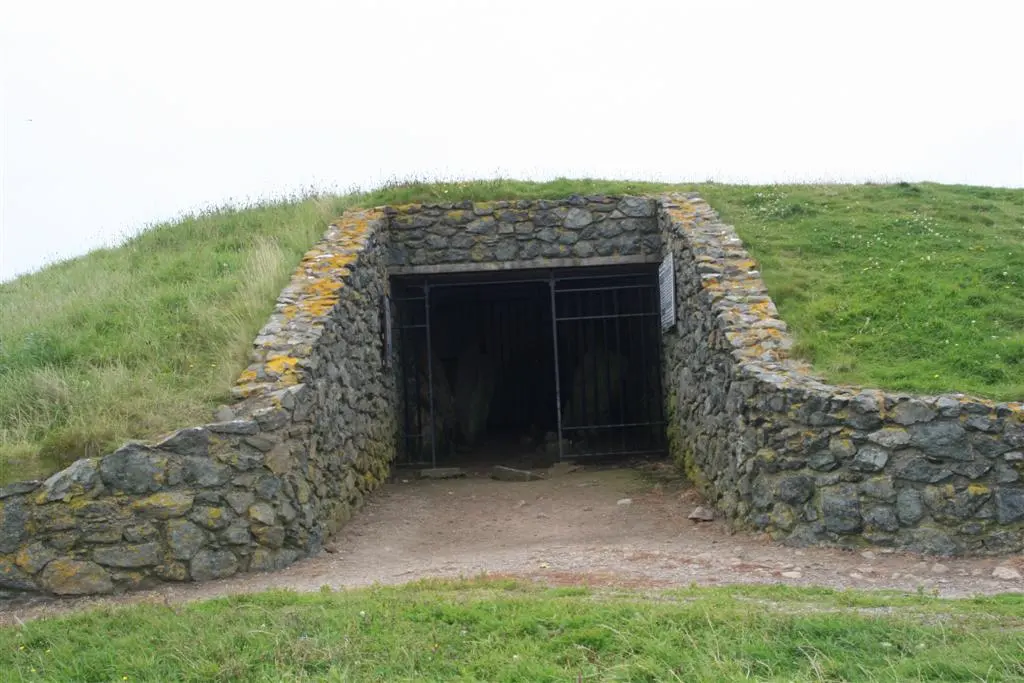
    Ballymeanoch Neolithic site - Celtic/Prehistoric sacred site
    Celtic/Prehistoric

    Ballymeanoch Neolithic site

    Kilmartin, Alba / Scotland, United Kingdom

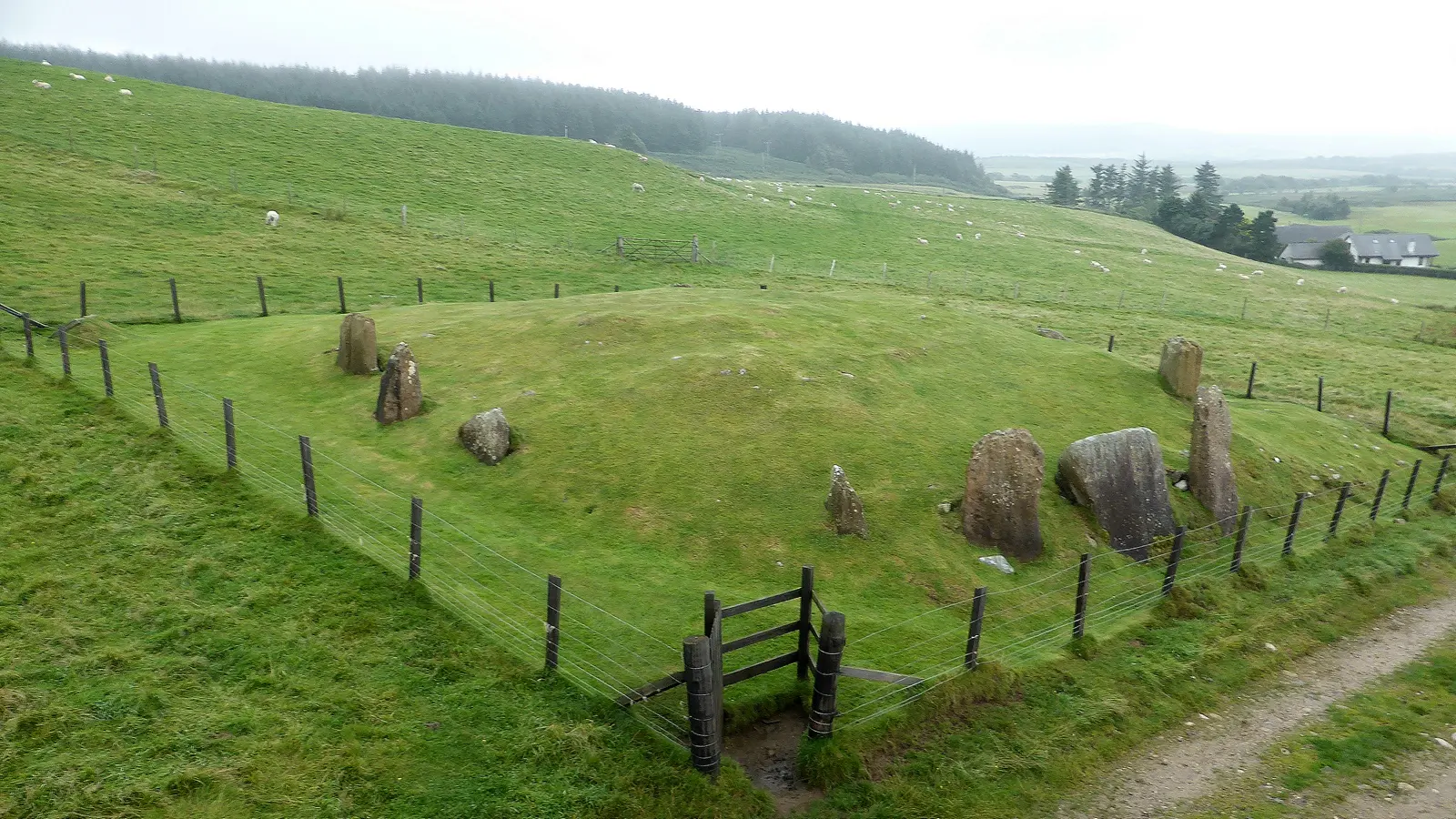
    Ballymeanoch Neolithic site, Kilmartin Glen is a neolithic site of sacred significance. Approximate coordinates: 56.10898, -5.47998. Attributes: built, cultural, archaeological. Tradition: Prehistoric. Located in Alba / Scotland, United Kingdom.

    Cairn of Get - Celtic/Prehistoric sacred site
    Celtic/Prehistoric

    Cairn of Get

    Ulbster, Alba / Scotland, United Kingdom

    Cairn of Get is a cairn of sacred significance. Approximate coordinates: 58.35313, -3.17511. Attributes: built, cultural, archaeological. Located in Alba / Scotland, United Kingdom.

    Camster Cairns - Celtic/Prehistoric sacred site
    Celtic/Prehistoric

    Camster Cairns

    Lybster, Alba / Scotland, United Kingdom

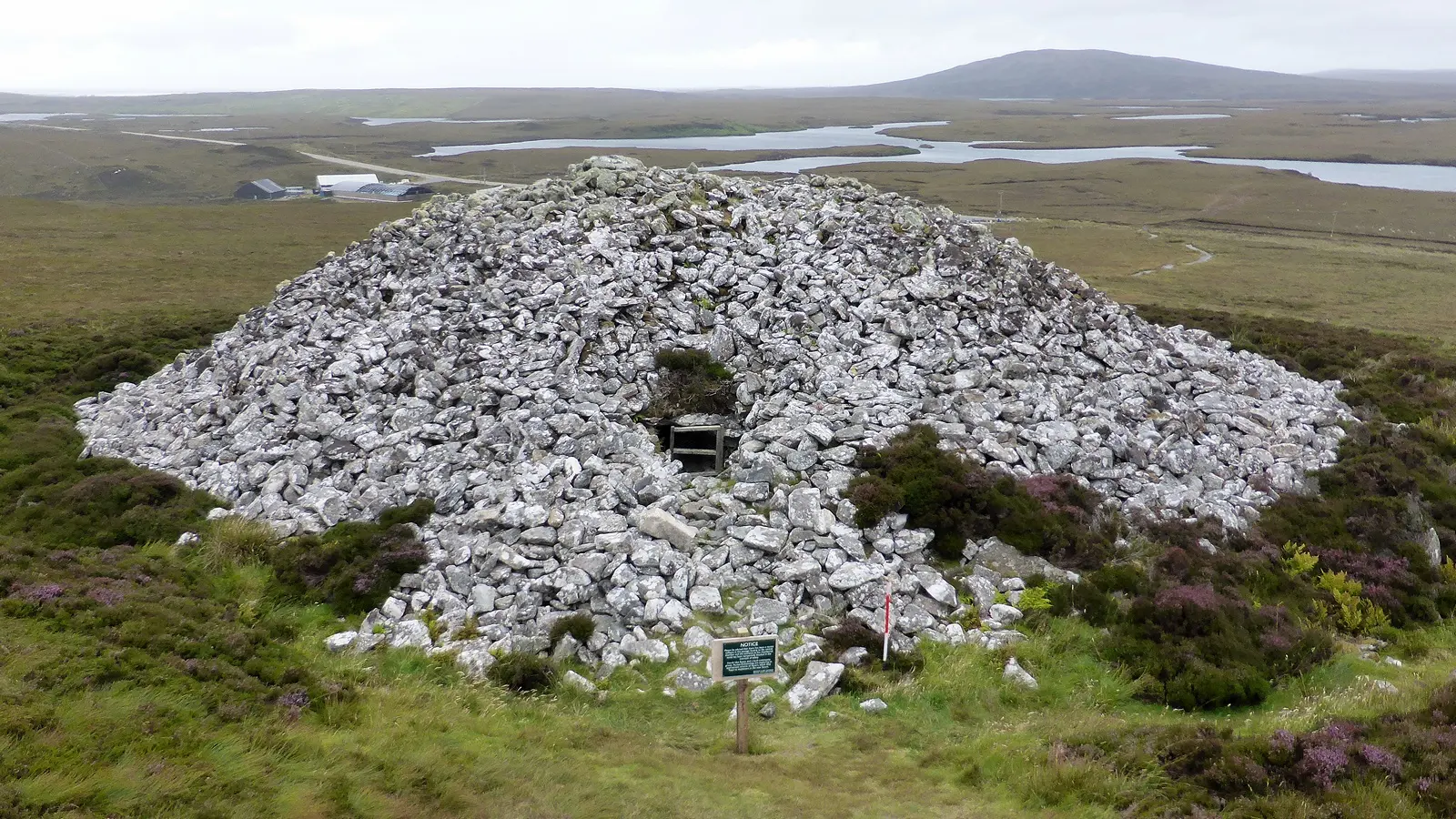
    Camster Cairns is a cairn of sacred significance. Approximate coordinates: 58.37909, -3.26423. Attributes: built, cultural, archaeological. Located in Alba / Scotland, United Kingdom.

    Corrimony Cairn - Celtic/Prehistoric sacred site
    Celtic/Prehistoric

    Corrimony Cairn

    Drumnadrochit, Alba / Scotland, United Kingdom

    Corrimony Cairn is a cairn of sacred significance. Approximate coordinates: 57.33448, -4.68782. Attributes: built, cultural, archaeological. Located in Alba / Scotland, United Kingdom.

    Croft Moraig Stone Circle - Celtic/Prehistoric sacred site
    Celtic/Prehistoric

    Croft Moraig Stone Circle

    Aberfeldy, Alba / Scotland, United Kingdom

    Croft Moraig Stone Circle, Aberfeldy is a stone circle of sacred significance. Approximate coordinates: 56.60181, -3.96030. Attributes: built, cultural, archaeological. Located in Alba / Scotland, United Kingdom.

    Dun Beag, Struan, Isle of Skye - Celtic sacred site
    Celtic

    Dun Beag, Struan, Isle of Skye

    Struan, Alba / Scotland, United Kingdom

    Dun Beag, Struan, Isle of Skye, Scotland is a broch of sacred significance. Approximate coordinates: 57.36024, -6.42573. Attributes: built, cultural, archaeological. Located in Alba / Scotland, United Kingdom.

    Fingal’s Cave, Island of Staffa - Celtic/Natural sacred site
    Celtic/Natural

    Fingal’s Cave, Island of Staffa

    Staffa Island, Alba / Scotland, United Kingdom

    Fingal’s Cave, Island of Staffa, Scotland is a cave of sacred significance. Approximate coordinates: 56.43137, -6.34139. Attributes: natural, cultural. Located in Alba / Scotland, United Kingdom.

    Fortingall Yew Tree and Church, Perthshire - Celtic/Christianity sacred site
    Celtic/Christianity

    Fortingall Yew Tree and Church, Perthshire

    Fortingall, Alba / Scotland, United Kingdom

    The Fortingall Yew is an ancient European yew (Taxus baccata) in the churchyard of the village of Fortingall in Perthshire, Scotland. Considered one of the oldest trees in Britain, modern estimates place its age at an average of 5,000 years.

    Healabhal Mhor, Isle of Skye - Celtic sacred site
    Celtic

    Healabhal Mhor, Isle of Skye

    Dunvegan, Alba / Scotland, United Kingdom

    Healabhal Mhor, Isle of Skye, Scotland is a mountain of sacred significance. Approximate coordinates: 57.40550, -6.63203. Attributes: natural. Located in Alba / Scotland, United Kingdom.

    Kinnell stone circle - Celtic/Prehistoric sacred site
    Celtic/Prehistoric

    Kinnell stone circle

    Killin, Alba / Scotland, United Kingdom

    Kinnell stone circle, Killin is a stone circle of sacred significance. Approximate coordinates: 56.46561, -4.31094. Attributes: built, cultural, archaeological. Located in Alba / Scotland, United Kingdom.

    Mount Schiehallion - Celtic sacred site
    Celtic

    Mount Schiehallion

    Aberfeldy, Alba / Scotland, United Kingdom

    Mount Schiehallion, Scotland is a site of sacred significance. Approximate coordinates: 56.66683, -4.10014. Located in Alba / Scotland, United Kingdom.

    Mt. Beinn-na-Greine, Portree - Celtic sacred site
    Celtic

    Mt. Beinn-na-Greine, Portree

    Portree, Alba / Scotland, United Kingdom

    Mt. Beinn-na-Greine, Portree, Scotland is a site of sacred significance. Approximate coordinates: 57.39383, -6.22969. Located in Alba / Scotland, United Kingdom.

    Nether Largie standing stones, Argyll - Celtic/Prehistoric sacred site
    Celtic/Prehistoric

    Nether Largie standing stones, Argyll

    Kilmartin, Alba / Scotland, United Kingdom

    Nether Largie standing stones, Argyll, Scotland is a site of sacred significance. Approximate coordinates: 56.12170, -5.49540. Located in Alba / Scotland, United Kingdom.

    Praying Hands of Mary - Celtic sacred site
    Celtic

    Praying Hands of Mary

    Fortingall, Alba / Scotland, United Kingdom

    Praying Hands of Mary is a site of sacred significance. Approximate coordinates: 56.60122, -4.07460. Located in Alba / Scotland, United Kingdom.

    St. Fillan’s Cave, Pittenweem - Christianity/Celtic sacred site
    Christianity/Celtic

    St. Fillan’s Cave, Pittenweem

    Pittenweem, Alba / Scotland, United Kingdom

    St. Fillan’s Cave, Pittenweem, Scotland is a site of sacred significance. Approximate coordinates: 56.21323, -2.72752. Located in Alba / Scotland, United Kingdom.

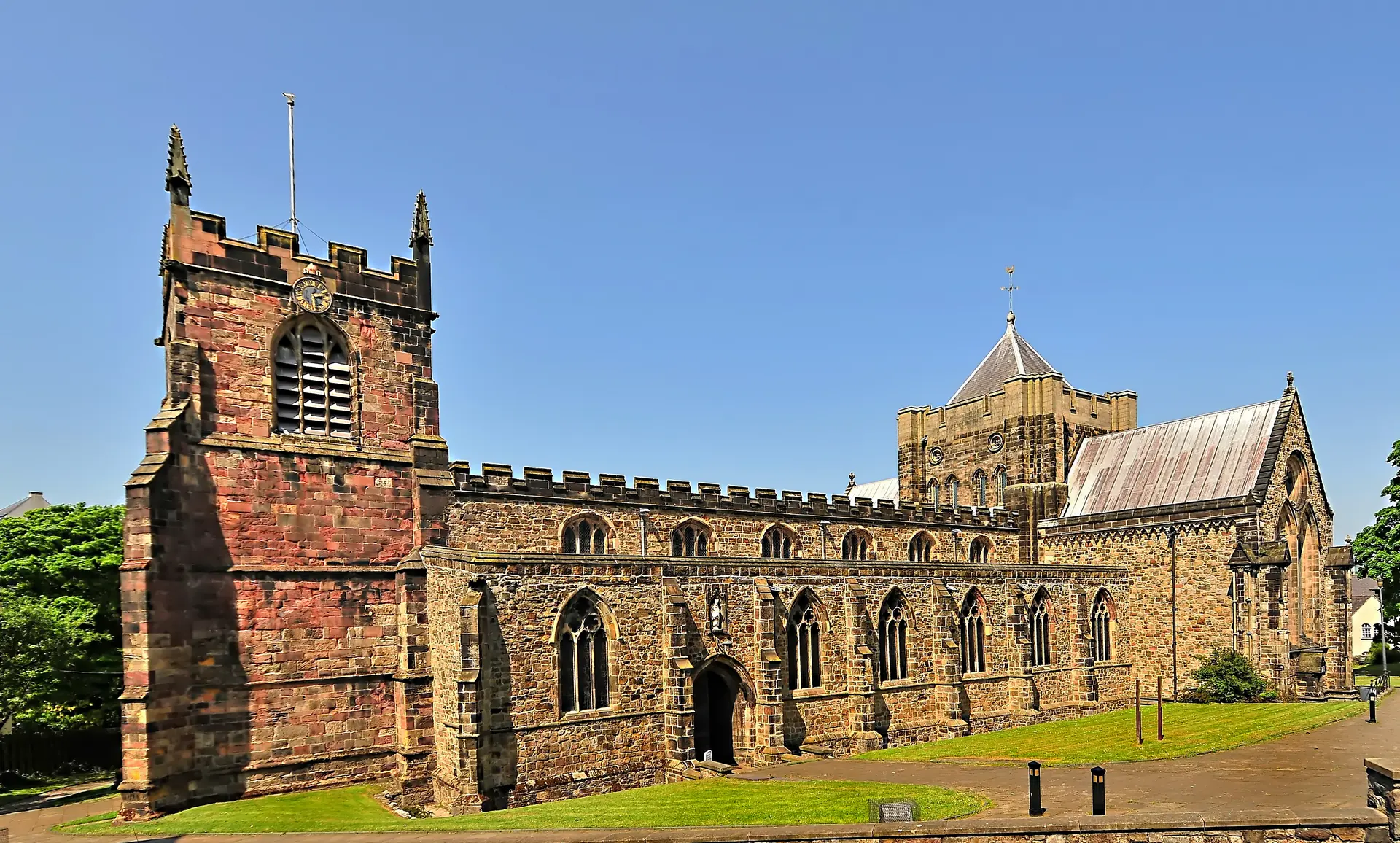
    St. Mary’s Church, Haddington - Christianity sacred site
    Christianity

    St. Mary’s Church, Haddington

    Haddington, Alba / Scotland, United Kingdom

    St. Mary’s Church, Haddington, Scotland is a site of sacred significance. Approximate coordinates: 55.95315, -2.77241. Located in Alba / Scotland, United Kingdom.

    Anglesey

    3 sites

    Meini Hirion standing stones - undefined sacred site

    Meini Hirion standing stones

    Holyhead, Anglesey, United Kingdom

    Meini Hirion standing stones is a site of sacred significance. Approximate coordinates: 53.39659, -4.46204. Located in Cymru / Wales, United Kingdom.

    Penrhos Feiliw standing stones - undefined sacred site

    Penrhos Feiliw standing stones

    Holyhead, Anglesey, United Kingdom

    Penrhos Feiliw standing stones is a site of sacred significance. Approximate coordinates: 53.29570, -4.66178. Located in Cymru / Wales, United Kingdom.

    St. Cybi’s Church - undefined sacred site

    St. Cybi’s Church

    Holyhead, Anglesey, United Kingdom

    St. Cybi’s Church is a site of sacred significance. Approximate coordinates: 53.31144, -4.63254. Located in Cymru / Wales, United Kingdom.

    Argyll and Bute

    17 sites

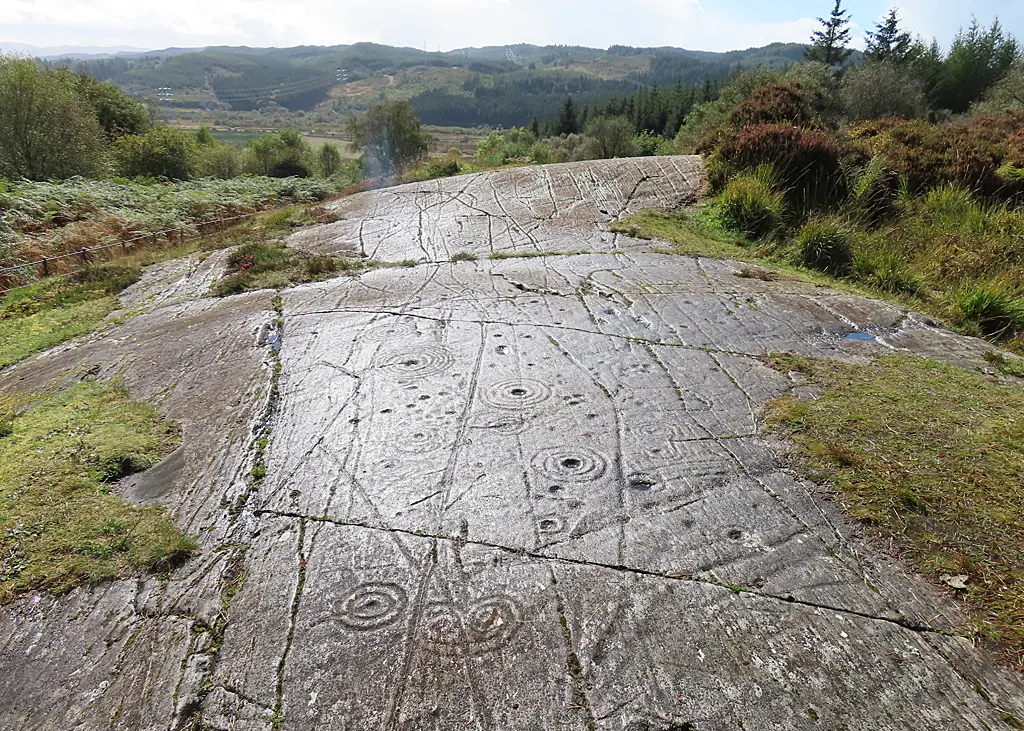
    Achnabreck Rock Art Sites - Prehistoric sacred site
    Prehistoric

    Achnabreck Rock Art Sites

    Lochgilphead, Argyll and Bute, United Kingdom

    Achnabreck Rock Art Sites in Lochgilphead, Argyll and Bute, United Kingdom.

    Ballygowan Rock Art - Prehistoric sacred site
    Prehistoric

    Ballygowan Rock Art

    Kilmartin, Argyll and Bute, United Kingdom

    Ballygowan Rock Art in Kilmartin, Argyll and Bute, United Kingdom.

    Baluachraig Cup and Ring Marks - Prehistoric sacred site
    Prehistoric

    Baluachraig Cup and Ring Marks

    Kilmartin, Argyll and Bute, United Kingdom

    Baluachraig Cup and Ring Marks in Kilmartin, Argyll and Bute, United Kingdom.

    Dunamuck North Stone Row - Prehistoric sacred site
    Prehistoric

    Dunamuck North Stone Row

    Kilmartin, Argyll and Bute, United Kingdom

    Dunamuck North Stone Row in Kilmartin, Argyll and Bute, United Kingdom.

    Dunamuck South Stone Row - Prehistoric sacred site
    Prehistoric

    Dunamuck South Stone Row

    Kilmichael Glassary, Argyll and Bute, United Kingdom

    Dunamuck South Stone Row in Kilmichael Glassary, Argyll and Bute, United Kingdom.

    Dunchraigaig Cairn - Prehistoric sacred site
    Prehistoric

    Dunchraigaig Cairn

    Kilmartin, Argyll and Bute, United Kingdom

    Dunchraigaig Cairn in Kilmartin, Argyll and Bute, United Kingdom.

    Glebe Cairn - Prehistoric sacred site
    Prehistoric

    Glebe Cairn

    Kilmartin, Argyll and Bute, United Kingdom

    Glebe Cairn in Kilmartin, Argyll and Bute, United Kingdom.

    Hill of the Angels - Christianity sacred site
    Christianity

    Hill of the Angels

    Iona, Argyll and Bute, United Kingdom

    Hill of the Angels in Iona, Argyll and Bute, United Kingdom.

    Iona Abbey - Christianity sacred site
    Christianity

    Iona Abbey

    Isle of Iona, Argyll and Bute, United Kingdom

    Iona Abbey in Isle of Iona, Argyll and Bute, United Kingdom.

    Kilmichael Glassary Cup and Ring Marks - Prehistoric sacred site
    Prehistoric

    Kilmichael Glassary Cup and Ring Marks

    Lochgilphead, Argyll and Bute, United Kingdom

    Kilmichael Glassary Cup and Ring Marks in Lochgilphead, Argyll and Bute, United Kingdom.

    MacLean's Cross - Christianity sacred site
    Christianity

    MacLean's Cross

    Iona, Argyll and Bute, United Kingdom

    MacLean's Cross in Iona, Argyll and Bute, United Kingdom.

    Nether Largie Mid Cairn - Prehistoric sacred site
    Prehistoric

    Nether Largie Mid Cairn

    Kilmartin, Argyll and Bute, United Kingdom

    Nether Largie Mid Cairn in Kilmartin, Argyll and Bute, United Kingdom.

    Nether Largie North Cairn - Prehistoric sacred site
    Prehistoric

    Nether Largie North Cairn

    Kilmartin, Argyll and Bute, United Kingdom

    Nether Largie North Cairn in Kilmartin, Argyll and Bute, United Kingdom.

    Nether Largie South Cairn - Prehistoric sacred site
    Prehistoric

    Nether Largie South Cairn

    Kilmartin, Argyll and Bute, United Kingdom

    Nether Largie South Cairn in Kilmartin, Argyll and Bute, United Kingdom.

    Ri Cruin Cairn - Prehistoric sacred site
    Prehistoric

    Ri Cruin Cairn

    Kilmartin, Argyll and Bute, United Kingdom

    Ri Cruin Cairn in Kilmartin, Argyll and Bute, United Kingdom.

    Temple Wood Stone Circle - Prehistoric sacred site
    Prehistoric

    Temple Wood Stone Circle

    Kilmartin, Argyll and Bute, United Kingdom

    Temple Wood Stone Circle in Kilmartin, Argyll and Bute, United Kingdom.

    The Street of the Dead - Christianity sacred site
    Christianity

    The Street of the Dead

    Iona, Argyll and Bute, United Kingdom

    The Street of the Dead in Iona, Argyll and Bute, United Kingdom.

    Caithness

    8 sites

    Bruan Broch - Prehistoric sacred site
    Prehistoric

    Bruan Broch

    Lybster, Caithness, United Kingdom

    Bruan Broch in Lybster, Caithness, United Kingdom.

    Camster Cairns - The Long Cairn - Prehistoric sacred site
    Prehistoric

    Camster Cairns - The Long Cairn

    Lybster, Caithness, United Kingdom

    Camster Cairns - The Long Cairn in Lybster, Caithness, United Kingdom.

    Camster Cairns - The Round Cairn - Prehistoric sacred site
    Prehistoric

    Camster Cairns - The Round Cairn

    Lybster, Caithness, United Kingdom

    Camster Cairns - The Round Cairn in Lybster, Caithness, United Kingdom.

    Dunbeath Broch - Prehistoric sacred site
    Prehistoric

    Dunbeath Broch

    Dunbeath, Caithness, United Kingdom

    Dunbeath Broch in Dunbeath, Caithness, United Kingdom.

    Hill o' Many Stanes - Prehistoric sacred site
    Prehistoric

    Hill o' Many Stanes

    Lybster, Caithness, United Kingdom

    Hill o' Many Stanes in Lybster, Caithness, United Kingdom.

    Ousdale Broch - Prehistoric sacred site
    Prehistoric

    Ousdale Broch

    Helmsdale, Caithness, United Kingdom

    Ousdale Broch in Helmsdale, Caithness, United Kingdom.

    Upper Borgue Broch - Prehistoric sacred site
    Prehistoric

    Upper Borgue Broch

    Dunbeath, Caithness, United Kingdom

    Upper Borgue Broch in Dunbeath, Caithness, United Kingdom.

    Yarrows Broch - Prehistoric sacred site
    Prehistoric

    Yarrows Broch

    Thrumster, Caithness, United Kingdom

    Yarrows Broch in Thrumster, Caithness, United Kingdom.

    Ceredigion

    1 site

    Our Lady of Cardigan - undefined sacred site

    Our Lady of Cardigan

    Cardigan, Ceredigion, United Kingdom

    Our Lady of Cardigan, Wales is a site of sacred significance. Approximate coordinates: 52.08725, -4.65267. Located in Cymru / Wales, United Kingdom.

    Cornwall

    6 sites

    Boscawen-un Stone Circle - undefined sacred site

    Boscawen-un Stone Circle

    St Buryan, Cornwall, United Kingdom

    Boscawen-un Stone Circle is a stone circle of sacred significance. Approximate coordinates: 50.08983, -5.61929. Attributes: built, cultural, archaeological, ceremonial. Located in England, United Kingdom.

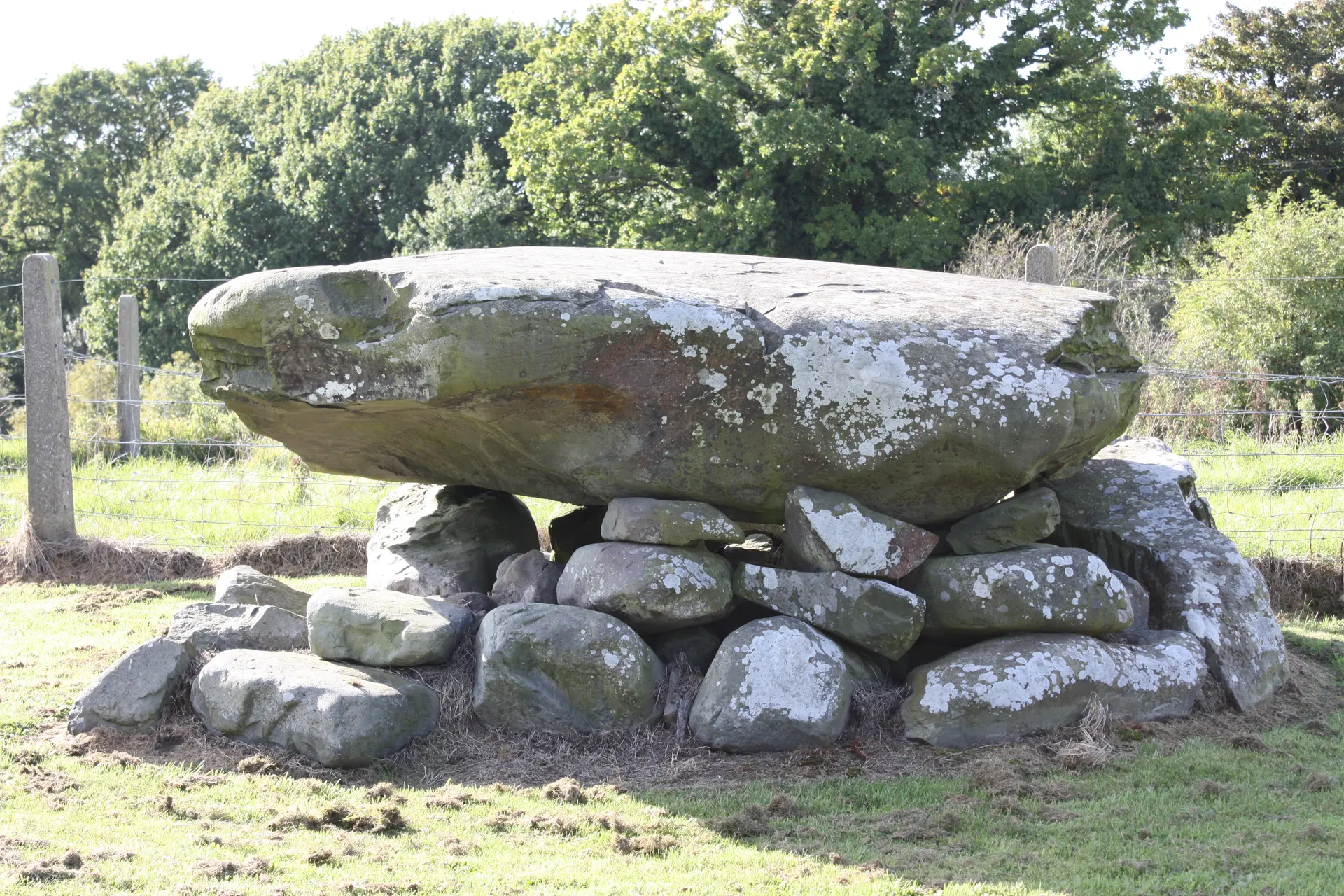
    Carwynnen Quoit - undefined sacred site

    Carwynnen Quoit

    Camborne, Cornwall, United Kingdom

    Carwynnen Quoit (grid reference SW650372) is a dolmen belonging to the Neolithic period, at Carwynnen near Camborne in west Cornwall. It is also known as 'The Giant's Quoit', 'The Giant's Frying Pan', 'Pendarvis Quoit' and 'Pendarves Quoit'. It collapsed in 1966 and was re-erected in 2014.

    Lanyon Quoit - undefined sacred site

    Lanyon Quoit

    Madron, Cornwall, United Kingdom

    Lanyon Quoit is a dolmen in Cornwall, England, United Kingdom, 2 miles southeast of Morvah. It collapsed in a storm in 1815 and was re-erected nine years later, and as a result the dolmen is now very different from its original appearance.

    Mên-an-Tol - Ancient/Prehistoric sacred site
    Ancient/Prehistoric

    Mên-an-Tol

    Morvah, Cornwall, United Kingdom

    On the West Penwith moor, three stones stand against the sky—but it is the middle stone that draws seekers from around the world. Men-an-Tol, the Stone of the Hole, features a precisely carved circular opening large enough for an adult to pass through. For as long as anyone can remember, people have crawled through this granite portal seeking healing: children with rickets, adults with back pain, women hoping to conceive. The practice continues today. Whatever purpose Bronze Age people had in creating this unique stone, its invitation remains: pass through, and something changes.

    Nine Maidens stone ring - undefined sacred site

    Nine Maidens stone ring

    St. Columb Major, Cornwall, United Kingdom

    Nine Maidens stone ring, Cornwall is a site of sacred significance. Approximate coordinates: 50.16056, -5.59374. Located in England, United Kingdom.

    St. Michael's Mount - undefined sacred site

    St. Michael's Mount

    Marazion, Cornwall, United Kingdom

    St. Michael's Mount is a site of sacred significance. Approximate coordinates: 50.11733, -5.47759. Located in England, United Kingdom.

    Cumbria

    1 site

    Castlerigg stone ring - undefined sacred site

    Castlerigg stone ring

    Keswick, Cumbria, United Kingdom

    Castlerigg stone ring is a stone circle of sacred significance. Approximate coordinates: 54.60282, -3.09840. Attributes: built, cultural, archaeological. Located in England, United Kingdom.

    Cymru / Wales

    3 sites

    Bodowyr Dolmen - Celtic/Prehistoric sacred site
    Celtic/Prehistoric

    Bodowyr Dolmen

    Llangaffo, Cymru / Wales, United Kingdom

    Bodowyr Dolmen is a dolmen of sacred significance. Approximate coordinates: 53.18827, -4.30301. Attributes: built, cultural, archaeological. Located in Cymru / Wales, United Kingdom.

    Cadair Idris - Celtic sacred site
    Celtic

    Cadair Idris

    Dolgellau, Cymru / Wales, United Kingdom

    Cadair Idris or Cader Idris is a mountain in the Meirionnydd area of Gwynedd, Wales. It lies at the southern end of the Snowdonia National Park near the town of Dolgellau. The peak, which is one of the most popular in Wales for walkers and hikers, is composed largely of Ordovician igneous rocks, with classic glacial erosion features such as cwms, moraines, striated rocks, and roches moutonnées.

    Carn Ingli - Celtic/Christianity sacred site
    Celtic/Christianity

    Carn Ingli

    Newport, Cymru / Wales, United Kingdom

    Carn Ingli (Welsh: [karn ˈɪŋli]) is a Site of Special Scientific Interest (SSSI) in the Preseli Hills, Pembrokeshire, Wales. It was designated a SSSI in January 1954 in an attempt to protect its fragile biological elements. The site has an area of 428.4 hectares (1,059 acres) and is managed by Natural Resources Wales.

    Devon

    1 site

    Brisworthy Stone Circle - undefined sacred site

    Brisworthy Stone Circle

    Shaugh Prior, Devon, United Kingdom

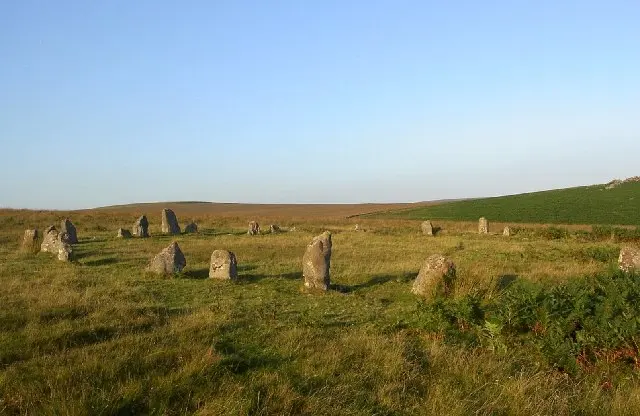
    Brisworthy stone circle (grid reference SX564654) is a stone circle on Dartmoor, Devon. It is located three miles east of the A386, northeast of the village of Shaugh Prior. It is three hundred metres from Ringmoor stone row and cairn circle, and is one of the archaeological sites found in the Upper Plym Valley.

    East Riding of Yorkshire

    1 site

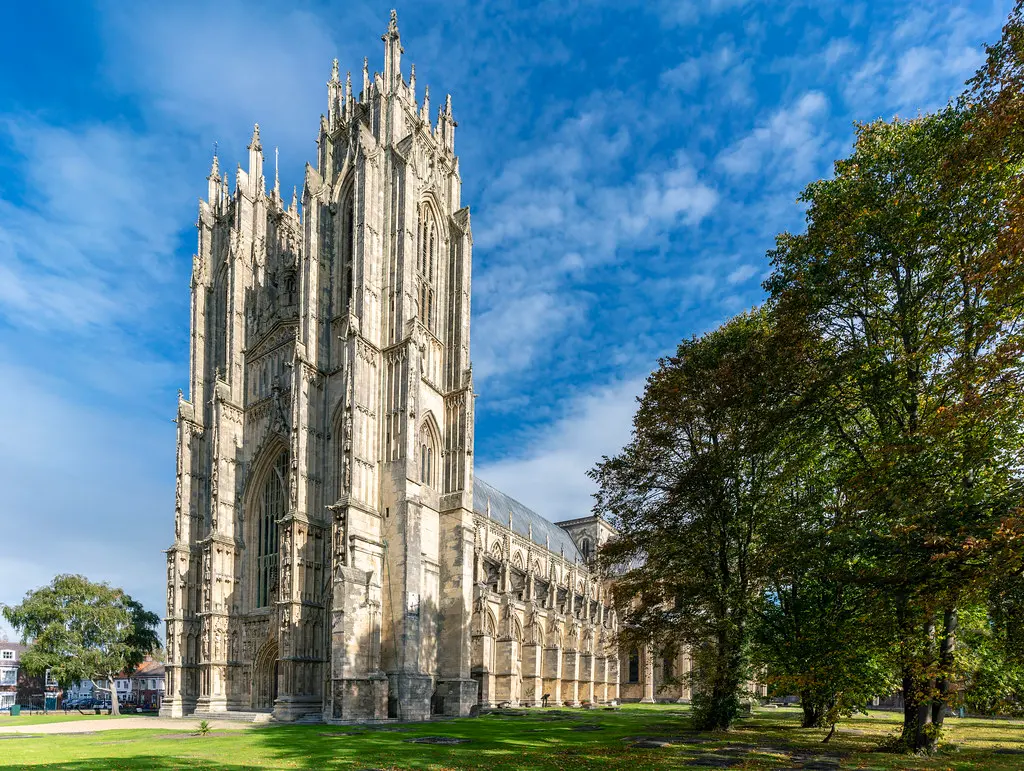
    Beverley Minster - Christianity sacred site
    Christianity

    Beverley Minster

    Beverley, East Riding of Yorkshire, United Kingdom

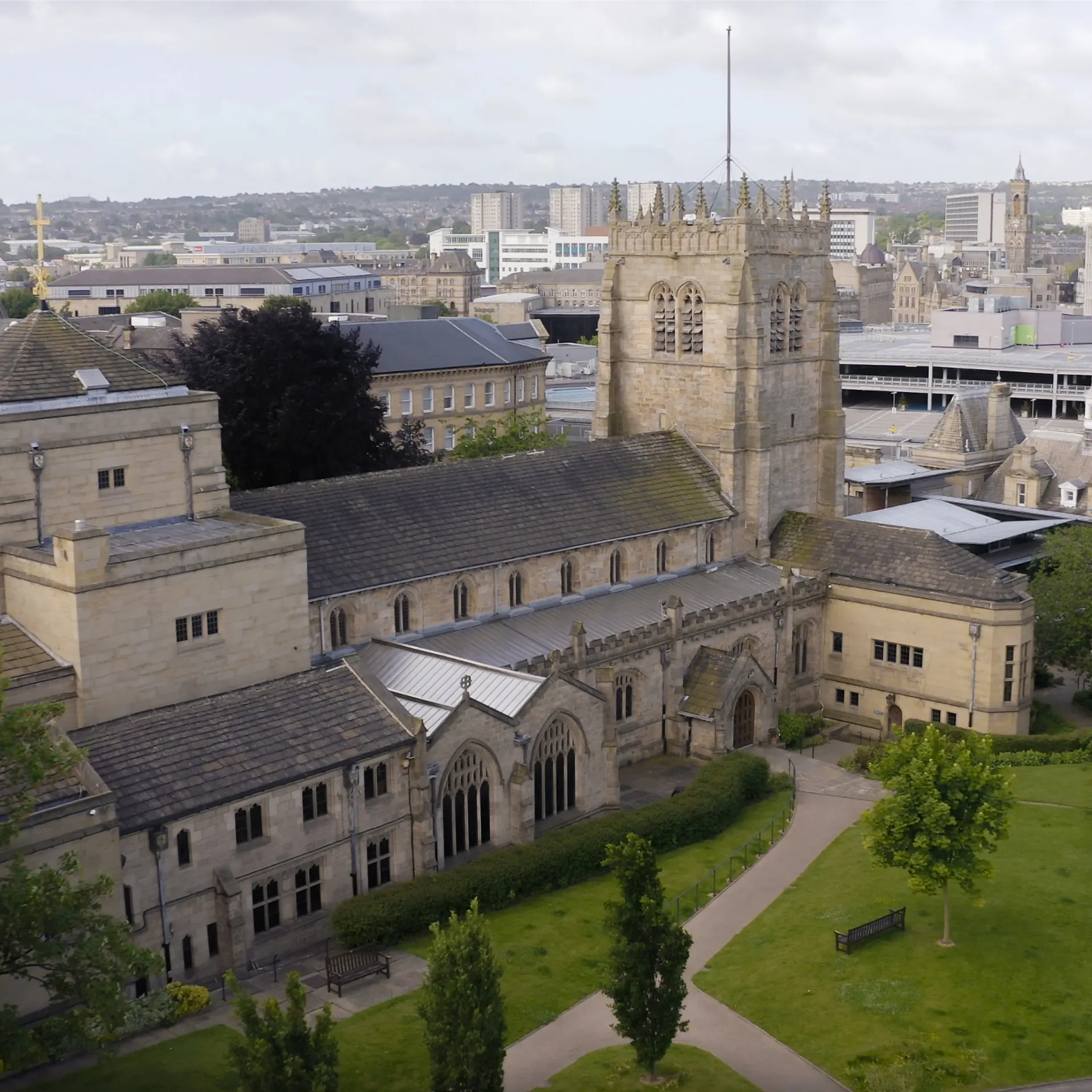
    Beverley Minster, otherwise known as the Parish Church of Saint John and Saint Martin, in Beverley, East Riding of Yorkshire, is a parish church in the Church of England. It is one of the largest parish churches in the UK, larger than one-third of all English cathedrals and is regarded as a Gothic masterpiece. Originally a collegiate church, it was not selected as a bishop's seat during the Dissolution of the Monasteries; nevertheless, it survived as a parish church and the chapter house and the attached church of St Martin were the only major parts of the building to be lost. It is part of the Major Churches Network and a Grade I listed building.

    England

    68 sites

    Abbots Way between Buckfast Abbey and Tavistock Abbey, Dartmoor - Christianity sacred site
    Christianity

    Abbots Way between Buckfast Abbey and Tavistock Abbey, Dartmoor

    Teignbridge, England, United Kingdom

    Abbots Way between Buckfast Abbey and Tavistock Abbey, Dartmoor, England is a pathway of sacred significance. Approximate coordinates: 50.49270, -3.77565. Attributes: natural, cultural, pilgrimage. Tradition: Christianity.

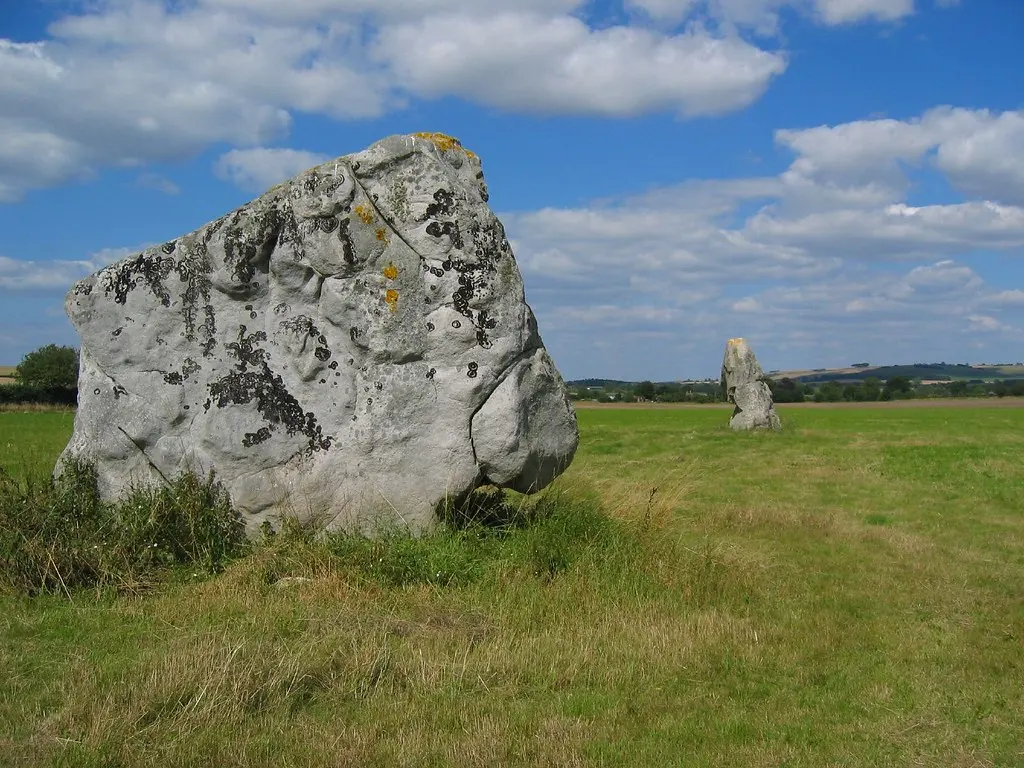
    Adam and Eve Stones - undefined sacred site

    Adam and Eve Stones

    Beckhampton, England, United Kingdom

    Adam and Eve Stones, Avebury is a megalithic monument of sacred significance. Approximate coordinates: 51.42282, -1.87328. Attributes: built, cultural, archaeological.

    Avebury - Pagan sacred site
    UNESCO
    Pagan

    Avebury

    Avebury, England, United Kingdom

    Avebury () is a Neolithic henge monument containing three stone circles, around the village of Avebury in Wiltshire, in south-west England. One of the best-known prehistoric sites in Britain, it contains the largest megalithic stone circle in the world. It is both a tourist attraction and a place of religious importance to contemporary pagans. Constructed over several hundred years in the third millennium BC, during the Neolithic, or New Stone Age, the monument comprises a large henge (a bank and a ditch) with a large outer stone circle and two separate smaller stone circles situated inside the centre of the monument. Its original purpose is unknown, although archaeologists believe that it was most likely used for some form of ritual or ceremony. The Avebury monument is a part of a larger prehistoric landscape containing several older monuments nearby, including West Kennet Long Barrow, Windmill Hill and Silbury Hill. By the Iron Age, the site had been effectively abandoned, with some evidence of human activity on the site during the Roman period. During the Early Middle Ages, a village first began to be built around the monument, eventually extending into it. In the late medieval and early modern periods, local people destroyed many of the standing stones around the henge, both for religious and practical reasons. The antiquarians John Aubrey and William Stukeley took an interest in Avebury during the 17th and 18th centuries, respectively, and recorded much of the site between various phases of destruction. Archaeological investigation followed in the 20th century, with Harold St George Gray leading an excavation of the bank and ditch, and Alexander Keiller overseeing a project to reconstruct much of the monument. Avebury is managed by the National Trust. It has been designated a Scheduled Ancient Monument, as well as a World Heritage Site, in the latter capacity being seen as a part of the wider prehistoric landscape of Wiltshire known as Stonehenge, Avebury and Associated Sites. About 480 people live in 235 homes in the village of Avebury and its associated settlement of Avebury Trusloe, and in the nearby hamlets of Beckhampton and West Kennett.

    Bath - Christianity sacred site
    UNESCO
    Christianity

    Bath

    Bath, England, United Kingdom

    Bath may refer to: Bathing, immersion in a fluid Bathtub, a large open container for water, in which a person may wash their body Public bathing, a public place where people bathe Thermae, ancient Roman public bathing facilities

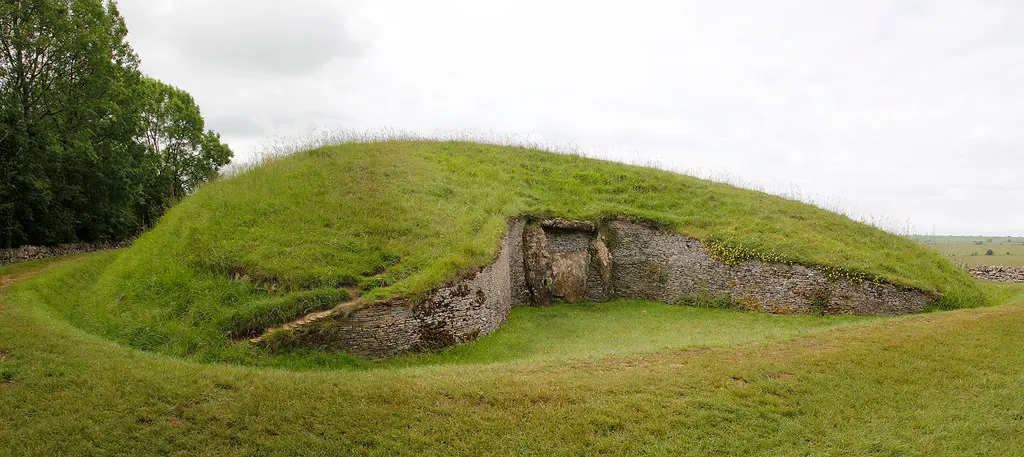
    Belas Knap Long Barrow - undefined sacred site

    Belas Knap Long Barrow

    Tewkesbury, England, United Kingdom

    Belas Knap Long Barrow is a long barrow of sacred significance. Approximate coordinates: 51.92764, -1.97081. Attributes: built, cultural, archaeological. Located in Tewkesbury, England, United Kingdom.

    Canterbury Cathedral - Christianity sacred site
    UNESCO
    Christianity

    Canterbury Cathedral

    Canterbury, England, United Kingdom

    Canterbury ( , ) is a city and UNESCO World Heritage Site, in the county of Kent, England; it was a county borough until 1974. It lies on the River Stour. The city has a mild oceanic climate. Canterbury is a popular tourist destination, with the city's economy heavily reliant upon tourism, alongside higher education and retail. As of 2011, the city's population was over 55,000, including a substantial number of students and one of the highest student-to-permanent-resident ratios in Britain. The site of the city has been occupied since Paleolithic times and served as the capital of the Celtic Cantiaci and Jute Kingdom of Kent. Many historical structures fill the area, including a city wall founded in Roman times and rebuilt in the 14th century, the Westgate Towers museum, the ruins of St Augustine's Abbey, the Norman Canterbury Castle, and the oldest extant school in the world, the King's School. Modern additions include the Marlowe Theatre and Kent County Cricket Club's St Lawrence Ground. Canterbury Cathedral is known for its architecture, its music, and for being the seat of the Archbishop of Canterbury; it receives a million visitors per year.

    Cerne Abas Giant - undefined sacred site

    Cerne Abas Giant

    Cerne Abbas, England, United Kingdom

    Cerne Abas is a hill figure of sacred significance. Approximate coordinates: 50.81371, -2.47453. Attributes: cultural, archaeological. Located in England, United Kingdom.

    Chanctonbury Rings, Findon, West Sussex - Multi-faith sacred site
    Multi-faith

    Chanctonbury Rings, Findon, West Sussex

    Horsham, England, United Kingdom

    Chanctonbury Rings, Findon, West Sussex, England is a hill fort of sacred significance. Approximate coordinates: 50.89675, -0.38106. Attributes: built, cultural, archaeological. Located in Horsham, England, United Kingdom.

    Chapel of Our Lady of the Crag, Knaresborough - Christianity sacred site
    Christianity

    Chapel of Our Lady of the Crag, Knaresborough

    Knaresborough, England, United Kingdom

    Chapel of Our Lady of the Crag, Knaresborough, England is a chapel of sacred significance. Approximate coordinates: 54.00283, -1.46556. Attributes: built, cultural. Tradition: Christianity. Associated figure: Our Lady. Located in England, United Kingdom.

    Chun Quoit - Prehistoric sacred site
    Prehistoric

    Chun Quoit

    Bojewyan, England, United Kingdom

    Chun Quoit is a megalithic burial site of sacred significance. Approximate coordinates: 50.14859, -5.63770. Attributes: built, cultural, archaeological. Located in England, United Kingdom.

    Church of St Frideswide, Oxford - Christianity sacred site
    Christianity

    Church of St Frideswide, Oxford

    Oxford, England, United Kingdom

    Church of St Frideswide, Oxford, England is a church of sacred significance. Approximate coordinates: 51.75218, -1.27475. Attributes: built, cultural. Tradition: Christianity. Associated figure: St Frideswide. Located in Oxford, England, United Kingdom.

    Church of St. Mary and St. Edwin, Evesham - Christianity sacred site
    Christianity

    Church of St. Mary and St. Edwin, Evesham

    Wychavon, England, United Kingdom

    Church of St. Mary and St. Edwin, Evesham, England is a church of sacred significance. Approximate coordinates: 52.09663, -1.94618. Attributes: built, cultural. Tradition: Christianity. Associated figure: St. Mary and St. Edwin. Located in Wychavon, England, United Kingdom.

    Church of St. Mary’s - undefined sacred site

    Church of St. Mary’s

    Cotswold District, England, United Kingdom

    St. Mary’s Church, Temple Guiting, England is a site of sacred significance. Approximate coordinates: 51.94901, -1.86848. Located in Cotswold, England, United Kingdom.

    Cissbury Ring, Findon, West Sussex - Multi-faith sacred site
    Multi-faith

    Cissbury Ring, Findon, West Sussex

    Worthing, England, United Kingdom

    Cissbury Ring, Findon, West Sussex, England is a neolithic flint mines of sacred significance. Approximate coordinates: 50.86046, -0.38325. Attributes: built, cultural, archaeological. Located in Worthing, England, United Kingdom.

    Cornwall - Celtic sacred site
    Celtic

    Cornwall

    Penzance, England, United Kingdom

    Cornwall ( ; Cornish: Kernow [ˈkɛrnɔʊ] or [ˈkɛrnɔ]) is a ceremonial county in South West England. It is also one of the Celtic nations and the homeland of the Cornish people. The county is bordered by the Atlantic Ocean to the north and west, Devon to the east, and the English Channel to the south. The largest urban area is the Redruth and Camborne conurbation. The county is predominantly rural, with an area of 1,375 square miles (3,562 km2) and population of 568,210. After the Redruth-Camborne conurbation, the largest settlements are Falmouth, Penzance, Newquay, St Austell, and Truro. For local government purposes most of Cornwall is a unitary authority area, with the Isles of Scilly governed by a unique local authority. The Cornish nationalist movement disputes the constitutional status of Cornwall and seeks greater autonomy within the United Kingdom. Cornwall is the westernmost part of the South West Peninsula, and the southernmost county within the United Kingdom. Its coastline is characterised by steep cliffs and, to the south, several rias, including those at the mouths of the rivers Fal and Fowey. It includes the southernmost point on Great Britain, Lizard Point, and forms a large part of the Cornwall National Landscape. The national landscape also includes Bodmin Moor, an upland outcrop of the Cornubian batholith granite formation. The county contains many short rivers; the longest is the Tamar, which forms the border with Devon. Cornwall had a minor Roman presence, and later formed part of the Brittonic kingdom of Dumnonia. From the 7th century, the Britons in the South West increasingly came into conflict with the expanding Anglo-Saxon kingdom of Wessex, eventually being pushed west of the Tamar; by the Norman Conquest Cornwall was administered as part of England, though it retained its own culture. The remainder of the Middle Ages and Early Modern Period were relatively settled, with Cornwall developing its tin mining industry and becoming a duchy in 1337. During the Industrial Revolution, the tin and copper mines were expanded and then declined, with china clay extraction becoming a major industry. Railways were built, leading to a growth of tourism in the 20th century. The Cornish language became extinct as a living community language at the end of the 18th century, but is now being revived.

    Devil’s Quoits - undefined sacred site

    Devil’s Quoits

    West Oxfordshire, England, United Kingdom

    Devil’s Quoits is a megalithic circle of sacred significance. Approximate coordinates: 51.74001, -1.40589. Attributes: built, cultural, archaeological. Located in West Oxfordshire, England, United Kingdom.

    Dragon Hill - undefined sacred site

    Dragon Hill

    Vale of White Horse, England, United Kingdom

    Dragon Hill, Uffington, England is a hill of sacred significance. Approximate coordinates: 51.57927, -1.56846. Attributes: natural, cultural, archaeological. Mythological context: Dragon. Located in Vale of White Horse, England, United Kingdom.

    Duddo Five Stones - Prehistoric sacred site
    Prehistoric

    Duddo Five Stones

    Duddo, England, United Kingdom

    Duddo Five Stones, Duddo is a stone circle of sacred significance. Approximate coordinates: 55.68681, -2.11204. Attributes: built, cultural, archaeological. Located in England, United Kingdom.

    Duloe Stone Circle - Prehistoric sacred site
    Prehistoric

    Duloe Stone Circle

    Tredinnick, England, United Kingdom

    Duloe stone circle or Duloe circle is a stone circle near the village of Duloe, located 5 miles (8.0 km) from Looe in southeast Cornwall, England, UK.

    Durham Cathedral - Christianity sacred site
    UNESCO
    Christianity

    Durham Cathedral

    Durham, England, United Kingdom

    Durham most commonly refers to: Durham, England, a cathedral city in north east England County Durham, a ceremonial county which includes Durham Durham, North Carolina, a city in North Carolina, United States Durham may also refer to:

    Ely Cathedral - Christianity sacred site
    Christianity

    Ely Cathedral

    Ely, England, United Kingdom

    Ely Cathedral, formally the Cathedral Church of the Holy and Undivided Trinity of Ely, is an Anglican cathedral in the city of Ely, Cambridgeshire, England. The cathedral can trace its origin to the abbey founded in Ely in 672 by St Æthelthryth (also called Etheldreda). The earliest parts of the present building date to 1083, and it was granted cathedral status in 1109. Until the Reformation, the cathedral was dedicated to St Etheldreda and St Peter, at which point it was refounded as the Cathedral Church of the Holy and Undivided Trinity of Ely. It is the cathedral of the Diocese of Ely, which covers most of Cambridgeshire and western Norfolk, Essex, and Bedfordshire. It is the seat of the Bishop of Ely and a suffragan bishop, the Bishop of Huntingdon. Architecturally, Ely Cathedral is outstanding both for its scale and stylistic details. Having been built in a monumental Romanesque style, the galilee porch, lady chapel and choir were rebuilt in an exuberant Decorated Gothic. Its most notable feature is the central octagonal tower, with lantern above, which provides a unique internal space and, along with the West Tower, dominates the surrounding landscape. The cathedral is a major tourist destination, receiving around 250,000 visitors per year, and sustains a daily pattern of morning and evening services.

    Exeter Cathedral - Christianity sacred site
    Christianity

    Exeter Cathedral

    Exeter, England, United Kingdom

    Exeter Cathedral, properly known as the Cathedral Church of Saint Peter in Exeter, is an Anglican cathedral, and the seat of the Bishop of Exeter, in the city of Exeter, Devon, in South West England. The present building was complete by about 1400 and has several notable features, including an early set of misericords, an astronomical clock and the longest uninterrupted medieval stone vaulted ceiling in the world.

    Fernworthy Stone Circle - Prehistoric sacred site
    Prehistoric

    Fernworthy Stone Circle

    West Devon, England, United Kingdom

    Fernworthy Stone Circle is a stone circle of sacred significance. Approximate coordinates: 50.64118, -3.90377. Attributes: built, cultural, archaeological. Located in West Devon, England, United Kingdom.

    Glastonbury - Christianity sacred site
    Christianity

    Glastonbury

    Glastonbury, England, United Kingdom

    Glastonbury ( GLAST-ən-bər-ee, UK also GLAHST-) is a town and civil parish in Somerset, England, situated at a dry point on the low-lying Somerset Levels, 23 miles (37 km) south of Bristol. The town had a population of 8,932 in the 2011 census. Glastonbury is less than 1 mile (2 km) across the River Brue from Street, which is now larger than Glastonbury. Evidence from timber trackways such as the Sweet Track show that the town has been inhabited since Neolithic times. Glastonbury Lake Village was an Iron Age village, close to the old course of the River Brue and Sharpham Park approximately 2 miles (3 km) west of Glastonbury, that dates back to the Bronze Age. Centwine was the first Saxon patron of Glastonbury Abbey, which dominated the town for the next 700 years. One of the most important abbeys in England, it was the site of Edmund Ironside's coronation as King of England in 1016. Many of the oldest surviving buildings in the town, including the Tribunal, George Hotel and Pilgrims' Inn and the Somerset Rural Life Museum, which is based at the site of a 14th-century abbey manor barn, often referred to as a tithe barn, are associated with the abbey. The Church of St John the Baptist dates from the 15th century. The town became a centre for commerce, which led to the construction of the market cross, Glastonbury Canal and the Glastonbury and Street railway station, the largest station on the original Somerset and Dorset Railway. The Brue Valley Living Landscape is a conservation project managed by the Somerset Wildlife Trust and nearby is the Ham Wall National Nature Reserve. Glastonbury has been described as having a New Age community, and possibly being where New Age beliefs originated at the turn of the twentieth century. It is notable for myths and legends often related to Glastonbury Tor, concerning Joseph of Arimathea, the Holy Grail and King Arthur. Joseph is said to have arrived in Glastonbury and stuck his staff into the ground, when it flowered miraculously into the Glastonbury Thorn. The presence of a landscape zodiac around the town has been suggested but no evidence has been discovered. The Glastonbury Festival, held in the nearby village of Pilton, takes its name from the town.

    Hurlers Stone Circles - Prehistoric sacred site
    Prehistoric

    Hurlers Stone Circles

    Cornwall, England, United Kingdom

    Hurlers Stone Circles is a stone circles of sacred significance. Approximate coordinates: 50.51661, -4.45806. Attributes: built, cultural, archaeological, ceremonial. Located in England, United Kingdom.

    Keswick - undefined sacred site

    Keswick

    Cumberland, England, United Kingdom

    Keswick may refer to:

    Knaresborough - undefined sacred site

    Knaresborough

    Knaresborough, England, United Kingdom

    Knaresborough ( NAIRZ-bər-ə) is a market and spa town and civil parish on the River Nidd in North Yorkshire, England. It is three miles (five kilometres) east of Harrogate and was in the Borough of Harrogate until April 2023.

    Ladyewell Marian Shrine, Fernyhalgh - Christianity sacred site
    Christianity

    Ladyewell Marian Shrine, Fernyhalgh

    Preston, England, United Kingdom

    Ladyewell Marian Shrine, Fernyhalgh, England is a shrine of sacred significance. Approximate coordinates: 53.79700, -2.67536. Attributes: built, cultural, pilgrimage. Tradition: Christianity. Associated figure: Virgin Mary. Located in Preston, England, United Kingdom.

    Lincoln - Christianity sacred site
    Christianity

    Lincoln

    Lincoln, England, United Kingdom

    Lincoln most commonly refers to: Abraham Lincoln (1809–1865), the 16th president of the United States Lincoln, England, cathedral city and county town of Lincolnshire, England Lincoln, Nebraska, the capital of Nebraska, U.S. Lincoln (name), a surname and given name Lincoln Motor Company, a Ford brand Lincoln may also refer to:

    Lindisfarne - Christianity sacred site
    Christianity

    Lindisfarne

    Holy Island, England, United Kingdom

    Lindisfarne, also known as Holy Island, is a tidal island off the northeast coast of England, which constitutes the civil parish of Holy Island in Northumberland. Holy Island has a recorded history from the 6th century AD; it was an important centre of Celtic Christianity under Saints Aidan, Cuthbert, Eadfrith, and Eadberht of Lindisfarne. The island was originally home to a monastery, which was destroyed during the Viking invasions but re-established as a priory following the Norman Conquest of England. Other notable sites built on the island are St Mary the Virgin parish church (originally built AD 635 and restored in 1860), Lindisfarne Castle, several lighthouses and other navigational markers, and a complex network of lime kilns. In the present day, the island is an Area of Outstanding Natural Beauty and a hotspot for historical tourism and bird watching. As of February 2020, the island had three pubs, a hotel and a post office as well as a museum.

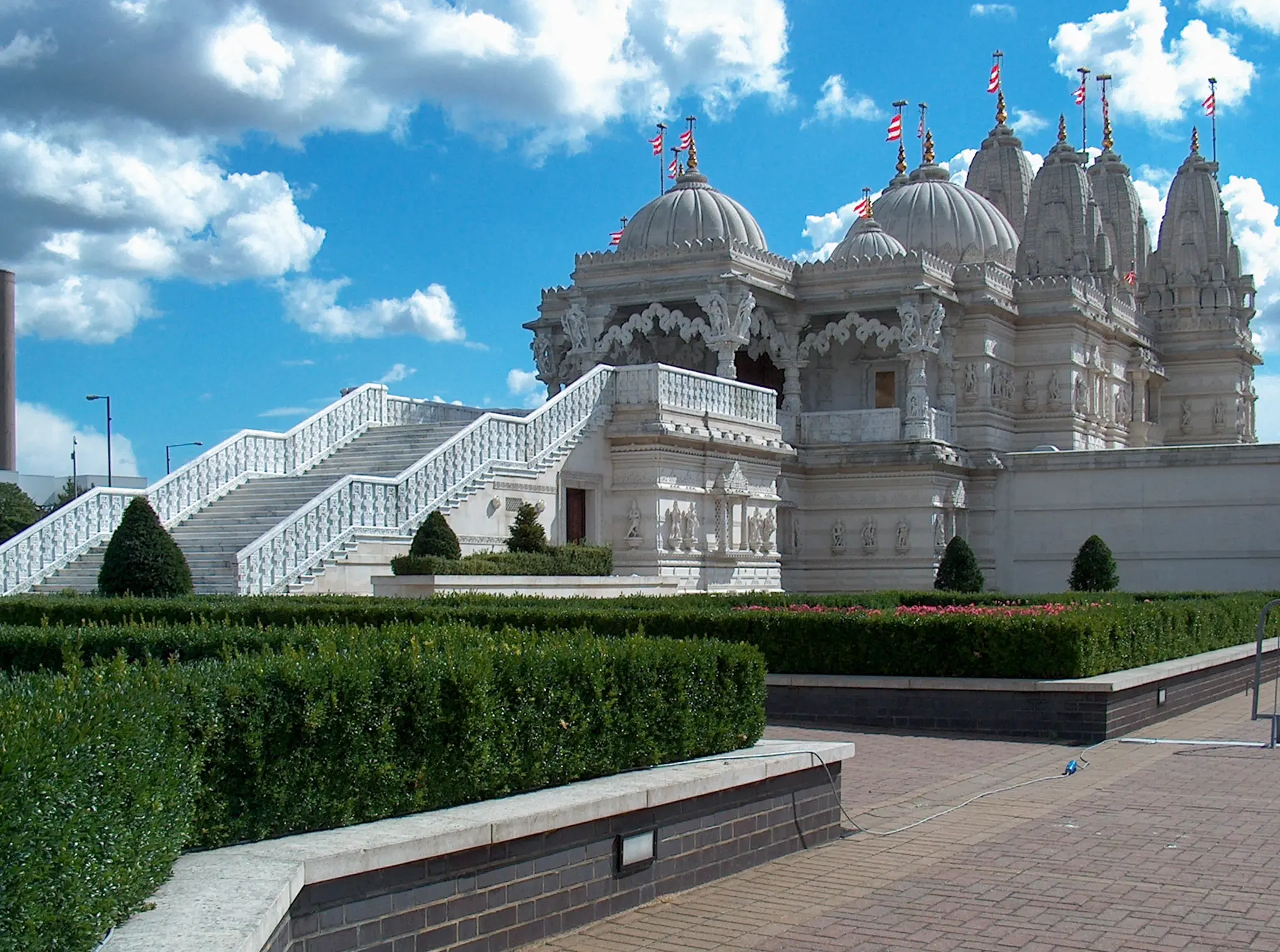
    London - undefined sacred site

    London

    London, England, United Kingdom

    London is the capital and largest city of both England and the United Kingdom, with a population of 8,866,180 in 2022. Its wider metropolitan area is the largest in Western Europe, with a population of 14.9 million. London stands on the River Thames in southeast England, at the head of a 50-mile (80 km) tidal estuary down to the North Sea, and has been a major settlement for nearly 2,000 years. Its ancient core and financial centre, the City of London, was founded by the Romans as Londinium and has retained its medieval boundaries. The City of Westminster, to the west of the City of London, has been the centuries-long host of the national government and parliament. London grew rapidly in the 19th century, becoming the world's largest city at the time. Since the 19th century, the name "London" has referred to the metropolis around the City of London, historically split between the counties of Middlesex, Essex, Surrey, Kent, and Hertfordshire, which since 1965 has largely comprised the administrative area of Greater London, governed by 33 local authorities and the Greater London Authority. As one of the world's major global cities, London exerts a strong influence on world art, entertainment, fashion, commerce, finance, education, healthcare, media, science, technology, tourism, transport, and communications. London is Europe’s most economically powerful city, and is one of the world's major financial centres. London hosts Europe's largest concentration of higher education institutions, comprising over 50 universities and colleges and enrolling more than 500,000 students as of 2023. It is home to several of the world's leading academic institutions: Imperial College London, internationally recognised for its excellence in natural and applied sciences, and University College London (UCL), a comprehensive research-intensive university, consistently rank among the top ten globally. Other notable institutions include King's College London (KCL), highly regarded in law, humanities, and health sciences; the London School of Economics (LSE), globally prominent in social sciences and economics; and specialised institutions such as the Royal College of Art (RCA), Royal Academy of Music (RAM), the Royal Academy of Dramatic Art (RADA), the School of Oriental and African Studies (SOAS), and London Business School (LBS). It is the most visited city in Europe and has the world's busiest city airport system. The London Underground is the world's oldest rapid transit system. London's diverse cultures encompass over 300 languages. The 2023 population of Greater London of just under 10 million made it Europe's third-most populous city, accounting for 13.4% of the United Kingdom's population and over 16% of England's population. The Greater London Built-up Area is the fourth-most populous in Europe, with about 9.8 million inhabitants as of 2011. The London metropolitan area is the third-most populous in Europe, with about 14 million inhabitants as of 2016, making London a megacity. Four World Heritage Sites are located in London: Kew Gardens; the Tower of London; the site featuring the Palace of Westminster, Church of St. Margaret, and Westminster Abbey; and the historic settlement in Greenwich where the Royal Observatory defines the prime meridian (0° longitude) and Greenwich Mean Time. Other landmarks include Buckingham Palace, the London Eye, Piccadilly Circus, St Paul's Cathedral, Tower Bridge, and Trafalgar Square. The city has the most museums, art galleries, libraries, and cultural venues in the UK, including the British Museum, National Gallery, Natural History Museum, Tate Modern, British Library, and numerous West End theatres. Important sporting events held in London include the FA Cup Final, the Wimbledon Tennis Championships, and the London Marathon. It became the first city to host three Summer Olympic Games upon hosting the 2012 Summer Olympics.

    Long Meg and Her Daughters stone ring - Prehistoric sacred site
    Prehistoric

    Long Meg and Her Daughters stone ring

    Little Salkeld, England, United Kingdom

    Long Meg and Her Daughters stone ring is a site of sacred significance. Approximate coordinates: 54.72772, -2.66694. Located in England, United Kingdom.

    Marlborough Mound - undefined sacred site

    Marlborough Mound

    Marlborough, England, United Kingdom

    Marlborough Mound, Wiltshire, England is a mound of sacred significance. Approximate coordinates: 51.41664, -1.73711. Attributes: built, cultural, archaeological. Located in England, United Kingdom.

    Merry Maidens Stone Circle - Prehistoric sacred site
    Prehistoric

    Merry Maidens Stone Circle

    Lamorna, England, United Kingdom

    Merry Maidens Stone Circle is a site of sacred significance. Approximate coordinates: 50.06513, -5.58873. Located in England, United Kingdom.

    Mother Shipton’s Cave, Knaresborough - Folklore sacred site
    Folklore

    Mother Shipton’s Cave, Knaresborough

    Knaresborough, England, United Kingdom

    Mother Shipton’s Cave, Knaresborough, England is a site of sacred significance. Approximate coordinates: 54.00871, -1.47485. Located in England, United Kingdom.

    Nine Stones Circle - undefined sacred site

    Nine Stones Circle

    West Devon, England, United Kingdom

    Nine Stones Circle is a site of sacred significance. Approximate coordinates: 50.71863, -3.96712. Located in West Devon, England, United Kingdom.

    Nine Stones Close Stone Circle - Prehistoric sacred site
    Prehistoric

    Nine Stones Close Stone Circle

    Derbyshire Dales, England, United Kingdom

    Nine Stones Close Stone Circle, Youlgreave is a site of sacred significance. Approximate coordinates: 53.16046, -1.66443. Located in Derbyshire Dales, England, United Kingdom.

    Oddendale Stone Ring, Oddendale - undefined sacred site

    Oddendale Stone Ring, Oddendale

    Shap, England, United Kingdom

    Oddendale Stone Ring, Oddendale, United Kingdom is a site of sacred significance. Approximate coordinates: 54.50984, -2.63163. Located in England, United Kingdom.

    Our Lady and St. Annes Church - undefined sacred site

    Our Lady and St. Annes Church

    Reading, England, United Kingdom

    Our Lady & St. Annes Church is a site of sacred significance. Approximate coordinates: 51.46790, -0.96685. Located in England, United Kingdom.

    Our Lady of Caversham - undefined sacred site

    Our Lady of Caversham

    Reading, England, United Kingdom

    Our Lady of Caversham, Reading, England is a site of sacred significance. Approximate coordinates: 51.46784, -0.96687. Located in England, United Kingdom.

    Our Lady of Czestochowa (Camden Town) - Christian sacred site
    Christian

    Our Lady of Czestochowa (Camden Town)

    London, England, United Kingdom

    Black Madonna shrine known for Belgian connection, historic devotion from Halle, England

    Our Lady of Walsingham - undefined sacred site

    Our Lady of Walsingham

    North Norfolk, England, United Kingdom

    Our Lady of Walsingham is a title given to Mary, the mother of Jesus, venerated by Catholics and high church Anglicans. The title is linked to a Marian apparition that, according to tradition, was experienced by Lady Richeldis de Faverches, an Anglo-Saxon noblewoman, in 1061 in the village of Walsingham, Norfolk, England. Lady Richeldis was said to have been instructed to build a replica of the Holy House, the home of the Holy Family in Nazareth. The shrine became a major pilgrimage site and her son, Geoffrey de Faverches, later entrusted its guardianship to others. Before his death, he left instructions for the foundation of a priory in Walsingham, which was established sometime between 1146 and 1174. This priory was eventually placed under the care of the Canons Regular of Saint Augustine. During the Middle Ages, Walsingham grew into one of England's most significant pilgrimage destinations, attracting royalty and commoners alike. Though the original shrine was dismantled during the English Reformation, the tradition of pilgrimage to Walsingham was revived in the late 19th and 20th centuries and it remains a significant centre for devotion among both Catholics and Anglicans. By a papal rescript issued on 6 February 1897, Pope Leo XIII blessed a venerated image for the restored medieval sanctuary of Our Lady of Walsingham. The image was sent from Rome and placed in the Holy House Chapel at the newly built Catholic parish church of King's Lynn on 19 August 1897. The following day, the first post-Reformation pilgrimage took place from King's Lynn to the Slipper Chapel in Walsingham, which had been purchased by Charlotte Boyd in 1895 and restored for Catholic use. Approximately 40–50 Catholics participated in this first public pilgrimage to Walsingham, initiating an annual pilgrimage traditionally held at Whitsun (the Feast of Pentecost). This continued until 1934, when the Slipper Chapel was declared the Roman Catholic National Shrine of Our Lady of Walsingham. On 15 August 1954, Pope Pius XII granted a canonical coronation to the venerated image of Our Lady of Walsingham. The coronation was carried out by the papal nuncio, Bishop Gerald O'Hara, with a gold crown funded by female devotees. The image is now enshrined in the Basilica of Our Lady of Walsingham. The feast day of Our Lady of Walsingham is observed on 24 September in both the Anglican and Catholic churches. Anglicans, particularly those in the Society of Our Lady of Walsingham and at the Anglican Shrine of Our Lady of Walsingham, also commemorate an additional feast of translation on 15 October each year, marking the anniversary of the translation of the image from Walsingham's parish church to the shrine church in 1931. In the United States, some local churches recognise 15 October as the principal feast of Our Lady of Walsingham, including the Episcopal Church (Anglican Communion) and Western Rite Orthodox churches of the Russian Orthodox Church Outside of Russia and the Antiochian Orthodox Christian Archdiocese of North America.

    Rollright Stones - Multi-faith sacred site
    Multi-faith

    Rollright Stones

    West Oxfordshire, England, United Kingdom

    The Rollright Stones are a complex of three Neolithic and Bronze Age megalithic monuments near the village of Long Compton, on the borders of Oxfordshire and Warwickshire. Constructed from local oolitic limestone, the three monuments, now known as the King's Men and the Whispering Knights in Oxfordshire and the King Stone in Warwickshire, are distinct in their design and purpose. They were built at different periods in late prehistory. During the period when the three monuments were erected, there was a continuous tradition of ritual behaviour on sacred ground, from the 4th to the 2nd millennium BCE. The first to be constructed was the Whispering Knights, a dolmen that dates to the Early or Middle Neolithic period. It was likely to have been used as a place of burial. This was followed by the King's Men, a stone circle that was constructed in the Late Neolithic or Early Bronze Age; unusually, it has parallels to other circles located further north, in the Lake District, implying a trade-based or ritual connection. The third monument, the King Stone, is a single monolith. Although its construction has not been dated, the dominant theory amongst archaeologists is that it was a Bronze Age grave marker. The British philologist Richard Coates has proposed that the name "Rollright" is from the Brittonic phrase *rodland rïx 'wheel enclosure groove', where *rïx 'groove' refers to a narrow valley near Great Rollright and *rodland 'wheel enclosure' refers to the King's Men circle. By the Early Modern period, folkloric stories had developed about the Stones, telling of how they had once been a king and his knights who had been turned to stone by a witch. Such stories continued to be taught amongst local people well into the 19th century. Meanwhile, antiquarians such as William Camden, John Aubrey and William Stukeley had begun to take an interest in the monuments. Fuller archaeological investigations were undertaken in the 20th century, culminating in excavations run by George Lambrick in the 1980s. The site is listed by Historic England as a scheduled monument and was first designated in 1882. In the 20th century, the stones became an important site for adherents of various forms of Contemporary Paganism, as well as for other esotericists, who hold magico-religious ceremonies there. They also began to be referred to more widely in popular culture, being featured in television, literature, music and art.

    Rudston Monolith - Multi-faith sacred site
    Multi-faith

    Rudston Monolith

    Rudston, England, United Kingdom

    The Rudston Monolith at over 25 feet (7.6 m) is the tallest monolith (standing stone) in the United Kingdom. It is situated in the churchyard in the village of Rudston (grid reference TA 098 678) in the East Riding of Yorkshire.

    Salisbury Cathedral - undefined sacred site

    Salisbury Cathedral

    Salisbury, England, United Kingdom

    Salisbury ( SAWLZ-bər-ee, locally SAWZ-bər-ee) is a cathedral city and civil parish in Wiltshire, England with a population of 41,820, at the confluence of the rivers Avon, Nadder and Bourne. The city is approximately 20 miles (30 kilometres) from Southampton and 30 miles (50 kilometres) from Bath. Salisbury is in the southeast of Wiltshire, near the edge of Salisbury Plain. An ancient cathedral was north of the present city at Old Sarum. A new cathedral was built near the meeting of the rivers and a settlement grew up around it, which received a city charter in 1227 as New Sarum. This continued to be its official name until 2009, when Salisbury City Council was established. Salisbury railway station is an interchange between the West of England Line and the Wessex Main Line. Stonehenge, a UNESCO World Heritage Site, is 8 miles (13 kilometres) northwest of Salisbury.

    Sherborne Abbey - undefined sacred site

    Sherborne Abbey

    Sherborne, England, United Kingdom

    Sherborne Abbey, otherwise the Abbey Church of St. Mary the Virgin, is a Church of England church in Sherborne in the English county of Dorset. It was a Saxon cathedral (705–1075), a Benedictine abbey church (998–1539), before becoming a Church of England parish church in 1539 during the dissolution of the monasteries.

    St Nonna’s Church - Christianity sacred site
    Christianity

    St Nonna’s Church

    Altarnun, England, United Kingdom

    St Nonna’s Church, Altarnun is a site of sacred significance. Approximate coordinates: 50.60462, -4.51291. Located in England, United Kingdom.

    St. Albans Cathedral, St Albans - Christianity sacred site
    Christianity

    St. Albans Cathedral, St Albans

    St Albans, England, United Kingdom

    St. Albans Cathedral, St Albans, United Kingdom is a site of sacred significance. Approximate coordinates: 51.75046, -0.34234. Located in St Albans, England, United Kingdom.

    St. Albans Cathedral, St. Albans - undefined sacred site

    St. Albans Cathedral, St. Albans

    St Albans, England, United Kingdom

    St. Albans Cathedral, St. Albans, England is a site of sacred significance. Approximate coordinates: 51.75046, -0.34234. Located in St Albans, England, United Kingdom.

    St. Andrew’s Church, Bishopstone - Christianity sacred site
    Christianity

    St. Andrew’s Church, Bishopstone

    Seaford, England, United Kingdom

    St. Andrew’s Church, Bishopstone, England is a site of sacred significance. Approximate coordinates: 50.78973, 0.08760. Located in Lewes, England, United Kingdom.

    St. Edmundsbury Cathedral - Christianity sacred site
    Christianity

    St. Edmundsbury Cathedral

    West Suffolk, England, United Kingdom

    St Edmundsbury Cathedral (formally entitled the Cathedral Church of St James and St Edmund) is the cathedral for the Church of England's Diocese of St Edmundsbury and Ipswich. It is the seat of the Bishop of St Edmundsbury and Ipswich and is in Bury St Edmunds in Suffolk. Originating in the 11th century, it was rebuilt in the 12th and 16th centuries as a parish church and became a cathedral in 1914; it has been considerably enlarged in recent decades.

    St. Eustachius Church - undefined sacred site

    St. Eustachius Church

    West Devon, England, United Kingdom

    St. Eustachius Church is a site of sacred significance. Approximate coordinates: 50.54985, -4.14517. Located in West Devon, England, United Kingdom.

    St. Mary Church - Christianity sacred site
    Christianity

    St. Mary Church

    Cotswold District, England, United Kingdom

    St. Mary Church, Temple Guitling is a site of sacred significance. Approximate coordinates: 51.94903, -1.86849. Located in Cotswold, England, United Kingdom.

    St. Paul’s Cathedral, London - Christianity sacred site
    Christianity

    St. Paul’s Cathedral, London

    City of London, England, United Kingdom

    St. Paul’s Cathedral, London, England is a site of sacred significance. Approximate coordinates: 51.51385, -0.09835. Located in City of London, England, United Kingdom.

    St. Withburga’s Well - Christianity sacred site
    Christianity

    St. Withburga’s Well

    Breckland District, England, United Kingdom

    St. Withburga’s Well is a site of sacred significance. Approximate coordinates: 52.68102, 0.93735. Located in Breckland, England, United Kingdom.

    Stanton Drew stone ring - undefined sacred site

    Stanton Drew stone ring

    Stanton Drew, England, United Kingdom

    Stanton Drew stone ring is a site of sacred significance. Approximate coordinates: 51.36737, -2.57556. Located in England, United Kingdom.

    Stonehenge - undefined sacred site
    UNESCO

    Stonehenge

    West Amesbury, England, United Kingdom

    Stonehenge is a prehistoric megalithic structure on Salisbury Plain in Wiltshire, England, two miles (3 km) west of Amesbury. It consists of an outer ring of vertical sarsen standing stones, each around 13 feet (4.0 m) high, seven feet (2.1 m) wide, and weighing around 25 tons, topped by connecting horizontal lintel stones, held in place with mortise and tenon joints, a feature unique among contemporary monuments. Inside is a ring of smaller bluestones. Inside these are free-standing trilithons, two bulkier vertical sarsens joined by one lintel. The whole monument, now ruinous, is aligned towards the sunrise on the summer solstice and sunset on the winter solstice. The stones are set within earthworks in the middle of the densest complex of Neolithic and Bronze Age monuments in England, including several hundred tumuli (burial mounds). Stonehenge was constructed in several phases beginning about 3100 BC and continuing until about 1600 BC. The famous circle of large sarsen stones were placed between 2600 BC and 2400 BC. The surrounding circular earth bank and ditch, which constitute the earliest phase of the monument, have been dated to about 3100 BC. Radiocarbon dating suggests that the bluestones were given their current positions between 2400 and 2200 BC, although they may have been at the site as early as 3000 BC. One of the most famous landmarks in the United Kingdom, Stonehenge is regarded as a British cultural icon. It has been a legally protected scheduled monument since the Ancient Monuments Protection Act 1882 was passed. The site and its surroundings were added to UNESCO's list of World Heritage Sites in 1986. Stonehenge is owned by the Crown and managed by English Heritage; the surrounding land is owned by the National Trust. Stonehenge could have been a burial ground from its earliest beginnings. Deposits containing human bone date from as early as 3000 BC, when the ditch and bank were first dug, and continued for at least another 500 years.

    Swinside Stone Circle - Prehistoric sacred site
    Prehistoric

    Swinside Stone Circle

    Cumberland, England, United Kingdom

    Swinside Stone Circle is a site of sacred significance. Approximate coordinates: 54.28249, -3.27393. Located in England, United Kingdom.

    Tewkesbury Abbey - Christianity sacred site
    Christianity

    Tewkesbury Abbey

    Tewkesbury, England, United Kingdom

    The Abbey Church of St Mary the Virgin, Tewkesbury, commonly known as Tewkesbury Abbey, is located in the town of Tewkesbury in the ceremonial county of Gloucestershire, England. A former Benedictine monastery, it is now a parish church. Considered one of the finest examples of Norman architecture in Britain, it has "probably the largest and finest Romanesque" crossing tower in England. Tewkesbury had been a centre for worship since the 7th century. A priory was established there in the 10th century. The present building was started in the early 12th century. It was unsuccessfully used as a sanctuary in the Wars of the Roses. After the dissolution of the monasteries, Tewkesbury Abbey became the parish church for the town. George Gilbert Scott led the restoration of the building in the late 19th century. The church and churchyard within the abbey precincts include tombs and memorials to many of the aristocracy of the area. Services have been high church but now include Parish Eucharist, choral Mass, and Evensong. These services are accompanied by one of the church's three organs and choirs. There is a ring of twelve bells, hung for change ringing.

    The Cheesewring - Multi-faith sacred site
    Multi-faith

    The Cheesewring

    Henwood, England, United Kingdom

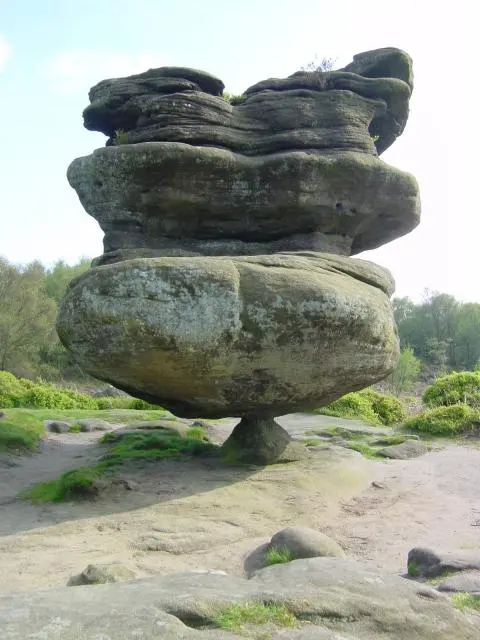
    The Cheesewring (Cornish: Keuswask) is a granite tor in Cornwall, England, situated on the eastern flank of Bodmin Moor on Stowe's Hill in the parish of Linkinhorne approximately one mile northwest of the village of Minions and four miles (6 km) north of Liskeard. It is a natural geological formation, a rock outcrop of granite slabs formed by weathering. The name derives from the resemblance of the piled slabs to a stack of "cheeses" in a traditional cider press. Wilkie Collins described the Cheesewring in 1861 in his book Rambles Beyond Railways: If a man dreams of a great pile of stones in a nightmare, he would dream of such a pile as the Cheesewring. All the heaviest and largest of the seven thick slabs of which it is composed are at the top; all the lightest and smallest at the bottom. It rises perpendicularly to a height of thirty-two feet, without lateral support of any kind. The fifth and sixth rocks are of immense size and thickness, and overhang fearfully all round the four lower rocks which support them. All are perfectly irregular; the projections of one do not fit into the interstices of another; they are heaped up loosely in their extraordinary top-heavy form on slanting ground, half way down a steep hill. Located adjacent to the Cheesewring Quarry (which supplied the granite cladding for the structure of Tower Bridge, London) and surrounded by other granite formations, this landmark was threatened with destruction in the late nineteenth century by the proximity of blasting operations, but was saved as a result of local activism.

    The Devils Arrows - Prehistoric sacred site
    Prehistoric

    The Devils Arrows

    Boroughbridge, England, United Kingdom

    The Devils Arrows is a site of sacred significance. Approximate coordinates: 54.09323, -1.40370. Located in England, United Kingdom.

    Tintagel - undefined sacred site

    Tintagel

    Tintagel, England, United Kingdom

    Tintagel is a site of sacred significance. Approximate coordinates: 50.66728, -4.75851. Located in England, United Kingdom.

    Trethevy Quoit - Prehistoric sacred site
    Prehistoric

    Trethevy Quoit

    St Cleer, England, United Kingdom

    Trethevy Quoit (Cornish: Koyt Tredhewi) is a well-preserved megalithic structure between St Cleer and Darite in Cornwall, England, United Kingdom. It is known locally as "the giant's house". Standing 9 feet (2.7 m) high, it consists of five standing stones capped by a large slab and was added to the Heritage at Risk Register in 2017.

    Wells Cathedral - undefined sacred site

    Wells Cathedral

    Wells, England, United Kingdom

    Wells Cathedral, formally the Cathedral Church of St Andrew, is a Church of England cathedral in Wells, Somerset, England. It is the seat of the bishop of Bath and Wells and the mother church of the diocese of Bath and Wells. There are daily Church of England services in the building, and in 2023 it was reported to receive over 300,000 visitors per year. The cathedral is a Grade I listed building. The cathedral precincts contain the Bishop's Palace and several buildings linked to its medieval chapter of secular canons, including the fifteenth-century Vicars' Close. The earliest record of a church on the present site is a charter of 766. A bishopric was established in 909, however in 1090 the cathedral of the diocese was moved to Bath Abbey and remained there until Wells became co-cathedral in 1218. The remains of the tenth-century cathedral lie to the south of the present building, beneath the cloister. The present cathedral has a cruciform plan with a chapter house attached to the north and a cloister to the south, and is largely the result of two building campaigns which took place between c. 1180 to c. 1260 and c. 1285 to c. 1345. The western half of the cathedral, including the nave and western transepts, belongs primarily to the first building phase and is constructed in the Early English style of Gothic architecture. The east end, including the lady chapel, eastern transepts, chapter house, and central tower, belongs to the second phase and uses the Decorated Gothic style; it also retains much medieval stained glass. Two towers were added to the west front between 1385 and 1410 in the Perpendicular Gothic style, and the cloisters were remodelled in the same style between 1420 and 1508. The cathedral was restored over the course of the nineteenth and early twentieth centuries. Wells has been called "unquestionably one of the most beautiful" and "most poetic" of English cathedrals. The architectural historian John Harvey sees it as Europe's first truly Gothic structure, breaking from the last constraints of the Romanesque style. The west front, which contains 300 sculpted figures, has been described by Harvey as the "supreme triumph of the combined plastic arts in England", however the architectural historian Nikolaus Pevsner described it as "spare", with "harsh uprights and horizontals [...] like steel scaffolding".

    Winchester Cathedral - undefined sacred site

    Winchester Cathedral

    Winchester, England, United Kingdom

    Winchester (, ) is a cathedral city in Hampshire, England. The city lies at the heart of the wider City of Winchester, a local government district, at the western end of the South Downs National Park, on the River Itchen. It is 60 miles (97 km) south-west of London and 14 miles (23 km) from Southampton, its nearest city. At the 2021 census, the built-up area of Winchester had a population of 48,478. The wider City of Winchester district includes towns such as Alresford and Bishop's Waltham and had a population of 127,439 in 2021. Winchester is the county town of Hampshire and contains the head offices of Hampshire County Council. Winchester developed from the Roman town of Venta Belgarum, which in turn developed from an Iron Age oppidum. Winchester was one of if not the most important cities in England until the Norman conquest in the eleventh century. It now has become one of the most expensive and affluent areas in the United Kingdom. The city's major landmark is Winchester Cathedral. The city is also home to the University of Winchester and Winchester College, the oldest public school in the United Kingdom still using its original buildings.

    Worcester Cathedral - Christianity sacred site
    Christianity

    Worcester Cathedral

    Worcester, England, United Kingdom

    Worcester Cathedral, formally the Cathedral Church of Christ and Blessed Mary the Virgin, is a Church of England cathedral in Worcester, England. The cathedral is the seat of the bishop of Worcester and is the mother church of the diocese of Worcester; it is administered by its dean and chapter. The cathedral is a grade I listed building and part of a scheduled monument. The cathedral was founded in 680. The earliest surviving fabric dates from 1084, when the cathedral was rebuilt in the Romanesque style by Bishop Wulfstan. The chapter house dates from 1120, and the nave was extended in the 1170s. Between 1224 and 1269 the east end was rebuilt in the Early English Gothic style. The remainder of the nave was rebuilt in the 1360s, and the "exquisite" central tower completed in 1374. The cathedral retains a set of medieval misericords, now set into Victorian choir stalls; the cathedral was heavily restored in the nineteenth century, and contains a set of furnishings by George Gilbert Scott. It contains several funerary monuments, including those of King John; Arthur, Prince of Wales; and the prime minister Stanley Baldwin.

    Yockenthwaite stone circle - Prehistoric sacred site
    Prehistoric

    Yockenthwaite stone circle

    Buckden, England, United Kingdom

    Yockenthwaite stone circle is a site of sacred significance. Approximate coordinates: 54.20990, -2.15508. Located in England, United Kingdom.

    York - undefined sacred site

    York

    York, England, United Kingdom

    York is a cathedral city in North Yorkshire, England, with Roman origins, sited at the confluence of the rivers Ouse and Foss. The city has many historic buildings and other structures, such as a minster, castle, and city walls, all of which are Grade I listed. It is the largest settlement and the administrative centre of the wider City of York district. It is located 27 miles (43 km) north-east of Leeds, 90 miles (140 km) south of Newcastle upon Tyne and 207 miles (333 km) north of London. York's built-up area had a recorded population of 141,685 at the 2021 census. The city was founded under the name of Eboracum in AD 71. It then became the capital of Britannia Inferior, a province of the Roman Empire, and was later the capital of the kingdoms of Deira, Northumbria and Scandinavian York. In the Middle Ages it became the northern England ecclesiastical province's centre, and grew as a wool-trading centre. In the 19th century it became a major railway network hub and confectionery-manufacturing centre. In the Second World War York was bombed in the Baedeker Blitz. Although York was less targeted during the war than other, more industrialised northern cities, several historic buildings were gutted and restoration took place up until the 1960s. Historic local governance of the city was as a county corporate, not included in the county's riding system. The city has since been locally governed as a municipal borough, county borough, and since 1996, a non-metropolitan district (the City of York), which also includes surrounding villages and rural areas, and the town of Haxby. The current district's local council, City of York Council, is responsible for providing all local services and facilities throughout this area.

    Gloucestershire

    1 site

    Gloucester Cathedral - Christianity sacred site
    Christianity

    Gloucester Cathedral

    Gloucester, Gloucestershire, United Kingdom

    Gloucester Cathedral, formally the Cathedral Church of St Peter and the Holy and Indivisible Trinity and formerly St Peter's Abbey, in Gloucester, England, stands in the north of the city near the River Severn. It originated with the establishment of a minster, Gloucester Abbey, dedicated to Saint Peter and founded by Osric, King of the Hwicce, in around 679. The subsequent history of the church is complex; Osric's foundation came under the control of the Benedictine Order at the beginning of the 11th century and in around 1058, Ealdred, Bishop of Worcester, established a new abbey "a little further from the place where it had stood". The abbey appears not to have been an initial success, by 1072, the number of attendant monks had reduced to two. The present building was begun by Abbott Serlo in about 1089, following a major fire the previous year. Serlo's efforts transformed the abbey's fortunes; rising revenues and royal patronage enabled the construction of a major church. William the Conqueror held his Christmas Court at the chapter house in 1085, at which he ordered the compilation of Domesday Book. In October 1216, Henry III was crowned at the abbey. After another disastrous fire in 1222, an ambitious rebuilding programme was begun. In the 14th century, the Great and Little Cloisters were constructed, displaying the earliest, and perhaps the finest, examples of fan vaulting anywhere. The cathedral contains the shrine of Edward II, who was murdered at nearby Berkeley Castle. Following the dissolution of the monasteries by Henry VIII in 1536, the abbey was refounded as a cathedral. The cathedral underwent much restoration in the 18th century, and again in the 19th. In 1989, it celebrated its 900th anniversary. In 2015, the installation of Rachel Treweek saw the Church of England appoint its first woman as a diocesan bishop. The cathedral has frequently been used as a filming location, including as a stand-in for Hogwarts in the Harry Potter movies. The cathedral is a Grade I listed building. There are a large number of other listed buildings within the cathedral complex, many also listed at Grade I, the highest grade. These include the Treasury, the Chapter House, the Cloisters, the precinct wall and a number of the medieval gates into the cathedral enclosure. Others are listed at Grade II* and Grade II.

    Gwynedd

    4 sites

    Clynnog Fawr Dolmen - undefined sacred site

    Clynnog Fawr Dolmen

    Clynnog Fawr, Gwynedd, United Kingdom

    Clynnog Fawr Dolmen is a dolmen of sacred significance. Approximate coordinates: 53.01968, -4.37403. Attributes: built, cultural, archaeological. Located in Cymru / Wales, United Kingdom.

    St. Beuno shrine and well, Clynnog Fawr - undefined sacred site

    St. Beuno shrine and well, Clynnog Fawr

    Clynnog Fawr, Gwynedd, United Kingdom

    St. Beuno shrine and well, Clynnog Fawr, Wales is a site of sacred significance. Approximate coordinates: 53.02103, -4.36513. Located in Cymru / Wales, United Kingdom.

    St. Beuno’s Church and Well, Clynnog Fawr - undefined sacred site

    St. Beuno’s Church and Well, Clynnog Fawr

    Clynnog Fawr, Gwynedd, United Kingdom

    St. Beuno’s Church and Well, Clynnog Fawr, Wales is a site of sacred significance. Approximate coordinates: 53.02105, -4.36517. Located in Cymru / Wales, United Kingdom.

    St. Mary’s Church - undefined sacred site

    St. Mary’s Church

    Dolgellau, Gwynedd, United Kingdom

    St. Mary’s Church, Dolgellau is a site of sacred significance. Approximate coordinates: 52.74317, -3.88671. Located in Cymru / Wales, United Kingdom.

    Highland

    1 site

    Clava Cairns - undefined sacred site

    Clava Cairns

    Inverness, Highland, United Kingdom

    Clava Cairns is a cairn of sacred significance. Approximate coordinates: 57.47349, -4.07317. Attributes: built, cultural, archaeological. Located in Inverness, Alba / Scotland, United Kingdom.

    Isle of Lewis

    1 site

    Callanish - undefined sacred site

    Callanish

    Callanish, Isle of Lewis, United Kingdom

    Calanais (English: Callanish) is a village (township) on the west side of the Isle of Lewis, in the Outer Hebrides (Western Isles), Scotland. Calanais is within the parish of Uig. A linear settlement with a jetty, it is on a headland jutting into Loch Roag, a sea loch 13 miles (21 kilometres) west of Stornoway. Calanais is situated alongside the A858, between Breasclete and Garynahine. The Calanais Stones "Calanais I", a cross-shaped setting of standing stones erected around 3000 BC, are one of the most spectacular megalithic monuments in Scotland. A modern visitor centre provides information about the main circle and other lesser monuments nearby, numbered as Calanais II to X.

    Midlothian

    1 site

    Rosslyn - undefined sacred site

    Rosslyn

    Roslin, Midlothian, United Kingdom

    Rosslyn can refer to:

    Monmouthshire

    2 sites

    Harold’s Stones - undefined sacred site

    Harold’s Stones

    Trellech, Monmouthshire, United Kingdom

    Harold’s Stones is a megalithic site of sacred significance. Approximate coordinates: 51.74277, -2.72659. Attributes: cultural, archaeological. Located in Cymru / Wales, United Kingdom.

    The Virtuous Well - undefined sacred site

    The Virtuous Well

    Trellech, Monmouthshire, United Kingdom

    The Virtuous Well is a site of sacred significance. Approximate coordinates: 51.74248, -2.72113. Located in Cymru / Wales, United Kingdom.

    North Ayrshire

    6 sites

    Auchagallon Curved Cairn - Prehistoric sacred site
    Prehistoric

    Auchagallon Curved Cairn

    Machrie, North Ayrshire, United Kingdom

    Auchagallon Curved Cairn in Machrie, North Ayrshire, United Kingdom.

    Auchencar Standing Stone - Prehistoric sacred site
    Prehistoric

    Auchencar Standing Stone

    Machrie, North Ayrshire, United Kingdom

    Auchencar Standing Stone in Machrie, North Ayrshire, United Kingdom.

    Giants' Graves - Prehistoric sacred site
    Prehistoric

    Giants' Graves

    Whiting Bay, North Ayrshire, United Kingdom

    Giants' Graves in Whiting Bay, North Ayrshire, United Kingdom.

    Machrie Moor Stone Circles - Prehistoric sacred site
    Prehistoric

    Machrie Moor Stone Circles

    Machrie, North Ayrshire, United Kingdom

    Machrie Moor Stone Circles in Machrie, North Ayrshire, United Kingdom.

    Moss Farm Road Stone Circle - Prehistoric sacred site
    Prehistoric

    Moss Farm Road Stone Circle

    Machrie, North Ayrshire, United Kingdom

    Moss Farm Road Stone Circle in Machrie, North Ayrshire, United Kingdom.

    Torrylin Cairn - Prehistoric sacred site
    Prehistoric

    Torrylin Cairn

    Kilmory, North Ayrshire, United Kingdom

    Torrylin Cairn in Kilmory, North Ayrshire, United Kingdom.

    Northern Ireland

    11 sites

    Ballynaglogh Standing Stones, Ballycastle - undefined sacred site

    Ballynaglogh Standing Stones, Ballycastle

    Ballyvoy, Northern Ireland, United Kingdom

    Ballynaglogh Standing Stones, Ballycastle, Northern Ireland is a standing stones of sacred significance. Approximate coordinates: 55.20063, -6.19803. Attributes: built, cultural, archaeological. Located in Causeway Coast and Glens District, Northern Ireland / Tuaisceart Éireann, United Kingdom.

    Ballynoe Stone Circle, Downpatrick - Prehistoric sacred site
    Prehistoric

    Ballynoe Stone Circle, Downpatrick

    Downpatrick, Northern Ireland, United Kingdom

    Ballynoe Stone Circle, Downpatrick, Ireland is a stone circle of sacred significance. Approximate coordinates: 54.29072, -5.72588. Attributes: built, cultural, archaeological. Located in Northern Ireland / Tuaisceart Éireann, United Kingdom.

    Cranfield Church, Antrim - Christianity sacred site
    Christianity

    Cranfield Church, Antrim

    Antrim and Newtownabbey District, Northern Ireland, United Kingdom

    Cranfield is a village and civil parish in the west of Bedfordshire, England, situated between Bedford and Milton Keynes. It had a population of 4,909 in 2001. increasing to 5,369 at the 2011 census. The parish is in Central Bedfordshire unitary authority. It is best known for being the home of Cranfield University and Cranfield Airport (an airfield). The hamlet of Bourne End is located just north of Cranfield, and is part of the civil parish. Wharley End was a separate settlement, but now forms the northern part of Cranfield village, by the university.

    Downpatrick - Christianity sacred site
    Christianity

    Downpatrick

    Downpatrick, Northern Ireland, United Kingdom

    Downpatrick (from Irish Dún Pádraig, meaning 'Patrick's fort') is a town in County Down, Northern Ireland. It is on the Lecale peninsula, about 21 mi (34 km) south of Belfast. In the Middle Ages, it was the capital of the Dál Fiatach, the main ruling dynasty of Ulaid. Its cathedral is said to be the burial place of Saint Patrick. Today, it is the county town of Down and the joint headquarters of Newry, Mourne and Down District Council. Downpatrick had a population of 11,545 according to the 2021 Census.

    Drumskinny Stone Circle, Drumskinny - Prehistoric sacred site
    Prehistoric

    Drumskinny Stone Circle, Drumskinny

    County Fermanagh, Northern Ireland, United Kingdom

    Drumskinny Stone Circle, Drumskinny, Ireland is a stone circle of sacred significance. Approximate coordinates: 54.58431, -7.69009. Attributes: built, cultural, archaeological. Located in Northern Ireland / Tuaisceart Éireann, United Kingdom.

    Eamhain Mhacha - Celtic sacred site
    Celtic

    Eamhain Mhacha

    Armagh, Northern Ireland, United Kingdom

    Eamhain Mhacha is a fort of sacred significance. Approximate coordinates: 54.34785, -6.69740. Attributes: built, cultural, archaeological, ceremonial. Tradition: pagan. Mythological context: Ulaidh. Located in Armagh, Northern Ireland / Tuaisceart Éireann, United Kingdom.

    Giant’s Ring, Belfast - Prehistoric sacred site
    Prehistoric

    Giant’s Ring, Belfast

    Belfast, Northern Ireland, United Kingdom

    Giant’s Ring, Belfast, Northern Ireland is a henge of sacred significance. Approximate coordinates: 54.54024, -5.94994. Attributes: built, cultural, archaeological, ceremonial. Tradition: Prehistoric. Located in Belfast City District, Northern Ireland / Tuaisceart Éireann, United Kingdom.

    Navan megalithic era site, Armagh - undefined sacred site

    Navan megalithic era site, Armagh

    Armagh, Northern Ireland, United Kingdom

    Navan megalithic era site, Armagh, Ireland is a site of sacred significance. Approximate coordinates: 54.34370, -6.70216. Located in Armagh, Northern Ireland / Tuaisceart Éireann, United Kingdom.

    St. Patrick’s Cathedral, Armagh - undefined sacred site

    St. Patrick’s Cathedral, Armagh

    Armagh, Northern Ireland, United Kingdom

    St. Patrick’s Cathedral, Armagh, Ireland is a site of sacred significance. Approximate coordinates: 54.35264, -6.65897. Located in Armagh, Northern Ireland / Tuaisceart Éireann, United Kingdom.

    St. Patrick’s Holy Well, Belcoo - undefined sacred site

    St. Patrick’s Holy Well, Belcoo

    Belcoo, Northern Ireland, United Kingdom

    St. Patrick’s Holy Well, Belcoo, Ireland is a site of sacred significance. Approximate coordinates: 54.30604, -7.88388. Located in Northern Ireland / Tuaisceart Éireann, United Kingdom.

    Struell Wells, Downpatrick - Christianity sacred site
    Christianity

    Struell Wells, Downpatrick

    Downpatrick, Northern Ireland, United Kingdom

    Struell Wells, Downpatrick, Northern Ireland is a site of sacred significance. Approximate coordinates: 54.32400, -5.67744. Located in Northern Ireland / Tuaisceart Éireann, United Kingdom.

    Orkney

    2 sites

    Dwarfie Stane (Dwarf's Stone) - Ancient/Prehistoric sacred site
    Ancient/Prehistoric

    Dwarfie Stane (Dwarf's Stone)

    Hoy, Orkney, United Kingdom

    In a steep-sided valley on the island of Hoy, a massive block of red sandstone lies in desolate peatland. Look closer and you find an entrance—a square opening cut into the rock. Enter if you can fit, and you crawl into a chamber hollowed out 5,000 years ago using only stone tools and antler picks. This is the Dwarfie Stane, the only Neolithic rock-cut tomb in Britain. Norse settlers called it Dvergasteinn, the Dwarf Stone, associating it with supernatural beings who lived in rock. The cramped chambers seemed fit for diminutive creatures. Today's visitors squeeze through the same entrance, occupying space shaped by Neolithic hands.

    Ring of Brodgar - undefined sacred site

    Ring of Brodgar

    Stromness, Orkney, United Kingdom

    The Ring of Brodgar (or Brogar, or Ring o' Brodgar) is a Neolithic henge and stone circle about 6 miles north-east of Stromness on Mainland, the largest island in Orkney, Scotland. It is part of the UNESCO World Heritage Site known as the Heart of Neolithic Orkney.

    Orkney Islands

    28 sites

    Banks Chambered Tomb - Prehistoric sacred site
    Prehistoric

    Banks Chambered Tomb

    South Ronaldsay, Orkney Islands, United Kingdom

    Banks Chambered Tomb in South Ronaldsay, Orkney Islands, United Kingdom.

    Blackhammer Chambered Cairn - Prehistoric sacred site
    Prehistoric

    Blackhammer Chambered Cairn

    Rousay, Orkney Islands, United Kingdom

    Blackhammer Chambered Cairn in Rousay, Orkney Islands, United Kingdom.

    Broch of Borwick - Prehistoric sacred site
    Prehistoric

    Broch of Borwick

    Sandwick, Orkney Islands, United Kingdom

    Broch of Borwick in Sandwick, Orkney Islands, United Kingdom.

    Broch of Burrian - Prehistoric sacred site
    Prehistoric

    Broch of Burrian

    North Ronaldsay, Orkney Islands, United Kingdom

    Broch of Burrian in North Ronaldsay, Orkney Islands, United Kingdom.

    Broch of Gurness - Prehistoric sacred site
    Prehistoric

    Broch of Gurness

    Evie, Orkney Islands, United Kingdom

    Broch of Gurness in Evie, Orkney Islands, United Kingdom.

    Brough of Birsay - Christianity sacred site
    Christianity

    Brough of Birsay

    Birsay, Orkney Islands, United Kingdom

    Brough of Birsay in Birsay, Orkney Islands, United Kingdom.

    Brough of Deerness Chapel - Christianity sacred site
    Christianity

    Brough of Deerness Chapel

    Deerness, Orkney Islands, United Kingdom

    Brough of Deerness Chapel in Deerness, Orkney Islands, United Kingdom.

    Burroughston Broch - Prehistoric sacred site
    Prehistoric

    Burroughston Broch

    Shapinsay, Orkney Islands, United Kingdom

    Burroughston Broch in Shapinsay, Orkney Islands, United Kingdom.

    Cuween Hill Chambered Cairn - Prehistoric sacred site
    Prehistoric

    Cuween Hill Chambered Cairn

    Kirkwall, Orkney Islands, United Kingdom

    Cuween Hill Chambered Cairn in Kirkwall, Orkney Islands, United Kingdom.

    Knap of Howar - Prehistoric sacred site
    Prehistoric

    Knap of Howar

    Papa Westray, Orkney Islands, United Kingdom

    Knap of Howar in Papa Westray, Orkney Islands, United Kingdom.

    Knowe of Lairo - Prehistoric sacred site
    Prehistoric

    Knowe of Lairo

    Rousay, Orkney Islands, United Kingdom

    Knowe of Lairo in Rousay, Orkney Islands, United Kingdom.

    Knowe of Yarso - Prehistoric sacred site
    Prehistoric

    Knowe of Yarso

    Rousay, Orkney Islands, United Kingdom

    Knowe of Yarso in Rousay, Orkney Islands, United Kingdom.

    Maeshowe Chambered Cairn - Prehistoric sacred site
    Prehistoric

    Maeshowe Chambered Cairn

    Stenness, Orkney Islands, United Kingdom

    Maeshowe Chambered Cairn in Stenness, Orkney Islands, United Kingdom.

    Midhowe Broch - Prehistoric sacred site
    Prehistoric

    Midhowe Broch

    Rousay, Orkney Islands, United Kingdom

    Midhowe Broch in Rousay, Orkney Islands, United Kingdom.

    Midhowe Chambered Cairn - Prehistoric sacred site
    Prehistoric

    Midhowe Chambered Cairn

    Rousay, Orkney Islands, United Kingdom

    Midhowe Chambered Cairn in Rousay, Orkney Islands, United Kingdom.

    Mor Stein - Prehistoric sacred site
    Prehistoric

    Mor Stein

    Shapinsay, Orkney Islands, United Kingdom

    Mor Stein in Shapinsay, Orkney Islands, United Kingdom.

    Ness of Brodgar - Prehistoric sacred site
    Prehistoric

    Ness of Brodgar

    Stenness, Orkney Islands, United Kingdom

    Ness of Brodgar in Stenness, Orkney Islands, United Kingdom.

    Quoyness Chambered Cairn - Prehistoric sacred site
    Prehistoric

    Quoyness Chambered Cairn

    Sanday, Orkney Islands, United Kingdom

    Quoyness Chambered Cairn in Sanday, Orkney Islands, United Kingdom.

    Ring of Bookan - Prehistoric sacred site
    Prehistoric

    Ring of Bookan

    Stromness, Orkney Islands, United Kingdom

    Ring of Bookan in Stromness, Orkney Islands, United Kingdom.

    Skara Brae Prehistoric Village - Prehistoric sacred site
    Prehistoric

    Skara Brae Prehistoric Village

    Sandwick, Orkney Islands, United Kingdom

    Skara Brae Prehistoric Village in Sandwick, Orkney Islands, United Kingdom.

    Standing Stone of Hollandstoun - Prehistoric sacred site
    Prehistoric

    Standing Stone of Hollandstoun

    North Ronaldsay, Orkney Islands, United Kingdom

    Standing Stone of Hollandstoun in North Ronaldsay, Orkney Islands, United Kingdom.

    Standing Stones of Stenness - Prehistoric sacred site
    Prehistoric

    Standing Stones of Stenness

    Stenness, Orkney Islands, United Kingdom

    Standing Stones of Stenness in Stenness, Orkney Islands, United Kingdom.

    Stone 'O Quoybune - Prehistoric sacred site
    Prehistoric

    Stone 'O Quoybune

    Birsay, Orkney Islands, United Kingdom

    Stone 'O Quoybune in Birsay, Orkney Islands, United Kingdom.

    Taversoe Tuick Chambered Cairn - Prehistoric sacred site
    Prehistoric

    Taversoe Tuick Chambered Cairn

    Rousay, Orkney Islands, United Kingdom

    Taversoe Tuick Chambered Cairn in Rousay, Orkney Islands, United Kingdom.

    The Setter Stone - Prehistoric sacred site
    Prehistoric

    The Setter Stone

    Eday, Orkney Islands, United Kingdom

    The Setter Stone in Eday, Orkney Islands, United Kingdom.

    Tomb of Eagles - Prehistoric sacred site
    Prehistoric

    Tomb of Eagles

    South Ronaldsay, Orkney Islands, United Kingdom

    Tomb of Eagles in South Ronaldsay, Orkney Islands, United Kingdom.

    Unstan Chambered Cairn - Prehistoric sacred site
    Prehistoric

    Unstan Chambered Cairn

    Stenness, Orkney Islands, United Kingdom

    Unstan Chambered Cairn in Stenness, Orkney Islands, United Kingdom.

    Vinquoy Chambered Cairn - Prehistoric sacred site
    Prehistoric

    Vinquoy Chambered Cairn

    Eday, Orkney Islands, United Kingdom

    Vinquoy Chambered Cairn in Eday, Orkney Islands, United Kingdom.

    Pembrokeshire

    8 sites

    Gors Fawr stone ring, Mynachlog-ddu, Dyfed - undefined sacred site

    Gors Fawr stone ring, Mynachlog-ddu, Dyfed

    Mynachlog-ddu, Pembrokeshire, United Kingdom

    Gors Fawr stone ring, Mynachlog-ddu, Dyfed, England is a stone circle of sacred significance. Approximate coordinates: 51.93157, -4.71464. Attributes: built, cultural, archaeological, ceremonial. Located in Cymru / Wales, United Kingdom.

    Llech-y-tribedd - Prehistoric sacred site
    Prehistoric

    Llech-y-tribedd

    Moylgrove, Pembrokeshire, United Kingdom

    Llech-y-tribedd in Moylgrove, Pembrokeshire, Wales, United Kingdom.

    Pentre Ifan Dolmen - undefined sacred site

    Pentre Ifan Dolmen

    Nevern, Pembrokeshire, United Kingdom

    Pentre Ifan Dolmen is a site of sacred significance. Approximate coordinates: 51.99898, -4.77001. Located in Cymru / Wales, United Kingdom.

    St Brynach’s Church - undefined sacred site

    St Brynach’s Church

    Nevern, Pembrokeshire, United Kingdom

    St Brynach’s Church is a site of sacred significance. Approximate coordinates: 52.02540, -4.79514. Located in Cymru / Wales, United Kingdom.

    St David’s Cathedral - undefined sacred site

    St David’s Cathedral

    St Davids, Pembrokeshire, United Kingdom

    St Davids Cathedral (Welsh: Eglwys Gadeiriol Tyddewi) is a Church in Wales cathedral situated in St Davids, Britain's smallest city, in the county of Pembrokeshire, near the most westerly point of Wales.

    St Non’s Chapel and Well - undefined sacred site

    St Non’s Chapel and Well

    St Davids, Pembrokeshire, United Kingdom

    St Non’s Chapel and Well is a site of sacred significance. Approximate coordinates: 51.87224, -5.26874. Located in St Davids, Cymru / Wales, United Kingdom.

    St. Davids and St. Non's - undefined sacred site

    St. Davids and St. Non's

    St Davids, Pembrokeshire, United Kingdom

    St. Davids and St. Non's, Wales is a site of sacred significance. Approximate coordinates: 51.87217, -5.26882. Located in St Davids, Cymru / Wales, United Kingdom.

    Trellyffaint Burial Chamber - Prehistoric sacred site
    Prehistoric

    Trellyffaint Burial Chamber

    Nevern, Pembrokeshire, United Kingdom

    Trellyffaint Burial Chamber in Nevern, Pembrokeshire, Wales, United Kingdom.

    Scotland

    7 sites

    Dunadd sacred hill, Lochgilphead - undefined sacred site

    Dunadd sacred hill, Lochgilphead

    Bridgend, Scotland, United Kingdom

    Dunadd sacred hill, Lochgilphead, Scotland is a hill of sacred significance. Approximate coordinates: 56.08601, -5.47842. Attributes: natural, cultural, archaeological. Located in Alba / Scotland, United Kingdom.

    Easter Aquorthies Stone Ring - undefined sacred site

    Easter Aquorthies Stone Ring

    Aberdeenshire, Scotland, United Kingdom

    Easter Aquorthies Stone Ring is a stone circle of sacred significance. Approximate coordinates: 57.27702, -2.44555. Attributes: built, cultural, archaeological. Located in Alba / Scotland, United Kingdom.

    Iona - Christianity sacred site
    Christianity

    Iona

    The Village, Scotland, United Kingdom

    Iona (; Scottish Gaelic: Ì Chaluim Chille [ˈiː ˈxal̪ˠɪm ˈçiʎə] , sometimes simply Ì) is an island in the Inner Hebrides, off the Ross of Mull on the western coast of Scotland. It is mainly known for Iona Abbey, though there are other buildings on the island. Iona Abbey was a centre of Gaelic monasticism for three centuries and is today known for its relative tranquility and natural environment. It is a tourist destination and a place for spiritual retreats. Its modern Scottish Gaelic name means "Iona of (Saint) Columba" (formerly anglicised as "Icolmkill"). In 2019, Iona's estimated population was 120. In March 1980, the Hugh Fraser Foundation donated much of the main island (and its off-lying islands) to the current owner, the National Trust for Scotland. The abbey and some church buildings are owned by the Iona Cathedral Trust. One publication, describing the religious significance of the island, says that the island is "known as the birthplace of Celtic Christianity in Scotland,” and notes that “St Columba came here in the year 563 to establish the Abbey, which still stands".

    Mt. Healabhal, Isle of Skye - undefined sacred site

    Mt. Healabhal, Isle of Skye

    Dunvegan, Scotland, United Kingdom

    Mt. Healabhal, Isle of Skye, Scotland is a site of sacred significance. Approximate coordinates: 57.38542, -6.61961. Located in Alba / Scotland, United Kingdom.

    Shrine of Cailleach, Tigh nam Bodach, near Glen Lyon - undefined sacred site

    Shrine of Cailleach, Tigh nam Bodach, near Glen Lyon

    Perth and Kinross, Scotland, United Kingdom

    Shrine of Cailleach, Tigh nam Bodach, near Glen Lyon, Scotland is a site of sacred significance. Approximate coordinates: 56.54837, -4.63599. Located in Alba / Scotland, United Kingdom.

    Stenness - undefined sacred site

    Stenness

    Stenness, Scotland, United Kingdom

    Stenness (pronounced ) (Old Norse: Steinnes; Norn: Stennes) is a village and parish on the Orkney Mainland in Scotland. It contains several notable prehistoric monuments including the Standing Stones of Stenness and the Ring of Brodgar.

    Temple Wood megalithic site, Argyll - undefined sacred site

    Temple Wood megalithic site, Argyll

    Argyll and Bute, Scotland, United Kingdom

    Temple Wood megalithic site, Argyll, Scotland is a site of sacred significance. Approximate coordinates: 56.12381, -5.49849. Located in Alba / Scotland, United Kingdom.

    Shetland

    4 sites

    Broch of Mousa - Prehistoric sacred site
    Prehistoric

    Broch of Mousa

    Mousa, Shetland, United Kingdom

    Broch of Mousa in Mousa, Shetland, United Kingdom.

    Burraland Broch - Prehistoric sacred site
    Prehistoric

    Burraland Broch

    Trondra, Shetland, United Kingdom

    Burraland Broch in Trondra, Shetland, United Kingdom.

    Jarlshof Prehistoric and Norse Settlement - Prehistoric sacred site
    Prehistoric

    Jarlshof Prehistoric and Norse Settlement

    Sumburgh, Shetland, United Kingdom

    Jarlshof Prehistoric and Norse Settlement in Sumburgh, Shetland, United Kingdom.

    Old Scatness Broch and Iron Age Village - Prehistoric sacred site
    Prehistoric

    Old Scatness Broch and Iron Age Village

    Virkie, Shetland, United Kingdom

    Old Scatness Broch and Iron Age Village in Virkie, Shetland, United Kingdom.

    Somerset

    8 sites

    Bride's Mound - Celtic/Christian sacred site
    Celtic/Christian

    Bride's Mound

    Glastonbury, Somerset, United Kingdom

    Behind an industrial estate on Glastonbury's western edge, a small mound rises from a field. Few visitors find it. Those who do discover something remarkable: the oldest documented Christian monastic site in Britain, sacred to both goddess and saint, where the fire traditions of Celtic Brigid and the relics of Saint Brigid once converged. Each Imbolc, pilgrims still walk from the White Spring to honor her here—whichever form of her they recognize.

    Chalice Well Gardens - Multi-faith sacred site
    Multi-faith

    Chalice Well Gardens

    Glastonbury, Somerset, United Kingdom

    At the foot of Glastonbury Tor, iron-stained waters have flowed without ceasing for over two thousand years. Christian pilgrims come seeking the Holy Grail. Goddess devotees honor the sacred feminine. Pagans mark the wheel of the year. Yet beneath all interpretations, the spring simply flows—red, constant, indifferent to the meanings we bring, open to all who come seeking.

    Glastonbury Abbey - Christianity sacred site
    Christianity

    Glastonbury Abbey

    Glastonbury, Somerset, United Kingdom

    Glastonbury Abbey was once the second richest monastery in England, claiming to be the oldest Christian foundation in Britain. Today its ruins stand open to sky—walls that once enclosed a thousand years of prayer, the site where monks announced they had found King Arthur's grave, the ground where Abbot Whiting was dragged to his execution. What remains invites contemplation of what was lost and what endures.

    Glastonbury Tor - Multi-faith sacred site
    Multi-faith

    Glastonbury Tor

    Glastonbury, Somerset, United Kingdom

    Rising 158 meters above the Somerset Levels, Glastonbury Tor has drawn seekers for millennia. Celtic tradition holds it as a gateway to Annwn, the Otherworld. Christian legend claims Joseph of Arimathea buried the Holy Grail at its foot.

    St John's Church - Christianity sacred site
    Christianity

    St John's Church

    Glastonbury, Somerset, United Kingdom

    On Glastonbury's High Street stands a church where prayers have risen for eight centuries. St. John the Baptist is not a museum of legend but a working parish church—Sunday Eucharist, weekday morning prayer, weddings and funerals. Yet within its walls, medieval treasures connect to Glastonbury's deepest stories: a cope worn by the last abbot before his execution, a fragment of a Joseph of Arimathea shrine, and in the churchyard, the Holy Thorn from which a sprig is sent to the monarch each Christmas.

    St Margaret's Chapel - Christianity sacred site
    Christianity

    St Margaret's Chapel

    Glastonbury, Somerset, United Kingdom

    Behind a passageway on Magdalene Street, a small chapel and garden offer what Glastonbury's busier sites cannot: genuine quiet. Since the 11th century, this place has welcomed weary travelers. Today, as part of the Quiet Garden Movement, St Margaret's continues the ancient work of hospitality—not through programs or teaching, but through simple presence and stillness.

    Wearyall Hill & Holy Thorn - Christianity sacred site
    Christianity

    Wearyall Hill & Holy Thorn

    Glastonbury, Somerset, United Kingdom

    An open hilltop rises above Glastonbury, marking where—according to legend—Joseph of Arimathea first set foot in Britain. Exhausted from his journey, he planted his staff in the earth. By morning, it had taken root and burst into flower. The Holy Thorn that grows here still blooms at Christmas, defying both season and repeated vandalism. Pilgrims climb the hill to stand where British Christianity, in one telling, began.

    White Spring Temple - Multi-faith sacred site
    Multi-faith

    White Spring Temple

    Glastonbury, Somerset, United Kingdom

    Step from daylight into darkness. The White Spring Temple occupies a Victorian well house at the base of Glastonbury Tor, where calcite-white waters have flowed for millennia. Hundreds of candles illuminate shrines to Brigid, Our Lady of Avalon, and the King of Faery. This is an active temple where seekers come to bathe in cold, purifying waters and sit in silence at the threshold between worlds.

    Sutherland

    5 sites

    Backies Broch - Prehistoric sacred site
    Prehistoric

    Backies Broch

    Golspie, Sutherland, United Kingdom

    Backies Broch in Golspie, Sutherland, United Kingdom.

    Brora Pictish Cairn - Prehistoric sacred site
    Prehistoric

    Brora Pictish Cairn

    Brora, Sutherland, United Kingdom

    Brora Pictish Cairn in Brora, Sutherland, United Kingdom.

    Carn Liath Broch - Prehistoric sacred site
    Prehistoric

    Carn Liath Broch

    Golspie, Sutherland, United Kingdom

    Carn Liath Broch in Golspie, Sutherland, United Kingdom.

    Carrol Broch - Prehistoric sacred site
    Prehistoric

    Carrol Broch

    Brora, Sutherland, United Kingdom

    Carrol Broch in Brora, Sutherland, United Kingdom.

    Kilphedir Broch - Prehistoric sacred site
    Prehistoric

    Kilphedir Broch

    Kilphedir, Sutherland, United Kingdom

    Kilphedir Broch in Kilphedir, Sutherland, United Kingdom.

    Wales

    9 sites

    Bardsey Island - Christianity sacred site
    Christianity

    Bardsey Island

    Gwynedd, Wales, United Kingdom

    Bardsey Island (Welsh: Ynys Enlli), known as the legendary "Island of 20,000 Saints", is located 1.9 miles (3.1 km) off the Llŷn Peninsula in the Welsh county of Gwynedd. The Welsh name means "The Island in the Currents", while its English name refers to the "Island of the Bards", or possibly the Viking chieftain, "Barda". At 179 hectares (440 acres; 0.69 sq mi) in area it is the fourth largest offshore island in Wales, with a population of 11. The north east rises steeply from the sea to a height of 548 feet (167 m) at Mynydd Enlli, which is a Marilyn, while the western plain is low and relatively flat cultivated farmland. To the south the island narrows to an isthmus, connecting a peninsula on which the lighthouse stands. Since 1974 it has been included in the community of Aberdaron. The island has been an important religious site since the 6th century, when it is said that the Welsh king Einion Frenin and Saint Cadfan founded a monastery there. In medieval times it was a major centre of pilgrimage and, by 1212, belonged to the Augustinian Canons Regular. The monastery was dissolved and its buildings demolished by Henry VIII in 1537, but the island remains an attraction for pilgrims, marking the end point of the North Wales Pilgrims Way. Bardsey Island is famous for its wildlife and rugged scenery. A bird observatory was established in 1953. It is a nesting place for Manx shearwaters and choughs, with rare plants, and habitats undisturbed by modern farming practices. The waters around the island attract dolphins and porpoises and grey seals. In 2023, the island became the first site in Europe to be awarded International Dark Sky Sanctuary certification.

    Carn Ingli Holy Mountain - undefined sacred site

    Carn Ingli Holy Mountain

    Newport, Wales, United Kingdom

    Carn Ingli Holy Mountain, Wales is a mountain of sacred significance. Approximate coordinates: 51.99933, -4.82458. Attributes: natural, cultural. Located in Cymru / Wales, United Kingdom.

    Ffynnon Santes Gwenfaen well - Christianity sacred site
    Christianity

    Ffynnon Santes Gwenfaen well

    Trearddur, Wales, United Kingdom

    Ffynnon Santes Gwenfaen well is a well of sacred significance. Approximate coordinates: 53.24738, -4.60995. Attributes: natural, cultural, pilgrimage. Tradition: Christianity. Associated figure: St Gwenfaen. Located in Cymru / Wales, United Kingdom.

    Holywell - undefined sacred site

    Holywell

    Holywell, Wales, United Kingdom

    Holywell may refer to:

    Llangolen - undefined sacred site

    Llangolen

    Llangollen, Wales, United Kingdom

    Llangolen is a castle of sacred significance. Approximate coordinates: 52.97933, -3.15888. Attributes: built, cultural, archaeological. Located in Cymru / Wales, United Kingdom.

    Lligwy Dolmen - undefined sacred site

    Lligwy Dolmen

    Moelfre, Wales, United Kingdom

    Lligwy Dolmen is a site of sacred significance. Approximate coordinates: 53.34995, -4.25289. Located in Cymru / Wales, United Kingdom.

    Mt. Cadair Idris - undefined sacred site

    Mt. Cadair Idris

    Gwynedd, Wales, United Kingdom

    Mt. Cadair Idris, Wales is a site of sacred significance. Approximate coordinates: 52.69938, -3.90805. Located in Cymru / Wales, United Kingdom.

    St. Mary’s Abbey - undefined sacred site

    St. Mary’s Abbey

    Gwynedd, Wales, United Kingdom

    St. Mary’s Abbey, Bardsey Island is a site of sacred significance. Approximate coordinates: 52.76427, -4.78757. Located in Cymru / Wales, United Kingdom.

    St. Winefride’s Well - undefined sacred site

    St. Winefride’s Well

    Holywell, Wales, United Kingdom

    St. Winefride’s Well is a site of sacred significance. Approximate coordinates: 53.27764, -3.22317. Located in Cymru / Wales, United Kingdom.

    Pilgrim MapPilgrim Map

    A compass for the soul, guiding you to sacred places across the world.

    Browse Sacred Sites

    Explore

    Learn

    © 2025 Pilgrim Map. Honoring all spiritual traditions and sacred paths.

    Data sources: Wikipedia, OpenStreetMap, and community contributions. Site information is provided for educational and spiritual exploration purposes.

    Made with reverence for all paths