Seonbawi Rock
A monk-shaped rock where wishes meet a vulnerable surface
Understand sacred places, explore living traditions, and learn how to engage respectfully with Pilgrim Map.
Access has not been verified. Check current local guidance before planning a visit.
Seoul, Seoul, South Korea
Read the sources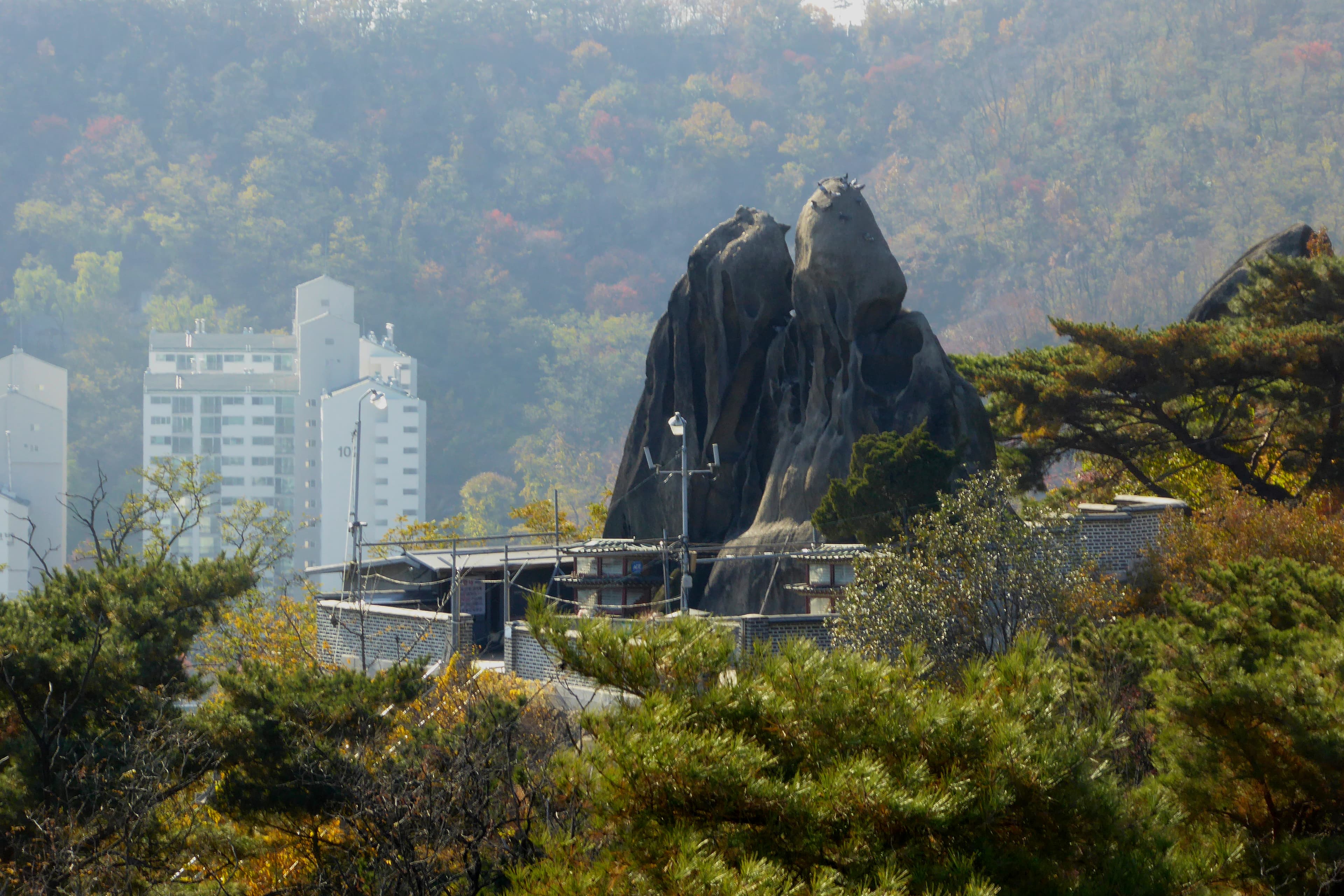
Seonbawi Rock in Seoul, Jongno District, South Korea. Image source · CC BY-SA 4.0
Visit essentials
A quick read before you go
- Duration
- Pause briefly enough to share the narrow devotional area respectfully.
- Access
- Weather and mountain-path conditions should be checked on the day of travel.
Overview
The rock’s form does not dictate one interpretation. Academy of Korean Studies records several: standing monks in long robes, Taejo and his Buddhist adviser Muhak, or Taejo with his wife. This plurality matters because it shows sacred meaning forming through repeated recognition rather than an official iconographic program. Seonbawi is not a carved statue, yet people have approached it as an embodied presence capable of receiving petitions.
Childless petitioners were especially associated with prayers here, and a custom called butim involved rubbing a small stone against the surface in the hope that it would adhere and strengthen efficacy. Marks left by that action turn intangible belief into material conservation evidence. After Guksadang was moved nearby in 1925, the rock became still more closely integrated with Seoul shamanic practice. Sacred natural site, urban trail destination, and vulnerable heritage surface now coexist within a few steps.
Why this place is sacred
Seonbawi invites projection because weathered stone never resolves into one face or body. A visitor may see monks only after hearing the name, then discover that others see royal founders or a couple. The spiritual force of the site lies partly in this openness. It can receive hopes that have no obvious institutional home, especially the grief and longing surrounding childlessness. Yet the surface is finite. A devotional action repeated by many hands becomes abrasion.
Respect today may therefore require refusing a historically attested gesture. Reports that prayers fulfill wishes or enable childbirth are prevalent user and traditional claims; they are not independently verified.
Historical evidence distinguishes the natural formation from later devotional interpretation.
Later change is identified without inventing continuity.
Experience and orientation
Approach through the Inwangsa and Guksadang landscape without assuming that every shrine belongs to one organization. Stop where the full outline is visible, then identify what visual cues create the impression of robes, heads, or paired bodies. Notice worn patches but do not reproduce butim, press coins into cracks, or add chalk, wax, thread, food, or paper. If someone is praying, yield the direct line to the rock and do not photograph the person.
Google lists the site at 26 Tongil-ro 18ga-gil as open continuously; that does not override trail closures, weather hazards, ceremonies, or heritage barriers. Inwangsan’s rocky paths require daylight judgment even when a map says twenty-four hours.
Approach on the established path and do not climb the formation.
Context and lineage
No single foundation story applies to a natural outcrop. Instead, named legends accumulated around its perceived human forms. The Academy of Korean Studies records interpretations involving monks, Taejo and Muhak, or the royal couple, together with petition traditions and rubbing marks. Seoul designated Seonbawi as folk cultural heritage in 1973. The later proximity of Guksadang intensified its shamanic context but did not create the rock or erase earlier layers of belief.
Historical narration should therefore avoid choosing one likeness as the correct identity.
Korean folk religion and shamanic practice
Traditions and practice
The most documented petition concerns having a child, alongside broader wishes. This page presents efficacy as what users and tradition claim, with no guarantee of pregnancy or any other outcome. Visitors who wish to reflect can articulate a hope silently without applying objects to the stone. Do not imitate a gut nearby, interrupt an officiant, or treat private fertility prayer as spectacle. A conservation-minded practice is to notice the desire to touch and choose distance instead.
Current observance remains under custodian authority.
Pause once and attend before interpreting.
Korean folk religion and shamanic practice
ActiveRecognized human-like forms support prayer beside Inwangsan’s shamanic shrine landscape.
Petitioners set the devotional tone, while heritage boundaries govern physical contact.
Perspectives and open questions
Folklore, fertility petition, visual ambiguity, shamanic practice, and conservation all shape the rock’s meaning.
Scholarly perspective
Folklorists document stories and repeated practices; devotees may understand the rock as responsive; conservation asks what repeated touch has done. These perspectives meet in the visible rubbing traces. A responsible page can state that petitions are longstanding and prevalent without declaring their outcomes factual. The appropriate disclaimer is direct: reported wish fulfillment and childbirth effects are user claims, not independently verified results.
Living and traditional perspectives
Local devotional readings recognize Buddha-like forms without changing the rock’s geology.
Open questions
Reported answers to fertility prayers are devotional testimony, not verified outcomes.
Plan your visit
Access and arrival
Weather and mountain-path conditions should be checked on the day of travel.
No accommodation is associated with the rock in the reviewed material.
Respectful visit
Wear modest layers and stable footwear for Inwangsan’s exposed rock path.
Do not photograph petitioners closely or interrupt prayer for a viewpoint.
Use only forms explicitly authorized by custodians.
Barriers and ceremony instructions always take priority.
Avoid imitation, intrusion, and unsupported promises.
Current practical details
Address
26 Tongil-ro 18ga-gil, Jongno District, Seoul, South Korea
Hours
Hours, fees, and access can change — verify on the official source before you travel. Practical details last checked Jul 2026.
Location
Map loads as you approach this section.
Pilgrim reflections
A portrait of encounter, not a score
Pilgrims describe what they felt, how present they could become, and whether the place would shape a journey. There are no stars and no ranking of traditions.
No reviewed reflections yet
The first pilgrims can help describe the character of being here.
Share a reflection
Available after an account-backed “Been there.” Every reflection is reviewed before publication.
Nearby sacred places
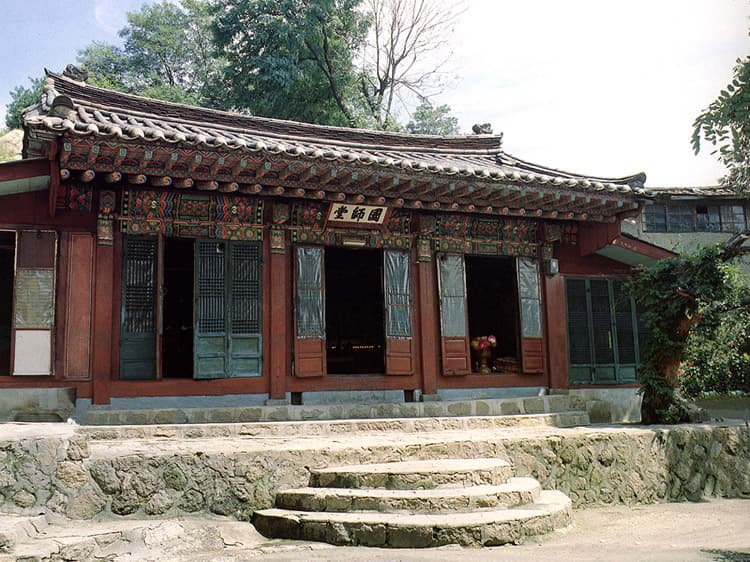
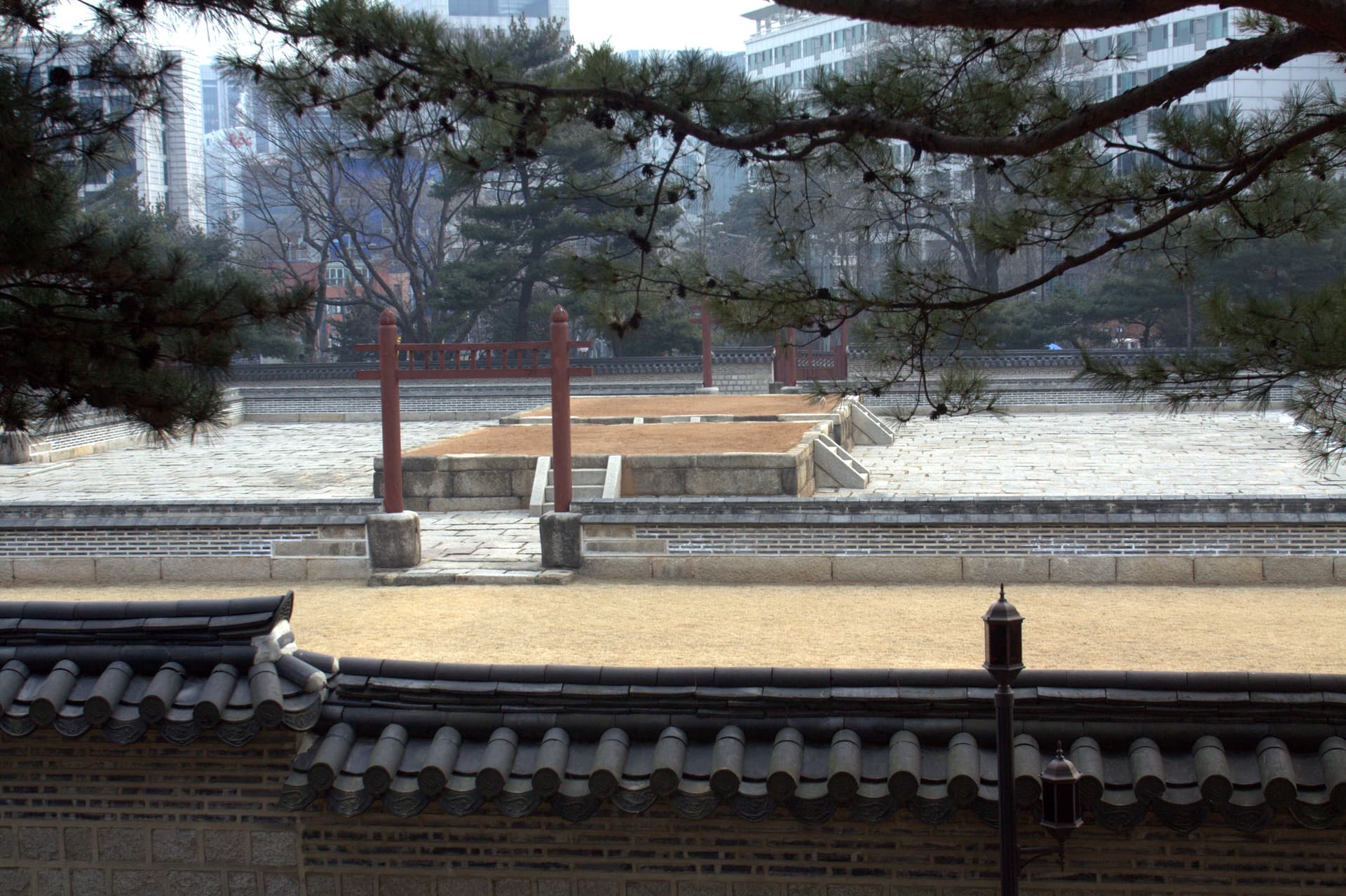
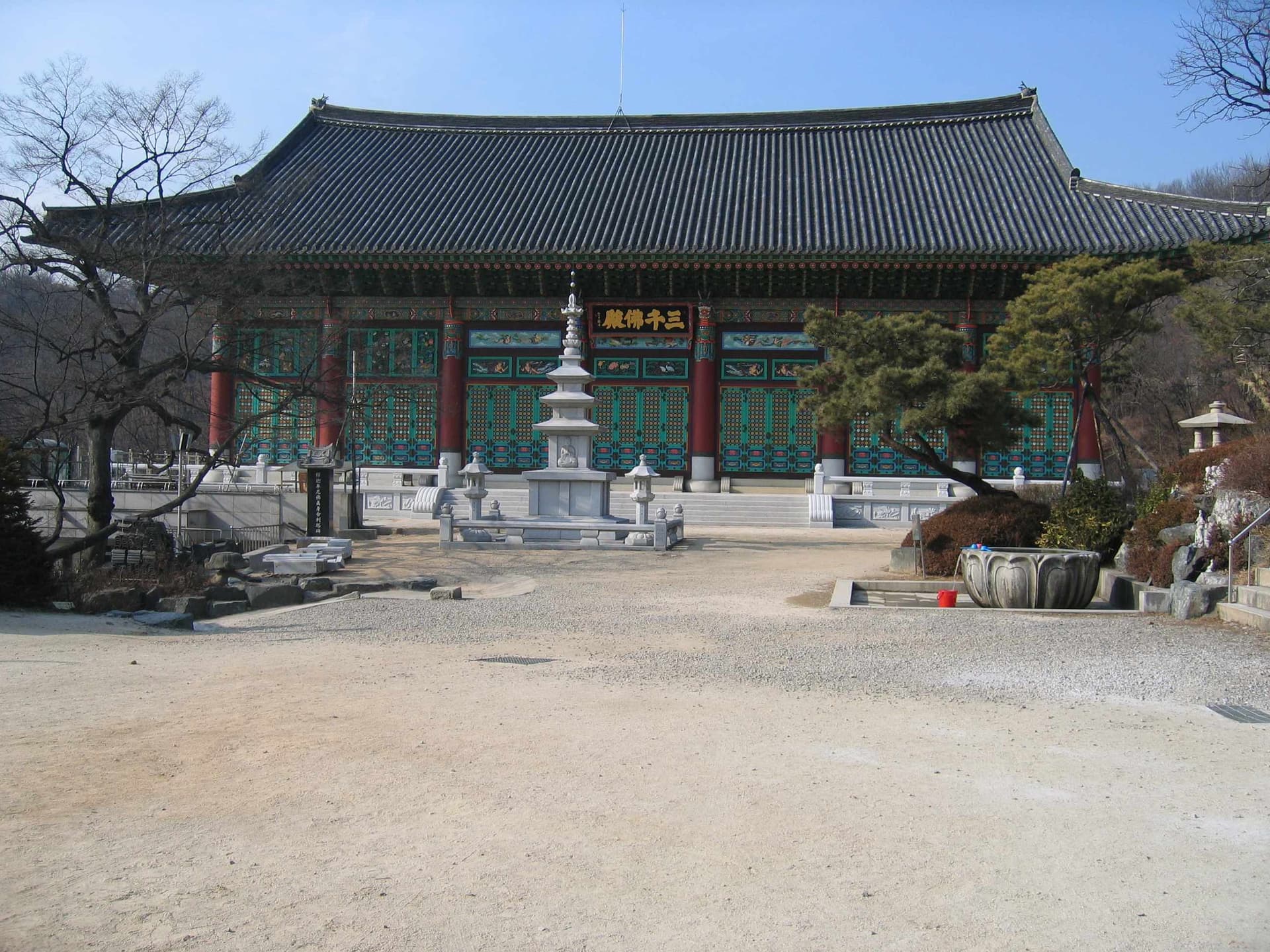
Explore other sacred places in the region. Proximity does not establish access or travel time; check each place’s guidance.
References
Sources consulted for this page. Source categories describe the publication, not a guarantee that every claim is verified. Traditional accounts and outside interpretations may differ.
- 01Seonbawi — Academy of Korean StudiesacademicExpert encyclopedia entry for the monk-like form, competing royal legends, wish and childbirth petitions, stone-rubbing practice, heritage status, and relation to Guksadang.
- 02Inwangsa Temple — Korea Tourism OrganizationofficialOfficial visitor record identifying Seonbawi as a focus of folk beliefs and shamanic rites above the Inwangsa cluster.
- 03Inwangsan Mountain Trail — Seoul Metropolitan GovernmentofficialOfficial trail context for Guksadang and Seonbawi within the Inwangsan section.
- 04Seonbawi Rock — Google Maps place record — GoogleSource contextStrong exact identity used only for coordinates, address, and continuously listed public access.
Share a photo
Help visitors recognize Seonbawi Rock. Every submission is reviewed before publication.