Jogyesa Temple
Seon Buddhism at street level in the center of Seoul
Understand sacred places, explore living traditions, and learn how to engage respectfully with Pilgrim Map.
Access has not been verified. Check current local guidance before planning a visit.
Seoul, Seoul, South Korea
Read the sources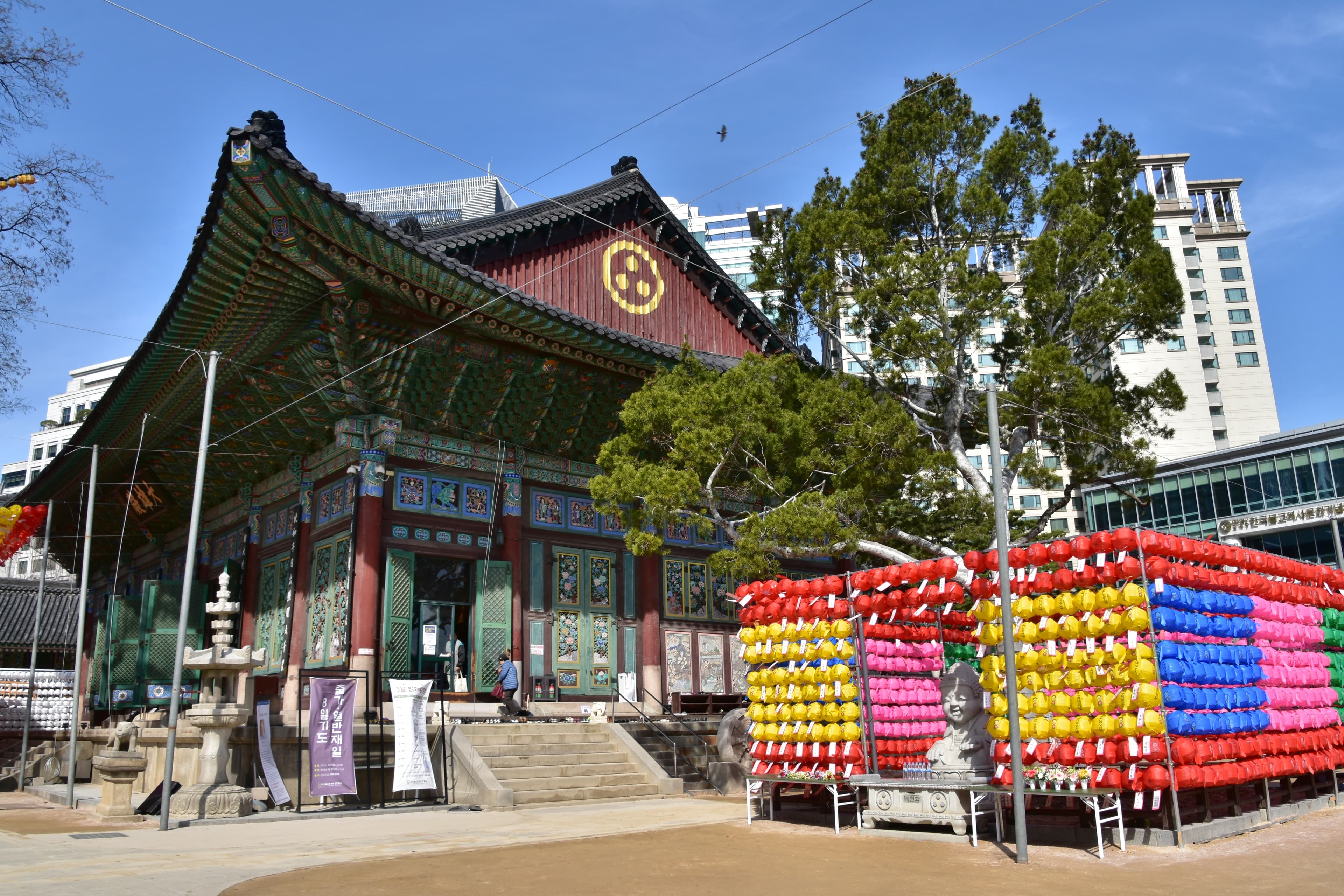
Jogyesa Temple in Seoul, Jongno District, South Korea. Image source · CC BY 2.0
Visit essentials
A quick read before you go
- Duration
- Forty-five to ninety minutes suits an ordinary visit; a scheduled service or festival requires…
- Access
- The strong matched Places record currently shows daily early-morning-to-late-evening access, but…
Overview
Jogyesa's defining feature is proximity: visitors step from Jongno's commercial streets into an active national Buddhist center without a mountain climb or remote valley. Ease of entry does not mean informality. Principal hall, sacred images, old trees, clergy, devotees, offices, and festival preparations share limited ground. This public concentration is its spiritual significance, showing that Seon discipline—chanting, bowing, study, community service, and institutional responsibility—continues amid Seoul's sound and pressure.
Why this place is sacred
Urban temples create a different kind of threshold. Sirens and conversation may remain audible, and the skyline is close, yet the courtyard reorganizes conduct around Daeungjeon and the people entering it. During Yeon Deung Hoe, lantern-making, procession, and celebration expand that sacred presence into Jongno; current schedules place major activities at Jogyesa and along the surrounding streets. The festival is also UNESCO-listed intangible heritage, but the temple itself is not thereby a World Heritage property. That distinction matters.
Jogyesa’s sanctity rests in active Buddhist use and its leadership role, not in borrowing a designation that belongs to a cultural practice.
The current institution developed as the central temple of the Jogye Order and serves worship, teaching, and administration.
Modern rebuilding and institutional change created a national Buddhist headquarters whose ritual calendar now reaches far beyond the precinct.
Experience and orientation
Enter from Ujeongguk-ro and resist stopping directly in the flow for a photograph. Observe who is approaching Daeungjeon, where shoes are removed, and how devotees orient their bodies before the Buddha. The old trees introduce vertical scale distinct from surrounding towers. When lanterns are installed, look beyond color to the wishes and labor they represent.
At a busy festival the experience is collective and extroverted; outside festival periods a weekday visit may reveal smaller repetitions of bowing, recitation, cleaning, and consultation. Neither mode is more authentic. Both belong to a temple that mediates Buddhism in public.
Stand at the courtyard edge until you understand circulation, then approach open halls without crossing in front of someone bowing.
Context and lineage
The present Jogyesa emerged through the modern reorganization of Korean Buddhism and became the head temple of the Jogye Order. Its large Daeungjeon and recognized Buddhist artworks give material focus to worship, while nearby administrative functions connect the precinct to temples across the country. Annual Lotus Lantern celebrations make Jogyesa a culminating point for processions through Seoul. Because the dates and program change each year, festival details must be checked against the current preservation committee or temple announcement.
Jogyesa represents the Jogye Order, Korea’s major Seon Buddhist order, and centers devotion to Sakyamuni Buddha in Daeungjeon.
Traditions and practice
Inside Daeungjeon, devotees may make prostrations, chant, sit, or offer light and incense according to temple forms. Visitors should follow the space rather than imitate a sequence they do not understand.
Templestay and cultural programs offer structured participation, while Yeon Deung Hoe joins artistic work, procession, prayer, and community celebration.
From a quiet edge of the courtyard, watch one complete cycle of arrival, bowing, and departure without photographing it.
Korean Buddhism
ActiveJogye Seon Buddhism gains a visible public center where worship and national institutional life meet.
Prostration, chanting, meditation, lantern offerings, teaching, community events, and temple service.
Perspectives and open questions
Jogyesa can be understood as sacred precinct, national institution, and civic gathering place without reducing one role to another.
Scholarly perspective
Modern religious history helps explain why administrative centrality is as important here as architectural age.
Living and traditional perspectives
For Jogye Buddhists, public activity remains ordered toward Buddha, Dharma, Sangha, and the discipline of awakening.
Open questions
No source basis was found for claims that the courtyard possesses a paranormal urban energy.
Plan your visit
Access and arrival
The strong matched Places record currently shows daily early-morning-to-late-evening access, but hours and hall availability can change. Confirm through jogyesa.kr or the temple.
Use the official Templestay channel for any program; this page does not recommend nearby lodging.
Respectful visit
Modest everyday clothing is appropriate; remove hats and shoes where hall instructions require.
Exterior photographs are common, but ask before photographing rites, clergy, or individual devotees.
Use temple-provided lantern, incense, donation, or prayer arrangements.
Do not handle sacred images, lantern inscriptions, ritual instruments, or personal offerings.
Do not confuse unrestricted entry to the grounds with permission to interrupt ceremonies, teachers, or administrative work.
Current practical details
Address
55 Ujeongguk-ro, Jongno District, Seoul, South Korea
Phone
Hours
Hours, fees, and access can change — verify on the official source before you travel. Practical details last checked Jul 2026.
Location
Map loads as you approach this section.
Pilgrim reflections
A portrait of encounter, not a score
Pilgrims describe what they felt, how present they could become, and whether the place would shape a journey. There are no stars and no ranking of traditions.
No reviewed reflections yet
The first pilgrims can help describe the character of being here.
Share a reflection
Available after an account-backed “Been there.” Every reflection is reviewed before publication.
Nearby sacred places
Explore other sacred places in the region. Proximity does not establish access or travel time; check each place’s guidance.

References
Sources consulted for this page. Source categories describe the publication, not a guarantee that every claim is verified. Traditional accounts and outside interpretations may differ.
- 01Jogyesa Temple official website — Jogyesa TempleofficialDomain matches the site or its managing religious/heritage body.
- 02Korean Temple Food: Jogyesa Temple — Korea Tourism OrganizationofficialOfficial tourism record identifying Jogyesa as head temple of the Jogye Order and documenting Daeungjeon, sacred images, address, and urban setting.
- 03Jogyesa — Wikipedia — Wikipedia contributorsacademicCorroborates identity, location, and general historical context; key claims require higher-tier support.
- 04Jogyesa — Wikidata — Wikidata contributorsSource contextCommunity-maintained structured identity and coordinate cross-check; not treated as scholarship or an official custodian record.
- 05Jogyesa Temple — Google Maps place record — GoogleSource contextStrong identity match used only for current practical fields and coordinates.
Pilgrim glossary
- Sangha
- The community of Buddhist practitioners, traditionally monks and nuns.
- Dharma
- The teachings of the Buddha; also the universal law underlying them.
Share a photo
Help visitors recognize Jogyesa Temple. Every submission is reviewed before publication.