Sajikdan Altar
Earth and grain made central to the responsibility of rule
Understand sacred places, explore living traditions, and learn how to engage respectfully with Pilgrim Map.
Access has not been verified. Check current local guidance before planning a visit.
Seoul, Seoul, South Korea
Read the sources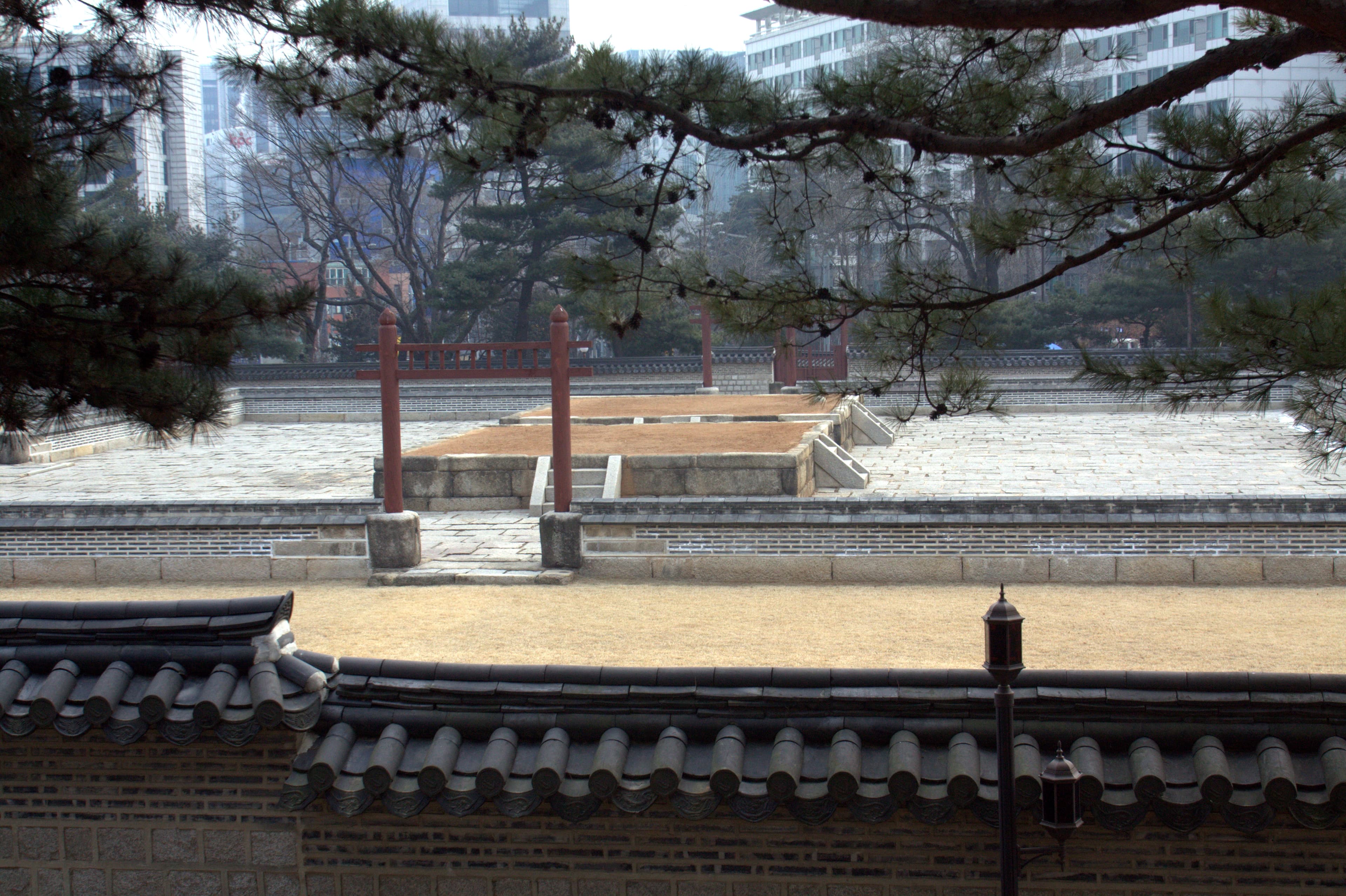
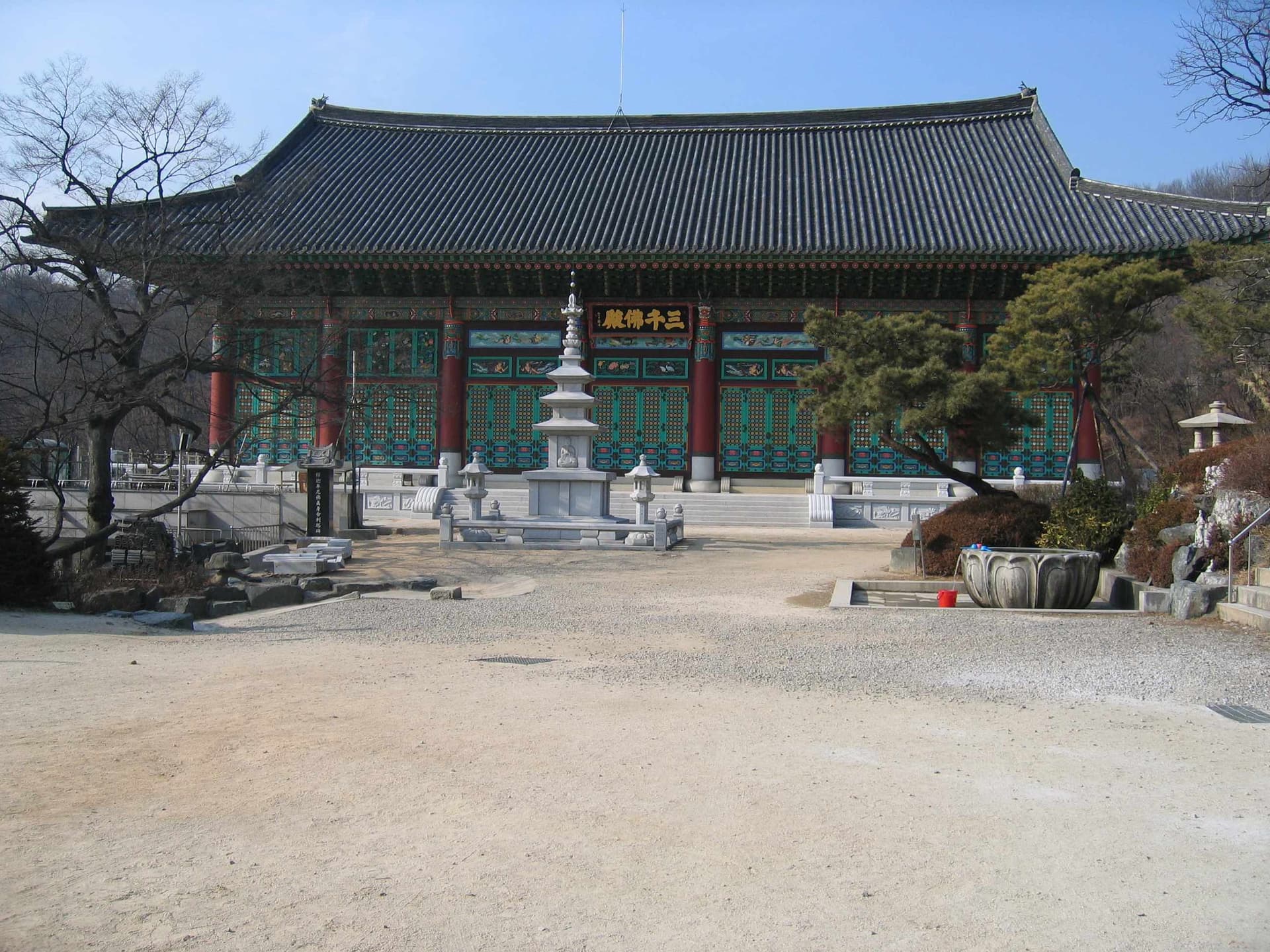
Sajikdan Altar in Seoul, Jongno District, South Korea. Image source · CC BY-SA 3.0
Visit essentials
A quick read before you go
- Duration
- Allow one hour for the restored compound and interpretation, longer for an announced ceremony.
- Access
- Google and KTO list the surrounding park as continuously open, but this does not establish…
Overview
Korea Heritage Service dates the altar to 1395, when the new capital was ordered with Jongmyo east of the palace and Sajikdan west. This was not an ornamental symmetry. Royal ancestors and the material foundations of collective life framed rulership from opposite sides. The original state system ended amid imperial change and colonial-era transformation; the grounds became a park and buildings were lost or altered. Restoration beginning in 1988 recovered the major rite, while recent work rebuilt ritual-support facilities.
Present sacredness therefore includes both historical discontinuity and living ceremonial renewal.
Why this place is sacred
A government can speak as if prosperity were produced by policy alone. Sajik ritual counters that claim by directing royal action toward earth, seed, weather, labor, and harvest. Within its tradition, offerings address Sasin and Jiksin; outside that tradition, the rite still records agricultural vulnerability. This does not mean the ceremony can be scientifically shown to cause rain or abundance. Its moral force lies in acknowledging what authority cannot manufacture.
Empty-looking earthen platforms become demanding precisely because they refuse spectacle and return attention to conditions beneath food, population, and power.
Taejo established Sajikdan in 1395 for state rites to the deities of soil and grain.
Royal use, wartime protection of tablets, imperial changes, colonial park conversion, ritual cessation, 1988 restoration, and recent reconstruction shaped the site.
Experience and orientation
Begin by distinguishing Sajik Park from the protected altar compound. The public green space can make the ritual core seem like one park feature, but walls and gates mark another order. Locate Anhyangcheong, where incense and ritual prayers were kept, and Jeonsacheong, where food was prepared. During Sajik Daeje, follow designated viewing areas and watch how silk, greeting, successive obeisances, shared food, and burning of ritual paper form a sequence.
Outside the rite, do not climb altar platforms simply because they appear vacant.
Separate park paths, main gate, altar enclosure, Anhyangcheong, Jeonsacheong, tablet-related spaces, and ceremony routes.
Context and lineage
KHS states that Taejo built Sajikdan in 1395 under the rule placing the royal ancestral shrine left of the palace and the soil-and-grain altar right. Tablets and rites were protected or moved during invasions, buildings were repeatedly repaired, and the deity ranks changed with the Korean Empire in 1897. Ritual ended in the early twentieth century. Restoration began in 1988, and the Sajik Daeje now continues under designated heritage custody. The altar is not UNESCO-listed.
Sajikdan belongs to Korean state ritual and Confucian-inflected ceremonial traditions with older agricultural roots.
Traditions and practice
Sajik Daeje addresses Sasin and Jiksin through authorized officiants and a prescribed sequence.
Heritage bearers restore and perform the rite while the Royal Palaces and Tombs Center conserves its architectural setting.
Before eating later in the day, identify the soil, seed, water, labor, and transport concealed within one ingredient.
Korean ritual traditions
ActiveSajikdan turns land and food security into sacred obligations at the heart of political order.
State offering, invocation, obeisance, music, dance, ritual cooking, tablet care, and public commemoration.
Perspectives and open questions
Sajikdan can be read through state ritual, agricultural history, theology of rule, colonial disruption, and restoration ethics.
Scholarly perspective
Current performance is a documented restoration based on transmitted expertise, not an unbroken daily survival from 1395.
Living and traditional perspectives
Ritual honors the powers of soil and grain and asks public authority to acknowledge dependence and responsibility.
Open questions
No causal claim that ceremony produces rain, harvest, or national prosperity is independently verified.
Plan your visit
Access and arrival
Google and KTO list the surrounding park as continuously open, but this does not establish unrestricted altar or building access. Check the Royal Palaces and Tombs Center for current compound and ritual schedules.
This is a daytime urban heritage visit; no lodging is associated with the altar.
Respectful visit
Modest park clothing is suitable for ordinary access; major ceremony calls for especially restrained dress.
Confirm rules for altar interiors, tablets, offerings, ritual bearers, musicians, dancers, and restoration work.
Only authorized ritual teams prepare and place offerings; visitors should not add food, incense, coins, or paper.
Altars, tablet rooms, ritual kitchens, stored vessels, closed gates, and restoration zones require authorization.
Do not claim the rite controls weather, invent offerings, mount the altars, or treat ritual food and fire as visitor activities.
Current practical details
Address
South Korea, Seoul, Jongno District, 사직동 1-28
Phone
Hours
Hours, fees, and access can change — verify on the official source before you travel. Practical details last checked Jul 2026.
Location
Map loads as you approach this section.
Pilgrim reflections
A portrait of encounter, not a score
Pilgrims describe what they felt, how present they could become, and whether the place would shape a journey. There are no stars and no ranking of traditions.
No reviewed reflections yet
The first pilgrims can help describe the character of being here.
Share a reflection
Available after an account-backed “Been there.” Every reflection is reviewed before publication.
Nearby sacred places
Explore other sacred places in the region. Proximity does not establish access or travel time; check each place’s guidance.
References
Sources consulted for this page. Source categories describe the publication, not a guarantee that every claim is verified. Traditional accounts and outside interpretations may differ.
- 01Sajikdan Altar and Its History — Korea Tourism OrganizationofficialOfficial Korea Heritage Service record for Sasin and Jiksin, the 1395 foundation, palace-city ordering, state rites, drought and harvest prayers, ritual buildings, restoration, and present custody.
- 02Sajikdan — Wikipedia — Wikipedia contributorsacademicCorroborates identity, location, and general historical context; key claims require higher-tier support.
- 03Seoul Sajikdan — Wikidata — Wikidata contributorsSource contextCommunity-maintained structured identity and coordinate cross-check; not treated as scholarship or an official custodian record.
- 04Sajikdan Altar — Google Maps place record — GoogleSource contextStrong identity match used only for current practical fields and coordinates.
Share a photo
Help visitors recognize Sajikdan Altar. Every submission is reviewed before publication.