Piram Seowon
Kim In-hu’s ethical learning carried through a level-field academy
Understand sacred places, explore living traditions, and learn how to engage respectfully with Pilgrim Map.
Access has not been verified. Check current local guidance before planning a visit.
Jangseong-gun, Jeollanam-do, South Korea
Read the sources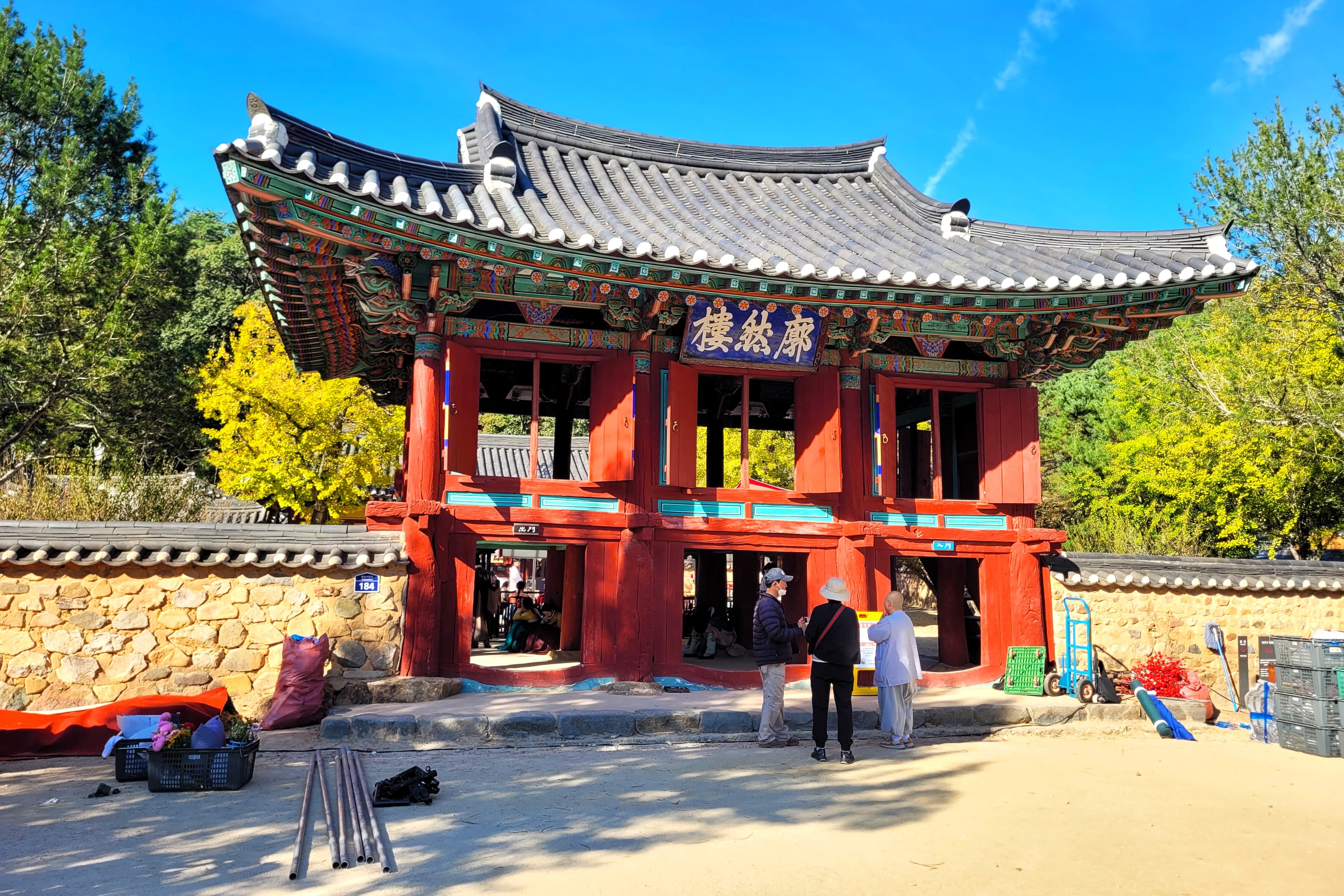
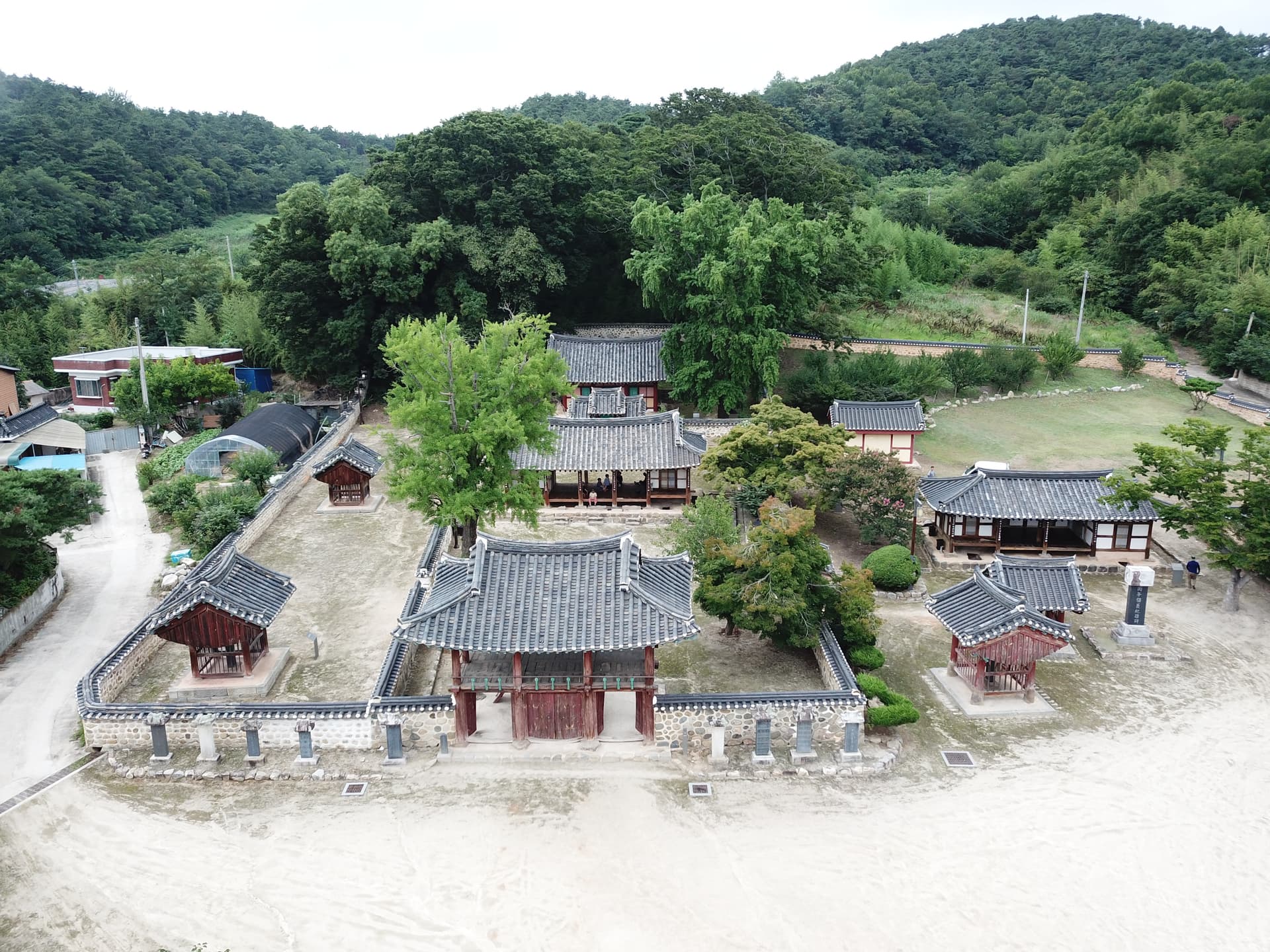
Piram Seowon in Jangseong, South Jeolla, South Korea. Image source · CC BY 4.0
Visit essentials
A quick read before you go
- Duration
- Allow a calm, condition-aware visit.
- Access
- Prepare for the exact route described above.
Overview
Jangseong County records a foundation in 1590, destruction during the 1597 war, re-establishment in 1624, royal chartering in 1659, and relocation after flooding to the present Piram-ri setting in 1672. This sequence matters because the current buildings do not represent a single untouched construction moment. Fire, rebuilding, royal recognition, and movement across the local landscape belong to the academy’s identity and should be explained rather than hidden behind a generalized claim of antiquity.
Why this place is sacred
Udongsa places Kim In-hu’s tablet centrally and Yang Ja-jing’s to one side. The integrated management center describes a distinctive connection between rite and study: officiants gathered to read favored passages before observance, composed on an assigned topic, and returned to reading after the ceremony. The practice made remembrance intellectually demanding. A visitor should not call these tablets deities or reduce the rite to ancestor worship; the exact tradition venerates exemplary scholars through Korean Neo-Confucian ritual forms.
Original function follows the cited authorities.
Material continuity is not presumed.
Experience and orientation
The broad, level ground gives Piram a different spatial character from academies fitted into steep valleys. Hwakyeonnu marks the entrance, Cheongjeoldang organizes learning, and walls clarify the relationship among instruction, support work, archives, and shrine. Jangpangak preserved printing woodblocks, while Gyeongjanggak guarded a royal-associated ink-bamboo image. Records concerning land and bonded servants also expose the institution’s economic basis. Spiritual significance should not conceal that academies depended on material resources and unequal Joseon social structures.
Use the verified public approach.
Context and lineage
From Hwakyeonnu, look across the open field before turning inward toward the more controlled shrine precinct. The movement makes an effective study in ethical attention: openness does not remove form, and ritual enclosure does not end inquiry. Read one account of Kim In-hu before arrival, then notice how doors and walls distribute access. This is an interpretive exercise only; it does not claim that the pavilion transmits wisdom or that reciting a classic produces a guaranteed transformation.
Korean Neo-Confucianism
Traditions and practice
Do not enter Udongsa or archival buildings when closed, touch tablets or woodblocks, lean on painted rails, or use flash against vulnerable surfaces. Memorial observances take priority over ordinary visitation. Keep conversations outside the ritual axis, obtain consent before photographing participants, and follow all staff directions. Avoid copying ceremonial movements without invitation. The courtyard is not a stage for costume play, and the academy’s records should not be handled unless they are presented through a supervised exhibition.
Current use remains custodian-led.
Attend quietly before drawing conclusions.
Korean Neo-Confucianism
ActiveSacred meaning follows the documented local tradition.
Practice remains governed by present custodians.
Perspectives and open questions
Several disciplines illuminate this sacred place.
Scholarly perspective
Piram supports architectural, intellectual, ritual, archival, and social-history readings. Each adds precision: Kim In-hu’s teaching gives the shrine its named focus; flat-site planning shapes movement; operational documents reveal how ideals were funded; repeated rites preserve memory. No prevalent metaphysical claim was found, so the page does not promise clarity, moral improvement, or contact with a scholar’s spirit. Its spiritual importance rests on practiced veneration and disciplined learning, both directly documented.
Romanization varies between Piram and Pilam, but the Jangseong address, Korean name, coordinates, shrine targets, and UNESCO component establish one exact institution. Search systems must not mistake that spelling variation for separate academies. Practical data should remain attached to the Jangseong component and never be borrowed from another member of the nine-site serial property.
Living and traditional perspectives
Community meanings retain their own authority.
Open questions
Unsupported effects remain explicitly unverified.
Plan your visit
Access and arrival
Prepare for the exact route described above.
No lodging claim was researched.
Respectful visit
Dress for dignity and terrain.
Ask before recording people or ritual.
Use authorized channels only.
Obey every closure and barrier.
Do not invent or imitate rites.
Current practical details
Address
184 Piramseowon-ro, Hwangnyong-myeon, Jangseong-gun, Jeollanam-do, South Korea
Phone
Hours, fees, and access can change — verify on the official source before you travel. Practical details last checked Jul 2026.
Location
Map loads as you approach this section.
Pilgrim reflections
A portrait of encounter, not a score
Pilgrims describe what they felt, how present they could become, and whether the place would shape a journey. There are no stars and no ranking of traditions.
No reviewed reflections yet
The first pilgrims can help describe the character of being here.
Share a reflection
Available after an account-backed “Been there.” Every reflection is reviewed before publication.
Nearby sacred places
Explore other sacred places in the region. Proximity does not establish access or travel time; check each place’s guidance.
References
Sources consulted for this page. Source categories describe the publication, not a guarantee that every claim is verified. Traditional accounts and outside interpretations may differ.
- 01Seowon, Korean Neo-Confucian Academies — UNESCO World Heritage CentreofficialSerial-property scope, component identity, essential functions, and 2019 inscription.
- 02Seowon, Korean Neo-Confucian Academies — nomination dossier — Republic of Korea / UNESCO World Heritage CentreofficialExact Piram component history, flat-site organization, Kim In-hu veneration, and records of academy operations.
- 03Piramseowon — World Heritage Integrated Management Center for Korean SeowonofficialExact shrine targets, ritual learning, layout, relocation history, records, and current heritage programs.
- 04World Heritage Piram Seowon — Jangseong CountyofficialCurrent official page for address, managing office, exact chronology, buildings, shrine tablets, and website provenance.
- 05Korean Neo-Confucian academies — Korea Tourism OrganizationofficialNational tourism context for the nine inscribed academies and responsible visitation.
- 06Pilam Seowon Confucian School — Google Maps place record — GoogleSource contextExact Piram/Pilam romanization match and current address, coordinates, telephone, government website candidate, and operational status.
Share a photo
Help visitors recognize Piram Seowon. Every submission is reviewed before publication.