Naejangsa Temple
A rebuilt monastery inside a ring of autumn attention
Understand sacred places, explore living traditions, and learn how to engage respectfully with Pilgrim Map.
Access has not been verified. Check current local guidance before planning a visit.
Jeongeup, Jeollabuk-do, South Korea
Read the sources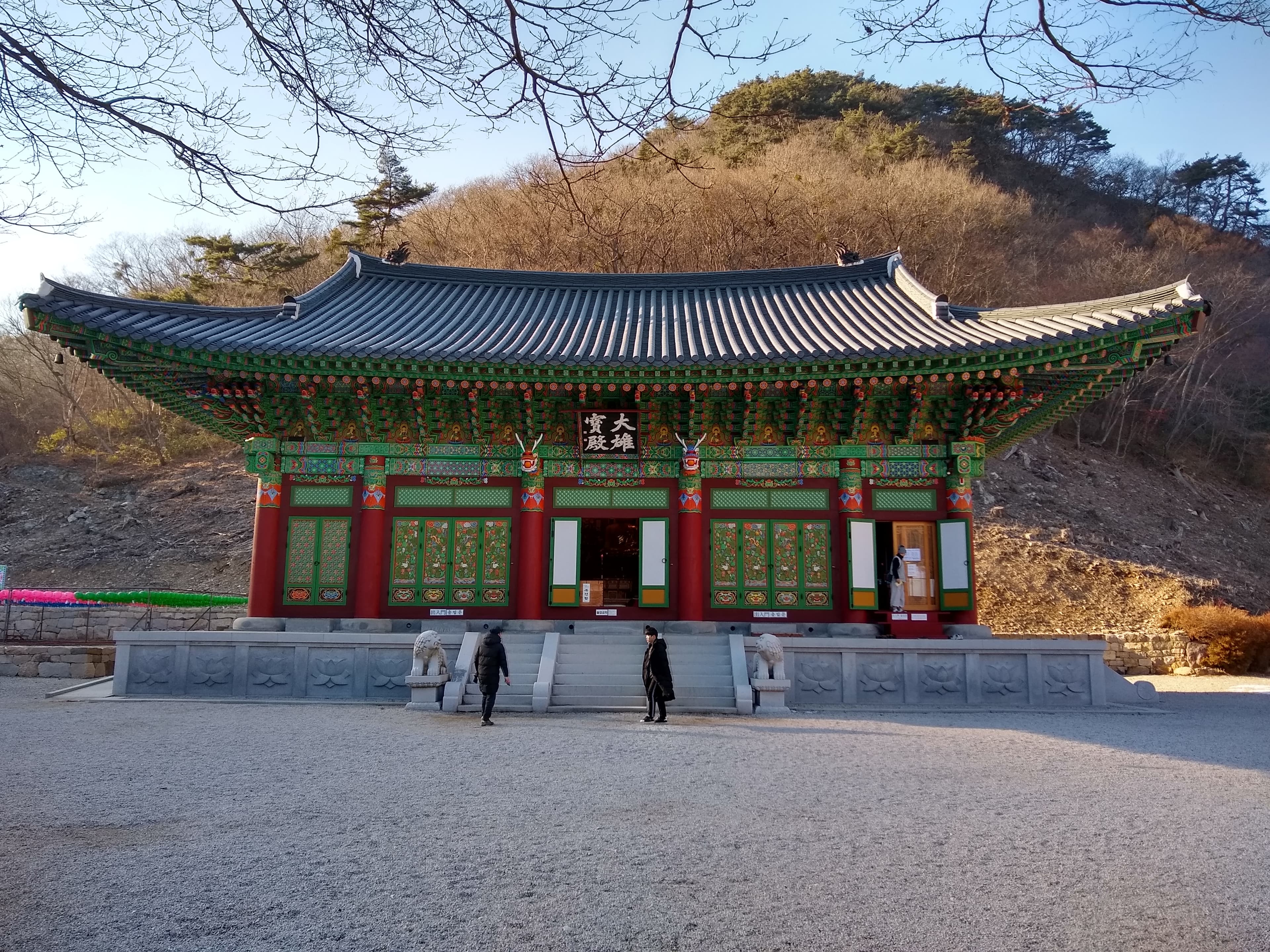
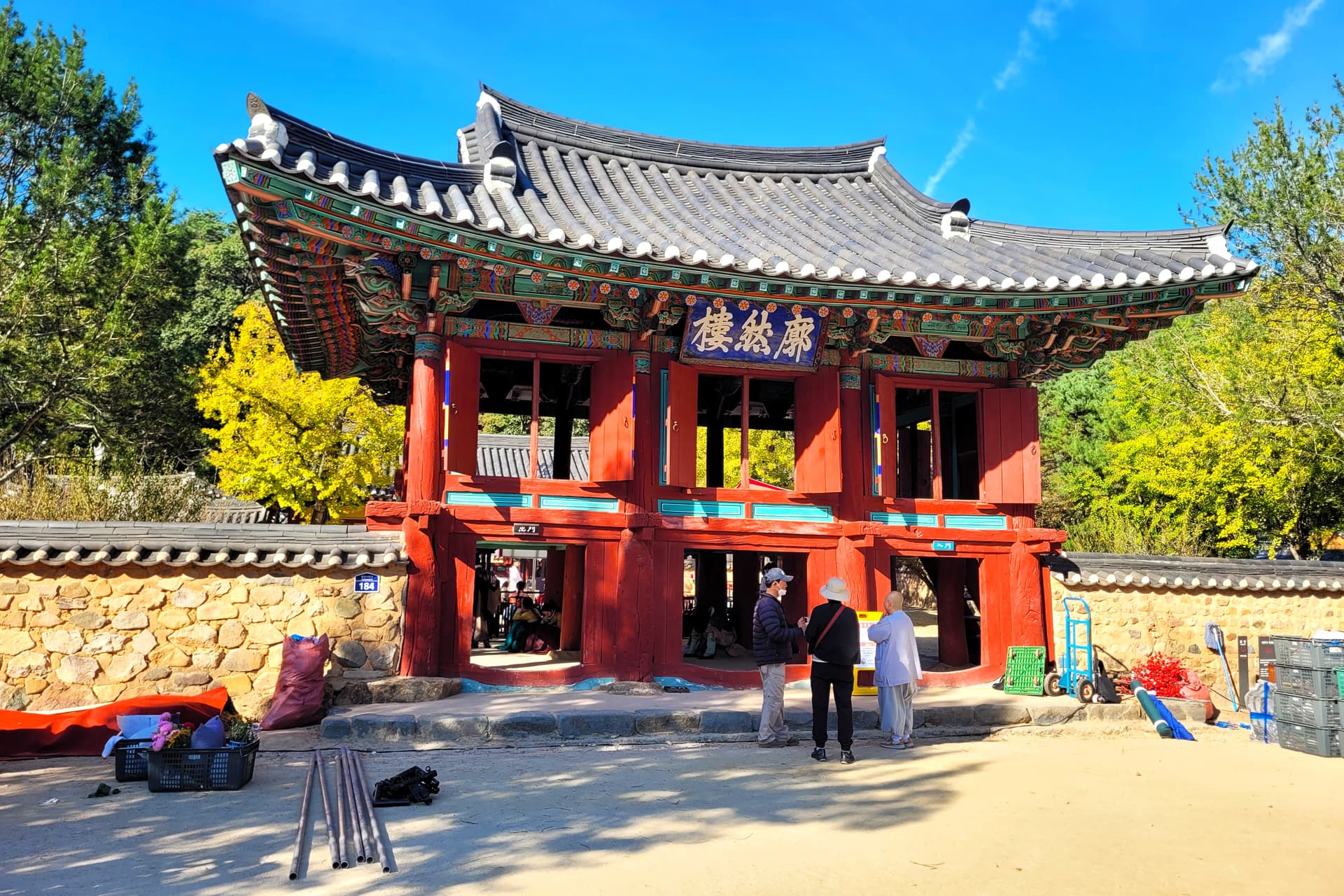
Naejangsa Temple in Jeongeup, North Jeolla, South Korea. Image source · CC BY-SA 4.0
Visit essentials
A quick read before you go
- Duration
- Allow ninety minutes for the public temple precinct, plus separate transport and trail time.
- Access
- KTO lists year-round opening, parking, and a temple telephone but no verified official website…
Overview
Naejangsan’s peaks encircle the precinct like a screen, a comparison used by official tourism material and easily felt on arrival. In autumn, the enclosing slopes also concentrate crowds, lenses, vehicles, and commercial desire. The temple must work inside that attention. A Joseon-period bronze bell offers a material counterpoint to reconstructed halls: sound can continue a ritual pattern even when the structures around it have changed.
The bell is not a device for clearing energy, and falling leaves do not guarantee transformation. Their significance emerges through Buddhist remembrance of impermanence and the community’s practical decision to rebuild.
Why this place is sacred
A scarred institutional history complicates the fantasy of an ancient sanctuary outside time. Buildings disappear through war, fire, and political violence. New buildings can still shelter bows, chants, teaching, and care. Autumn leaves offer an obvious image of impermanence, but Naejangsa gives it weight because destruction here was historical rather than merely seasonal. The mountain enclosure makes attention feel concentrated without proving a geomantic or paranormal force.
Visitors can respond responsibly by holding beauty and vulnerability together: photograph what is present, learn what was lost, and avoid treating reconstruction as inauthentic simply because its materials are younger.
The received 636 foundation belongs to Baekje Buddhist history and the creation of a mountain worship community.
Expansion to a large complex, repeated destruction, postwar rebuilding, and national-park tourism reshaped how the temple is encountered.
Experience and orientation
During autumn, accept that the route may be crowded and resist stopping in gate openings. Move from the mountain panorama to the scale of roof, threshold, bell, and active altar. Ask which elements are older, rebuilt, or commemorative instead of applying one date to everything. If the bell is sounded for a rite, listen from the assigned area and do not request a demonstration.
Outside peak season, quieter courts may make the relationship between reconstructed buildings and surrounding ridges easier to study. Weather and park transport can shape the entire visit.
National-park transport, foliage viewpoints, public temple courts, worship halls, and mountain trails form overlapping but distinct zones.
Context and lineage
KTO says the temple is believed to have been established in 636 and that the historical complex once held about fifty large buildings. Foreign invasions and the Korean War destroyed them, and most structures seen today were rebuilt later. Those qualifications must remain visible in any description. The Joseon bronze bell is named among significant cultural assets and should be understood within its own object history rather than as proof that all surrounding fabric is early.
Naejangsa is an active Korean Buddhist temple and one of Jeonbuk’s emblematic religious sites.
Traditions and practice
Devotees enter halls and observe Buddhist rites according to the temple calendar.
National-park crowds share the approach; staff and residents maintain a workable boundary around prayer.
Notice one reconstructed element and consider why continuity sometimes requires making something again.
Korean Buddhism
ActiveKorean Buddhism at Naejangsa persists through deliberate rebuilding and care within a heavily visited mountain setting.
Prayer, chanting, offerings, bell ritual, remembrance, hospitality, and conservation.
Perspectives and open questions
Naejangsa can be read through reconstruction ethics, ritual continuity, war memory, ecology, and mass tourism.
Scholarly perspective
Received foundation, former building count, destruction episodes, reconstructed fabric, and the bell are separate evidentiary layers.
Living and traditional perspectives
A rebuilt hall can continue refuge and practice because sacred continuity depends upon community as well as material.
Open questions
The exact early fabric and any guaranteed emotional effect of autumn visitation are not established.
Plan your visit
Access and arrival
KTO lists year-round opening, parking, and a temple telephone but no verified official website or precise daily hours. Google also supplied no hours; confirm with the temple and park before travel, especially in foliage season.
No overnight program is recommended without direct verified booking information.
Respectful visit
Dress modestly in layers for cool mountain weather and variable rain.
Do not stage portraits in ritual paths; ask before interiors, bells, ceremonies, monastics, or close images of worshippers.
Use designated devotional places and remove all picnic or photography props.
Bell structures, altars, residential areas, roofs, reconstruction zones, and closed park paths remain protected.
Do not romanticize wartime destruction, ring heritage instruments, or claim autumn scenery causes spiritual awakening.
Current practical details
Address
1253 Naejangsan-ro, Jeongeup, Jeonbuk State, South Korea
Phone
Hours, fees, and access can change — verify on the official source before you travel. Practical details last checked Jul 2026.
Location
Map loads as you approach this section.
Pilgrim reflections
A portrait of encounter, not a score
Pilgrims describe what they felt, how present they could become, and whether the place would shape a journey. There are no stars and no ranking of traditions.
No reviewed reflections yet
The first pilgrims can help describe the character of being here.
Share a reflection
Available after an account-backed “Been there.” Every reflection is reviewed before publication.
Nearby sacred places
Explore other sacred places in the region. Proximity does not establish access or travel time; check each place’s guidance.
References
Sources consulted for this page. Source categories describe the publication, not a guarantee that every claim is verified. Traditional accounts and outside interpretations may differ.
- 01Korea Heritage Service public heritage search — Korea Heritage ServiceofficialAuthoritative national search portal retained as a verification route; not used alone for site-specific claims.
- 02Naejangsa Temple — Korea Tourism OrganizationofficialOfficial tourism record for the received 636 foundation, former scale, destruction, modern reconstruction, national-park setting, bell, address, and year-round listing.
- 03Naejangsa Temple — Google Maps place record — GoogleSource contextStrong identity match used only for current practical fields and coordinates.
Share a photo
Help visitors recognize Naejangsa Temple. Every submission is reviewed before publication.