Magoksa Temple
A monastery read through water, refuge, and continued practice
Understand sacred places, explore living traditions, and learn how to engage respectfully with Pilgrim Map.
Access has not been verified. Check current local guidance before planning a visit.
Gongju, Chungcheongnam-do, South Korea
Read the sources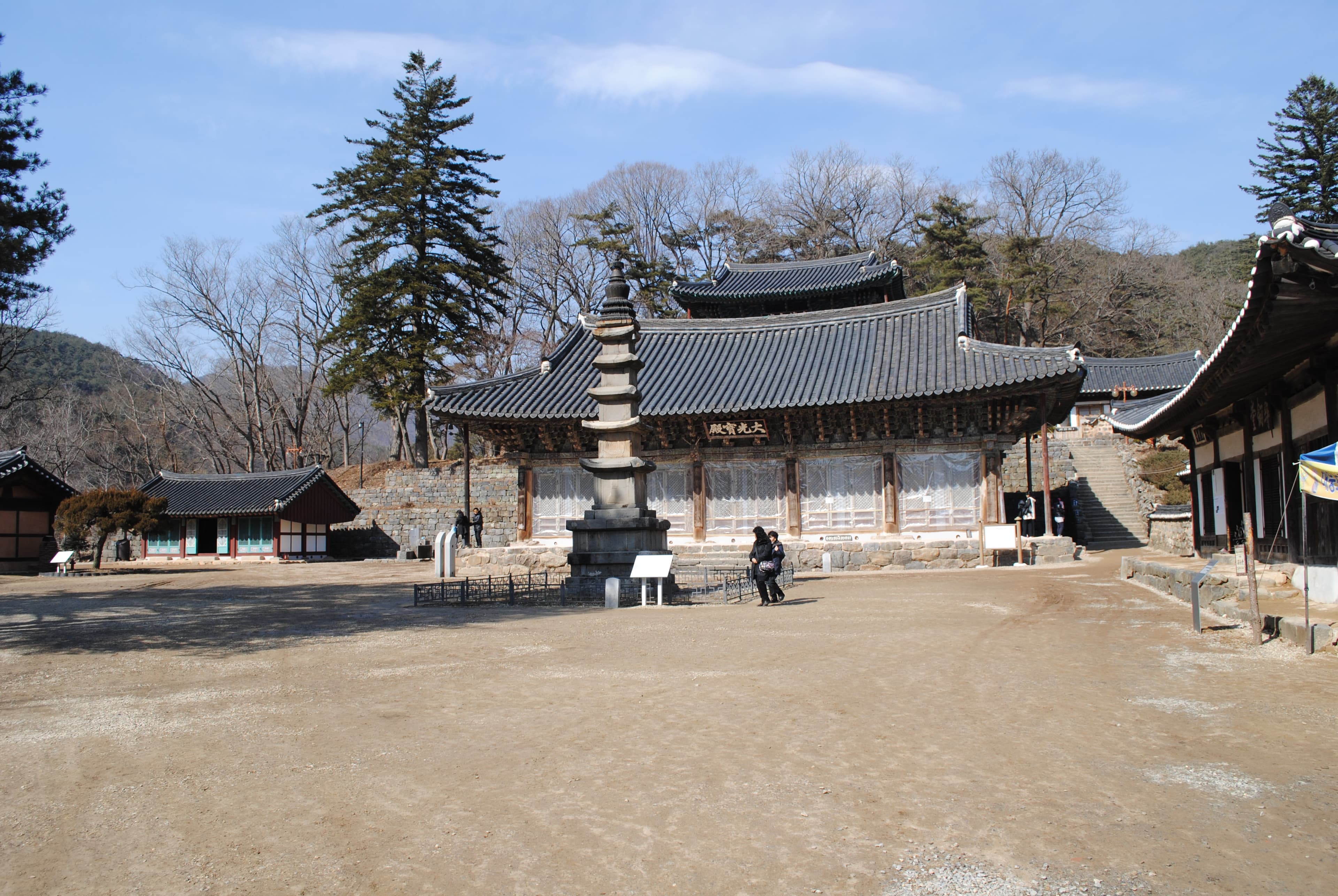
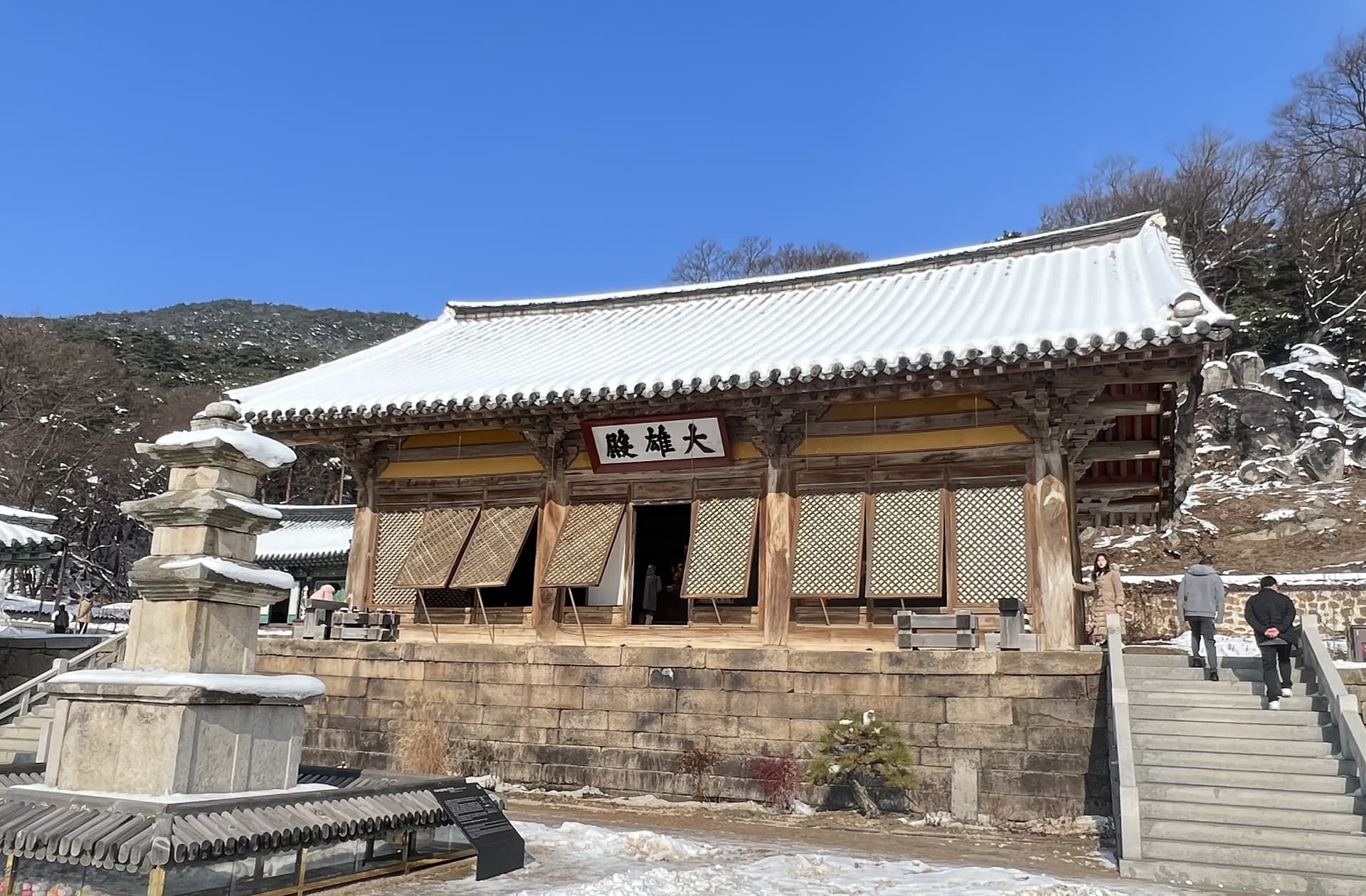
Magoksa Temple in Gongju, South Chungcheong, South Korea. Image source · CC BY-SA 3.0
Visit essentials
A quick read before you go
- Duration
- Two hours accommodates the stream approach and main precinct without haste.
- Access
- The official address is 966 Magoksa-ro, Sagok-myeon, Gongju.
Overview
Magoksa unfolds along a valley route that crosses water and gathers gates, halls, residences, and slopes into a monastery. Official accounts give a traditional foundation in 640, though different records attach that date to different royal chronologies; the discrepancy remains important. Better-supported later history shows the place serving as shelter during war and preserving major buildings through repeated danger. Its inclusion in the Sansa World Heritage property recognizes a living mountain monastery, not an abandoned monument.
Stream, built courts, and practitioners' routines form one sustained setting.
Why this place is sacred
The taegeuk-shaped relationship of flowing water and mountain is an interpretive feature in official Korean tourism material, where it represents balance. That symbolism can be presented without claiming that the terrain emits a measurable power. What a visitor can observe is more grounded: the stream repeatedly redirects sight and walking pace; bridges create thresholds; halls occupy clearings without erasing the valley’s form. The monastery’s history as a place of refuge deepens that physical experience.
Shelter here meant survival within landscape, while Buddhist discipline supplied continuity of purpose. These layers make Magoksa spiritually significant as a practiced relationship among community, terrain, and recurring acts of care.
Magoksa’s inherited foundation account places it within Buddhist monastic life from the seventh century, though exact chronology varies among records.
The precinct endured major wars, retained and rebuilt halls, and now combines worship, heritage stewardship, and structured visitor programs.
Experience and orientation
Begin by listening to the water and watching how the path changes sides. Each crossing resets the approach, so the temple arrives as a sequence rather than a view. Within the courts, look for the contrast between ceremonial buildings and residential areas that sustain daily practice. Yeongsanjeong’s signboard is traditionally connected with King Sejo, while the hall’s present fabric belongs to later rebuilding; this is a useful reminder that named memory and surviving material do not always share one date.
Sit only where visitors are permitted, and allow the soundscape to shift from current and footsteps to bells or chanting if a service begins.
Use the main visitor route, keep bridge approaches clear, and avoid wandering into residential monastic quarters.
Context and lineage
KTO describes Magoksa as established in 640, but official pages differ on whether this falls under Queen Seondeok of Silla or King Mu of Baekje. The safe conclusion is that 640 is the received foundation date while the attached court context is not uniform. Later tradition remembers King Sejo praising the temple and writing a signboard for Yeongsanjeong. That hall burned during the Imjin War and was rebuilt in 1650, illustrating how Magoksa’s continuity includes reconstruction rather than untouched survival.
The temple belongs to Korean Buddhism and forms one component of UNESCO’s Sansa property, recognized for the continuing religious functions of mountain monasteries.
Traditions and practice
Temple ritual is organized by the resident community. Guests may witness chanting or offerings, but should enter only when a hall is open and should follow local cues for bowing and seating.
Official visitor information lists Templestay as a charged program alongside free general admission. Participation should be booked through the temple, not improvised during an ordinary visit.
At one bridge, pause to trace how water, path, and rooflines share the same field of view. Use that observation to understand balance as composition rather than invisible force.
Korean Buddhism
ActiveKorean Buddhism remains active in a valley monastery historically associated with refuge and balance.
Services, monastic discipline, offerings, contemplative walking, and organized Templestay.
Perspectives and open questions
Magoksa rewards readings that keep symbolism, documented history, and direct observation distinct.
Scholarly perspective
Conflicting royal attributions attached to 640 show why a date should not be treated as a complete historical explanation. Surviving buildings and later records offer firmer anchors.
Living and traditional perspectives
The mountain and water setting supports a Buddhist life of practice, retreat, and communal order; balance is lived through conduct as well as seen in terrain.
Open questions
No prevalent visitor claim of paranormal energy was established by this research.
Plan your visit
Access and arrival
The official address is 966 Magoksa-ro, Sagok-myeon, Gongju. Current KTO guidance says open twenty-four hours, but religious events and building access can change; confirm with +82-41-841-6220.
Templestay is available for a separate fee and should be reserved through the official program.
Respectful visit
Choose modest layers and shoes suitable for streamside paths and temple floors.
Check each interior before using a camera and never block a bridge or doorway for a composed shot.
Make monetary or devotional offerings only through containers and forms supplied by Magoksa.
Residential rooms, service spaces, altars, and conserved objects are not general visitor areas.
Do not turn the taegeuk landscape description into a guaranteed energetic effect or enter program areas without registration.
Current practical details
Address
966 Magoksa-ro, Sagok-myeon, Gongju, Chungcheongnam-do, South Korea
Phone
Hours, fees, and access can change — verify on the official source before you travel. Practical details last checked Jul 2026.
Location
Map loads as you approach this section.
Pilgrim reflections
A portrait of encounter, not a score
Pilgrims describe what they felt, how present they could become, and whether the place would shape a journey. There are no stars and no ranking of traditions.
No reviewed reflections yet
The first pilgrims can help describe the character of being here.
Share a reflection
Available after an account-backed “Been there.” Every reflection is reviewed before publication.
Nearby sacred places
Explore other sacred places in the region. Proximity does not establish access or travel time; check each place’s guidance.
References
Sources consulted for this page. Source categories describe the publication, not a guarantee that every claim is verified. Traditional accounts and outside interpretations may differ.
- 01Sansa, Buddhist Mountain Monasteries in Korea — UNESCO World Heritage CentreofficialAuthoritative World Heritage property record, dossier 1562; component scope preserved.
- 02Magoksa Temple — World Heritage nomination dossier — State Party of the Republic of Korea / UNESCOofficialPrimary nomination documentation for UNESCO property 1562, including serial-component identity, mapping, and heritage context.
- 03Magoksa Temple official website — Magoksa TempleofficialDomain matches the site or its managing religious/heritage body.
- 04Magoksa Temple [UNESCO World Heritage] — Korea Tourism OrganizationofficialOfficial tourism record for foundation tradition, wartime refuge, surviving halls, hours, address, and visitor logistics.
- 05Magoksa — Wikipedia — Wikipedia contributorsacademicCorroborates identity, location, and general historical context; key claims require higher-tier support.
- 06Magoksa — Wikidata — Wikidata contributorsSource contextCommunity-maintained structured identity and coordinate cross-check; not treated as scholarship or an official custodian record.
- 07Magoksa Temple — Google Maps place record — GoogleSource contextStrong identity match used only for current practical fields and coordinates.
Share a photo
Help visitors recognize Magoksa Temple. Every submission is reviewed before publication.