Donghaksa Temple
A women’s monastic academy beyond the blossom road
Understand sacred places, explore living traditions, and learn how to engage respectfully with Pilgrim Map.
Access has not been verified. Check current local guidance before planning a visit.
Gongju, Chungcheongnam-do, South Korea
Read the sources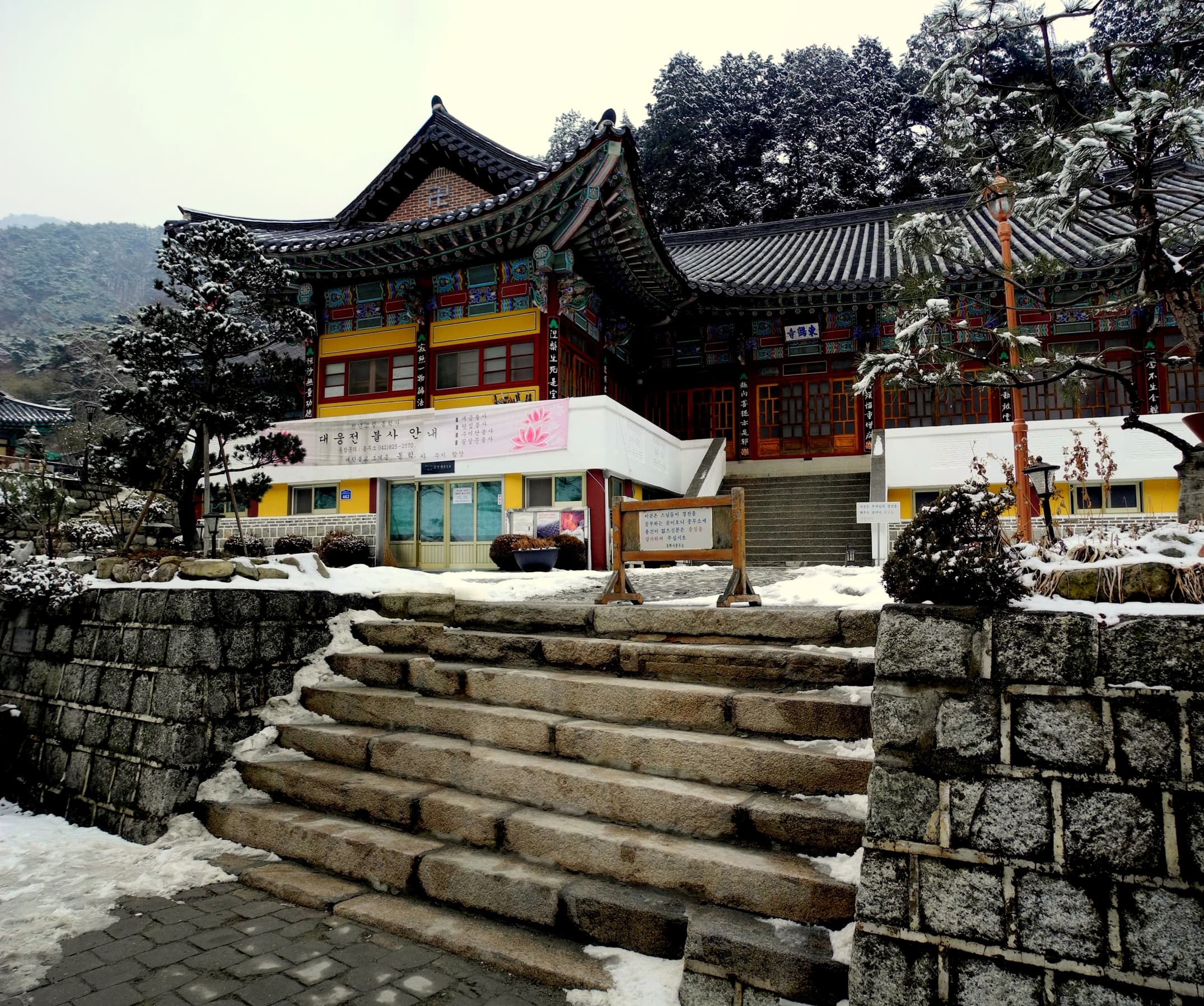
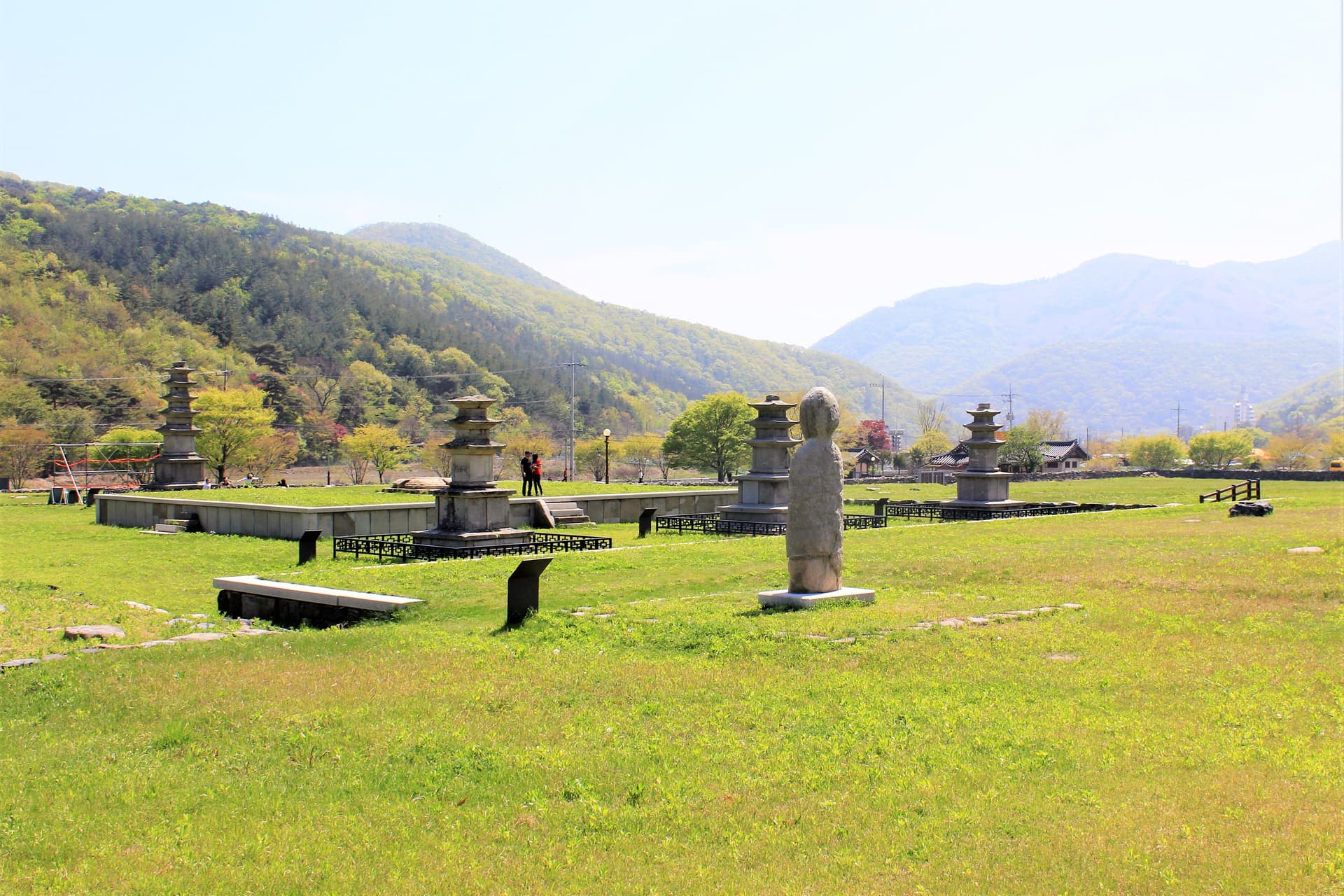
Donghaksa Temple in Gongju, South Chungcheong, South Korea. Image source · CC BY 3.0
Visit essentials
A quick read before you go
- Duration
- Allow two hours for the approach and public temple precinct, with extra time and patience during…
- Access
- KTO lists year-round opening, parking, and the temple telephone but no verified official site…
Overview
A visitor can easily reverse the site’s priorities: blossoms become the destination and the monastery a scenic endpoint. Donghaksa asks for the opposite reading. The path prepares arrival at an institution where women have maintained Buddhist scholarship and religious community under conditions that deserve more attention than a generic temple history provides. Residence, teaching, recitation, debate, ritual, meals, and work create the place every day.
Munpilbong rises before the precinct, and Gyeryongsan gives enclosure, water, and seasonal change, but landscape is not assigned an occult power. The mountain setting matters because it supports separation and concentration while remaining accessible to a large public.
Why this place is sacred
Cherry flowers make impermanence visible because their abundance is short-lived. Monastic education approaches impermanence differently: not as a picturesque moment, but as a reason to keep returning to text, ethical discipline, meditation, and community. One blooms through rapid change; the other matures through repetition. Holding both rhythms together can sharpen attention without claiming that the avenue transmits healing energy. Donghaksa’s specifically female scholarly lineage also resists the habit of making monastic authority anonymous or implicitly male.
The living practitioners are not part of the scenery. Their privacy and work establish the boundaries within which visitors are guests.
Donghaksa’s institutional history developed around Buddhist worship and learning in Gyeryongsan; its enduring distinction is the bhikkhuni academy.
A secluded study community now receives large seasonal visitor flows, making the separation of public access and monastic life especially important.
Experience and orientation
If arriving in spring, expect the road and festival area to be noisier than the inner temple. Notice where commercial and recreational activity ends, lower your voice, and do not carry blossom photography habits into residential courts. Outside peak season, the same route reveals stream, stone, canopy, and the gradual opening toward Munpilbong. Within the public precinct, look for lecture and residence buildings as evidence of an educational institution, while respecting that many are not open for inspection.
Spend time at a permitted hall rather than trying to see every corner. A short, attentive visit causes less disruption than wandering in search of private monastic life.
The temple sits at the end of a long public approach in Gyeryongsan; map festival space, worship courts, and clearly marked residence or academy boundaries.
Context and lineage
The current evidence used here does not support a single precise founding narrative, so the page does not force one. What KTO does state clearly is that Donghaksa is the first and oldest existing academic institute for female monastics and is home to about 150 practitioners. That living institutional fact is more relevant to present sacred identity than an unqualified legendary date.
The annual spring flower festival, held since 1993 according to KTO, belongs to the visitor history of the approach and should not be mistaken for a temple rite.
Donghaksa belongs to Korean Buddhism and is distinguished by the transmission of learning within a bhikkhuni community.
Traditions and practice
Resident practitioners follow an ordained Buddhist schedule; visitors may bow or sit quietly only in public halls and according to posted guidance.
Public tourism and the spring festival coexist with the academy but do not grant access to classes, residences, or private ceremonies.
Read one posted teaching or translation slowly and acknowledge the often-overlooked labor required to transmit it.
Korean Buddhism
ActiveDonghaksa makes the intellectual and communal authority of Korean Buddhist nuns central to a living sacred place.
Scriptural study, recitation, meditation, ritual, ethical discipline, teaching, and communal work.
Perspectives and open questions
Donghaksa should be understood through women’s religious authority, educational continuity, mountain setting, and visitor pressure.
Scholarly perspective
The academy is evidence of an institutional history that warrants sources centered on bhikkhuni education rather than only scenic tourism.
Living and traditional perspectives
Learning and practice are not separate accomplishments: study is carried into conduct, worship, and communal responsibility.
Open questions
The available official evidence does not establish every foundation detail or any metaphysical property of Gyeryongsan.
Plan your visit
Access and arrival
KTO lists year-round opening, parking, and the temple telephone but no verified official site URL. Google reports continuous access to the place record; verify building hours and seasonal controls locally.
No overnight stay is recommended without a verified official program and direct confirmation.
Respectful visit
Choose modest clothing suitable for walking, sitting, and removing shoes at a hall.
Ask before photographing monastics, classes, ceremonies, interiors, or anyone at close range; long lenses do not remove the need for consent.
Use formal donation boxes or instructions and do not leave blossom branches, food, or personal tokens.
Residence halls, classrooms, kitchens, administrative rooms, and any signed monastic paths are private.
Do not photograph resident nuns without consent, describe the academy as a curiosity, or treat festival attendance as participation in Buddhist practice.
Current practical details
Address
462 Donghaksa 1-ro, Banpo-myeon, Gongju, Chungcheongnam-do, South Korea
Phone
Hours
Hours, fees, and access can change — verify on the official source before you travel. Practical details last checked Jul 2026.
Location
Map loads as you approach this section.
Pilgrim reflections
A portrait of encounter, not a score
Pilgrims describe what they felt, how present they could become, and whether the place would shape a journey. There are no stars and no ranking of traditions.
No reviewed reflections yet
The first pilgrims can help describe the character of being here.
Share a reflection
Available after an account-backed “Been there.” Every reflection is reviewed before publication.
Nearby sacred places
Explore other sacred places in the region. Proximity does not establish access or travel time; check each place’s guidance.
References
Sources consulted for this page. Source categories describe the publication, not a guarantee that every claim is verified. Traditional accounts and outside interpretations may differ.
- 01Gongju Donghaksa Temple — Korea Tourism OrganizationofficialLive official tourism record used for site identity, heritage context, and visitor logistics; time-sensitive details require rechecking.
- 02Korea Heritage Service public heritage search — Korea Heritage ServiceofficialAuthoritative national search portal retained as a verification route; not used alone for site-specific claims.
- 03Gongju Donghaksa Temple — Korea Tourism OrganizationofficialOfficial tourism record for the east Gyeryongsan setting, the historic bhikkhuni academy, resident study community, cherry approach, address, and visitor facilities.
- 04Donghaksa Temple — Google Maps place record — GoogleSource contextStrong identity match used only for current practical fields and coordinates.
Share a photo
Help visitors recognize Donghaksa Temple. Every submission is reviewed before publication.