Gakwonsa Temple
Amitabha’s bronze stillness facing an unfinished division
Understand sacred places, explore living traditions, and learn how to engage respectfully with Pilgrim Map.
Access has not been verified. Check current local guidance before planning a visit.
Cheonan, Chungcheongnam-do, South Korea
Read the sources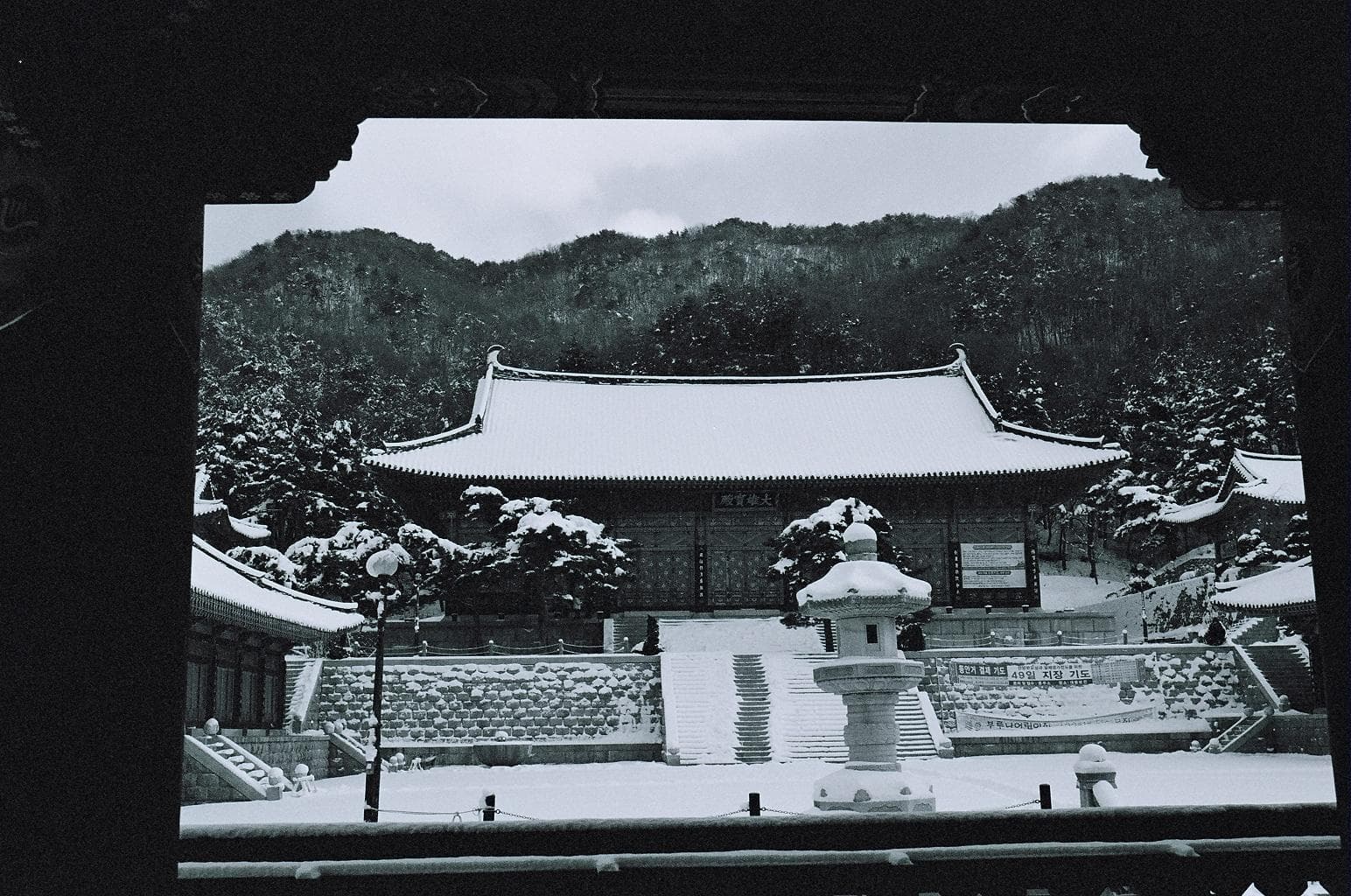
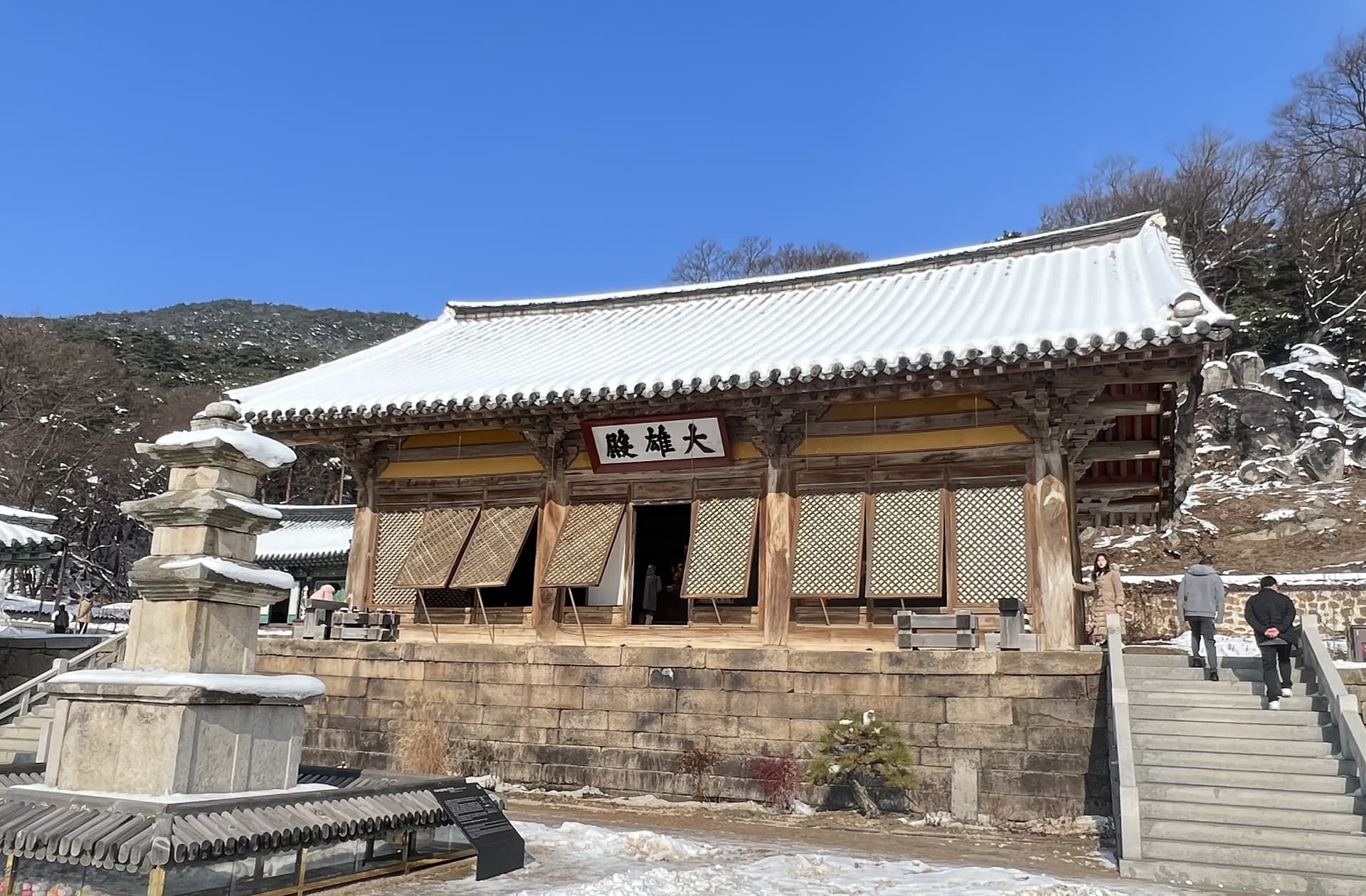
Gakwonsa Temple in Cheonan, South Chungcheong, South Korea. Image source · CC BY 2.0
Visit essentials
A quick read before you go
- Duration
- Allow ninety minutes for the statue terrace, main hall, memorial context, and stairs.
- Access
- Google and KTO agree on the address, +82-41-561-3545, and continuous general opening.
Overview
KTO gives Gakwonsa's bronze Buddha a height of fifteen metres, a circumference of thirty metres, and a weight of sixty tons, but its scale matters in relation to the vow represented. In Mahayana Buddhism, Amitabha is associated with the Pure Land and compassionate conditions for awakening. Here that devotion stands beside a modern Korean hope that separation might end without further violence. The large Daeungjeon and Gaesan Memorial Hall place image, worship, and institutional history within an active temple.
Why this place is sacred
A reunification monument can become propaganda if complexity is erased. Gakwonsa’s Buddhist setting allows another reading: hope is held as a vow rather than announced as an inevitable political outcome. Amitabha’s seated posture does not predict when or how the peninsula will reunify. It offers a visual discipline of patience, compassion, and refusal of hatred. The mountain slope and long stair approach intensify the encounter, but no source establishes a measurable sacred energy.
The supported spiritual claim is narrower and stronger: worshippers direct prayer toward Amitabha while the temple keeps peaceful reunification within public moral imagination.
Gakwonsa was founded as a Buddhist place of worship and a symbol of hope for peaceful Korean reunification.
The seated Amitabha, large Dharma hall, memorial collection, seasonal visitation, and continuing worship made the modern complex a major Cheonan religious landmark.
Experience and orientation
Walk the stairs at a pace that leaves room for worshippers carrying offerings. From the lower approach, observe how the figure’s posture relates to the mountain and open sky; closer in, shift attention from size to gesture and facial expression. Continue to Daeungjeon rather than treating the statue as the entire temple. The Gaesan Memorial Hall provides a separate historical register, where objects are connected with the temple’s foundation.
If prayers are underway, remain outside the devotional axis and avoid posing against the image.
Distinguish the Amitabha terrace, Daeungjeon, memorial hall, public stairs, and monastic areas.
Context and lineage
Official tourism material does not present Gakwonsa as an ancient Silla foundation. It identifies a modern temple whose purpose is connected to peaceful reunification. The monumental seated Amitabha and unusually large Daeungjeon express the resources and confidence of that project. The exact political future remains unknown, so content should neither imply that the temple guarantees reunification nor reduce its devotional life to a political slogan.
Gakwonsa belongs to Korean Mahayana Buddhism and centers public devotion to Amitabha.
Traditions and practice
Amitabha devotion belongs to a Buddhist path of trust, ethical conduct, recollection, and aspiration; it is not worship of a national symbol.
Visitors and local devotees encounter the temple as both a living religious institution and a public statement for peaceful reunification.
Before the image, hold one concrete action that reduces hostility without pretending to solve national division alone.
Korean Buddhism
ActiveAmitabha devotion at Gakwonsa gives spiritual form to patient hope for peace on the Korean peninsula.
Prayer, recollection of Amitabha, chanting, bowing, offerings, temple worship, and memorial study.
Perspectives and open questions
Gakwonsa invites Buddhist, artistic, political-memory, and peacebuilding readings without collapsing them.
Scholarly perspective
The temple shows how monumental Buddhist patronage could address national division in modern South Korea.
Living and traditional perspectives
Amitabha devotion directs hope toward compassionate awakening, not toward hostility against people across the border.
Open questions
Neither reunification nor a devotee’s desired outcome can be guaranteed by the temple or image.
Plan your visit
Access and arrival
Google and KTO agree on the address, +82-41-561-3545, and continuous general opening. Individual buildings and ceremonies may differ; confirm current conditions at gakwonsa.or.kr.
No overnight visitor program is asserted in the current evidence bundle.
Respectful visit
Wear modest clothing and shoes suitable for hillside stairs; remove footwear where posted.
Ask about interior rules and never climb, touch, or stage comic poses beside the Amitabha image.
Use designated candles, incense, and donation boxes; do not attach notes or objects to the statue.
Altars, memorial objects, monastic quarters, service rooms, and closed terraces require authorization.
Do not claim prayer here predicts political events, guarantees rebirth, or automatically fulfills wishes.
Current practical details
Address
245 Gagwonsa-gil, Dongnam-gu, Cheonan, Chungcheongnam-do, South Korea
Phone
Hours
Hours, fees, and access can change — verify on the official source before you travel. Practical details last checked Jul 2026.
Location
Map loads as you approach this section.
Pilgrim reflections
A portrait of encounter, not a score
Pilgrims describe what they felt, how present they could become, and whether the place would shape a journey. There are no stars and no ranking of traditions.
No reviewed reflections yet
The first pilgrims can help describe the character of being here.
Share a reflection
Available after an account-backed “Been there.” Every reflection is reviewed before publication.
Nearby sacred places
Explore other sacred places in the region. Proximity does not establish access or travel time; check each place’s guidance.
References
Sources consulted for this page. Source categories describe the publication, not a guarantee that every claim is verified. Traditional accounts and outside interpretations may differ.
- 01Korea Heritage Service public heritage search — Korea Heritage ServiceofficialAuthoritative national search portal retained as a verification route; not used alone for site-specific claims.
- 02Gakwonsa Temple — Korea Tourism OrganizationofficialOfficial Korea Tourism Organization record for the exact temple, peaceful-reunification purpose, seated Amitabha image, Daeungjeon, address, temple website, telephone, and public access.
- 03Gakwonsa Temple — Google Maps place record — GoogleSource contextStrong identity match used only for current practical fields and coordinates.
Pilgrim glossary
- Dharma
- The teachings of the Buddha; also the universal law underlying them.
- Pure Land
- A Buddhist tradition focused on rebirth in Amida Buddha's western paradise through devotional practice.
Share a photo
Help visitors recognize Gakwonsa Temple. Every submission is reviewed before publication.