Jingwansa Temple
Food offered across worlds beneath Bukhansan
Understand sacred places, explore living traditions, and learn how to engage respectfully with Pilgrim Map.
Access has not been verified. Check current local guidance before planning a visit.
Seoul, Seoul, South Korea
Read the sources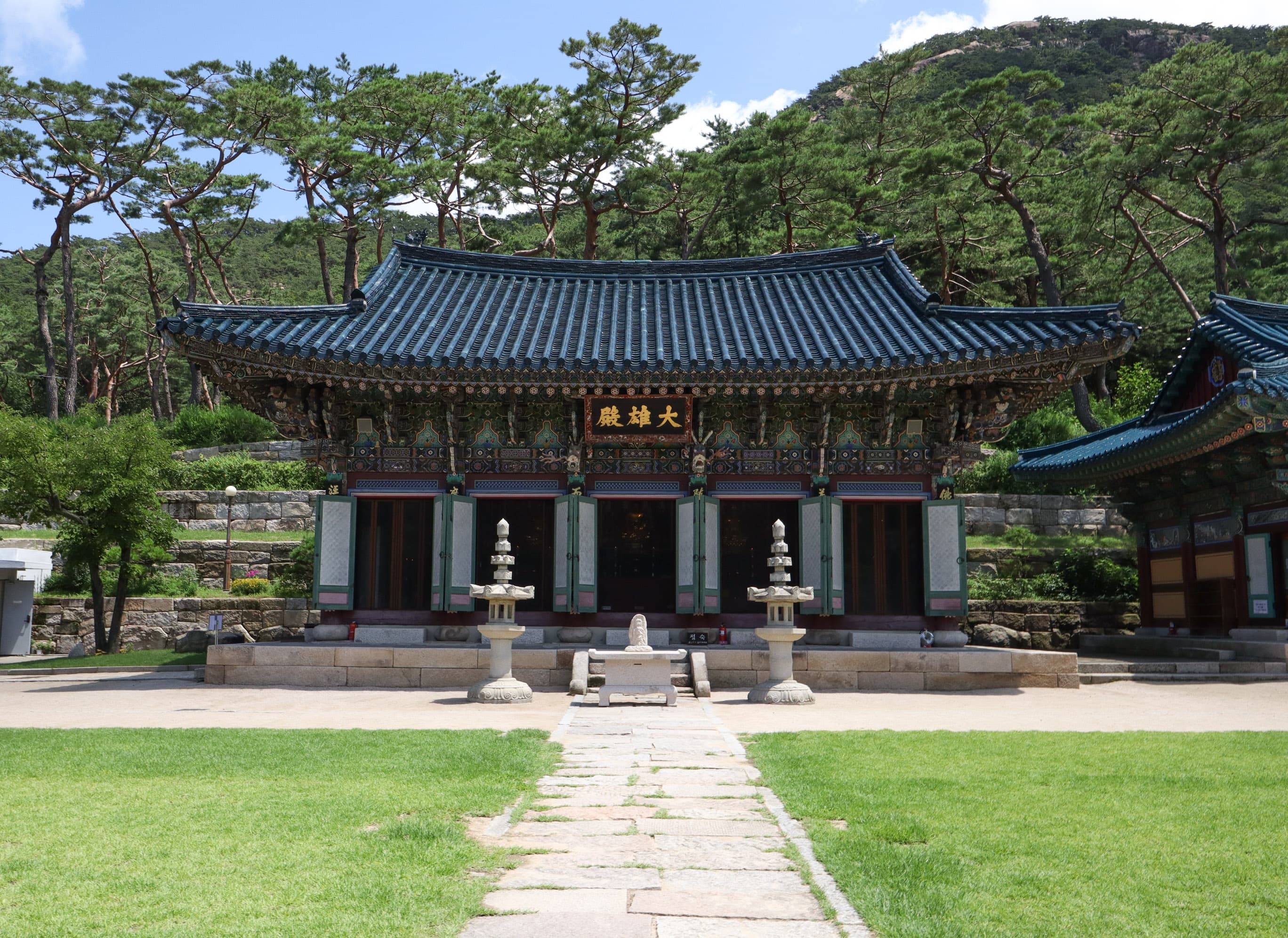
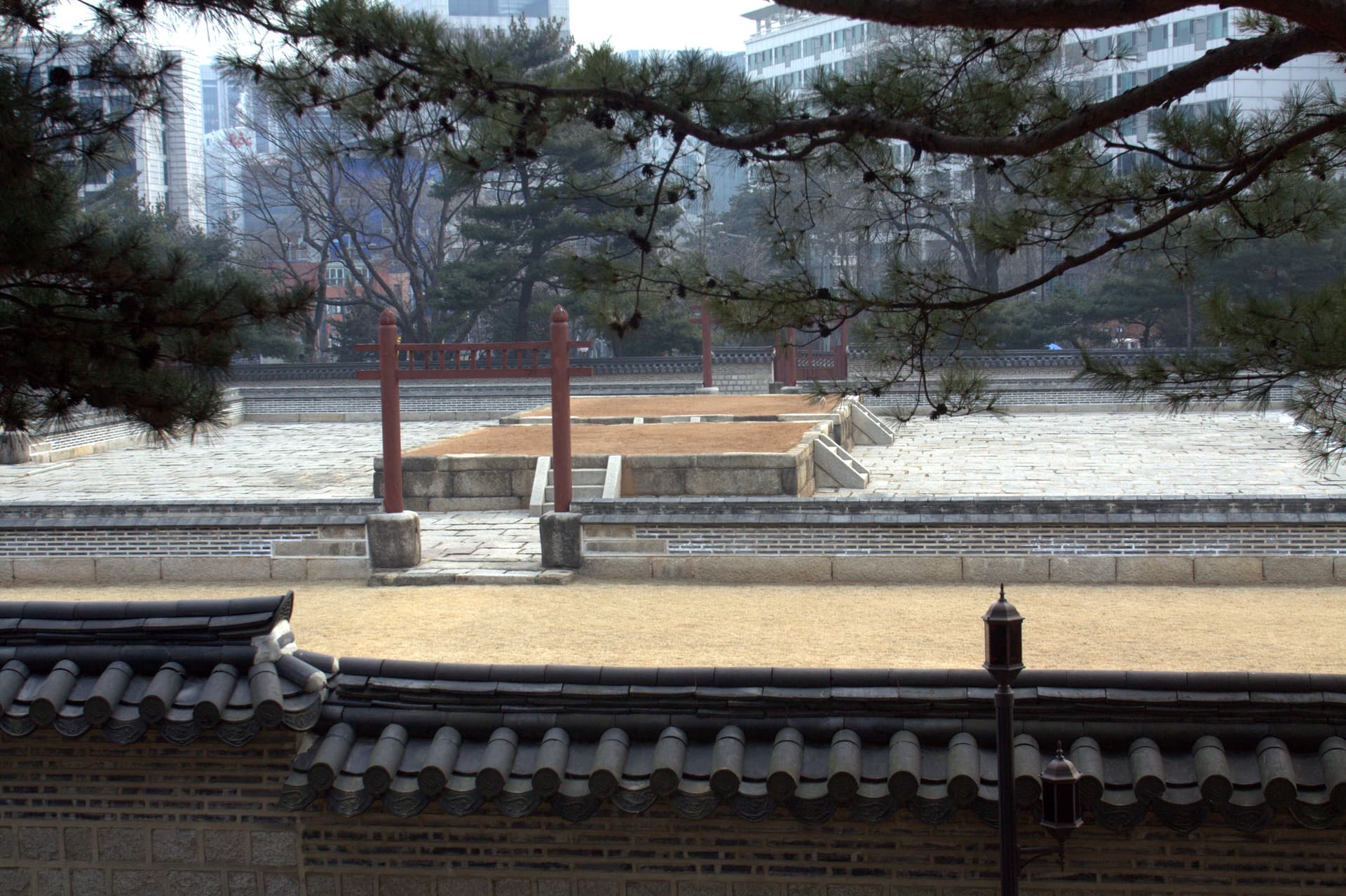
Jingwansa Temple in Seoul, Eunpyeong District, South Korea. Image source · CC BY-SA 4.0
Visit essentials
A quick read before you go
- Duration
- Allow ninety minutes for an ordinary visit; a ritual or reserved experience follows its…
- Access
- KTO currently lists 09:00–18:00, free entry, parking, and +82-2-359-8410.
Overview
At Jingwansa, nourishment is a serious religious language. Suryukjae food offerings address hungry ghosts and wandering souls, expressing Buddhist compassion beyond the visible congregation rather than lifestyle decoration. The temple's cuisine and cultural programs belong within this wider attention to life, labor, and interdependence. Bukhansan's valley encloses the precinct while the nearby city keeps public responsibilities close.
Visitors meet connected histories of ritual care for the dead, monastic hospitality for the living, and patriotic risk during colonial rule without collapsing them into sentiment.
Why this place is sacred
Suryukjae widens the imagined community of a rite. Prayers and offerings are directed toward beings who have no household to remember them, including those said to wander on land or water. Whether a visitor shares the cosmology or not, the ethical form is clear: the forgotten are deliberately given place. Temple food adds another material discipline, organizing ingredients and preparation around Buddhist respect for life.
The valley setting may help concentration, but it is not the source of an unverifiable energy. Jingwansa’s spiritual significance is better located in repeated acts that turn compassion into cooking, chanting, arrangement, and communal memory.
Jingwansa developed as a Buddhist monastery serving royal, ritual, educational, and community functions around the capital.
The temple rebuilt after wartime damage and now sustains nationally recognized ritual, cultural programs, cuisine, and remembrance of anti-colonial activity.
Experience and orientation
From the entrance, notice how the path follows the valley and how kitchens, halls, courtyards, and program facilities support different forms of work. If visiting near the autumn Suryukjae season, check whether public observation is permitted and where guests should stand. The rite’s visual richness belongs to a carefully ordered sequence; arriving only to collect images misses its address to the unremembered dead. The Baek Chowol trail adds another mode of attention.
It commemorates the monk associated with hiding a Korean flag and independence materials, placing moral courage within the same monastic landscape.
Begin at visitor information, identify areas reserved for rites or programs, and follow staff direction during Suryukjae.
Context and lineage
KTO describes Jingwansa as one of four major Buddhist temples around Seoul and as a historic center of learning. Its present identity is anchored by Gukhaeng Suryukjae, a nationally designated ritual held in the autumn, and by programs in temple food and Templestay. The name of Baekchowon-gil recalls monk Baek Chowol, whose concealed flag and materials linked the monastery to resistance during Japanese colonial rule.
These elements should be dated and interpreted separately rather than woven into a single foundation legend.
Jingwansa belongs to Korean Buddhism and maintains Suryukjae as a major ritual lineage.
Traditions and practice
During Suryukjae, ritual specialists follow a long sequence for inviting, feeding, teaching, and sending onward the beings addressed by the ceremony.
Templestay and food programs provide supervised ways to learn; their simplified visitor activities should not be confused with full ritual authority.
Before eating temple food, attend to its preparation and the Buddhist commitments described by the custodian instead of treating it only as cuisine.
Korean Buddhism
ActiveKorean Buddhism at Jingwansa makes universal compassion concrete through Suryukjae and disciplined hospitality.
Chanting, offerings, ritual movement, temple cooking, meditation, memorial observance, and retreat.
Perspectives and open questions
Ritual studies, Buddhist ethics, food culture, and modern Korean history each illuminate a different Jingwansa practice.
Scholarly perspective
Suryukjae can be studied as performance, intangible heritage, and social memory without denying its religious address to unseen beings.
Living and traditional perspectives
Offerings to land-and-water spirits express compassion for beings beyond ordinary kinship and remembrance.
Open questions
The rite’s cosmology is presented as Buddhist tradition, not as independently verified evidence about spirits.
Plan your visit
Access and arrival
KTO currently lists 09:00–18:00, free entry, parking, and +82-2-359-8410. Verify seasonal rites and program bookings at jinkwansa.org.
Only confirmed Templestay reservations should be treated as overnight access.
Respectful visit
Wear modest layers suitable for temple floors and Bukhansan weather.
Suryukjae and food preparation may have special rules; request explicit permission rather than assuming public visibility means consent.
Contribute only through the temple’s designated ritual or donation channels.
Do not handle arranged foods, ritual papers, flags, instruments, or memorial materials.
Do not imitate ceremonial gestures, enter kitchens, or photograph ritual participants from restricted positions.
Current practical details
Address
73 Jingwan-gil, Eunpyeong District, Seoul, South Korea
Phone
Hours, fees, and access can change — verify on the official source before you travel. Practical details last checked Jul 2026.
Location
Map loads as you approach this section.
Pilgrim reflections
A portrait of encounter, not a score
Pilgrims describe what they felt, how present they could become, and whether the place would shape a journey. There are no stars and no ranking of traditions.
No reviewed reflections yet
The first pilgrims can help describe the character of being here.
Share a reflection
Available after an account-backed “Been there.” Every reflection is reviewed before publication.
Nearby sacred places
Explore other sacred places in the region. Proximity does not establish access or travel time; check each place’s guidance.
References
Sources consulted for this page. Source categories describe the publication, not a guarantee that every claim is verified. Traditional accounts and outside interpretations may differ.
- 01Jingwansa Temple (Seoul) — Korea Tourism OrganizationofficialLive official tourism record used for site identity, heritage context, and visitor logistics; time-sensitive details require rechecking.
- 02Korea Heritage Service public heritage search — Korea Heritage ServiceofficialAuthoritative national search portal retained as a verification route; not used alone for site-specific claims.
- 03Jingwansa Temple Gukhaeng Suryukjae — Korea Tourism OrganizationofficialOfficial tourism feature documenting the nationally designated Suryukjae, its purpose, seasonal timing, and Jingwansa venue.
- 04Jingwansa Temple — Google Maps place record — GoogleSource contextStrong identity match used only for current practical fields and coordinates.
Share a photo
Help visitors recognize Jingwansa Temple. Every submission is reviewed before publication.