Asklepieion of Kos
Terraces of worship and medicine above the city of Kos
Understand sacred places, explore living traditions, and learn how to engage respectfully with Pilgrim Map.
Access has not been verified. Check current local guidance before planning a visit.
Kos, South Aegean, Greece
Read the sourcesVisit essentials
A quick read before you go
- Etiquette
- Stay on marked routes, respect conservation barriers, and leave stones and other material in…
Overview
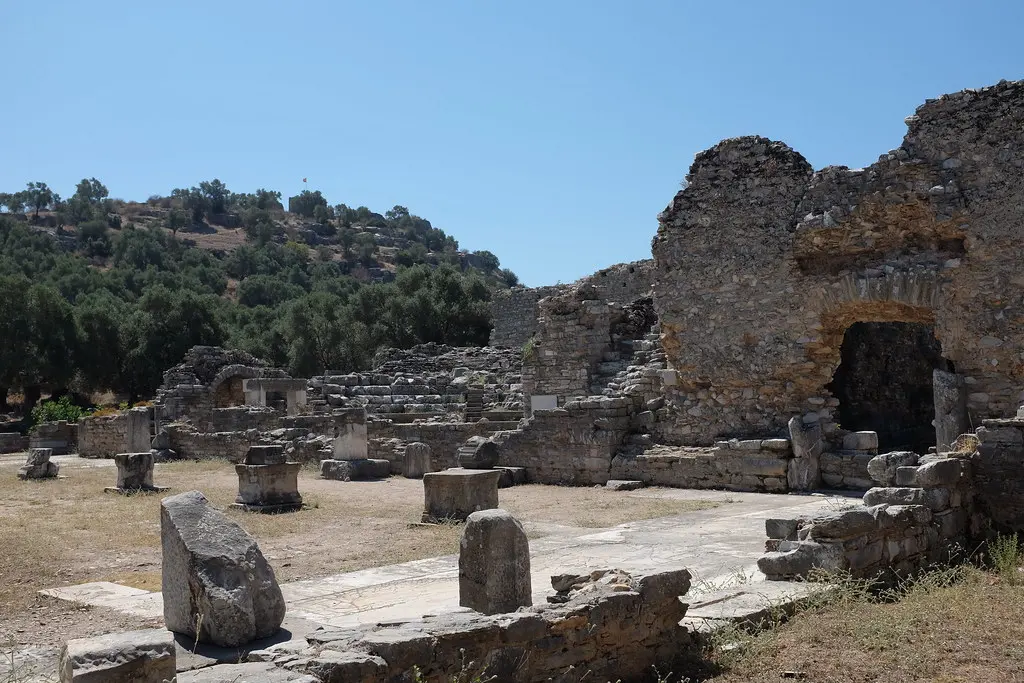
The Asklepieion of Kos is an archaeological sanctuary associated with Asklepios and the island's history of medicine. Its terraced remains include spaces for worship and activities connected with healing. Today visitors encounter a protected monument, not an operating ancient hospital or a shrine offering the same rites once practiced here. It is distinct from the Asklepieia at Athens, Epidaurus, and Pergamon.
Why this place is sacred
The site allows visitors to consider how religious and medical approaches to suffering once shared a setting. Inscriptions, architecture, and archaeological interpretation provide evidence for that history. Ancient healing narratives show what people hoped for and remembered, but are not modern clinical evidence and do not establish therapeutic properties in the present site.
Healing traditions
Ancient sanctuary of healing
The Asklepieion of Kos combined worship of Asklepios with care and medical learning. The terraces, temples, and finds including surgical instruments and inscriptions preserve that history. The reviewed archaeological sources establish a healing sanctuary, but do not provide a particular miraculous recovery suitable for retelling here.
Ways to participate
Follow the site's marked routes and use the museum or interpretation to learn how sacred care and medicine shared this landscape. Pause to consider the people who came seeking relief and those who cared for them. Do not recreate ancient treatments, leave offerings on the ruins, or assume the surviving complex was all built in Hippocrates's lifetime.
These accounts describe religious traditions and reported experiences. They do not promise a cure or replace medical care.
Context and lineage
Ancient worship of Asklepios connected the search for healing with divine assistance, ritual, and the practical care of the body. At Kos, the sanctuary developed within an island strongly associated with Hippocrates and medical learning. Modern summaries sometimes make the stronger claim that Hippocrates taught in the surviving complex; the connection should be handled cautiously because the monumental sanctuary developed over time. The ruins should not all be assigned to a single celebrated physician's lifetime.
Traditions and practice
Move through the permitted terraces and notice how the ascent organizes the sanctuary. Read the interpretation for the different building phases and functions instead of assuming every structure was a treatment room. Quiet reflection is appropriate; recreating incubation or entering restricted remains is not part of ordinary visitor access.
Ancient Greek
HistoricalHistorical setting for worship and healing rites.
Plan your visit
The Asklepieion lies outside Kos town. Consult the current Greek heritage authority or official island visitor information for admission, opening periods, and closures. The terraced layout involves stairs and exposed areas, so confirm accessible routes and plan for weather and rest. Ask site staff about rest points and the route between terraces.
Respectful visit
Stay on marked routes, respect conservation barriers, and leave stones and other material in place. Do not climb ruins for photographs or enact rituals that could disturb the monument. The sanctuary's historical healing role is best appreciated through careful attention to its evidence and landscape.
Location
Map loads as you approach this section.
Pilgrim reflections
A portrait of encounter, not a score
Pilgrims describe what they felt, how present they could become, and whether the place would shape a journey. There are no stars and no ranking of traditions.
No reviewed reflections yet
The first pilgrims can help describe the character of being here.
Share a reflection
Available after an account-backed “Been there.” Every reflection is reviewed before publication.
Nearby sacred places
Explore other sacred places in the region. Proximity does not establish access or travel time; check each place’s guidance.


References
Sources consulted for this page. Source categories describe the publication, not a guarantee that every claim is verified. Traditional accounts and outside interpretations may differ.
- 01Asclepieion | Kos Island Greece — kos.grofficialSupports site identity, history, or publicly described devotion; healing narratives are attributed beliefs, not clinical evidence.
- 02Epigraphical Collection of Asklepieion, Kos | Directorate of Archaeological Museums, Exhibitions and Educational Programs — archaeologicalmuseums.culture.gov.grofficialSupports site identity, history, or publicly described devotion; healing narratives are attributed beliefs, not clinical evidence.
- 03The Island - Δήμος Κω — kos.gov.grofficialSupports site identity, history, or publicly described devotion; healing narratives are attributed beliefs, not clinical evidence.
- 04Coordinate reference for Asklepieion of Kos — www.wikidata.orgSource contextIdentity and geographic positioning only; not used to approve religious claims or access policy.
- 05Asklepieion — Municipality of Kos tourismofficialSupports the attributed account or visitor practice in the healing section; not evidence of clinical efficacy.
- 06Epigraphical collection of the Asklepieion — Greek Ministry of CultureofficialSupports the attributed account or visitor practice in the healing section; not evidence of clinical efficacy.
Share a photo
Help visitors recognize Asklepieion of Kos. Every submission is reviewed before publication.