Greece
Aegean
8 sites

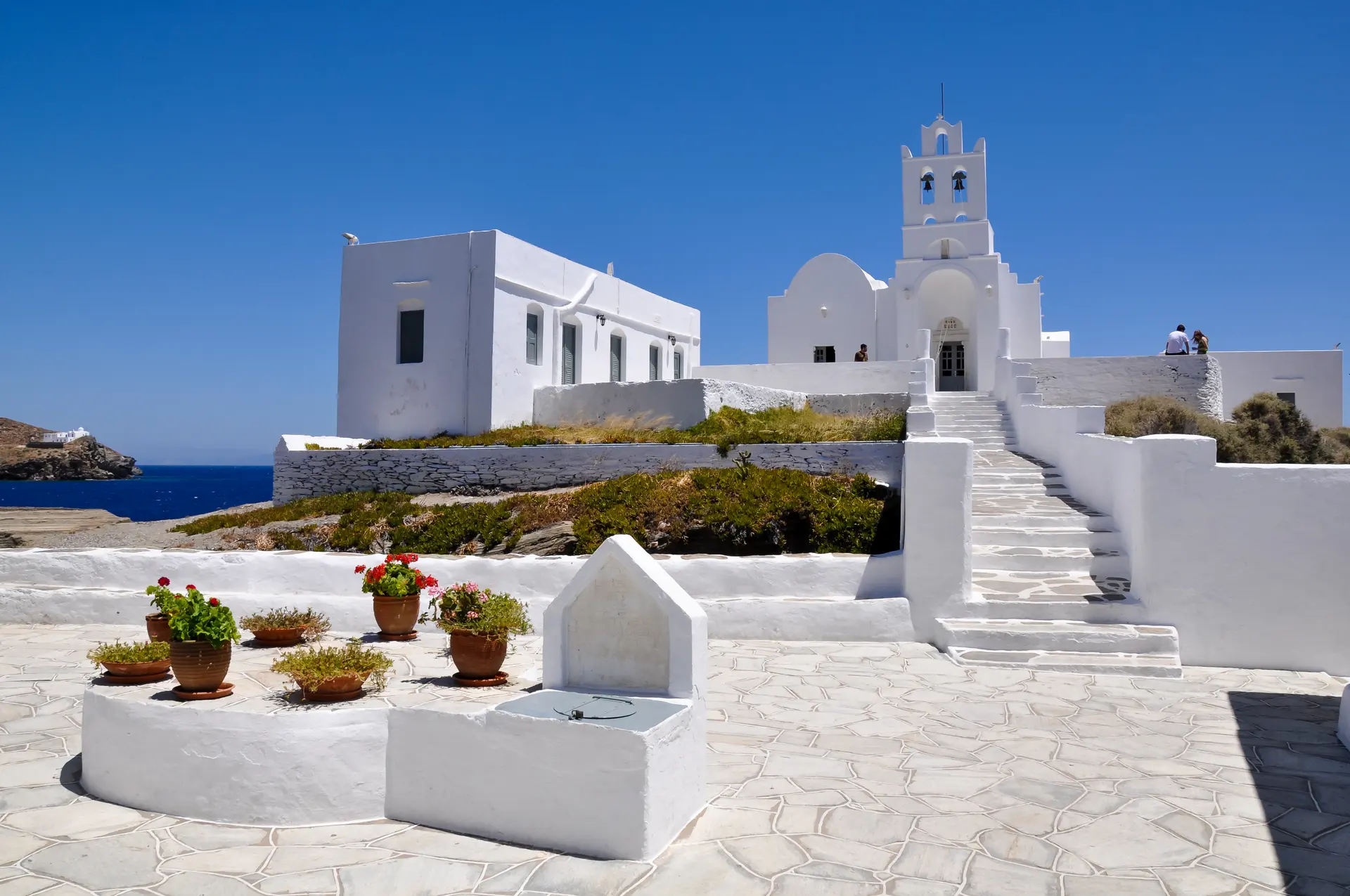
Church of Panagia Chrisopigi
The Panagia Chrysopigi (Greek: Παναγία Χρυσοπηγή) is a former monastery built on a promontory on the southeast coast of Sifnos. In the past there was a share of the Vrysis monastery and the oldest references to the monastery date back to the 17th century. The monastery is connected with many legends of the island. The building complex of the former monastery includes, beyond the church, some rectangular buildings, such as the refectory. The single-aisled church bears an inscription from 1757, when the church was probably rebuilt.
Delos
Delos (; Greek: Δήλος [ˈðilos]; Attic Greek: Δῆλος Dêlos, Doric Greek: Δᾶλος Dâlos), is a small Greek island near Mykonos, close to the centre of the Cyclades archipelago. Though only 3.43 km2 (1.32 sq mi) in area, it is one of the most important mythological, historical, and archaeological sites in Greece. The ongoing excavations in the island are among the most extensive in the Mediterranean, and many of the artifacts found are displayed at the Archaeological Museum of Delos and the National Archaeological Museum of Athens. Delos had a position as a holy sanctuary for a millennium before Olympian Greek mythology made it the birthplace of Apollo and Artemis. From its Sacred Harbour are visible the three conical mounds that have identified landscapes sacred to a goddess (presumably Athena). Another site, retaining its Pre-Greek name Mount Cynthus, is crowned with a sanctuary of Zeus. In 1990, UNESCO added Delos to the World Heritage List, citing its exceptional archaeological site which "conveys the image of a great cosmopolitan Mediterranean port", its influence on the development of Greek architecture, and its sacred importance throughout Ancient Greece.
Holy Monastery of Saint John the Theologian
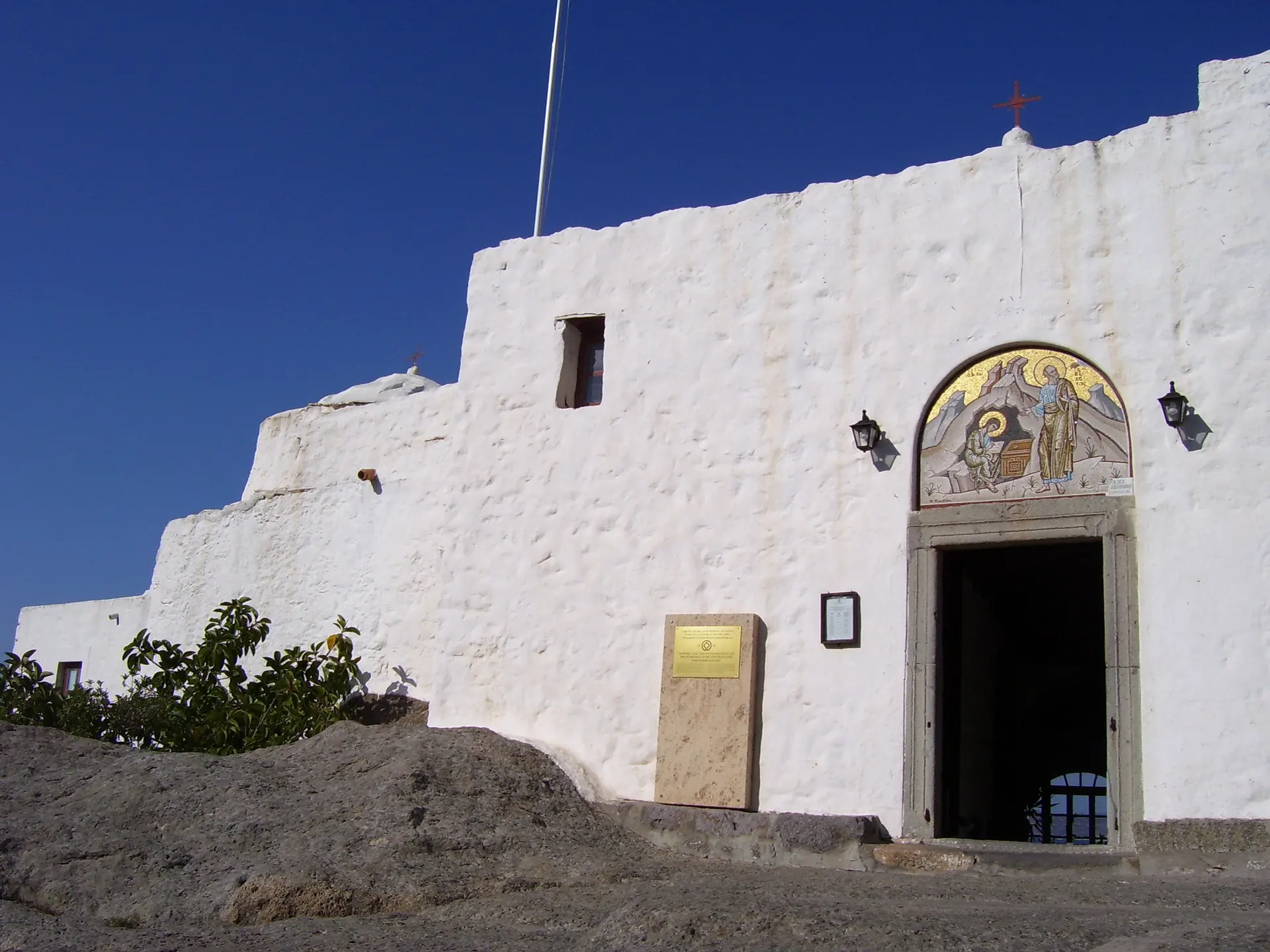
Patmos (Greek: Πάτμος, pronounced [ˈpatmos]) is a Greek island in the Aegean Sea. It is famous as the location where, according to Christian belief, John of Patmos received the vision found in the Book of Revelation of the New Testament, and where the book was written. One of the northernmost islands of the Dodecanese complex, Patmos has a population of 3,283 (2021) and an area of 34.05 km2 (13.15 sq mi). The highest point is Profitis Ilias, 269 metres (883 ft) above sea level. The municipality of Patmos, which includes the offshore islands of Arkoi (pop. 44), Marathos (pop. 5), and several uninhabited islets, has a total population of 3,047 (2011 census) and a combined land area of 45.039 square kilometres (17.390 sq mi). It is part of the Kalymnos regional unit. In 1999, the island's historic center Chora, along with the Monastery of Saint John the Theologian and the Cave of the Apocalypse, were declared World Heritage Sites by UNESCO because of their significance in Christianity and the preservation of ancient religious ceremonies that occur on the island. The monastery was founded by Christodoulos Latrinos. Patmos is also home to the Patmian School, a notable Greek seminary.

Island of Kos
Island of Kos is a ancient healing temple of sacred significance. Approximate coordinates: 36.87531, 27.25677. Attributes: built, cultural, archaeological. Tradition: Ancient Greek. Associated figure: Asclepius. Mythological context: Greek Mythology. Located in Κως, Αποκεντρωμένη Διοίκηση Αιγαίου, Ελλάς.

Monastery of Hozoviótissa
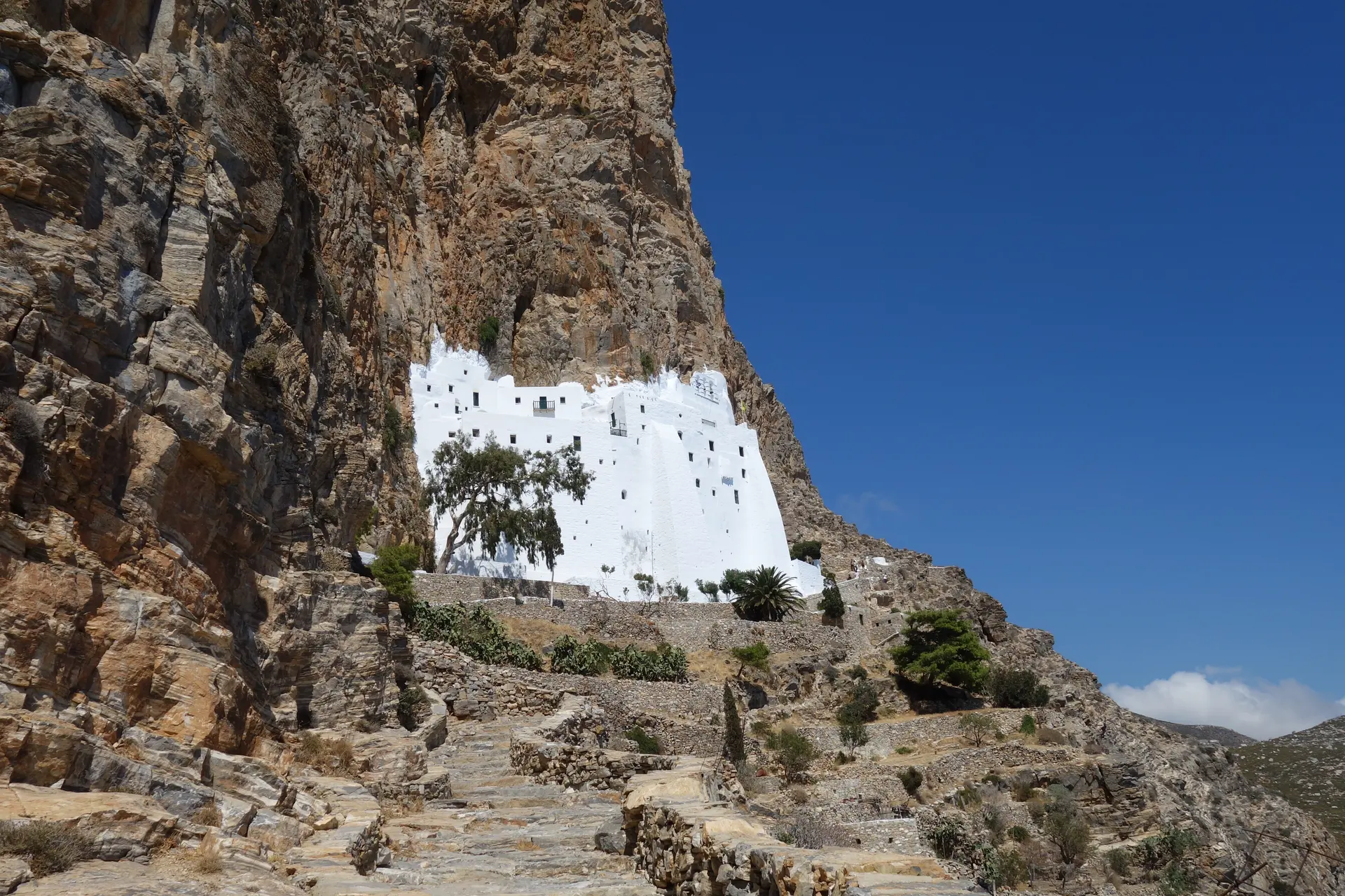
Monastery of Hozoviótissa, Amorgos Island is a site of sacred significance. Approximate coordinates: 36.83456, 25.90965. Located in Δήμος Αμοργού, Αποκεντρωμένη Διοίκηση Αιγαίου, Ελλάς.
Samos Island
Samos Island is a site of sacred significance. Approximate coordinates: 37.67194, 26.88555. Located in Δημοτική Ενότητα Πυθαγορείου, Αποκεντρωμένη Διοίκηση Αιγαίου, Ελλάς.

Santorini
Santorini is a site of sacred significance. Approximate coordinates: 36.40035, 25.45961. Located in Δημοτική Ενότητα Θήρας, Αποκεντρωμένη Διοίκηση Αιγαίου, Ελλάς.

Tinos
Tinos is a site of sacred significance. Approximate coordinates: 37.54241, 25.16271. Located in Δήμος Τήνου, Αποκεντρωμένη Διοίκηση Αιγαίου, Ελλάς.
Attica
6 sites

Aegina
Aegina (; Greek: Αίγινα pronounced [ˈeɣina]; Ancient Greek: Αἴγῑνα) is one of the Saronic Islands of Greece in the Saronic Gulf, 27 km (17 mi) from Athens. Tradition derives the name from Aegina, the mother of the mythological hero Aeacus, who was born on the island and became its king.

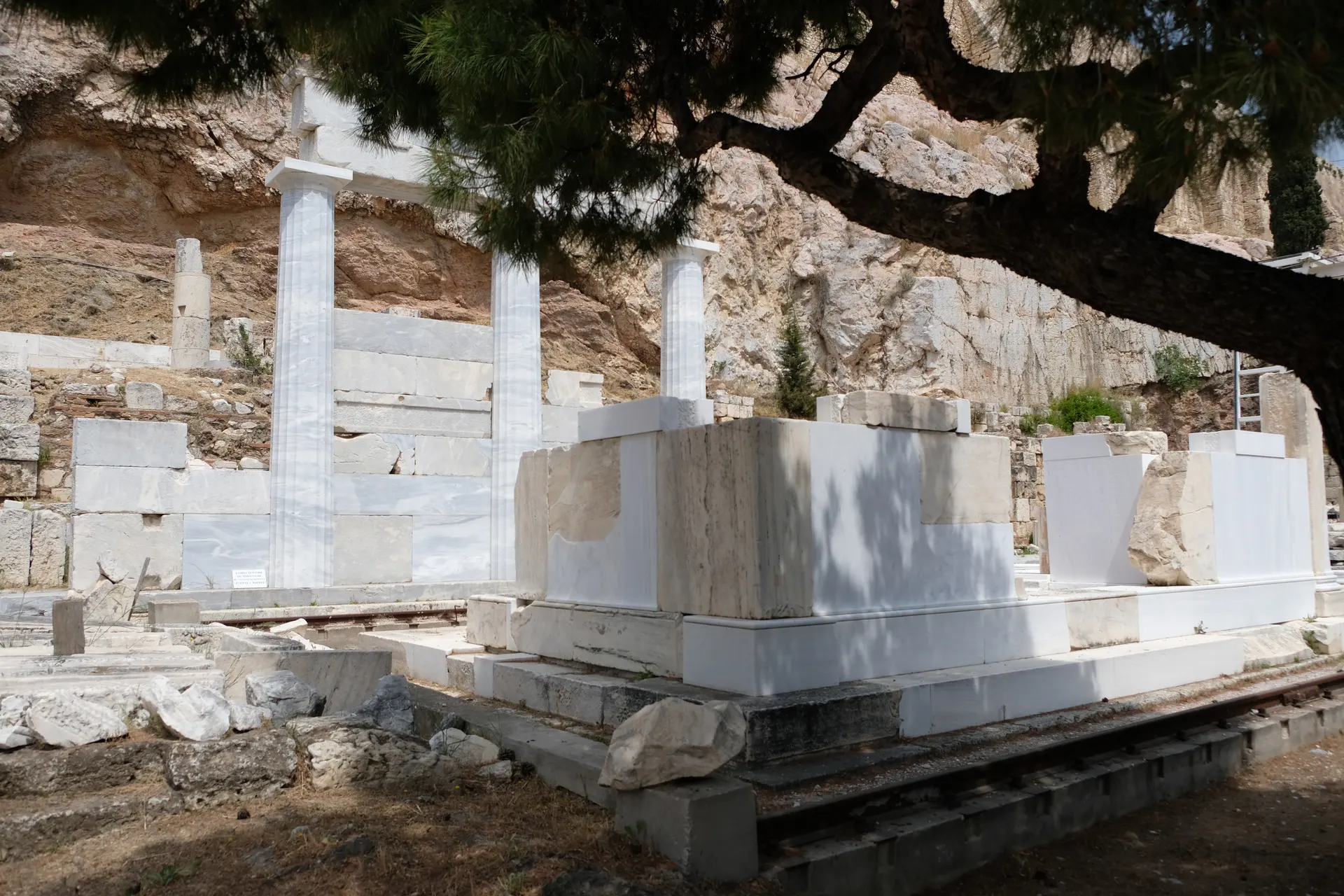
Asklepion shrine
An Asclepieion (Ancient Greek: Ἀσκληπιεῖον Asklepieion; Ἀσκλαπιεῖον in Doric dialect; Latin aesculapīum), plural Asclepieia, was a healing temple in ancient Greece (and in the wider Hellenistic and Roman world) that was dedicated to Asclepius, the first doctor-demigod in Greek mythology. Asclepius was said to have been such a skilled doctor that he could even raise people from the dead. Stemming from the myth of his great healing powers, pilgrims would flock to temples built in his honor in order to seek spiritual and physical healing. Asclepieia included carefully controlled spaces conducive to healing and fulfilled several of the requirements of institutions created for healing. Treatment at these temples largely centered around promoting healthy lifestyles, with a particular emphasis on a person's spiritual needs. Characteristic of the Asclepieion was the practice of incubatio, also known as 'temple sleep.' This was a process by which patients would go to sleep in the temple with the expectation that they would be visited by Asclepius himself or one of his healing children in their dream. During this time, they would be told what it is that they needed to do in order to cure their ailment. At the very least, they would wake up having not been directly visited by a deity and instead report their dream to a priest. The priest would then interpret the dream and prescribe a cure, often a visit to the baths or a gymnasium. The preliminary treatment for admission into the Asclepieia was catharsis, or purification. It consisted of a series of cleansing baths and purgations, accompanied by a cleansing diet, which lasted several days. In the Asclepieion of Epidaurus, three large marble boards dated to 350 BC preserve the names, case histories, complaints, and cures of about 70 patients who came to the temple with a problem and shed it there. Some of the surgical cures listed, such as the opening of an abdominal abscess or the removal of traumatic foreign material, are realistic enough to have taken place, with the patient in a dream-like state of induced sleep known as "enkoimesis" (Greek: ἐγκοίμησις), not unlike anesthesia, induced with the help of soporific substances such as opium. Asclepieia also became home to future physicians as well. Hippocrates is said to have received his medical training at an asclepieion on the isle of Kos. Prior to becoming the personal physician to the Roman Emperor Marcus Aurelius, Galen treated and studied at the famed asclepieion at Pergamon.

Cape Sounion
Cape Sounion is a temple of sacred significance. Approximate coordinates: 37.65016, 24.02458. Attributes: built, cultural, archaeological, pilgrimage. Tradition: Greek. Associated figure: Poseidon. Mythological context: Greek Mythology. Located in Δημοτική Ενότητα Λαυρεωτικής, Αποκεντρωμένη Διοίκηση Αττικής, Ελλάς.
Eleusis
Eleusis is a religious of sacred significance. Approximate coordinates: 38.04124, 23.53861. Attributes: built, cultural, archaeological, pilgrimage, ceremonial. Tradition: Ancient Greek. Associated figure: Demeter and Persephone. Mythological context: Eleusinian Mysteries. Recognized as a UNESCO World Heritage Site. Located in Δημοτική Ενότητα Ελευσίνος, Αποκεντρωμένη Διοίκηση Αττικής, Ελλάς.

Mount Parnitha
Mount Parnitha is a site of sacred significance. Approximate coordinates: 38.17374, 23.71768. Located in Αποκεντρωμένη Διοίκηση Αττικής, Ελλάς.

Parthenon
The Parthenon (; Ancient Greek: Παρθενών, romanized: Parthenōn [par.tʰe.nɔ̌ːn]; Greek: Παρθενώνας, romanized: Parthenónas [parθeˈnonas]) is a former temple on the Athenian Acropolis, Greece, that was dedicated to the goddess Athena. Its decorative sculptures are considered some of the high points of classical Greek art, and the Parthenon is considered an enduring symbol of Ancient Greece, democracy, and Western civilization. The Parthenon was built in the 5th century BC in thanksgiving for the Greek victory over the Persian invaders during the Greco-Persian Wars. Like most Greek temples, the Parthenon also served as the city treasury. Construction started in 447 BC when the Delian League was at the peak of its power. It was completed in 438 BC; work on the artwork and decorations continued until 432 BC. For a time, it served as the treasury of the Delian League, which later became the Athenian Empire. In the final decade of the 6th century AD, the Parthenon was converted into a Christian church dedicated to the Virgin Mary. After the Ottoman conquest in the mid-15th century, it became a mosque. In the Morean War, a Venetian bomb landed on the Parthenon, which the Ottomans had used as a munitions dump, during the 1687 siege of the Acropolis. The resulting explosion severely damaged the Parthenon. From 1800 to 1803, the 7th Earl of Elgin controversially removed many of the surviving sculptures and subsequently shipped them to England where they are now known as the Elgin Marbles or Parthenon marbles. Since 1975, numerous large-scale restoration projects have been undertaken to preserve remaining artefacts and ensure its structural integrity.
Autonomous Monastic State of the Holy Mountain
1 site

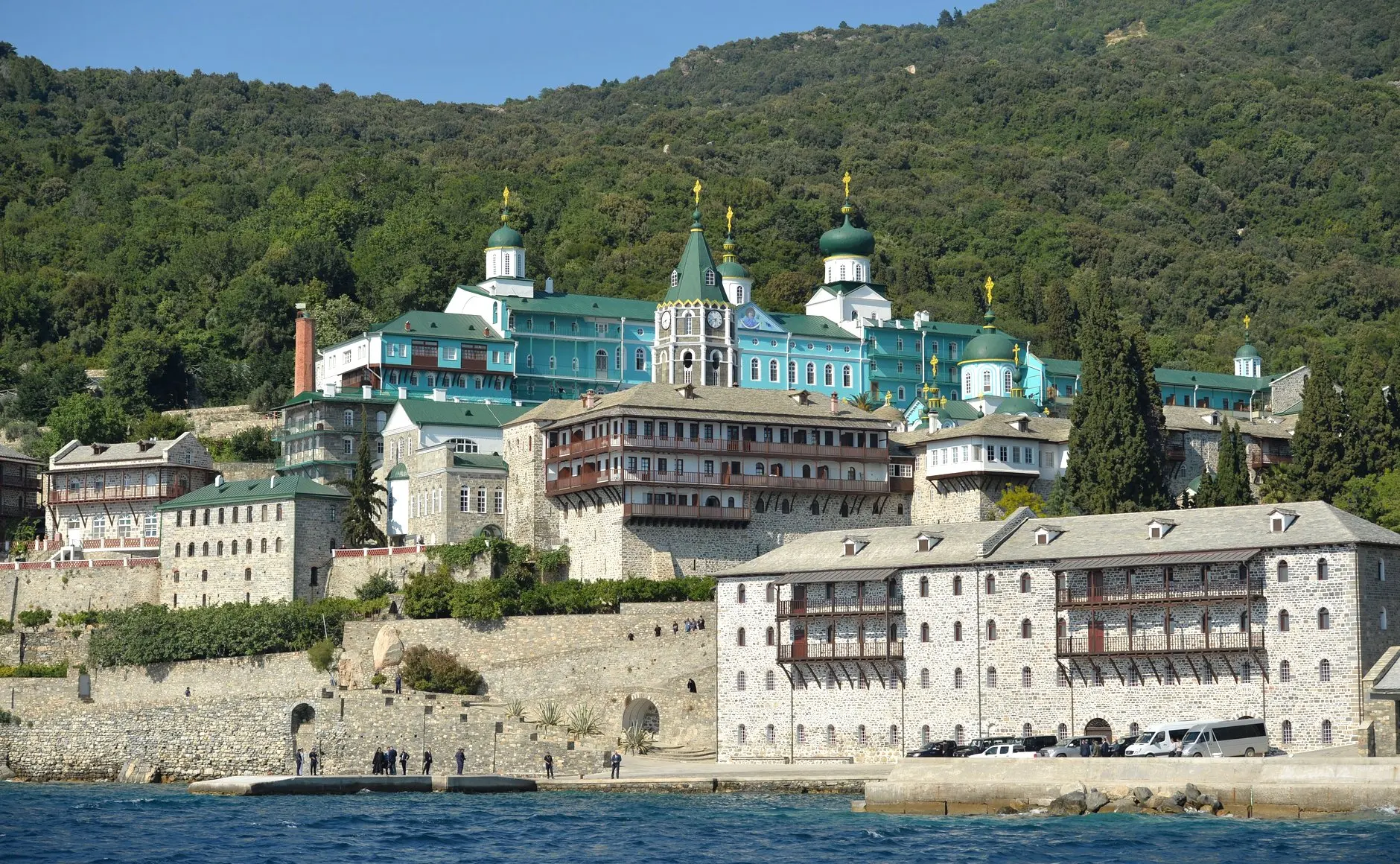
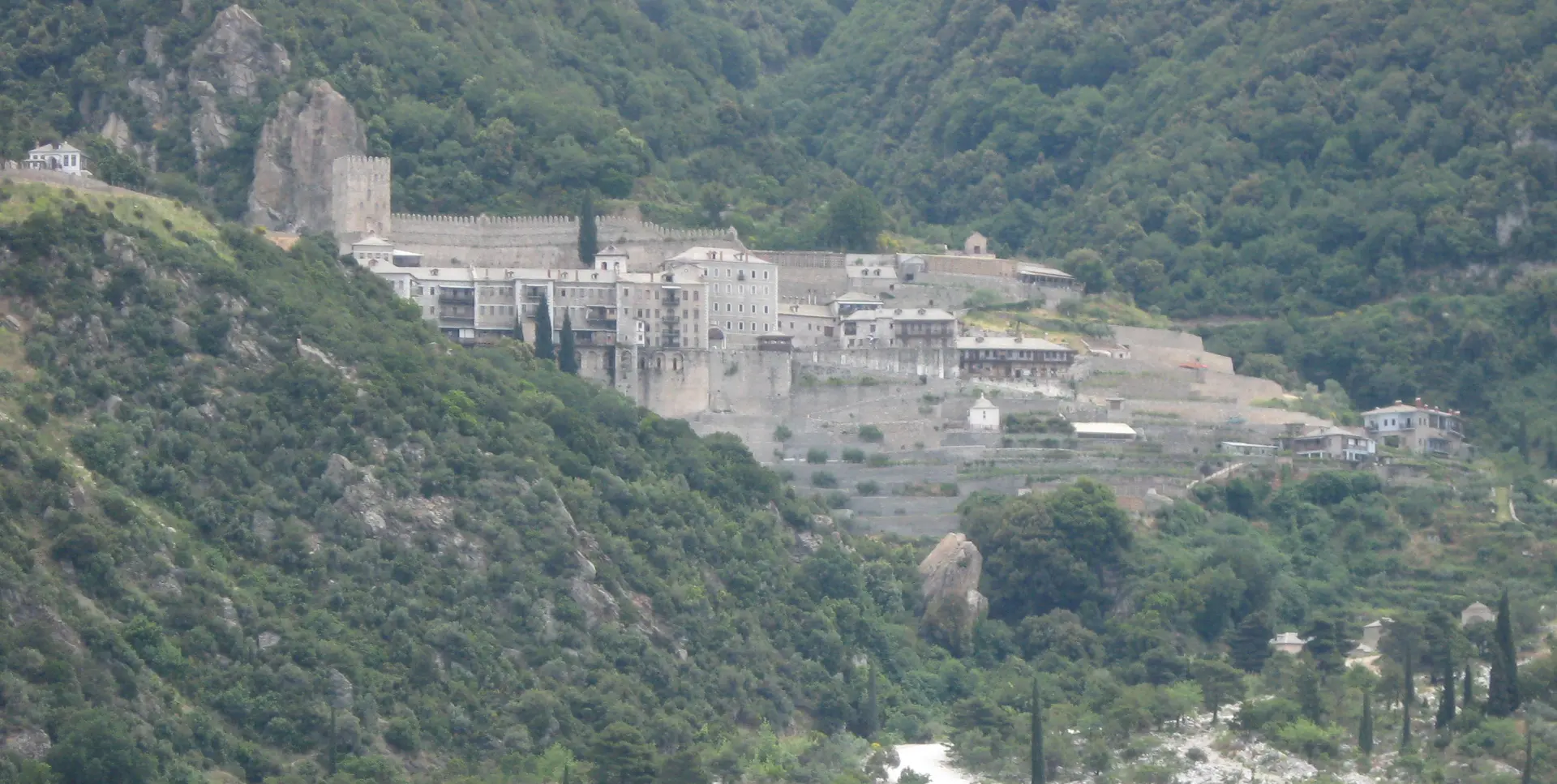
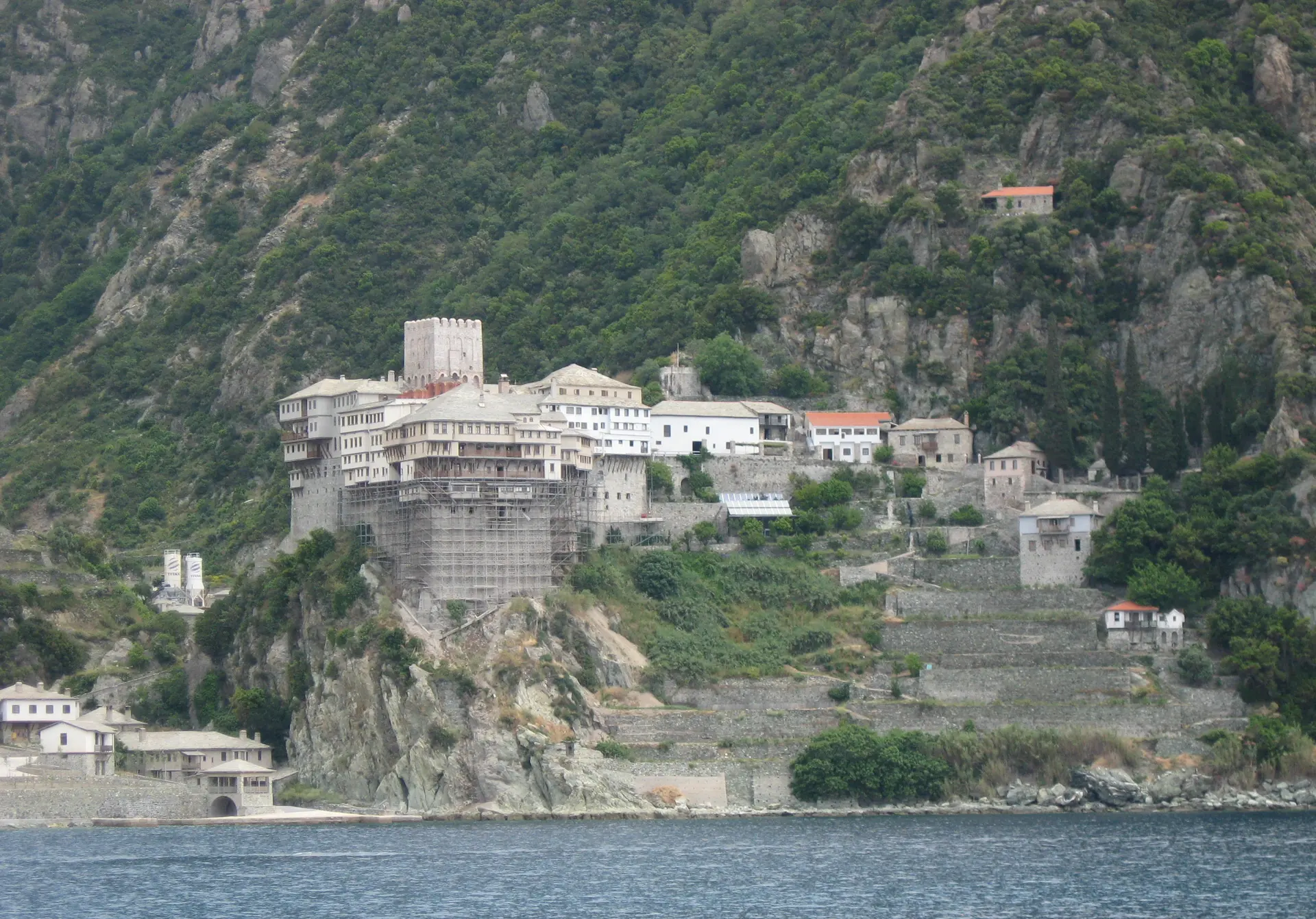
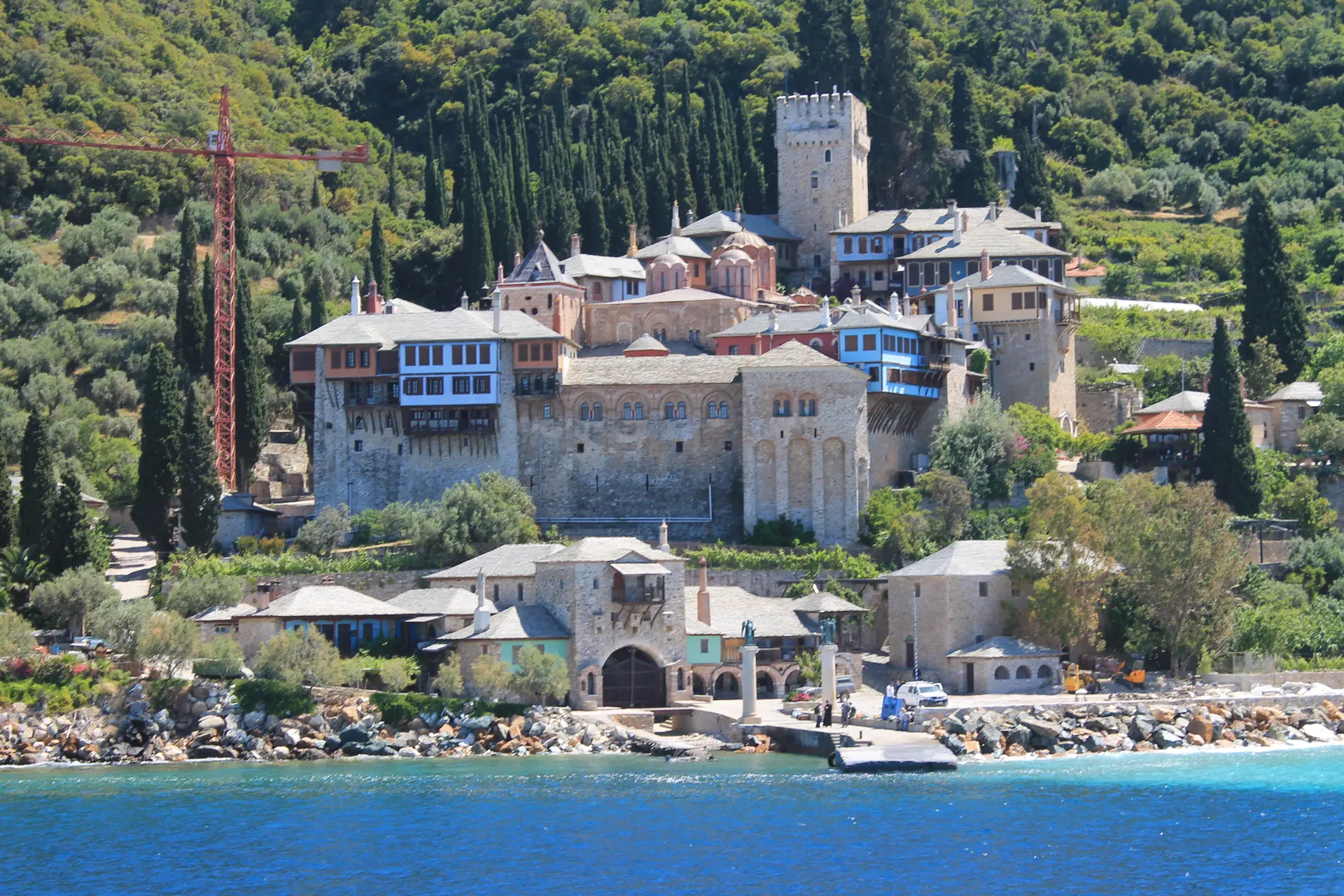
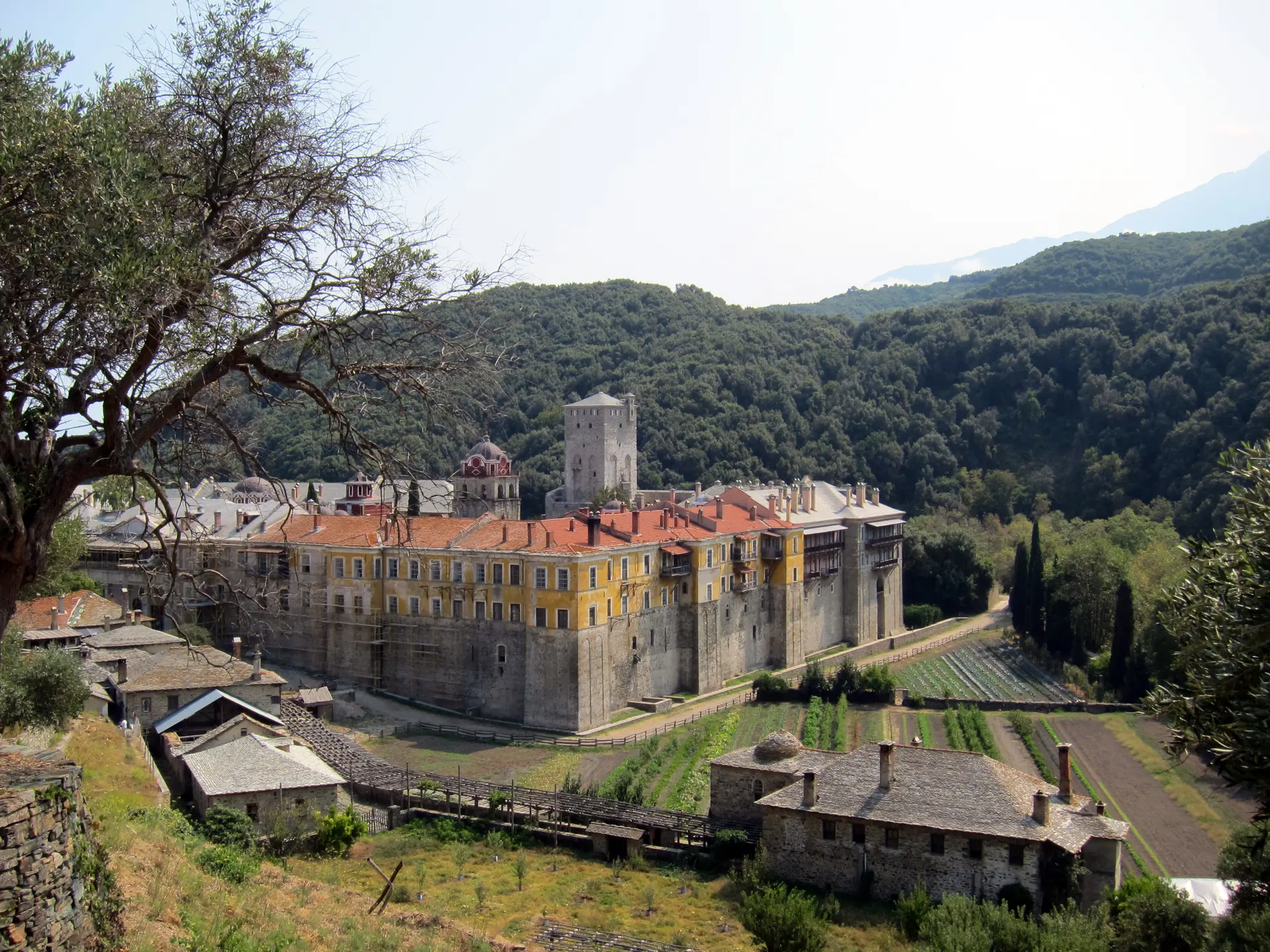
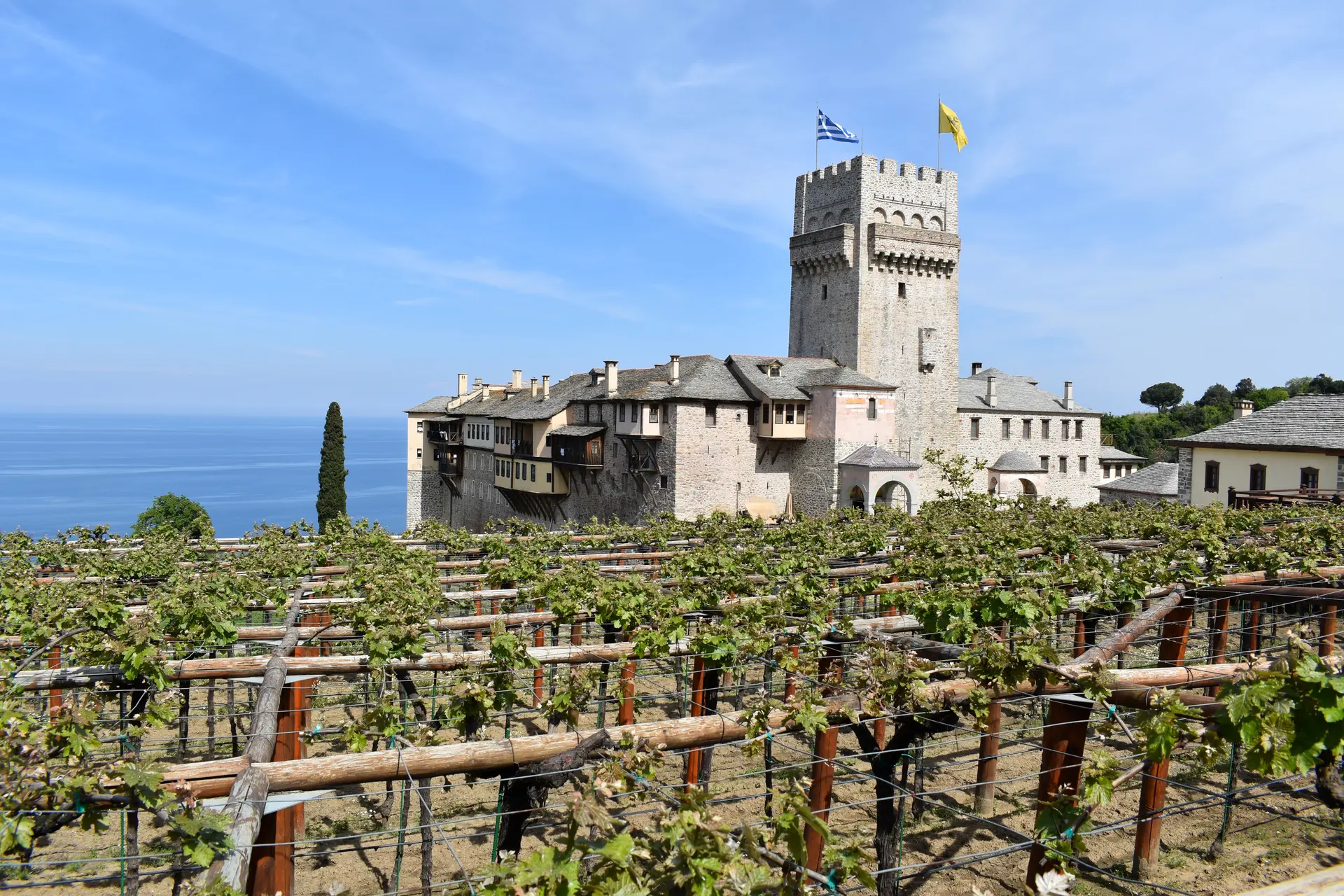
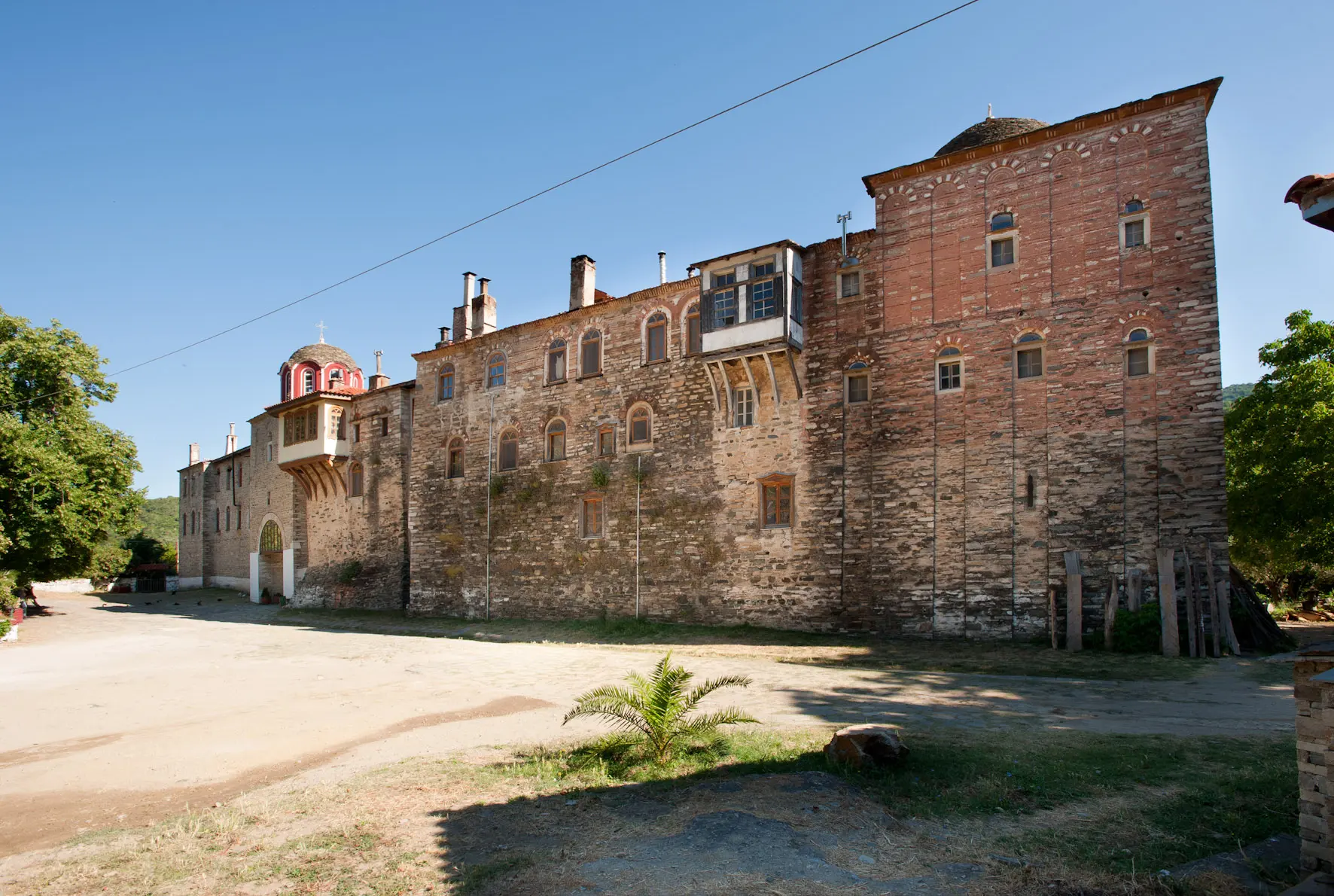
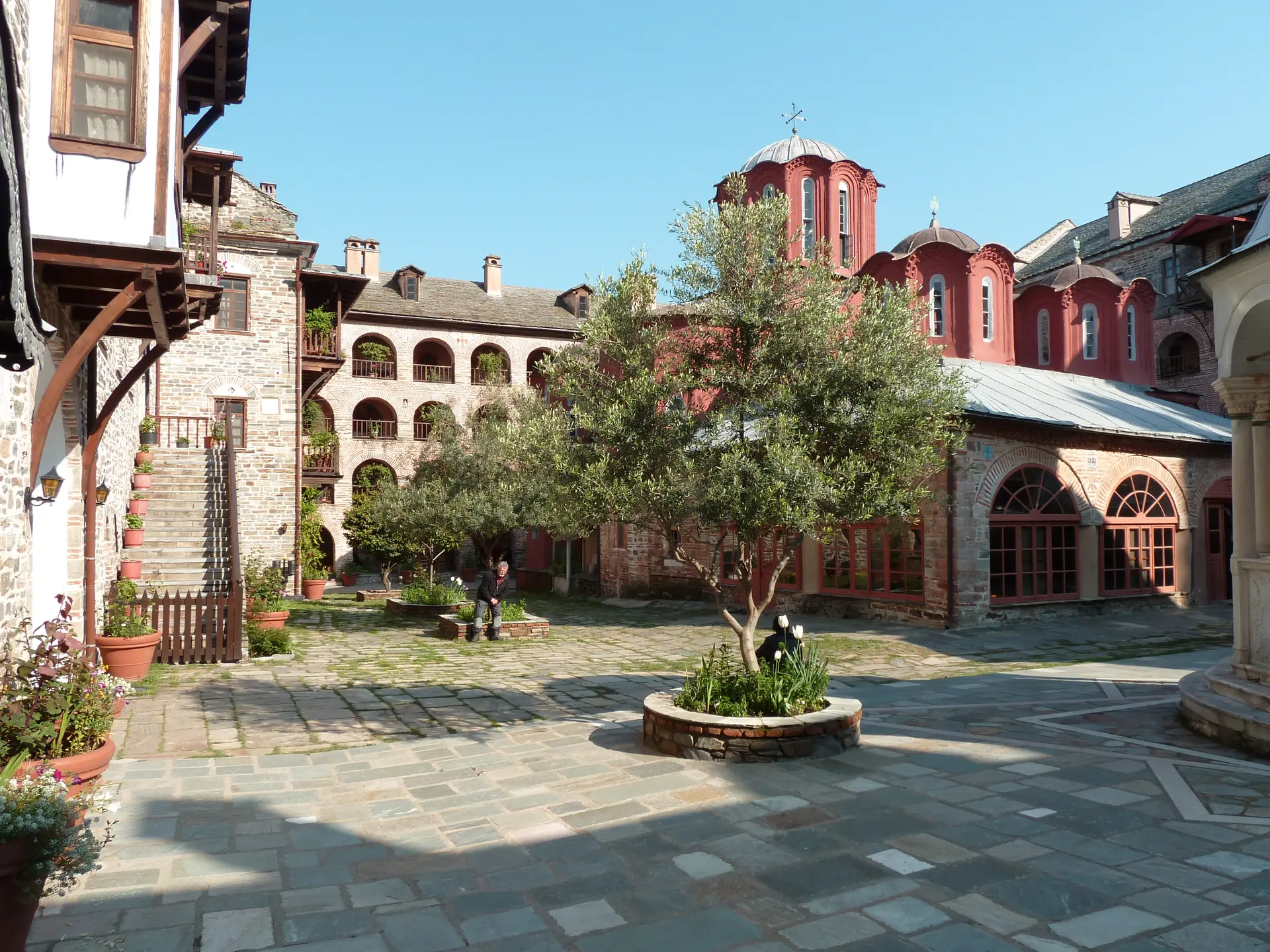
Mt. Athos
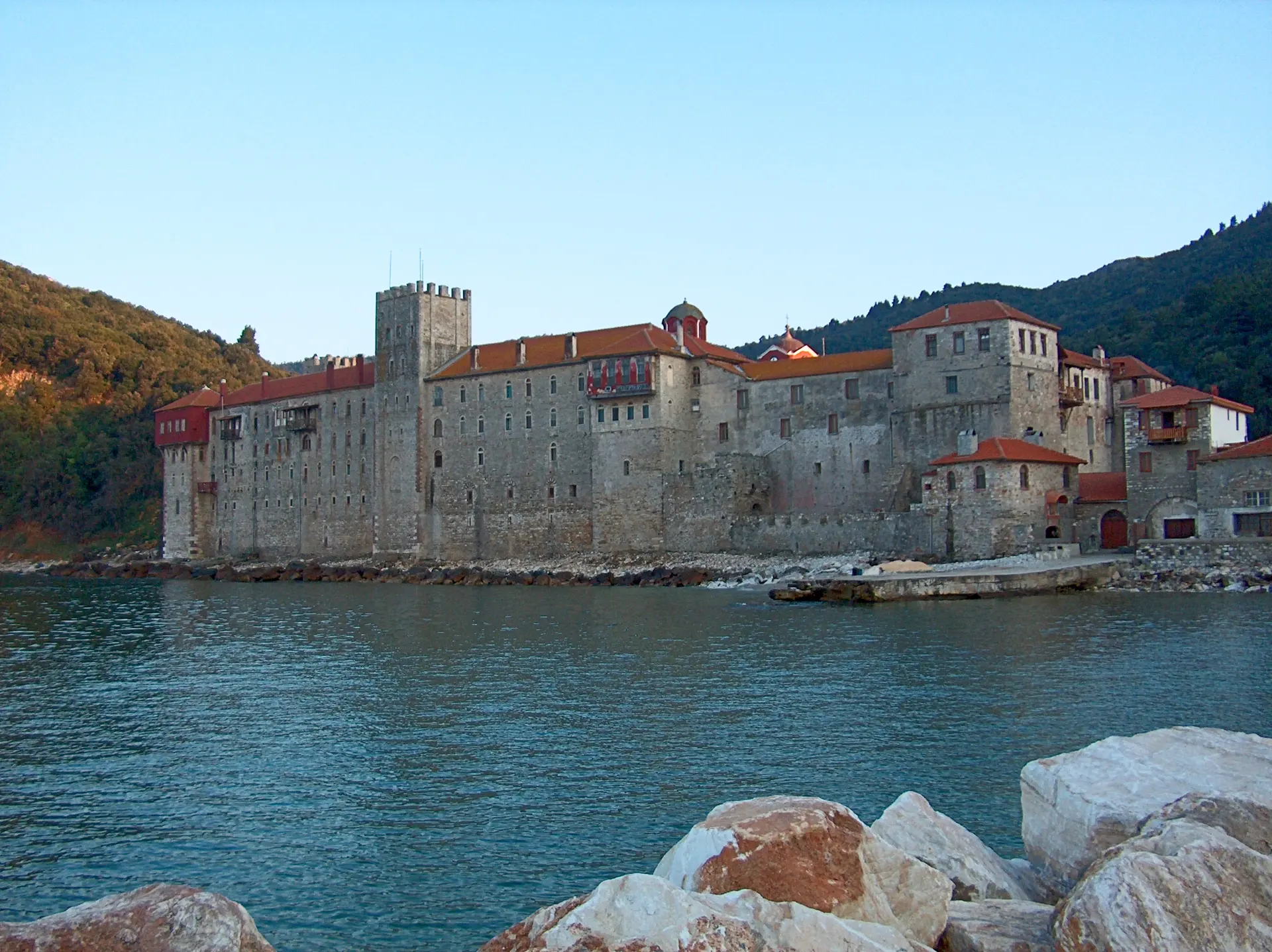
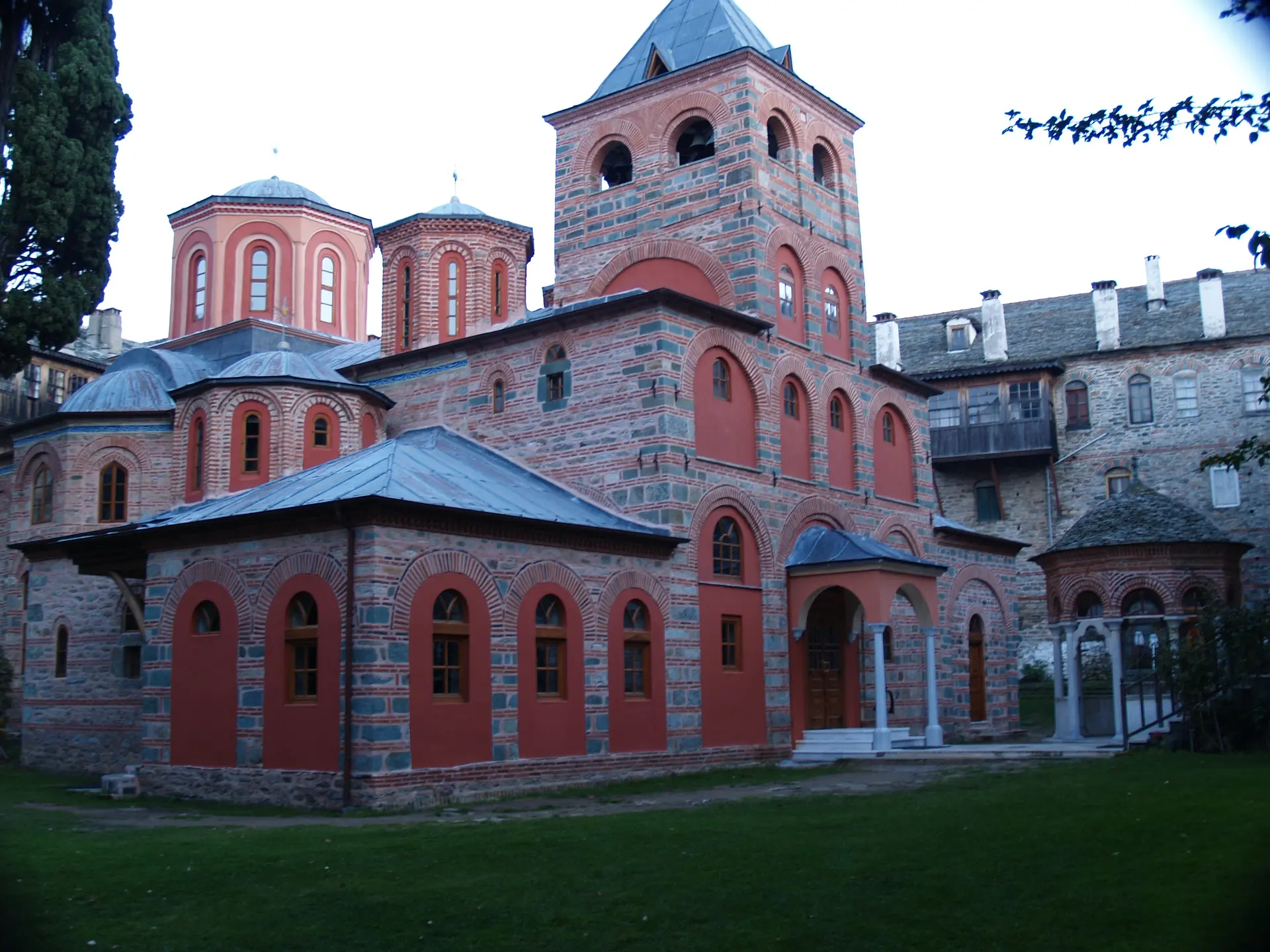
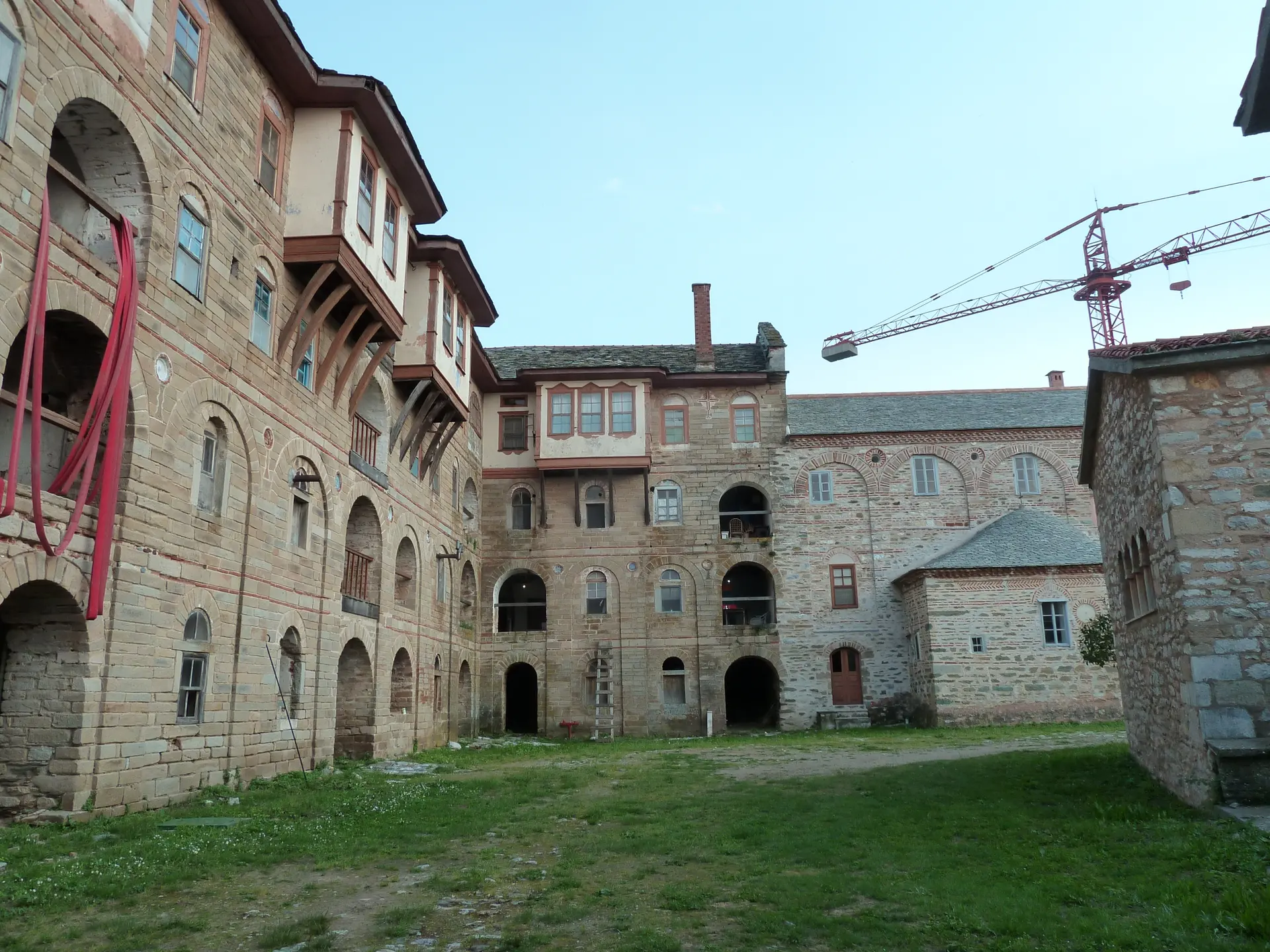
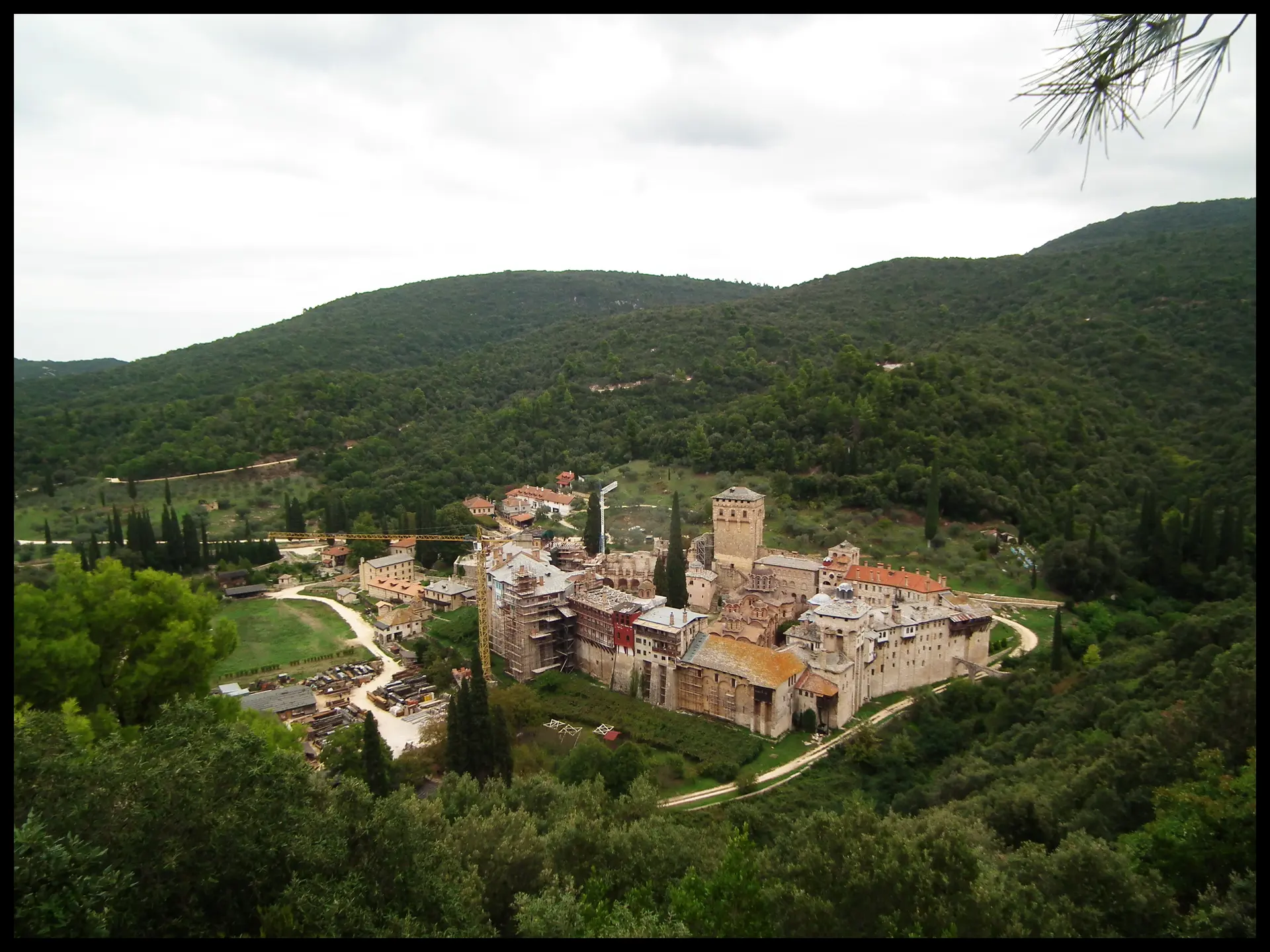
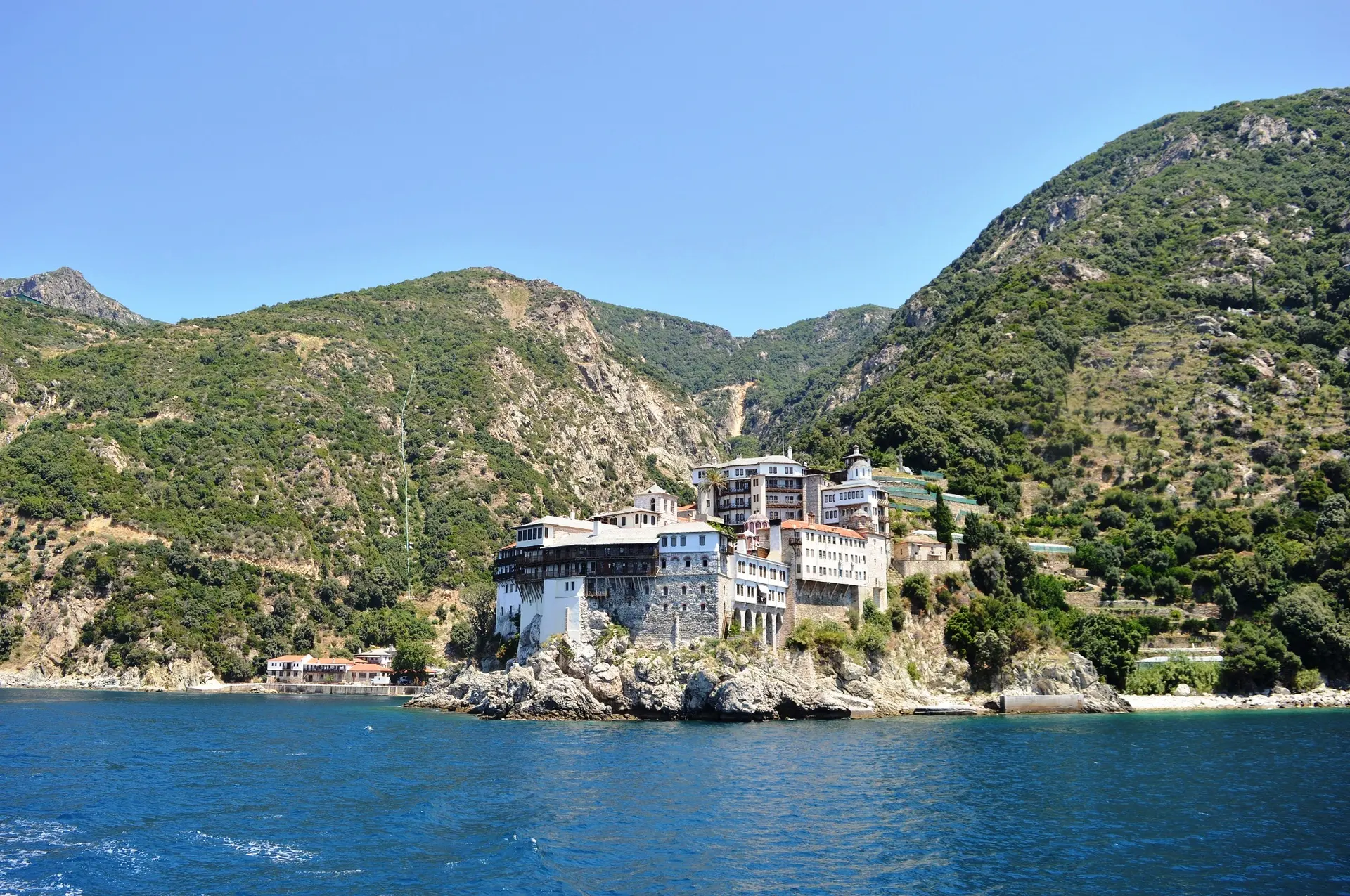
Mt. Athos is a site of sacred significance. Approximate coordinates: 40.15889, 24.32833. Located in Αυτόνομη Μοναστική Πολιτεία Αγίου Όρους, Ελλάς.
Epirus and Western Macedonia
2 sites

Dodona
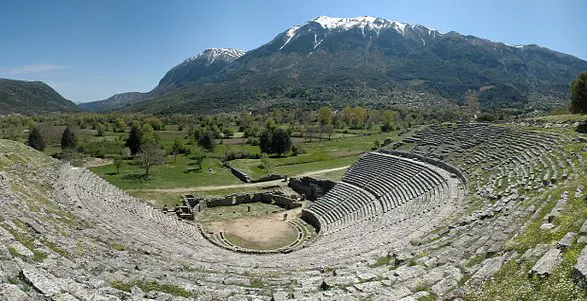
Dodona (; Doric Greek: Δωδώνα, romanized: Dōdṓnā, Ionic and Attic Greek: Δωδώνη, Dōdṓnē) in Epirus in northwestern Greece was the oldest Hellenic oracle, possibly dating to the 2nd millennium BCE according to Herodotus. The earliest accounts in Homer describe Dodona as an oracle of Zeus. Situated in a remote region away from the main Greek poleis, it was considered second only to the Oracle of Delphi in prestige. Aristotle considered the region around Dodona to have been part of Hellas and the region where the Hellenes originated. The oracle was first under the control of the Thesprotians before it passed into the hands of the Molossians. It remained an important religious sanctuary until the rise of Christianity during the Late Roman era.
Ephyra
Ephyra may refer to:
Macedonia and Thrace
4 sites

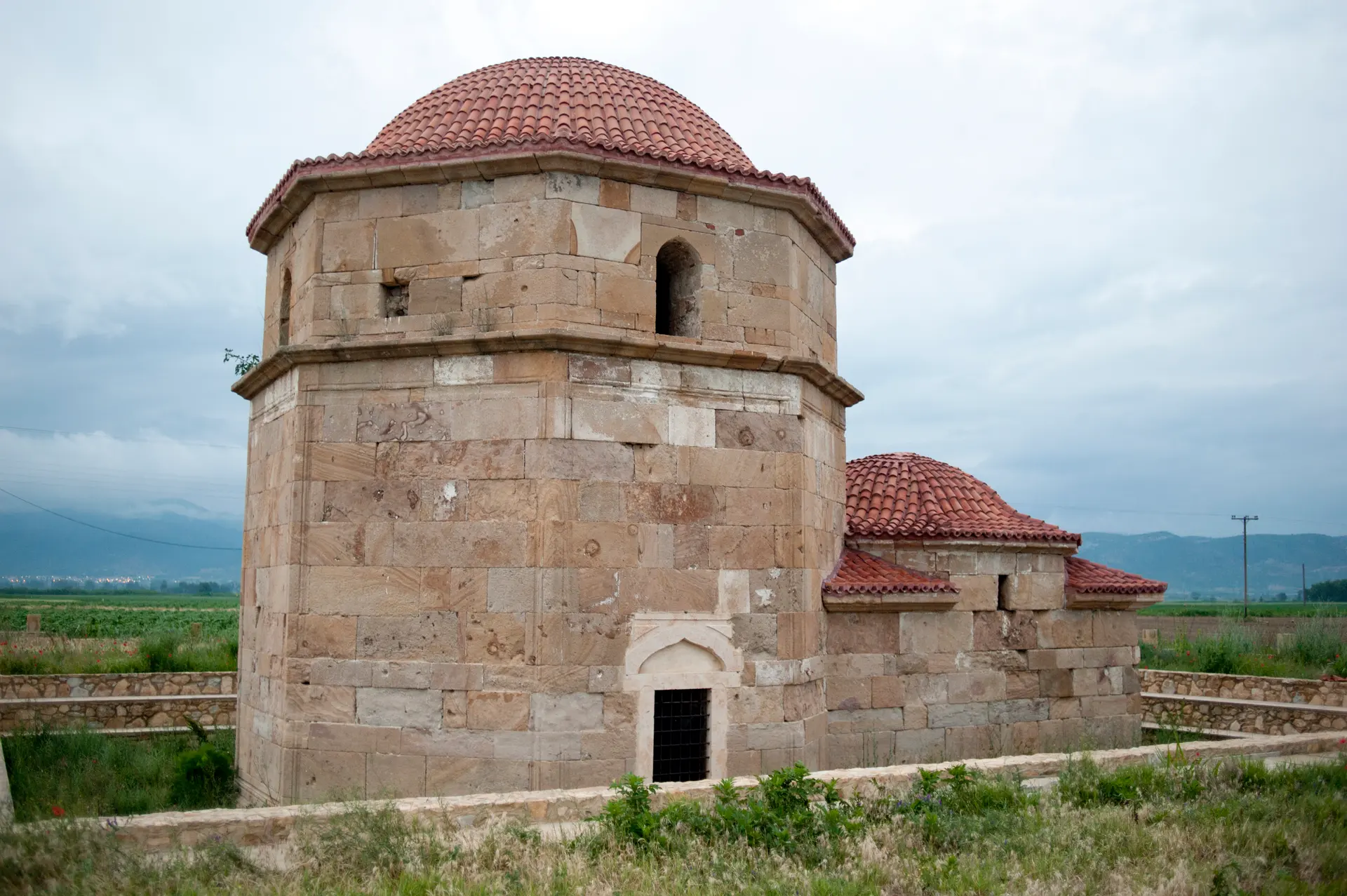
Kutuklu Baba Tekke, Selina
Kutuklu Baba Tekke, Selina, Greece is a tekke of sacred significance. Approximate coordinates: 41.07561, 25.05824. Attributes: built, cultural, pilgrimage. Tradition: Bektashi Order. Associated figure: Kutuklu Baba. Located in Δήμος Αβδήρων, Αποκεντρωμένη Διοίκηση Μακεδονίας - Θράκης, Ελλάς.

Mt. Olympus
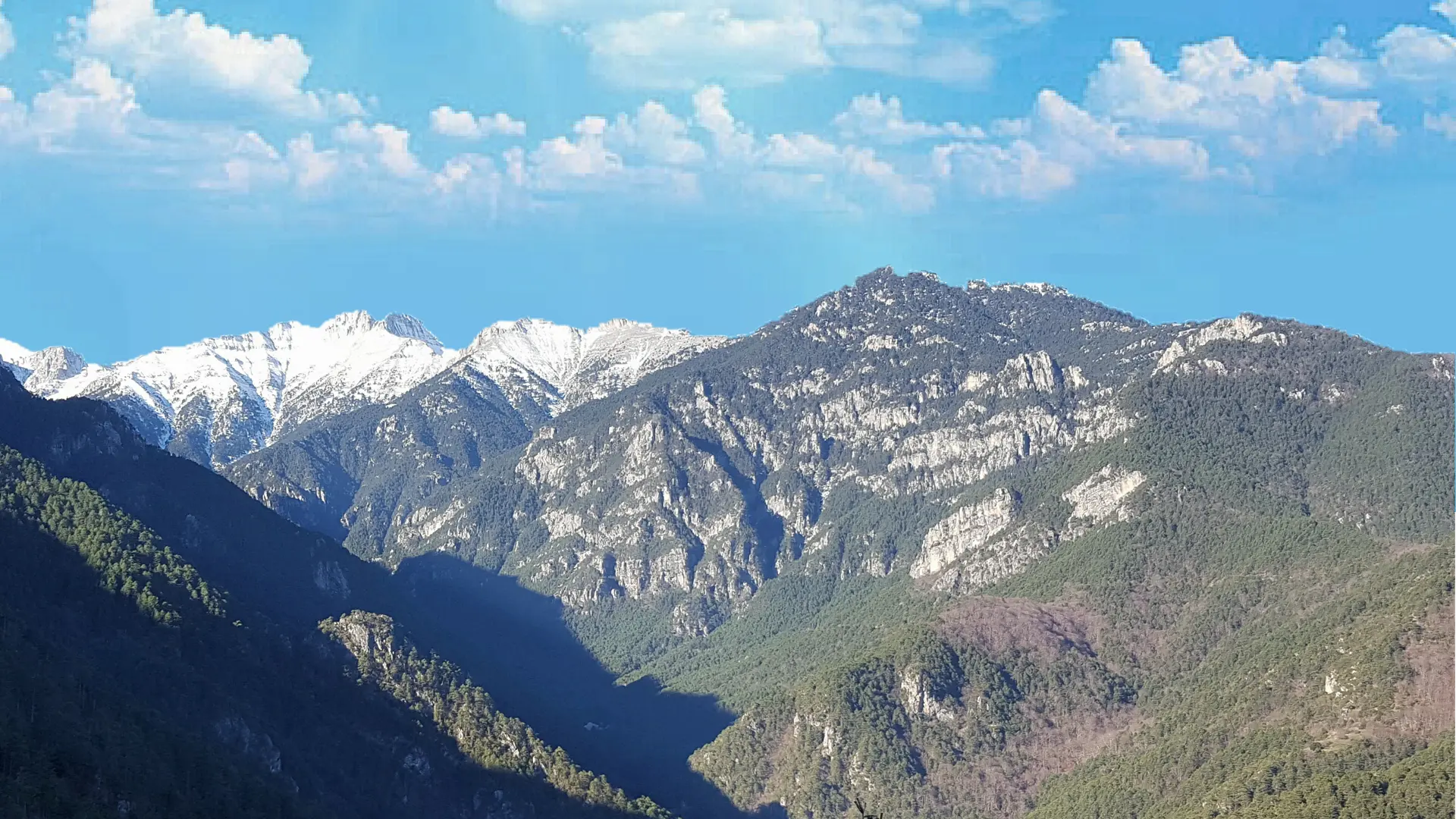
Mt. Olympus is a site of sacred significance. Approximate coordinates: 40.08841, 22.35856. Located in Δήμος Δίου - Ολύμπου, Αποκεντρωμένη Διοίκηση Μακεδονίας - Θράκης, Ελλάς.

Panagia Krimniotissa
Panagia Krimniotissa is a site of sacred significance. Approximate coordinates: 40.40541, 25.58584. Located in Δήμος Σαμοθράκης, Αποκεντρωμένη Διοίκηση Μακεδονίας - Θράκης, Ελλάς.

Samothrace
Samothrace (also known as Samothraki; Greek: Σαμοθράκη, [samoˈθraci]) is a Greek island in the northern Aegean Sea. It is a municipality within the Evros regional unit of Thrace. The island is 17 km (11 mi) long, 178 km2 (69 sq mi) in size and has a population of 2,596 (2021 census). Its main industries are fishing and tourism. Resources on the island include granite and basalt. Samothrace is one of the most rugged Greek islands, with Mt Saos and its highest peak, Fengari, rising to 1,611 m (5,285 ft). The Winged Victory of Samothrace statue, which is now displayed at the Louvre in Paris, was found on the island.
Patmos
1 site
Holy Cave of the Apocalypse
Holy Cave of the Apocalypse in Between Skala and Chora, Patmos, Greece.
Peloponnese, Western Greece and the Ionian
7 sites
Argos
Argos most often refers to: Argos, Peloponnese, a city in Argolis, Greece Argus (Greek myth), several characters in Greek mythology Argos (retailer), a catalogue retailer in the United Kingdom Argos or ARGOS may also refer to:
Epidauros
Epidauros is a sanctuary of sacred significance. Approximate coordinates: 37.63345, 23.16023. Attributes: built, cultural, archaeological, pilgrimage, ceremonial. Tradition: Ancient Greek. Associated figure: Apollo Maleatas. Mythological context: Greek Mythology. Recognized as a UNESCO World Heritage Site. Located in Δημοτική Ενότητα Επιδαύρου, Αποκεντρωμένη Διοίκηση Πελοποννήσου, Δυτικής Ελλάδας και Ιονίου, Ελλάς.
Isthmia
Isthmia may refer to: Isthmia (sanctuary) at the east side of the Isthmus of Corinth, Greece The ancient Isthmian Games, held at the sanctuary Temple of Isthmia, located in the sanctuary Isthmia, Corinthia, a village in the municipal unit Loutraki-Perachora, Corinthia, Greece, near ancient Isthmia Isthmia (genus), a genus of diatom in the Coscinodiscophyceae subclass

Mount Lykaion
Mount Lykaion (Ancient Greek: Λύκαιον ὄρος, Lýkaion Óros; Latin: Mons Lycaeus) is a mountain in Arcadia, Greece. Lykaion has two peaks: Stefani to the north and St. Ilias (Άγιος Ηλίας, Agios Īlías) to the south where the altar of Zeus is located. The northern peak is higher, 1,421 m, than the southern, 1,382 m (4,662 and 4,534 ft). Mount Lykaion was sacred to Zeus Lykaios, who was said to have been born and brought up on it, and was the home of Pelasgus and his son Lycaon, who were said to have founded the ritual of Zeus practiced on its summit. This seems to have involved a human sacrifice and a feast in which the man who received the portion of a human victim was changed to a wolf, as Lycaon had been after sacrificing a child. The altar of Zeus consists of a great mound of ashes with a retaining wall. It was said that no shadows fell within the precincts and that any who entered it died within the year. The sanctuary of Zeus played host to athletic games held every four years, the Lykaia. Archaeological excavations were first carried out in 1897 by K. Kontopoulos for the Greek Archaeological Service, followed by K. Kourouniotes between 1902 and 1909. The Mt. Lykaion Excavation and Survey Project, a joint effort of the University of Pennsylvania and the University of Arizona began work at the site in 2004, with the aim of continuing the topographical survey begun in 1996 and carrying out a full topographical and architectural analysis not only of the altar and temenos, but of the nearby valley where the Lykaian Games were held. The detailed digital records and drawings of every architectural stone block. To date, a complete map of the area has been made, including not only the Ash Altar and temenos, but also two fountains, including the Hagno fountain mentioned by Pausanias, the hippodrome, the stadium, a building that was probably a bathhouse, the xenon (hotel), a stoa, several rows of seats, and a group of statue bases. Many of these buildings seem to have been planned in relation to each other: the baths at the northern end of the hippodrome are on the same alignment as it is, and the stoa, the xenon, the lower fountain, and the rows of seats all appear to have been built in an intentionally similar alignment. Just to the north of the stoa four rows of seats were excavated, with the remains of a group of stelae and statue bases nearby. These would have bordered the hippodrome's southern edge, and correspond to an earlier excavated row of seats on the south-eastern edge of the racetrack. The majority of the spectators of events in the hippodrome, however, would have sat on the surrounding hills.: 381–396

Mycenae
Mycenae ( my-SEE-nee; Mycenaean Greek: 𐀘𐀏𐀙𐀂; Ancient Greek: Μυκῆναι or Μυκήνη, Mykē̂nai or Mykḗnē) is an archaeological site near Mykines in Argolis, north-eastern Peloponnese, Greece. It is located about 120 kilometres (75 miles) south-west of Athens; 11 kilometres (7 miles) north of Argos; and 48 kilometres (30 miles) south of Corinth. The site is 19 kilometres (12 miles) inland from the Saronic Gulf and built upon a hill rising 900 feet (274 metres) above sea level. In the second millennium BC, Mycenae was one of the major centres of Greek civilisation, a military stronghold which dominated much of southern Greece, Crete, the Cyclades and parts of southwest Anatolia. The period of Greek history from about 1600 BC to about 1100 BC is called Mycenaean in reference to Mycenae. At its peak in 1350 BC, the citadel and lower town had a population of 30,000 and an area of 32 hectares (79 acres). The first correct identification of Mycenae in modern literature was in 1700, during a survey conducted by the Venetian engineer Francesco Vandeyk on behalf of Francesco Grimani, the Provveditore Generale of the Kingdom of the Morea. Vandeyk used Pausanias's description of the Lion Gate to identify the ruins of Mycenae. In 1999 the archeological site of Mycenae was added to the UNESCO World Heritage List, along with the nearby site of Tiryns, because of its historical importance as the center of the Mycenaean civilization, its outstanding architecture and its testimony to the development of Ancient Greek civilization. The Lion Gate, the Treasury of Atreus and the walls of Mycenae and Tiryns are examples of the noteworthy architecture found in Mycenae and Tiryns. The structures and layouts of these discoveries exemplify the creative talent of the time. Greek architecture and urban planning have been significantly influenced by the Mycenaean civilization. Mycenae and Tiryns, which stand as the pinnacle of the early phases of Greek civilisation, provided unique witness to political, social and economic growth during the Mycenaean civilization. The accomplishments of the Mycenaean civilisation in art, architecture and technology, which inspired European cultures, are also on display at both locations. These sites are strongly connected to the Homeric epics. The earliest examples of the Greek language are also visible at Mycenae and Tiryn, preserved on Linear B tablets. A stringent legal framework was established to safeguard the integrity of the Mycenae and Tiryns sites against vandalism and other forms of damage and disturbance to the remains. The Hellenic Ministry of Culture and Sports monitors the two archaeological sites. To maintain the quality and conditions of the Mycenaean and Tiryn sites, archaeological study is conducted methodically and systematically. The Greek Antiquities Law No 3028/2002, on the ‘Conservation of Antiquities and Cultural Heritage in General’, governs the preservation and protection of the sites. Ministerial Decree No 2160 of 1964 created and safeguarded the limits of Mycenae in addition to the sites themselves. The acropolis and the wider surroundings are also covered by the extension of protection conferred by this ministerial decree. Ministerial Decrees No 102098/4753 of 1956 and 12613/696 of 1991 both provide protection for the Tiryns archaeological site.

Olympia
Olympia may refer to:

Oracle at Cape Tainaron (Mataram), Peloponnese
Oracle at Cape Tainaron (Mataram), Peloponnese, Greece is a site of sacred significance. Approximate coordinates: 36.38638, 22.48291. Located in Δημοτική Ενότητα Ανατολικής Μάνης, Αποκεντρωμένη Διοίκηση Πελοποννήσου, Δυτικής Ελλάδας και Ιονίου, Ελλάς.
Region of Crete
21 sites

Agia Triada Monastery
Agia Triada Monastery ((in Greek) Μονή Αγίας Τριάδος) or the Monastery of Agia Triada Tsangarolon is a Greek Orthodox monastery in the Akrotiri peninsula in the Chania regional unit, Crete, Greece. It also contains a museum. The monastery, whose name means "Holy Trinity", was built in the 17th century by two brothers of the Venetian Zangaroli family on the site of a pre-existing church. The monks produce and sell wine and olive oil on the premises.

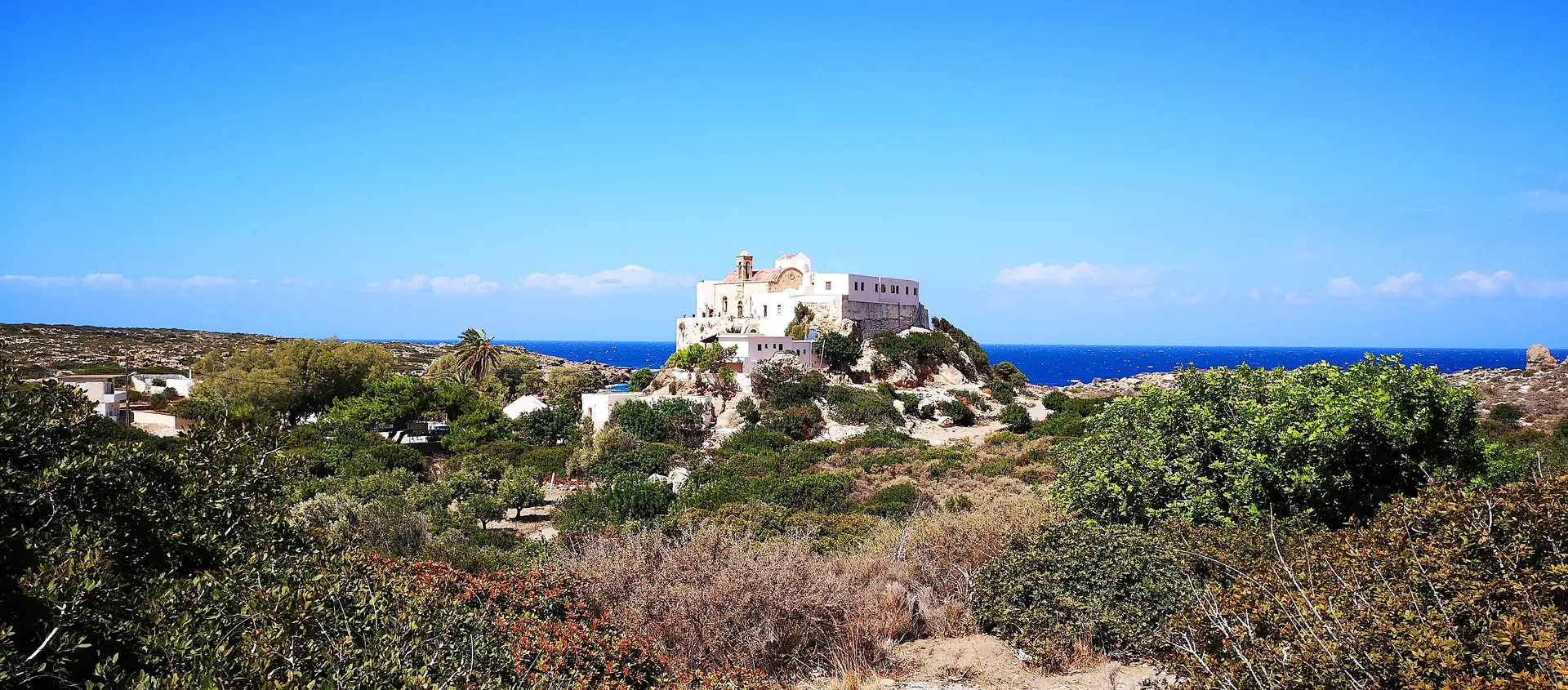
Chrysoskalitissa Monastery
Chrysoskalitissa Monastery (Greek: Μονή Χρυσοσκαλιτίσσης) is a 17th-century Eastern Orthodox Christian monastery located on the southwest coast of the island of Crete, Greece. Within the municipal district of Innachori of the municipality of Kissamos, the monastery lies about 72 kilometres southwest of Chania. Built up on rocks 35 metres above the water, it overlooks the Libyan Sea.

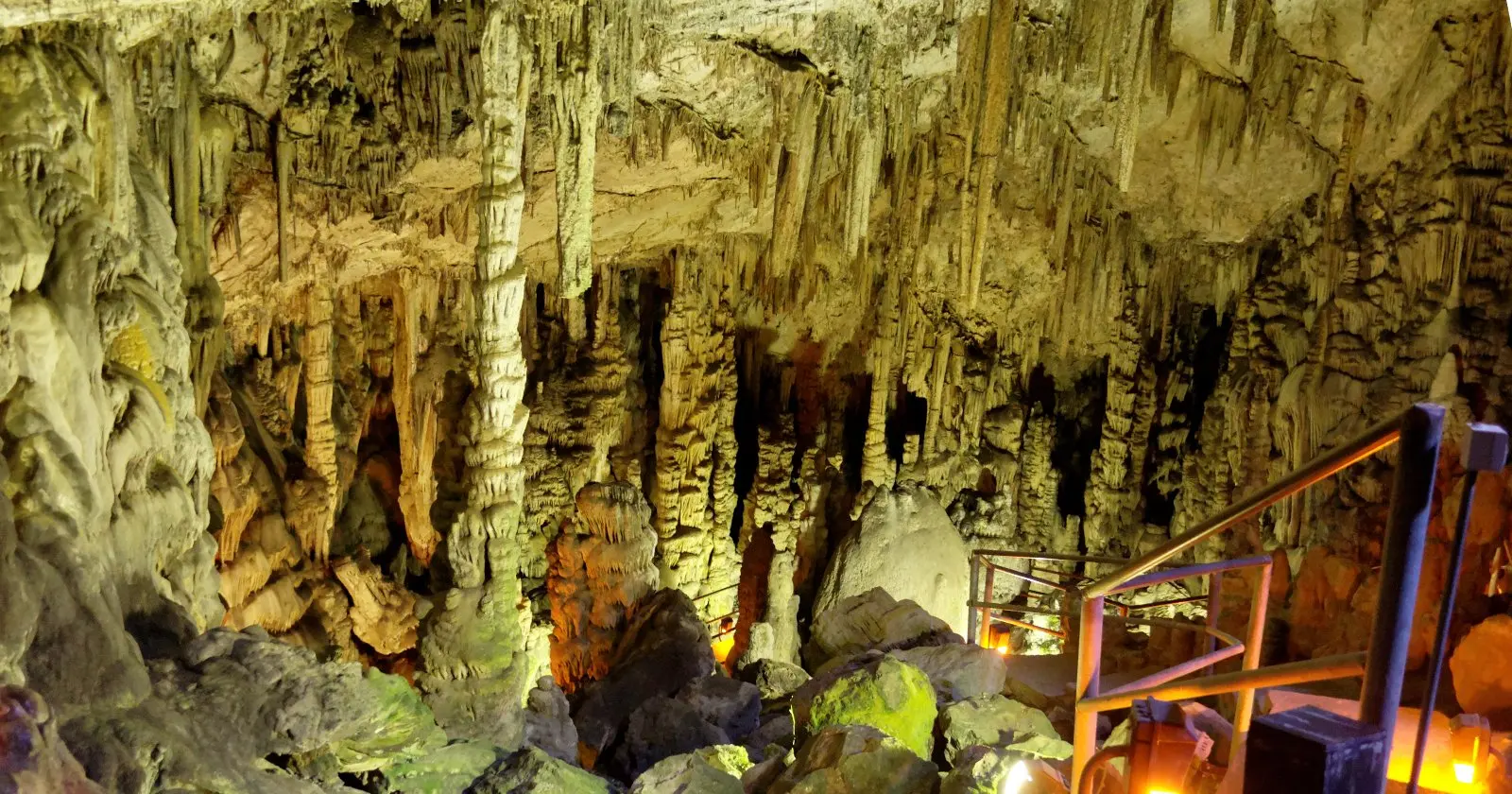
Diktaion Andron Cave
Diktaion Andron Cave is a cave of sacred significance. Approximate coordinates: 35.16262, 25.44525. Attributes: natural, cultural, archaeological, pilgrimage, ceremonial. Tradition: Greek Mythology. Associated figure: Zeus. Mythological context: Birthplace of Zeus. Located in Δήμος Οροπεδίου Λασιθίου, Αποκεντρωμένη Διοίκηση Κρήτης, Ελλάς.

Kamares Cave
Kamares Cave is a cave of sacred significance. Approximate coordinates: 35.17749, 24.82762. Attributes: natural, cultural, archaeological. Located in Δημοτική Ενότητα Τυμπακίου, Αποκεντρωμένη Διοίκηση Κρήτης, Ελλάς.

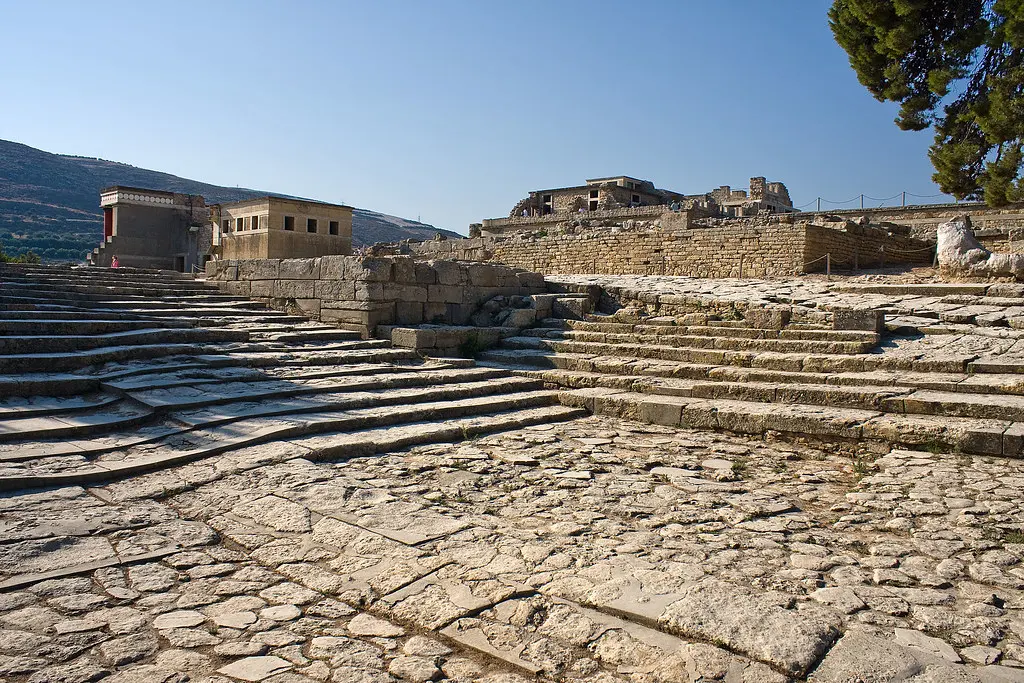
Knossos
Knossos (; Ancient Greek: Κνωσσός, romanized: Knōssós, pronounced [knɔː.sós]; Linear B: 𐀒𐀜𐀰 Ko-no-so) is a Bronze Age archaeological site in Crete. The site was a major centre of the Minoan civilization and is known for its association with the Greek myth of Theseus and the minotaur. It is located on the outskirts of Heraklion, and remains a popular tourist destination. Knossos is considered by many to be the oldest city in Europe. Knossos is dominated by the monumental Palace of Minos. Like other Minoan palaces, this complex of buildings served as a combination religious and administrative centre rather than a royal residence. The earliest parts of the palace were built around 1900 BC in an area that had been used for ritual feasting since the Neolithic. The palace was continually renovated and expanded over the next five centuries until its final destruction around 1350 BC. The site was first excavated by Minos Kalokairinos in 1877. In 1900, Sir Arthur Evans undertook more extensive excavations which unearthed most of the palace as well as many now-famous artifacts including the Bull-Leaping Fresco, the snake goddess figurines, and numerous Linear B tablets. While Evans is often credited for discovering the Minoan Civilization, his work is controversial in particular for his inaccurate and irreversible reconstructions of architectural remains at the site.

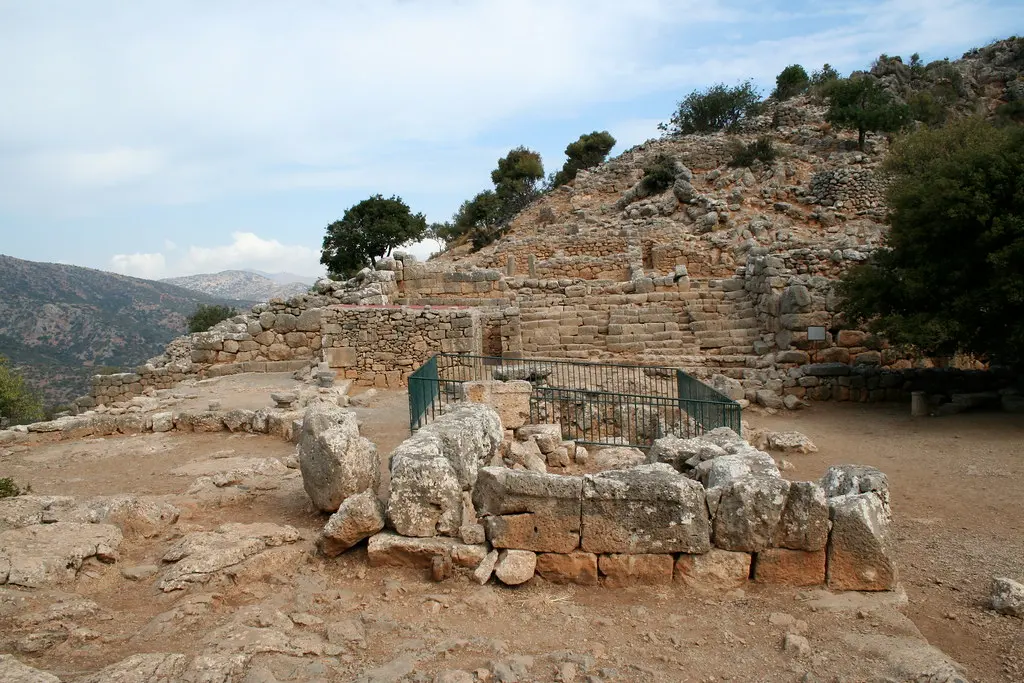
Lato
Lato (Ancient Greek: Λατώ, romanized: Latṓ) was an ancient city of Crete, the ruins of which are located approximately 3 km from the village of Kritsa.

Monastery of Arkadi
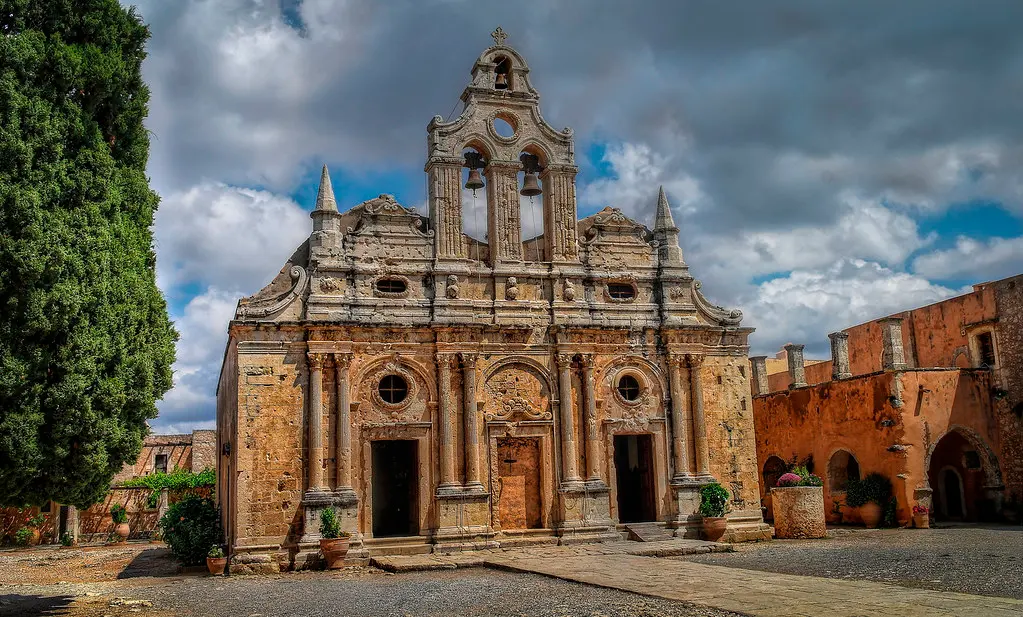
Monastery of Arkadi is a site of sacred significance. Approximate coordinates: 35.31006, 24.62899. Located in Δήμος Ρεθύμνης, Αποκεντρωμένη Διοίκηση Κρήτης, Ελλάς.
Monastery of Panagaia Kera Kardiotissa
Monastery of Panagaia Kera Kardiotissa is a site of sacred significance. Approximate coordinates: 35.22437, 25.46174. Located in Δημοτική Ενότητα Χερσονήσου, Αποκεντρωμένη Διοίκηση Κρήτης, Ελλάς.

Mt. Dicti
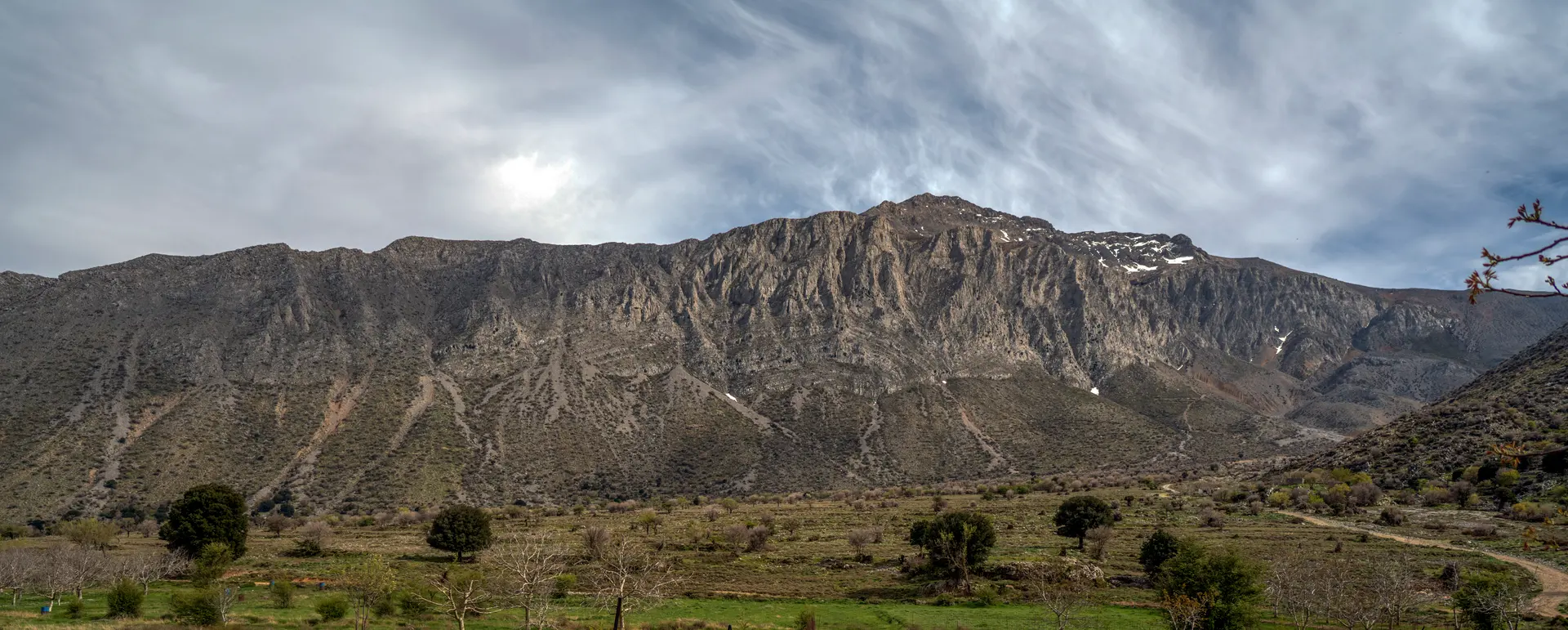
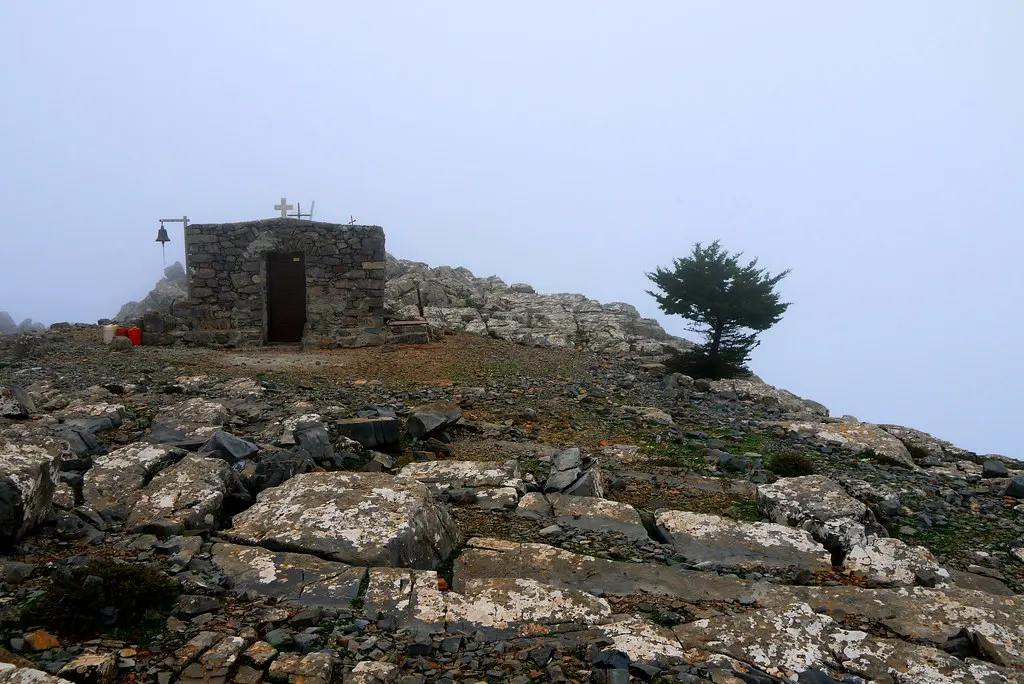
Mt. Dicti is a site of sacred significance. Approximate coordinates: 35.16262, 25.44524. Located in Δήμος Οροπεδίου Λασιθίου, Αποκεντρωμένη Διοίκηση Κρήτης, Ελλάς.

Mt. Ida
Mt. Ida is a site of sacred significance. Approximate coordinates: 35.22641, 24.77072. Located in Δήμος Μυλοποτάμου, Αποκεντρωμένη Διοίκηση Κρήτης, Ελλάς.

Mt. Juktas Minoan Peak Sanctuary
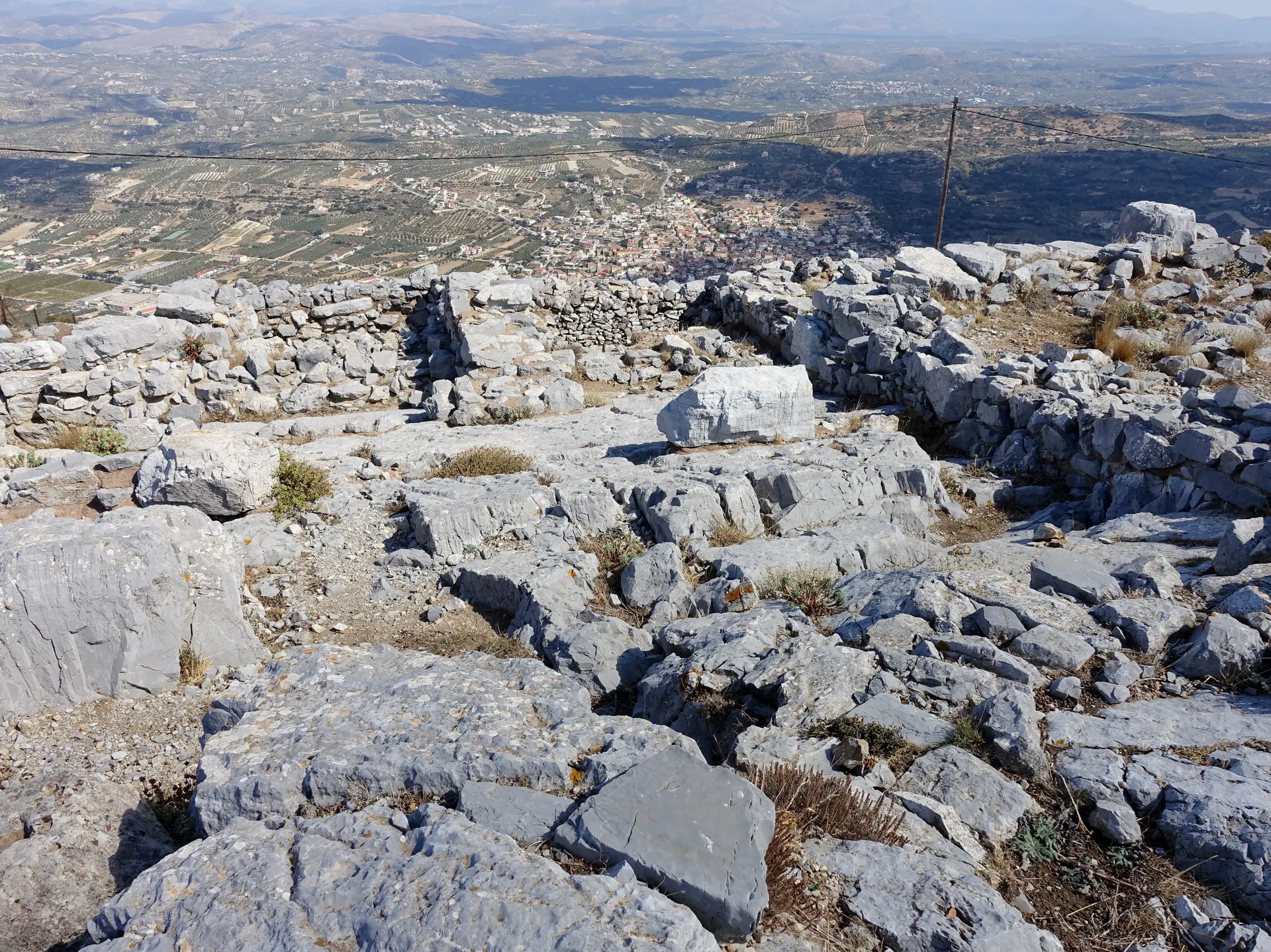
Mt. Juktas Minoan Peak Sanctuary, Crete is a site of sacred significance. Approximate coordinates: 35.23993, 25.14416. Located in Δημοτική Ενότητα Αρχανών, Αποκεντρωμένη Διοίκηση Κρήτης, Ελλάς.

Mt. Kofinas Minoan Peak Sanctuary
Mt. Kofinas Minoan Peak Sanctuary, Crete is a site of sacred significance. Approximate coordinates: 34.96167, 25.07938. Located in Δημοτική Ενότητα Κόφινα, Αποκεντρωμένη Διοίκηση Κρήτης, Ελλάς.

Mt. Pyrgos Minoan Peak sanctuary and Tylissos, Crete
Mt. Pyrgos Minoan Peak sanctuary and Tylissos, Crete, Greece is a site of sacred significance. Approximate coordinates: 35.29831, 25.02024. Located in Δημοτική Ενότητα Τυλίσου, Αποκεντρωμένη Διοίκηση Κρήτης, Ελλάς.

Palace of Knossos
Palace of Knossos is a site of sacred significance. Approximate coordinates: 35.29782, 25.16313. Located in Δημοτική Ενότητα Ηρακλείου, Αποκεντρωμένη Διοίκηση Κρήτης, Ελλάς.

Paliani Monastery
Paliani Monastery is a site of sacred significance. Approximate coordinates: 35.19083, 25.04242. Located in Δημοτική Ενότητα Παλιανής, Αποκεντρωμένη Διοίκηση Κρήτης, Ελλάς.

Panagia Kera
Panagia Kera is a site of sacred significance. Approximate coordinates: 35.15677, 25.65520. Located in Δημοτική Ενότητα Αγίου Νικολάου, Αποκεντρωμένη Διοίκηση Κρήτης, Ελλάς.

Petsofas Minoan Peak Sanctuary
Petsofas Minoan Peak Sanctuary is a site of sacred significance. Approximate coordinates: 35.18333, 26.30000. Located in Δημοτική Ενότητα Ιτάνου, Αποκεντρωμένη Διοίκηση Κρήτης, Ελλάς.

Pyrgos Minoan Temple
Pyrgos Minoan Temple is a site of sacred significance. Approximate coordinates: 35.00688, 25.59070. Located in Δημοτική Ενότητα Ιεράπετρας, Αποκεντρωμένη Διοίκηση Κρήτης, Ελλάς.

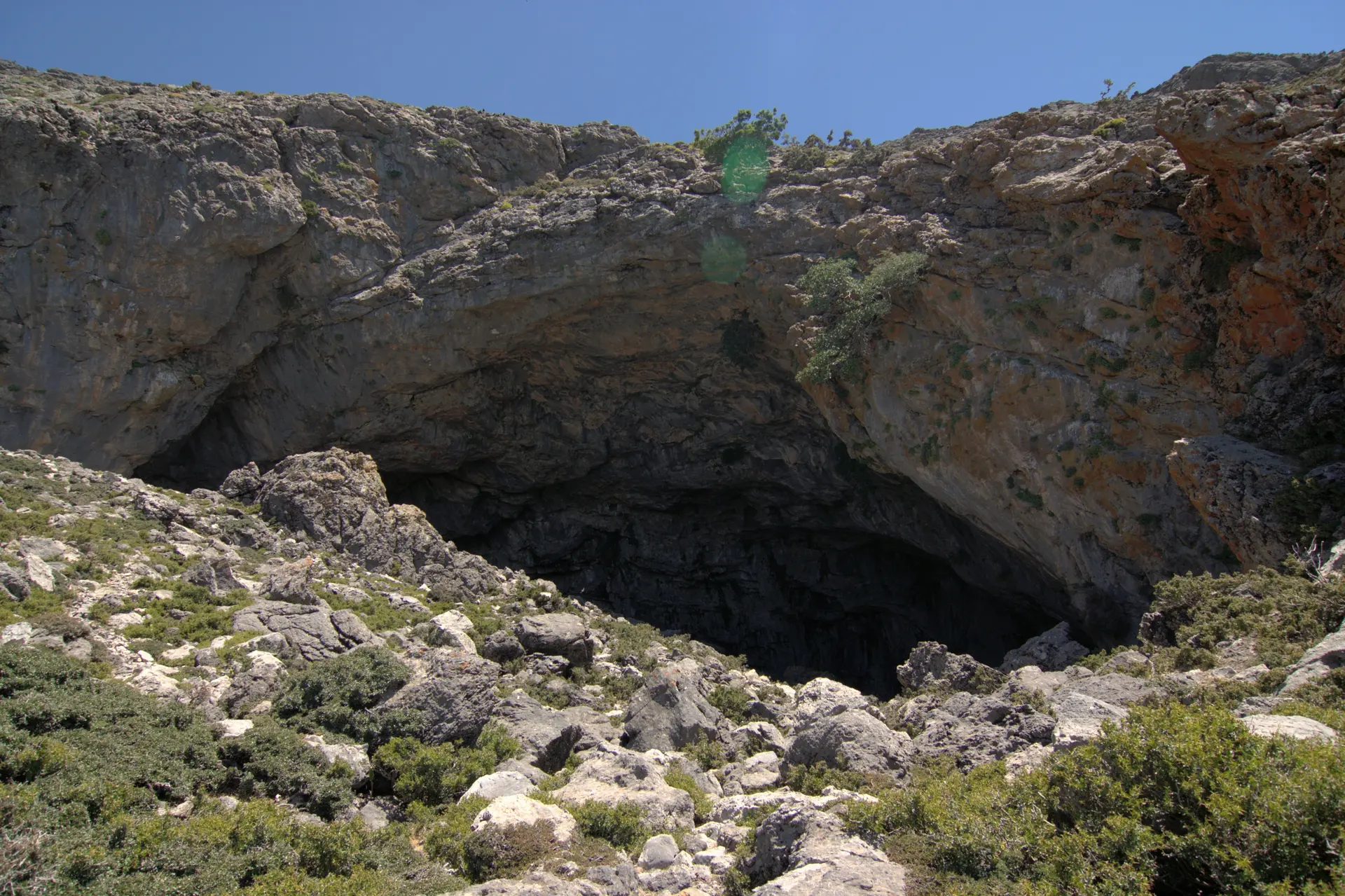
Skotino Cave
Skotino Cave (Greek: σπήλαιο Σκοτεινού) is one of the largest caves in Crete. The cave lies high on a hill northwest of the village of Skotino, a few kilometers inland south of Gouves. It is also known as Agia Paraskevi Cave from the church dedicated to Saint Paraskevi built on top of it. The cave is 160 meters deep and 36 meters wide. The first archaeological examination on the site were carried out by Arthur Evans, the well-known British archaeologist who unearthed and partially restored Knossos in the early 20th century. A more comprehensive exploration was carried out by French and Greek archaeologists in the 1960s. They found a considerable number of bronze and ceramic votive offerings, the oldest of them dating from the earliest Minoan periods, suggesting the cave was an important sacred shrine dedicated to a female fertility deity, presumably Britomartis. The cave was still used in Classical Greek and Roman eras, when the fertility goddess Artemis or her Roman equivalent Diana replaced the Minoan deity.

Traostalos Minoan Peak Sanctuary
Traostalos Minoan Peak Sanctuary is a site of sacred significance. Approximate coordinates: 35.12660, 26.26701. Located in Δημοτική Ενότητα Ιτάνου, Αποκεντρωμένη Διοίκηση Κρήτης, Ελλάς.

Tylissos Minoan Temple
Tylissos Minoan Temple is a site of sacred significance. Approximate coordinates: 35.29834, 25.02024. Located in Δημοτική Ενότητα Τυλίσου, Αποκεντρωμένη Διοίκηση Κρήτης, Ελλάς.
Thessaly and Central Greece
5 sites
Delphi
Delphi (; Greek: Δελφοί [ðelˈfi]), in legend previously called Pytho (Πυθώ), was an ancient sacred precinct and the seat of Pythia, the major oracle who was consulted about important decisions throughout the ancient classical world. The ancient Greeks considered the centre of the world to be in Delphi, marked by the stone monument known as the Omphalos of Delphi (navel). According to the Suda, Delphi took its name from the Delphyne, the she-serpent (drakaina) who lived there and was killed by the god Apollo (in other accounts the serpent was the male serpent (drakon) Python). The sacred precinct occupies a delineated region on the south-western slope of Mount Parnassus. It is now an extensive archaeological site, and since 1938 a part of Parnassos National Park. The precinct is recognized by UNESCO as a World Heritage Site in having had a great influence in the ancient world, as evidenced by the various monuments built there by most of the important ancient Greek city-states, demonstrating their fundamental Hellenic unity. Adjacent to the sacred precinct is a small modern town of the same name.

Dragon House Megalithic site, Mount Ochi
Dragon House Megalithic site, Mount Ochi, Greece is a megalithic of sacred significance. Approximate coordinates: 38.05980, 24.46680. Attributes: built, cultural, archaeological. Located in Δήμος Καρύστου, Αποκεντρωμένη Διοίκηση Θεσσαλίας - Στερεάς Ελλάδος, Ελλάς.
Meteora
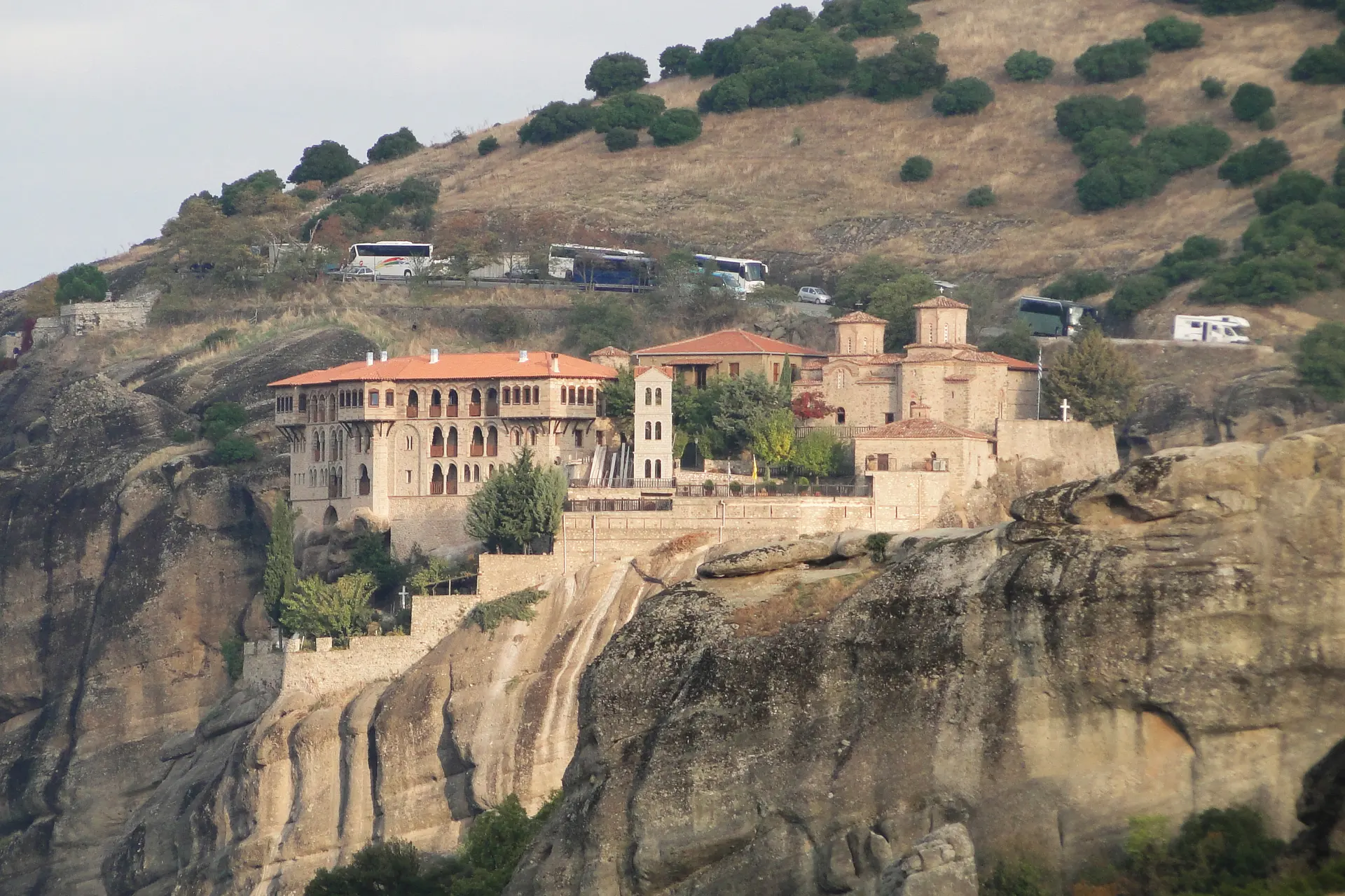
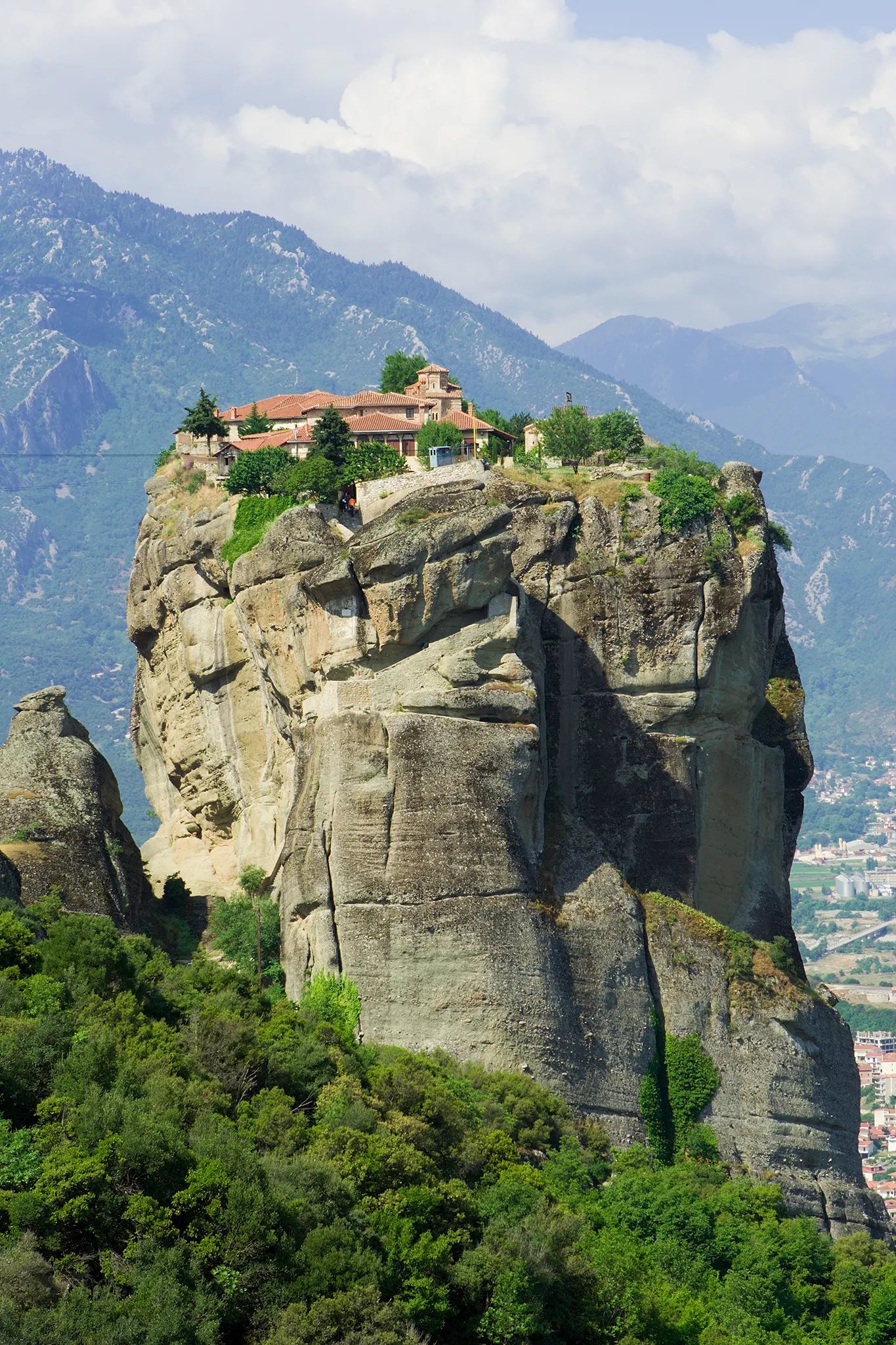
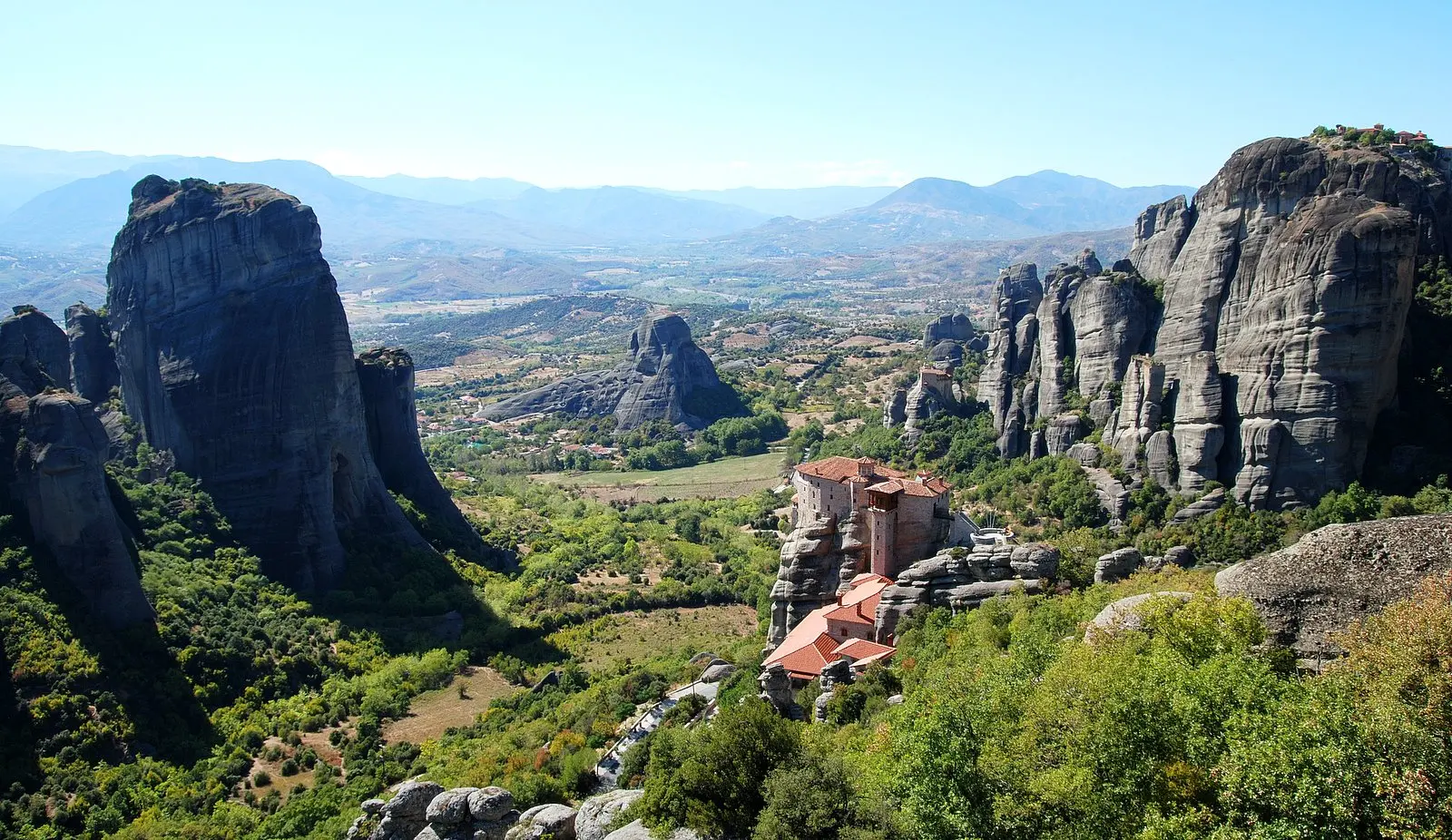
The Meteora (; Greek: Μετέωρα, pronounced [meˈteora]) is a rock formation in the regional unit of Trikala, in Thessaly, in northwestern Greece, hosting one of the most prominent complexes of Eastern Orthodox monasteries, viewed locally as second in importance only to Mount Athos. Twenty-four monasteries were established atop the giant natural pillars and hill-like rounded boulders that dominate the local area, mainly from the second half of the 14th century under the local rule of Simeon Uroš.: 414-415 Six of these are still active and open to visitors: the monasteries of Great Meteoron (est. 1356), Varlaam, Saint Nicholas Anapausas, Rousanou, Holy Trinity, and Saint Stephen. The latter became a community of nuns in 1961, whereas the former five remain managed by monks. Meteora is located in between the town of Kalabaka and the village of Kastraki at the northwestern edge of the Plain of Thessaly near the Pineios river and Pindus Mountains. The Meteora complex was added to the UNESCO World Heritage List in 1988 because of its outstanding architecture and beauty, combined with religious and cultural significance. The name means "lofty", "elevated", and is etymologically related to meteor.

Mt. Pelion
Mt. Pelion is a site of sacred significance. Approximate coordinates: 39.43833, 23.04750. Located in Δημοτική Ενότητα Ζαγοράς, Αποκεντρωμένη Διοίκηση Θεσσαλίας - Στερεάς Ελλάδος, Ελλάς.

Trofonion Oracle, Livadia
Trofonion Oracle, Livadia, Greece is a site of sacred significance. Approximate coordinates: 38.43150, 22.87501. Located in Δημοτική Ενότητα Λεβαδέων, Αποκεντρωμένη Διοίκηση Θεσσαλίας - Στερεάς Ελλάδος, Ελλάς.