Haemi International Holy Ground
Named and unnamed martyrs at a living international sanctuary
Understand sacred places, explore living traditions, and learn how to engage respectfully with Pilgrim Map.
Access has not been verified. Check current local guidance before planning a visit.
Sosan, Chungcheongnam-do, South Korea
Read the sources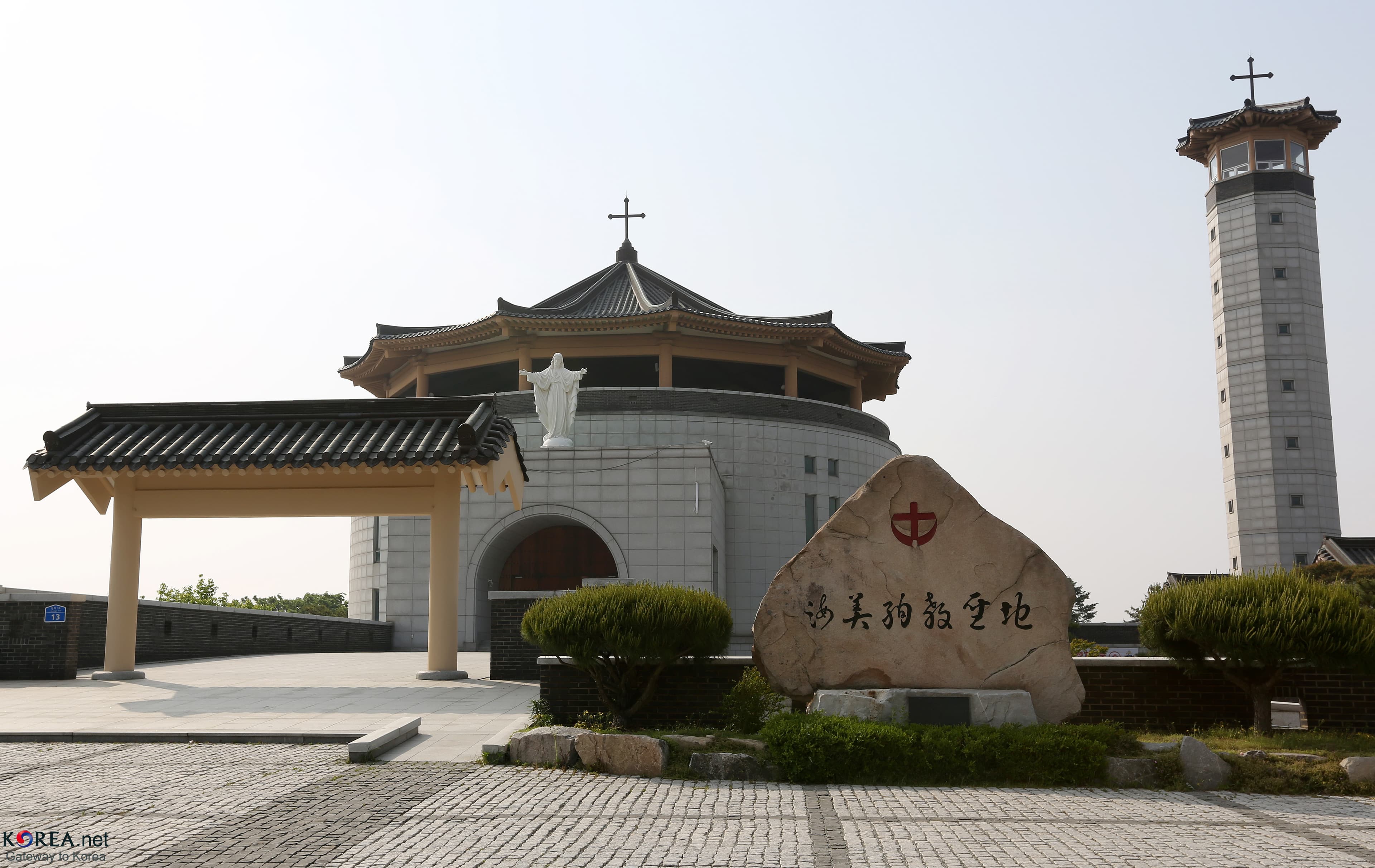
Haemi International Holy Ground in Seosan, South Chungcheong, South Korea. Image source · CC BY-SA 2.0
Visit essentials
A quick read before you go
- Duration
- Allow a calm, condition-aware visit.
- Access
- Prepare for the exact route described above.
Overview
The word international describes current Catholic recognition and pastoral reach, not UNESCO inscription. Pope Francis visited in 2014, and the sanctuary now receives pilgrims from Korea and abroad. Its sacred meaning joins testimony under persecution, care for recovered and lost remains, Eucharistic worship, confession, prayer, and public remembrance. Numerical and chronological details vary across summaries, so this page attributes the sanctuary’s figures rather than presenting every estimate as settled.
Why this place is sacred
Walking pilgrimage is directly documented. The custodian publishes several Haemi International Sanctuary routes connecting birthplaces, martyrdom grounds, graves, mission locations, parishes, passes, and other shrines; Seosan also maintains a 10.1-kilometer route through Haemi’s persecution landscape. These are named, current practices, not an inference from tourism. Distances and route conditions must still be checked before walking.
Original function follows the cited authorities.
Material continuity is not presumed.
Experience and orientation
Pilgrimage here is bodily remembrance. Hanti Pass recalls the forced transfer of arrested Catholics, Yeosutgol preserves memory of burial and death, and the sanctuary provides liturgy and pastoral care. Visitors should not turn these locations into horror attractions. Speak carefully about victims, avoid staging images at memorials, and recognize that descendants, clergy, local residents, school groups, and international pilgrims may inhabit the same space differently.
Use the verified public approach.
Context and lineage
At church and outdoor memorial areas, keep ceremonies unobstructed, dress modestly, and ask before photographing faces, relics, graves, confession lines, or prayer groups. Use only authorized candles and offerings. Never remove soil, stones, flowers, or devotional objects. On long routes, remain on public paths and respect farms, villages, traffic, and weather warnings. A pilgrimage map does not grant access across private land.
Roman Catholic Christianity
Traditions and practice
The official site lists daily Mass at 11:00 and confession from 10:00 at the research time, plus office consultation on weekdays from 09:00–17:00. Google confirms 13 Seongji 1-ro, telephone 041-688-3183, and operational status but provides no hours. Because liturgical schedules, group reservations, feast events, and route services change, the sanctuary’s current notice takes priority.
Current use remains custodian-led.
Attend quietly before drawing conclusions.
Roman Catholic Christianity
ActiveSacred meaning follows the documented local tradition.
Practice remains governed by present custodians.
Perspectives and open questions
Several disciplines illuminate this sacred place.
Scholarly perspective
Catholic theology reads martyrdom as faithful witness and communion; historical study investigates persecution, class, law, and regional networks; local heritage work preserves places and names. These perspectives should meet without converting suffering into proof of a supernatural outcome. Pilgrims may report consolation or spiritual renewal, but no sufficiently prevalent, specific metaphysical claim was established for inclusion. The grounded significance is active remembrance through worship and walking. Haemi’s emphasis on unnamed martyrs creates an ethical limit for content generation.
A page should not invent biographies to make anonymous deaths more emotionally legible. It can instead document why names were lost, how partial remains were recovered, and how collective prayer preserves dignity without false certainty. The sanctuary’s official updates and the bishops’ conference are the appropriate authorities when new identifications, recognitions, route details, or liturgical information emerge.
Living and traditional perspectives
Community meanings retain their own authority.
Open questions
Unsupported effects remain explicitly unverified.
Plan your visit
Access and arrival
Prepare for the exact route described above.
No lodging claim was researched.
Respectful visit
Dress for dignity and terrain.
Ask before recording people or ritual.
Use authorized channels only.
Obey every closure and barrier.
Do not invent or imitate rites.
Current practical details
Address
13 Seongji 1-ro, Haemi-myeon, Sosan, Chungcheongnam-do, South Korea
Phone
Hours, fees, and access can change — verify on the official source before you travel. Practical details last checked Jul 2026.
Location
Map loads as you approach this section.
Pilgrim reflections
A portrait of encounter, not a score
Pilgrims describe what they felt, how present they could become, and whether the place would shape a journey. There are no stars and no ranking of traditions.
No reviewed reflections yet
The first pilgrims can help describe the character of being here.
Share a reflection
Available after an account-backed “Been there.” Every reflection is reviewed before publication.
Nearby sacred places
Explore other sacred places in the region. Proximity does not establish access or travel time; check each place’s guidance.
Seosan Rock-carved Buddha Triad
Sosan, Chungcheongnam-do, South Korea
9.1 km away
Sudeoksa Temple
Yesan-gun, Chungcheongnam-do, South Korea
9.3 km away
Seongjusa Temple Site, Boryeong
Boryeong, Boryeong, Chungcheongnam-do, South Korea
42.3 km away
Magoksa Temple
Gongju, Chungcheongnam-do, South Korea
45.6 km away
References
Sources consulted for this page. Source categories describe the publication, not a guarantee that every claim is verified. Traditional accounts and outside interpretations may differ.
- 01Haemi International Sanctuary — Haemi International SanctuaryofficialCustodian history, current Mass and confession times, office contact, pilgrimage reservations, and papal visit.
- 02Haemi International Sanctuary walking pilgrimage — Haemi International SanctuaryofficialNamed active routes, distances, pastoral provision, current walking pilgrimages, and route meaning.
- 03Haemi Martyr Shrine — Catholic Bishops’ Conference of KoreaofficialNational church authority confirming shrine identity and institution-owned domain.
- 04Haemi Martyrdom Holy Ground — Korea Tourism OrganizationofficialExact national tourism account of Yeosutgol and martyr remembrance.
- 05Haemi International Holy Ground Pilgrimage Trail — Seosan CityofficialCurrent municipal 10.1-kilometer walking route, stops, reflective purpose, and tourism contact.
- 06Catholic Haemi International Sanctuary — Google Maps place record — GoogleSource contextStrong exact identity and current address, coordinates, telephone, website, and operational status.
Share a photo
Help visitors recognize Haemi International Holy Ground. Every submission is reviewed before publication.