Gwaneumsa Temple
Jeju’s rebuilt Jogye center beneath Hallasan
Understand sacred places, explore living traditions, and learn how to engage respectfully with Pilgrim Map.
Access has not been verified. Check current local guidance before planning a visit.
Cheju, Jeju-do, South Korea
Read the sources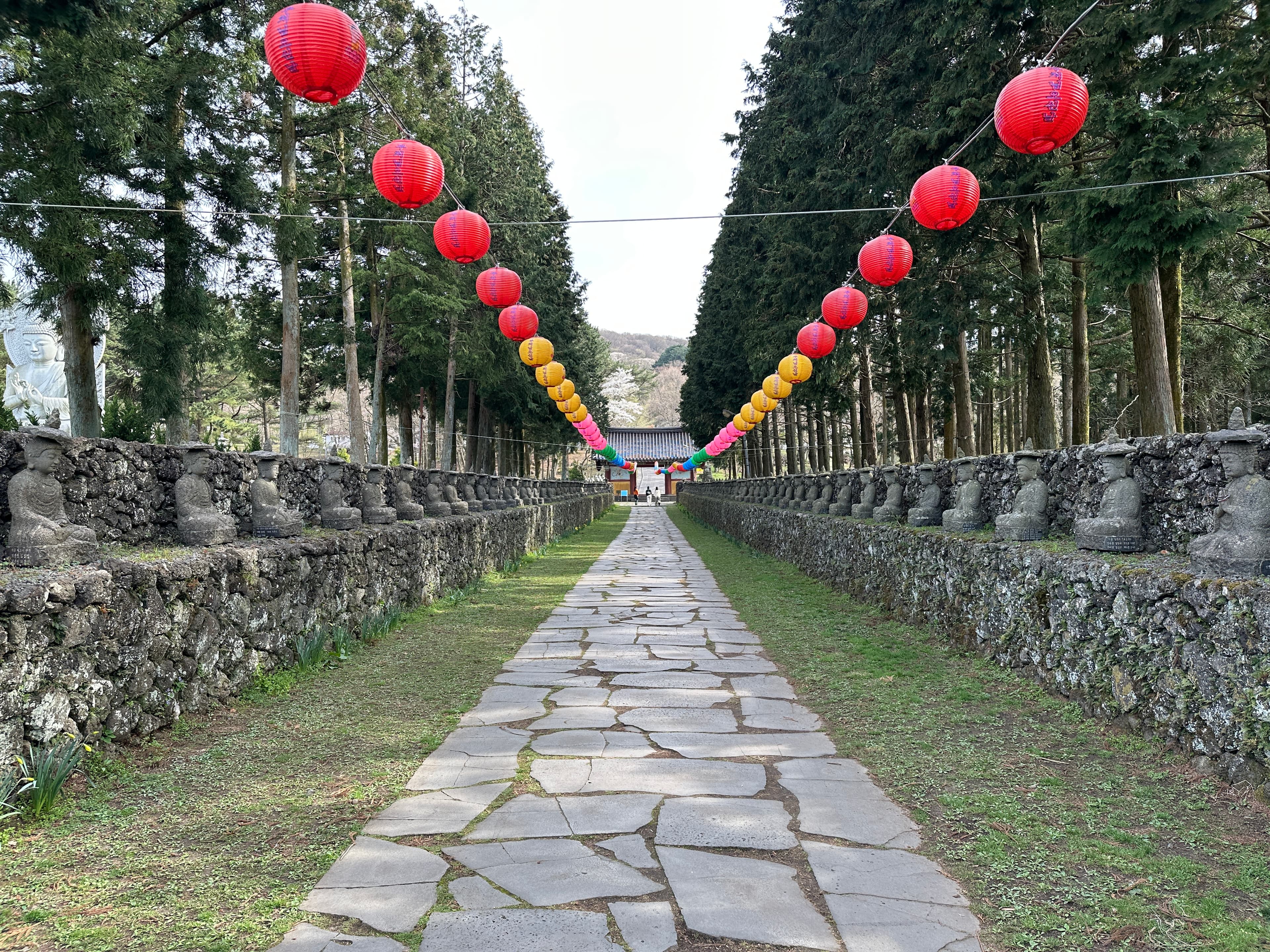
Gwaneumsa Temple in Jeju City, Jeju Special Self-Governing Province, South Korea. Image source · CC BY-SA 4.0
Visit essentials
A quick read before you go
- Duration
- Allow a calm, condition-aware visit.
- Access
- Prepare for the exact route described above.
Overview
Visit Jeju records Buddhist activity here during the Joseon period, the destruction of Jeju temples in 1702, reconstruction at Gwaneumsa from 1908, and another devastating rupture during the Jeju 4·3 conflict in 1948. Rebuilding resumed in 1969. Those dates establish a demanding historical frame: current halls embody recovery after religious restriction and political violence. A respectful account therefore names discontinuity instead of manufacturing an unbroken architectural lineage.
Why this place is sacred
The temple’s spiritual significance is specifically Buddhist, but the reviewed authorities do not identify one exclusive figure as the sole target for the entire complex. The metadata consequently leaves a single target blank rather than deriving Avalokitesvara merely from the name Gwaneumsa. Visitors should read individual hall signs and altar arrangements on site. That restraint protects the difference between a temple’s institutional identity, its inherited name, and the dedications of particular worship spaces.
Original function follows the cited authorities.
Material continuity is not presumed.
Experience and orientation
Move through the precinct as a functioning monastery. Give bows, chanting, meal movement, instruction, and resident circulation priority over sightseeing. Hallasan’s wooded slope supplies quiet and climatic exposure, yet nature is context rather than proof of a measurable force. Temple-stay programs frame silence, meditation, communal schedules, and Buddhist etiquette through trained hosts. Day visitors should not copy retreat exercises or enter residential rooms without an invitation.
Use the verified public approach.
Context and lineage
The site offers a useful meditation on restoration. A hall can be recent in material and still carry serious sacred continuity through community, ritual, memory, and renewed custody. Pause outside one public hall, notice the transition from mountain sound to interior quiet, and allow worshippers to enter first. This observational practice does not promise healing, awakening, or supernatural contact. It simply makes the temple’s thresholds and social obligations more visible.
Korean Buddhism (Jogye Order)
Traditions and practice
Wear restrained clothing, lower voices, remove shoes wherever directed, and ask before photographing altars, monastics, ceremonies, or retreat participants. Do not touch paintings, statues, ritual instruments, offerings, or protected trees. Use only designated donation channels and never leave stones, ribbons, food, or incense in unofficial places. Weather on Hallasan can change quickly, so secure footwear and conservative timing matter even when the temple itself is open.
Current use remains custodian-led.
Attend quietly before drawing conclusions.
Korean Buddhism (Jogye Order)
ActiveSacred meaning follows the documented local tradition.
Practice remains governed by present custodians.
Perspectives and open questions
Several disciplines illuminate this sacred place.
Scholarly perspective
Gwaneumsa can be studied through modern Jeju history, Buddhist institutional renewal, architecture, mountain ecology, and contemplative practice. None of those viewpoints authorizes romanticizing the 4·3 destruction or presenting resilience as inevitable. No prevalent, well-sourced metaphysical claim met the inclusion threshold in this research. The strongest conclusion is observable and culturally grounded: a community repeatedly restored a Buddhist center whose current worship remains shaped by remembered loss. The most responsible visitor narrative keeps Jeju’s modern trauma visible without speaking for survivors.
Temple reconstruction is evidence of deliberate labor and renewed Buddhist organization, not proof that loss was overcome completely. Anyone researching the precinct further should prioritize temple records, Jeju historical institutions, and locally accountable accounts of the 4·3 period. Scenic mountain language must never push that documented human history into the background.
Living and traditional perspectives
Community meanings retain their own authority.
Open questions
Unsupported effects remain explicitly unverified.
Plan your visit
Access and arrival
Prepare for the exact route described above.
No lodging claim was researched.
Respectful visit
Dress for dignity and terrain.
Ask before recording people or ritual.
Use authorized channels only.
Obey every closure and barrier.
Do not invent or imitate rites.
Current practical details
Address
660 Sallokbuk-ro, Cheju, Jeju-do, South Korea
Phone
Hours
Hours, fees, and access can change — verify on the official source before you travel. Practical details last checked Jul 2026.
Location
Map loads as you approach this section.
Pilgrim reflections
A portrait of encounter, not a score
Pilgrims describe what they felt, how present they could become, and whether the place would shape a journey. There are no stars and no ranking of traditions.
No reviewed reflections yet
The first pilgrims can help describe the character of being here.
Share a reflection
Available after an account-backed “Been there.” Every reflection is reviewed before publication.
Nearby sacred places
Explore other sacred places in the region. Proximity does not establish access or travel time; check each place’s guidance.

References
Sources consulted for this page. Source categories describe the publication, not a guarantee that every claim is verified. Traditional accounts and outside interpretations may differ.
- 01Gwaneumsa Temple — Jeju Tourism OrganizationofficialExact institutional history, Jeju 4·3 destruction, rebuilding, current role, contact data, and confirmation of the temple-owned website.
- 02Gwaneumsa Temple, Jeju — Korea Tourism OrganizationofficialExact national tourism record for the mountain temple, history, and visitor identity.
- 03Gwaneumsa Templestay — Cultural Corps of Korean BuddhismofficialOfficial Buddhist program channel confirming the living monastic and retreat context.
- 04Gwaneumsa Temple Jeju — Google Maps place record — GoogleSource contextExact strong place identity; current address, coordinates, telephone, hours, website candidate, and operational status only.
Share a photo
Help visitors recognize Gwaneumsa Temple. Every submission is reviewed before publication.