Geumsansa Temple
A three-story hall built around the Buddha yet to come
Understand sacred places, explore living traditions, and learn how to engage respectfully with Pilgrim Map.
Access has not been verified. Check current local guidance before planning a visit.
Gimje, Jeollabuk-do, South Korea
Read the sources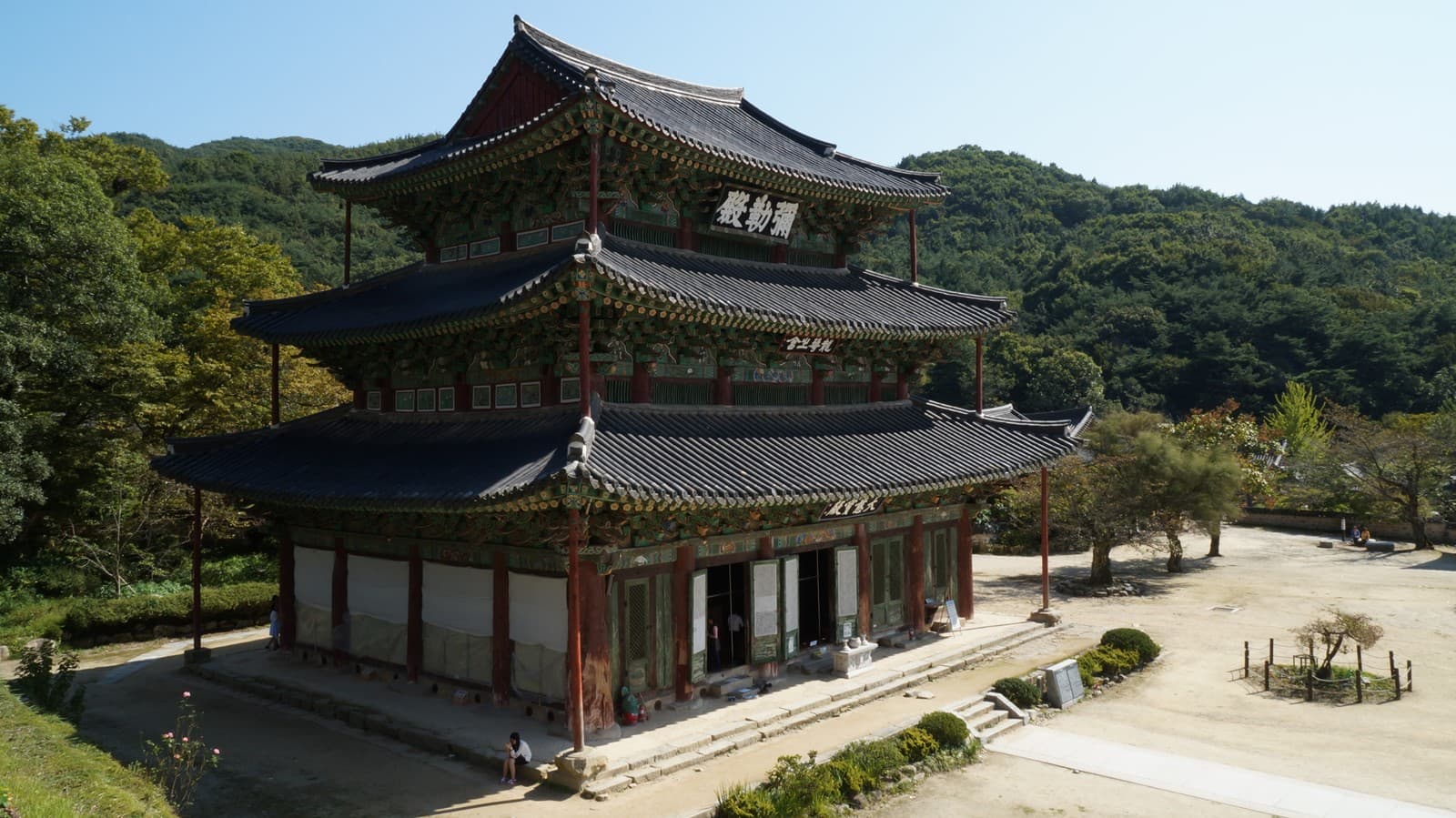
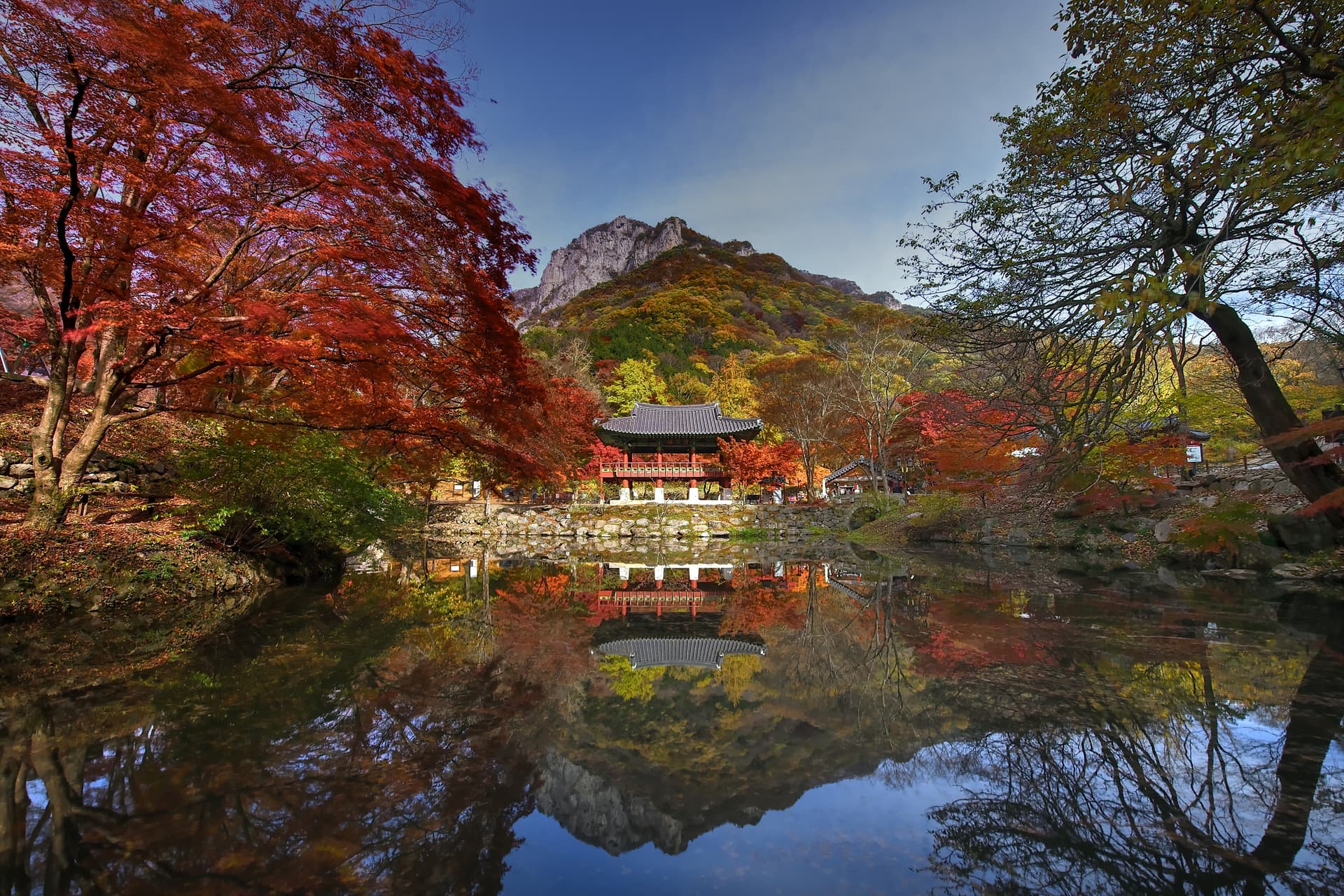
Geumsansa Temple in Gimje, North Jeolla, South Korea. Image source · CC BY-SA 4.0
Visit essentials
A quick read before you go
- Duration
- Allow two hours for major courts and interpretive reading, excluding a mountain hike.
- Access
- KTO lists 06:00–19:00 in summer and 06:00–18:00 in winter, year-round opening, parking,…
Overview
Official tourism information dates the temple’s foundation to 599 and its major expansion under Jinpyo to 776. The present precinct contains many later treasures, so those dates should not be assigned indiscriminately to every structure. Mireukjeon’s unusual full-height interior is the clearest spatial statement. KTO reports an 11.82-metre central Maitreya with two flanking figures of 8.8 metres. These measurements explain bodily experience, not supernatural efficacy. In winter, devotees still bow before the images or circle a pagoda.
Such action makes expectation disciplined: the hoped-for future Buddha becomes a reason for practice now rather than an excuse to abandon the present.
Why this place is sacred
Looking upward can produce awe, but Maitreya devotion asks more than amazement. The future represented by the bodhisattva is ethically conditioned; it cannot be reduced to personal wish fulfillment. Three stacked exterior levels surrounding one interior volume offer a visible paradox: division outside, continuity within. The metaphor is interpretive, not an occult claim about architectural energy. Bowing lowers the body beneath the immense image, while circumambulation changes the viewpoint through repeated steps. Together they prevent hope from remaining abstract.
Height, prostration, and circular movement each locate the visitor differently in relation to time.
The received Baekje foundation began a Buddhist institution later transformed by Jinpyo’s Maitreya-centered work.
Successive buildings and designated treasures developed around a strong future-Buddha identity that remains ritually active.
Experience and orientation
Stand far enough away to see the three-story façade before entering. At the threshold, allow the interior scale to unfold without stepping into bowing lines. Notice how the central standing figure and flanking images fill the vertical field. If circumambulation is occurring, determine the permitted route and direction before joining; watching respectfully is also participation in the public life of the court.
The many listed treasures can encourage checklist behavior, so choose two objects and learn their different dates and functions instead. Moaksan’s trails require a separate plan from temple worship.
Distinguish Mireukjeon worship space, pagoda circuits, other heritage courts, memorial facilities, and provincial-park routes.
Context and lineage
KTO places Geumsansa’s foundation in the first year of Baekje King Beop, 599, and credits Jinpyo with rebuilding it as a major temple in 776. Mireukjeon is nationally designated and architecturally unusual, but its current fabric and images require their own chronology. The nearby Moaksan region has also hosted wider Maitreya and new-religion expectations. That regional history should not collapse all communities into Geumsansa’s Buddhist doctrine.
Geumsansa is an active Korean Buddhist temple distinguished by sustained devotion to Maitreya.
Traditions and practice
Devotees direct reverence toward Maitreya and other Buddhist figures according to liturgical and personal practice.
Cultural events and heritage visitation coexist with worship; neither substitutes for the resident institution.
Name one future condition you hope for and one present action that would make it less contradictory.
Korean Buddhism
ActiveGeumsansa gives Korean Maitreya devotion unusual architectural and communal prominence.
Prostration, chanting, offerings, circumambulation, teaching, contemplation, and heritage care.
Perspectives and open questions
Geumsansa joins architectural scale, Maitreya doctrine, embodied worship, and layered regional history.
Scholarly perspective
Foundation dates, rebuilding, hall fabric, image dimensions, and current ritual each require separate documentation.
Living and traditional perspectives
Maitreya represents a future awakening whose value is measured by compassion and practice undertaken now.
Open questions
No responsible source establishes when Maitreya will appear or that a petition here must be fulfilled.
Plan your visit
Access and arrival
KTO lists 06:00–19:00 in summer and 06:00–18:00 in winter, year-round opening, parking, geumsansa.org, and contact information. Google supplied no hours, so the official seasonal listing governs pending recheck.
Verify any retreat through the temple or recognized Templestay channel before travel.
Respectful visit
Wear modest clothes and shoes that are easy to remove before hall entry.
Confirm rules for Mireukjeon interiors, images, worshippers, rites, and protected objects.
Use designated candles, incense, rice, prayer, and donation places without adding objects to heritage surfaces.
Image platforms, pagoda bases, upper-looking exterior levels, monastic zones, and conservation areas are restricted.
Do not turn Maitreya into a prophecy about current events or claim prayer guarantees a specific outcome.
Current practical details
Address
1 Moak 15-gil, Geumsan-myeon, 특별자치도, Gimje, Jeonbuk State, South Korea
Phone
Hours, fees, and access can change — verify on the official source before you travel. Practical details last checked Jul 2026.
Location
Map loads as you approach this section.
Pilgrim reflections
A portrait of encounter, not a score
Pilgrims describe what they felt, how present they could become, and whether the place would shape a journey. There are no stars and no ranking of traditions.
No reviewed reflections yet
The first pilgrims can help describe the character of being here.
Share a reflection
Available after an account-backed “Been there.” Every reflection is reviewed before publication.
Nearby sacred places
Explore other sacred places in the region. Proximity does not establish access or travel time; check each place’s guidance.
References
Sources consulted for this page. Source categories describe the publication, not a guarantee that every claim is verified. Traditional accounts and outside interpretations may differ.
- 01Gimje Geumsansa Temple — Korea Tourism OrganizationofficialOfficial tourism record for 599 foundation, Jinpyo's 776 rebuilding, Mireukjeon, Maitreya devotion, heritage, dimensions, seasonal hours, website, and access.
- 02Geumsansa — Wikipedia — Wikipedia contributorsacademicCorroborates identity, location, and general historical context; key claims require higher-tier support.
- 03Geumsansa — Wikidata — Wikidata contributorsSource contextCommunity-maintained structured identity and coordinate cross-check; not treated as scholarship or an official custodian record.
- 04Geumsansa Temple — Google Maps place record — GoogleSource contextStrong identity match used only for current practical fields and coordinates.
Pilgrim glossary
- Bodhisattva
- An enlightened being who postpones full nirvana to help others toward awakening.
Share a photo
Help visitors recognize Geumsansa Temple. Every submission is reviewed before publication.