Boriam Hermitage
Gwaneum prayer held between Geumsan granite and the southern sea
Understand sacred places, explore living traditions, and learn how to engage respectfully with Pilgrim Map.
Access has not been verified. Check current local guidance before planning a visit.
Namhae, Gyeongsangnam-do, South Korea
Read the sources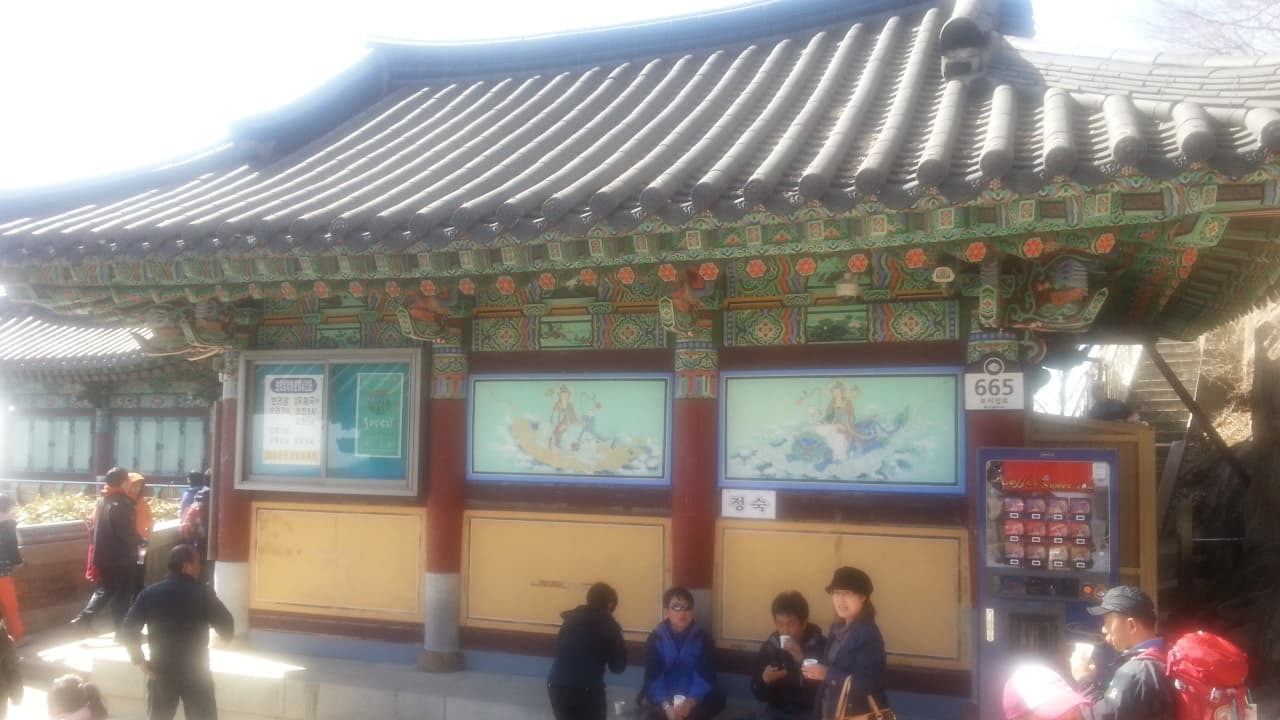
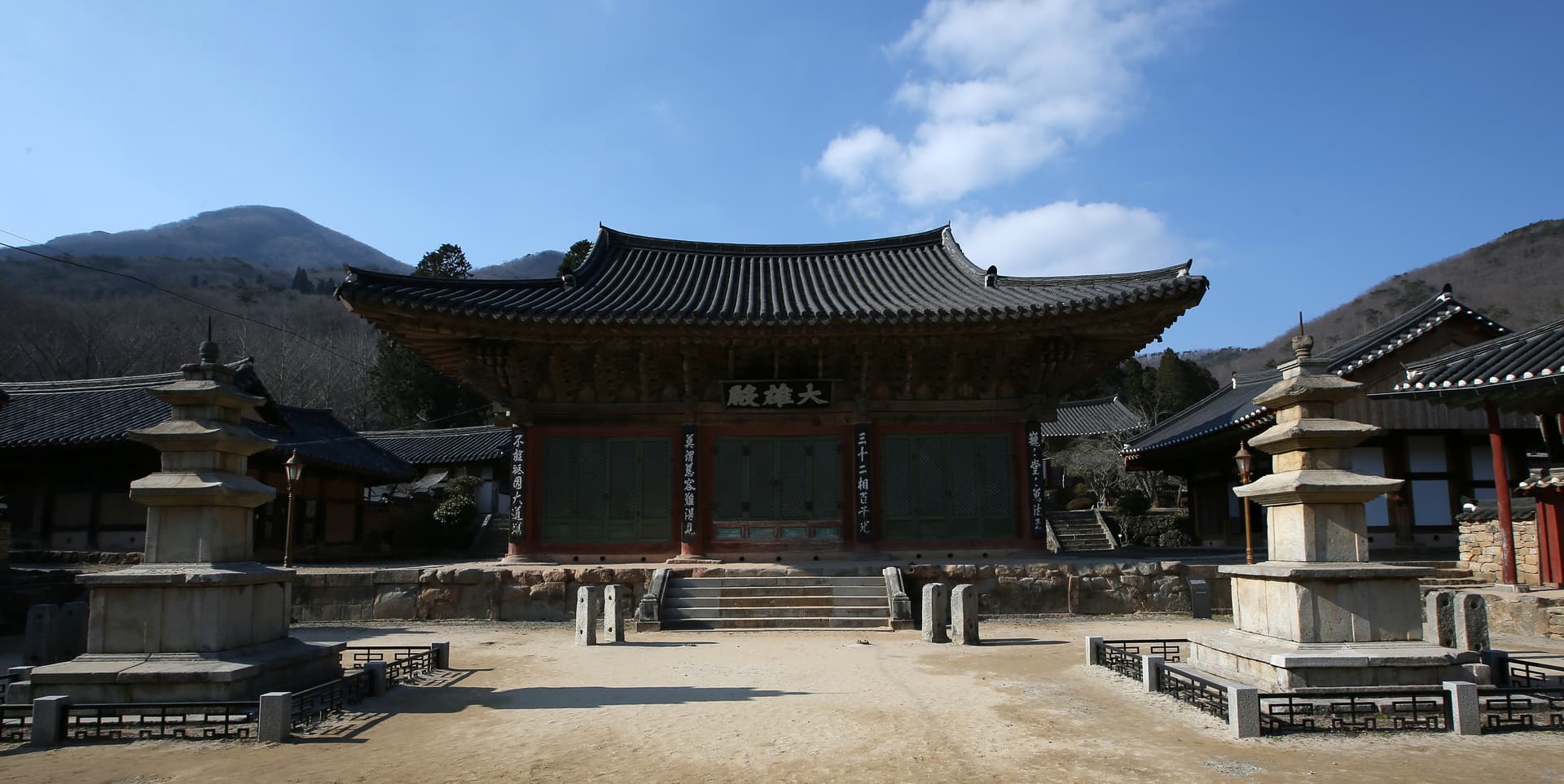
Boriam Hermitage in Namhae, South Gyeongsang, South Korea. Image source · CC BY-SA 3.0
Visit essentials
A quick read before you go
- Duration
- Allow two to three hours including parking transfer, final ascent, worship spaces, and safe…
- Access
- Google lists 03:30–21:00 daily and +82-55-862-6500; KTO publishes parking, a small admission…
Overview
Official tourism sources connect the mountain with Wonhyo and with a later tradition about Yi Seong-gye, the future King Taejo, praying here before founding Joseon. These stories give political memory to an already devotional landscape, but Gwaneum remains the clearest religious focus. The hermitage’s small halls and terraces are pressed against granite outcrops rather than arranged in a broad monastic court.
That physical constraint gives prayer unusual exposure: wind crosses the terrace, the sea fills peripheral vision, and arriving worshippers share narrow paths with hikers.
Why this place is sacred
Avalokitesvara is revered for compassionate response to cries of suffering. At Boriam, the sea-facing image allows that teaching to be read through distance: countless islands and settlements appear within one horizon, while individual prayers remain intimate. The setting may feel powerful, but this page does not claim that granite, altitude, or sunrise produces a measurable energy. A widespread popular account says one sincere wish offered here will be granted.
That is devotional testimony repeated in tourism articles and by visitors, not an independently verified causal promise. Its ethical value depends on whether desire becomes more compassionate, not on treating Gwaneum as a mechanism.
The received tradition associates Wonhyo with establishing a practice place on the mountain for Buddhist cultivation.
Royal prayer memory, changing mountain and temple names, a major Gwaneum image, road and shuttle access, and year-round prayer visits shaped the present hermitage.
Experience and orientation
Parking does not end the ascent. Follow the managed route and allow time for steep or uneven sections, especially in rain, heat, or winter wind. At the hermitage, first identify the active worship areas before seeking the broadest view. The Sea-Watching Avalokitesvara is approached by devotees carrying private concerns; stand aside rather than crossing their line for a photograph. Look back toward the buildings to see how foundations and retaining walls negotiate the rock.
Sunrise attracts crowds, so quiet cannot be assumed even at an early hour.
Distinguish ticket and parking stages, final footpath, worship halls, Gwaneum terrace, rock edges, and restricted service areas.
Context and lineage
KTO says the mountain was formerly Bogwangsan because it held Bogwangsa, associated with the monk Wonhyo. A later tradition says Yi Seong-gye prayed here for one hundred days and renamed the mountain Geumsan after becoming the first Joseon king. These accounts should be preserved as inherited tradition rather than converted into proof that prayer caused his accession. Current official tourism also groups Boriam with major Korean Gwaneum prayer sites.
Boriam belongs to Korean Buddhism and is especially associated with Avalokitesvara devotion.
Traditions and practice
Devotees address Gwaneum for compassionate aid while temple ritual remains under resident Buddhist authority.
Pilgrims in the broad devotional sense and hikers arrive year-round, but this research found no named recurrent route meeting the project’s formal pilgrimage-metadata threshold.
Before forming a wish, ask whose suffering would be eased if it were fulfilled and what action you can take yourself.
Korean Buddhism
ActiveBoriam gives Korean Gwaneum devotion a sea-facing mountain sanctuary of prayer and compassionate aspiration.
Prayer, bowing, chanting, offerings, vows, sunrise observance, and respectful mountain approach.
Perspectives and open questions
Boriam can be read through Gwaneum devotion, royal legend, mountain ecology, tourism logistics, and wish testimony.
Scholarly perspective
Foundation and royal-prayer stories explain remembered identity but do not establish supernatural causation.
Living and traditional perspectives
Gwaneum hears suffering and calls forth compassion; prayer is relationship and vow, not a commercial guarantee.
Open questions
Claims that one wish will certainly be granted are prevalent reports and are not independently verified.
Plan your visit
Access and arrival
Google lists 03:30–21:00 daily and +82-55-862-6500; KTO publishes parking, a small admission fee, and +82-55-860-5800. These change, so verify locally. No first-party website was independently confirmed.
No public overnight lodging at the hermitage is asserted in this research.
Respectful visit
Wear modest layers, secure loose clothing in wind, and use shoes with reliable grip.
Ask before photographing interiors or close-up prayer; drones and tripods require explicit current permission.
Use the hermitage’s established candle, incense, donation, and prayer arrangements.
Altars, image platforms, cliff barriers, roofs, monastic rooms, and service paths are not visitor shortcuts.
Do not promise wish fulfillment, test cliff edges, monopolize the image terrace, or reduce prayer to a sunrise photo ritual.
Current practical details
Address
665 Boriam-ro, Sangju-myeon, Namhae, Gyeongsangnam-do, South Korea
Phone
Hours
Hours, fees, and access can change — verify on the official source before you travel. Practical details last checked Jul 2026.
Location
Map loads as you approach this section.
Pilgrim reflections
A portrait of encounter, not a score
Pilgrims describe what they felt, how present they could become, and whether the place would shape a journey. There are no stars and no ranking of traditions.
No reviewed reflections yet
The first pilgrims can help describe the character of being here.
Share a reflection
Available after an account-backed “Been there.” Every reflection is reviewed before publication.
Nearby sacred places
Explore other sacred places in the region. Proximity does not establish access or travel time; check each place’s guidance.
References
Sources consulted for this page. Source categories describe the publication, not a guarantee that every claim is verified. Traditional accounts and outside interpretations may differ.
- 01Geumsan Mountain and Boriam Hermitage — Korea Tourism OrganizationofficialLive official tourism record used for site identity, heritage context, and visitor logistics; time-sensitive details require rechecking.
- 02Korea Heritage Service public heritage search — Korea Heritage ServiceofficialAuthoritative national search portal retained as a verification route; not used alone for site-specific claims.
- 03Namhae Geumsan Boriam Hermitage — Korea Tourism OrganizationofficialOfficial KTO record for the exact hermitage, Geumsan setting, Wonhyo foundation tradition, Taejo naming tradition, national prayer-site reputation, address, fees, parking, and contact.
- 04Boriam Hermitage — Google Maps place record — GoogleSource contextStrong identity match used only for current practical fields and coordinates.
- 05An early-summer visit to Namhae and Boriam — Korea Tourism OrganizationofficialOfficial tourism feature documenting the widespread one-wish tradition, year-round prayer visits, Gwaneum identity, current route logistics, and the need for quiet around worshippers.
Pilgrim glossary
- Bodhisattva
- An enlightened being who postpones full nirvana to help others toward awakening.
Share a photo
Help visitors recognize Boriam Hermitage. Every submission is reviewed before publication.